Every new year brings with it new seasons of change. Sometimes they mean working out more and practicing healthier eating habits. Sometimes they mean saving money and becoming more financially responsible. And sometimes, they could be just trying to be a better person. For me, 2025 is bringing many changes with it, including this website. Starting today, I will no longer be publishing movie reviews on DavidDunnReviews.com. Or at least, not in their traditional format.
You see, when I first launched this website in 2013, I did so with the express intent of pursuing my passion, which was the movies. I have always been passionate about the movies. Ever since I was a child, I was always mesmerized by the sights and sounds of the moving picture and how its magic transported us to new worlds, time periods, and characters to fall in love with. I always knew I wanted to be involved with film in some way, shape, or form. And while many doors were closed to me in terms of filming, writing, acting, or directing my own movies, the possibility of covering them always excited me. I will always appreciate my many years of covering the entertainment industry because it taught me much more than just being a better writer: it taught me how to be a better person, which is sadly a rare takeaway in today’s hectic, crazy, busy-bee world.
I always imagined that the movies would forever be a part of my life, no matter where it might take me. So why am I no longer committed to covering them full-time on my website? Well for one thing, my postings have become wildly infrequent. The last movie I officially reviewed on this website was Deadpool & Wolverine last July, and as fun and irreverent as that movie was, it’s a far cry from the best movie of the year. In my Top 10 for 2024, I placed nine movies above Deadpool & Wolverine. The only other one I reviewed on my list was Dune: Part Two. To cover an entire year of movies only to have properly reviewed just two of them is a grave injustice to me. It makes me feel like I failed as a movie critic — potentially even as a movie lover.
The explanation for my infrequent postings most likely revolves around my second reason: I’m tired. I’m exhausted beyond words. I’ve never stated this plainly outright before, but I think any casual viewer can see that I don’t get paid to run this website. Instead, I cover the movies whenever and wherever I can, juggling everything between my professional career, my married life, my social life, and my hobbies. That’s a lot to manage for a 30-something-year-old man, and with juggling all of my responsibilities, my passions inevitably fell to the wayside. Perhaps that’s the trajectory of all dreamers as they grow from childhood into adulthood.
Lastly, and perhaps most significantly, 2024 was the year that completely and utterly broke me: personally, mentally, emotionally, physically, and spiritually. Without getting into specifics, 2024 was the year where basically every catastrophe that could have possibly happened was hurled into my lap like a time bomb, and I had to hurry up and disarm it before the next one blew up in my face. I make no exaggeration when I say that last year was most definitely the hardest year I’ve had yet in my young life, and I already know for a fact that harder years lie ahead: that’s the worst part of surviving this hellish marathon.
With all of that under consideration, where does that leave this website? Well despite everything else being up in the air, I don’t think I can entirely shut everything down cold turkey. After all, I am still a writer, and I have to have an outlet somewhere that isn’t Twitter or Reddit.
That being said, I believe my first order of business is recentering myself and giving myself a much-needed and deserved break. After my hiatus is over, I think it’s time for creative reset: a chance to hit the “redo” button and start all over again. I don’t think I need to start from scratch, BUT I do believe this is a time to reevaluate what I’ve been writing about, what topics or conversations intrigue me, and what I might offer to my readers beyond the generic blog posts every once in a while. No matter how you slice it, I am not the same person I was when I first started this website 12 years ago. My writing should reflect who I am today, not who I wanted to be when I first entered the world of entertainment journalism.
So as I’m navigating this new chapter of my life and what it might mean for me and this website going forward, please bear with me as I figure out this new direction. You have all stuck with me through so much, and I could not be more grateful and appreciative for all of your support. I just hope you’ll remain patient with me a little longer as I figure out where I want to take this website in 2025 and beyond.
Thank you as always for taking the time to read my work. Regardless of wherever this website goes next, I’ll see you all at the same place as I always have — the movies.
Out of all of the years I’ve been covering the film industry, 2024 is the first year where I’ve felt genuinely deflated about the movies. Don’t get me wrong, I still cherish the moviegoing experience — the lights dimming, the hum of the speakers crescendoing into full volume, the bright, beautiful picture as it lights up that magical screen. Movies have always been a method of escape for me — that’s as true in 2024 as it was in 2014. I’ll always be grateful that out of the many, many things that have disappointed me from the past year, cinema has never lost its light.
That being said, in such a dim, cruel, callous world… who cares about light anymore? I find the fanciful fantasies of movies to be just that — fantasies, inspiring no real impact or change in the real world. Roger Ebert once said “Art is the closest we can come to understanding how a stranger really feels.” I truly believe that, and I always will. The problem is people nowadays don’t care much about art, and they care even less about other people. Living in such a state, who cares about movies or entertainment? Who cares about change when the means for change no longer work?
In either case, 2024 is thankfully behind us now, and 2025 will be about taking the lessons we learned from the past year and applying them to the future ahead of us. For me, that starts in the same place that it always has, and that is the movies. And while 2024 was a dismal, flimsy, and pathetic excuse for a year, the one thing I am grateful for is that the movies continued to persist. Like all of our favorite books, songs, paintings, poems, and photographs, the movies have inspired emotion and relevance in a year that demanded both in ways we’ve never seen before. I’m happy to say that the best movies of 2024 have risen to the occasion, just like they always have.
A few things before we dive into the year’s list. As always, I have not seen every movie that has come out in 2024, some very intentionally so. I have no desire to waste my time on soulless comic book movies like Joker 2 and Venom 3, especially when the original movies didn’t even warrant a sequel in the first place. But others just plain missed my radar. I had heard time and time again how brilliant The Substance and Anora were and wanted to see them both, but time did not allow me to catch either of those before the end of the year. So if there are any movies that deserve to be on this list and aren’t, I truly am sorry. This is the first year I’ve written this list where I’ve felt genuinely exhausted by it.
That being said, this list isn’t going to write itself, and I’m looking forward to diving into the very best movies the year gave us, starting with my special prize. Every year, I try to shine the spotlight on at least ONE limited-release movie that deserves just as much love and attention as many of the big-budget blockbusters we get throughout the year. Thankfully, my pick for 2024 was easy, because this movie only got a handful of public screenings before it snuck onto streaming services earlier this year. To me, that is the literal definition of “limited release,” so it is my great pleasure to award the Special Prize for 2024 to…
It feels weird to say that a black-and-white slapstick comedy film is one of the best movies of the year, but Mike Cheslik’s zany and wacky little masterpiece is as refreshing as it is straight-up bonkers. Ryland Brickson Cole Tews plays a fur trapper swooning after the affections of the merchant’s daughter, but before he can seek her hand in marriage, he has to offer the merchant the pelts of hundreds of beavers — hence the title. The movie does a brilliant job of channeling the style and appeal of 1930s black-and-white films, paying homage to all-time greats such as Buster Keaton and Charlie Chaplin. But aside from its nostalgic charm, Hundreds Of Beavers is simply one of the funniest movies I’ve ever seen. I caught myself laughing hysterically throughout the picture at the fur trapper’s silly antics in the same way that Elmer Fudd kept getting outsmarted by that pesky rabbit in the original Looney Tunes cartoons. If you’re sick of how cliche and unfunny most comedy films are nowadays, Hundreds Of Beavers will reaffirm your faith in the power of laughter and the movies.
Now without further adieu, let’s hop into the 10 best films of 2024, starting with…
The Merc With A Mouth’s third cinematic outing sees him partnering with the world’s most famous X-Man in this gleefully violent, profane, and outrageous roast of superhero franchises, cinematic universes, and multiverses in general. Ryan Reynolds and Hugh Jackman are as great as they’ve always been as both Deadpool and Wolverine, but their chemistry is on another level with Wade’s wisecracking antics clashing with Logan’s jaded rough-around-the-edges demeanor. The action sequences are among the most stylish and exhilarating out of the entire trilogy, and the cameos and easter eggs are unmatched in both their hilarity and fan service. The film doesn’t break any new ground for the superhero genre at large, and while Emma Corrin gave an enthusiastic performance as Cassandra Nova, her character unfortunately doesn’t do any favors for Marvel’s lackluster supervillain problem. That still doesn’t change the fact that Deadpool & Wolverine is a big and bold celebration of the Fox X-Men franchise, a welcome return to form for the MCU, and a wildly fun time at the movies.
Dev Patel teams up with Academy Award-winner Jordan Peele in his directorial debut that’s as fast-paced and action-packed as it is hard-hitting and impactful. After a young boy’s mother is killed and his village is burned down by a powerful business tycoon, he grows up perfecting his mind and body to seek vengeance against those who took everything from him. As the star, Dev Patel is as exemplary as he always is, displaying an emotional depth and complexion that makes you understand his character’s pain and where it comes from. But it’s in the director’s seat where Patel shows his deep love and appreciation for martial arts the most, with action sequences so intense, brutal, and heart-pounding that it makes you feel every punch and kick that lands in the theater. Some of the editing is slightly choppy and the cinematography is a little too shaky for my liking, but regardless, Monkey Man is a breath of fresh air for the action movie genre that encourages everyone to embrace who they are.
Pixar’s return into Riley’s head sees Joy, Sadness, Anger, Fear, and Disgust colliding with an all-new team of emotions, and the chaos that ensues is as hilarious as it is heartfelt. The animation is as colorful and as vibrant as ever, with all of Riley’s memories lighting up in a brilliant and mesmerizing display of cosmic awe and wonder. The voice cast is just as outstanding, with Maya Hawke being a particular highlight as the jittery, erratic, and worrisome Anxiety. But it’s Kelsey Mann who takes center stage in his directorial debut, taking the ideas and themes from the first movie and expanding on them in new and relevant ways in the sequel. The very best thing about this movie is that as Riley navigates the confusion of her teenage years, it doesn’t villainize any of her emotions and shows they all have a part to play when it comes to who we are. Our emotions can lie to us, but they can also set us free. Inside Out 2 shows us how.
Alien’s return to its sci-fi horror roots is as horrifying as it is disturbing, with plenty of twists, turns, and surprises to keep audiences on the edge of their seats all the way through. Benjamin Wallfisch’s score is equally beautiful and unnerving, while Galo Olivares’ masterful cinematography is just as intense as it is claustrophobic within the dark, creepy walls of the Renaissance. Cailee Spaeny is effective as the film’s emotional center, and David Jonnson plays one of the coldest and most calculated androids in the entire franchise. But it’s Fede Alvarez who shines the most in the director’s chair, demonstrating a sound understanding of the tension and inspiration behind the Alien franchise like we haven’t seen since Ridley Scott first directed the original in 1979. There are a few cliches and one-liners littered throughout that rely a little heavier on nostalgia than I would have preferred, but regardless, Alien: Romulus is the best sequel in the franchise by a clear mile. The last 20 minutes will haunt you for the rest of your life.
DreamWorks comes out in full swing with the best animated film of the year that’s bursting with creativity, personality, and heart. After a cargo ship crash lands on a remote island, a service robot named “Roz” must learn how to survive against the elements in mother nature. But after befriending an orphaned baby goose, a stray fox, and many other four-legged companions, Roz discovers how to overcome her programming and become a protector for all of the forest animals. The animation itself is gorgeous and eye-catching, with everything from the animals, environments, and skyline sticking out in lush watercolor detail. The voice acting is also incredible, with Lupita Nyongo and Pedro Pascal giving the most nuanced and multifaceted performances out of the entire voice cast. But the most beautiful thing about this movie is its sense of humanity that values every life no matter how big or how small. Whether you come from a forest or a factory, The Wild Robot shows us that every life is sacred and worth fighting for.
The fastest hedgehog alive dashes into theaters for what is quite possibly the best video game film adaptation ever made. When the ultimate life form Shadow (Keanu Reeves) wakes up after being trapped in stasis for 50 years, Sonic (Ben Schwartz) must team up with his friends, Tails (Colleen O’Shaughnessey) and Knuckles (Idris Elba), to defeat him and save the world from utter destruction. Pulling inspiration from the original game it’s based on, Sonic Adventure 2, Sonic 3 is jam-packed with wonderful easter eggs, spectacular action sequences, and heartfelt moments that flesh out these already beloved characters. Jim Carrey is iconic as both the eccentric Dr. Eggman and his grandfather, Gerald Robotnik, and plays up the dual role with great comedic timing and effect. However, the biggest star is Keanu Reeves as Shadow the Hedgehog, a dark and grim figure who’s haunted by his tragic past. Sonic The Hedgehog 3 demonstrates that we’re entering a new era of video game adaptations that prioritizes character development and storytelling over everything else. All hail Shadow.
Very few Mad Max fans wanted or asked for a prequel to Fury Road, but Furiosa shows what happens when you get a skilled director with a strong vision behind the camera with enthusiasm for the character and who she represents. In Furiosa, Anya-Taylor Joy squares off against Chris Hemsworth years before Max Rockatansky enters the picture, and their rivalry is as intense as it is seething. Anya does a brilliant job demonstrating the same strength and vulnerability that made Charlize Theron’s character so iconic in the first place, but surprisingly, Chris Hemsworth steals the spotlight in his craziest and most chaotic role yet. I always like it when prominent Marvel actors break out of their typecasts, so seeing Hemsworth so unhinged here brought the biggest smile to my face. Everything else that made Fury Road a classic, from George Miller’s skilled direction to the explosive action sequences and the gorgeous practical effects, all make Furiosa the standout blockbuster of the year. I will never forgive moviegoers for letting this movie bomb at the box office.
Expectations were undoubtedly high for the live-action adaptation of Stephen Schwartz’s iconic musical, but Jon M. Chu absolutely knocks it out of the park with a sweeping fantasy epic that is just as joyous and enchanting as it is dramatic and powerful. This prequel to the classic Wizard Of Oz shows the complex relationship between Elphaba (Cynthia Erivo) and Galinda (Ariana Grande) before they became the Wicked Witch of the West and Glinda The Good and how they went from the closest of friends to the most bitter of rivals. The music is faithfully recreated from the original Broadway production and given new life thanks to the incredible vocal talents of both Cynthia and Ariana. Likewise, both of their performances are out of this world, with Cynthia portraying Elphaba’s intensity so brilliantly against Ariana’s blissfully vain Galinda. But the best thing about this movie is the deeper conversations Jon Chu explores, including how easy it is to villainize and marginalize others through propaganda. In every sense of the word, Wicked is pure magic and will make you believe that you too can defy gravity.
Everyone expected this star-studded sci-fi sequel to be as explosive, captivating, and visually spectacular as the first film was. What elevates Dune: Part Two above its predecessor is that it’s deeper, darker, and even more profound and thought-provoking. Greig Fraser’s cinematography is as striking and masterful as it’s always been, bringing weight, meaning, and gravitas into every shot he captures. Denis Villeneuve’s visual scope is equally unrivaled in how he chooses to portray the carnage and chaos of Arrakis, whether that involves Sardaukar hovering in the air or sandworms burrowing through the desert sands. And the all-star cast is nothing short of top-tier, with Timothee Chalamet offering the most raw and compelling performance as the prophesied Lisan al-Gaib. But the best thing about this movie is how much it emphasizes Frank Herbert’s original themes surrounding wealth, power, and religious fanaticism. As the Fremen swear allegiance to Paul and declare war against the universe, the parallels between Arrakis and our world today are disturbingly similar. Yet, the scariest thing about Dune: Part Two wasn’t seeing millions believing in Paul and rallying behind his crusade — it’s that you wanted to believe him too.
And finally, my number one movie of the year. I was initially worried I wasn’t going to see this movie before year’s end because the distributors had the bright idea of releasing this film on Christmas, which is a little weird because this isn’t exactly a quote-unquote “Christmas” movie. Regardless, this movie was a Christmas present in its own little way, with some of the best writing, performances, and direction out of the entire year. And that movie is…
In a day and age where Hollywood seems relegated to just keep reusing old ideas over and over again without any creativity or innovation, here comes Robert Eggers with a gothic horror revival that feels wholly unique, original, and inspired. Which is ironic, because the original Nosferatu actually ripped off Bram Stroker’s Dracula first in 1922. But with how haunting, eerie, creepy, and unsettling this new Nosferatu is, I wouldn’t be surprised if future Dracula adaptations ripped off Robert Eggers instead. The production design and costuming accurately reflect the era of 1800s Germany, while every frame of Jarin Blaschke’s gorgeous cinematography feels like it can be ripped straight out of the film and put into a painting. The makeup feels equally cursed and monstrous, with Bill Skarsgard looking straight up unrecognizable as the titular Count Orlok. However, it’s Lily-Rose Depp who outshines everybody as Ellen, playing a loyal and loving housewife in one scene and a deeply disturbed and terrified consort to death incarnate in another. More than being a brilliant horror film, a gripping supernatural thriller, a monumental period piece, and a moving love story all at once, Nosferatu is a modern masterpiece that demonstrates that if we are to tame the darkness, we must first acknowledge that it exists.
Thankfully, that’s all for 2024 folks. Tune in next year when I rank the 10 worst billionaires. Feel free to place your bets now on who places at number one.
Note: Since 2016, I’ve had the displeasure of co-writing every Deadpool review with the Merc With A Mouth himself, Wade Wilson. Neither one of us saw a reason to discontinue that tradition now, so without further adieu, here’s… Deadpool.
You did it. You crazy son of a *****, you did it.
You are NOT Jeff Goldblum, so stop quoting Jurassic Park.
Neither did I, but you managed to bring Hugh Jackman back from the dead, so I figured that’s worth something.
Hehehe, Disney was never gonna let him hang up the claws and you know it.
Oh yeah, they’re gonna milk everything out of him like the Star Wars franchise.
Yeah, but let’s be honest — our cameo game is WAY better.
Oh it definitely is Wade. You and Hugh Jackman both prove that to be true with Deadpool & Wolverine, Marvel’s most bloody, brutal, and bizarre film yet, but it’s also filled with a lot of heart.
Don’t I know it! See, it’s beating right now!
Oh God, Wade, it’s outside of you. Please, put it back in.
Lol, that’s what she said.
Stop. You JUST got added to Disney Plus.
Okay, fine. God knows I don’t wanna end up on Tubi. So, what did you like about my third movie, Double D?
Well I was particularly impressed with how much freedom you had in this movie. Marvel and Fox normally like to gatekeep their characters very closely, and understandably so considering how passionate fans feel about these franchises. That’s why I was so surprised to find just how big of a sandbox you got to play in for Deadpool & Wolverine. You happily hurled jokes and insults not just at the Marvel movies, but also at the Fox movies and even a few DC movies. Did your lawyers clear everything you said in the script?
Did my who do my what now?
… okay, Blind Al might wanna call Matt Murdock before this review is over. Bottom line, you made me laugh. A lot.
Hehe, I always do. And what about ol’ Wolvie? You HAD to be excited about him coming back!
Well to be honest, I was a bit worried he was coming back at first. Not just because Hugh Jackman is in his mid-50s, but also because Logan was such a perfect sendoff for the character.
And you had to LOVE how I dug him back up just for this movie, didn’t you???
It was… certainly a choice.
Yeah it was — a GOOD one!
I’ll… reluctantly agree with you on that one. While I have mixed feelings on how exactly you brought him back, I can’t deny that Hugh Jackman is exceptional in this role, and your chemistry together is unmatched. His stoic, stiff, rough-around-the-edges demeanor perfectly contrasts with your off-the-cuff, smartmouth personality, and you make a beautifully dysfunctional pair together.
Hehe, yeah… just like Elon Musk and his dwindling X users. So why dock half a star then?
The movie in general is actually a lot like you Wade — funny, charismatic, violent, and wildly unhinged, but also very erratic, impulsive, and nonsensical. Structurally speaking, this is your messiest movie to date, with the plot relying more on Easter Eggs and nostalgia more than characters and their motivations. I genuinely wonder if this film works better as a standalone movie or as straight-up cameo porn.
I’m grabbing the bottle of lotion now. My question is why can’t it be both?
First, put that bottle away Wade, my mom reads my reviews. Second, that’s actually the case you make here with Deadpool & Wolverine, and honestly, I’m not mad at it. As messy and convoluted as your film is, it’s also wildly funny, amusing, and entertaining. I was grinning from ear to ear throughout the whole picture, and honestly, I can’t remember the last time that’s happened to me in a movie theater.
It’s not usual that I’m happy with how the Academy Awards play out. This year, I’m happy with the Academy Awards for a number of reasons. One: Jimmy Kimmel was great as the Oscars host, as he always is. With his first year of hosting being the same year as the infamous Moonlight-La La Land Best Picture mixup in 2017, I’m sure every year after that seemed like a cakewalk for the late-night talk show host. He was just as charismatic and clever as he’s always been, and he did a great job making sure the show stayed fresh and kept up its momentum — even when he was facing scathing remarks from twice-impeached charlatan Donald Trump on “Truth” Social. My favorite rebuttal from Kimmel: “Isn’t it past your jail time?”
Two: The bits were actually funny this year and didn’t overstay their welcome. One of my favorite moments was when Ryan Gosling and Emily Blunt were ribbing each other for their “Barbenheimer” rivalry, with Ryan pointing out Barbie dominating the box office while Emily observed all the honors Oppenheimer racked up this awards season. John Mulvaney hilariously ribbed Madame Web during his presentation for Best Sound, quoting the infamous “He was in the Amazon with my mom” line. But my favorite bit was when John Cena “streaked” across the stage to present the Best Costume Design category with only the envelope covering his Magic Johnson. Hey, at least you can’t say he didn’t wear his best suit (just as long as birthday suits count).
And lastly, the winners were largely justified this year. There was no obviously outrageous moment like Jamie Lee Curtis winning Best Supporting Actress, or Denis Villeneuve not being nominated for Dune, or Chadwick Boseman losing Best Actor for Ma Rainey’s Black Bottom. Sure there were a few snubs here or there, but for the most part, I can see why most of the winners won this year. It’s very rare that the Academy is on the mark this much. And I’m going to savor every minute of it, because I already know this euphoria will be very short-lived.
Even my predictions went pretty well this year. As per usual, I didn’t get every category right this year, with the most obvious misses coming from those accursed short categories. But before we get to that, let’s start with…
Best Picture:Oppenheimer won the Academy Awards’ most coveted honor of the night, as it deserved to. Not only is it a compelling character drama taking a deep dive into the psyche of one of the most complex men in American history, but it is simultaneously also a cautionary tale on nuclear proliferation and what Oppenheimer’s achievements may mean for the future of the human race. Given the fact that it swept the SAG Awards, the PGAs, the DGAs and every other awards ceremony under the sun, I think it was a foregone conclusion that Best Picture was Oppenheimer’s to lose.
Still, I don’t want to minimize Christoper Nolan’s or Emma Thomas’ achievements. Oppenheimer is not only the best film from 2023, but one of the finest Best Picture winners to emerge from the past several years. I’m glad the Academy got this category right and gave it to Oppenheimer as it justly deserved. Now if only it could denuclearize the rest of the world.
Best Director: Just as he had won Best Picture, so too had Christopher Nolan won Best Director for Oppenheimer. Again, I don’t think there’s much more that needs to be said here other than he obviously deserved it. Not only was his work on Oppenheimer the very best out of the entire year, but he’s also been largely snubbed by the Academy for pretty much his entire career. The first time he was nominated was in 2018 for Dunkirk, and considering he’s mounted even more significant cinematic achievements with the likes of Memento, The Prestige, The Dark Knight, Inception, and Interstellar, it’s kind of stupid that Oppenheimer marks only his second nomination — or his first win, for that matter.
Regardless, he couldn’t have won for a better film, and I couldn’t have been happier when they called Christopher Nolan’s name for Best Director. His Oscar win has been very much overdue.
Best Actor: No surprise here either: Cillian Murphy’s turn as J. Robert Oppenheimer was filled with both humanity and horror, and Cillian did a masterful job bringing the Father of the Atomic Bomb to life. What makes this win even more significant is the fact that this is also Cillian’s first nomination, let alone his first win. It’s baffling to me that such a committed actor has taken this long to be recognized by the Academy, but better late than never I guess. He did a phenomenal job in the lead role of Oppenheimer and absolutely deserved to win. I couldn’t have been happier for him.
That being said, I am sad that Cillian did have to win Best Actor at the expense of Paul Giamatti, who gave an equally gifted performance as Mr. Hunham in The Holdovers. Truth be told, I wouldn’t have been mad if Giamatti did win instead of Cillian, even if I wouldn’t necessarily have agreed with it. But let’s at least be grateful that one noteworthy performance lost to an equally talented performance. That’s the best way to lose at the Academy Awards.
Best Actress: It was a battle of the “stones” for Best Actress this year, with Killers Of The Flower Moon’s Lily Gladstone squaring off against Poor Things’ Emma Stone. And Emma clinched it, if ever so slightly.
Knowing that she had previously won Best Actress for the likes of La La Land in 2017, I mistakenly thought that would work to her detriment considering the fact that she’s already an Oscar winner. I obviously underestimated the weight of her BAFTA win, a mistake I desperately need to learn from going forward with the Academy Awards.
Best Supporting Actor: Again, no surprise here: Robert Downey Jr. was just as compelling as Lewis Strauss as Cillian Murphy was in Oppenheimer, so it makes sense that he also won the Oscar for Best Supporting Actor. It’s so heartwarming to see Robert Downey Jr. go from struggling with addiction abuse in the 2000s to getting clean to becoming part of one of most successful franchises in cinematic history, only to turn around with arguably one of the best performances of his career in Oppenheimer. I worried for a while that he was going to be typecast after the success of The Avengers, but Oppenheimer proves he’s still got phenomenal acting chops — you just have to give him a role that he can truly thrive in. Congratulations to Robert Downey Jr. and his incredible achievement. The only way his win could have been even better is if he ended his speech by saying “I am Iron Man.”
Best Supporting Actress:Da’Vine Joy Randolph obviously gave the best performance out of all of the supporting actress nominees in The Holdovers, so she was the clear winner by a long mile. Da’Vine’s win is one of those Oscar moments that fills me with so much hope and joy, because she is clearly not as big of a name as her fellow nominees, yet won regardless due to the merit of her performance. She didn’t win by being a nepo baby (*cough cough*, JAMIE LEE CURTIS, *cough cough*) — she won by genuinely being the best actress. I couldn’t be happier for the win and hope that the Academy will follow suit in this voting methodology going forward. Perhaps they could start by taking away Jamie Lee Curtis’ Oscar and giving it to Stephanie Hsu instead.
Best Animated Feature:It was a showdown between The Boy And The Heron and Across The Spider-Verse, and The Boy And The Heron ultimately won much to the dismay of web-heads. Personally, I feel Across The Spider-Verse deserved to win more, and Nimona should have been part of the conversation WAY more than it was. But in its defense, Into The Spider-Verse did already win Best Animated Feature back in 2018, while the last Oscar Hayao Miyazaki won was in 2002 for Spirited Away. The Boy And The Heron is a beautiful, tragic, and spellbinding film either way. If Spider-Verse or Nimona wasn’t going to win it, I’m glad it went to The Boy And The Heron.
No, if we really want to talk about Across The Spider-Verse snubs, we should be looking at other categories it wasn’t nominated in, including Best Original Score, Best Original Song, and Best Visual Effects. Heck, I would have even caved for a Best Picture nomination. Regardless, Beyond The Spider-Verse is still coming out in the next few years, so Spidey will have another shot at the Oscars either way. The Academy better not mess up its mulligan, otherwise Marvel fans will have legitimate reasons to be angry next time.
Best Documentary Feature:20 Days In Mariupol rightfully won Best Documentary, marking not only the third Academy Award-winner I’ve interviewed after Aaron Sorkin and Alejandro Gonzalez Inarritu, but also the first Ukrainian to win an Oscar (how???). While I’m happy that 20 Days In Mariupol won the Oscar, there is a twinge of sadness attached to it knowing that it came at a cost of over 20,000 Ukrainian lives. I choked up at the moment when director Mstyslav Chernov said he wished this film never needed to be made, and similarly, I wish that I never needed to interview him.
Regardless, Mystyslav set out to make this film as a monument to the lives lost in Ukraine. He more than succeeded in making his monument, and as far as I’m concerned, that’s an accomplishment greater than any Academy Award could ever be.
Best International Feature: I’ve said it before, and I’ll say it again: if a Foreign-language film was nominated for Best Picture, it’s a lock for the Best International Feature Oscar. That made The Zone Of Interest winning a foregone conclusion. I just wish I could have seen it prior to Oscar night. It doesn’t help that it wasn’t playing anywhere near me. Here’s a film whose “limited” release was so limited that they should have just labeled it “Eh, we guess it was released.”
Best Original Screenplay:Anatomy Of A Fall won this year’s Best Original Screenplay Oscar as it rightfully should have. I saw the film months ago, and it’s still at the forefront of my mind with its spellbinding and dizzying narrative that masterfully teeters you on the edge of your seat. Did Sandra kill her husband or did she not? All these months later, I still don’t have an answer, and I don’t know if I want one.
Best Adapted Screenplay:Cord Jefferson’s witty and amusing adaptation of Percival Everett’s “Erasure” was as clever as it was insightful in American Fiction, so naturally it made it a perfect fit for this year’s Best Adapted Screenplay Oscar. Personally, I still wish it could have gone to Christopher Nolan for Oppenheimer, but considering how much it cleaned up in the rest of the ceremony this year, I’m okay with giving this one to American Fiction. Most would probably argue that it deserved it more anyway.
Best Cinematography: I remember back in 2014 when Hoyte van Hoytema took over for longtime collaborator Wally Phister when shooting for Christopher Nolan’s Interstellar. Years later, he continues to prove he’s one of the most creative cinematographers working in Hollywood today, with some of his most notable projects including Spectre, Dunkirk, Ad Astra, Tenet, and Nope.Oppenheimer demonstrates some of his finest work to date, so of course he deserved to win. I still don’t know how he pulled off those quantum physics sequences without any use of CGI. If they ever produce a documentary about the filming of Oppenheimer, I’ll be the first one to watch it. Mark my words.
Best Film Editing: From Frances Ha to Black Panther: Wakanda Forever, Jennifer Lame’s editing prowess has taken her all over Hollywood, which makes it especially baffling how Oppenheimer marks only her first nomination. Whatever. Oppenheimer’s film editing is the very best out of the year, and Jennifer Lame deserved to win regardless of whatever snubbing she experienced beforehand. Guess she and Christopher Nolan have that in common.
Best Production Design: It was clear from the trailers that Poor Things had some of the most striking set designs out of the entire year. As gorgeous as Barbieland looked, it lacked the dreamy and ethereal aesthetic that Poor Things nailed so effectively. It was clear from the outset that Poor Things was going to win Best Production Design. Nothing controversial to report here.
Best Costume Design: This one I got wrong because I vastly overestimated the Academy’s affection for Barbie. At first glance, Barbie seemed like the easy frontrunner, but Poor Things’ costumes were just as distinct, and unlike Barbie, didn’t have a template to base its wardrobe around. You won’t find any of Bella Baxter’s or Duncan Wedderburn’s clothes in any play sets or doll boxes. You will, however, find any of Barbie or Ken’s costumes in any toy aisle you happen to stroll past. Failing to observe its originality was perhaps my greatest oversight in making my Best Costume Design prediction this year.
Best Makeup & Hairstyling:While I flubbed up on predicting Best Costume Design, I did correctly predict that Poor Things would win Best Makeup over the likes of Maestro and Golda. Stitches and disfigured jawlines beat big noses and Helen Mirren erasure. I still don’t know why Oppenheimer was nominated in this category. I genuinely don’t.
Best Musical Score:If Ludwig Goransson didn’t win Best Musical Score for his eerie, ominous, and haunting compositions for Oppenheimer, then the Dolby Theatre truly deserved to be hit with a hydrogen bomb. Thankfully, the Academy picked the right winner in this category. For the record, I’m still fuming that John Williams is nominated for Dial Of Destiny over Daniel Pemberton for Across The Spider-Verse.
Best Original Song: As epic as Barbie’s musical number for “I’m Just Ken” was, it’s clear that Billie Eilish was going to win for her beautiful yet heartbreaking single “What Was I Made For?” Long before the nominees were even announced, the impact of her song was at the forefront of my mind for its emotion, its melancholy piano melody, and its somber and bittersweet tone. It’s a masterclass in excellent songwriting, and the Academy got it right when they picked her as the Best Original Song winner.
What’s most surprising about this category isn’t the fact that she won — it’s the fact that it’s the only Oscar Barbie won, period. Look at the list of winners. Barbie did not win in a single other category besides original song. Not production design. Not costume design. Not writing. Certainly not for Best Picture. The only Oscar it won was for its music.
In its defense, “What Was I Made For?” is arguably the most influential aspect of Barbie. I loved the song long before I even watched the movie, and the best part is you don’t even have to watch the movie to appreciate its message. It doesn’t change the fact that Barbie got absolutely shafted by the Academy this year. Many Barbie fans will be reasonably upset by the many ways it was snubbed at the Oscars this year. Personally, no snub was greater than Greta Gerwig getting robbed in the Best Director category. Oh well. At least she had fun singing “I’m Just Ken” with her cast.
Best Sound: Now here’s one of the few surprises from the night. Oppenheimer’s sweeping and striking sounds of atomic molecules crashing into each other was among the most distinct sound design of the entire year. I thought it was a lock for the Best Sound Oscar, but it turns out the Academy felt differently when The Zone Of Interest won instead.
Like I said, I haven’t seen the movie (who has?), so it’s hard for me to say whose sound design was more deserving. What I will say is that the muffled sounds of children screaming in the chemical showers in the small snippet that played during the ceremony was easily the most disturbing moment from the Academy Awards this year. The clip lasted less than 10 seconds, yet that eerie sound is the one thing I remember most from this weekend. It reminded me a lot of the sound design of Nope, where the muffled sounds of people being digested by a giant alien was one of the most haunting and disturbing sounds I had ever heard in a horror movie. In a way, The Zone Of Interest is a horror movie of its own, only it’s covering real-life horrors as opposed to fictional ones.
So while I haven’t seen enough to declare whether or not it deserved the Oscar over Oppenheimer, I can definitely see why it won. This is likely one of the first Oscar winners I’ll be catching once the title hits streaming services.
Best Visual Effects:I have mixed feelings about Godzilla Minus One winning Best Visual Effects, mainly due to the allegations that its VFX artists were simultaneously overworked and underpaid. What gave me hope was seeing that director Takashi Yamazaki worked alongside his fellow artists as a VFX supervisor, meaning that whatever arduous hours his team was working, he was most likely working right alongside them. Does that make their working circumstances any less problematic? Not really, but at least the director is in the trenches with them. If your crew is drowning in misery, at least have everyone be equally miserable together. That’s all I really ask for.
Also, Takashi and his crew looked really excited to be at the Academy Awards. For crying out loud, he brought a gold Godzilla statue with him, and his team all had their own Godzilla figurines with them. Regardless of whatever their working conditions were, you can tell that they were passionate fans who poured their hearts into this atomic-sized monster epic. As long as they’re happy, I’m happy. And for whatever it’s worth, Godzilla Minus One did have the best visual effects out of the year regardless.
And finally, we come down to those blasted short categories. The only one I got right this year was Wes Anderson winning Best Live Action Short for The Wonderful Story Of Henry Sugar. The rest were all a bust. Thankfully, Issa Rae and Ramy Youssef at least had the good sense to keep the presentation as blissfully short as their nominees.
That brings my total score this year to 18 out of 23 categories guessed correctly. Not a bad year for me, although I did lose in my own family’s pool. Oh well. At least I got to go to bed before 11 for a change.
On February 24, 2022, Russia’s preeminent dictator Vladimir Putin launched his invasion on Ukraine, declaring it as a necessary step to the “demilitarization and denazification of Ukraine,” whatever that’s supposed to mean. He claimed that this operation didn’t include occupying Ukrainian territories. That they weren’t going to impose anything on anyone by force. That they would not infringe on the rights of Ukraine and its people.
He said all of this while shelling residential neighborhoods, carrying out attacks on innocent civilians, bombing hospitals, and killing children and their families. Once again, Putin proves that his actions are what you should listen to most — not his lies.
While this operation was carried out, photojournalist and war correspondent Mystyslav Chernov was on the front lines, covering the siege for the Associated Press. The footage that was not used in AP’s reporting, he edited into a 94-minute documentary called 20 Days In Mariupol, which is nominated for Best Documentary at the 96th Academy Awards.
I recently had the privilege of sitting down with Mystyslav to ask him about his experiences filming that conflict up close, but before I did, I wanted to watch the movie myself to ensure that I was well-prepared to discuss the topic at hand.
My viewing experience was nothing short of horrifying. When watching other movies about real-life conflicts, whether it’s 1917, All Quiet On The Western Front, or Oppenheimer, it’s helpful to know that what you’re watching on screen isn’t real. Yes, someone died at some point and someone lived through indescribable suffering, but the people you’re watching on the screen are not those people. At the end of the day, they get to clock out of work, they get to go home, and they get to live their happy lives, hopefully with a family who loves and values them.
The people I watched in 20 Days In Mariupol did not have that privilege. Despite what Russia’s propaganda may have you believe, there were no actors involved in this conflict. There were no set extras, body doubles, or special effects. When you watch someone die, they died. When a father grieves for his dead son, it’s real. When a hospital is overwhelmed with citizens whose limbs have been blown off, it’s real. When a mother wails for her dead infant, it’s real. And when the bodies of both children and adults fill mass graves until it’s overflowing, it’s real.
In many ways, the carnage and cruelty in Ukraine mirrors that in Gaza right now. And just like Ukraine, people don’t seem to care what happens to the innocents who live there.
It’s hard to pin down the exact number of casualties Ukraine suffered from the ongoing conflict, but it likely exceeds 20,000 people. Imagine a small city wiped off of the face of the Earth in a heartbeat. That’s what Mystyslav witnessed during the fall of Mariupol.
Before I go into our conversation, I would like to encourage all of my readers to watch 20 Days In Mariupol as soon as they can either on PBS Frontline or YouTube. After that, I encourage you to support Ukrainian relief efforts however you can. The Ukrainian Red Cross actually helped Mystyslav and his team escape from Mariupol at the end of the film, so they’re at least one initiative I strongly recommend. There’s also Future For Ukraine, Razom, Nova Ukraine, as well as the GlobalGiving Ukraine Crisis Relief Fund. There are plenty of opportunities to help those who are suffering in Ukraine. Even $1 can go a long way for those drowning in a sea of sorrow.
As we begin, know that this is probably one of the most important interviews I’ve ever conducted. That’s because this isn’t covering the movies — it’s covering life. Specifically the life of Ukraine and her people — including Mstyslav Chernov.
Mstyslav Chernov | AP
David Dunn: Your film opens on such a haunting line: “Wars don’t start with explosions —they start with silence.” As you were driving through the streets of Mariupol on the eve of the invasion, what was that silence saying to you?
Mstyslav Chernov: This war has lasted for me and all Ukrainians for 10 years. Russia invaded Ukraine in 2013, so all these 10 years, we’ve heard explosions on the front lines. We tried to cover it and keep telling the story of this invasion to the world, and the world didn’t always pay attention to that because there were so many other important events happening in Syria, Iraq, and Europe. But the front line was always active. There was always fighting.
But that night before, it was completely silent as we drove along the front line. It was so unusually quiet. It felt like the calm before the storm. As the world looked away from what was happening, nobody really believed that the war was about to start. Nobody really wanted to believe that tomorrow, our world would be shattered and changed forever.
Even when the bombs started to fall, there were moments of dire attempts to keep their humanity and hope that there was still a chance that our world would not fall apart. That silence was also striking. The fact that people clung to their humanity until the very, very last moment when the bombs already hit the residential areas in Mariupol. That is another kind of silence that was there not only for the people of Mariupol, but probably for the whole world. They didn’t really want to believe that Russia did attack Ukraine openly this time — that they did probably start the third world war.
The more I travel and talk to people in the U.S., the more I realize that this belief that the world hasn’t changed and can stay the way we remember it is an attempt to keep silence around us. Not everyone probably realizes the gravity of what has already started, as the people of Mariupol did not realize that until the bombs started to hit their houses. Russia is already at war with NATO. Russia has already been openly stating that to their own military, their own people, and their media for over a year. The west doesn’t seem to completely realize the gravity of that fact — that Russia is already at war with them.
DD: So it’s more than just bringing attention to what’s going on in Ukraine — you also want to bring attention to how grave of a threat Russia really is?
MC: How grave the situation is. For many people, it still seems like this concerns only Ukraine. That this is a local conflict that has no influence on the U.S. or other parts of the world. But this and the victory of Russia on the battlefield will have huge implications around the world — in other regions where other countries are waiting for their opportunity to invade their neighbors. This will signal that they can do that and nobody will stop them. It will have huge implications on U.S. security because of the U.S. presence in those regions. It will have huge implications on the economy of the entire world. It may ultimately result in direct confrontation between Russia and NATO, as many generals are saying right now in Europe and the U.S.
Evgeniy Maloletka | AP
DD: Your film has been getting a lot of recognition on the awards circuit. You’ve obviously won the BAFTA, you’ve won the DGA, and you’re nominated for Best Documentary at the Academy Awards. What change do you hope comes from all of this attention your film is getting, and by extension, the ongoing conflict between Ukraine and Russia?
MC: Well, it would be naive of me to think that the film could change international policy — that it can change the course of the war. I actually address that thought in the film itself. When Vladimir the police officer tells us this is going to change the course of the war — the images of the bombing of the maternity hospital — I do express my doubts about that. I do extend my doubts to the film as well, although I feel that cinema is a much more impactful medium. It has a stronger appeal and stronger impact on audiences. The more recognition this film gets, the more audiences will see that. That’s actually my main hope, for more people to see it.
Addressing the hope for change, I would rather express my doubt about that because it takes much more than one film or 10 films or any kind of reporting to actually change international policy. I think there should be much more effort to really change the course of the war efforts from politicians, from countries, from civil societies, which will someday probably realize that it’s not only about Ukraine, but it’s also about the security of their own countries. That’s probably what I hope this film will ultimately bring.
It’s not a political issue, and it’s not a bargaining chip for political arguments. It is an urgent humanitarian catastrophe. People are dying every day. They need to be helped because that’s what we as humans do. If someone is being attacked in the street by a criminal, we call the police, we intervene, or we try to stop the crime. It’s quite the natural thing to do for modern society. For the people who see the film, I hope they look at Ukraine again not as a political topic, but as a humanitarian catastrophe.
There are approximately 14,000 graves right now on the outskirts of Mariupol. That means there are at least 14,000 people who have been killed just in that siege — not only by the bombs, but by the conditions that were created by the lack of food and medicine. We do hope that this tragedy will be recognized and reacted upon in a way — or taken seriously, at least.
Mstyslav Chernov | AP
DD: This documentary was incredibly hard to watch, which is why I imagine it was even harder to film. I think of the line in the movie where you say “My brain will desperately want to forget all of this, but the camera will not let it happen.” How did you keep filming despite all of the horror you were witnessing? What kept you going through it all?
MC: In the moment, you’re only thinking about two things — how do I not die, and how do I even go on after this? You’re also thinking about your shutter speeds, how much battery you have left on the camera, how many minutes are on these cards. This is all happening at the same time in your head. Very often, you’re so scared that you don’t want to do what you do.
But then you look at the people around you — the people who are burying people, who are burying children and adults in mass graves in the city center of Mariupol. They were still doing that, even while the bombs were falling nearby. The day before that, that nearby cemetery was hit by a shell, and those people still do their work, just like the firefighters without water or the doctors without medicine. When you look at all of those people and you look at how strong the community is, that’s what keeps you going. You feel like part of the community and you just realize you need to do your part.
Of course, it sometimes feels like that’s not enough. You can’t really stop a bullet with a camera. You can’t really protect anyone. But people kept telling us, “You have to keep filming. You have to make sure that the world knows about what’s happening in Mariupol.” They wanted to be heard, and that alone was a huge motivation for me, because we were the only ones who could give them that voice.
DD: One of the most sickening, disheartening moments of the film was watching how Russia tried to delegitimize your reporting through mass disinformation campaigns. What did you feel when your editors told you what was happening outside of Mariupol?
MC: As a journalist, I wasn’t surprised, because I went through that before in 2014 when Russia shot down the MH17 Boeing going over Donetsk Oblast by Hrabove. There was such a storm of misinformation and misinterpretation and distortions, and that showed me that the most important events are immediately followed by a misinformation campaign — fake news and propaganda.
I was not surprised when it happened after the Mariupol maternity hospital bombing, because it was already happening before that. Some Russian bloggers were saying that the woman who died was just an actor, or it was staged scenes. I was prepared for that, and it’s actually a good indicator of the importance of the work. If it evokes a strong response of propaganda, it means that the work and this story is making an impact.
But my heart bleeds for the people who lost their families — who lost everything. Apart from the fact they lost everything, they are also being told that this is all fake. Even their pain is denied and questioned. I know how painful and devastating it is for the residents of Mariupol.
DD: Do you see 20 Days In Mariupol as a way of legitimizing and restoring truth to their pain?
MC: Yeah, that’s probably the main motivation behind what I did in Mariupol and also what I did when we started making the film. We wanted to make sure that this story is not forgotten and that they will have a way to express their tragedy and prove that this really happened. It’s at least a way to save their memory — those children, those thousands who were murdered. It would be a monument to those who died.
The greatest drug on Arrakis is not spice, but power. It’s the drug that corrupts the mind and the soul — the drug that turns women into witches and men into monsters. The last line spoken in the first Dune was “This is only the beginning.” When Dune: Part Two lingered on its last haunting shot, all I could think to myself was “This is the end.”
Picking up immediately where Part One left off, Dune: Part Two shows Paul Atreides (Timothee Chalamet) learning the ways of the Fremen, the sand people of Arrakis. He falls in love with a young woman named Chani (Zendaya), and his mother Jessica (Rebecca Ferguson) is now a trusted Reverend Mother to the Fremen. Paul and Jessica have adjusted quickly to their new lives, but Paul still has thoughts of vengeance in the back of his mind for the deaths of his father and House Atreides.
Meanwhile on Geidi Prime, House Harkonnen is building up its forces to take back spice production on Arrakis. After failing to kill Paul and Lady Jessica, the Baron (Stellan Skarsgard) replaces his nephew Rabban (Dave Bautista) with Feyd-Rautha (Austin Butler), a violent and bloodthirsty psychopath and heir to the Baron’s throne. As both of these factions come head to head, Paul must decide what kind of man he wants to become and the lengths he will go to exact vengeance on the ones who betrayed his family.
I was very nervous going in to watch Dune: Part Two. Not because I wasn’t confident in writer-director Denis Villeneuve, who has proven himself over and over again with the likes of Prisoners, Sicario, Arrival, Blade Runner 2049, and of course, the first Dune. I was nervous because I understood the huge expectations that weighed down on this film like a sandworm. Not only was Denis Villeneuve expected to make a film just as great as its predecessor, but somehow, he had to build upon the already big ideas he was exploring and make a film that was satisfying for fans new and old alike. Much bigger franchises than Dune have crumbled under the weight of their own expectations, whether you’re talking about Star Wars, Harry Potter, Lord Of The Rings, or the Marvel Cinematic Universe. I was worried Dune was going to fall into the small trap as many others had before it.
I’m so grateful to tell you that Dune: Part Two is not as great as its predecessor — it’s even better. Like The Dark Knight, Return Of The King, or Empire Strikes Back, Dune: Part Two expands on its universe and builds upon the lore in new and exciting ways that takes it in surprising and unexpected directions. It’s one thing to make an epic sci-fi blockbuster smash hit for moviegoing audiences. It’s another thing entirely to pose it as a moral and philosophical question to the same audience and have it hit just as deeply.
The very first thing that hits you with this movie is its visual prowess. The opening shot is a deeply disturbing image of a pile of corpses set ablaze — the last remains of the fallen House Atreides. At the end of the film, we circle back to that motif with a similar shot, only this time with a different pile of bodies and an even more horrifying context. That’s the skill cinematographer Greg Frasier fully displays here. He isn’t just capturing stunning, spectacular, striking images — he fills them with context that brings weight and meaning to every image.
There are some scenes that are filled with all of the extravagant imagery you’ve witnessed from the first movie — sand worms traversing through the desert, Sardaukar hovering in the air, Fremen and Harkonnen warring in the sands. And then there are other scenes that are so quiet, somber, and contemplative, yet say eons more than any of the action scenes do. My favorite shot in the whole movie isn’t even a particularly exciting one — it’s the final shot of the film, where we linger on the pained, hurt, and grieved face of an innocent who’s left lost and alone at the end of it all. It’s technically the most normal shot in the movie, yet it says the most because you understand what this character went through and what brought them to this very moment.
But capturing the setting is one thing — it’s the characters whose actions and words bring life to this story, and the performances in Dune: Part Two are even more outstanding than the first movie, if you can believe it. In her first appearance as Lady Jessica, Rebecca Ferguson was very good as a grieving mother caught up in a conflict she never wanted herself or her family to get involved in. Here, she demonstrates that she will go to any length to protect her son and unborn child — no matter who she has to hurt in the process. While Zendaya had a smaller role in the first movie, here she’s brought front and center as one of the main characters, and she demonstrates the dramatic chops to prove that she can be just as memorable as her leading co-stars despite having less screen time than them. But the most surprising transformation comes from Austin Butler, who is easily the most sinister, the most scathing, and the most monstrous character out of the entire movie. He was nominated for an Oscar just last year for playing Elvis Presley, but I genuinely believe this is the role he should be most known for going forward. He commits to the insanity of this part with such conviction to the point where you don’t even see him as a heartthrob nor as a movie star — you only see him for his evil and bloodlust.
As phenomenal as this star-studded cast is, none of them compare to the fierceness and ferocity of Timothee Chalamet. At the beginning of the film, Paul is fearful of the Bene Gesserit’s prophecy and resists it like the plague. But by the time we arrive at the third act, Paul has fully embraced his identity as Lisan al Gaib and uses it to strike down his enemies like a crysknife. There is a scene in this movie where he rallies all of Arrakis’ tribes together, and it’s so intense, powerful, and commanding that it made me believe that he just might be the messiah to these people. Whether he actually is remains to be seen, but it almost doesn’t matter whether he is or isn’t. The Fremen believe that he is, and sometimes, belief is all you need to defeat armies, conquer lands, and win wars — or wage them.
Denis Villeneuve masterfully brings all of these elements together to create a mesmerizing, spellbinding, and horrifying portrait of faith, fascism, and fanaticism that consumes and corrupts everything it touches. I think everybody expected this film to be as explosive, captivating, and visually spectacular as the first film was. What’s more surprising is that Dune: Part Two is deeper, darker, and even more profound and thought-provoking. To me, that’s the bigger accomplishment, because movies only last as long as their runtime — but the conversations they create last far beyond the closing credits.
When we first meet Paul in Dune: Part One, we see a bright-eyed and curious royal heir who’s eager to learn more about the tribes and cultures beyond his own. But after losing his father, his family, his home, and his life, he turns into something lethal — something more violent than the Harkonnens and more cruel than the Bene Gesserit. But the scariest part isn’t seeing the millions believing in Paul and rallying behind his crusade. The scariest part is that you want to believe him too.
It’s not usual that I’m looking forward to the Academy Awards. From one stupid slip-up after another, the Academy has consistently demonstrated that it’s more interested in patting its own back rather than rewarding the most legitimately deserving winner every year. We all remember where we were when Chadwick Boseman lost Best Actor for his last great performance in Ma Rainey’s Black Bottom in 2021, or when Denis Villeneuve wasn’t nominated for Best Director with Dune in 2022, or when Jamie Lee Curtis won Best Supporting Actress over all of her fellow nominees just last year. Let’s face it — we’ve all been conditioned to be let down by the Academy time and time again. That’s probably why I’ve been less disappointed by them in recent years — because my expectations for them have been so low.
And yet, I’m uncharacteristically… hopeful for this year’s Academy Awards. Every year, I pen down one or two movies that I think will win an Oscar even though there is clearly a more deserving nominee in their category. I’m happy to say that this year, it doesn’t seem to be that way. Indeed, the most frustrating thing about this year seems to be who isn’t nominated rather than who is. Despite this, I’m very much looking forward to seeing how this year’s ceremony pans out. Many of the nominees are much overdue for an Oscar, so the fact that they may finally become Oscar winners excites me to no end.
Don’t get me wrong: the Academy Awards still scored some big misses for this year’s ceremony, and I do expect a few upset wins regardless. Let’s break down the Academy Award nominees for 2023 and see who is well on their way to becoming an Oscar winner:
Best Picture:Ah, Best Picture. We meet again. Time and time again, my success with predicting you has been very inconsistent. Sure, I correctly predicted that 12 Years A Slave, Birdman, Nomadland, andEverything Everywhere All At Once would all win Best Picture, but I’ve gotten more Best Picture winners wrong in the past decade than I care to admit. Spotlight, Moonlight, The Shape Of Water, Green Book, Parasite, and CODA were all Best Picture winners that I didn’t see coming, because how on Earth would I? With a selection that erratic, how could you possibly be expected to develop a criteria from a winning pool that’s so blasted inconsistent?
Still, I’ve got a good feeling about Oppenheimer winning Best Picture this year. Not only has it won the Golden Globe, the BAFTA, and the PGA Awards — it’s also one of last year’s most successful films and one of the highest-grossing biopics of all time at $960 million. With a hit that critically and commercially successful, it’s hard to deny its impact on both film and pop culture. My money’s on Oppy.
Best Director: Christopher Nolan won the Director’s Guild Award, which means he’s pretty much a lock to win the Best Directing Oscar for Oppenheimer.About damn time. Despite being one of the most cutting-edge filmmakers of our time, Christopher Nolan has been relentlessly snubbed by the Academy ever since Memento in 2000. From The Dark Knight to Inception to Interstellar, Christopher Nolan has been consistently overlooked in the Best Director category over and over again. He didn’t even get his first nomination until Dunkirk in 2017, which is arguably his worst film. He hasn’t deserved any of the snubbing he’s received the past two decades, so the fact that he may finally win an Oscar is the most exciting thing about this year’s ceremony.
And he couldn’t have gotten it for a better film either. Not only is Oppenheimer one of his very best films, but it is also one of his most intelligent, most thoughtful, most weighty, most consequential, and most haunting films all at the same time. I’ve seen the film four times now, and the ending never fails to send chills down my spine. The fact that I know what to expect and I still react the same way every time is the signs of a brilliant director. I can’t wait to see him accept his Oscar. It’s been much overdue.
Of course, we can’t talk about Best Director without talking about the most obvious snub: Greta Gerwig was absolutely robbed for a nomination despite how creative, compelling, clever, and downright hilarious Barbie was. Need I remind you that I hate Barbies with a passion, yet Greta delivered something so fresh and original with that film that you can’t help but fall in love with it. It is beyond stupid that she was overlooked for Best Director this year when Jonathan Glazer is already nominated for Best International Film for The Zone Of Interest. How many of you even seen the movie? I’ll bet you that 10 of my readers have never even heard of it.
It goes without saying that the Academy typically rewards filmmakers long beyond when they were supposed to. Christopher Nolan is this year’s much-overdue Best Director winner. Hopefully within a few years, so will Greta Gerwig.
Best Actor: This year’s Best Actor race is truly intense because we have two really strong nominees who both deserve to win. On one hand, Paul Giamatti gave a very raw and real performance in The Holdovers as a grumpy history teacher learning to connect with his fellow students. I am not exaggerating when I say that Paul Giamatti gave one of the finest performances of his career for The Holdovers — maybe the finest ever. It’s just so authentic and vivid and grounded that it’s hard to imagine that Mr. Hunham wasn’t a real person. Paul Giamatti just brought so much life to that role, and I can’t imagine another actor playing that part as masterfully as Paul Giamatti did.
But on the other hand, Cillian Murphy gave just as raw and authentic of a performance as the father of the atomic bomb, J. Robert Oppenheimer. And their performances are both so distinct and specific that it’s hard to say which one is objectively better. I’d hate to be one of the voters in this category because if it were up to me, my tiebreaker would come down to a coin toss. It’s that close.
Granted, Cillian does have the traction of awards season on his side. Sure, Paul has already racked up the Golden Globe and the Critic’s Choice Award, but Cillian has also won a Golden Globe, a Satellite Award, a BAFTA, and a SAG award. Usually that many rapid wins in succession indicate a fast track to winning the Oscar. I have to give this one to Cillian Murphy for Oppenheimer,but if Paul Giamatti does pull off a surprise upset, it will have been well-deserved.
Best Actress: It all boils down to a battle between the “stones.” Emma Stone won the BAFTA, while Lily Gladstone won the Screen Actor. Both gave incredibly gifted performances in their respective movies. And unfortunately, both the BAFTAs and the SAG Awards are relatively consistent when picking the Best Actress winner. So, who’s going to take home the Oscar?
Well in recent years, the Oscars have seemed to lean a little more in favor of the SAG Award winners moreover the BAFTAs. I know 2020 backfired with Frances McDormand winning Best Actress for Nomadland, but since that was such a strange year in movies anyway, it’s hard to see whether that win was truly based on merit or if it was just of consequence of such a garbage year in movies. Lily Gladstone wasn’t even nominated at the BAFTAs, so there’s no telling how that category would have gone if she was involved.
Because of all of this, I have to go with Lily Gladstone for her deadpan performance in Martin Scorsese’s Killers Of The Flower Moon. If she does win, it will have been very well-earned, because her performance was so great that she even outshined her co-stars Leonardo DiCaprio and Robert De Niro. It’s true that Emma Stone is an equally talented actress and gave it her all in Yorgos Lanthimos’ bizarre twist on Frankenstein in Poor Things, but the difficult thing about this category is that both of their performances are so, so different. At the end of the day, it may just come down to personal preference, which is a difficult thing to predict when it comes to Academy voters. This truly could go either way on Oscar night.
And while I do believe Lily Gladstone deserves to win Best Actress, I want to give a special mention to Sandra Huller for her incredibly nuanced performance as a writer stuck at the center of her husband’s death in Anatomy Of A Fall. Her character teeters between the edges of seeming innocent and guilty at various points of the film, and she does a masterful job blurring the lines and keeping the audience on their toes as to her character’s true motivations. I know the competition is between Stone and Gladstone, but truly, it should be a three-way tie between the three of them. Her performance was truly compelling, and she hasn’t gotten the credit she’s deserved all awards season.
We should also not forget how ridiculous it is that Margot Robbie is not nominated for Barbie. Did her co-stars Ryan Gosling and America Ferrera deserve their supporting actor nominations? Absolutely, but not at Margot’s expense and not in her absence. The fact that everyone unanimously decried Margot’s snubbing speaks to how stupid of a decision the Academy made in this year’s Best Actress race. They’ll be answering for that snub for years to come.
Speaking of supporting actors…
Best Supporting Actor:It’s no contest — Robert Downey Jr. deserves to win for playing the sniveling, conniving little politician Lewis Strauss in Christopher Nolan’s Oppenheimer. This is a man who has played several larger-than-life characters over the past several years, including Charlie Chaplin, Paul Avery, Kirk Lazarus, Sherlock Holmes, and oh yeah, IRON FREAKING MAN. Yet for all of the parts he’s played, none have felt quite as sinister or obsessive as his role as Lewis Strauss. I know he’s the biggest name amongst this year’s nominees, but I genuinely believe he deserves to win not because of his notoriety, but because of all of the raw talent he proudly displayed in Oppenheimer.
Special shoutout goes out to Chukwudi Iwuji, who turned out a downright evil and maniacal performance as the High Evolutionary in James Gunn’s Guardians Of The Galaxy Vol. 3. His performance was every bit as hateful as Robert Downey Jr.’s was, and by all accounts, he deserved to be nominated right alongside him. Once again, the Academy proves that having one of the best villainous performances of the year doesn’t matter to them. As long as that performance is in a Marvel movie, it will not get nominated. Pathetic.
Best Supporting Actress: I’m actually relatively split in this category because I love so many of this year’s nominees. America Ferrera had the year’s best monologue in Greta Gerwig’s Barbie, while Emily Blunt’s presence was arguably just as powerful as her on-screen husband’s in Oppenheimer.
But when I stack all of these performances up against one another, one clearly outshines the rest — Da’Vine Joy Randolph’s turn as a grieving mother in The Holdovers was easily the most heart-wrenching and devastating performance out of the entire year. All of this year’s supporting actress nominees gave brilliant performances, but Da’Vine’s felt the most raw, the most real, and the most human of them all. She was a clear standout in the movie, and I hope she prevails on Oscar night despite the tough competition she’s facing.
Best Animated Feature: In previous years, it’s been very clear who the Oscar frontrunner is in the Best Animated Feature category, whether you’re talking about Soul in 2020, Encanto in 2021, or Guillermo Del Toro’s Pinocchio just last year. 2024 isn’t as clear cut, with Spider-Man: Across The Spider-Verse, The Boy And The Heron, Nimona, Robot Dreams, and Elemental all scoring nominations. I don’t remember the last time that the animated feature race was this close, and that really speaks to what an outstanding year in animation we had. It was such a great year that we couldn’t even nominate all of the animated films that deserved to be, including Suzume, The Super Mario Bros. Movie, and Teenage Mutant Ninja Turtles: Mutant Mayhem. Regardless of however it plays out on Oscar night, let’s be grateful that we have such a stacked and competitive category this year, because moments like these don’t come around very often.
As far as this year’s animated feature race goes, it’s a toss-up between Across The Spider-Verse and The Boy And The Heron, both equally ingenious and captivating films in their own way. I personally prefer Spider-Verse not just for its stunning animation and breathtaking visual feats, but also because its story is just as complex and builds upon the Spider-Man mythos in ways I never would have imagined. But The Boy And The Heron equally deserves praise for being as mature and thought-provoking as it is. Sure, it may not be the most exciting or the most sensible film out of the nominees, but what it lacks in coherency it more than makes up for with its philosophical questions and its gorgeous animation that paints this beautiful and twisted world to life. The Oscar really can go to either film on Oscar night, but I’m betting on The Boy And The Heron just because it’s the most unique out of all of the nominees. And in this race, uniqueness can make all of the difference.
While on the subject, I want to give a special shoutout to Nimona for being just as impressive a visual and narrative feat as those movies are, yet consistently getting shoved to the side because of… what exactly? It’s LGBT-adjacent themes? By every account, Nimona deserves to be taken as seriously, if not more so, than Spider-Verse and The Boy And The Heron, but its biggest win this awards season was for Best Writing at the Annie Awards. It deserves to get recognized for so much more than merely its writing, and the fact that it may go home with nothing will go down as one of the biggest snubs in Oscar history. Regardless of whoever wins, you are loved very deeply Nimona. Never forget you are a hero in everybody’s eyes.
Best Documentary Feature:Besides already winning the BAFTA and the DGA Award, no film this year has been more horrifying or haunting than 20 Days In Mariupol. I didn’t see the film in time last year, but if I had, I would have named it my second-favorite film of 2023. It’s that riveting and powerful.
I’ll have more to say on 20 Days In Mariupol later this week, but for now, all I have to say is that you should watch this movie as soon as you can. It’s easily one of the best films I’ve seen last year and demonstrates that the Academy should consider more documentaries for Best Picture.
Best International Feature: I say the same thing every year — if an International film is nominated for Best Picture, it’s a lock for the Best International Feature Oscar. But in this case, this year’s eventual Oscar-winner is a double-whammy. Not only is The Zone Of Interest nominated for Best Picture, but Jonathan Glazer is also nominated for Best Director. The last time that happened was in 2021 when Ryusuke Hamaguchi was nominated for Drive My Car, and sure enough, he won the International Feature Oscar as expected. The same thing will happen this year with The Zone Of Interest. Do not bet against it.
An honorable mention goes out to Takashi Yamazaki’s terrifying monster epic Godzilla Minus One, which takes the atomic behemoth back to his roots as a horrifying metaphor for war and nuclear destruction. Sure it’s a big-budget blockbuster that the Academy doesn’t typically go for, but it could and should have made an exception for Godzilla Minus One. Honestly, I would have even pushed for it being nominated for Best Picture. But the Academy didn’t even have the good sense to nominate The Iron Claw for anything this year, so good luck trying to appeal to the Academy’s lack of common sense.
Best Original Screenplay: In a bizarre turn of events this Oscar season, the Writer’s Guild of America set its awards date after the Academy Awards. The Oscars take place on March 10, while the WGA Awards are taking place a full month afterward on April 14. I have no idea why they would do this. Sure, the WGAs play it close to the Academy’s airdate, but that’s usually within a span of a couple of weeks — not an entire month after the Oscars take place. Because of this, we’ll have to make our best writing predictions without the Writer’s Guild this year. Disappointing, but it isn’t the first time I’ve made my predictions without the WGA. Maybe this time it’ll finally be an even playing field.
This year’s race boils down to two nominees: David Hemingson’s The Holdovers and Justin Triet’s Anatomy Of A Fall. I love them both for very different reasons, The Holdovers for its quirky sense of humor and emotional honesty and Anatomy Of A Fall for its tense and spellbinding narrative that keeps you on your toes all the way through. The worst thing about this category is that regardless of whoever wins, someone else will have undeservedly lost. That makes me irrevocably sad about this year’s Best Original Screenplay nominees.
If we’re going with the quote-unquote “best” original screenplay, it’s The Holdovers hands-down. Not only does it do an incredible job drawing you in and getting you sucked into the lives of these people staying inside this depressing little boarding school, but it does an incredible job humanizing these characters and getting you to root for them despite their circumstances. It’s a masterful dramatic balancing act, and David Hemingson’s entire writing prowess is proudly on display.
But the one thing to understand about the Academy is that they don’t always go for the “Best” in any category (as evidenced from Jamie Lee Curtis’ Best Supporting Actress win for Everything Everywhere All At Once last year). Instead, they often go for the flashiest nominee — the one that will often grab the most headlines and garner the most attention. Judging by that criteria, Anatomy Of A Fall is mesmerizing in its investigative aspect, keeping you guessing throughout until the film finishes on its jaw-dropping conclusion. The Holdovers is obviously the better screenplay, but Anatomy Of A Fall is undoubtedly the smarter one. Intelligence might top emotion in this Oscar race, so I’m going to go with Justine Triet’s Anatomy Of A Fall.
Best Adapted Screenplay: My first thought gravitated toward Christopher Nolan for Oppenheimer, but then I thought about the film’s technical elements — how the score, cinematography, and masterful editing brought this intelligent and introspective script all together. Is it some of Christopher Nolan’s finest writing to date? Absolutely, but I think it’s even more impressive from a directorial standpoint. I don’t believe another filmmaker could direct Christopher Nolan’s scripts and make it work as brilliantly as he does. That’s one of his greatest strengths as a filmmaker — he stands on his own as an independent storyteller.
That being said, I do think any director could pick up Cord Jefferson’s screenplay for American Fiction and do just as good of a job. I don’t mean that as a slight toward his directing — I mean that his writing is so strong that it makes it hard for another filmmaker to come in and mess it up. It really could go either way, but considering how much potential Oppenheimer has to winning in other categories, adapted screenplay is really American Fiction’s best chance to win an Oscar, so that’s the one I’m going with.
Best Cinematography: Unbelievably enough, Hoyte van Hoytema has never won an Oscar for Best Cinematography, so he’s more than deserving in winning it for Oppenheimer now. Not only has he also been historically overlooked by the Academy like Christopher Nolan (his only other nomination was with 2017’s Dunkirk), but he’s also done incredible work on other movies that have often gone unrecognized. Tinker Tailor Soldier Spy. Her. Interstellar. Spectre. Tenet. Nope. Time and time again, he’s demonstrated that he can pull off some of the most creative shots ever put to film, and that’s just as true with Oppenheimer as it is with his other works. My jaw dropped when I learned that the quantum physics sequences depicting atoms and molecules were practically shot instead of generated through CGI, and the rest of the film’s cinematography is just as masterful as those sequences. Whether it was the Trinity Test or that horrifying sequence at the Los Alamos gymnasium, every single scene is dripping with Oppenheimer’s guilt and the unbearable atomic weight he bears on his shoulders. No film was simultaneously as haunting or as striking this year as Oppenheimer. If Hoyte van Hoytema doesn’t win it despite his cinematic mastery, it will be a grave, grave injustice.
Best Film Editing: I know it seems like I’m just fanboying at this point, but there’s truly something to be said about an editor who can make a film about a bunch of guys talking in a room compelling, riveting, and interesting all at once. That’s Jennifer Lane’s great accomplishment with Oppenheimer, and it’s also why she deserves to win. Granted, there are several reasons why the movie is amazing, from the performances to the writing to the cinematography to the music to Christopher Nolan’s outstanding direction. But Jennifer Lane masterfully brought it all together and made the film clear and concise despite how much was going on. Oppenheimer’s editing is the very best of the year, point blank, period.
Then again, Laurent Senechal’s editing for Anatomy Of A Fall was similarly masterful and expertly kept audiences in the dark whether Sandra was truly guilty or innocent. I don’t expect there to be an upset win in this category, but if there is, it does deserve to go to Anatomy Of A Fall. I’m good either way just as long as Bohemian Rhapsody doesn’t win.
Best Production Design: On first glance, my temptation was to put down Barbie for Best Production Design. But then I asked myself “What made Barbie’s production design so outstanding outside of Barbieland?” I’ll give you that it’s genuinely impressive and does look like any little girl’s Barbieland playset in the real world. But it’s only three locations: Barbie’s home, Ken’s beach, and Weird Barbie’s home, so it was simple for the set designers to knock it out of the park since their sets were so well contained.
Compare that to the expansive, dreamy, and surreal production design of Poor Things. Not only is it much bigger and grander than Barbieland is, but it’s all filled with very evocative imagery that’s as peculiar as it is elusive. It is a cursed fantasy if I’ve ever seen one, and I can’t imagine Poor Things losing to Barbie. Oh well. At least pink still looks good on you, girl.
Best Costume Design:If there’s any Oscar Barbie deserves to win, it’s costume design. Not only does every piece of clothing look like an outfit you could find in Barbie’s closet, but the catalog is so massive that I’m shocked Mattel didn’t make it themselves. Sure Poor Things also has some fine costume work as well, but most scenes have you drawn toward the intense and intoxicating scenery, not whatever Emma Stone is wearing. Barbie’s wardrobe is much more dazzling and deserves the Oscar more. It’s just. So. FABULOUS!
Best Makeup & Hairstyling: Yeah, Bradley Cooper has a big nose in Maestro. Big deal (literally!). I’m not as interested in resurrecting prominent composers as much as I am in bringing your most lividly messed-up vision to life on screen. We haven’t had a good makeup nominee like that for a while, and the last creature makeup to win the Oscar was 2016’s… Suicide Squad. Bleh.
We desperately need a palette-cleanser. That’s why I think Poor Things is going to win it for those horribly grotesque Frankenstein’s monster-esque stitches Willem Dafoe wore throughout filming.Oppenheimer getting nominated in this category is downright laughable.
Best Musical Score: Before we go into my prediction, shame on the Academy for nominating John Williams for Indiana Jones And The Dial Of Destiny over Daniel Pemberton’s phenomenal and captivating score for Across The Spider-Verse. Mind you, I’m not dissing John Williams himself: the guy is obviously a massive music legend, and if we’re looking back, he’s mostly deserved the more than 54 nominations he’s received throughout his illustrious 70-year career.
But of all of his film compositions, Indiana Jones And The Dial Of Destiny is perhaps the most… phoned in. I’m not saying it’s bad. It has the same melodies, themes, and marches from all of the Indiana Jones movies. And if we’re just looking at nostalgia alone, it was refreshing and nice to hear his iconic score in the theater once again.
The problem is it’s a score that we’ve heard before. In fact, it’s the same score that he was previously nominated for in the original Indiana Jones trilogy. There’s zero interpolation to it, there’s nothing original or novel about it, I’m not even sure he composed new music for Dial Of Destiny. IT’S THE SAME MUSIC. Good music sure, but the same nevertheless.
Compare ALL OF THAT to Daniel Pemberton, who to date has only been nominated once for Trial Of The Chicago 7. His themes in Across The Spider-Verse were energetic, epic, awe-inspiring, fresh, original, dramatic, and exciting. I caught myself humming Miles, Gwen, and Miguel’s themes several times throughout the year, and I can confidently say that it was the second-most streamed film score I listened to all year. For it to not even get a nomination is beyond insulting.
The worst part? This is the second time Daniel Pemberton was snubbed by the Academy, and the second time it was for the same bloody franchise. I don’t remember most of the 2017 Best Original Score nominees, but you know what I do remember? Daniel Pemberton’s music for Into The Spider-Verse. At this point, I’m just preparing myself for Pemberton to get snubbed again whenever Beyond The Spider-Verse comes out. The fact that I have to even prepare myself for that is just plain pathetic.
Granted, even if Daniel Pemberton did get nominated, he’d still probably lose to the same guy who won the 2017 Best Original Score Oscar anyway: Ludwig Gorranson. I mentioned that Across The Spider-Verse was my second most-streamed film soundtrack of the year. Oppenheimer was my first. The mesmerizing themes, incredible strings, and that big, hulking, epic bass that feels like a man spiraling toward nuclear destruction was simultaneously the most captivating and most terrifying thing I’ve listened to all year. There were a lot of reasons why Oppenheimer worked so well, but Ludwig Gorranson’s score was one of the biggest ones. When the cast, the dialogue, and the unraveling plot wasn’t rapturing our attention, it was Ludwig Gorranson’s score peering into the mind of the Father of the Atomic Bomb and what made him tick.
No other film score this year was as impactful, as powerful, and as hypnotizing as Ludwig Gorranson’s music for Oppenheimer. If he doesn’t win, it’ll be an even bigger snub than Daniel Pemberton’s.
Best Original Song:First of all, just what on God’s green earth is “The Fire Inside” doing here? There were several great songs from the year that didn’t get nominated, from “Am I Dreaming?” in Across The Spider-Verse to Lauv’s “Steal The Show” in Elemental. I know a lot of people who really enjoyed Flamin’ Hot, but I have NEVER heard ANYONE say ANYTHING positive about “The Fire Inside.” It’s just such a nothing track that created zero traction in an otherwise strong year for film music. I could think of at least 10 other songs that would be more worthy of a nomination than “The Fire Inside,” so the fact that it got nominated over all the others is beyond irritating.
That being said, the clear frontrunner is Billie Eilish’s “What Was I Made For?”, and it deserves to be. Not only does it have some of Billie Eilish’s most cutting, devastating lyrics to date, but the simple and melancholic piano melody is so soft and serene that it makes you want to cry. I’m not kidding when I say that I got emotional the first time I listened to it, and I still get emotional every time I listen to it. It’s just that powerful.
I do like that “Wahzhazhe” is nominated for Killers Of The Flower Moon, and seeing Jon Batiste nominated for American Symphony’s “It Never Went Away” was a nice surprise. And sure, “I’m Just Ken” is nominated too, but does anyone really think it’s better than “What Was I Made For?” The only people who probably think so are those misogynistic incels who truly believe Ryan Gosling gave a better performance than Margot Robbie did, and their opinions aren’t worth squat anyway.
The only thing that might get in the way for Billie Eilish’s win is the fact that she previously won Best Original Song for No Time To Die two years ago. Can the Academy Awards REALLY award ANOTHER Best Original Song Oscar so soon after a previous win? Yes it can, and it should.
Best Sound: Fun fact: when I sat down to write my predictions this year, the very first category I predicted was Best Sound. How could I not? Christopher Nolan’s films have a history of performing very well in the sound category, whether you’re talking about The Dark Knight, Inception, or Dunkirk, but few of his films leave an audible impact as powerful as Oppenheimer did. Even before the Trinity Test sequence, you felt the impact of the bomb tests shake the very theater like you were hiding in a bunker until detonation. And when the atomic bomb itself blew up, it felt like an earthquake shaking the ground beneath you. It was the scariest and most terrified I ever felt in a movie theater, and it was all thanks to the masterful sound design at work here.
At the same time, I don’t want to take away credit from the other worthy sound nominees. The Creator had some impressive sound design with its futuristic dystopian setting, and Mission Impossible: Dead Reckoning had some great tricks at work with the Entity mimicking the voices of Ethan’s comrades. But when I think of the best sound of the year, Oppenheimer was the atomic bomb of sound design. It really is the only pick to make here.
Best Visual Effects: I’m very conflicted in this category between the nominee that deserves to win and the nominee that should win. On one hand, Godzilla Minus One has some of the most terrifying monster destruction ever caught on film that feels equally as monumental as it does massive. Godzilla has never felt larger or more ominous than ever before. When his attack on Japan began, it felt like an atomic bomb went off and shook the very Earth. Godzilla Minus One does have some of the most gargantuan visual effects out of the entire year, and if it does win, it deserves to… kind of.
The problem is what the cost of those visual effects were. While the film was initially praised for pulling off such incredible visual effects at just a meager $15-million budget, we now know why it was able to do that — it’s because they were overworking and underpaying their visual effects artists. Japan’s working conditions for animators are notoriously awful, with artists working long hours for low wages. Apparently visual effects artist’s working conditions aren’t much better, with just 35 artists working on 610 VFX shots for Godzilla Minus One. Because of this, I feel very conflicted about Godzilla Minus One winning the Oscar, because at that point, what are you really rewarding: the visual effects or the horrific working conditions?
Personally I would rather the VFX Oscar go to either Guardians Of The Galaxy Vol. 3 or The Creator, two films that were just as visually stunning while exercising more humane working conditions. I don’t know which film is going to win on Oscar night, but right now the momentum is behind Godzilla Minus One. If they do win, I hope the visual effects artists will use the moment to speak against their working conditions and help push toward positive change in Japan. That will mean more than a statuette anyway.
Also, Oppenheimer and Spider-Verse were both robbed in this category and deserved to be nominated for their outstanding visual prowess. I don’t care if their effects were practical or animated: both movies displayed some of the most spectacular visual feats out of the entire year, and the fact neither got nominated shows that the Academy doesn’t value nor respect visual effects that exist outside of a computer screen. Shame on them.
And finally, we come to this year’s short categories, none of which I’ve seen but still have to predict every year regardless. Funny thing is I normally struggle in this category due to how few of the nominees I’ve seen, but this year, my predictions are easy. Not because I’ve seen the nominees, no, but because I know the people who made them. Predicting the category is a pain in the rear every year, so if sheer bias is all I have to go on, and I’m going for it baby.
Besides guessing The ABC’s Of Booking Banning winning Best Documentary Short, I’m also going to predict that The Wonderful Story Of Henry Sugar and Ninety-Five Senses will win live-action and animated short respectively. Why these nominees? Well for one thing, Wes Anderson has never won an Oscar despite being nominated seven times for the likes of The Royal Tenenbaums, Fantastic Mr. Fox, Moonrise Kingdom, Grand Budapest Hotel, and Isle of Dogs. For another thing, this is Jared and Jerusha Hess’ first nomination, and I would love to say “From the Academy Award-winning directors of Nacho Libre and Napoleon Dynamite.” Gosh!
That’s all for now, folks. I’ll see y’all on Oscar night. Nobody drop any atomic bombs on the Dolby Theatre in the meantime.
We open on a dark, harrowing image — a young boy racing to save his mother. That boy is Mahito Maki (Luca Padovan), and as the sirens go off and the sky seems to catch on fire, the only thought he can focus on is that his mom is in danger. As he races through the village toward the hospital where she’s staying at, all of the details surrounding him seem to blur like a watercolor painting. The people he passes by are mere flashes of color and light that distract from the path ahead of him. The embers surrounding him flicker and fade away like the lives they take. He barely even feels the heat that’s consuming the town. But when he stops at the hospital and sees it set ablaze, all he can focus on is the flames reflecting in his own eyes.
And just like that, Mahito was alone.
This opening shot is so imperative to The Boy And The Heron because it informs everything that motivates Mahito throughout the film. As his father Shoichi (Christian Bale) remarries and has another child with his wife’s sister, Natsuko (Gemma Chan), he politely asks Mahito to call Natsuko “mother.” Of course, he refuses, because in his heart, he only has one mom. Or rather, had.
As Mahito adjusts to a new life away from the war, he keeps noticing a grey heron (Robert Pattinson) pestering around his estate. At first, the heron taunts Mahito by repeating his name, almost as if he’s mocking him like a parrot. But as Mahito continues to seek him out, the heron claims that his mother is actually alive and needs Mahito’s help.
But how could this be? Mahito saw his mother die in the hospital. Surely the heron is lying. Or is he? Mahito doesn’t know whether to trust the heron or to be wary of him, but regardless, he clings to the hope that his mother may in fact be alive. Only by going on this journey with the heron will Mahito discover if his hope is in vain or not.
This is the 12th film by Japanese animation legend Hayao Miyazaki, who has produced several magical works over the years including My Neighbor Totoro, Kiki’s Delivery Service, Princess Mononoke, Howl’s Moving Castle, and Spirited Away, which won the Academy Award for Best Animated Feature in 2002. All of his works capture the mystery and magic of the worlds they belong to, whether they involve spirits, witches, mermaids, warriors, or dreamers — sometimes all of the above.
The Boy And The Heron is just as magical as his previous films are, from the stunning and captivating animation to the gorgeous and alluring worlds he paints like an artist and his canvas. When Mahito begins his journey, he’s swept away into a strange world filled with brave explorers, spirits, birds, wizards, pyrokinetics, and even murderous cannibal pelicans. No, I’m not exaggerating when I say that, and it’s every bit as bizarre and funny as it sounds.
But it’s not just wonderful, joyful, imaginative, and spellbinding — it’s also incredibly profound and thought-provoking. One of the very best things about this movie is its emotional complexity. While other movies spell out everything you’re supposed to feel and make it so literal and on-the-nose that you can’t miss it, The Boy And The Heron is much more contemplative and open-ended with its art and its messaging. It is not a fast-moving film by any means. In fact, it’s very gradual and spends a lot of time developing this world and the people who inhabit it. Some viewers might be frustrated by this film’s slower pacing. I myself appreciate that the film took its time to invest in its characters and what they’re experiencing because the truth is there’s nothing simple about their emotions. How do you explain to a child that people just die? No, even bigger — how do you explain to a child that dreams die?
When Mahito travels into the realm where his mother is supposably at, part of it is to discover if she is still alive. But another part of it is that he needs to escape from the prison that is his life. He’s tired of being with a father who is always working and never around. He’s tired of living with a mother who isn’t really his mother. And he’s tired of playing second fiddle to a younger brother who isn’t really his brother. For the first act of the movie, he’s caught in a whirlwind of tormented emotions, yet he bottles all of them up and pretends his world isn’t crumbling just because he’s expected to be on his best behavior.
So when Mahito is swept away into a magical new world and all of his troubles seem far away, it makes sense that Mahito gets a little mesmerized by it all. Wouldn’t you be? We may not all have lost a parent, but all of us have felt like Mahito at one point or another, with our emotions screaming inside of us all while we’re expected to bury and silence them. So we go to a place to escape. For some people, it’s in books, while for others, it’s in music. For me and for many others, it’s in the movies.
Going into that escape feels so freeing, but then we face a conundrum — do we remain in the pleasant fantasy, or do we return to the harsh reality? I must admit, I have struggled with this question on numerous occasions. After I graduated high school, I almost always spent my time at the movie theater, immersing myself in countless adventures and the many wonders that they held. But was that good for me? Did I benefit from watching other people’s stories unfold, or was I hindering myself by not experiencing my own?
This question is at the heart of The Boy And The Heron’s conflict, and ultimately, it’s what sets it apart from its peers regardless of whether they’re animated or live-action. I watched this movie back in December, and several months later, it’s still at the forefront of my mind. I don’t know if every single creative decision in the film works for me. I don’t even pretend that I understand most of the film’s dream logic. But what I do know is that the film resonated with me, deeply moved me, and made me think about my own life and the path I want to forge moving ahead. And ultimately, that’s more important.
I have one complaint, and one complaint alone, and that is the film’s title. The Boy And The Heron is as misleading as it is inaccurate, because the emphasis isn’t on Mahito and the grey heron’s relationship. In fact, the grey heron is barely a presence in the movie at all. As eye-catching as it is, calling this movie The Boy And The Heron would be like calling Star Wars “The Farmer And The Droids,” or The Lord Of The Rings “The Wizard And The Eagles.” There’s much more going on in the film than just two characters, and ultimately, the title does a grave disservice to the story Hayao Miyazaki is trying to tell. The weirdest part is the Japanese version already has the perfect title, releasing in theaters as How Do You Live? Sure, it’s not as much an attention-grabber as The Boy And The Heron, but it is more true and relevant to the story. And if American audiences don’t like it, they can get over themselves. They need more lessons in subtlety anyway.
All that is to say that The Boy And The Heron is an incredibly conflicting experience, but it is a very true experience, and that’s what I think audiences need to latch onto more. By the time the movie ended, I thought very deeply about Mahito’s journey, the many tragedies he endured, the exciting new adventures he got to have, and all of the growth he’s experienced along the way. By the end, I’m left facing the same question that Mahito has to answer — do you spend your life living in a fantasy or in reality? When I have a child, I hope I can teach them that you don’t have to choose and that you indeed experience the most of life by embracing both. How do you live? By living.
Madame Web is an ugly, excruciating, and incomprehensible waste of a film — the cinematic equivalent of excrement if there ever was one. Not a single thing worked in this movie. Every single frame was rancid from cringey dialogue, incomprehensible editing, God-awful visual effects and performances so flimsy and weak that stick figures would have been more convincing. Its failure runs so deep and so thoroughly that I’m more aghast than I am angry. How can you stay mad at something that’s so pathetic?
The movie follows Cassandra Webb (Dakota Johnson), a paramedic who learns that she has precognitive abilities that allows her to see into the future. During one of her visions, she sees a man in a spider costume start killing these innocent teenage girls on a train. His name is Ezekiel Sims (Tahir Rahim), and he has a premonition that these three teenagers will become Spider-Women in the future and kill him. How does he know this, and why do they want to kill him? The movie never explains either because it doesn’t expect you to, well, think, while watching.
This movie is so baffling to me for several reasons, but let me start with one of the more obvious ones — absolutely nobody asked for nor wanted a Madame Web movie. Out of all of Spider-Man’s cast of characters, Madame Web’s role is minimal at best, and her appearances are limited to just a handful of TV shows and video games. She does not have the notoriety to justify a cameo in a Spider-Man movie, let alone getting her own movie.
Still, I always say the idea isn’t what matters most — it’s how it’s executed that makes the difference. Several obscure comic book characters have made their big-screen debuts over the past several years, including Thor, Ant-Man, Shazam, Shang-Chi, and The Suicide Squad. All of those movies were successful because they had a deep-rooted love for these characters and they understood how to translate their stories to the big screen. Ten years ago, I predicted that Guardians Of The Galaxy was going to be the MCU’s biggest flop and thought it was Marvel’s dumbest idea to date. Then just last year, the Guardians deeply moved me and made me sob my eyes out in their third and final movie. Because of this, I will never dismiss a premise outright, even if it’s a bad one. It’s all about how you approach it.
The problem is Madame Web had no approach. No, I don’t mean that it was poorly executed — I mean it had no execution, period. So much is wrong with this movie all at once that it’s hard to break down what exactly went wrong, because EVERYTHING went wrong. It’s like trying to look through a kid’s vomit in the cafeteria — you can see everything that went into him, but it’s harder to see what exactly made him sick.
The biggest problem by far is the film’s writing. I know, surprise surprise that the writers of Morbius turned out yet another dumpster fire. But somehow, Madame Web is even worse. At least Morbius had hilariously bad moments, like when Matt Smith was twerking in the bathroom or when Jared Leto says “I am Venom.” Madame Web’s writing is just as bad as Morbius’ and even less fun, which is really saying something.
I could talk about how God-awful the dialogue is in this movie, like when Cassie tells a young Ben Parker “What, you don’t want to get shot in Queens?” or when another character absolutely BUTCHERS the “with great power comes great responsibility” line. Instead I would like to focus on the characters, because the character work here is horrendous. All of the pre-Spider-Women are brain-dead nitwits who are more concerned about flirting with random guys than they are about avoiding the murderous Spider-killer hunting them. Ezekiel Sims lacks any sort of intimidating presence and feels like he can be shoved aside in the subway. And Cassie is just straight-up unlikeable. Instead of being protective of these girls once she realizes they’re in danger, she immediately tries to pawn them off, saying “You’re your parents’ problem now.” Are you kidding me??? Why are you a paramedic if you don’t give a rip what happens to other people? You’d be better off being a slimy corporate executive, or perhaps more appropriately, a Warner Bros. or Sony Pictures studio head.
The most frustrating thing is that I’ve seen these actors in better movies — they can act, and they can act well. Dakota Johnson was a marvel in Black Mass, Our Friend, and Peanut Butter Falcon and shows that she can display depth and drama when given a good part. Tahar Rahim was nominated for both a BAFTA and a Golden Globe for playing the lead in The Mauritanian and “The Serpent.” But Sydney Sweeney is sadly the absolute worst of them all. This is an Emmy-nominated actress who’s put out one emotional performance after another with the likes of “The Handmaiden’s Tale,” “The White Lotus” and “Euphoria.” Yet here, she’s so clueless and ditzy that she couldn’t even pull off a cameo in “Degrassi.”
And sadly, all of the film’s technical elements are just as awful as the writing and acting is. The CGI is so obviously cartoonish that it looks like PS3-era video game graphics. The sound dubbing is so jarring and awkward that I’m still not entirely convinced the actors didn’t deliver their lines on-set. The editing is so choppy and incomprehensible that it makes Transformers look Oscar-worthy by comparison. I’m not exaggerating when I say that nothing worked in this movie. Say whatever you will about Spider-Man 3, The Amazing Spider-Man 2, or even Morbius — at least those movies had individual elements that were technically impressive, whether it was the music, the action, or the visual effects. Madame Web has none of that. It. Has. Nothing.
Yet as terrible as this movie is, I don’t want to blame the cast, who feel more like victims to the script rather than its stars. I don’t want to blame the film’s director S.J. Clarkson, who prior to this CGI abomination had an illustrious TV career directing for shows such as “Heroes,” “Dexter,” “Orange Is The New Black,” “Jessica Jones,” and more recently “Succession.” I don’t even want to blame the film’s writers which, sure aren’t good, but they’ve previously written projects that are at least watchable.
No, for a stinker this bad, I place the blame squarely on the shoulders of the film’s producers, especially Transformers and G.I. Joe producer Lorenzo di Bonaventura. Because at the end of the day, it’s their responsibility for how poorly this turned out. Whether they were too involved with this film’s production or they weren’t involved at all doesn’t matter — somebody left the wheel in the driver’s seat unattended. And as a result, this train wreck crashed into all of us poor unsuspecting moviegoers.
Madame Web represents everything wrong not just with superhero movies, but with movies period. When people say they don’t like big-budget blockbusters, they aren’t talking about legitimately good movies like Top Gun: Maverick, Avatar: The Way of Water, or John Wick: Chapter 4. They’re talking about movies like this — cheap, insincere, incomprehensible hogwash that would fail a fifth-grader in their English lit class, let alone an entire film production. Madame Web clearly does not have the gift of foresight, because if she did, she would have seen how terribly her story would have turned out and fired her agent ahead of time.
Life is all about accepting the good with the bad, and the Academy Awards are the same way. Every year, they fill us with boundless joy and endless betrayal. They excite us, and they frustrate us. They make us happy, and they make us sad. They give, and they take. I’ve let the Academy Awards drive me insane for well over 10 years now, and I’ve learned the key to not letting them get to you is to just accept that they’re going to make at least one bad decision every year. That’s the key to happiness, my friends: accepting mediocrity.
No year exemplifies the Academy Awards’ inconsistency more than 2024, which has some of the most ballistic nominations I’ve ever seen from the Academy. There are some nominations that make me very excited and eager to see how things will play out on Oscar night. There are other nominations that make me confused as to why they’re even on here. Then there are snubs so stupid and outrageous that I’m tempted to bomb the Dolby Theatre with pixie dust. But we’ll get to that in a bit.
First of all, the good news: Oppenheimer earned a whopping 13 nominations, including Best Picture, Best Director, Best Actor, Best Supporting Actor and Actress, Best Adapted Screenplay, Best Cinematography, Best Film Editing, Best Costume Design, Best Production Design, Best Makeup, Best Original Score, and Best Sound. About damn time. As a prominent filmmaker who’s released one mindbending blockbuster hit after another for over 25 years, Christopher Nolan is one of the best filmmakers of our time and is always on the cutting edge of cinematic innovation. It’s outright insane that Oppenheimer marks only his second Best Director nomination, especially since his first nomination was with 2018’s Dunkirk. I don’t think anyone will be surprised when I say that I will be rooting for Oppenheimer big-time on Oscar night. It deserves everything that it’s been nominated for, and I’m excited that Christopher Nolan might finally get the recognition he’s always deserved.
Then we get our first surprise from this year’s Best Picture nominees: Yorgos Lathimos’ beautiful and bizarre experimental drama Poor Things, which earned 11 nominations total. Most of the nominations I’m not surprised at, especially when you see how gorgeous the costuming, production design, makeup, and cinematography is. Emma Stone ain’t no pushover either, so she’ll definitely be one to dethrone in the Best Actress race.
No, what I’m more surprised by is how many nominations it received. Aside from sweeping most of the technical categories, Poor Things also secured a supporting actor nomination for Mark Ruffalo, as well as Best Picture and Director nominations for Yorgos Lanthimos. I haven’t seen the movie yet, but I wasn’t expecting it to be the second frontrunner in the Best Picture race. We’ll see how many Oscars it ends up winning the night of the ceremony. It’s very possible that Barbie could snatch up most of the categories Poor Things is nominated in.
After that, we have Martin Scorsese’s phenomenal historical drama Killers Of The Flower Moon, which is easily the coldest and cruelest film to come out from last year. At 10 nominations, Killers Of The Flower Moon is nominated for Best Picture, Best Director, Best Supporting Actor and Actress, Best Cinematography, Best Film Editing, Best Costume and Production Design, Best Original Score, and Best Original Song. I’m grateful that Robbie Robertson got nominated for the movie’s unsettling and uneasy score, especially since he passed away from prostate cancer last year. But the nominee I’m most pining for is Lily Gladstone. Her gripping, passionate performance felt so human and raw, it was hard to imagine that someone actually lived through the things she did. She was a tour de force in the movie and easily outshines the leads above her. She’s my favorite to win Best Actress, but we’ll see if the scales are tipped in her favor later this spring.
Now here comes Barbie, and this one actually really pisses me off. Barbie scored eight nominations total for this year’s ceremony, including Best Picture. Ryan Gosling and America Ferrera secured supporting actor nominations, Noah Baumbach got nominated for adapted screenplay, and the film is an easy frontrunner for costume, production design, and original song.
All of those nominations the Academy got right. What it got wrong was what it chose not to nominate. For one thing, Margot Robbie is noticeably absent from the Best Actress category, which is beyond ridiculous since it’s her performance that makes the entire film work. Going from a generic and artificial Barbie doll and learning to grow and develop into her own person was such a sweet arc, and it’s her performance that gives the character gravity and humanity. I haven’t seen all of the movies nominated under the Best Actress category, but I’m willing to bet that Nyad and Maestro do NOT feature performances as strong as Margot Robbie’s. If Ryan Gosling can get nominated for going shirtless and screaming “I’m just Ken,” Margot damn sure can get nominated for playing the MAIN FREAKING CHARACTER.
Snubbing Margot was bad enough, but snubbing the film’s director is even worse. While Greta Gerwig did get nominated for Best Adapted Screenplay, she got shoved to the sidelines when it came to Best Director, which is even more baffling to me. Greta’s creativity, ingenuity, and artistry brought the entire film together and made everything work as cohesively as it did. Barbieland is beautiful. The lore and the world-building is fully fleshed out. The corporate and Kenfluence loomed large. And Barbie’s arc of learning to become a woman and be proud to be one is just captivating and awe-inspiring. Absolutely no one else could have made a Barbie movie work as well as she did, let alone make one PERIOD. The fact that she got snubbed despite directing the most influential film of the year is idiocy to the Kenth degree.
And who took her spot in the Best Director category, you may ask? Why, it’s none other than Justine Triet and Jonathan Glazer, who respectively directed Anatomy Of A Fall and The Zone Of Interest. Both films look really good, with one being about a writer trying to prove her innocence for allegedly murdering her husband and another being a drama about a Nazi family trying to build their dream life next to a concentration camp. But I haven’t seen either movie, and more to the point, I don’t know of many people who have. I appreciate when the Academy branches out and tries to recognize smaller films that some moviegoers might have missed, but not at the expense of a billion-dollar blockbuster hit that broke through gender barriers to tell a story that’s as daring and emotional as it is funny and entertaining. I don’t know who I would replace under the director category to make room for Greta, but let’s start with “anybody except Christopher Nolan” and go from there.
Finally, let’s do a lightning round of “Best Picture nominees I haven’t seen yet.” Bradley Cooper’s Leonard Bernstein biopic, Maestro, secured seven nominations, which is one less than Barbie, but at least the Academy had the good sense to nominate its star. The satire of stereotypes, American Fiction, received five nominations, as did Alexander Payne’s newest comedic high school drama, The Holdovers. Perhaps most perplexingly, Celine Song’s heartfelt romantic drama, Past Lives, got only two nominations: one for Best Picture, the other for Best Original Screenplay. I’ve written about my frustrations about Best Picture nominees only getting two nominations before, so I won’t go down that rabbit hole again. What I will say is that it’s ABSURD that Past Lives got the same amount of nominations as both The Creator and Mission Impossible: Dead Reckoning Part One — and one less nomination than Napoleon. I guess Past Lives needed more pyramids blowing up in it.
And just like any other year, there are a slew of snubs that didn’t make the cut in this year’s Oscar race. Air, Talk To Me, and Ferrari all got zero nominations despite how creative and compelling all of them were. Spider-Man: Across The Spider-Verse got robbed of both music and VFX noms, which is especially maddening since there are nominees that Across The Spider-Verse is emphatically BETTER than. Perhaps most upsetting is that the devastating Von Erich family drama The Iron Claw got a resounding ZERO nominations. No acting nominations for either Zac Efron, Lily James, or Holt McCallany. No director or writing noms for Sean Durkin. No cinematography nomination for Matyas Erdely, no editing nomination for Matthew Hannam, and no music nomination for Richard Reed Perry. If I had to point to a snub that was the most egregious, it would probably be the Academy ignoring The Iron Claw across the entire board.
That doesn’t change how obscene it is that Greta Gerwig or Margot Robbie didn’t get nominated. Regardless of how dumb or nonsensical some of the other snubs may be, there is a set limit for how many noms each category can have, so I understand that the Academy can’t fit EVERYBODY in. Snubs are going to happen, but what happened with Barbie isn’t a snub — it’s stupidity. It’s pure idiocy thinking that the most commercially and critically successful film of the year isn’t worth not only a Best Actress nomination, but a Best Director nomination either — especially since those two people were the most ESSENTIAL part of your movie. It’s like nominating Oppenheimer for Best Picture but then snubbing Christopher Nolan and Cillian Murphy in their own categories. It’s beyond insanity.
At the end of the day, moviegoers know just how special Barbie is and the women who brought it to life. So tonight, I hope these amazing artists are sipping on the tallest glass of Moscato along with their millions knowing that their movie made a greater impact on film than any other Best Picture nominee this year. Cheers to you, ladies — you are more than Kenough.


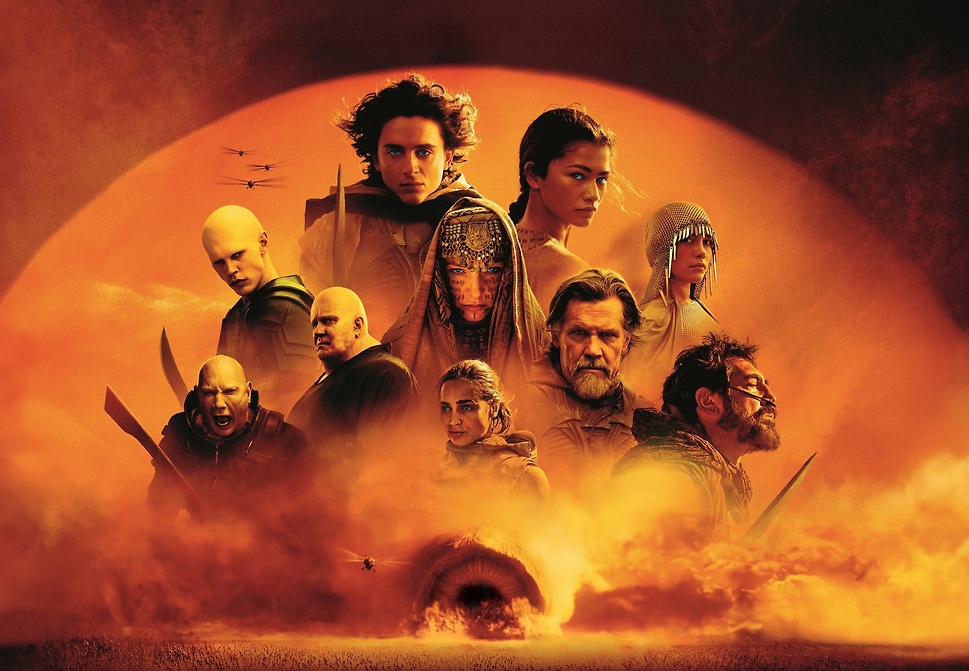
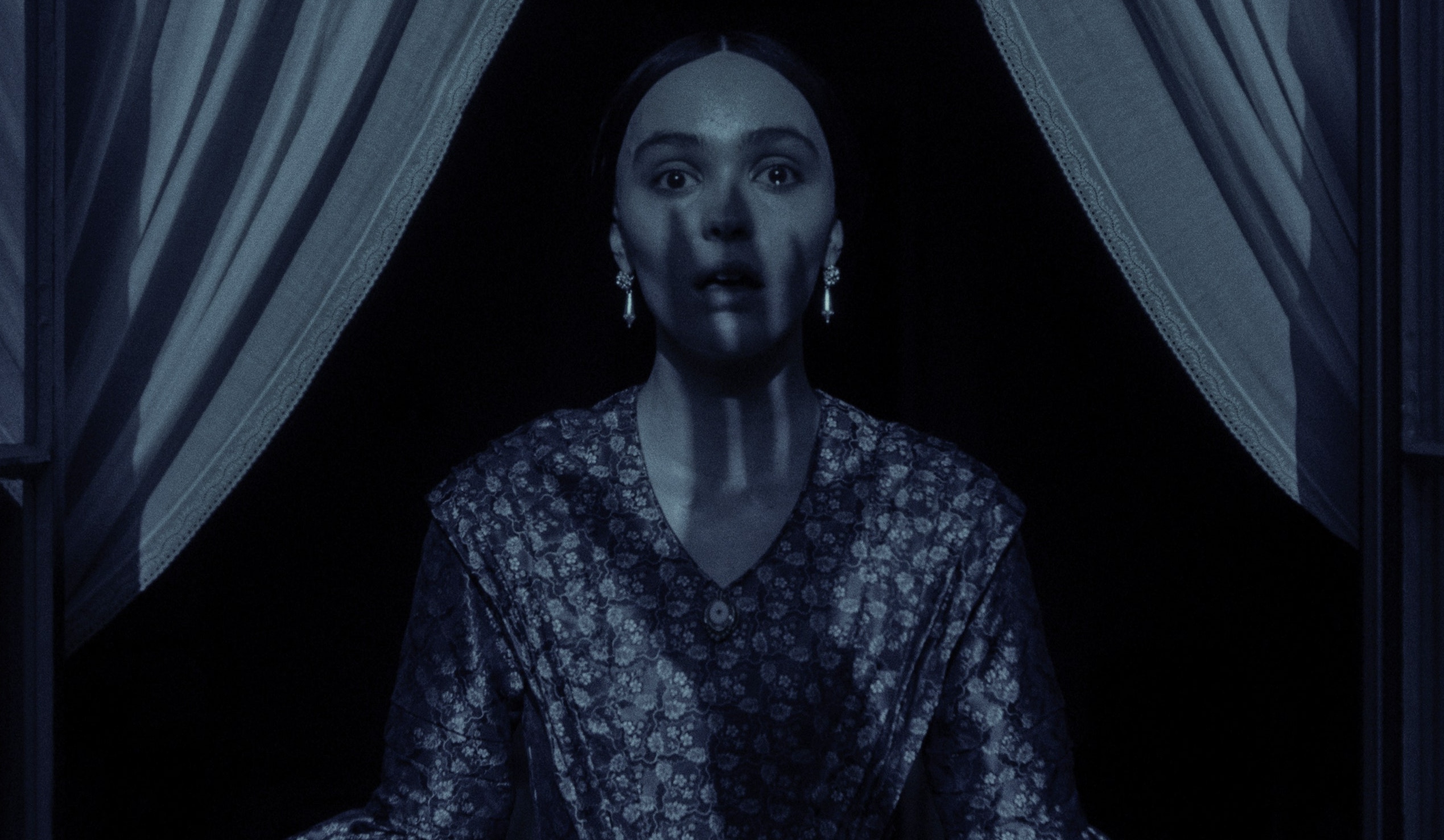

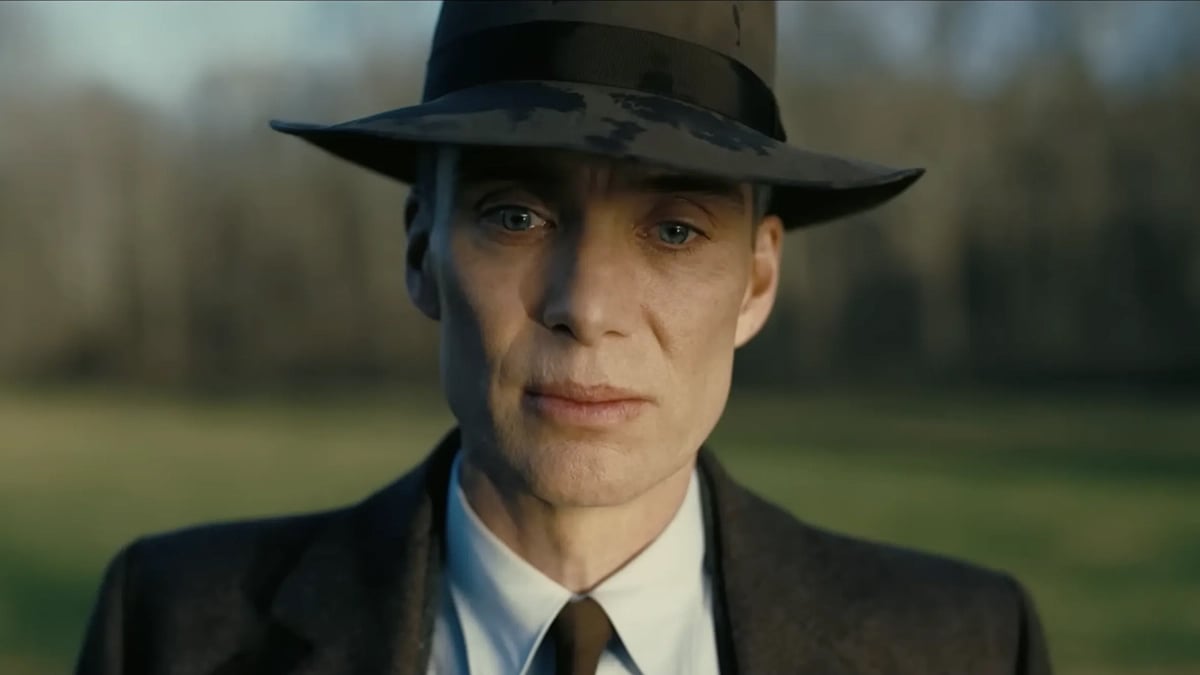


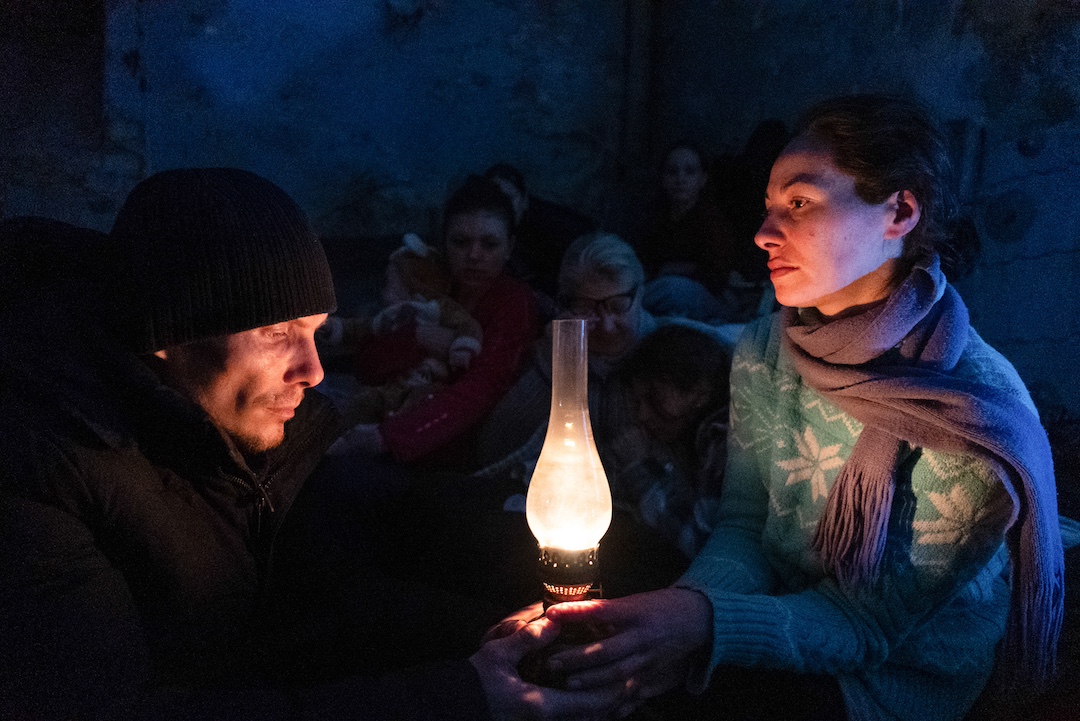

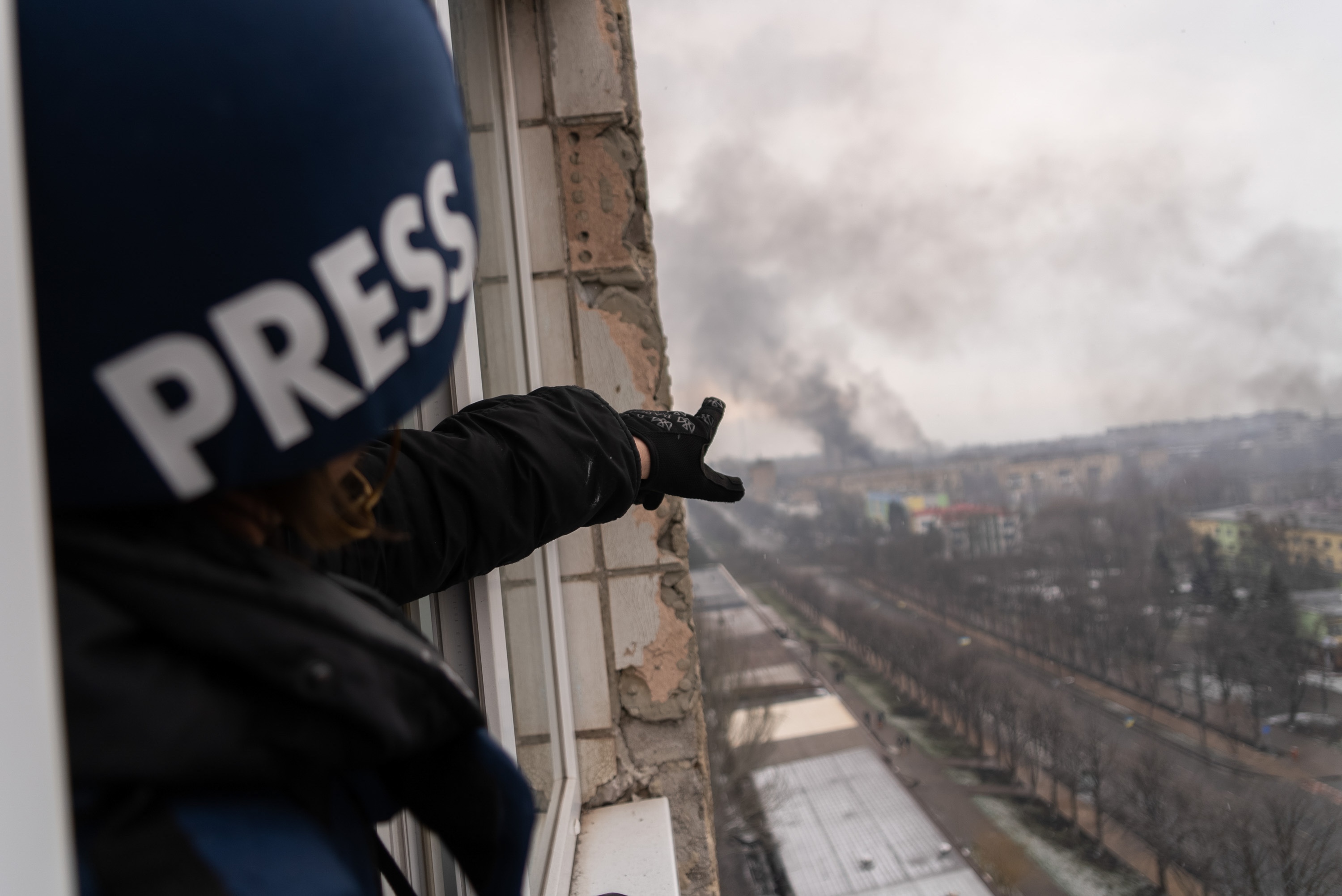


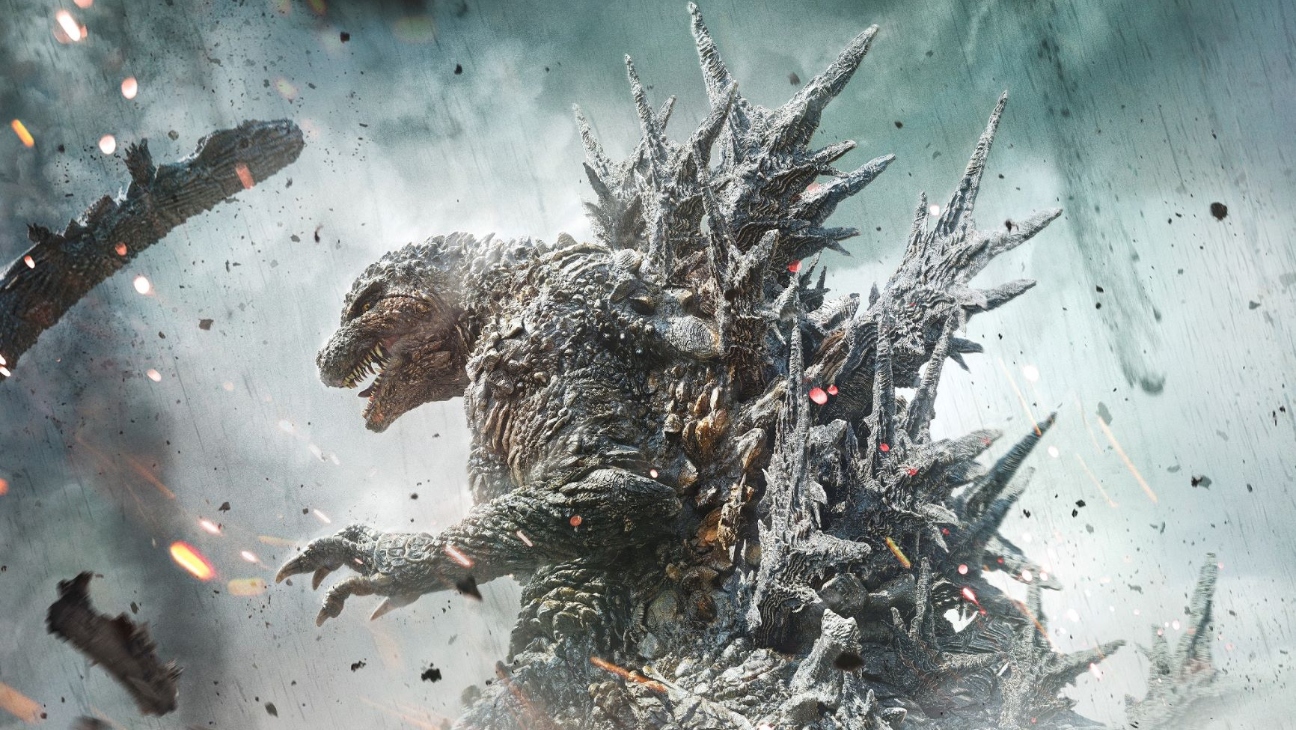


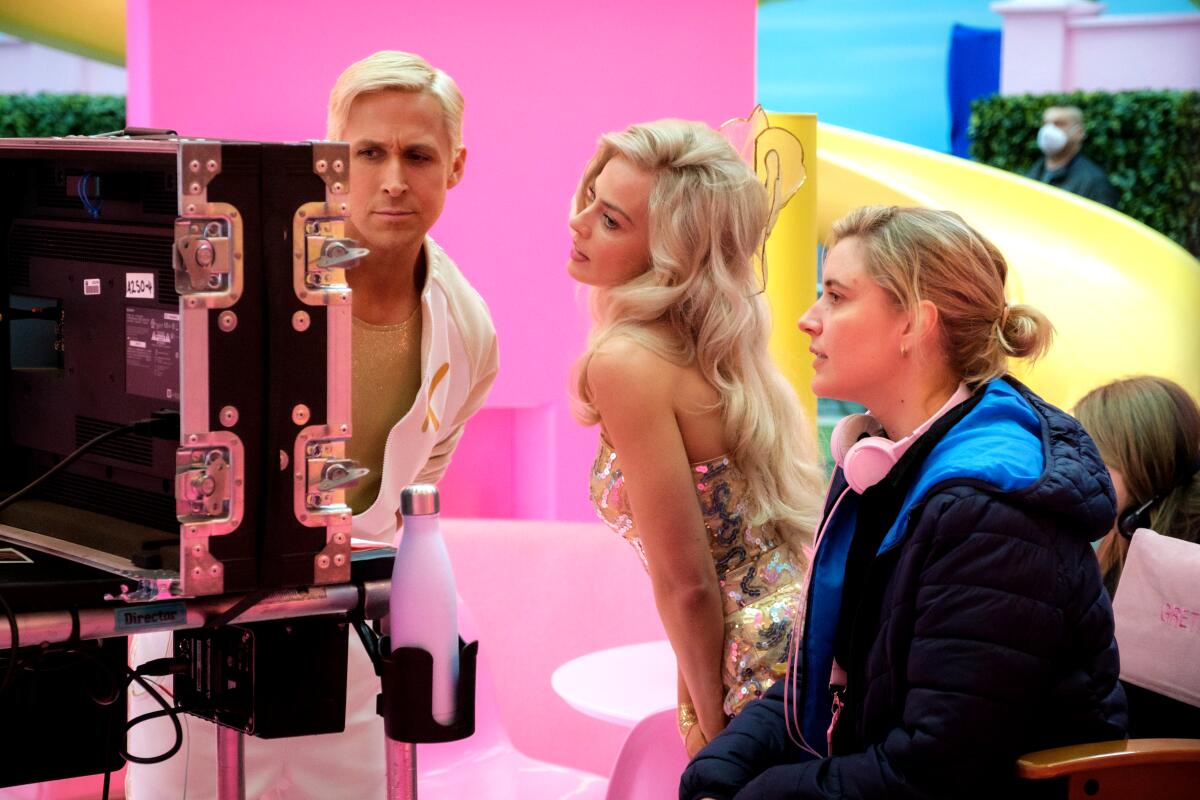

 DAVID DUNN