Author Archives: David Dunn

“THOR: THE DARK WORLD” Review (✫✫✫)

SOURCE: Walt Disney Studios Motion Pictures

Et tu, Loki?

Thor: The Dark World is another Thor movie, and how much you’re going to like it depends just on how you react to hearing that. I quite liked the first Thor, although the town scenes meandered a bit too much for my liking. Beyond that, it was a fun, standard superhero fanfare that watched and clapped its hands whenever Thor whacked something with his hammer. Thor: The Dark World has all of the elements that made the first Thor successful, just more of it.

After Loki’s (Tom Hiddleston) embarrassing defeat at the hands of the world’s mightiest heroes in The Avengers, Thor (Chris Hemsworth) brings him back to Asgard to stand trial against his father Odin (Anthony Hopkins). While this is going on, the ancient dark elf Malekith (Christopher Eccleston), who has spent centuries trapped in suspended animation, is suddenly set free and assembles his army to reclaim the Aether, a powerful artifact that can eat away and disintegrate entire worlds. Now with the fate of the nine realms in the balance, Thor needs to team up with Sif (Jaimie Alexander), the Warriors Three, and even Loki to defeat Malekith and free the universe from his madness.

Let’s get the obvious out of the way first: Malekith is a terrible villain. Don’t get me wrong, Eccleston is a fantastic actor, and he brings a sense of conviction and ruthlessness to his role unlike anything we’ve seen from him when he played the ninth doctor in BBC’s “Doctor Who” series. But the villain himself is completely flat and uninteresting. He has no personal stake in Thor or anybody else’s story. He’s just a giant, ugly-looking grey Yoda ripoff that has the typical “I WILL DESTROY THE UNIVERSE” shtick. He doesn’t have Obadiah Stane’s deceitful snide, the Red Skull’s malicious presence, or even Loki’s sickly narcissistic charm. No, he’s just your typical big baddie with zero personality or interest, and he inhabits the film like Marvel needed to fit the bill just so they could green light the production. In an age where supervillains have the potential to be the best or most memorable element in a superhero film, Malekith is just flimsy and forgettable. He offers nothing significant to set him apart from the rest of the Marvel crew.

Thankfully, Hiddleston offers more than enough personality and interest as Loki to make up for Malekith’s lackluster inclusion. One of the things about Hiddleston that constantly impresses me is how well he inhabits the cunning and madness of Loki whenever he’s in character. He has a jesting, flamboyant flair to him, yet a sinister undertone that’s always seething beneath like a snake’s venom through his teeth. Unlike Malekith, Loki has a grounded investment in the story, has personal ties and a history with the film’s hero, and plenty of deep layers that reveal themselves the more you pull back on them. There’s an incredibly interesting arc to his character, an almost Shakespearean tragedy that tells of a man infatuated with himself and his riches, but only inflicts himself the further he draws away from his family and friends. The dynamic that he shares with Hemsworth as his brother easily takes precedence as the most memorable moments from the movie. He could have a film entirely dedicated to himself and not lose one bit of interest or investment in it. He’s that good.

The rest of the film is your typical Asgardian action-adventure. Characters fly and fight each other in incredible visual spectacle, the costumes on both the Asgardians and the elves have an edge and detail to them that evokes the feel of ancient Roman garb and armor, and the set design of Asgard and its surrounding worlds continues to shine in spectacularly vivid detail, as if it’s an image ripped straight from our dreams as opposed to the frames on celluloid. The film’s director Alan Taylor demonstrates a keen eye on the design and visual appearance of Asgard and the nine realms, and so he should. He’s directed seven episodes from the highly-praised “Game of Thrones” television series, another show that had highly-stylistic violence and an acute sense of detail to its scenery and costumes. Thor: The Dark World is a fitting follow-up for him. Asgard continues to astound and amaze, the action is just as exciting and gripping, and Taylor continues to expand upon this infinite universe that Thor is constantly exploring.

So which film is better? Thor, or The Dark World? I can’t really say for certain. They both play to their strengths, yet also demonstrate ignorance to the flaws perpetrated by their plots. I guess for me, it depends on how much you want to see Thor’s character arc fleshed out versus watching Thor bash bad guy’s brains in with a magical metal hammer. I vote hammer. Thor: The Dark World is ambitious, gladiatorial-style fun that pits our super-powered fantasy heroes against each other and watches what chaos ensues. I halfway expect Thor to turn around and yell “Are you not entertained?!” to the audience after playing whack-an-elf with Malekith. I’d pay a ticket price just to see that on its own.

Tagged , , , , , ,

Full ‘Lion King’ Cast Announced

Haaaaaaaa-I-see-aaaaaaaa-a-Glover-a-Simbaaaaaaaaa.

That lead probably worked better in my head rather than typed out. But if The Mummy has showed us anything, it is that my lead is still not the worst thing that was written this year.

Regardless, Walt Disney recently released their full voice cast for The Lion King remake, directed by The Jungle Book’s Jon Favreau. Many of the actors are unsurprising, especially when names such as Donald Glover have been circling the project since day one of development. Others were merely rumored until Disney confirmed their involvement late last night.

See the whole cast list below:

SOURCE: Walt Disney Studios Motion Pictures

Simba (Donald Glover)
Nala (Beyonce Knowles-Carter)
Mufasa (James Earl Jones)
Scar (Chiwetel Ejiofor)
Sarabi (Alfre Woodward)
Zazu (John Oliver)
Rafiki (John Kani)
Pumbaa (Seth Rogan)
Timon (Billy Eichner)
Azizi (Eric Andre)
Shenzi (Florence Kasumba)
Kamari (Keegan-Michael Key)

Gotta say, solid cast. Rogan and Oliver are excellent choices in their respective comedic roles, while Beyonce (a.k.a. BAE!) is pitch-perfect as Nala. My favorite casting by far is James Earl Jones, who is reprising his role as Simba’s father Mufasa from the original animated feature. The Jungle Book also a great cast associated with it (Bill Murray, Ben Kingsley, Idris Elba), but The Lion King easily knocks theirs out of the park. I can’t wait to see how these actors do in their respective parts.

One cast member that I am hesitant with: Chiwetel Ejiofor as the film’s villain Scar. Now don’t get me wrong, I love Ejiofor as an actor, and I have no doubt he’ll be great in this role. Why in 12 Years A Slave he was the best part in it by far, and he was also great as a supporting role in films including The Martian and Doctor Strange. But earlier this year, Hugh Jackman was among those rumored to be in the running for Scar. That ended up being an April fool’s joke, but after I heard that I couldn’t picture anybody else in the role. Seriously, listen to Hugh Jackman’s voice the next time you rewatch him as Wolverine in any of the older X-Men films. Tell me you don’t hear a perfect Scar behind that grisly growl of his.

Either way, it looks like Disney is all-hands-on-deck for their Lion King remake. We’ll have to wait until 2019 to see how far the horizon goes.

– David Dunn

SOURFCE: Walt Disney Studios, Slate

Pulses of the Nation

CREDIT: David Goldman / AP

One year.

It’s been one year since America went from its last deadliest shooting to the next. That doesn’t just happen. Last year, 49 people were killed and 58 were injured at the Pulse nightclub in Orlando, Florida. This year it’s 58 people and 527 injured at the Las Vegas strip. When will it stop? When will we stop being satisfied with well-wishes and prayers and start taking action on these problems? When will enough be enough?

I learned how to shoot my first BB gun when I was 12 years old, my first rifle when I was 16. As someone who has grown up to value the rights our second amendment grants us, I appreciate the technique and the intricacies needed to not only handle a gun, but to also take care of it and keep it in a safe condition. While I was being trained, I was carefully instructed on how the gun always needed to be pointed down and kept on safety if you weren’t shooting it. Responsible gun owners know this and will treat their weapons as if it’s always ready to shoot to kill. One of my family members actually fired a gun for the first time in her life this past summer and started crying. When we asked her what was wrong, she said “To think that just like that… a life can end.”

I thought about what she said during this month’s horrible turn of events. Do we weigh the loss of life as much as we need to every time we pick up a gun? Do we respect the deadly power that it comes with? Or is it just a fleeting detail, hidden behind all of today’s controversies and current events?

I would be lying if I said I wasn’t stricken with grief in a time like this. What kind of human being wouldn’t be? We tell ourselves that what happened wasn’t preventable, that if a man wants to commit an act of violence, he would do it with or without a gun. That much is true. Our nation’s most horrific terrorist attack on September 11th, 2001 was done with a few box cutters and four plane hijackings. Before that, the worst terrorist attack was carried out by Timothy McVeigh in Oklahoma City, where he killed 168 people by parking a truck bomb in front of a federal building. Evil intentions aren’t disarmed when you take the bullets out of a gun. As Tyler Joseph observes on the Twenty One Pilots song “Heathens,” “Just because we check the guns at the door doesn’t mean our brains will change from hand grenades.”

Still, it’s foolish to ignore the mountain of evidence that America has become one of the deadliest nations in the world. How deadly? Since 1966, there have been at least 131 mass shootings in the United States. Almost half of them have occurred since 2006. Out of established nations in the world, the U.S. ranks 31st in gun violence. 3.85 per 100,000 citizens died due to gun violence last year alone. In the United Kingdom, that number is .07. The majority of the perpetrators in these shootings are white males, and most of their weapons were obtained legally. Stephen Paddock is only one man out of a tribe of monsters. After the traumatic attack in Las Vegas, police found a total of 23 guns in his living spaces. All of them were legal purchases.

So let’s put these facts into perspective. The amount of mass shootings in the United States are growing in both frequency and fatality. I repeat: mass shootings are happening more often in America and with more casualties. This is not an anti-gun advocate saying this. This is a proponent of gun rights saying this. We had our deadliest shooting last year with 49 dead. It barely took a year to dethrone it. What does that pattern spell for our nation’s future if we allow this to continue?

Yet, the scariest thing to me is not the ongoing threat of gun violence in the United States: it’s the silencing of it. After the Las Vegas shooting, you would think people would respond to this violence and put more careful regulations in place to monitor gun sales. They haven’t. It’s now been a month and congress has demonstrated no initiative in addressing this constant stream of gun violence in the states. Funding for gun violence in the Center of Disease Control has gone down by 96% since 1996, with only $100,000 allotted on its budget. And the Dickey Amendment, which continues to restrict research on gun violence statistics, remains active with no indication of being overturned. How can we even begin to discuss solutions to these issues if we aren’t educated or informed on the statistics regarding these shootings?

I’m not saying we should have a general ban on automatic weapons in the United States. I’m not saying that we shouldn’t either. Gun control is a very layered issue, and with any issue like it, we need to talk about them in-depth to find the right compromises that satisfy both right-wing conservatives and concerned Democrats. Doing nothing and remaining silent about it is irresponsible and disrespectful, especially to those families who lost loved ones in Las Vegas, Orlando, or in any of the other mass shootings. We have plenty to disagree about in our nation: healthcare, immigration, the economy. The well-being of our citizens should not be one of them.

A point observed to me earlier this week was that Paddock used bump-stock on his rifle during the attacks to turn it from a semi-automatic weapon to an automatic. A friend of mine suggested that congress should discuss banning bump stocks in the United States, considering that would be banning a gun part as opposed to a gun itself. Fine. Great. That’s a fantastic place to start the conversation, but let’s have a conversation. Continuing to bury it threatens greater and more devastating tragedies to happen in the future. Is that when we’re finally going to talk about the issue? When hundreds are dead and families are left grieving?

Do not let this issue get buried. If we do, we threaten to bury our own loved ones with it.

– David Dunn

Tagged , , , , ,

Zachary Levi cast as DC’s ‘Shazam!’

CREDIT: BossLogic

Zachary Levi is shazamming his way into theaters.

After a lengthy casting process where Warner Bros. auditioned several actors, “Chuck” and Thor actor Zachary Levi was announced this weekend as DC’s Shazam, starring in the titular role for his solo feature due after Jason Mamoa’s Aquaman in 2018. Levi took to Instagram to voice his excitement and to thank fans for their support.

“Honored and greatly humbled to be a part of the [DC Universe] by bringing the original Captain Marvel to life,” Levi wrote. “Now if you’ll excuse me, I’ll be in the gym for the rest of forever.”

This casting news has been long overdue. Former WWE wrestler Dwayne “The Rock” Johnson was cast as Shazam’s mortal enemy Black Adam way back in 2014. Three years later, Levi is finally cast in the central role. What happened? Did DC take a bathroom break while Zack Snyder was busy working on Justice League?

Regardless, this announcement is better late than never. While Johnson is reportedly starring in his own separate solo film as opposed to starring alongside Levi in Shazam, ultimately I feel this will give both actors a great chance to explore their characters and see how they further expand upon the DC Extended Universe. No word on who will star as Shazam’s 15-year-old alter ego Billy Batson yet. Presumably that news will break within the next few months and hopefully not years from now like Levi’s announcement was.

The film is being written by Henry Gayden (Earth To Echo) and Darren Lemke (Goosebumps, Turbo) and directed by David F. Sandberg (Lights Out). The film is scheduled for release in April 2019.

– David Dunn

SOURCE: The Hollywood Reporter, Deadline

“THOR” Review (✫✫✫)

SOURCE: Paramount Pictures

If he be worthy…

This is it. This is the make-it or break-it for the Marvel Cinematic Universe: the deal-breaker. Up until now, Marvel has had strong material to work with for its cinematic universe, with the combined powers of Robert Downey Jr.’s Iron Man and Edward Norton’s Hulk filling the comic-book shoes well so far. But now we’re going into uncharted territory with Norse mythology. How are you supposed to make Norse Gods and legends work well with science-fiction, technology, and secret spy organizations without making it feel silly or on-the-nose?

The answer is you don’t: you amalgamate it and integrate it into their shared science-fiction universe to make it feel fluid and believable. Whatever silly experience you’re expecting to get out of a movie called Thor, you’re safe to throw your doubts out of the window now. Thor is exciting, fun, and fast-paced, whizzing with energy and incredible action and effects. And most impressively, it is epic, much like the Norse legends themselves are. I was not expecting a movie about the Norse God of Thunder to throw me off my feet this much. But then again, I didn’t know what to expect with a movie called Thor to begin with. Perhaps that helped me further appreciate it in the long run.

In this adaptation of both the Marvel comic and the Norse legend, Thor tells the story of the brash and arrogant God of Thunder, played here by Chris Hemsworth, who made his debut as James Kirk’s father in 2009’s Star Trek reboot. In this iteration, Thor is not a superhero like your regular Marvel folk, but instead the prince of Asgard, a fantastical world far removed from time and space. His father Odin (Anthony Hopkins) is the king of Asgard, while the God of Mischief Loki (Tom Hiddleston) supports Thor as his brother.

One day, the Frost Giants of Jotunheim sneak their way into Asgard and kill a few soldiers in an act of aggression against the kingdom. After they are swiftly wiped out by Asgard’s security forces, Thor ventures into Jotunheim to declare war with the Frost Giants against his father’s wishes. After narrowly escaping Jotunheim with their lives intact, Odin strips Thor of his powers, takes away his hammer Mjolnir, and banishes him from Asgard as his punishment. Now trapped on Earth (or “Midgard” as he refers to it) without any way of getting back home, Thor has to find a way to regain his powers and once again become the God of Thunder that he was born to be.

My biggest concern going into this movie was how they were going to fit Norse mythology into a universe filled with Iron Men and Gamma-radiated monsters and make it feel believable. Out of all of Stan Lee’s notable creations, Thor is hands down the most plagiarized and the most preposterous. Nothing about him is interesting. A Norse God has superpowers and family issues? Please. Iron Man, the Hulk, and Spider-Man all have the same things, yet are infinitely more interesting because of the very personal problems they experience. Tony Stark and his ego and alcoholism. Bruce Banner and his anger issues. Peter Parker and his sense of guilt and responsibility. Many superheroes are popularized not just because of the powers they have or the costumes they wear, but because they have complex drama and personalities coupled with their action-filled comic book panels. Thor has always felt the least interesting or compelling, and that’s partially because of the wildly fantastical setting that he inhabits.

And yet, Thor works surprisingly well, mostly because of the convictions held by its writers and director. Screenwriters Ashley Miller and Zack Stenz, who also penned X-Men: First Class earlier this summer, demonstrates a clear understanding of Thor’s mythology and how it ties in to the nuance and appeal of the rest of the Marvel Cinematic Universe. Yes it’s technically a fantasy film, but it doesn’t feel that way. It feels like another superhero action romp where characters zip, zoom, and fly into each other as the screen explodes into an exciting, color-filled visual effects spectacle. Part of that is because the film smartly blurs the lines between fantasy and science-fiction, blending both of the genre’s characteristics to make the film flow into one believable narrative. As one character observes in the film, “Magic is just science we don’t understand yet.” That quote comes from author Arthur C. Clarke.

Yet the film works on a dramatic level as well, with Hemsworth and Hiddleston’s chemistry feeling like actors interacting in a stage play, not as two superheroes flying into their own battles. There’s a very distinctive reason why: it’s because they’re being directed by actor Kenneth Branagh, who has made a career for himself as the “Shakespeare guy” in Hollywood (seriously, look at his filmography. He’s helmed adaptations of Shakespeare’s Henry V, Much Ado About Nothing, and Hamlet, and that doesn’t even include his stage credits). Approaching Thor like he would with any Shakespearean drama, Branagh lets the actors loose and allows them to have fun with their roles, with them being equally over-the-top, boisterous, dramatic, accentuated, and theatrical all at once. Oh, these characters definitely would not be believable as human beings. But as Norse Gods of ancient legend? They’re impeccable.

Hemsworth and Hiddleston serve their roles enthusiastically, and they work so well together that they could be just as entertaining by themselves without the help of added effects. The action and the visuals are dazzling and spectacular, making you feel like you really are in Asgard, Jotunheim, or Midgard watching Thor whack every enemy marching towards him. And the music by Patrick Doyle is beautiful and uplifting, evoking a sense of grandeur and adventure that feels appropriate for an epic like this.

If there is any weakness to the film it is its second act, which takes the momentum the first act builds up to and brings it to a screeching halt. In the second act, Thor loses his powers and is navigating Earth like a clueless goof that acts like he suddenly forgot how to behave and interact like a normal human. My problem with these scenes is that at the beginning and end of the film, we’re experiencing the action in Asgard, and it overwhelms you with incredible visual scope and spectacle. Then we’re transported to Earth with Thor and suddenly everything becomes so… dull. The visuals take an obvious step back and it looks and feels more like a SyFy channel television movie than it does as a Marvel production. Thor is thrusted through comedic slapstick moments, making him look pretty stupid in the wake of all of the lightning-fueled action he was performing earlier. These scenes feel disjointed, jarring, and removed from the rest of the picture, almost as if it’s another movie we’re watching entirely. I have no problem with taking away Thor’s powers for the sake of added drama or conflict. I do mind the stylistic changes that do not blend well with the rest of the picture.

Still, Thor is loads of fun, and I’d be lying if I said I didn’t enjoy it. Marvel is starting to develop a knack for making their underappreciated heroes shine in the spotlight. Remember years ago when we thought Robert Downey Jr. was going to be a bust in Iron Man? Now we have Chris Hemsworth stepping into the shoes of Thor, and he’ll be joining up with the rest of the Avengers next year with a metal man, a giant green ogre, and a red-white-and-blue boy scout. Thor is the God of Thunder. He’ll fit right in.

Tagged , , , ,

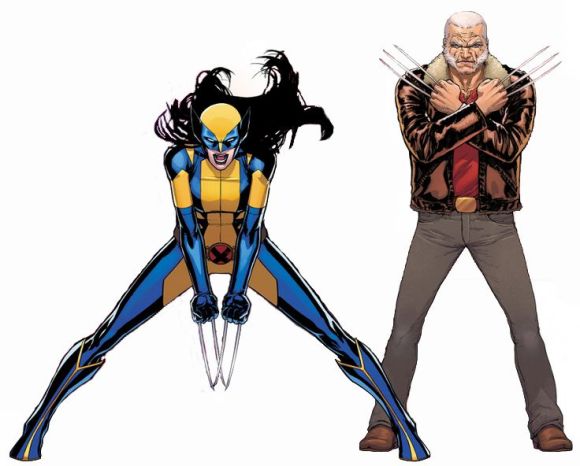
X-23 shreds her way back to the big screen

Wolverine’s claws are popping back out, except this time, it’ll be his daughter that is using them.

After the critical and financial success of Hugh Jackman’s last outing as Wolverine in Logan, director James Mangold confirmed that Laura, a.k.a. X-23 is set to be featured in an upcoming solo outing focusing on the character. In an interview with The Hollywood Reporter, Mangold said a script is reportedly in the works and the success of Patty Jenkins’ Wonder Woman served as inspiration to keep pursuing Laura’s story.

“That film only solidifies more for studios that there’s less to fear with a female protagonist,” Mangold said. “The more that keeps getting hit home, that ends up giving me more space turning around and going, ‘Well, here we are with a female protagonist. That’s incredible. And what are we going to do with her?’ And that’s where we are with that right now, dreaming.”

Lot to unpackage here, but let’s start with the implications of X-23 herself. Now I loved Logan. I feel it’s among the X-Men series’ best, and it’s definitely the best Wolverine film by far. However, due to the way Logan ends and what it means for the characters going forward, I feel that an X-23 film is not only unnecessary but also contradictory to Logan’s ending (see my piece published on MoviePilot for an in-depth explanation of why. Spoiler warnings ahead).

That being said, I am open to an X-23 movie, as no character’s story is truly over until the day they meet their maker. I’m hopeful for two things here. One, that Dafne Keen will reprise her role as X-23. It’s hard to say if the studio will do that or not, considering if they want to keep the character at her young age or wait until she’s older. Either way, she was a standout in Logan, and it would be exciting to see how she would handle the lead role in a solo outing.

SOURCE: Comic Book Resource


Second (and this is the most important part), GIVE HER THE FREAKING SUIT. The one disappointment with the X-Men franchise is that Hugh Jackman has never, not once, worn his iconic yellow and blue suit. There was a deleted scene that contained an Easter Egg in The Wolverine, and his Days of Future Past suit had yellow and blue tints in it. But no, neither of those actually count. Jackman never wore the yellow suit, and that is the one thing that fans such as myself have been pining for a long time.

As this is the case, Fox has a real opportunity to take Laura and give her the suit, paying homage to her father and his comic book appearance. If they don’t use this opportunity, I swear I will boycott every X-Men movie Fox puts out in the future. The New Mutants looks terrible anyway.

What do you guys think? Are you excited for an X-23 solo outing, or do you wish she would just live out a normal life out in Canada? Comment below, let me know.

– David Dunn

SOURCE: The Hollywood Reporter, Deadline

“THE INCREDIBLE HULK” Review (✫✫✫)

SOURCE: Universal Studios

Hulk smash puny critic! 

Bruce Banner is not a hero. One would be wrong for mistaking him as one. He is not proud or triumphant, he doesn’t wear a cape, and he doesn’t “save the day” as someone like Superman or Batman would. No, Bruce is a timid, shallow, and fearful young fellow, one that grips with a double-persona in him that’s angry, destructive, and vengeful all at once. His story is not one of happiness or hopefulness. It is in essence a tragedy, not unlike that of Dr. Jekyl and Mr. Hyde, except in this case Mr. Hyde is a giant, green raging monster that says “Hulk smash!” every time he punches something.

In this second go-around at adapting one of comic book’s most recognizable characters, The Incredible Hulk retells Banner’s transformation into Marvel’s not-so-jolly green giant, with Fight Club actor Edward Norton taking the part over from Erica Bana this time around. In this iteration of the Hulk, Bruce is on the run from General Thaddeus “Thunderbolt” Ross (William Hurt) and the U.S. military, who wants to take Banner’s gamma-radiated blood and weaponize it for their own uses. Desperate for a cure for his angry, green, muscle-infused transformation, Banner enlists in the help of his lover Betty (Liv Tyler) and Dr. Samuel Sterns (Tim Blake Nelson) to search for a cure, finally freeing himself from the monster within that is the incredible Hulk.

Since this is the second live-action adaptation of the Hulk in less than five years, it’s only fair to assume the comparison’s viewers are going to make from this version to Ang Lee’s Hulk released in 2003. As this is the case, you should know that I wasn’t a fan of that version. I did like a lot of things about it: the nuanced, quietly disturbed performances of Eric Bana and Nick Nolte, the creative comic book panel-esque transitions between shots, and the exploration of disturbed psychology developed from childhood trauma. There were a lot of creative elements in that film, and Lee deserves credit for at least branching out and trying new things in the superhero genre.

The key issue with that film was the pacing. The run time dragged out grudgingly, many shots didn’t pertain to what was going on in its scenes, and the movie just simply wasn’t fun. It was interesting for sure, but it lacked the suspense and excitement needed for a movie like Hulk to work. Observe, for instance, if Spider-Man or X-Men dragged out at the exasperating pace as Hulk did. Those movies would get boring pretty quickly, wouldn’t they?

I start my review by reliving the previous’ strengths and failures because The Incredible Hulk embodies the exact opposite of those. Hulk was an insightful, if meandering drama that had moments of superhero action in it. The Incredible Hulk is a full-blooded gamma-radiated monster-thriller that enthusiastically smashes through as much property damage as it can cause. It isn’t dramatic, insightful, or even significantly moving, and neither is it required to be. Part of a movie’s success is by playing to its strengths and weaknesses, and The Incredible Hulk demonstrates a sound understanding of both.

The crucial element to this is director Louis Leterrier, who helmed the first two Transporter movies before The Incredible Hulk. Framing it as an homage to the Bill Bixby 1978 television series, Leterrier plays the film’s elements to his advantage, pulling out thrills and excitement in the slightest of methods. Take, for instance, an early chase scene involving Banner, Ross, and a squad of military soldiers. Despite how it’s essentially another generic movie chase, the sequence was surprisingly thrilling, and that’s because of all of the elements in play here. The editing from Apocalypto’s John Wright was quick-paced and attentive, cutting briskly between each character’s perspective while at the same time not losing focus on the action. The music by Craig Armstrong is suspenseful and riveting, building up to a thematic opera that evokes the same sensation of those classic 1980’s monster movies. And the cinematography by Peter Menzies Jr. perfectly captures Bruce’s paranoia in this scene, with his biggest concern being not evading the soldiers or getting out unscathed, but rather not becoming so tense to the point where he transforms and causes harm to the people around him.

Leterrier uses these elements to turn seemingly simple moments into extraordinary ones, heightening tension and escalating excitement. Imagine what happens when Bruce breaks out into anger and goes Hulk destructive on everything in his path? While the smaller moments work surprisingly well, the film’s real value comes in its visual spectacle, where Hulk rams into soldiers, lifts and crushes cars, leaps and climbs tall structures, roars like a wild animal, and angrily smashes into as many objects as he can. In most action movies, the protagonist is usually in the more vulnerable position and has to face impossible odds stacked against him. I find it interesting that in this context the role is reversed and that Hulk’s enemies are the ones at a disadvantage against this giant, ruthless behemoth. It develops an interesting catharsis for the character, or at least, as much as it can possess in the midst of mindless superhero monster action violence.

The performances, while serviceable, are nothing spectacular enough to be memorable. The story is uninspired and feels stock compared to other action thrillers (seriously, read the script and tell me how much it reminds you of Jason Bourne). And while the final fight in the movie is climactic and exciting, the movie’s villain is just a mirror match to the Hulk and has no personal investment beyond that.

Still, how much you end up liking The Incredible Hulk depends on what you’re looking for in a Hulk movie to begin with. For me, I’m looking for action, and lots of it. The Incredible Hulk has that in spades. While not narratively impressive, The Incredible Hulk has enough dynamic action, awe-inspiring spectacle, and reckless destruction that makes you root for the big, angry green giant regardless. At the very least, let’s agree that this version of the Hulk is better than Ang Lee’s variation. I reiterate: the catchphrase is “Hulk Smash,” not “Hulk Talk You To Death.”

Tagged , , , , , ,

“BLADE RUNNER 2049” Review (✫✫✫)

SOURCE: Warner Bros. Pictures

Nothing has changed.

Blade Runner 2049 shares the same strength and weakness as its predecessor, and that is it’s complexion. Throughout both films, there is an exploration on the human condition and what it means to be considered alive. They both observe authoritarian societies and the effects it has on those lower on the food chain. They both contort ideas such as memory and artificial intelligence and how they affect our views of personal identity. Blade Runner finds its niche in its concepts, and so too does 2049 best represent itself under the original’s banner, even though it eventually does get drowned out beneath all of its complexity.

Taking place 30 years after the events of the first film, Blade Runner 2049 picks up in a dystopian future where not much has changed. Androids known as Replicants continue to try and blend in with the rest of society, bounty hunters known as Blade Runners continue to hunt them, and they both continue to live in the same dimly-lit, smoke-filled streets and rainy gallows. Except in this future, newer replicant models are allowed to coexist in human society, under the condition that they become Blade Runners themselves to hunt down and “retire” the older models.

LAPD officer K (Ryan Gosling) is one of those newer replicants, hunting down his brethren under the badge of a Blade Runner. While out on an assignment one day, he uncovers a trail leading him to former Blade Runner Rick Deckard (Harrison Ford), who made a discovery of his own years ago when he fled Los Angeles with his lover Rachel. As K and Deckard piece events together, they come to a conclusion that will shake the foundation of human and replicant kind for ages to come.

The best thing that can be said about Blade Runner 2049 is that it is an authentic sequel to its predecessor. In Hollywood, most sequels like to cash in on the success of their first entries without offering their own creative input for the provided material (See the Jurassic Park and Alien franchises). 2049 does not fall for this trend. Unlike Jurassic World and Alien: Covenant, which wallow in the clichés of their genres, Blade Runner 2049 fills its frames with its own life and ideas, expanding beyond the questions the original imposed and giving us a wider scope to think about. This makes sense, since screenwriter Hampton Fancher co-wrote the original Blade Runner in addition to its sequel. In 2049, he continues to elaborate on many of its familiar themes, from the existence of artificial intelligence to the barriers between different cultures. However, he also elaborates on many other concepts beyond it, such as internalized racism, love versus joy, and integrated species. This is a film that can easily stand on its own as an original feature, even though its building onto the first’s narrative does make it a stronger film overall.

And as this is a Blade Runner sequel, so too does it make sense that the visual effects would be just as mesmerizing as they were in the original. Even more than the original actually, especially because of how much technology has improved since 1982. The tall, ominous buildings. The sleek, dark vehicles. The bright holographic ads that light up the murky night sky. Everything oozes of detail and assimilation, and even the smaller examples of digital editing do not fail to astound us.

There is one computer construct in the movie portrayed by Ana de Armas, and all of her scenes stand out the most to me. In one of her first appearances, her holographic figure walks out into the rain for the first time, and even though the drops pass through her transparent figure, flickers still pixelate off of her body as if the droplets were falling onto flesh. There’s another scene where her body is mimicking the movements of another human being underlying her, and the way the two bodies moved together were so eerie and interesting that it reminded me of Alicia Vikander’s character Ava in 2015’s Ex Machina. But the image that sticks out the most to me is when an oversized pink variation of her bends down and speaks to her regular-sized lover on a bridge. Was this a metaphor for how small man’s ambition can be to that of an A.I.’s? In any case, cinematographer Roger Deakins captures every scene beautifully, encompassing both the depravity and desolation of a future ruined by mankind’s own misunderstandings.

Two performers that I have to give recognition to are Gosling and Sylvia Hoeks, who play the film’s protagonist and antagonist respectively. Gosling, whose appeal ranges depending on what role he’s given, offers a very thought-provoking performance here as a hero split between the two different worlds of man and machine. I’m not going to give much of his plot details away, but his arc challenges him, his identity, and the convictions he’s held closely to his heart for a long time now. Just to throw a separate example out there to compare the emotions that he’s displaying, imagine if you lived your whole life believing that God was real, only to find out that the Bible was written by only one author and none of the events depicted in it have ever happened. How would that change you? How would that shatter you as a person? Who would you be now after discovering that?

Gosling services that part brilliantly, and Hoeks serves as the antithesis: a woman who knows what she is, what the implications of her culture are and how they would change should one little piece be added to the constantly-shifting puzzle. In the film, I know she symbolizes at least one social idea for sure. I don’t know if she’s supposed to symbolize others beyond that one. All I know is that as a villain she’s cold, calculated, merciless, violent, and terrifying. I would not want to be in the same interrogation room with this woman.

My main concern with Blade Runner 2049 is how overstuffed it is. The film is two hours and 44 minutes long, and it has earned every bit of its screen time with all of the content that is in it. I’m just afraid that it may be too much. It’s been a week since I’ve seen the film now, and I’m still struggling to wrap my head around every character, every arc, every idea, every theme, every point iterated on, every plot twist the film takes you through, and all of the implications that the movie ends on. I know I liked what I saw in Blade Runner 2049. I just don’t know if I understand it. This is a film that definitely requires second viewings, even though the appreciation of it might not improve with each viewing.

Still, viewers such as myself asked for a faithful sequel in Blade Runner 2049. It undoubtedly fulfilled its promises, and it most impressively did it without the help of Phillip K. Dick’s characters. When I finished the original Blade Runner in 1982, I thought endlessly about the relationship between Deckard and the replicants, of the society that mankind created, and the many ways it mirrored our current world. I asked myself the same questions after watching 2049 as I did with the original Blade Runner. How sad is it that we’ve been given all this time to learn, to change, and to grow from where we were, and yet here we are 30 years later, making the same mistakes now as we did back then.

Tagged , , , , ,

Hollywood, the Sexual Predator

CREDIT: Alexander Koerner/Getty Images

Here’s how the next few weeks are going to go. Harvey Weinstein is going to offer both apologies and excuses, one on top of the other. Multiple Hollywood celebrities, commentators, and insiders are going to condemn him and his actions. Legal procedures will get carried out. Victims will offer testimonies, details, and depressingly vivid accounts of the experiences they went through. All through it all, people are going to say quote “This must never be allowed to happen again.” And then Hollywood will allow it to happen again, and then again, and then again, again and again.

This is not a pessimistic viewpoint. This is a fact. We live in a society where rape culture is in a constant flux of victim-blaming and lies, and through it all we lose focus and consistently fail to advocate for the victim. Weinstein’s history of sexual harassment extends well beyond three decades. His accusers consist of more than 32 women, including actresses Ashley Judd, Angelina Jolie, Gweneth Paltrow, Cara Delevigne, and Rose McGowan. How many people knew about this? How many complaints were filed to the Weinstein Company? How many times did they overlook those claims? His reputation was such an open-secret in the industry that “Family Guy” creator Seth MacFarlane even joked about it at the 2013 Academy Awards nominations announcement, saying to the best supporting actress nominees “You five ladies no longer have to pretend to be attracted to Harvey Weinstein.” The room was met with a mix of awkward laughs and uncomfortable silence.

Yet, the most bothersome thing about this is not Weinstein’s egregious behavior. It’s not how far back the allegations extend. It isn’t even the Weinstein Company’s reaction to throw everything under the rug. It’s how much of a recurring trend it is in Hollywood to not only excuse criminal behavior, but to also silence and deflect the accuser’s voices away from the conversation.

Observe, for instance, the following names: Woody Allen, Roman Polanski, and Casey Affleck. They all share three things in common with Weinstein. They’re all prominent Hollywood figures. They’re all Academy Award-winners. And they all have a history of sexual harassment.

Look at Allen, for instance. Winning four Oscars for Annie Hall, Hannah and Her Sisters, and Midnight in Paris, Allen is highly regarded by many Hollywood award ceremonies, yet his controversies follow him just as closely as his award statuettes. For one thing, during his relationship with actress Mia Farrow in 1992, Farrow discovered that Allen was having an affair with her adopted daughter Soon-Yi Previn, who at the latest would have been 19 years old at the time they started dating. The fact that Farrow’s teenage daughter started a relationship with her 53-year old boyfriend is disturbing all on its own, but only a few months later her seven year old daughter Dylan said she was molested by Allen while Farrow was out of the house. The case has been reviewed back and forth, with Dylan’s own siblings both defending and criticizing Dylan’s testimony. If it means anything, however, Allen’s biological son Ronan sympathizes with Dylan. The case was closed and Allen was released of all charges, going back into the moviemaking world to win more accolades.

Roman Polanski. Directed the movies Rosemary’s Baby, Macbeth, and Chinatown. Won an Oscar for directing The Pianist. Raped a 13-year old girl in 1977. Entered a plea bargain with the judge to serve his time under probation. Fled to France when he learned the judge was going to ignore the bargain and sentence him to 50 years in prison. You can think whatever you want about the events themselves. It doesn’t change the fact that when he won his best director Oscar in 2002, he was met with thunderous applause from everyone in the auditorium. He continues to work with many notable celebrity figures well into this day.

Casey Affleck. Won a Oscar last year for his performance in Manchester by the Sea. Was sued by producer Amanda White and cinematographer Magdalena Gorka for sexual harassment while he directed the 2010 mockumentary I’m Still Here. That controversy was so under-the-radar that it didn’t even hit mainstream conversation until Affleck’s win on Oscar night. I didn’t even find out about it until after I reported on it the day after.

As a film critic, I often find myself in a difficult position where my job is to critique the art and not the artist. Earlier this year, I received criticism for giving the superhero film Wonder Woman four stars out of four, mostly because of Gal Gadot’s position on the Israeli-Palestine conflict. The issue is that I wasn’t reviewing Gadot’s social views: I was reviewing her performance in a movie. And the fact of the matter is that she was outstanding in the picture, regardless of whatever real-life causes she advocated for.

The same thing goes for Weinstein. Here is a Hollywood media mogul responsible for the takeoff of so many successful careers and filmmakers. Quentin Taratino and Pulp Fiction. Lasse Halstromm and The Cider House Rules. Peter Jackson and The Lord of the Rings. Multiple accolades have been garnered from his productions. Six of them won the Academy Award for best picture. He has without a doubt had a huge impact on Hollywood culture and storytelling, and will continue to influence it years beyond this controversy as well as his own lifespan.

But here’s the thing: his successes does not excuse him from his cruelties. Yes, he has produced multiple masterpieces throughout his career. So what? He still sexually harassed, abused, and assaulted more than 30 women for three decades. Where is the accountability? Where are his consequences? He’s been exercising this reckless sexual ego since 1984. Why is it that 33 years later he’s suddenly facing the music for what he’s done? As viewers, we are required to suspend our personal cultural opinions in order to observe the film and review it on its own merits. But as human beings, how can we be responsible for no less than holding each other accountable for our actions?

SOURCE: Warner Bros. Pictures

I am reminded of a quote by the iconic Marilyn Monroe, who’s life creepily enough was adapted into the Weinstein production My Week With Marilyn. In her book My Story, she writes “In Hollywood, a girl’s virtue is much less important than her hair-do. You’re judged by how you look, not by what you are. Hollywood’s a place where they’ll pay you a thousand dollars for a kiss, and fifty cents for your soul. I know because I turned down the first offer often enough and held out for the fifty cents.” I read this somberly, imagining her 40 years after her death still singing “Happy Birthday” to the man in the chair. Only this time, it isn’t president John F. Kennedy sitting in it. It’s Harvey Weinstein, and Hollywood’s executives are all sitting right behind him.

– David Dunn

Tagged , , , , , ,

“ARRIVAL” Review (✫✫✫✫)

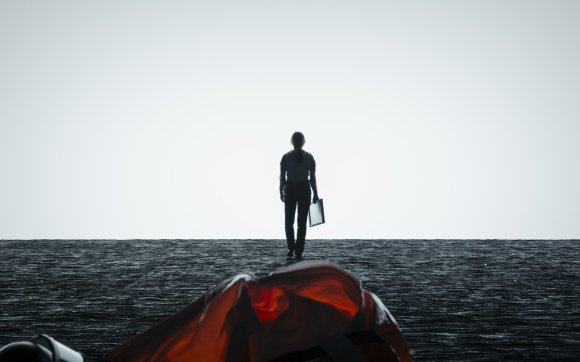
SOURCE: Paramount Pictures

Changing the things we can, and confronting the things we cannot.

There is a double meaning to the title Arrival, although you wouldn’t know it if you haven’t seen the film. On the surface, Arrival looks like another science-fiction thriller, unraveling an extraordinary world to an ordinary one, quietly observing how one reacts to the other. What the film turns into as it draws to its closing moments is a question of mortality, a search for purpose in life, and how we face the inevitable.

Confronting the life-long question of “Are we alone in the universe?”, Arrival starts on a bleak day where alien ships land on different continents all over the globe. Their landings seems to be without pattern or purpose, but whatever their motivations are, they don’t confront the human residents with hostility. Their ships just rest there, floating vertically over the horizon, awaiting brief interactions with the humans watching in awe below.

Enter Louise Banks (Amy Adams), an experienced linguist who is notable for her translation of thousands of languages. Louise is recruited alongside physicist Ian Donnelly (Jeremy Renner) by Colonel Webber (Forest Whitaker) to find out as much as they can about Earth’s new visitors, and if they establish communication, find out what they’re doing here. As Louise delves deeper into the aliens’ minds, she makes a discovery so shocking that will change the course of the human species forever.

One of the most unique elements of the film is how intelligently it approaches its strange premise. Director Denis Villeneuve, who directed the deeply unsettling films Prisoners and Sicario, approaches Arrival not as a typical science-fiction blockbuster, but instead as a quiet observation of the extraterrestrial, how human beings react to the unknown, and how we build bridges to learn foreign communication. I didn’t know what exactly to expect when going in to see Arrival, but after watching it I know one thing for certain: it is definitely not an action movie. A thriller, maybe. But the film doesn’t excite you as much as it educates you, and that immersion in knowledge is where the movie finds its niche.

Let me break down one of the movie’s key scenes to show you what I’m talking about. In one exchange between Webber and Louise, Webber tells her to ask the aliens one question: “What is your purpose here?” One sentence, five words. Seems simple enough. Yet when Louise breaks it down, she explains how complex the question actually is to those unfamiliar with the language, from differentiating between a question and a statement, to identifying the meaning behind “what”, to whether “your” is plural or singular, to even defining what the word “purpose” means. To us, these are simple concepts because we’ve been educated on these since we were children. But when communicating with someone or something else that has spent their entire lives learning another form of communication? How do you even begin to bridge that gap?

This film’s exploration into our interpretation of language is one that is only seldom observed in both mainstream and independent cinema alike. The fact that Villeneuve translated it into a science-fiction film is sheer brilliance on his part, as he draws comparisons between the humans and the aliens in the film to the real-life encounters we’ve shared with our own species in the past. Think, for instance, the first time the pilgrims landed in America and met Native Americans for the first time in the 1620’s. Spaceships and aliens aside, would their interactions really have been that different from what we’re seeing in the film?

This is a great film from Villeneuve: a thoughtful minimalist masterpiece that evokes the same eeriness and existentialism as Stanley Kubrick’s 2001: A Space Odyssey does. If there is any weakness, it is the drudging tone and pacing that follows the film everywhere it goes. We as moviegoers are so used to movies that are quick-paced, fast-tempoed and always watching something happen on-screen. It’s not usual to find a film as slow-moving, contemplative, and uneventful as this. In that lack of excitement, viewers might have a hard time immersing themselves into such a sublime picture when they’re so used to watching flashy effects and movement light up the screen.

And yet, I don’t fault Arrival for this choice of tone. Not one bit. That’s because the pacing isn’t a mistake on its part: it’s intentional. If real-life aliens ever did come to our planet, our first instinct wouldn’t be to shoot at them like a Michael Bay movie. No, we would try to establish communication with them and find out what exactly they want from us. We would be surprised, confused, scared, maybe intimidated all at once by their presence. In embodying our emotions in such a situation, Arrival’s slow pacing is validated due to the reality the film tries to encompass, not the sensationalism that every other Hollywood blockbuster contrives to.

Arrival is much more than standard science-fiction. I would classify it as science-philosophy. It poses questions, leaves its answers open to interpretation, and watches as two different species push past their cultural boundaries so they could try and understand each other. And after watching all of these events unfold on the screen, we are forced to ask ourselves the most important question of all: if our knowledge expanded beyond that of our human capabilities, would we use it to change what we previously couldn’t? The answer will shock you.

Tagged , , , ,