Tag Archives: Survival

“10 CLOVERFIELD LANE” Review (✫✫✫)

You’re not safe inside. You’re not safe outside either.

Whether you love him or hate him, you gotta admit one thing about J.J. Abrams: he knows how to sell a film.

Take 10 Cloverfield Lane as a testament to his skill. When the trailer dropped out of nowhere back in January, nobody knew anything about the plot, characters, or premise of this movie. That’s rare in today’s industry, especially with all of the casting and production announcements circulating daily on today’s news platforms. The fact that 10 Cloverfield Lane’s producers, director, writers, and actors were able to keep it a secret up until now is genuinely surprising, and I think it will pay off for them. It’s built up anticipation for the movie in ways no major blockbuster can do, and it will equally fulfill it’s audience in ways only this movie can supply.

In their excitement, some fans speculated that this movie is a sequel to Cloverfield, a risky yet innovative 2008 monster thriller also produced by Abrams. You would be wrong. 10 Cloverfield Lane is about as related to Cloverfield as Star Wars is related to Star Trek. Same genre, different execution. Much different.

This time around, 10 Cloverfield Lane ditches the nauseating shaky cam from Cloverfield and chooses instead to focus on a few survivors in a bomb shelter as opposed to a collapsing New York City. These survivors consist of Michelle (Mary Elizabeth Winstead), Emmett (John Gallagher Jr.), and Howard (John Goodman), the last of whom built the shelter in the first place. These three are forced into the shelter after a chemical attack cripples the U.S..

Or so Michelle is told.

Before coming to the shelter, Michelle got into a devastating car crash that left her injured and unconscious. She wakes up chained to a small bed on the floor next to Howard, who doesn’t quite seem all there if you know what I mean. Michelle is left with a difficult decision. Does she choose to trust her instincts, or this man that’s telling her that the world has ended?

The special thing about 10 Cloverfield Lane is that it focuses on its setting and performances to provide suspense instead of an overflow of visual effects. This is not an aesthetic Abrams is unfamiliar with. Ever since producing Cloverfield, he’s mostly understood that it is not spectacle that provides thrills, but rather, perspective. And whether it’s through the eyes of a producer, or through the lense of directing Mission Impossible III or Super 8, he’s always been a filmmaker that’s understood the value of perspective.

Take, for instance, Michelle’s perspective in the movie. Through her eyes, she’s just a prisoner who woke up in someone’s basement chained up to a mattress on the floor. The man who says he saved her life isn’t entirely a friendly guy. He’s old, unsettling, awkward, unreasonable, and demanding, running his bomb shelter like a warden runs a prison. Michelle is understandably terrified with him, but then she’s told that there’s been an attack on the world outside. Now what do you do? Do you try to escape and possibly face death, or do you believe this stranger and confide in the safety of his shelter?

Such psychological dilemmas is what compels the film forward, and director Dan Trachtenberg handles this cast skillfully in the small space that they are confined in. Winstead and Goodman bounce off of each other perfectly in the film, like a cat and mouse locked together in the same cage. Winstead, who’s played the survivors role in quite a few films (Live Free Or Die Hard, The Thing prequel), displays her trauma and distress here effectively without overacting or reaching for an emotion. Goodman is just downright chilling. He’s a man who seems like he has good intentions, but has a dark side to him that he demonstrates with disturbing normalcy. Their dynamic together felt eerily resemblant of Clarice Starling and Hannibal Lecter from 1991’s The Silence of the Lambs, which also featured a chilling relationship formed more out of necessity rather than comfort.

All of this builds to a well-paced, tense, and uncomfortable film driven almost entirely through performance, which is a very special thing in today’s industry. My biggest regret is that given the talent and the uniqueness involved with this production, it has to undercut its own success by throwing a CGI action spectacle in the third act of the film. While I won’t spoil it by saying what exactly happens, I will say it’s a severe shift in genre by the time the third act rolls around. We go from a tensely-wrought suspense-thriller to what is typically considered a Hollywood blockbuster. In making that transition, the film loses a part of its spirit and what makes it special from other thriller films.

“But it’s science-fiction,” you might argue with me. Yes, but did it need to be? Damien Chazelle made an incredible, heart-racing thriller in 2014’s Whiplash, and that was a film about the sharp rivalry of two passion-fueled musicians. Chazelle also worked on the script for 10 Cloverfield Lane, and I’m convinced that Howard’s uneasy presence originated from Chazelle’s ideas. The studio should have followed in his lead. The creepiest scenes in this movie remains to be from the tension between the characters and for what they can or can’t do to each other: not some supernatural force that threatens these people from outside the shelter. A quick rewrite of the ending and a few reshoots could have shifted this picture from a good movie to a great one.

All in all, 10 Cloverfield Lane is an effectively creepy film that you just wish would follow through on its intentions. The movie draws a line between fearing what is reality and what is fiction, and at looking at that line, isn’t it reality that seems more scary to us? That’s the thought that stuck with me when I left the theater. Well, bomb shelter.

Tagged , , , , , , , , , , , , , , , , , , , , , , , ,

“CLOVERFIELD” Review (✫✫✫)

Turn the camera on.

Why is it when we think of monster movies, we remember the larger-than-life creatures more easily than we do the main characters? For instance, we don’t remember Ann Darrow as easily as we remember King Kong. We don’t remember Hideto Ogata over Godzilla. It’s simpler to remember Frankenstein’s monster rather than Dr. Frankenstein himself. And it’s easy to see why too: the monsters are more interesting than their human co-stars are. We all know someone like Ann, Hideto, or Victor because they’re all human beings, just like us. King Kong, Godzilla, and Frankenstein’s monster have never existed and can never exist. Perhaps that’s why they fascinate us so much: because they play on fantasy rather than reality.

Let Cloverfield, then, be the monster movie to flip the genre on its head. Not only do we not know the name of the monster that is tearing apart New York City, but our focus is poured almost entirely into the human survivors. It’s just as well too. Cloverfield is one of those rare movies that blends entertainment with art, method with innovation, fantasy with reality.

So yes, if you happened to miss the highly talked-about teaser trailer before the movie’s release, Cloverfield is another monster movie. There’s a big baddie, there’s a city, and chaos and destruction ensues. That’s how far the similarities extend. The difference in its approach this time around lies is its execution. While King Kong and Godzilla are framed and staged on a massive scale as monsters clobber each other and throw each other into buildings and landmarks, Cloverfield instead focuses on a smaller scale as found footage off of a New York City regular’s camcorder. This New Yorker is named Rob (Michael Stahl-David), and he is accompanied by his friend Hud (T.J. Miller) and his lover Beth (Odette Annable), of whom he has a complicated past with. Great time to have relationship problems, isn’t it? In the middle of a destroyed New York City while a monster is obliterating everything in sight.

Here is a movie that succeeds more as an experiment than it does as a film. Cloverfield is a movie that takes genre conventions and throws them out the back window, taking any direction it wishes as it propels its humans through the chaos of a quickly collapsing New York City. The risks it takes both pays off for itself and then doesn’t. Most of the time, the movie’s intentions shine clear and have a strong payoff for its audience. At other times, it’s shaky and unstable, much like this movie’s handheld shooting method.

I’ll start with the positives. First of all, it’s different. That much is a compliment you don’t hear too much nowadays in corporate Hollywood, which pushes out sequels and remakes like the happy meals at McDonalds. Yes, Cloverfield’s overall premise has been used and reused, but it’s originality comes from its forced perspective towards these human characters. Here’s a question for you: out of all of the horror movies you’ve seen, how many characters have you been able to relate to on a personal level? No, I’m not talking about relating to them in the sense that they’re running away from giant monsters or psychotic axe murderers. Sure, we like to root for Ellen Riply in Alien or Sally in The Texas Chainsaw Massacre, but take them out of their own movies for a second. How many of them can you relate to as people rather than as movie characters?

Cloverfield is one of those rare movies that understands its characters before it understands its visual effects. This is in credit to both screenwriter Drew Godard and cinematographer Michael Bonvillain, who both understand that for this story to work, we need to relate to the characters as regular people rather than as survivors. Them taking the time to change their focus and build on exposition works. After a very brief introduction, we understand who these characters are, their motivations, and their relationships to each other. When they die, it’s genuinely heartbreaking. It means something when they’re killed, as opposed to being just another number for the monster’s kill count. Because of our investment into Rob, Beth, Hud and others, we’re scared for them and with them as they’re running through a violently torn apart New York City, desperately searching for the people they love most. By making that the focus, Cloverfield works not just as a horror or monster movie, but also as a tragedy. Such deepness is rare for disaster pictures nowadays, but Cloverfield pulls it off well, unlike most of today’s big-budget blockbusters.

Of course, with this “found-footage” method of shooting, it also raises some problems for this production. For one thing, there is not a single steady shot in the movie. The camera is always shaking back and forth, which didn’t bother me as much, but I know it will cause motion sickness for some unfortunate viewers. Another problem is that with this shaky-cam method of shooting, some of the action flow is incoherent, or sometimes, lost altogether in a tense disaster scene. Most of the time, Bonvillain handles the camera well enough to capture important moments, like to focus on the tail of the monster or on a character when they are wounded. Sometimes though, Bonvillain’s method of shooting exceeds his talent on the camera. For instance, what do you see during a chase scene? A lot of the camera rocking back and forth between the motion of a character’s legs as they’re trying to get away.

The sad part is that Bonvillain is almost powerless to do anything about this. Making this a steady shot would do nothing to convince us that this was really happening, considering the camera is being supposably held by a movie character that A) Doesn’t know how to shoot, and B) Is in the middle of a literal disaster. But then again, the shakiness doesn’t do any favors for our eyesight either. You’re screwed either way.

I’ve repeatedly went back and forth on this movie, bobbling the pros and cons around in my head, trying to decide on which element beats out the others. There’s good cases to both sides. We identify with our heroes as people rather than as movie characters, and that humanity makes their crusade all the more important to us. The sense of mystery, eeriness, and hopelessness plays out perfectly like an H.P. Lovecraft novel. The scares and the thrills are all there. That much the movie has going for it. On the opposite end, though, we have a shaky camera that makes people want to vomit, a few genre cliches that the movie can’t escape from, and a pathetic, lackluster ending that just suddenly cuts off and leaves an empty, unfulfilled feeling for its desperately hungry audience. I have no problem whether a character lives or dies for the sake of drama, but when you’re stuck not knowing, that’s just dangling a hook in front of your audience that they’re never going to reach.

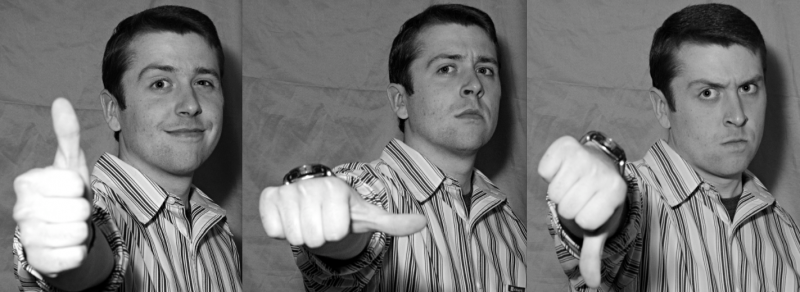
I’m giving the movie a thumbs up for one reason: it tried. It experimented. It did something different, and it partially worked out for itself. That’s a thumbs up not for the movie itself, but for the movie-making business.

Years ago, aspiring filmmakers dreamed of big visions in their heads. They experimented, they failed more times than they succeeded, but they took steps towards creating their visions, and their reward was seeing their beautiful, breathtaking ideas playing on the big screen. Filmmakers these days lack that creation or that aspiration, and they prefer piggybacking off of other people’s creations just for the big buck. The creators behind Cloverfield need to be honored not necessarily for their movie, but for their aspiration to create. They sought to make something all their own, and whether you like it or not, that’s exactly what they did.

Tagged , , , , , , , , , , , , , , , , , , , , , , , , , , , , ,

“DEADPOOL” Review (✫✫✫)

Featuring guest writer Wadey Wilson!!!

Hi! Deadpool here, just in time for the release of my own movie! I know this article says that some schmuck named “David” wrote this, but he won’t be joining us today because he’s kind of, well, dead. I’ll be writing in his place because I’m sooo much better at writing than he is! Winky face 😉

Sooooo, what do you need to know about my movie? Well I’m in it, I’m playing Ryan Reynolds, I’m after some douchebag that named himself after dish soap… oh, and there’s women. And nudity. And boobs. Lots and lots of boobs. And blood. Not boobs and blood together, because that would be very unsanitary. But what do I care?! This movie is great!

In your dreams, wise guy.

What the–?! Who are you and what are you doing in between my paragraphs???

I’m the guy you put a spork through his neck while eating a curled bean burrito.

GASP! It– it can’t be! DAVID DUNN???

Yep.

But— but how???

My words exist in my writing, Deadpunk. Even if you kill me, my opinions still exist through them.

Aw, dangit! But your opinion is wrong!

Believe me, Wade, your movie is all sorts of wrong. Did you even wait long enough to hear my opinion before you stabbed me? 

Hell yes, I did! You said you didn’t like my movie!

Wrong. I said I didn’t know if I liked your movie. But while rolling around in my grave, I finally decided that I actually did.  

That means you stabbed me for no reason. 

Killing me. 

Officially preventing me from getting my diploma in the fall. 

… do you take food stamps as an apology?

Idiot.

ARGH! IT’S YOUR OWN FAULT! HOW COULD YOU NOT KNOW IF YOU LIKED MY MOVIE OR NOT?!?!

To be fair, you gave me a good case for why your movie was both entertaining and macabre. On one hand, you’ve rightfully earned your title as “the merc with a mouth”, Wade. You’re funny, witty, self-aware, and you’re not afraid to make fun of yourself and the movies. You’re incredibly in-cheek, and that’s a rarity for superhero movies nowadays. 

Hehehe, well I don’t like to brag, buuuuuuuuut you’re kinda right.

But waitaminute. What didn’t you like about my movie then?

You’re equally as vulgar, violent, and idiotic as you are funny.

LIAR! LIAR LIAR, PANTS ON FIRE! Go ahead, name one example where I was any of those things. I’ll bet you can’t even name ONE.

You masturbated while staring intensely at a stuffed unicorn. 

Do you blame me? That stuffed unicorn was HAWT.

Unfortunately, I’m not sexually attracted to stuffed animals. So I’m just thinking you’re a sick person. 

Okay, okay sourpuss. Any other moments that wriled your panties up in a bunch?

Oh, plenty. You stuffed a hot car lighter into someone’s mouth and told them not to swallow. You made fun of a woman for her blindness and for being addicted to cocaine. You spelled out someone’s name using dead bodies and severed heads and limbs. I can go on and on. The violence, nudity, sex, and language are all the most deplorable elements of the picture, and you should be ashamed for having them in there.

Sorry broseph; I don’t know the definition of “ashamed,” and I also don’t own a dictionary. Just to clarify, you said you liked my movie, correct?

Yes, I did. 

What the ******* **** you ******-******* piece of ****. After all that ********, why the **** do you like my movie?

For one reason, and one reason alone. Every time I thought about your movie, I laughed. I smiled. I laughed again as I recalled moments where you made me grin from ear to ear. Deplorable and revolting as your movie is, it was equally unique and clever, and I would be lying if I said I didn’t have a good time watching it. That probably says more about me than about you, but there you have it. 

… I love you.

Oh God. 

So you, uh, doing anything later?

Get away from me. 

Don’t be scared, baby. I’m gentle.

That’s it, I’m out. I’m going to heaven to ask God’s forgiveness for liking your movie. Don’t worry, I’ll put in a good word for you. You’ll need it. 

Oh! Oh! Say hi for me when you see him! I sent a couple of buddies of mine his way during a runtime of 100 minutes! Or am I thinking of somebody else?

Tagged , , , , , , , , , , , , , , , , , , , , , , , , , , , , , , , , , , , , , , ,

“THE HATEFUL EIGHT” Review (✫✫✫)

Quentin Tarantino sticking up his bloodied middle finger. 

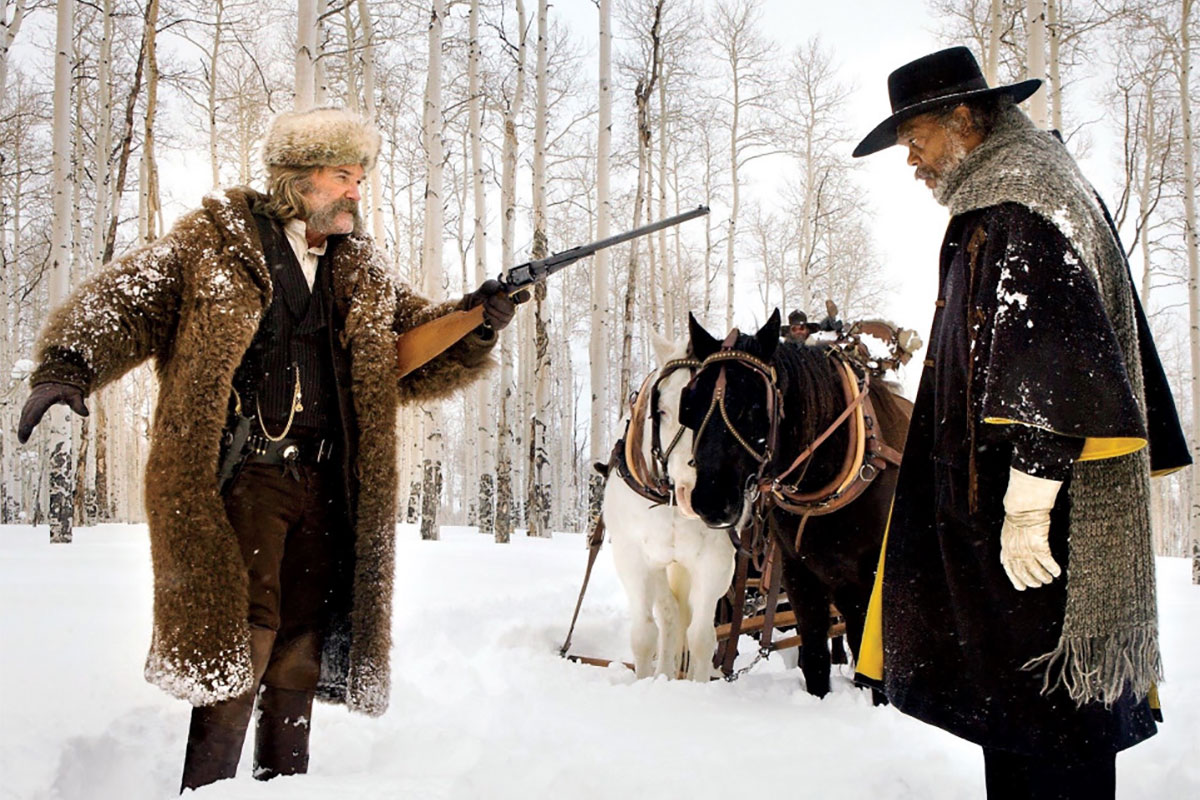
You could not have picked a better title for The Hateful Eight if you had a team of eight Quentin Tarantinos working on the script. It’s simple, straightforward, and to the point: you take away everything you need to know about it, just like Tarantino’s writing. There’s eight killers, they’re all hateful, and they blow each other up in bloody, gory Tarantino-esque fashion. Whether you’d like that sort of thing depends on if you like Tarantino. I do, and I had just as much a blast watching this movie as Tarantino did writing it.

As already mentioned, The Hateful Eight pits eight character’s wits and murderous instincts against each other, all with unique names that accurately reflect their histories and personalities. They include The Bounty Hunter (Samuel L. Jackson), the Hangman (Kurt Russell), the Sheriff (Walton Goggins), the Mexican (Demian Bichir), the Little Man (Tim Roth), the Cow Puncher (Michael Madsen), the Confederate (Bruce Dern), and the Prisoner (Jennifer Jason Leigh), the last of which the plot more or less focuses around. Trapped in a cabin during a harsh winter storm, these eight killers need to keep their wits intact so that they don’t start murdering each other.

This being a Tarantino movie, however, that obviously doesn’t work out very well.

For a lack of a better word, Quentin Tarantino went through hell to get this movie made. First, his script got leaked a few months before he was supposed to start production. Then, he decided to turn his screenplay into a book. When he finally resolved to make it a feature film, he received threats from police officers for participating in a Black Lives Matter protest in New York. Oh, and he had to battle being released in the same month as Star Wars: The Force Awakens. It has not been an easy year for Quentin Tarantino.

With that in mind, I appreciate that Tarantino is still able to make a quality film up to his standards, despite everything he’s been through this year. What is it you love most about Tarantino’s movies? The performances? The dialogue? The characters? The dark humor? The grit? The violence? The shock value? The Hateful Eight has all of that just as much as Inglorious Basterds, Django Unchained, and Pulp Fiction does. To classify it as a western or a comedy or a mystery doesn’t do it justice. Tarantino movies are almost a genre all their own.

That much is how The Hateful Eight is similar to its counterparts. The differences lie in its mystery element, in the characters trying to find the one person slowly, yet violently, killing off everyone else in the cabin. That being confined to eight people makes it difficult to keep this a mystery, as we already know more or less who the “good” guys are, if such a thing can exist in this movie. Regardless, it’s fun to hypothesize and figure the plot out, as there is the added element of mystery that gives The Hateful Eight a sense of intrigue over Tarantino’s other pictures.

As always, the make-it or break-it element comes down to Tarantino’s almost insane obsession with on-screen violence. At times, it gives it that extra shock value that is so ridiculous, you can’t help but laugh about it. At other times, it’s just sick, and it makes you want to throw up the more you think about it. That’s what happened with me and Django Unchained after watching too many nut shots for my own comfort. The Hateful Eight is just as guilty for being violent as Tarantino’s other motion pictures, and while it doesn’t get away with all of its violence (such as the uncomfortable nut shots), it’s still smart enough to survive beyond its onslaught of blood, guts, beatings, bruisings, stabbings, and gore that’s enough to fill up The Shining’s elevator lobby.

Do you like Quentin Tarantino? If the answer is yes, then you will want to see The Hateful Eight. If no, then you definitely don’t want to find yourself alone in this cabin with these eight murderous psychopaths.

Tagged , , , , , , , , , , , , , , , , , , , , , , , , , , , , , , , , , ,

“THE REVENANT” Review (✫✫✫✫)

The broken spirit, revived. 

The Revenant is one of the best films I’ve ever seen, and I never want to see it again.

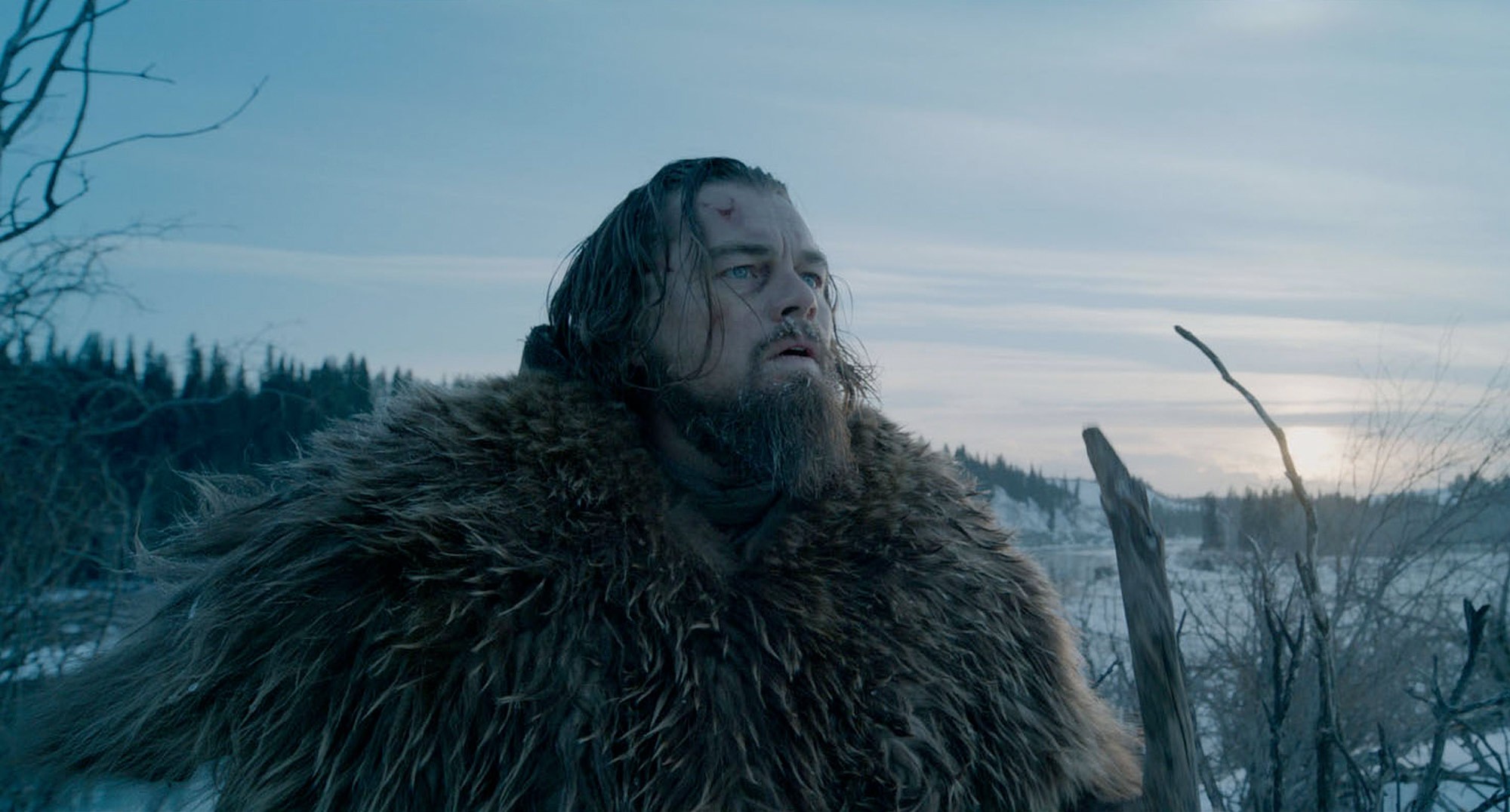
The film tells the story of Hugh Glass (Leonardo DiCaprio), an 1820’s frontiersman who got mauled by a bear, watched his son get murdered, was left for dead by his friends, and crawled 200 miles to society, seeking revenge against those who betrayed him. His story is not fictional. Author Michael Punke captured the true accounts of Glass’s life in the novel of the same name, which serves as the primary basis for this film.

At hearing about the film, you would never have guessed that this is a true story. Watching the film does little to suspend your disbelief, but as it continues on, you catch yourself slowly conforming to the film’s convictions, believing it more and more as it builds to its emotionally binding and captivating climax. Director Alejandro Gonzalez-Inarritu, who won an Oscar last year for directing Birdman, or The Unexpected Virtue of Ignorance, has made a film so vivid, eerie, and compelling that it could, and indeed does, pass itself off as reality.

Look at the huge risks Inarritu takes as a filmmaker. In Birdman, he took a great risk by filming in multiple long takes, editing them together to give off the illusion that Birdman was all filmed in one shot. Here, Inarritu takes another risk by shooting everything in natural light, using the sun to naturally fill the space that Inarritu captures on camera. The result allows us to experience The Revenant’s environments as they are, rather than being artificially constructed for the film’s sake.

Beyond its practical filming and staging, Inarritu is equally ambitious in his overarching vision for the film. To pick one word to describe The Revenant is impossible. It’s beautiful. Disturbing. Shocking. Heartbreaking. Violent. Gritty. Emotional. Meaningful. Spiritual. The scope of Inarritu’s filmmaking is simply incredible, peering into this man’s loneliness, desperation, paranoia, and drive as he struggles not only to survive, but to live beyond his son’s death.

Oh, this is a wonderfully shot film. In wide angles, cinematographer Emanuel Lubeski captures the sheer scope and vastness of his environments, capturing both the beauty and danger of nature around Glass. In tight shots, he perfectly encapsulates Glass’s struggle against life, nature, and himself as he fights to keep on living. DiCaprio lends just as much to Glass’ turmoil as Lubeski does. At times he doesn’t speak, but simply reacts to the environment around him, and his grief and angst is so believable that you buy his struggle not as a character or an actor, but as a real person.

All of these elements build to embody a perfect film. Yes. A perfect film. Why then, do I say that I never want to see it again? Because it captures its vision so perfectly that the filmmaking aspect no longer seems like an illusion. It doesn’t feel like you’re watching a movie: it feels like you’re watching life. You feel Glass’ nerves as he freezes in the cold, struggling breaths in between his slit throat and his stitches. You feel the pain stab through Glass as the bear’s claws tear into his flesh, literally ripping apart his fragile body as the blood replaces his decaying skin. And you feel Glass’ wrath and his pain, his internal torture where he knows that he will never be the same man again. The film is so convincing in its art that it becomes uncomfortable to watch. That’s what I mean when I say that I can’t see it again.

The film never tells us that it’s based on a true story in the opening and closing credits, and it doesn’t need to. We are already convinced of this through experiencing pure film.

Tagged , , , , , , , , , , , , , , , , , , , , , , , ,

“STAR WARS: THE FORCE AWAKENS” Review (✫✫✫✫)

SOURCE: Walt Disney Studios Motion Pictures

J.J. Abrams: the spiritual successor to George Lucas.

Star Wars: The Force Awakens is a sheer blast of nostalgia, meaningful and joyous from it’s opening scroll credits to when John William’s score crescendos in the last shot. We’ve seen an updated Star Wars for a modern audience before, and that was in the lopsided and disappointing prequel trilogy. Now we have The Force Awakens, and it’s so good that it’s eligible to compete with the original.

It’s 30 years after the events of Return of the Jedi. A new sith named Kylo Ren (Adam Driver) has arisen and is bent on taking over the galaxy. His pursuits lead him towards a troup of misfits who have become acquainted almost by sheer chance. A scavenger named Rey (Daisy Ridley) lived on the desolate planet of Jakku before she got entangled into this conflict. Finn (John Boyega) was a Stormtrooper who defected for reasons unbeknown to us. BB-8 is a spherical droid who wants to get away from Kylo Ren for reasons also unknown. What is known is that these three figures have something that Kylo Ren wants, and he won’t stop at nothing until he has fulfilled his destiny.

It’s hard to talk about this movie without giving away any spoilers. One thing I will say without giving too much away is that the story is exemplary, and is reminiscent of the adventure and intrigue that made Star Wars iconic in the first place. The screenplay, written by Toy Story 3 scribe Michael Ardnt and polished up by Star Trek director J.J. Abrams and The Empire Strikes Back writer Lawrence Kasdan, is an active synergy of the old and new, incorporating elements that we are familiar with while at the same time introducing original content all their own. This is not just a strong Star Wars story. It’s a strong story, period.

For me, that was my biggest concern going into the theater, and the biggest relief coming out of it. This was the first Star Wars movie where its key subjects would not be featured. Yes, we have references to the older films, but we don’t have Darth Vader. We don’t have Yoda. We don’t have Obi-Wan. We don’t have any of the key figures that linked the whole series together, minus R2 and C-3PO. How would the movie hold up on its own?

Very well, as it turns out, and the new cast members do a great job servicing their roles and making them memorable on their own. Driver is menacing and malicious as Kylo Ren, an egotistical and maniacal presence that reflects both the chilling imposition of Darth Vader and the deepening paranoia of Episode III’s Anakin Skywalker. Boyega is both humorous and likable as Finn, a reformed spirit who is just trying to find new meaning and purpose in his life. Out of the entire cast, however, I am most impressed with newcomer Daisy Ridley. This is the first time she has acted in a feature film, but you wouldn’t have been able to tell that based off of her performance. She is both heartbreaking and intriguing as Rey, equal parts fascinating, sympathetic, and compelling as this character whom is a complete mystery to us. Even by the end of the film, we still don’t understand everything about her, and that’s the point. We’re not supposed to understand her history; we’re supposed to understand her. Ridley did an amazing job at bringing this character to life, and out of anyone else from the cast, she made me most excited for her journey in the future installments.

Do I need to go into the film’s visual and sound effects? They were the groundbreaking features of the very first movies, and they’re stronger than ever in this motion picture. Part of that is because Abrams takes a note out of George Lucas’ old playbook, reverting to practical effects and detailed costuming to bring authenticity to this universe. He still uses CGI, but he doesn’t rely on it. He only uses it when he absolutely has to, when X-wings are firing at TIE Fighters or when lightsabers are clashing against each other. Everything else is created through elaborate art direction and set design, while the CGI is used to compliment the visuals rather than serve as them. The result is the most visually authentic out of any of the films yet.

I have one gripe, and one gripe alone, and that is that there are plot elements that eerily mimic the storyline of one of the original films. I won’t spoil it by saying which one. I will say that even in the face of that criticism, The Force Awakens still manages to make itself unique and special in a series that is already unique and special by itself. We said goodbye to this universe a long time ago. Rejoice as we are once again reunited with the galaxy from far, far away.

Tagged , , , , , , , , , , , , , , , , , , , , , , , , , , , , , , , , , , , , , , , , , , , , , , , , , , ,

“STAR WARS: RETURN OF THE JEDI” Review (✫✫✫1/2)

Balance to the force, there is at last.

This is it, the moment that everything has been building up to: the conclusion of George Lucas’ Star Wars trilogy. Just like the last few movies, Return of the Jedi is a strong sci-fi feature that focuses on its character’s development just as much as it does on its mythology and visual effects. I’ve grown fond of Star Wars and its sequel The Empire Strikes Back, and Return of the Jedi is no different. The only disappointment is that it has to end.

Taking place after The Empire Strikes Back when Han Solo (Harrison Ford) is frozen in carbonite and Darth Vader (James Earl Jones) reveals he is Luke’s (Mark Hamill) father, Return of the Jedi sees our heroes as the Galactic Rebellion comes to its most crucial moment. As the Empire works to rebuild its infamous Death Star and the rebellion works to counterattack the Empire, both sides mount up their efforts as they have one last chance to defeat their enemies, either freeing or enslaving the galaxy for all eternity.

Out of any of the other Star Wars movies, Return of the Jedi is the most exhilarating, an exciting action romp that contains rebels and stormtroopers shooting at each other, chase sequences through forests, and lightsaber duels that are arguably the best out of the series. We’ve witnessed over and over again how visually ambitious the Star Wars saga is. Here is another demonstration of how groundbreaking the Star Wars movies really are.

Take the film’s climax as an example. As the film gains momentum, we switch around to multiple scenes at once and the stakes that characters are faced with in the heat of the moment. We switch to an epic space battle where rebellion cruisers and imperial spacecrafts are firing and flying at each other all at once. We switch to a ground scene where rebels are breaking into an imperial base before they are suddenly captured and fired upon. We switch to a dark room, where two jedi are staring tensely at each other, waiting for the other to make the first move against them.

This is something all of the Star Wars movies handle well, which is perspective. We have our main conflict between Luke and Darth Vader, certainly, but they’re not the only ones in the scope here. We also have Han and Leia’s romance, 3PO’s humorous cowardice, R2’s curious sense of adventure, and Chewbacca’s loyalty and brutishness. We have a comprehensive understanding of all of these characters, their motivations and aspirations, and we sympathize with them when they’re in the midst of tragedy. It’s rare to have this much character diversity and not have it fleet in its focus, but Return of the Jedi succeeds in being emotionally balanced and meaningful. If The Empire Strikes Back is the buildup, Return of the Jedi is the payoff.

There are a few elements that don’t work as well with this picture. The beginning sequence, for instance, ran a little longer than it should have, and could have been edited down to about ten minutes as opposed to the 25 minutes it took up. On the opposite end, the final battle, while thrilling and climactic, was equally too long and took up the better half of the picture. The introduction of some teddy bear-sized aliens called Ewoks definitely did not help the picture either. These squatty little freaks speak in such incomprehensible and annoying sounds that they make Chewbacca look like he speaks English. The fact that these midget-sized creatures had a fight scene was almost laughable to me.

But the film’s flaws are miniscule compared to it’s sheer and massive successes. Yes, the runtime was too long, but it at least kept me interested throughout most of it. The action was engaging, the chemistry of the cast was genuine, and George Lucas ultimately gave a fitting conclusion to one of cinema’s most cherished trilogies. We can forgive him for the Ewoks.

Tagged , , , , , , , , , , , , , , , , , , , , , , , , , , , , , , , , , , , , , , ,

“STAR WARS: THE EMPIRE STRIKES BACK” Review (✫✫✫✫)

The Galactic rebellion intensifies.

How do you improve upon perfection? The second installment in the Star Wars series, The Empire Strikes Back, answers this question with profound confidence, wiping away any doubt with the swift of a lightsaber and the influence of the force. It’s hard to imagine that at one point, creator George Lucas doubted the impact his series would hold. And now here stands The Empire Strikes Back, not only every bit as strong as its predecessor, but also cementing its influence on cinema forever.

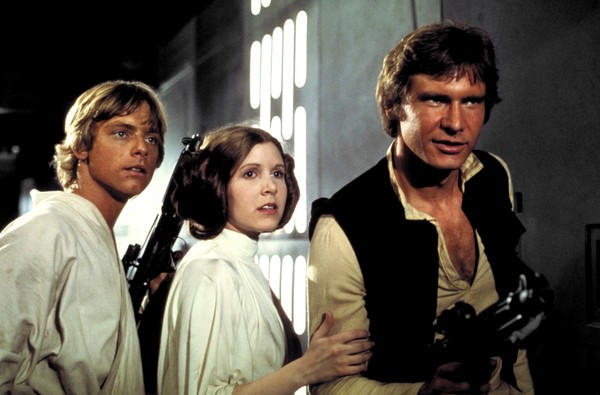
Taking place a few years after the events of Star Wars, The Empire Strikes Back follows its core characters as they continue the intensified conflict against the empire. Darth Vader (James Earl Jones) is viciously in pursuit after Luke Skywalker (Mark Hamill). Han Solo (Harrison Ford) has a debt he desperately needs to pay off from a criminal overlord. Princess Leia (Carrie Fisher) has a war she’s still trying to fight. And while all of this is going on, Luke receives a message from his long-deceased friend, Ben Kenobi (Alec Guinness), telling him to go to the Dagobah system to train with the only Jedi master left in existence. Now all on separate paths towards their destinies, these rebels and friends must complete their own journeys as they continue to fight the empire and save the galaxy from its evil clutches.

After the massive success of Star Wars, you’d wonder how on Earth George Lucas would be able to provide a follow up to his science-fiction saga. Yes, he had created these wonderful characters, but character appeal can only last for so long. You have to give them something to do to test the strength of their resolve and the changes that they go through. For the sequel to work, Lucas needed to not only reproduce his memorable heroes: he needed a story just as compelling to allow them to grow and evolve.

Thankfully, Lucas delivers just that alongside director Irvin Kershner and screenwriters Leigh Brackett and Lawrence Kasdan. One improvement that The Empire Strikes Back has upon its predecessor is in the scope of its storytelling; in the stakes that it sets up and in the challenges it pits against its characters. That’s perhaps the most noticeable way in how this movie excels, is in its buildup and anticipation.

Take, for instance, the dynamic that pits Luke Skywalker against Darth Vader. As the movie builds, you quickly realize how similar Luke and Vader are to each other, and how dangerous of a path Luke is on if he isn’t careful. Luke is training to become a jedi. So was Vader, at one point. Luke is very strong in the force. So is Vader. Luke wants to get powerful fast so he can protect his friends. So did Vader, before he turned to the dark side. The parallels this movie draws on its protagonist and antagonist are very strong, and Kershner is effective in highlighting the conflict going on inside of Luke. It shows that if Luke isn’t careful, the greatest thing he will lose is not his friends, but his soul.

The other characters are just as great as they were the first time we became acquainted with them. Han Solo is still the smug, over-confident rebel, Leia is still the stubborn and headstrong leader that gives a good name to female protagonists. Darth Vader, however, is just as imposing and fearful as he was when we first met him. I would argue even more so, given more of the history we learn about him in this movie. When listening to him, I had forgotten how pivotal James Earl Jones was in his character conception, how his voice lends so much to his performance and his agony. It isn’t just the deepness of Jones’ voice that perfectly encapsulates Darth Vader: it’s in the sincerity of his words, how he says some lines with intensity and quietly utters others in softness. In the first movie, we got a great introduction to Darth Vader as a villain. Here, we’re beginning to understand him as a character, and Jones continues to be pivotal as that comprehension continues to be constructed.

What of the technical elements? Read my first review. You know what I think of its technical elements. The landscapes are vast and barren, contributing to a deep sense of loneliness and vulnerability. The action is exciting and suspenseful, teaming our heroes up against near impossible tasks, then having them find solutions in the most creative and dynamic ways possible. John Williams’ score doesn’t even need any elaboration. Can’t you remember the emotions you felt the first time you saw the words “Star Wars” on the screen and heard the horns blasting proudly in harmony?

This movie is just as strong as the first film was in its production value. Yet, production value means nothing without a strong arc for our characters to go through, and The Empire Strikes Back has that in spades. On the surface, it’s another sci-fi action blockbuster not too dissimilar to its first entry. In deeper insight, it’s a character conflict on how these heroes and villains react to stakes rising and how similar they are in their struggle and in their pain.

There are other characters and story elements that I would like to talk about, but doing so would cheat you of the experience and take away the enjoyment of seeing it for yourself. Star Wars was a masterpiece. The Empire Strikes Back, even more so.

Tagged , , , , , , , , , , , , , , , , , , , , , , , , , , , , , , , , , , , , , , , , , , , ,

“STAR WARS” Review (✫✫✫✫)

The force is strong with George Lucas.

What is your favorite piece of science fiction of all time? Nine times out of ten, most people’s answer will be Star Wars. Not Star Trek. Not Terminator. Not Alien, or Blade Runner, or Metropolis, or 2001: A Space Odyssey. It’s always Star Wars. Why is that?

I think it’s because, unlike Gene Roddenberry, James Cameron, Ridley Scott, Fritz Lang, and yes, even the great Stanley Kubrick, George Lucas succeeded in making characters that were not only believable, but loveable. We didn’t just accept them. We embraced them as we found a piece of ourselves in each of them. If I bring up the name David Bowman, many of you might ask “Who?” If I mention Nyota Uhura, most of you would stare at me in puzzlement. But if I mention the letters and numbers of C-3PO and R2-D2, your ears would most likely perk up in excitement as you realize I’m talking about Star Wars.

That’s what happened to me in my small living room in Brownsville, Texas when I was just a little boy. When the opening credits and theme song for Star Wars opened up, my attention was immediately caught. When the vast imperial fighter boarded the small rebel ship and the tall figure of Darth Vader (James Earl Jones) entered the deck, I stared at the screen in bewilderment and amazement. But when those two geeky droids entered the frame, as R2 slid around beeping and 3PO clumsily blundered about, I knew I had found something special, as we all did when Star Wars hit the theaters in 1977.

The droids escape the rebel ship and soon land on the dusty planet of Tatooine, where they are soon captured and sold to a small plantation family outside of the city. It is here where we meet our hero Luke Skywalker (Mark Hamill), and we watch as he grows from being a desert farmer to a jedi warrior.

After spending years apart from this picture, I wondered if its appeal would still hold up to today’s standards. Yes, I had grown up with the characters, but that was when I was a child. I had grown away from many things as I grew into adulthood. Would I grow away from Star Wars too?

The answer is no, I didn’t, and I don’t think anyone can grow away from Star Wars. Star Wars appeals to a very specific part of the moviegoing experience: imagination. Yes, plenty of science-fiction films existed prior to the release of Star Wars, but none left the impact on the genre that Star Wars did. And every time I view Star Wars, watching as the droids beep and the aliens groan and the stormtroopers march, I ask what was it that this movie had that all of the others didn’t? My answer is the same every time: George Lucas.

From the writing to the visual design, George Lucas was heavily involved with the film’s concept and creation. How could Lucas come up with such creative and dynamic characters? From the droids to the humans, every character is completely fascinating and appealing, reaching a deep part of our mind from when we were excited at those swashbuckling serials we read when we were kids. It’s almost childlike in its appeal, and its heroes and villains alike are people we learn to root for not because we are asked to as viewers, but because we want to as fans.

Luke is the well-intentioned hero of the story, the knight in shining armor so to speak that is looking for his own adventure out there, all while trying to help anyone he can along the way. 3PO and R2 are the Abbott and Costello of robots here, and provide some of the more comedic moments of the picture without trying too hard or seeming exaggerated. Then there’s Darth Vader, whose visual scope and deep, imposing voice sets a new standard of villainy altogether. James Earl Jones wasn’t a relatively popular actor before Star Wars’ release. Yet, when Star Wars hit the theater, Jones’ personification of the character summoned such a powerful sense of intimidation for Darth Vader that it emboldened his status as a movie villain forever.

In retrospect, these characters don’t do anything in Star Wars that other characters haven’t done in other movies before. A princess is captured, a dashing hero (or two) comes in to save her, a climactic duel builds between its two leads, and somewhere, in one place or another, an explosion happens.

Doesn’t that sound like something you’ve seen before? Indeed, in most classic westerns and swashbuckling pictures, this was the template for your typical motion picture. What places Star Wars above the standard is its characters, in their funny, witty remarks, their moments of lighthearted comedy, and their deepened sense of adventure that survives past the stars and beyond. Yes, the cast gets credit for servicing their characters well, but not as much credit as the man who created the characters.

The other technical elements of the motion picture are astounding and contribute to the overall vision of this science-fiction fantasy. The visual effects were groundbreaking for its time, its elaborate art direction, set design, costuming and make up creating this authentic and aged environment that makes it feel like an age long lost. The technology and the weapons they use make for some of the most exciting action sequences, with one light saber battle between two jedi in the movie serving as one of its high points. And the musical composition by John Williams is simply beautiful, with the horns and the strings switching from moments of ease and reflection to moments of excitement and anticipation. Williams demonstrated his mastery of handling different aesthetics from his Academy Award-winning score for Jaws. Here is another film where he arguably contributed just as much to the film as its creator did.

But a film can be technically well made and fail on the whole. What makes Lucas’ work stand out is, once again, his characters. We share the young farmer’s dreams as he wants to travel to different worlds and become a jedi. We share the droid’s frustration at each other as their situation quickly crumbles into shambles, and we share the rebel’s fear and gloom as the shadowy figure of Darth Vader approaches them. This is a film that is strong in both production and concept, as it makes us deeply care for the characters that exist from a long time ago in a galaxy far, far away.

Tagged , , , , , , , , , , , , , , , , , , , , , , , , , , , , , , , , , , , , , , ,

“SPOTLIGHT” Review (✫✫✫✫)

“Shine a light, and let the whole world see.”

In the Boston Globe story on the 1990 Church abuse scandal, the Spotlight team reported that there were over 130 sexual assault victims from just one Catholic priest. In the film Spotlight, we eventually learn that over 80 Boston priests were sexual predators, and were being continuously circulated from parish to parish. If those numbers are consistent, how many victims of sexual assault does that spell out for Boston? My math came down to over 10,000.

I don’t know if that’s accurate because I haven’t dug much further into the Boston Globe’s reporting, but I don’t think that matters. What matters is that Spotlight made me think of those victims. It made me think about the people that you don’t normally think about, the problems that you don’t think exist, and the secrets that you don’t think are being hidden behind prayers and confession booths. Like any great piece of reporting, Spotlight brings importance, urgency, and truth that needs to be known about. If Spotlight isn’t the best film of the year, it is definitely the most important.

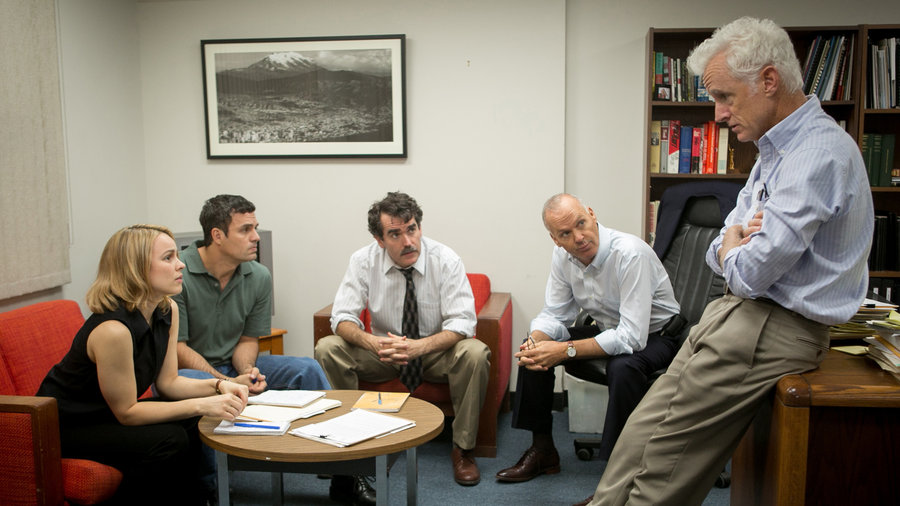
The Spotlight team consists of lead editor Walter Robinson (Michael Keaton) and reporters Matt Carol (Brian d’Arcy James), Sacha Pfeiffer (Rachel McAdams), and Michael Rezendes (Mark Ruffalo). The team is specifically reserved for investigative reporting, previously breaking stories on transit mismanagement and political corruption in Massachusetts. At the time when they were given this assignment, it was not as a follow-up to a news story, but to a column written and published by one of the Globe’s staffers.

At first, no one really thought much of the project. When originally pitched, it had to do with the Catholic church finding out that one priest had sexually assaulted children in six different churches, and did nothing about it. But when the team kept digging, they found out that it was bigger than they anticipated. Much bigger.

While watching Spotlight, I was thrusted upon an early memory of one of my first major news assignments. It was a story called “Seconds Away,” and it was about a university alumna who was just seconds from crossing the finish line before it blew up during the Boston Marathon bombings in 2013. The story wasn’t that she survived. It was that she went back the following year to finish crossing the line that she never did.

While getting ready for our interview, I was excited, nervous, and petrified all at once. This was a woman who had survived a near-death experience. She had faced something few other people have had to face, myself included. I didn’t know how to approach it. Was she comfortable with me talking to her? Would I be insensitive by asking serious questions? Would I be disrespectful by asking what was going through her mind? What would that say of me as a person, by asking her to relive something traumatic that she already went through?

The reporters and editors behind Spotlight face these same questions and concerns of morality every day they step into the office. Yet, they handled this difficult subject in the same way that the movie does: with grace and respect.

The greatest thing that can be said about Spotlight is its transparency: in how its characters charge towards this groundbreaking story and the emotions and conflicts they experience while doing their jobs. Writer-director Tom McCarthy, who was raised Catholic, juggles this behind-the-scenes story with real people’s traumas and emotions in mind. The result is a portrait that is genuine, astounding, mind-blowing, and heartbreaking all at once.

Take the interview scenes as a demonstration of this. During the film’s first scenes, Spotlight reporters sit down with a few sex abuse survivors, their brokenness and vulnerability made evident on the spot. The interesting thing you’ll find in between these intercut scenes is that it’s not Rachel McAdam’s mannerisms we’re noticing. It’s not Mark Ruffalo’s reactions or face of shock we’re noticing. It’s the supporting actors playing these victims, whom I can’t even identify off of the film’s cast list. Every detail of them is absorbing and introspective.

We notice the gay man in a coffee shop as he twiddles his thumbs nervously on his coffee cup. We notice the skinny drug addict sweating, entering the room cautiously, seeing scars up his arms from when he injected himself with heroin. We notice that while their testimonies are overwhelmingly tragic, they talk about it casually and on a whim; like it’s a scar that has already been healed, but will never go away. We listen to their silence as they quietly relive their traumas, the quivering in their voice as they slowly speak, the tears building up in their eyes as they come to once again realize what they are. I find that so compelling, that one of the best things in this film are the actors that I can’t even name.

The rest of the film is like that: finding value in the areas that you can’t exactly point out, but you know they are there. For instance, who’s the main protagonist? You could argue Rezendes, because he has the most visible reaction from working on this story. In reality though, this story is impacting the entire Spotlight team and more. It impacts everyone, in ways that nobody realizes until it walks right up to their doorstep.

This movie takes time and dedication to build up its story and collect the necessary information, just like Spotlight’s reporters do. In doing that, this is undeniably a slow film, but the pace doesn’t matter as much as the payoff. Spotlight deserves to be sought out. It is one of those rare films that not only makes us better viewers, but also better human beings.

Tagged , , , , , , , , , , , , , , , , , , , , , , , , , , , , , , , , , , , , , , ,