Tag Archives: Oppenheimer

J. Robert Oscarheimer

It’s not usual that I’m happy with how the Academy Awards play out. This year, I’m happy with the Academy Awards for a number of reasons. One: Jimmy Kimmel was great as the Oscars host, as he always is. With his first year of hosting being the same year as the infamous Moonlight-La La Land Best Picture mixup in 2017, I’m sure every year after that seemed like a cakewalk for the late-night talk show host. He was just as charismatic and clever as he’s always been, and he did a great job making sure the show stayed fresh and kept up its momentum — even when he was facing scathing remarks from twice-impeached charlatan Donald Trump on “Truth” Social. My favorite rebuttal from Kimmel: “Isn’t it past your jail time?”

Two: The bits were actually funny this year and didn’t overstay their welcome. One of my favorite moments was when Ryan Gosling and Emily Blunt were ribbing each other for their “Barbenheimer” rivalry, with Ryan pointing out Barbie dominating the box office while Emily observed all the honors Oppenheimer racked up this awards season. John Mulvaney hilariously ribbed Madame Web during his presentation for Best Sound, quoting the infamous “He was in the Amazon with my mom” line. But my favorite bit was when John Cena “streaked” across the stage to present the Best Costume Design category with only the envelope covering his Magic Johnson. Hey, at least you can’t say he didn’t wear his best suit (just as long as birthday suits count).

And lastly, the winners were largely justified this year. There was no obviously outrageous moment like Jamie Lee Curtis winning Best Supporting Actress, or Denis Villeneuve not being nominated for Dune, or Chadwick Boseman losing Best Actor for Ma Rainey’s Black Bottom. Sure there were a few snubs here or there, but for the most part, I can see why most of the winners won this year. It’s very rare that the Academy is on the mark this much. And I’m going to savor every minute of it, because I already know this euphoria will be very short-lived.

Even my predictions went pretty well this year. As per usual, I didn’t get every category right this year, with the most obvious misses coming from those accursed short categories. But before we get to that, let’s start with…
SOURCE: Universal Pictures

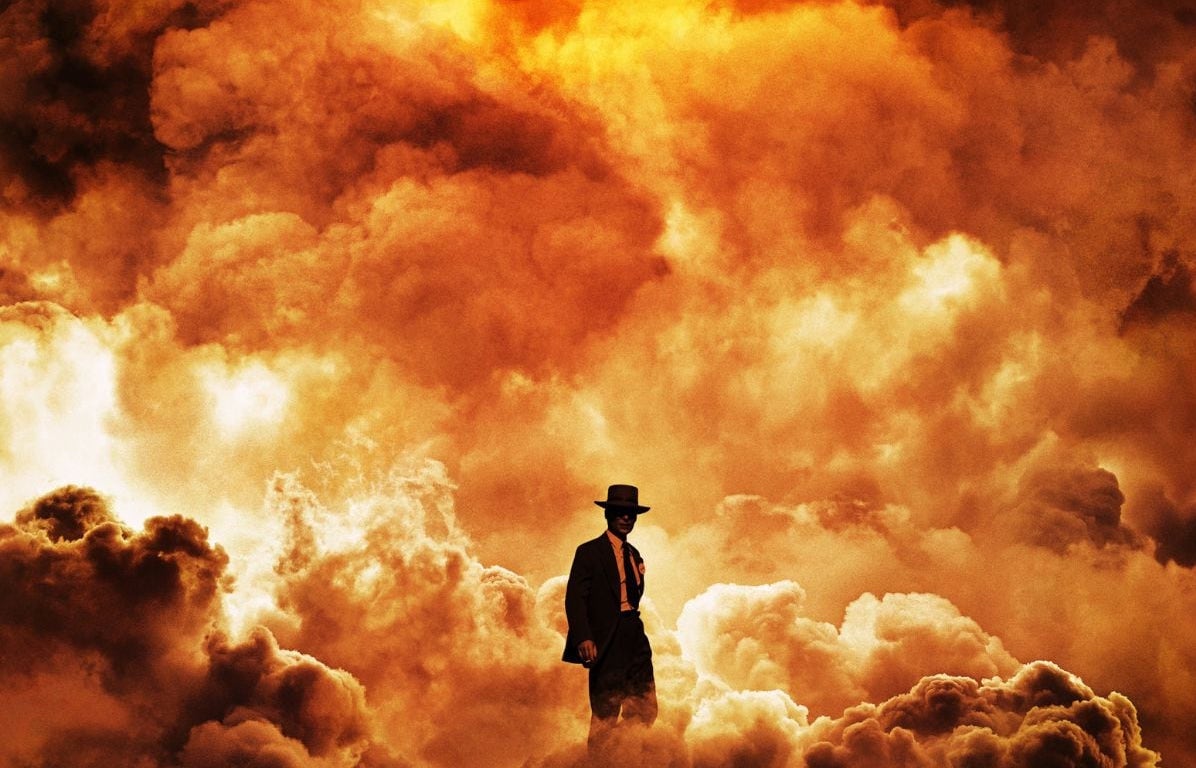
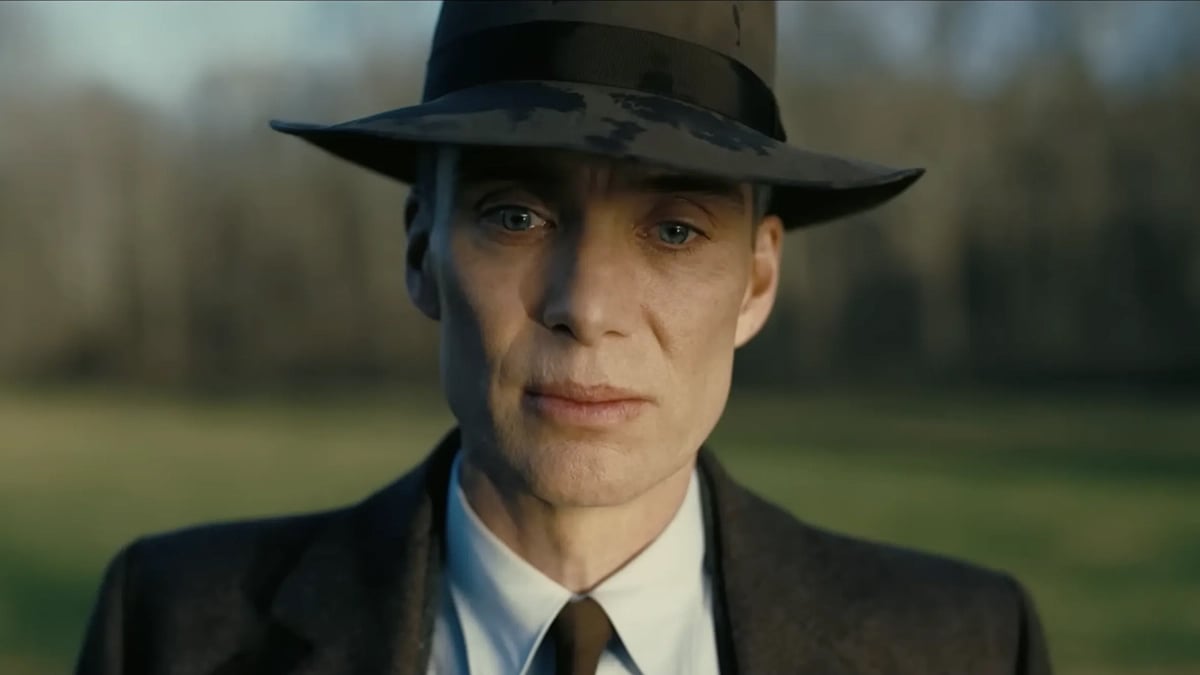
Best Picture: Oppenheimer won the Academy Awards’ most coveted honor of the night, as it deserved to. Not only is it a compelling character drama taking a deep dive into the psyche of one of the most complex men in American history, but it is simultaneously also a cautionary tale on nuclear proliferation and what Oppenheimer’s achievements may mean for the future of the human race. Given the fact that it swept the SAG Awards, the PGAs, the DGAs and every other awards ceremony under the sun, I think it was a foregone conclusion that Best Picture was Oppenheimer’s to lose.

Still, I don’t want to minimize Christoper Nolan’s or Emma Thomas’ achievements. Oppenheimer is not only the best film from 2023, but one of the finest Best Picture winners to emerge from the past several years. I’m glad the Academy got this category right and gave it to Oppenheimer as it justly deserved. Now if only it could denuclearize the rest of the world.

Best Director: Just as he had won Best Picture, so too had Christopher Nolan won Best Director for Oppenheimer. Again, I don’t think there’s much more that needs to be said here other than he obviously deserved it. Not only was his work on Oppenheimer the very best out of the entire year, but he’s also been largely snubbed by the Academy for pretty much his entire career. The first time he was nominated was in 2018 for Dunkirk, and considering he’s mounted even more significant cinematic achievements with the likes of Memento, The Prestige, The Dark Knight, Inception, and Interstellar, it’s kind of stupid that Oppenheimer marks only his second nomination — or his first win, for that matter.

Regardless, he couldn’t have won for a better film, and I couldn’t have been happier when they called Christopher Nolan’s name for Best Director. His Oscar win has been very much overdue.

Best Actor: No surprise here either: Cillian Murphy’s turn as J. Robert Oppenheimer was filled with both humanity and horror, and Cillian did a masterful job bringing the Father of the Atomic Bomb to life. What makes this win even more significant is the fact that this is also Cillian’s first nomination, let alone his first win. It’s baffling to me that such a committed actor has taken this long to be recognized by the Academy, but better late than never I guess. He did a phenomenal job in the lead role of Oppenheimer and absolutely deserved to win. I couldn’t have been happier for him.

That being said, I am sad that Cillian did have to win Best Actor at the expense of Paul Giamatti, who gave an equally gifted performance as Mr. Hunham in The Holdovers. Truth be told, I wouldn’t have been mad if Giamatti did win instead of Cillian, even if I wouldn’t necessarily have agreed with it. But let’s at least be grateful that one noteworthy performance lost to an equally talented performance. That’s the best way to lose at the Academy Awards.

Best Actress: It was a battle of the “stones” for Best Actress this year, with Killers Of The Flower Moon’s Lily Gladstone squaring off against Poor Things’ Emma Stone. And Emma clinched it, if ever so slightly.

Knowing that she had previously won Best Actress for the likes of La La Land in 2017, I mistakenly thought that would work to her detriment considering the fact that she’s already an Oscar winner. I obviously underestimated the weight of her BAFTA win, a mistake I desperately need to learn from going forward with the Academy Awards.

Best Supporting Actor: Again, no surprise here: Robert Downey Jr. was just as compelling as Lewis Strauss as Cillian Murphy was in Oppenheimer, so it makes sense that he also won the Oscar for Best Supporting Actor. It’s so heartwarming to see Robert Downey Jr. go from struggling with addiction abuse in the 2000s to getting clean to becoming part of one of most successful franchises in cinematic history, only to turn around with arguably one of the best performances of his career in Oppenheimer. I worried for a while that he was going to be typecast after the success of The Avengers, but Oppenheimer proves he’s still got phenomenal acting chops — you just have to give him a role that he can truly thrive in. Congratulations to Robert Downey Jr. and his incredible achievement. The only way his win could have been even better is if he ended his speech by saying “I am Iron Man.”

Best Supporting Actress: Da’Vine Joy Randolph obviously gave the best performance out of all of the supporting actress nominees in The Holdovers, so she was the clear winner by a long mile. Da’Vine’s win is one of those Oscar moments that fills me with so much hope and joy, because she is clearly not as big of a name as her fellow nominees, yet won regardless due to the merit of her performance. She didn’t win by being a nepo baby (*cough cough*, JAMIE LEE CURTIS, *cough cough*) — she won by genuinely being the best actress. I couldn’t be happier for the win and hope that the Academy will follow suit in this voting methodology going forward. Perhaps they could start by taking away Jamie Lee Curtis’ Oscar and giving it to Stephanie Hsu instead.

SOURCE: Toho

Best Animated Feature: It was a showdown between The Boy And The Heron and Across The Spider-Verse, and The Boy And The Heron ultimately won much to the dismay of web-heads. Personally, I feel Across The Spider-Verse deserved to win more, and Nimona should have been part of the conversation WAY more than it was. But in its defense, Into The Spider-Verse did already win Best Animated Feature back in 2018, while the last Oscar Hayao Miyazaki won was in 2002 for Spirited Away. The Boy And The Heron is a beautiful, tragic, and spellbinding film either way. If Spider-Verse or Nimona wasn’t going to win it, I’m glad it went to The Boy And The Heron.

No, if we really want to talk about Across The Spider-Verse snubs, we should be looking at other categories it wasn’t nominated in, including Best Original Score, Best Original Song, and Best Visual Effects. Heck, I would have even caved for a Best Picture nomination. Regardless, Beyond The Spider-Verse is still coming out in the next few years, so Spidey will have another shot at the Oscars either way. The Academy better not mess up its mulligan, otherwise Marvel fans will have legitimate reasons to be angry next time.

Best Documentary Feature: 20 Days In Mariupol rightfully won Best Documentary, marking not only the third Academy Award-winner I’ve interviewed after Aaron Sorkin and Alejandro Gonzalez Inarritu, but also the first Ukrainian to win an Oscar (how???). While I’m happy that 20 Days In Mariupol won the Oscar, there is a twinge of sadness attached to it knowing that it came at a cost of over 20,000 Ukrainian lives. I choked up at the moment when director Mstyslav Chernov said he wished this film never needed to be made, and similarly, I wish that I never needed to interview him.

Regardless, Mystyslav set out to make this film as a monument to the lives lost in Ukraine. He more than succeeded in making his monument, and as far as I’m concerned, that’s an accomplishment greater than any Academy Award could ever be.

Best International Feature: I’ve said it before, and I’ll say it again: if a Foreign-language film was nominated for Best Picture, it’s a lock for the Best International Feature Oscar. That made The Zone Of Interest winning a foregone conclusion. I just wish I could have seen it prior to Oscar night. It doesn’t help that it wasn’t playing anywhere near me. Here’s a film whose “limited” release was so limited that they should have just labeled it “Eh, we guess it was released.”

Best Original Screenplay: Anatomy Of A Fall won this year’s Best Original Screenplay Oscar as it rightfully should have. I saw the film months ago, and it’s still at the forefront of my mind with its spellbinding and dizzying narrative that masterfully teeters you on the edge of your seat. Did Sandra kill her husband or did she not? All these months later, I still don’t have an answer, and I don’t know if I want one.

Best Adapted Screenplay: Cord Jefferson’s witty and amusing adaptation of Percival Everett’s “Erasure” was as clever as it was insightful in American Fiction, so naturally it made it a perfect fit for this year’s Best Adapted Screenplay Oscar. Personally, I still wish it could have gone to Christopher Nolan for Oppenheimer, but considering how much it cleaned up in the rest of the ceremony this year, I’m okay with giving this one to American Fiction. Most would probably argue that it deserved it more anyway.

Best Cinematography: I remember back in 2014 when Hoyte van Hoytema took over for longtime collaborator Wally Phister when shooting for Christopher Nolan’s Interstellar. Years later, he continues to prove he’s one of the most creative cinematographers working in Hollywood today, with some of his most notable projects including Spectre, Dunkirk, Ad Astra, Tenet, and Nope. Oppenheimer demonstrates some of his finest work to date, so of course he deserved to win. I still don’t know how he pulled off those quantum physics sequences without any use of CGI. If they ever produce a documentary about the filming of Oppenheimer, I’ll be the first one to watch it. Mark my words.

Best Film Editing: From Frances Ha to Black Panther: Wakanda Forever, Jennifer Lame’s editing prowess has taken her all over Hollywood, which makes it especially baffling how Oppenheimer marks only her first nomination. Whatever. Oppenheimer’s film editing is the very best out of the year, and Jennifer Lame deserved to win regardless of whatever snubbing she experienced beforehand. Guess she and Christopher Nolan have that in common.

SOURCE: Searchlight Pictures

Best Production Design: It was clear from the trailers that Poor Things had some of the most striking set designs out of the entire year. As gorgeous as Barbieland looked, it lacked the dreamy and ethereal aesthetic that Poor Things nailed so effectively. It was clear from the outset that Poor Things was going to win Best Production Design. Nothing controversial to report here.

Best Costume Design: This one I got wrong because I vastly overestimated the Academy’s affection for Barbie. At first glance, Barbie seemed like the easy frontrunner, but Poor Things’ costumes were just as distinct, and unlike Barbie, didn’t have a template to base its wardrobe around. You won’t find any of Bella Baxter’s or Duncan Wedderburn’s clothes in any play sets or doll boxes. You will, however, find any of Barbie or Ken’s costumes in any toy aisle you happen to stroll past. Failing to observe its originality was perhaps my greatest oversight in making my Best Costume Design prediction this year.

Best Makeup & Hairstyling: While I flubbed up on predicting Best Costume Design, I did correctly predict that Poor Things would win Best Makeup over the likes of Maestro and Golda. Stitches and disfigured jawlines beat big noses and Helen Mirren erasure. I still don’t know why Oppenheimer was nominated in this category. I genuinely don’t.

Best Musical Score: If Ludwig Goransson didn’t win Best Musical Score for his eerie, ominous, and haunting compositions for Oppenheimer, then the Dolby Theatre truly deserved to be hit with a hydrogen bomb. Thankfully, the Academy picked the right winner in this category. For the record, I’m still fuming that John Williams is nominated for Dial Of Destiny over Daniel Pemberton for Across The Spider-Verse.

Best Original Song: As epic as Barbie’s musical number for “I’m Just Ken” was, it’s clear that Billie Eilish was going to win for her beautiful yet heartbreaking single “What Was I Made For?” Long before the nominees were even announced, the impact of her song was at the forefront of my mind for its emotion, its melancholy piano melody, and its somber and bittersweet tone. It’s a masterclass in excellent songwriting, and the Academy got it right when they picked her as the Best Original Song winner.

What’s most surprising about this category isn’t the fact that she won — it’s the fact that it’s the only Oscar Barbie won, period. Look at the list of winners. Barbie did not win in a single other category besides original song. Not production design. Not costume design. Not writing. Certainly not for Best Picture. The only Oscar it won was for its music.

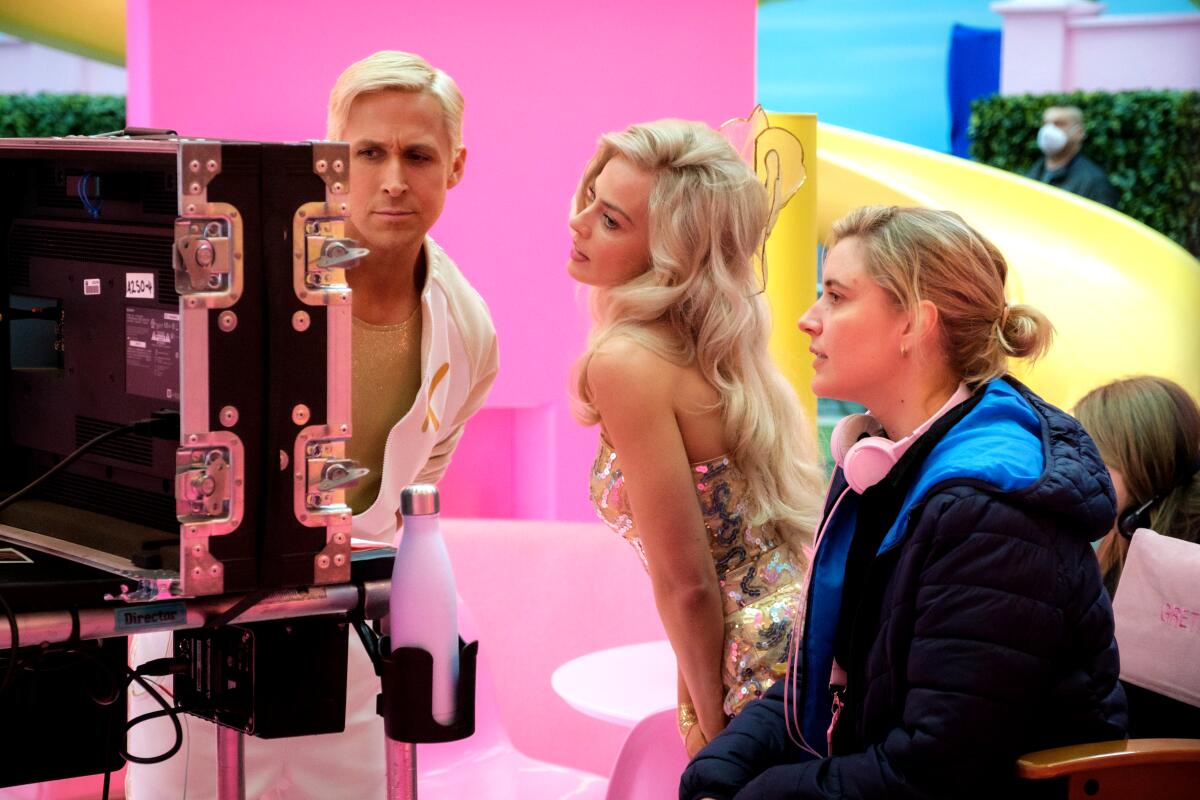
In its defense, “What Was I Made For?” is arguably the most influential aspect of Barbie. I loved the song long before I even watched the movie, and the best part is you don’t even have to watch the movie to appreciate its message. It doesn’t change the fact that Barbie got absolutely shafted by the Academy this year. Many Barbie fans will be reasonably upset by the many ways it was snubbed at the Oscars this year. Personally, no snub was greater than Greta Gerwig getting robbed in the Best Director category. Oh well. At least she had fun singing “I’m Just Ken” with her cast.

Best Sound: Now here’s one of the few surprises from the night. Oppenheimer’s sweeping and striking sounds of atomic molecules crashing into each other was among the most distinct sound design of the entire year. I thought it was a lock for the Best Sound Oscar, but it turns out the Academy felt differently when The Zone Of Interest won instead.

Like I said, I haven’t seen the movie (who has?), so it’s hard for me to say whose sound design was more deserving. What I will say is that the muffled sounds of children screaming in the chemical showers in the small snippet that played during the ceremony was easily the most disturbing moment from the Academy Awards this year. The clip lasted less than 10 seconds, yet that eerie sound is the one thing I remember most from this weekend. It reminded me a lot of the sound design of Nope, where the muffled sounds of people being digested by a giant alien was one of the most haunting and disturbing sounds I had ever heard in a horror movie. In a way, The Zone Of Interest is a horror movie of its own, only it’s covering real-life horrors as opposed to fictional ones.

So while I haven’t seen enough to declare whether or not it deserved the Oscar over Oppenheimer, I can definitely see why it won. This is likely one of the first Oscar winners I’ll be catching once the title hits streaming services.

SOURCE: Toho

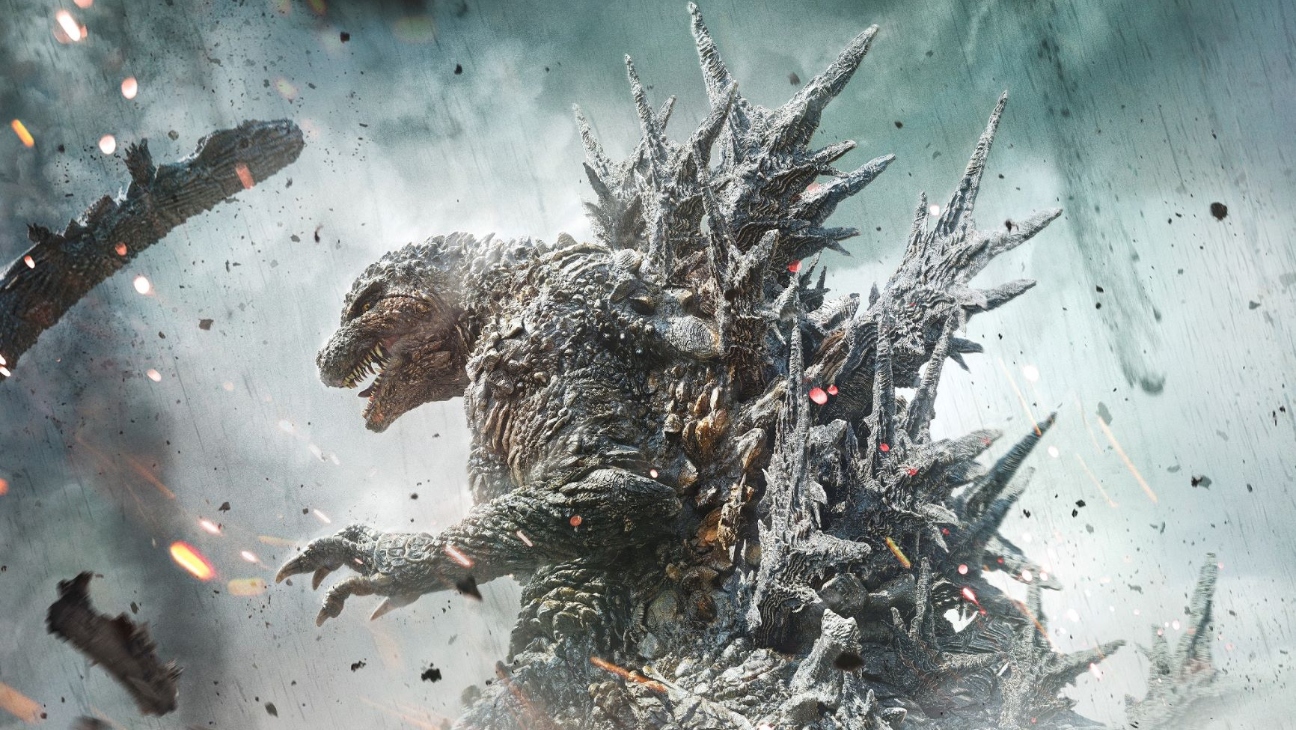
Best Visual Effects: I have mixed feelings about Godzilla Minus One winning Best Visual Effects, mainly due to the allegations that its VFX artists were simultaneously overworked and underpaid. What gave me hope was seeing that director Takashi Yamazaki worked alongside his fellow artists as a VFX supervisor, meaning that whatever arduous hours his team was working, he was most likely working right alongside them. Does that make their working circumstances any less problematic? Not really, but at least the director is in the trenches with them. If your crew is drowning in misery, at least have everyone be equally miserable together. That’s all I really ask for.

Also, Takashi and his crew looked really excited to be at the Academy Awards. For crying out loud, he brought a gold Godzilla statue with him, and his team all had their own Godzilla figurines with them. Regardless of whatever their working conditions were, you can tell that they were passionate fans who poured their hearts into this atomic-sized monster epic. As long as they’re happy, I’m happy. And for whatever it’s worth, Godzilla Minus One did have the best visual effects out of the year regardless.

And finally, we come down to those blasted short categories. The only one I got right this year was Wes Anderson winning Best Live Action Short for The Wonderful Story Of Henry Sugar. The rest were all a bust. Thankfully, Issa Rae and Ramy Youssef at least had the good sense to keep the presentation as blissfully short as their nominees.

That brings my total score this year to 18 out of 23 categories guessed correctly. Not a bad year for me, although I did lose in my own family’s pool. Oh well. At least I got to go to bed before 11 for a change.

– David Dunn

Tagged , , , , ,

2024 Oscar Predictions

It’s not usual that I’m looking forward to the Academy Awards. From one stupid slip-up after another, the Academy has consistently demonstrated that it’s more interested in patting its own back rather than rewarding the most legitimately deserving winner every year. We all remember where we were when Chadwick Boseman lost Best Actor for his last great performance in Ma Rainey’s Black Bottom in 2021, or when Denis Villeneuve wasn’t nominated for Best Director with Dune in 2022, or when Jamie Lee Curtis won Best Supporting Actress over all of her fellow nominees just last year. Let’s face it — we’ve all been conditioned to be let down by the Academy time and time again. That’s probably why I’ve been less disappointed by them in recent years — because my expectations for them have been so low. 

And yet, I’m uncharacteristically… hopeful for this year’s Academy Awards. Every year, I pen down one or two movies that I think will win an Oscar even though there is clearly a more deserving nominee in their category. I’m happy to say that this year, it doesn’t seem to be that way. Indeed, the most frustrating thing about this year seems to be who isn’t nominated rather than who is. Despite this, I’m very much looking forward to seeing how this year’s ceremony pans out. Many of the nominees are much overdue for an Oscar, so the fact that they may finally become Oscar winners excites me to no end. 

Don’t get me wrong: the Academy Awards still scored some big misses for this year’s ceremony, and I do expect a few upset wins regardless. Let’s break down the Academy Award nominees for 2023 and see who is well on their way to becoming an Oscar winner: 

SOURCE: Universal Pictures

Best Picture: Ah, Best Picture. We meet again. Time and time again, my success with predicting you has been very inconsistent. Sure, I correctly predicted that 12 Years A Slave, Birdman, Nomadland, and Everything Everywhere All At Once would all win Best Picture, but I’ve gotten more Best Picture winners wrong in the past decade than I care to admit. Spotlight, Moonlight, The Shape Of Water, Green Book, Parasite, and CODA were all Best Picture winners that I didn’t see coming, because how on Earth would I? With a selection that erratic, how could you possibly be expected to develop a criteria from a winning pool that’s so blasted inconsistent? 

Still, I’ve got a good feeling about Oppenheimer winning Best Picture this year. Not only has it won the Golden Globe, the BAFTA, and the PGA Awards — it’s also one of last year’s most successful films and one of the highest-grossing biopics of all time at $960 million. With a hit that critically and commercially successful, it’s hard to deny its impact on both film and pop culture. My money’s on Oppy.

Best Director: Christopher Nolan won the Director’s Guild Award, which means he’s pretty much a lock to win the Best Directing Oscar for Oppenheimer. About damn time. Despite being one of the most cutting-edge filmmakers of our time, Christopher Nolan has been relentlessly snubbed by the Academy ever since Memento in 2000. From The Dark Knight to Inception to Interstellar, Christopher Nolan has been consistently overlooked in the Best Director category over and over again. He didn’t even get his first nomination until Dunkirk in 2017, which is arguably his worst film. He hasn’t deserved any of the snubbing he’s received the past two decades, so the fact that he may finally win an Oscar is the most exciting thing about this year’s ceremony.  

And he couldn’t have gotten it for a better film either. Not only is Oppenheimer one of his very best films, but it is also one of his most intelligent, most thoughtful, most weighty, most consequential, and most haunting films all at the same time. I’ve seen the film four times now, and the ending never fails to send chills down my spine. The fact that I know what to expect and I still react the same way every time is the signs of a brilliant director. I can’t wait to see him accept his Oscar. It’s been much overdue. 

Of course, we can’t talk about Best Director without talking about the most obvious snub: Greta Gerwig was absolutely robbed for a nomination despite how creative, compelling, clever, and downright hilarious Barbie was. Need I remind you that I hate Barbies with a passion, yet Greta delivered something so fresh and original with that film that you can’t help but fall in love with it. It is beyond stupid that she was overlooked for Best Director this year when Jonathan Glazer is already nominated for Best International Film for The Zone Of Interest. How many of you even seen the movie? I’ll bet you that 10 of my readers have never even heard of it. 

It goes without saying that the Academy typically rewards filmmakers long beyond when they were supposed to. Christopher Nolan is this year’s much-overdue Best Director winner. Hopefully within a few years, so will Greta Gerwig. 

Best Actor: This year’s Best Actor race is truly intense because we have two really strong nominees who both deserve to win. On one hand, Paul Giamatti gave a very raw and real performance in The Holdovers as a grumpy history teacher learning to connect with his fellow students. I am not exaggerating when I say that Paul Giamatti gave one of the finest performances of his career for The Holdovers — maybe the finest ever. It’s just so authentic and vivid and grounded that it’s hard to imagine that Mr. Hunham wasn’t a real person. Paul Giamatti just brought so much life to that role, and I can’t imagine another actor playing that part as masterfully as Paul Giamatti did. 

But on the other hand, Cillian Murphy gave just as raw and authentic of a performance as the father of the atomic bomb, J. Robert Oppenheimer. And their performances are both so distinct and specific that it’s hard to say which one is objectively better. I’d hate to be one of the voters in this category because if it were up to me, my tiebreaker would come down to a coin toss. It’s that close. 

Granted, Cillian does have the traction of awards season on his side. Sure, Paul has already racked up the Golden Globe and the Critic’s Choice Award, but Cillian has also won a Golden Globe, a Satellite Award, a BAFTA, and a SAG award. Usually that many rapid wins in succession indicate a fast track to winning the Oscar. I have to give this one to Cillian Murphy for Oppenheimer, but if Paul Giamatti does pull off a surprise upset, it will have been well-deserved

Best Actress: It all boils down to a battle between the “stones.” Emma Stone won the BAFTA, while Lily Gladstone won the Screen Actor. Both gave incredibly gifted performances in their respective movies. And unfortunately, both the BAFTAs and the SAG Awards are relatively consistent when picking the Best Actress winner. So, who’s going to take home the Oscar? 

Well in recent years, the Oscars have seemed to lean a little more in favor of the SAG Award winners moreover the BAFTAs. I know 2020 backfired with Frances McDormand winning Best Actress for Nomadland, but since that was such a strange year in movies anyway, it’s hard to see whether that win was truly based on merit or if it was just of consequence of such a garbage year in movies. Lily Gladstone wasn’t even nominated at the BAFTAs, so there’s no telling how that category would have gone if she was involved. 

Because of all of this, I have to go with Lily Gladstone for her deadpan performance in Martin Scorsese’s Killers Of The Flower Moon. If she does win, it will have been very well-earned, because her performance was so great that she even outshined her co-stars Leonardo DiCaprio and Robert De Niro. It’s true that Emma Stone is an equally talented actress and gave it her all in Yorgos Lanthimos’ bizarre twist on Frankenstein in Poor Things, but the difficult thing about this category is that both of their performances are so, so different. At the end of the day, it may just come down to personal preference, which is a difficult thing to predict when it comes to Academy voters. This truly could go either way on Oscar night. 

And while I do believe Lily Gladstone deserves to win Best Actress, I want to give a special mention to Sandra Huller for her incredibly nuanced performance as a writer stuck at the center of her husband’s death in Anatomy Of A Fall. Her character teeters between the edges of seeming innocent and guilty at various points of the film, and she does a masterful job blurring the lines and keeping the audience on their toes as to her character’s true motivations. I know the competition is between Stone and Gladstone, but truly, it should be a three-way tie between the three of them. Her performance was truly compelling, and she hasn’t gotten the credit she’s deserved all awards season. 

We should also not forget how ridiculous it is that Margot Robbie is not nominated for Barbie. Did her co-stars Ryan Gosling and America Ferrera deserve their supporting actor nominations? Absolutely, but not at Margot’s expense and not in her absence. The fact that everyone unanimously decried Margot’s snubbing speaks to how stupid of a decision the Academy made in this year’s Best Actress race. They’ll be answering for that snub for years to come. 

Speaking of supporting actors…

Best Supporting Actor: It’s no contest — Robert Downey Jr. deserves to win for playing the sniveling, conniving little politician Lewis Strauss in Christopher Nolan’s Oppenheimer. This is a man who has played several larger-than-life characters over the past several years, including Charlie Chaplin, Paul Avery, Kirk Lazarus, Sherlock Holmes, and oh yeah, IRON FREAKING MAN. Yet for all of the parts he’s played, none have felt quite as sinister or obsessive as his role as Lewis Strauss. I know he’s the biggest name amongst this year’s nominees, but I genuinely believe he deserves to win not because of his notoriety, but because of all of the raw talent he proudly displayed in Oppenheimer. 

Special shoutout goes out to Chukwudi Iwuji, who turned out a downright evil and maniacal performance as the High Evolutionary in James Gunn’s Guardians Of The Galaxy Vol. 3. His performance was every bit as hateful as Robert Downey Jr.’s was, and by all accounts, he deserved to be nominated right alongside him. Once again, the Academy proves that having one of the best villainous performances of the year doesn’t matter to them. As long as that performance is in a Marvel movie, it will not get nominated. Pathetic. 

Best Supporting Actress: I’m actually relatively split in this category because I love so many of this year’s nominees. America Ferrera had the year’s best monologue in Greta Gerwig’s Barbie, while Emily Blunt’s presence was arguably just as powerful as her on-screen husband’s in Oppenheimer

But when I stack all of these performances up against one another, one clearly outshines the rest — Da’Vine Joy Randolph’s turn as a grieving mother in The Holdovers was easily the most heart-wrenching and devastating performance out of the entire year. All of this year’s supporting actress nominees gave brilliant performances, but Da’Vine’s felt the most raw, the most real, and the most human of them all. She was a clear standout in the movie, and I hope she prevails on Oscar night despite the tough competition she’s facing. 

SOURCE: Toho

Best Animated Feature: In previous years, it’s been very clear who the Oscar frontrunner is in the Best Animated Feature category, whether you’re talking about Soul in 2020, Encanto in 2021, or Guillermo Del Toro’s Pinocchio just last year. 2024 isn’t as clear cut, with Spider-Man: Across The Spider-Verse, The Boy And The Heron, Nimona, Robot Dreams, and Elemental all scoring nominations. I don’t remember the last time that the animated feature race was this close, and that really speaks to what an outstanding year in animation we had. It was such a great year that we couldn’t even nominate all of the animated films that deserved to be, including Suzume, The Super Mario Bros. Movie, and Teenage Mutant Ninja Turtles: Mutant Mayhem. Regardless of however it plays out on Oscar night, let’s be grateful that we have such a stacked and competitive category this year, because moments like these don’t come around very often. 

As far as this year’s animated feature race goes, it’s a toss-up between Across The Spider-Verse and The Boy And The Heron, both equally ingenious and captivating films in their own way. I personally prefer Spider-Verse not just for its stunning animation and breathtaking visual feats, but also because its story is just as complex and builds upon the Spider-Man mythos in ways I never would have imagined. But The Boy And The Heron equally deserves praise for being as mature and thought-provoking as it is. Sure, it may not be the most exciting or the most sensible film out of the nominees, but what it lacks in coherency it more than makes up for with its philosophical questions and its gorgeous animation that paints this beautiful and twisted world to life. The Oscar really can go to either film on Oscar night, but I’m betting on The Boy And The Heron just because it’s the most unique out of all of the nominees. And in this race, uniqueness can make all of the difference. 

While on the subject, I want to give a special shoutout to Nimona for being just as impressive a visual and narrative feat as those movies are, yet consistently getting shoved to the side because of… what exactly? It’s LGBT-adjacent themes? By every account, Nimona deserves to be taken as seriously, if not more so, than Spider-Verse and The Boy And The Heron, but its biggest win this awards season was for Best Writing at the Annie Awards. It deserves to get recognized for so much more than merely its writing, and the fact that it may go home with nothing will go down as one of the biggest snubs in Oscar history. Regardless of whoever wins, you are loved very deeply Nimona. Never forget you are a hero in everybody’s eyes. 

Best Documentary Feature: Besides already winning the BAFTA and the DGA Award, no film this year has been more horrifying or haunting than 20 Days In Mariupol. I didn’t see the film in time last year, but if I had, I would have named it my second-favorite film of 2023. It’s that riveting and powerful. 

I’ll have more to say on 20 Days In Mariupol later this week, but for now, all I have to say is that you should watch this movie as soon as you can. It’s easily one of the best films I’ve seen last year and demonstrates that the Academy should consider more documentaries for Best Picture. 

Best International Feature: I say the same thing every year — if an International film is nominated for Best Picture, it’s a lock for the Best International Feature Oscar. But in this case, this year’s eventual Oscar-winner is a double-whammy. Not only is The Zone Of Interest nominated for Best Picture, but Jonathan Glazer is also nominated for Best Director. The last time that happened was in 2021 when Ryusuke Hamaguchi was nominated for Drive My Car, and sure enough, he won the International Feature Oscar as expected. The same thing will happen this year with The Zone Of Interest. Do not bet against it. 

An honorable mention goes out to Takashi Yamazaki’s terrifying monster epic Godzilla Minus One, which takes the atomic behemoth back to his roots as a horrifying metaphor for war and nuclear destruction. Sure it’s a big-budget blockbuster that the Academy doesn’t typically go for, but it could and should have made an exception for Godzilla Minus One. Honestly, I would have even pushed for it being nominated for Best Picture. But the Academy didn’t even have the good sense to nominate The Iron Claw for anything this year, so good luck trying to appeal to the Academy’s lack of common sense. 

Best Original Screenplay: In a bizarre turn of events this Oscar season, the Writer’s Guild of America set its awards date after the Academy Awards. The Oscars take place on March 10, while the WGA Awards are taking place a full month afterward on April 14. I have no idea why they would do this. Sure, the WGAs play it close to the Academy’s airdate, but that’s usually within a span of a couple of weeks — not an entire month after the Oscars take place. Because of this, we’ll have to make our best writing predictions without the Writer’s Guild this year. Disappointing, but it isn’t the first time I’ve made my predictions without the WGA. Maybe this time it’ll finally be an even playing field. 

This year’s race boils down to two nominees: David Hemingson’s The Holdovers and Justin Triet’s Anatomy Of A Fall. I love them both for very different reasons, The Holdovers for its quirky sense of humor and emotional honesty and Anatomy Of A Fall for its tense and spellbinding narrative that keeps you on your toes all the way through. The worst thing about this category is that regardless of whoever wins, someone else will have undeservedly lost. That makes me irrevocably sad about this year’s Best Original Screenplay nominees. 

If we’re going with the quote-unquote “best” original screenplay, it’s The Holdovers hands-down. Not only does it do an incredible job drawing you in and getting you sucked into the lives of these people staying inside this depressing little boarding school, but it does an incredible job humanizing these characters and getting you to root for them despite their circumstances. It’s a masterful dramatic balancing act, and David Hemingson’s entire writing prowess is proudly on display. 

But the one thing to understand about the Academy is that they don’t always go for the “Best” in any category (as evidenced from Jamie Lee Curtis’ Best Supporting Actress win for Everything Everywhere All At Once last year). Instead, they often go for the flashiest nominee — the one that will often grab the most headlines and garner the most attention. Judging by that criteria, Anatomy Of A Fall is mesmerizing in its investigative aspect, keeping you guessing throughout until the film finishes on its jaw-dropping conclusion. The Holdovers is obviously the better screenplay, but Anatomy Of A Fall is undoubtedly the smarter one. Intelligence might top emotion in this Oscar race, so I’m going to go with Justine Triet’s Anatomy Of A Fall

Best Adapted Screenplay: My first thought gravitated toward Christopher Nolan for Oppenheimer, but then I thought about the film’s technical elements — how the score, cinematography, and masterful editing brought this intelligent and introspective script all together. Is it some of Christopher Nolan’s finest writing to date? Absolutely, but I think it’s even more impressive from a directorial standpoint. I don’t believe another filmmaker could direct Christopher Nolan’s scripts and make it work as brilliantly as he does. That’s one of his greatest strengths as a filmmaker — he stands on his own as an independent storyteller. 

That being said, I do think any director could pick up Cord Jefferson’s screenplay for American Fiction and do just as good of a job. I don’t mean that as a slight toward his directing — I mean that his writing is so strong that it makes it hard for another filmmaker to come in and mess it up. It really could go either way, but considering how much potential Oppenheimer has to winning in other categories, adapted screenplay is really American Fiction’s best chance to win an Oscar, so that’s the one I’m going with. 

Best Cinematography: Unbelievably enough, Hoyte van Hoytema has never won an Oscar for Best Cinematography, so he’s more than deserving in winning it for Oppenheimer now. Not only has he also been historically overlooked by the Academy like Christopher Nolan (his only other nomination was with 2017’s Dunkirk), but he’s also done incredible work on other movies that have often gone unrecognized. Tinker Tailor Soldier Spy. Her. Interstellar. Spectre. Tenet. Nope. Time and time again, he’s demonstrated that he can pull off some of the most creative shots ever put to film, and that’s just as true with Oppenheimer as it is with his other works. My jaw dropped when I learned that the quantum physics sequences depicting atoms and molecules were practically shot instead of generated through CGI, and the rest of the film’s cinematography is just as masterful as those sequences. Whether it was the Trinity Test or that horrifying sequence at the Los Alamos gymnasium, every single scene is dripping with Oppenheimer’s guilt and the unbearable atomic weight he bears on his shoulders. No film was simultaneously as haunting or as striking this year as Oppenheimer. If Hoyte van Hoytema doesn’t win it despite his cinematic mastery, it will be a grave, grave injustice. 

Best Film Editing: I know it seems like I’m just fanboying at this point, but there’s truly something to be said about an editor who can make a film about a bunch of guys talking in a room compelling, riveting, and interesting all at once. That’s Jennifer Lane’s great accomplishment with Oppenheimer, and it’s also why she deserves to win. Granted, there are several reasons why the movie is amazing, from the performances to the writing to the cinematography to the music to Christopher Nolan’s outstanding direction. But Jennifer Lane masterfully brought it all together and made the film clear and concise despite how much was going on. Oppenheimer’s editing is the very best of the year, point blank, period. 

Then again, Laurent Senechal’s editing for Anatomy Of A Fall was similarly masterful and expertly kept audiences in the dark whether Sandra was truly guilty or innocent. I don’t expect there to be an upset win in this category, but if there is, it does deserve to go to Anatomy Of A Fall. I’m good either way just as long as Bohemian Rhapsody doesn’t win.

SOURCE: Searchlight Pictures

Best Production Design: On first glance, my temptation was to put down Barbie for Best Production Design. But then I asked myself “What made Barbie’s production design so outstanding outside of Barbieland?” I’ll give you that it’s genuinely impressive and does look like any little girl’s Barbieland playset in the real world. But it’s only three locations: Barbie’s home, Ken’s beach, and Weird Barbie’s home, so it was simple for the set designers to knock it out of the park since their sets were so well contained. 

Compare that to the expansive, dreamy, and surreal production design of Poor Things. Not only is it much bigger and grander than Barbieland is, but it’s all filled with very evocative imagery that’s as peculiar as it is elusive. It is a cursed fantasy if I’ve ever seen one, and I can’t imagine Poor Things losing to Barbie. Oh well. At least pink still looks good on you, girl. 

Best Costume Design: If there’s any Oscar Barbie deserves to win, it’s costume design. Not only does every piece of clothing look like an outfit you could find in Barbie’s closet, but the catalog is so massive that I’m shocked Mattel didn’t make it themselves. Sure Poor Things also has some fine costume work as well, but most scenes have you drawn toward the intense and intoxicating scenery, not whatever Emma Stone is wearing. Barbie’s wardrobe is much more dazzling and deserves the Oscar more. It’s just. So. FABULOUS! 

Best Makeup & Hairstyling: Yeah, Bradley Cooper has a big nose in Maestro. Big deal (literally!). I’m not as interested in resurrecting prominent composers as much as I am in bringing your most lividly messed-up vision to life on screen. We haven’t had a good makeup nominee like that for a while, and the last creature makeup to win the Oscar was 2016’s… Suicide Squad. Bleh. 

We desperately need a palette-cleanser. That’s why I think Poor Things is going to win it for those horribly grotesque Frankenstein’s monster-esque stitches Willem Dafoe wore throughout filming. Oppenheimer getting nominated in this category is downright laughable. 

Best Musical Score: Before we go into my prediction, shame on the Academy for nominating John Williams for Indiana Jones And The Dial Of Destiny over Daniel Pemberton’s phenomenal and captivating score for Across The Spider-Verse. Mind you, I’m not dissing John Williams himself: the guy is obviously a massive music legend, and if we’re looking back, he’s mostly deserved the more than 54 nominations he’s received throughout his illustrious 70-year career. 

But of all of his film compositions, Indiana Jones And The Dial Of Destiny is perhaps the most… phoned in. I’m not saying it’s bad. It has the same melodies, themes, and marches from all of the Indiana Jones movies. And if we’re just looking at nostalgia alone, it was refreshing and nice to hear his iconic score in the theater once again. 

The problem is it’s a score that we’ve heard before. In fact, it’s the same score that he was previously nominated for in the original Indiana Jones trilogy. There’s zero interpolation to it, there’s nothing original or novel about it, I’m not even sure he composed new music for Dial Of Destiny. IT’S THE SAME MUSIC. Good music sure, but the same nevertheless. 

Compare ALL OF THAT to Daniel Pemberton, who to date has only been nominated once for Trial Of The Chicago 7. His themes in Across The Spider-Verse were energetic, epic, awe-inspiring, fresh, original, dramatic, and exciting. I caught myself humming Miles, Gwen, and Miguel’s themes several times throughout the year, and I can confidently say that it was the second-most streamed film score I listened to all year. For it to not even get a nomination is beyond insulting. 

The worst part? This is the second time Daniel Pemberton was snubbed by the Academy, and the second time it was for the same bloody franchise. I don’t remember most of the 2017 Best Original Score nominees, but you know what I do remember? Daniel Pemberton’s music for Into The Spider-Verse. At this point, I’m just preparing myself for Pemberton to get snubbed again whenever Beyond The Spider-Verse comes out. The fact that I have to even prepare myself for that is just plain pathetic. 

Granted, even if Daniel Pemberton did get nominated, he’d still probably lose to the same guy who won the 2017 Best Original Score Oscar anyway: Ludwig Gorranson. I mentioned that Across The Spider-Verse was my second most-streamed film soundtrack of the year. Oppenheimer was my first. The mesmerizing themes, incredible strings, and that big, hulking, epic bass that feels like a man spiraling toward nuclear destruction was simultaneously the most captivating and most terrifying thing I’ve listened to all year. There were a lot of reasons why Oppenheimer worked so well, but Ludwig Gorranson’s score was one of the biggest ones. When the cast, the dialogue, and the unraveling plot wasn’t rapturing our attention, it was Ludwig Gorranson’s score peering into the mind of the Father of the Atomic Bomb and what made him tick. 

No other film score this year was as impactful, as powerful, and as hypnotizing as Ludwig Gorranson’s music for Oppenheimer. If he doesn’t win, it’ll be an even bigger snub than Daniel Pemberton’s. 

Best Original Song: First of all, just what on God’s green earth is “The Fire Inside” doing here? There were several great songs from the year that didn’t get nominated, from “Am I Dreaming?” in Across The Spider-Verse to Lauv’s “Steal The Show” in Elemental. I know a lot of people who really enjoyed Flamin’ Hot, but I have NEVER heard ANYONE say ANYTHING positive about “The Fire Inside.” It’s just such a nothing track that created zero traction in an otherwise strong year for film music. I could think of at least 10 other songs that would be more worthy of a nomination than “The Fire Inside,” so the fact that it got nominated over all the others is beyond irritating. 

That being said, the clear frontrunner is Billie Eilish’s “What Was I Made For?”, and it deserves to be. Not only does it have some of Billie Eilish’s most cutting, devastating lyrics to date, but the simple and melancholic piano melody is so soft and serene that it makes you want to cry. I’m not kidding when I say that I got emotional the first time I listened to it, and I still get emotional every time I listen to it. It’s just that powerful. 

I do like that “Wahzhazhe” is nominated for Killers Of The Flower Moon, and seeing Jon Batiste nominated for American Symphony’s “It Never Went Away” was a nice surprise. And sure, “I’m Just Ken” is nominated too, but does anyone really think it’s better than “What Was I Made For?” The only people who probably think so are those misogynistic incels who truly believe Ryan Gosling gave a better performance than Margot Robbie did, and their opinions aren’t worth squat anyway. 

The only thing that might get in the way for Billie Eilish’s win is the fact that she previously won Best Original Song for No Time To Die two years ago. Can the Academy Awards REALLY award ANOTHER Best Original Song Oscar so soon after a previous win? Yes it can, and it should. 

Best Sound: Fun fact: when I sat down to write my predictions this year, the very first category I predicted was Best Sound. How could I not? Christopher Nolan’s films have a history of performing very well in the sound category, whether you’re talking about The Dark Knight, Inception, or Dunkirk, but few of his films leave an audible impact as powerful as Oppenheimer did. Even before the Trinity Test sequence, you felt the impact of the bomb tests shake the very theater like you were hiding in a bunker until detonation. And when the atomic bomb itself blew up, it felt like an earthquake shaking the ground beneath you. It was the scariest and most terrified I ever felt in a movie theater, and it was all thanks to the masterful sound design at work here. 

At the same time, I don’t want to take away credit from the other worthy sound nominees. The Creator had some impressive sound design with its futuristic dystopian setting, and Mission Impossible: Dead Reckoning had some great tricks at work with the Entity mimicking the voices of Ethan’s comrades. But when I think of the best sound of the year, Oppenheimer was the atomic bomb of sound design. It really is the only pick to make here. 

SOURCE: Toho

Best Visual Effects: I’m very conflicted in this category between the nominee that deserves to win and the nominee that should win. On one hand, Godzilla Minus One has some of the most terrifying monster destruction ever caught on film that feels equally as monumental as it does massive. Godzilla has never felt larger or more ominous than ever before. When his attack on Japan began, it felt like an atomic bomb went off and shook the very Earth. Godzilla Minus One does have some of the most gargantuan visual effects out of the entire year, and if it does win, it deserves to… kind of. 

The problem is what the cost of those visual effects were. While the film was initially praised for pulling off such incredible visual effects at just a meager $15-million budget, we now know why it was able to do that — it’s because they were overworking and underpaying their visual effects artists. Japan’s working conditions for animators are notoriously awful, with artists working long hours for low wages. Apparently visual effects artist’s working conditions aren’t much better, with just 35 artists working on 610 VFX shots for Godzilla Minus One. Because of this, I feel very conflicted about Godzilla Minus One winning the Oscar, because at that point, what are you really rewarding: the visual effects or the horrific working conditions? 

Personally I would rather the VFX Oscar go to either Guardians Of The Galaxy Vol. 3 or The Creator, two films that were just as visually stunning while exercising more humane working conditions. I don’t know which film is going to win on Oscar night, but right now the momentum is behind Godzilla Minus One. If they do win, I hope the visual effects artists will use the moment to speak against their working conditions and help push toward positive change in Japan. That will mean more than a statuette anyway. 

Also, Oppenheimer and Spider-Verse were both robbed in this category and deserved to be nominated for their outstanding visual prowess. I don’t care if their effects were practical or animated: both movies displayed some of the most spectacular visual feats out of the entire year, and the fact neither got nominated shows that the Academy doesn’t value nor respect visual effects that exist outside of a computer screen. Shame on them. 

And finally, we come to this year’s short categories, none of which I’ve seen but still have to predict every year regardless. Funny thing is I normally struggle in this category due to how few of the nominees I’ve seen, but this year, my predictions are easy. Not because I’ve seen the nominees, no, but because I know the people who made them. Predicting the category is a pain in the rear every year, so if sheer bias is all I have to go on, and I’m going for it baby. 

Besides guessing The ABC’s Of Booking Banning winning Best Documentary Short, I’m also going to predict that The Wonderful Story Of Henry Sugar and Ninety-Five Senses will win live-action and animated short respectively. Why these nominees? Well for one thing, Wes Anderson has never won an Oscar despite being nominated seven times for the likes of The Royal Tenenbaums, Fantastic Mr. Fox, Moonrise Kingdom, Grand Budapest Hotel, and Isle of Dogs. For another thing, this is Jared and Jerusha Hess’ first nomination, and I would love to say “From the Academy Award-winning directors of Nacho Libre and Napoleon Dynamite.” Gosh! 

That’s all for now, folks. I’ll see y’all on Oscar night. Nobody drop any atomic bombs on the Dolby Theatre in the meantime. 

– David Dunn 

Tagged , , , , , , , , , , ,

The Barbenheimer Awards (Kinda)

Life is all about accepting the good with the bad, and the Academy Awards are the same way. Every year, they fill us with boundless joy and endless betrayal. They excite us, and they frustrate us. They make us happy, and they make us sad. They give, and they take. I’ve let the Academy Awards drive me insane for well over 10 years now, and I’ve learned the key to not letting them get to you is to just accept that they’re going to make at least one bad decision every year. That’s the key to happiness, my friends: accepting mediocrity. 

No year exemplifies the Academy Awards’ inconsistency more than 2024, which has some of the most ballistic nominations I’ve ever seen from the Academy. There are some nominations that make me very excited and eager to see how things will play out on Oscar night. There are other nominations that make me confused as to why they’re even on here. Then there are snubs so stupid and outrageous that I’m tempted to bomb the Dolby Theatre with pixie dust. But we’ll get to that in a bit. 

First of all, the good news: Oppenheimer earned a whopping 13 nominations, including Best Picture, Best Director, Best Actor, Best Supporting Actor and Actress, Best Adapted Screenplay, Best Cinematography, Best Film Editing, Best Costume Design, Best Production Design, Best Makeup, Best Original Score, and Best Sound. About damn time. As a prominent filmmaker who’s released one mindbending blockbuster hit after another for over 25 years, Christopher Nolan is one of the best filmmakers of our time and is always on the cutting edge of cinematic innovation. It’s outright insane that Oppenheimer marks only his second Best Director nomination, especially since his first nomination was with 2018’s Dunkirk. I don’t think anyone will be surprised when I say that I will be rooting for Oppenheimer big-time on Oscar night. It deserves everything that it’s been nominated for, and I’m excited that Christopher Nolan might finally get the recognition he’s always deserved. 

Then we get our first surprise from this year’s Best Picture nominees: Yorgos Lathimos’ beautiful and bizarre experimental drama Poor Things, which earned 11 nominations total. Most of the nominations I’m not surprised at, especially when you see how gorgeous the costuming, production design, makeup, and cinematography is. Emma Stone ain’t no pushover either, so she’ll definitely be one to dethrone in the Best Actress race. 

No, what I’m more surprised by is how many nominations it received. Aside from sweeping most of the technical categories, Poor Things also secured a supporting actor nomination for Mark Ruffalo, as well as Best Picture and Director nominations for Yorgos Lanthimos. I haven’t seen the movie yet, but I wasn’t expecting it to be the second frontrunner in the Best Picture race. We’ll see how many Oscars it ends up winning the night of the ceremony. It’s very possible that Barbie could snatch up most of the categories Poor Things is nominated in. 

After that, we have Martin Scorsese’s phenomenal historical drama Killers Of The Flower Moon, which is easily the coldest and cruelest film to come out from last year. At 10 nominations, Killers Of The Flower Moon is nominated for Best Picture, Best Director, Best Supporting Actor and Actress, Best Cinematography, Best Film Editing, Best Costume and Production Design, Best Original Score, and Best Original Song. I’m grateful that Robbie Robertson got nominated for the movie’s unsettling and uneasy score, especially since he passed away from prostate cancer last year. But the nominee I’m most pining for is Lily Gladstone. Her gripping, passionate performance felt so human and raw, it was hard to imagine that someone actually lived through the things she did. She was a tour de force in the movie and easily outshines the leads above her. She’s my favorite to win Best Actress, but we’ll see if the scales are tipped in her favor later this spring. 

Now here comes Barbie, and this one actually really pisses me off. Barbie scored eight nominations total for this year’s ceremony, including Best Picture. Ryan Gosling and America Ferrera secured supporting actor nominations, Noah Baumbach got nominated for adapted screenplay, and the film is an easy frontrunner for costume, production design, and original song. 

All of those nominations the Academy got right. What it got wrong was what it chose not to nominate. For one thing, Margot Robbie is noticeably absent from the Best Actress category, which is beyond ridiculous since it’s her performance that makes the entire film work. Going from a generic and artificial Barbie doll and learning to grow and develop into her own person was such a sweet arc, and it’s her performance that gives the character gravity and humanity. I haven’t seen all of the movies nominated under the Best Actress category, but I’m willing to bet that Nyad and Maestro do NOT feature performances as strong as Margot Robbie’s. If Ryan Gosling can get nominated for going shirtless and screaming “I’m just Ken,” Margot damn sure can get nominated for playing the MAIN FREAKING CHARACTER. 

Snubbing Margot was bad enough, but snubbing the film’s director is even worse. While Greta Gerwig did get nominated for Best Adapted Screenplay, she got shoved to the sidelines when it came to Best Director, which is even more baffling to me. Greta’s creativity, ingenuity, and artistry brought the entire film together and made everything work as cohesively as it did. Barbieland is beautiful. The lore and the world-building is fully fleshed out. The corporate and Kenfluence loomed large. And Barbie’s arc of learning to become a woman and be proud to be one is just captivating and awe-inspiring. Absolutely no one else could have made a Barbie movie work as well as she did, let alone make one PERIOD. The fact that she got snubbed despite directing the most influential film of the year is idiocy to the Kenth degree.

And who took her spot in the Best Director category, you may ask? Why, it’s none other than Justine Triet and Jonathan Glazer, who respectively directed Anatomy Of A Fall and The Zone Of Interest. Both films look really good, with one being about a writer trying to prove her innocence for allegedly murdering her husband and another being a drama about a Nazi family trying to build their dream life next to a concentration camp. But I haven’t seen either movie, and more to the point, I don’t know of many people who have. I appreciate when the Academy branches out and tries to recognize smaller films that some moviegoers might have missed, but not at the expense of a billion-dollar blockbuster hit that broke through gender barriers to tell a story that’s as daring and emotional as it is funny and entertaining. I don’t know who I would replace under the director category to make room for Greta, but let’s start with “anybody except Christopher Nolan” and go from there. 

Finally, let’s do a lightning round of “Best Picture nominees I haven’t seen yet.” Bradley Cooper’s Leonard Bernstein biopic, Maestro, secured seven nominations, which is one less than Barbie, but at least the Academy had the good sense to nominate its star. The satire of stereotypes, American Fiction, received five nominations, as did Alexander Payne’s newest comedic high school drama, The Holdovers. Perhaps most perplexingly, Celine Song’s heartfelt romantic drama, Past Lives, got only two nominations: one for Best Picture, the other for Best Original Screenplay. I’ve written about my frustrations about Best Picture nominees only getting two nominations before, so I won’t go down that rabbit hole again. What I will say is that it’s ABSURD that Past Lives got the same amount of nominations as both The Creator and Mission Impossible: Dead Reckoning Part One — and one less nomination than Napoleon. I guess Past Lives needed more pyramids blowing up in it. 

And just like any other year, there are a slew of snubs that didn’t make the cut in this year’s Oscar race. Air, Talk To Me, and Ferrari all got zero nominations despite how creative and compelling all of them were. Spider-Man: Across The Spider-Verse got robbed of both music and VFX noms, which is especially maddening since there are nominees that Across The Spider-Verse is emphatically BETTER than. Perhaps most upsetting is that the devastating Von Erich family drama The Iron Claw got a resounding ZERO nominations. No acting nominations for either Zac Efron, Lily James, or Holt McCallany. No director or writing noms for Sean Durkin. No cinematography nomination for Matyas Erdely, no editing nomination for Matthew Hannam, and no music nomination for Richard Reed Perry. If I had to point to a snub that was the most egregious, it would probably be the Academy ignoring The Iron Claw across the entire board. 

That doesn’t change how obscene it is that Greta Gerwig or Margot Robbie didn’t get nominated. Regardless of how dumb or nonsensical some of the other snubs may be, there is a set limit for how many noms each category can have, so I understand that the Academy can’t fit EVERYBODY in. Snubs are going to happen, but what happened with Barbie isn’t a snub — it’s stupidity. It’s pure idiocy thinking that the most commercially and critically successful film of the year isn’t worth not only a Best Actress nomination, but a Best Director nomination either — especially since those two people were the most ESSENTIAL part of your movie. It’s like nominating Oppenheimer for Best Picture but then snubbing Christopher Nolan and Cillian Murphy in their own categories. It’s beyond insanity. 

At the end of the day, moviegoers know just how special Barbie is and the women who brought it to life. So tonight, I hope these amazing artists are sipping on the tallest glass of Moscato along with their millions knowing that their movie made a greater impact on film than any other Best Picture nominee this year. Cheers to you, ladies — you are more than Kenough. 

– David Dunn

Tagged , , , , , , , , , , ,

Top 10 Films Of 2023

Life is funny. Not necessarily “haha” funny, but funny as in kind of weird. At the beginning of 2023, I was looking forward to my first full year of marriage with my newly-wedded wife, going on adventures together, and checking out the newest releases in theaters. We got to do all of that and more, but there were a lot of unexpected pitfalls along the way.

For instance, not only did the Writer’s Guild go on strike for the first time in 15 years, but so did SAG-AFTRA for the first time in 40 years, mainly due to the growing use of artificial intelligence in film productions. Both concurrent strikes resulted in over $6.5 billion in economic losses, as well as over 45,000 jobs lost. For context, the 2007 Writer’s strike resulted in over $2.1 billion and 38,000 job losses. And here I was thinking that COVID-19 would be the most damaging thing to the film industry. Hollywood studio executives turned out to be the biggest parasites out of the entire year, and the worst part is the issue isn’t even over. Sure, they ended up signing a new contract with the AMPTP, but that’s a temporary deal that only lasts until 2026, so we might be dealing with the same issues all over again in two years’ time. Good luck, Hollywood: you’re definitely gonna need it.

But that isn’t all that happened in the past year. The recession continues to put economic pressure on everybody across the nation. War continues to ravage Palestine and Israel. Advertisers continue to flee Elon Musk’s failed rebranding of Twitter (excuse me, “X”). Not to mention the bizarre “Barbenheimer” craze and all of the unhinged memes that came out of that. Don’t even get me started on the fact that we have another presidential election coming up this year. Didn’t we just have one of those things? I’m not looking forward to another year filled with political angst and hostility, especially when the leading GQP candidate is too much of a wuss to even show his face on a debate stage.

All this is to say that 2023 has been a strange, strange year, and it’s impossible to predict what 2024 will bring. But as long as actors and writers are being fairly paid and nobody attempts another insurrection against our democracy, I guess it can’t all be bad. Fingers crossed either way.

Now before we hop into this year’s Top 10 list, we have a few disclaimers to cover as per usual. First of all, try as I might, I have not seen every film that’s come out this year, especially those released in mid-to-late December. Trust me, I wanted to see movies like Wonka, Maestro, The Color Purple, The Boys In The Boat, and Ferrari, but it’s the holidays and my time was split between two families and a destination wedding. I’ve said this before, and I’ll keep saying it until it registers with film studios: if you want your movie considered for my Top 10, STOP. RELEASING. YOUR. MOVIES. IN. DECEMBER. There is a 99% chance I will not see it, especially with all of the holiday hysteria that’s happening this time of year.

Also, not every movie released this year made it onto my list. I know The Super Mario Bros. Movie was one of two billion-dollar movies from the year, and while it was a fun and wacky time in the Mushroom Kingdom, it doesn’t belong anywhere near anyone’s Top 10 list. For crying out loud, I didn’t even put Sonic The Hedgehog 2 in my Top 10 last year. You really think I’m going to put Mario above the greatest video game movie ever made? Mamma Mia, what a mistake that would be!

That being said, there were some movies I really enjoyed this year that couldn’t find their way onto my list just due to the sheer space. Those movies include Teenage Mutant Ninja Turtles: Mutant Mayhem, Mission Impossible: Dead Reckoning, A Haunting In Venice, Blue Beetle, Elemental, Evil Dead Rise, and The Boy And The Heron. It certainly doesn’t include Dune: Part Two since it got delayed to March 2024. David Zaslav continues to prove he’s the worst CEO working in Hollywood today, but he’s still got some work to do if he wants to be the worst CEO in the nation (hi Elon!).

With all of that said, let’s kick off my Top 10 with this year’s Special Prize. Normally, I award my Special Prize to a limited release that didn’t get as much love and attention as other movies did, but this year is different. Even though my Special Prize is literally the highest-grossing movie of the year, it did the most it could with its fairly limited premise and brought something fresh, original, and creative to cinemas this year. I hope all studios will look to this movie as inspiration for how to handle popular franchises moving forward, especially when that IP is as massive, iconic, and empowering as…

Special Prize: Barbie

SOURCE: Warner Bros. Pictures

Bursting with joy, humor, heart, style, pizzazz, personality, and as many hues of pink that it can fit, Barbie tells an ingenious and captivating story that is as thought-provoking as it is in-cheek and entertaining. Yet the best thing about this movie isn’t its leads, with Margot Robbie and Ryan Gosling giving inspired performances as both Barbie and Ken. It isn’t the flashy costumes, the dreamy vehicles, or the eye-catching production design that makes you feel like you’re walking through Barbieland. It isn’t even the incredible soundtrack, which features hit after hit from featured artists such as Dua Lipa, Lizzo, and Billie Eilish. No, the best thing about this movie is Greta Gerwig’s inspired take on Barbie that explores larger themes about womanhood, materialism, motherhood, gender patriarchy, and existentialism. Simply put, this movie is way better than it has any business being. If we’re going to keep going down this road of adapting popular childhood IPs, I hope future movies are as witty, clever, and creative as Barbie is.

Now that we’ve finished with this year’s Special Prize, let’s break down the 10 best movies I’ve seen in 2023, starting with…

10. John Wick: Chapter 4

SOURCE: Lionsgate

In a genre that’s as tired and exhausted as action movies are, the John Wick series always manages to stay fresh, stylish, and exhilarating, and Chapter 4 is no exception. The action is well-choreographed, fast-paced, and brutal, with every sequence consistently ramping up the stakes and tension. Keanu Reeves is as slick and cool as he’s ever been, and Bill Skarsgard offers a smug and slimy performance as the film’s central villain. But the best thing about the film by far is its richness in characters. Unlike other action movies that drop generic, faceless figures into the fray just to be killed, John Wick: Chapter 4 is packed with quirky, unique, and memorable characters that are as distinguished as they are charismatic. By the time the movie ended, I not only cared about what happened to John, but all of the characters he’s come into contact with — including the very people who were hunting him. A hot-blooded action thriller that skillfully teeters you on the edge of your seat all the way through. Three and a half stars.

9. Talk To Me

SOURCE: Umbrella Entertainment

One of the most creative, eerie, and original horror movies to emerge from the past several years. After a group of teenagers discover an embalmed hand that allows them to see the dead, they quickly realize that these spirits have nefarious intentions of their own and they won’t rest until they’ve taken over every person who’s touched the hand. Writers-directors Danny and Michael Philippou are absolutely stellar in their debut feature film, crafting an ingenious and layered narrative filled with depth, mystery, and intrigue. But they do an equally exceptional job humanizing their characters and making them feel down-to-earth and relatable. By the time the horror truly settles in, you’re invested in everyone and care about what happens to them. It does struggle a bit with pacing early on, but I’d rather have a more gradual narrative that sets up its stakes well rather than a spastic one that doesn’t understand how to properly engage its audience. The last scene will send the coldest shivers down your spine. Three and a half stars.

8. Air

SOURCE: Amazon Studios

An incredibly human and heartfelt look at one of the biggest branding deals ever made in sports history. Matt Damon stars as Sonny Vaccaro, a Nike talent scout who’s looking to sign NBA rookie Michael Jordan against impossible odds. This isn’t so much a sports drama as much as it is a marketing drama, but this behind-the-scenes look into one of Nike’s most iconic products feels interesting and engaging at every turn of this witty, clever, and spellbinding story. Matt Damon is phenomenal in the lead role and offers one of the most powerful monologues ever in a sports drama, and Viola Davis is equally as convincing as Michael Jordan’s mother. But Ben Affleck shines the most in the director’s chair, setting up the stakes very well and making you understand everything these characters have to lose if this deal doesn’t go through. A slam dunk in the world of basketball dramas and the best possible way you could have told this story. Three and a half stars.

7. Spider-Man: Across The Spider-Verse

SOURCE: Sony Pictures Animation

Yet another visually dazzling, eye-catching, emotional, and impactful animated epic that once again proves that animation is not merely a genre — it is a medium for art, film, and greater feats of storytelling. This sequel to the Academy Award-winning Spider-Man: Into The Spider-Verse is bigger than ever before, showing an expansive and limitless Spider-Verse filled with all kinds of Spider-Heroes. Shameik Moore and Hailee Steinfeld continue to shine as Miles and Gwen, but Oscar Isaac is the one who really leaves an impact as Miguel O’Hara, the Spider-Man from 2099 who is quite literally carrying the entire universe on his shoulders. The animation is even more ambitious than in 2018 if you can believe it, with each Spider-Verse stylized in a unique and striking way that makes each one stand out in their own way. But the creative team deserves special praise for not merely relying on the multiverse aspect, but rather using it to tell a larger, more complex story about how Miles fits in the ever-expanding Spider-Verse. The only genuinely negative thing I can say about Across The Spider-Verse is that it had to end. Four stars.

6. Nimona

A vibrant, fast-paced, and infectious sci-fi-fantasy adventure with some of the cleanest and most polished animation all year. Chloe Grace Moretz stars as Nimona, a shapeshifter who is feared and hated by her kingdom for her strange abilities. But when she teams up with disgraced ex-knight Ballister Boldheart (Riz Ahmed), they uncover a conspiracy together that could unravel the entire kingdom. Based on ND Stevenson’s beloved graphic novel, Nimona is a film bursting with energy, excitement, and heart, a magical little adventure that teaches children not to be afraid of who they are or what they can do. Moretz and Ahmed share great chemistry and create one of the year’s most beloved on-screen friendships. Directors Nick Bruno and Troy Quane translate ND Stevenson’s rebellious energy wonderfully into this vast medieval-futuristic setting. But it’s DNEG’s incredible animation that really makes this a top-tier animated classic, designed to evoke the feel of a storybook with silky-smooth action and motion. A special, sweet little gem that can make anyone feel like their own hero. Four stars.

5. Guardians Of The Galaxy Vol. 3

SOURCE: Marvel Studios

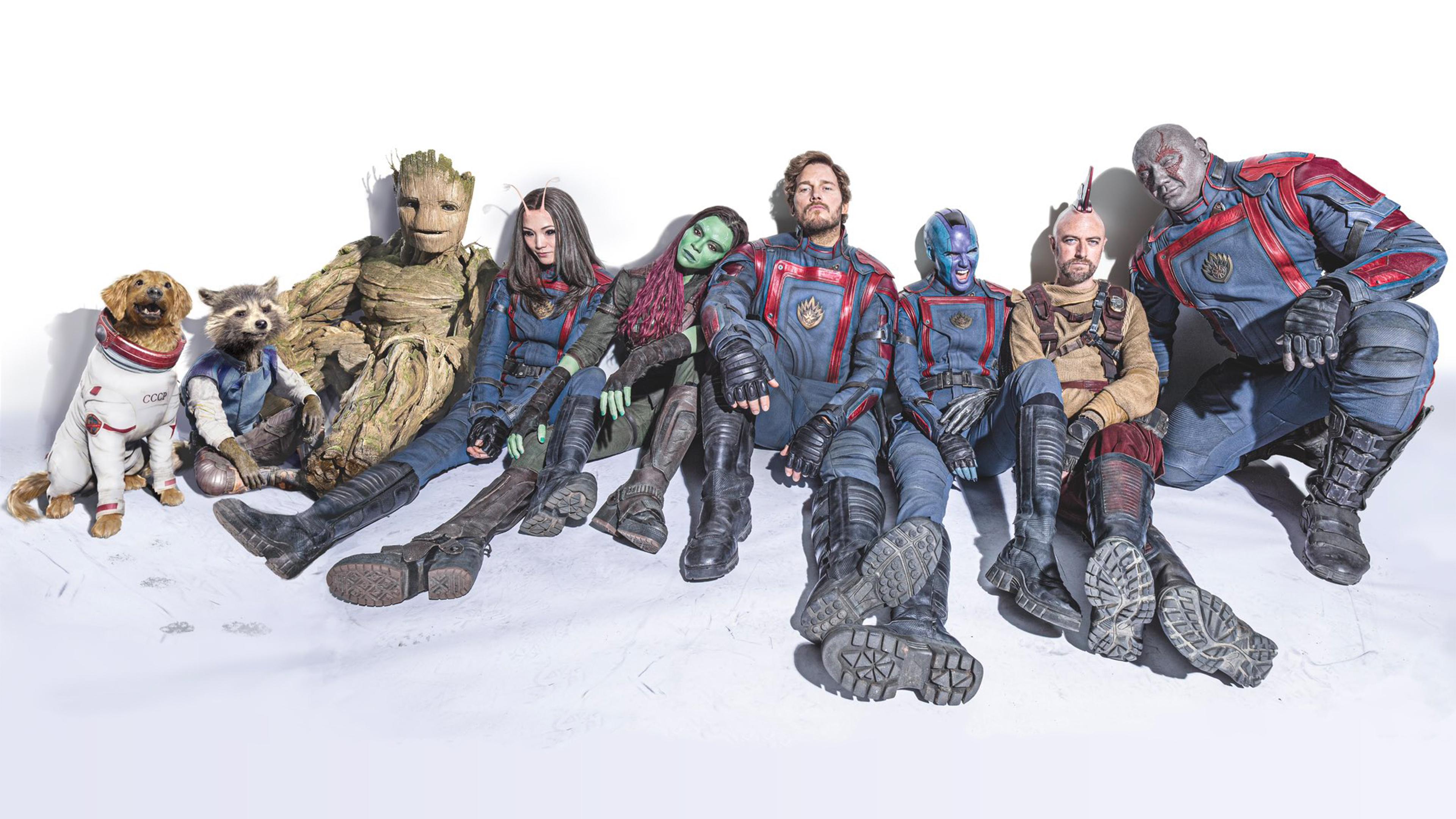
The very best movie out of the Guardians Of The Galaxy trilogy and quite possibly one of the best movies the MCU has ever produced, period. In this galactic threequel, the Guardians need to team up one last time to save one of their beloved friends from the clutches of the High Evolutionary (Chukwudi Iwuji), a cruel and psychotic scientist who will stop at nothing to “perfect” the universe as he sees fit. Chukwudi is downright despicable as the High Evolutionary, a twisted and sadistic madman who takes great pleasure in inflicting pain and torture upon his poor creations. Rocket’s (Bradley Cooper) backstory is as touching as it is heartbreaking, with each flashback drawing you deeper and deeper into his tragic beginnings. But James Gunn is the heart and soul of this story about redemption, change, and how the power of family can fix even the most broken people. Guardians of the Galaxy Vol. 3 is nothing short of a moviemaking miracle, a genuinely unique, refreshing, and original experience that reminds us all of the power of movies and what they can accomplish. Four stars.

4. Godzilla Minus One

SOURCE: Toho

An epic return to form for Japan’s most iconic movie monster, and just in time for his 70th anniversary. After the world was left devastated in the wake of World War II, a post-war Japan must unite against a new threat facing their nation — a 160-foot monster known as Godzilla. Taking inspiration from his roots as a metaphor for nuclear warfare, Godzilla is at his most terrifying here and wreaks havoc in ways we’ve never seen before. Godzilla’s sheer size and scale feels much bigger and more ominous than ever, and the destruction he leaves in his wake feels downright nuclear. But the disaster elements are commonplace in most Godzilla movies — what elevates Minus One is a very human story that focuses on war, PTSD, grief, guilt, and finding reasons to live in a world that feels like it’s always crumbling. Director Takashi Yamazaki gives the characters urgency and humanity that makes you want to root for them, even in the wake of an unstoppable Kaiju rampage. Godzilla Minus One is the surprise hit of the year that is as entertaining as it is emotional. One of the best modern-day Godzilla movies, if not of all time. Four stars.

3. Killers Of The Flower Moon

SOURCE: Apple Original Films

You don’t merely watch Killers Of The Flower Moon — you are traumatized by it. You sit in silence as a gaping sense of loss washes over you, like watching your own child die in front of you. Based on David Grann’s book chronicling the horrific Osage murders of the 1920s, Martin Scorsese’s sweeping crime saga is a striking and observant portrait filled with beautiful, bold, and striking colors and harrowing scenes of violence, terror, and tragedy. Leonardo DiCaprio and Robert De Niro give some of the best performances out of their entire careers, but Lily Gladstone outshines everyone else with a captivating performance filled with strength, bravura, power, grief, and a deep-rooted pain that could only last for generations. But Martin Scorsese deserves high regard for giving this subject matter the respect, the seriousness, and the attention that it deserves. At three hours and 26 minutes, Killers of the Flower Moon is one of Martin Scorsese’s longest films ever, but it is simultaneously one of his most essential. You will not find another film in 2023 as important to watch as Killers Of The Flower Moon. Four stars.

2. The Iron Claw

SOURCE: A24

A devastating behind-the-scenes look at one of America’s most notorious wrestling families and the relentless tragedy that followed them throughout their lives. Zac Efron gives an incredibly nuanced performance as world champion Kevin Von Erich, but it’s his on-screen brothers Jeremy Allen White, Harris Dickinson, and Stanley Simons that really round out this brotherhood and make it feel grounded and real. The wrestling sequences are brutal and unrelenting, with each punch, kick, throw, tackle, and impact pushing these brothers further and further past their limits. The cinematography by Matyas Erdely puts you right in the ring and makes you feel just as bloody and exhausted as these brothers are. But writer-director Sean Durkin deserves special praise for portraying this family not as larger-than-life wrestling icons, but as everyday people who have their own dreams, desires, fears, and aspirations. The big achievement with The Iron Claw isn’t just how faithful it remains to the real-life family — it’s how human it feels and how much these brothers mean to each other. A beautiful yet heart-wrenching picture that demonstrates just how beautiful and fleeting life can be. Four stars.

And finally, we come to my number one movie of 2023. Just like with any other moviegoing experience, I’m always looking for a film that leaves an impression: one that lingers and stays with you long after you’ve left the theater. But with this movie, the impact was immediate and horrifying: like watching a bomb go off in front of your eyes. This is the most engrossing, intriguing, absorbing, ominous, and foreboding film of the year by far, and that film is…

1. Oppenheimer

SOURCE: Universal Pictures

Recounting the life story of the father of the atomic bomb, Oppenheimer follows his life from his early university days to creating the bomb to witnessing the nuclear fallout from its creation. Writer-director Christopher Nolan accounts for nearly every aspect of J. Robert Oppenheimer’s life in vivid detail, while longtime collaborator Cillian Murphy does an impeccable job portraying the physicist at every point of his life. The cast is all exceptional, with Emily Blunt and Robert Downey Jr. being two of the strongest highlights. The score by Ludwig Goransson is entrancing, mesmerizing, and unsettling. And when that bomb goes off during the Trinity Test sequence, I’ve never felt a blast in a theater more than I ever did in that moment. Yet for all of its technical achievements, the greatest thing Oppenheimer does is capturing the fallout of the atomic bomb — how global powers reacted to it, how Washington politicized it, how the world felt threatened by it, and how Oppenheimer’s life was forever changed by it. More than anything else, I wanted Oppenheimer to show what unleashing nuclear warfare onto the world would do to the soul of a man, and Christopher Nolan does a brilliant job showing how Oppenheimer remained haunted by his achievement for the rest of his life. The scariest part of Oppenheimer isn’t wondering if his creation will end up destroying the world — it’s wondering if it already did. Four stars.

And that’s a wrap on 2023, folks. I hope you all have an amazing 2024. And if somehow David Zaslav or Elon Musk is reading this, I wish you the opposite.

– David Dunn

Tagged , , , , , , , , , ,

“OPPENHEIMER” Review (✫✫✫✫)

Becoming Death, The Destroyer Of Worlds.

On August 6th, 1945, the United States dropped an atomic bomb over Hiroshima, killing over 70,000 people and burning, scarring, and poisoning several hundred others. A few days later, the U.S. dropped a second bomb on Nagasaki, killing 60,000 more people. That’s at least 130,000 dead, and several historians estimate that casualties were actually much higher. If that bomb were dropped on U.S. soil instead, it would have meant the death of America. Maybe it already does. 

The argument lingers over how necessary those bombings were in effectively ending World War II, but even those arguments don’t answer one key question: what is the cost of taking all of those lives? History gives us hindsight of what the literal fallout from those bombings was, but what do all of those deaths do to a man? What is it like to feel the weight of a thousand burning souls on your shoulders? 

Oppenheimer answers this question with cold, stark, unflinching reality, simultaneously providing us with a behind-the-scenes look at how the atomic bomb was made as well as a peak into the soul of the man tortured by his own creation. Written and directed by Christopher Nolan (Inception, The Dark Knight trilogy), Oppenheimer recounts the story of the infamous father of the atomic bomb through three key points of his life: his academic upbringing in Cambridge, his days working on the Manhattan Project, and his security clearance hearing in 1954. While all of these storylines are being portrayed simultaneously, all of them are linked toward one recurring theme: Oppenheimer, and humanity itself, hurtling towards a dark, inevitable fate that all seem powerless to prevent.

I remember the first time I saw J. Robert Oppenheimer speak. It was during the 1965 documentary “The Decision To Drop The Bomb,” where he uttered the infamous quote “Now I have become Death, the destroyer of worlds.” However, the thing I remember most from that telecast wasn’t those words: it was Oppenheimer’s eyes. His face was cold, expressionless, the light from his eyes evaporated as if he were a corpse confessing his soul. He looked as if the atomic bomb went off inside of him, and his body on the outside was decaying from the nuclear fallout from within. 

More than anything else, I wanted Oppenheimer to capture what it’s like to be the man behind the deadliest weapon in human history. I wanted to see what that does to a person — what knowing the death and destruction you have caused does to your spirit. Oppenheimer gave me more than what I asked for and delivered a dramatic epic that’s part tragedy, part cautionary tale, and part Greek fable not unlike that of Prometheus, the god of fire. 

A key part of that comes from one of Nolan’s longtime collaborators Cillian Murphy, who convincingly portrays Oppenheimer at every point of his life. At the beginning of the film, he’s a curious and ambitious young scientist who dreams of atoms, molecules, and the world of matter that hides behind our own. As the film progresses, he transforms into an atomic-sized dramatic force determined to bring the Manhattan Project to life. It’s only after the Trinity test that he becomes Oppenheimer as we recognize him — an aging, decrepit shell of a man haunted by the nightmares he helped create. Cillian brilliantly portrays Oppenheimer not as a historical figure, but as a real person experiencing all of these events in real time. While the film doesn’t excuse his actions, Cillian humanizes Oppenheimer so effectively to the point where you understand where he’s coming from. At times, you even feel bad for him. 

But Cillian is only one part of this giant and mesmerizing nuclear puzzle, and his exceptional castmates help complete it. Emily Blunt plays Oppenheimer’s wife Kitty, and her fiery, ferocious spirit perfectly balances Cillian’s nuanced, colder demeanor. Matt Damon plays Oppenheimer’s handler, and his snarky condescension brings welcome brevity and comedic timing to a film that usually feels unbearably heavy. And I’m happy to say that Robert Downey Jr. was exceptional as AEC chairman Lewis Strauss. I was worried after he finished his time as Iron Man that he might become complacent and not want to work as hard for future roles. Oppenheimer demonstrates that he’s still got the acting chops, and if you give him a good part, he’ll damn near outshine everyone else in the movie.

And like all of his movies before, Christopher Nolan outdoes himself in his commitment to only using practical effects. It all culminates into the Trinity test sequence, which is actually the only time we ever see the atomic bomb explode on screen. The buildup and anticipation was nerve-wracking, the score by Ludwig Goransson was intense and anxious, and the cinematography by Hoyte Van Hoytema captured everyone’s uneasy expressions beautifully. But when that bomb went off, that bright light consumed the screen, and the sound design shook the theater like an earthquake… dear reader, I have NEVER felt an explosion like that in the cinema ever. It felt like you were in the bunker with Oppenheimer, and like everyone else on the Manhattan Project, you were worried you were going to set the sky on fire. 

But amazingly, that explosion was not the most impactful thing from the movie. What impacted me most was witnessing the fallout of it — how global powers changed, how the world reacted to its creation, how Washington scrambled to politicize it and benefit from its power, and the guilt and the grief that racked Oppenheimer for years after he detonated that first bomb.

We never actually see the bombings of Hiroshima and Nagasaki, and rightfully so. After all, Oppenheimer never saw it himself, so it makes sense that we share his perspective when he heard about it afterward. But what’s incredible is despite never witnessing it, Oppenheimer imagines it, and his imaginings are horrifying. He feels the bomb go off and the bright light consuming his body. He feels flesh burning and sees charred bodies crumble into ashes. And he hears the shrieks and screams as they fill his ears like a chorus from hell.

Oppenheimer is a haunting and harrowing vision of one man’s nuclear nightmares and what they may mean for the future of the human race. By the end of the film, the scariest thing isn’t wondering if the world will end from nuclear warfare — it’s wondering if it already did. 

Tagged , , , , , ,