“It’s A Wonderful Life” Is Getting A Not-So-Wonderful Sequel

The nightmare of all film news has just been unveiled. Reported yesterday by outlets including The Hollywood Reporter and Variety, it is revealed that Star Partners and Hummingbird productions are beginning work on a sequel to the 1946 Frank Capra classic It’s A Wonderful Life, a magical story about one man’s life and learning to appreciate what one has in life. Karolyn Grimes, who portrayed Zuzu in the original film with the iconic line “Every time a bell rings, an angel gets his wings!” is set to return for this film, showing George Baily’s grandson (also named George) how much better the world would be had he not been born.

“The new film will retain the feeling of the original, and it simply must be shared,” Grimes said. “I’ve probably read close to 20 scripts over the years suggesting a sequel to ‘It’s a Wonderful Life,’ but none of them were any good. The script by Bob Farnsworth and Martha Bolton was wonderful, and I wanted to be involved with his version of the film immediately.”

Let me start by saying the obvious: are you freaking kidding me.

Yes, Grimes is coming back. Yes, its being released at Christmas. Yes, it continues the story.

No, I don’t want this being made. The original was a classic in ways no other film has ever matched, not even with The Wizard of Oz or The Godfather. Have you ever heard of the term “LEAVE IT ALONE” Hollywood? No. Of course not. Because you’re a hand-grubbing money maker who is only looking for your next opportunity for a paycheck. There is absolutely no reason for this to be made. No flipping reason.

And to the people who say to “Be open with it.”  Here is my response:

NO

I am so sick of my childhood movies being remade or restructured into sequels when they indulge into stories that have no relevance and no influence with todays audience. And before you say anything further, no, it means nothing that Zuzu likes the script that she read. There are so many creators and writers of their original projects that enjoyed movie adaptations that everyone (myself included) hated. Example: Stephanie Meyer and “Twilight”.

I’m going to have a conniption about this all day. Sound off on your comments below. I’m too frustrated to follow up on this.

-David Dunn

Source: The Hollywood Reporter, Variety

“Bourne” To Be “Fast & Furious”

Brilliant. Have an already exhausted franchise revitalized by the guy who brought us Fast And Furious. Just brilliant.

News broke recently about the upcoming untitled Bourne sequel starring Jeremy Renner. Before you ask, no, Matt Damon is still not in it, so I don’t know why its still being called “Bourne” anything, but nevermind. A director has been selected for the project, and it is japanese filmmaker Justin Lin, director of the last four Fast And Furious movies.

Full announcement by Deadline below:

“Justin Lin will direct the sequel to the Tony Gilroy-directed ‘The Bourne Legacy’, the pic that kicked off storyline of Aaron Cross, the character played by Jeremy Renner.”

Are you freaking kidding me.

First of all, I’m not a fan of any of the Fast And Furious movies, so don’t even get my opinion on that yet. My concern is the vast difference in the series’ sense of style. The Fast And Furious movies are hyped-up, preposterous, adrenaline and testosterone-fueled action blockbusters filled with big explosions, beautiful women and slick cars. Nothing wrong with that, but how the blazes can this relate to the Bourne franchise? The Bourne movies were birthed as smart, slick, intelligent and tensly-knit psychiological thrillers, with some action scenes thrown into the mix of deep and thought-provoking stories. Where, in a list of directors that includes Doug Liman, Paul Greengrass and Tony Gilroy (P.S. You suck), did they think a director such as Justin Lin was the right choice for the next Bourne movie?

I’m major OCD-ing this, I know, but this announcement just flusters me. I’m going to be open-minded when this movie comes out, but until then I’m just waiting for the announcment that Paul Walker will be cast as Jason Bourne (please God, don’t let me jinx it).

What do you think? Yes or no to Justin Lin? His last two Fast and Furious movies were the only ones certified fresh on Rottentomatoes and have overall recieved praise from mainstream audiences, so Lin has that to be proud of. He just doesn’t have much praise from me is all.

-David Dunn

SOURCE: Empire, Deadline

“ALL IS LOST” Review (✫)

All Is Lost? You have no idea. 

I’m about to save you twelve dollars and about two hours of your life. Robert Redford lives.

Frustrated? Good. You’re supposed to feel frustrated, because that’s all the movie makes you feel. Out of all of the survival movies you will ever see, expect All Is Lost to be a bare, boring, and mindlessly pointless experience.

Here is the premise of the movie: Robert Redford is on a boat, trying to survive against storms at sea.

That’s it. That’s as much depth and interest as you’re going to get with this film’s premise. Make no mistake fellow reader: All Is Lost is aggressively bad. It is the most boring film of the year. It is the most forgettable film of the year. If the Academy Awards had an award for Most Mundane Picture of The Year, All Is Lost wouldn’t only be the winner of the category, it would be the only film nominated.

And yet, strangely enough, the movie has been mostly well-received by critics. The movie has a 94 percent rating on Rottentomatoes and an 88 percent on Metacritic, so there will be no shortage of people trying to defend it. Here are the most popular arguments defending the movie:

“The film is great at latching your attention despite limited dialogue.”

It’s true that the first 20 minutes are exciting enough to do a good job at latching you’re attention. The other hour and a half, however, could not be more repetitive or frustrating. Only two lines of dialogue are spoken throughout the film: “This is Virginia Gene with an S.O.S. call, over?” and profanity. That’s it. The rest of the movie is Redford staring out into an empty ocean with a deep, dreary melody playing in the background. Oh boy! Music! That sure will keep us interested!

“J.C. Chandor was masterful as a writer/director.”

It’s hard to make an argument that he even wrote this. The screenplay was a little more than 31 pages, barely any material to substantiate a feature-length motion picture. Chandor, who is most known for the intelligent and conversational Margin Call in 2011, was great as a writer, making an intelligent, well-crafted picture filled with character depth, dialogue and dimension. Now, he has reverted to making All Is Lost. Why? What convinced him to step out of his comfort zone as a writer? With the clever, intelligent and enticing dialogue now missing from Margin Call, his sense of style is just as absent, and it gives the film an empty feeling that feels like it’s just half complete. It’s better, in fact, to describe the movie as a feature-length short film, meaning it’s a 30-minute television special stretched out to feature length simply to enhance profit.

“Robert Redford was incredible in the movie.”

Yes, I see Redford is in the movie. Thank you for pointing out the obvious. He is completely and utterly useless. Notice with the plot synopsis, I never called him by his character name. That is because his character doesn’t have a name, credited as “Our Man” on the international movie database. Redford is not acting here. He is modeling, staging and positioning himself in meager, idle positions and actions as Chandor commands him to flip from one side of the boat to another. The character is so impersonal, so thinly written and so emotionally bleak that there is little reason to care about him or be motivated by his journey. So thanks, Chandor, for casting Redford in a character nobody gives two rips about.

Compare this to any survival movie written and produced in the past 30 years. JawsCast Away127 HoursThe GreyGravity. Look at all of those movies and try to remember the emotions you felt while watching them. What is it about those movies that latched everyone’s attention? What captivated audiences and compelled them to care for these characters to survive?

That’s exactly it: Characters. We cared about Chief Brody when his son barely missed the shark’s jaws. We care about Chuck and Wilson because Chuck needs to get home to his girlfriend Kelly. We care about Aaron Ralston because of how estranged he was with his family, with John Ottoway when we realize his wife is dying, or with Doctor Stone when we realize what became of her daughter.

We care about these characters not because of their situations, but because of their inner turmoils that compelled them to keep living: They all had something to live for.

What reason does Robert Redford have to live for? We are told nothing except for that he’s “Our Man.” Riiiiiiight.

It’s movies like Jaws and Cast Away that keeps us away from the ocean, but it’s movies like All Is Lost that keeps us away from the movie theater. All Is Lost? You have no idea.

Tagged , , , , , , , , , , , , , ,

“12 YEARS A SLAVE” Review (✫✫✫✫)

Over a decade of injustice and cruelty.

12 Years A Slave is quite possibly the best film of the year.

It is also the most disturbing.

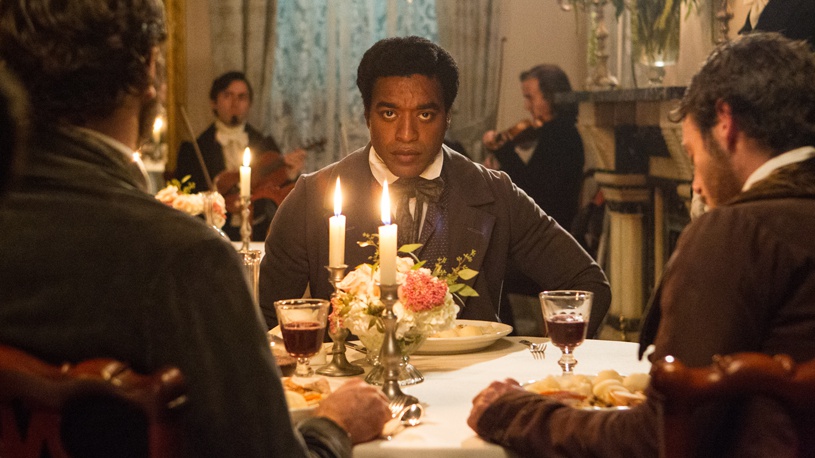
Based off the 1853 autobiography of the same name, 12 Years A Slave follows the true story of Solomon Northup (Chiwetel Ejiofor), a free black man who lives with his family and plays the violin in Saratoga, New York.

One evening, he becomes acquainted with two young gentlemen who claim to be circus performers looking to hire him for a one-night gig. When he wakes up the next morning, he is in chains, and realizes that he was drugged, kidnapped and sold into slavery by his captors. During his years as a slave, Northup goes from one owner to the next, from a kindhearted owner named William Ford (Benedict Cumberbatch) to a cruel, racist and mean-spirited pig named Edwin Epps (Michael Fassbender), who presents the greatest trials he must face if he is ever to survive.

12 Years A Slave is a film that not only lives up to all of its built-up hype and expectations: in many ways, it exceeds them.

Its quality as a work of art is so striking and powerful that it can be compared to other historical tragedies, including The Pianistand Schindler’s List.

Director Steve McQueen, who made the morally reprehensible and eerily bleak film Shame back in 2011, redeems himself here as a filmmaker. McQueen, in collaboration with cinematographer Sean Bobbitt, is not only masterful with framing his articulate, beautiful shots with 12 Years A Slave, but also brilliant with orchestrating scenes between his actors, showing us the bleak realism and truth of the slavery years in America.

Ejiofor, who portrays Northup in 12 Years A Slave is endlessly captivating. In moments where you think he might just be phoning it in, or just going along with the motions, he surprises you and releases an emotional intensity in ways no other actor has this year, not even Forest Whitaker in Lee Daniels’ The Butler. Newcomer Lupita Nyong’o plays a young female slave in this movie so passionately that you forget she’s an actress and slip into her character’s tragedy as a human being more than you do as a movie character.

Most noticeable perhaps is Michael Fassbender as Edwin Epps, who is so hateful and so spiteful in this role that all of the audience’s energy, anger and frustration is focused on him and his sadistic acts. Fassbender was brilliant in his portrayal, and I sincerely hope that he at least gets an Academy Award nomination for his performance.

Every other aspect of this film can be praised endlessly. The script by John Ridley, who wrote Three Kings in 1999, was endlessly emotional and captivating. The score by Hans Zimmer was quiet, humble and breathtakingly beautiful, encompassing both the truth and tragedy of Northup’s heartbreaking story.

However, let there be a strong word of caution: 12 Years A Slave will elicit violent reactions from its audiences. You will laugh. You will weep. You will grind your teeth in anger and frustration, maddened by the many years of cruelty, prejudice and barbarism that no human being should ever have to experience. But it compels you to care for the character, to reach deep down in your heart to feel what he is feeling, to experience compassion and sympathy in ways almost no other film can do, not even with Schindler’s List. 

And let this be a testament to the film’s quality: at the end of the showing, there was a white man who could be heard weeping in the back of the theater. In between his hiccups, tears and hysterical reactions, he turned toward the black viewer sitting next to him, shook her hand and after introducing himself said to her, “I’m so sorry for what my race did to your ancestors.”

That man felt a powerful feeling of guilt and shame for the things that he saw in 12 Years A Slave.

That man was me.

Tagged , , , , , , , , , , , , , , , , , , , , , , , , , , , , , , , , , , , , , , , ,

Tom Hardy Is “The Rocketman”

Tom Hardy is Elton John.

Yes, you read that right.

Details have recently emerged from multiple outlets that the Inception/Dark Knight Rises star will be portraying the Grammy-award winning singer in his upcoming biopic Rocketman, to be directed by an upcoming director named Michael Gracey with a screenplay penned by Pride And Prejudice/War Horse scribe Lee Hall. The full announcement by Focus Pictures CEO Peter Schessel can be seen below:

“Tom is quickly becoming known as one of the world’s most versatile actors, and like others at the top of their craft, he has proven his ability to transform himself completely into the character or subject found in the material. We are confident that Tom will embody the physicality and spirit of Sir Elton.”

The first thing I am going to ask (and I believe this is pertinent) is this: what in God’s name do you think you are doing?  

Don’t get me wrong: I absolutely love Tom Hardy. Fellow moviegoers will recognize him as Mr. Eames from Inception or as Bane from The Dark Knight Rises, but in his early career you will recognize him as Officer Twombly from Black Hawk Down, or as Captain Picard’s clone Shinzon in Star Trek Nemesis. I’ve always enjoyed seeing him in his many roles, and I also agree that he is a very talented, versatile actor.

That being said, I just don’t see it.  Hardy is not a singer.  He doesn’t look or embody the flamboyant type, and certainly not to the degree that Mr. John is.  He is an action hero: he’s the guy with the big burly muscles, the tough guy you can look towards and know that he’ll get the job done. If those other film roles don’t convince you of that, look at his current filmography: he’s currently set to take over Mel Gibson’s role as Mad Max in Mad Max: Fury Road and as Sam Fisher in the currently developing Splinter Cell. He is surrounded (I’m sorry: buried) in action roles, so how will he have time or attention to be able to portray an iconic pop singer?

On that note, who the heck is Michael Gracey? According to iMDB, Michael Gracey worked as a visual effects artist on multiple low-budget films from 2001 to 2005, including a horror film called Cubbyhouse and a crime drama called The Magician. So, basically no one that anyone would know about right? So what the heck is he doing directing a movie about Elton John??? With a film property like that, you would expect to give it to someone a little more experienced with the genre, such as Taylor Hackford with Ray, or Rob Marshall with Chicago. Why Michael Gracey? Or for that matter, why Tom Hardy?

The more I think about it, the more frustrated and confused I become, but the reality is my opinion doesn’t matter. Do you know who’s does?  Elton John himself, who is not only fully supportive of Tom Hardy casting decision: he’s fully supportive of the movie itself, not only serving as its executive producer but also as its composer, re-recording many of his classic hits to coincide with the film’s release.

I’m refuse to think about this anymore. I’m going to wait to see more media before I judge it any further. I’m just sayin’, I think its going to be a long, long time ‘til touch down brings me round again.

-David Dunn

SOURCE: The Hollywood Reporter, The Verge

“RUSH” Review (✫✫✫✫)

Don’t think.  Don’t pause.  Just drive.  

I couldn’t have thought of a better title for the movie Rush, because that’s exactly what it is: an unstoppable and uncontrollable rush of energy, excitement, and gravitas, a movie that starts on a high note and simply refuses to let up all the way through.  I hear a lot of complaints that there are biographical movies that are more concerned with cashing in on people’s legacies rather than making an authentic account of a person’s true story, such as Jobs or The Iron Lady.  Here is a break from all of that, a refreshing and ideal account of two racers who live every moment of their life trying to figure out how to beat the other guy, while understanding that their symbiotic relationship is what made them both great racers in the first place.

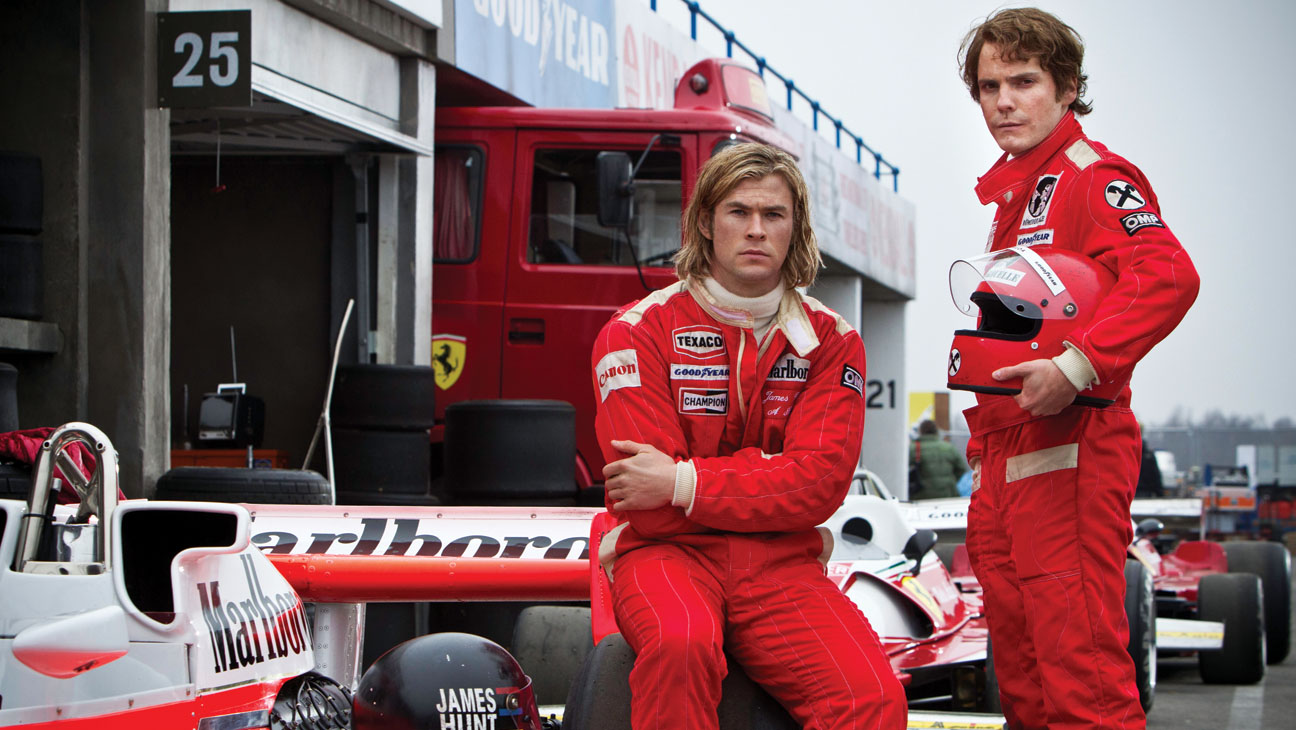
Focusing on the 1976 Formula One Grand Prix season, Rush follows the story of two different racers, both with polar opposite personalities and complexions.  James Hunt (Chris Hemsworth) is a hard-headed racer who races with passion instead of brains, and a playboy who drinks a lot, smokes a lot, and sleeps with beautiful women, a lot.  Nicki Lauda (Daniel Bruhl) is a intelligent, smart, and crafty german who is just as focused and analytical as he is rude and ignorant. The film chronicles the contempt they feel for each other and the mutual respect that makes them strive to be better than the other man.

Before you go and see this picture, I encourage you to go online and google the names “James Hunt” and “Nicki Lauda” and look at their images.  Got it?  Okay, now that you’ve done that, go and watch the movie.

If you actually took the time to open up another tab and look at the images, you will be just as shocked as I was.  Comparing the sight of Lauda and Hunt with that of Bruhl and Hemsworth isn’t comparing them at all: they look exactly like the same characters, from the red jackets around their back to the color and hairstyles that we see on their heads.

I love it when movies do this: when movies are so accurate to the real-life figures that they copy their appearance so accurately, it is nearly impossible to differentiate from them.  We’ve seen this from The Fighter in 2009, and recently from Daniel Day-Lewis in Lincoln.

Here is yet another example of a movie that is compelled by truth and driven by accuracy, pun intended.  Rush is exhilarating.  Exciting.  Edgy.  Anticipative.  Emotional.  True.  Everything about this movie is a heart-pounding, sweat-pouring adventure, and what’s truly impressive is not that the movie makes us feel this way: its the fact that it really happened, and that really director Ron Howard is just documenting it rather than retelling it.

One of the highlights in the film are easily its lead actors.  Not only do Hemsworth and Bruhl look exactly like the people they are portraying: they act like them too, with their rivalry and their edginess apparent in every fraction of a scene.  Sometimes their clashes are funny, like the dialogue bits between Mark Zuckerberg and Eduardo Saverin in The Social Network, while at other times its strikingly serious like the James Braddock/Max Baer rivalry in Cinderella Man.  Whatever the situations, these actors do well at remaining in tense situations and they never, ever break their character.  Hemsworth is energetic, lively, and egotistical as Hunt, a man whose only loves are beautiful women and racing.  Bruhl is equally as egotistical, but he’s got a sly smartness about him you can’t help but appreciate.  There’s one great scene where Hunt calls Lauda a rat and he responds by saying “You think I’m hurt that you call me a rat, Hunt?  Rats are ugly, but they are smart.  Intelligent.  I am proud of that.”

The film doesn’t slow down at their performances, however, and filmmaker Ron Howard (Apollo 13, A Beautiful Mind) and screenwriter Peter Morgan (The Queen, Frost/Nixon) are quick to follow up on the pace of these two fine actors.  The guys who made Fast And Furious could take a hint or two from this movie. Morgan and Howard not only succeed in making the movie exciting and suspenseful through key moments in races, press conferences and private, vulnerable moments when these racers are all by their lonesomes: they’ve managed to make it gripping and relevant, a grounded drama thats equal parts and insightful into these two men’s lives that we feel like we’re witnessing their story upfront in the pit, not viewing it from far away on the sidelines.

Oh, I could go on all day praising this film and how all the elements culminate into a near masterpiece.  The soundtrack by Hans Zimmer is tense, unsettling, and noble, defining these men’s relationship just as well as the movie does.  The editing is tight, crisp, and clean at the hands of collaborators Daniel Hanley and Mike Hill.  For Pete’s sake, even the cinematography by Anthony Mantle was so good at capturing emotions and details so intimate, Howard would probably have missed some of them if Mantle wasn’t there to point them out.

Bottom line: Rush is entirely, unforgettably awesome.  It’s a strong and powerful tale about two passionate racers who knew what they were after and were willing to sacrifice whatever they could to go after it.  We see why they want to beat each other.  We understand who they are and why they are racing.  We know what makes them tick and we want to see them make it through every pulsating moment of the film in order to accomplish their dreams.  Trust me, you’re going to want to sit in on this race.  Oh, and bring your seatbelt.  You’re going to need it.

Tagged , , , , , , , , , , , , , , , , , , , , , , , , , , , , , , , , , , , ,

“DON JON” Review (✫✫✫)

Oh, Donnie boy…

 “There’s only a few things I really care about in life,” a rich, deep boston voice says as we look at him staring  at his bright laptop screen shirtless in a dark room. “My body, my pad, my ride, my family, my church, my boys, my girls, and my porn.”

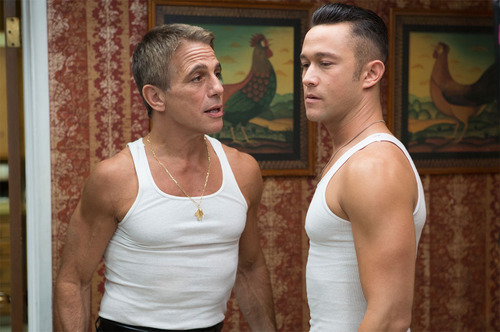
That last one doesn’t really belong there, but whatever, its in there.  The man we are looking at is Joe Martello (Joseph Gordon-Levitt), a thick, cut, and strongly appealing young man who has a slick, black haircut and a grin on his face that looks like he just finished up business in the bedroom.  His friends call him “The Don” because he’s able to score “dimes” on the weekends, which is another way of saying “That woman is a ten!”

One night in the bar, Donnie meets the best dime he’s ever seen: Barbara Sugarman (Scarlett Johansson), a beautiful blonde bombshell that turns heads and raises attention everywhere she goes.  To Donnie, this is simply another case of trying to score a hot night, but Barbara isn’t that easy.  She wants something more meaningful than just a one-night stand: she wants an affectionate, fairytale relationship, the cheesy kind you see in those unbearable romantic comedies starring Anne Hathaway and Channing Tatum.

So Donnie takes a deep breath and waits it out, hoping for her to come around eventually and give him the chance to slip under the covers with her.  The more time he spends with her, however, the more his addiction to pornography gets in the way and stops him from having a more meaningful relationship.  Now conflicted between his feelings between Barbara and his dependency on pornography, Donnie needs to figure out which is more important to him before she leaves him and all he has left is his laptop and his internet wifi.

Before I continue, let me issue a short disclaimer.  If you do not like R rated movies, do not watch this movie.  If you don’t like looking at nudity, do not watch this movie.  If you don’t like swearing, do not watch this movie.  And if you don’t like movies about sex, DEFINITELY do not watch this movie.  This is a picture stuffed to the mouthful with sex, nudity, T&A, F-words, censored and uncensored pornography to the point where I believe it deserved, and should have been rated, NC-17.

The only reason I issue this warning is because I know my readers, and the majority of my readers do not appreciate sexually explicit films that make jokes about the male/female anatomy and what goes on inside the bedroom.  Their views are warranted, and in many ways I share many of those same views with my readers.  I, however, am not as close-minded to this idea if it means not enjoying Don Jon, and believe me, that is a very hard thing to do.

That’s probably the worst word I could have used to describe this picture just now, but nevermind.  Don Jon is good.  Very good.  How good?  So good that it made me, a conservative reviewer who hates excessive nudity, enjoy it very, very much.  Trust me, I am not easy to please.  If you don’t believe me, you will when I tell you I rated The Hangover as the worst picture of 2009.

I find it interesting how effective Gordon-Levitt is here as a filmmaker.  His writing is fresh, fun, and original, exercising dialogue that is both clever and witty while at the same time being deeply meaningful and expressive.  The cast is equally brilliant, as their charismatic portrayals breathe life into these characters in ways that not even an animated rendition could do.

What I find more interesting, however, is how Gordon-Levitt handles this film as a director, using space and situations in his film to define Jon’s character and to show what sort of emotional state he’s in.

For instance, look at how he shows Jon’s everyday routine.  When Jon wakes up in the morning, he cleans his room the best way a bachelor knows how, he drives to Church, he goes to confession, he eats lunch with his family, he works out at the gym, he goes to a club to meet some beautiful lady, and then he ends his nights watching a skimpy porn video.

Got it?  Okay, now look at the variations of this same routine shown throughout the film.  At first its just the same thing over and over again, but later as Jon’s character changes, so does how he behaves during his routines.  When he’s depressed, his room get messy.  When he’s excited, he sings to Marky Mark in the car.  When he’s optimistic, he exercises with other people when he goes to the gym.  But what remains consistent in all of these sequences is him going to confessional and confessing his sins to the Catholic Priest he’s never met, hoping one day to have a clean slate in the eyes of the father.

I don’t think this movie is about a man struggling with his addiction to pornography.  I think this movie is about a man struggling between his lusts and sexual desires and the guilt he silently feels he needs to be redeemed from.  Think about it for a second.  Why else would he go to Church so frequently despite his promiscuous lifestyle?  He’s a grown man, he knows he doesn’t have to go to church if he doesn’t want to.  So why does he go so frequently even though his lifestyle isn’t congruent to that of a catholic?  There’s a deepness developing silently to Don Jon that can only be barely noticed, and if you don’t look out for it, it will slip you past you.

There’s obviously the negative element of watch a movie about pornography, and I would be the first to agree with you.  Even though the pornography is at times censored, its still there, and we can’t help but visualize everything because we’re seeing a rendition of it on the screen.

Still, since we’re talking about pornography, let me retaliate with another film that is also about addiction: a 2011 film titled Shame, starring Michael Fassbender and directed by Steve McQueen.  Like Don Jon, Shame is about a man who holds an unsatiated lust for porn and sex, and his life sinks into a swamp of sadness and depression because of his unsatiated hunger.  Unlike Don Jon, however, Shame is downtrodden, depressing, sickening, despicable, ugly, demeaning, and has no redeeming qualities whatsoever, outside of the acting and the composition.

Don Jon is different.  Unlike Shame, it is upbeat, energetic and joyous, and even though there are dramatic moments in the movie, there is never a moment that feels ugly, sickening, or unclean.  Don Jon is a stylish, articulate, and simply brilliant dramedy.  It is not only a film filled with clever dialogue and solid character development: it actually has a good, wholesome message to take away from the story, something to make you appreciate the small things in life that you never really notice.  I know some people are going to look at this movie from a first glance and ask “Why would I want to watch a feature-length pornography?”  Believe me, fellow reader, if this film can even be categorized as a pornography, its probably the best of its kind.

On a closing note, please don’t tell my mother.

Tagged , , , , , , , , , , , , , , , , , , , , , , ,

A Good Ol’ Cup Of Joe

I recently had the pleasure of sitting down at a college roundtable for an in-person interview with Joseph Gordon-Levitt, the award-winning actor most known for movie roles including Tom Hansen in 500 Days Of Summer, Robert Todd in Lincoln, and John Blake in The Dark Knight Rises.  Recently Mr. Gordon-Levitt (Or “Joe”, as he likes to introduce himself) was working to get publicity for his writer-director debut Don Jon, a romantic comedy coming out this Friday and the reason why me and three other college journalists were able to interview him.

The man who introduced himself to us couldn’t have been more humble, or for that matter, more real.  As I walked into the room with the other university journalists, it was hard to imagine that the well-combed, professionally-dressed man sitting casually at the table in front of us was the same man who fought through topping cars and buildings in Inception, or the same guy who shaved his head in front of Seth Rogan in 50/50.  And yet when he walked up to me, shook my hand, and said “Hi, my name is Joe,” the introduction couldn’t have been more fulfilling, or for that matter, more meaningful.

I was in attendance to the event alongside journalists from Northwestern University, Southern Methodist University, and the University Of North Texas.  We were all eager to ask Mr. Gordon-Levitt our questions about the film and what it was like making the movie.  These are our questions, and this is how he responded.

Question: Before anything else, can I just say that it was completely shocking to see your new look in the first few minutes of the film? Very well done sir.

Joe: Right on. That’s what we were going for.

Q: Since we’re all college students, if you and Don Jon were to teach a course in college, what would you both teach?

J: Jon I guess would probably teach at a bartending school. I don’t think he would teach anything undergrad or graduate.  But what class would I teach? I guess a storytelling class of some sort. I went to college for a couple years and I stopped, which isn’t to say that anybody else should, but for me personally I learn best by doing stuff. So I feel like for me, film school really was working on sets and watching directors do what they do and I don’t know if you know, I run this company called HitRecord, where anybody can come and contribute and its not your traditional production company, but it actually bears a lot of similarities to production companies other than the fact that its open and anybody can contribute. If you’re interested in the process, in how things are done, I would definitely recommend spending some time on the site to contribute to some of our collaborations and paying attention to how its done. I’m on there everyday. These days, we’re in the middle of making a TV show, and I’m directing it, and making stuff. It’s different than a classroom because in a classroom your goal is to teach every student, whereas HitRecord, our goal is to make the best TV show we can possibly make. So unfortunately I don’t get to necessarily spend time with everybody who comes and contributes, because there’s thousands everyday. But I think there’s a lot to be learned there and its really cool actually to see artists that do come in and contribute to HitRecord and do so for a while. You can see them grow as artists. You can see them learn from what they’ve done, and from notes I sometimes give as feedback and watch them improve. That’s always really satisfying.

Q: What audience demographic were you aiming for?  Are you afraid that this type of film because of its content will lose some of its audience? 

J: I was really wanting to make a movie for everybody and so far the reactions have been across the board, whether young or old, or male or female, people have been digging it. So, I was pretty intent on not having it be just a movie for cinephiles. I wanted it to be for everybody. And I think its talking about a lot of stuff that everybody can understand or relate to. I mean, I certainly think it’ll be popular on college campuses. My mom loved it, and I’ve spoken to a bunch of reporters today, some of whom were younger than I am some of whom that were older than I am. Everyone seems to really like it.

Q: This is the first time you’re credited as a screenwriter and director for a feature-length film. What inspired the idea of Don Jon and what story did you find relevant to tell in Don Jon’s character? 

J: Well, I wanted to tell a story about how sometimes people treat each other more like things than like people. I imagine that came from my own experience. You know, actors in our culture are often treated more like things than like people. It’s sort of weird. But I don’t think its just actors, I think everyone experiences that. We have a tendency to put each other in boxes and label them. And rather than actually listening to what someone is saying and paying attention to what is going on right here, right now, we sort of project our own pre-conceived notions onto them and I think it happens all the time everywhere. So I wanted to tell a story about that, then I wanted to tell a story about how media plays into that, also probably because I pay a lot of attention to how media works and the impact it has on people. And so, I thought of a story about a relationship between a young man who watches too much pornography and a young woman who watches too many romantic hollywood movies would be a funny way to kind of get at that question. So that’s the origin of that story.

Q: How similar are you and Don Jon’s viewpoints of the Hollywood system right now? Are you worried people are going to look at that in the movie in a bad way?

J: Not very. I mean, Jon I don’t think really has much of a view on the Hollywood system, I don’t think he thinks about it much. By the end of the movie, he is starting to maybe ask a few questions, and that’s good. But he’s mostly a guy that’s just sort of expects things to be how they’re supposed to be, and wouldn’t really notice if they weren’t. He just treats them as if they are. And you know, the way things are supposed to be is largely defined by the media. By the movies you see, the shows you watch, or the pornography videos you watch, or the magazines you read, or the radio shows you listen to, or the newspaper, any number of things.  You also learn, of course, these expectations from your family, your friends, your church, etc and that’s all in the movie too.

Q: Looking at your filmography, you seem to have a particular interest in the romantic comedy genre. Can you tell me what about that genre that appeals to you?

J: Well, I do all kinds of genres in movies, but why do the romantic comedies appeal to me? I mean, they’re fun to watch, you get caught up in them. I don’t know, what can I say, I’m a romantic person maybe? Me personally, I’m probably closer to Barbara Sugarman than Jon Martello as far as getting twisted up into pre-conceived fantasies from the screen. But you know, romantic comedies, especially really conventional ones, they tend to present things in black and white and love is not that way. Love is actually way cooler than that. Way way more interesting and rich and fulfilling and beautiful than some kind of sappy string section while you’re riding off into the sunset. You have to look for it. And if you’re too busy comparing real life to these sort of overly-simplified stories that you’ve seen, you won’t see it. You won’t see what’s so great about it. But if you kind of let go of those and go “Okay, those are nice movies to watch sometimes, but what is really going on?” There is so much to discover, and that’s I guess what Don Jon is sort of making fun of.

Q: How involved were you with casting? Did you get exactly the people you wanted for this film or did you kind of have to pull some strings for it to work?

J: I wrote it with Scarlett in mind the entire time. From the very beginning of conceiving the character I pictured her playing the part. Julie, I did not, to be honest. I never would have believed that she would have done it and it was a beautiful surprise when she read the script and she did want to do it. I think both of them just turned in such excellent performances. Scarlett is so different from any character you’ve really seen her really play before and I think she brings such charm and specificity to the character, yet at the same time, the character’s shortcomings are very apparent. Those are my favorite kinds of performances because they feel the most like human beings when they’re strengths and weaknesses are on display.

Q: You’re chemistry seemed so intimate and so sincere with Julianne Moore and Scarlett Johansen. What’s it like working with them?

J: On set? On set you know you’re just making a movie. It’s a very technical thing. It’s not like it seems in the scene. We’re creating an illusion. We’re crafting a story. So what its really like is you do the scene for a few seconds, and then you hop up and talk to camera, talk to sound, talk to lights, so its work. But its good work, I love doing it. It’s not honestly too dissimilar from any other scene, where you do the scene and then you cut and you talk about it a bit and figure out how to make it better, see if you have what you need, if you can move on or if you have to do it again. They’re really kind of just like any other scene, they fit into the story and you need to accomplish a certain thing to advance the story in that moment, and you shoot it until you have those ingredients necessary.

Q: When did you make the decision to do these long Carl’s Junior ads instead of having it in the background and putting a focus on it?

J: Yeah, and that’s in the script, there is a scene in the script as the family watches a television commercial with bikini girls in the background. Because again, I think that all types of media are sort of perpetrating a lot of these stereotypes and expectations, and I think any distinction between pornography and many of mainstream media is purely technical distinction. It’s still the same thing. It’s turning a woman into a sex object and reducing her to that.

Q: Now, I heard that Christopher Nolan advised against you starring and directing in your first film.  Can you tell me a little bit about that?

J: Well, that’s not quite accurate. He asked about it. And he pointed out some valid concerns and he asked like “Would you consider directing something first before directing and acting at the same time?” But he did not say like “You shouldn’t do it”.  He was nothing but encouraging. He was never discouraging and that was really meaningful to me.

Q: Regardless, what were some of the challenges you faced during filming? 

J: Yeah, well so its pretty normal for an actor, and I felt this way in the past, when you see yourself on screen, the sight of your own face and the sound of your own voice can be disconcerting. For me, I think just because I’ve made a ton of little short films and videos and things, pointing the camera at myself, loaded the footage onto my computer and cut it up into something and I’ve just done that over and over and over again for years, I’ve sort of gotten used to the sight of my own face and the sound of my own voice. So, that was a challenge that I sort of felt that I had already kind of overcome.

Q: Now in the movie, Jon was very dedicated to church despite his deviant lifestyle. Why did he have such a dedication to church despite the guilt he would bring on upon himself for that?

J: Good question. I think just because that’s how that had always been. That’s the answer. He just did it because he had always done it. That’s what was expected of him. I think that’s kind of why everyone in his family goes to church. I don’t think any of them are really thinking very much about why they are doing it. They’re just kind of doing it. And you know, at the end of the movie, there’s a bit of a change in that, and that’s how I think the whole movie goes, is that by the end this mold that he’s sort of stuck in is beginning to crack and he’s starting to be more curious and start to actually pay more attention to what is going on right here right now.

Q: What do you think happened to Jon after the end of the movie? Did he sort of move on, did he go to college, what happened? 

J: I hope he sort of breaks out of the mold. I think by the end of the movie he’s beginning to ask more questions and be more present and rather than comparing everything in his life to preset expectations he’s beginning to sort of actually pay attention to what is in front of his face. I’m hopeful that he’ll continue along that path. I don’t know whether he’ll finish college or not, I think he was sort of doing that because again, he was supposed to.

-David Dunn

Tagged , , , , , , , , , , , , , , , , , , , ,

“THE BUTLER” Review (✫✫✫✫)

A humble heart living through harsh times.  

When we watch movies like The Butler, we are reminded of our history and why we must never return to the horrible origins that we came from.  When I say that, I am saying that regardless of race.  The film is obviously centered around the issues of slavery, segregation, and racism, and asks us to feel sympathy towards the African population for all of the horrible things they’ve been through.  But the movie evokes a more powerful emotion from me personally, a deep sense of regret and shame that my own race, the Caucasians, were at one point responsible for all of the death and cruelty we inflicted upon our own African brothers.  And why?  Because they have a different pigment than us?  That’s the sort of hate and bias that lead us to World War II when Adolph Hitler led the Third Reich against the Jews.

Based on the career of real-life butler Eugene Allen, The Butler follows the story of Cecil Gaines, a black butler who grew up during the slave era, growed up learning how to be a white man’s servant, got a job at the White House, and continued to serve there for almost 35 years. Throughout his career he witnesses history unfold in itself, from President Dwight D. Eisenhower’s (Robin Williams) decision to enforce desegregation laws in Arkansas, to witnessing the assassination of John F. Kennedy (James Mardesen), to seeing the rise of the Ku Klux Klan and the Black Panthers, to the assassination of Martin Luther King Jr., to the eventual inauguration of Illinois Senator Barack Obama into office.

The Butler is an earnest, humble film, parts approachable and observant yet equally ambitious and honest. Like movies such as Ghandi, The Hurricane, and The Shawshank Redemption, this is a movie that looks into the reality of situations and shows them exactly how they were, no matter how tragic or heartbreaking those circumstances were.

Take, for example, the scene where the Ku Klux Klan is introduced.  During his college years, Cecil’s son Louis (wonderfully portrayed by David Oyelowo), was on a bus to protest against a racist Alabama.  While on their way, their bus stops suddenly as they stare at the white-robed, torch-bearing Klan staring at them with their hateful eyes.  Equal parts petrified and terrified, the protestors desperately tried to escape before the Klan started igniting the bus with fire and molotovs.

I sat there watching these scene, equally infuriated and enraged as I was emotional and mournful.  How could this be our country?  How could this have once been our land, our people who so hypocritically claimed to be the land of the brave and home of the free?

To watch these scenes and to incur such an emotion takes great skill and courage, and I think Lee Daniels does a great job orchestrating these scenes in ways that makes them so emotional and powerful.  Daniels, who was nominated for an Oscar in 2009 for Precious took quite a fall last year when he made Paperboy, a idyllic, preposterous, and morally reprehensible film that was anything except relevant, coherent, and well, good.  Here Daniels redeems himself, and leads a star-studded cast through such a gripping, overwhelming story that I think it surpasses his accomplishes even with 2009’s Precious.

Oh yes, the cast.  The cast is what makes this picture, but you already know that if you take the time to simply read the cast list.  Jane Fonda as Nancy Reagan.  Alan Rickman as Ronald Reagan.  John Cusack as Richard Nixon.  Liev Schriber as Lyndon B. Johnson.  Minka Kelly as Jackie Kennedy.  John Mardesen as JFK.  Robin Williams as Dwight Eisenhower.  Alex Pettyfr as a plantation owner.  Terrence Howard as Cecil’s neighbor.  Cuba Gooding Jr. as a head butler.  For Pete’s sake, Mariah Carrey is in the film as Cecil’s mother and she doesn’t even say a line of dialogue.

The best performances, however, are the lead ones by Forest Whitaker and Oprah Winfrey.  Whitaker, who won the academy award for The Last King Of Scotland in 2006, steals the show in every single scene he’s in, showing the still portrait of a man who is tired, weary, and emotionally strained, a man who has seen endless ages of wrongful suffering but can do little to change it because he’s worrying about himself and his family.  Winfrey is equally as striking as his wife Gloria, a woman who is also hurting and in deep suffering because of her situation and because of a drinking problem she has long struggled with.  Both of these characters are central and integral to the plot and to the progression of the story, and at many times, they’re the only ones carrying the movie through as a whole.

The Butler is one of the best films of the year.  Period.  I know there’s a lot of movies about African-American history being released later on this year (Such as Mandela: Long Walk To Freedom and 12 Years A Slave), but there’s no denying the power, drama, or the history the movie so brilliantly provides us.  Yes, there are some inaccuracies to the butler’s real-life story (Starting with his name, with the real name being Eugene Allen), but the fact that it is loosely told is the best asset Daniels has towards his narrative. Since the figure is so little-known in today’s world, it allows Daniels to let loose and tell the story that he wants to tell, not the story that he’s committed to tell.  This is a movie that shows the history of a great man and a humble servant who was simply trying to support his family and to get through the days of wrongful judgement and discrimination.

Tagged , , , , , , , , , , , , , , , , , , , , , , , , , , , , , , , , , , , , , , , , ,

A Look Into African-Americans In Film And Culture

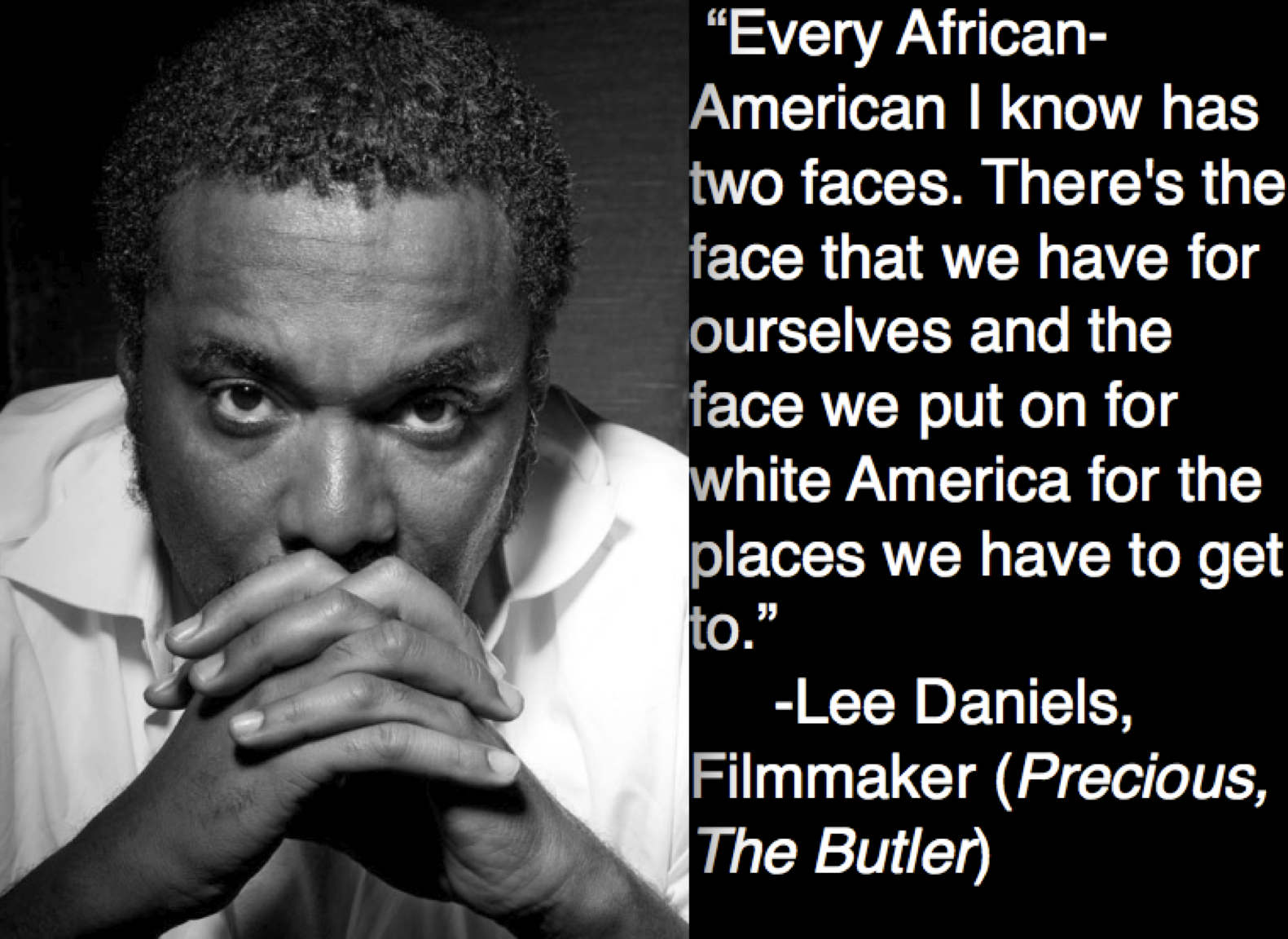
Photo and quote courtesy of Lee Daniels Entertainment

A great realization spread over me as I watched Lee Daniels The Butler with a good friend of mine last weekend: African-American films and movies based on African-American history are exploding in popularity and are becoming more frequent in today’s theaters.

Don’t believe me? Look at the movies being released in just this year alone. You have 42, a biographical picture about Jackie Robinson, the first African ballplayer to play on a dominantly caucasian team. There’s Fruitvale Station, a tragedy about a young black father discriminated and eventually killed by a white police officer in a subway station. There, of course, is Lee Daniel’s The Butler, based on real-life African-American butler Eugene Allen who served in the White House 34 years from the civil rights era all the way to when Barack Obama became president. And being released later on this year is Mandela: Long Walk To Freedom, a biographical picture about anti-apartheid activist Nelson Mandela, and 12 Years A Slave, a true story about a free black man who was kidnapped and sold back into slavery.

Recently speaking to me about the new trend on African-American cinema is award-winning filmmaker and film professor Ya’ke Smith, who recently released his feature debut titled Wolf, a spiritual drama about a young African-American boy who was sexually molested by his pastor and the emotional reprecussions that followed.

“It looks great,” he told me about 12 Years A Slave. Chiwetel man, I’m telling you, that guy, its time for him to get his Oscar. I mean, he’s been doing some great work. I’m really looking forward to that film.”

This isn’t the first year to feature stories promoting equality and nondiscrimination. Since 2009, an increasing number of films follow the African population and of the mistreatment they’ve experienced through America’s history. The Blind SideInvictus, Precious, The HelpLincoln, and Django Unchained all fit during this timestamp.

“I wanna say Django just for the fact that its comedy,” said film senior Avery Hartwell, telling me why Django was his favorite out of the bunch. “I mean, of course its a little history, but its funny. And of course you have some movies that are like Fruitvale Station, you can’t make that funny. It’s serious, of course, and you have to take that seriously. But I like to learn while still laughing, you know? And Django was about learning history, but also laughing about it.”

THE SLEEPER HITS

For the past four years, we’ve had more than eleven films being made about the African-American crusade. In the past, it would be rare to see even two of this genre in the same year.

I notice that the most popular period for African-American films were in the late ’80s and the early ’90s, according to data pulled from IMDB. Films such Spike Lee’s Do The Right Thing and Best Picture winner  Driving Miss Daisy were both released in 1989, while Boyz N The HoodMalcolm X and  Menace II Society were consecutively released from 1991 to 1993.

“African-american cinema of the 90’s is very different from what you’re seeing right now,” Smith said to me. “Again, you had the Spike Lees, the John Singletons, who were really commenting on popular culture  and what was going on at that time. You just had a slew of films that were really dealing with what was going on at the time because these filmmakers were allowed to comment on what was going on and they were able to do it without much censorship.”

As the 90’s faded into the 2000’s, African-American films became as scarce and rare as a sleeper hit in a movie theater.  Of course you would have movies such as The Hurricane come out in 1999, or other films such as Antwone Fisher in 2002 or Glory Road in 2006, but during that period African-American cinema was not as prominent as the typical American blockbusters, including the highly-revered Harry Potter and Lord of The Rings series.

CONVERGENCE AND CHANGE

In 2009, two things happened that profoundly impacted the black community: Barack Obama assuming office on Jan. 20, and the racial discrimination and murder of Oscar Grant III in Oakland, California, which inspired the 2013 movie Fruitvale Station.

“Since Obama has become president, there has been this whole new emergence on the conversation of race,” Smith said. “This whole idea of how African Americans are seen in this country. This whole idea of the African-American struggle to get to where Obama is now. This whole idea of ‘does racism still exist.’ I think all these conversations, because of Obama’s presidency, have started to happen, and then in people’s minds its like ‘Wait a minute, we need to tell our stories again. We need to tell from whence we came. We were once slaves who then were free, then we ended up being domestics, then we ended up being Presidents.”

The last sentence specifically reminded me of a key moment in Lee Daniels’ The Butler, where Forest Whitaker, after facing a lifetime of unfairness and cruelty as both a slave and a manservant, looked at a television screen with tears in his eyes as he saw Barack Obama become the first black president to be inaugurated into office.

But that wasn’t all that influenced this whole exploding trend: Smith and I also discussed the events of Fruitvale Station, in which he also compared to the racial discrimination and beating of Rodney King in 1991.

“You had a cop that got, I think he was given two years, and he got out in months,” Smith said about Johannes Mehserle, the police officer who involuntarily murdered Grant III. “You know, that’s not really justice, right? So yes, when that stuff starts happening again, we begin to talk about race again because it sort of opens up these old wounds that many of us thought were healed. But when you start to see something like that again, you realize that these wounds are not healed.”

Advertising senior and NAACP president Michael Coleman gave me a different theory on why these movies are becoming so frequent in 2013.

“I feel like specifically the most recent movies I feel like have something to do with the upcoming year of 2014 because that’s going to be the 50th anniversary of the Civil Rights movement,” Coleman said. “So, I feel like that could have a large influence on why so many movies have come out recently, and also just because the content in those movies are factual, and they are based on real events that happened in the past.”

WHERE WE GO FROM HERE

The trend of African-American films does not stop in 2013. More films are currently in production and slated for release in 2014. Two of those films include Belle, a true story about mixed-raced princess Dido Elizabeth Belle and Get On Up, a biographical picture on the life of African singer James Brown, directed by Tate Taylor of The Help and starring Chadwick Boseman from 42.

“I feel like its just going to get more and more prevalent in society,” Coleman said. “Not only in movies, but it can happen through music, poetry, anything else can come about, but I do feel like the African-American history and especially civil rights is about to become something major in society and people are really starting to take a further look into it.”

Hartwell couldn’t be more excited and hopes the trend will continue as long as it can.

“To tell you the truth, I’m a visual person,” Hartwell remarked. “Movies, of course, is how I learn, because I’m a visual thinker. So I hope that they keep at least putting out two or three movies about our history, just showing that. I hope there’s always somebody that wants to be an African-American director or producer that forgoes on not just making movies, but continuing our history through the years to come.”

Smith was especially excited for the upcoming reemergence of African-American cinema and the attention its getting from the general public.

“I think that this is a very exciting time for African-American filmmakers,” Smith said. “I know that it gives me hope, honestly. It’s like ‘Okay, these films are being produced, and maybe, maybe, maybe, maybe this door is opening.’”

More than anything else, however, Smith hopes that African-Americans don’t just get their own movies: he eventually wants them to blend with culture in the same way any caucasian actor would.

“What I really want to see is not the film that is necessarily dealing with my history, but is dealing with who I am presently as a man,” Smith said. “As an African-American person. Meaning, I want to see African-Americans in Gravity. I want to see African-Americans in whatever the popular film is right now. Because I don’t need to just be in films that are about history, or whatever. I am a man. Let me be that. Don’t just say you have to play this kind of role.”

Another film scheduled for a 2014 release is Annie, based on the original comic strip “Little Orphan Annie” by Harold Gray and starring African-American actors Quevenzhane Wallis and Jamie Foxx.

In the original comic strip, you will notice that both of their characters were originally white.

-David Dunn