“ELYSIUM” Review (✫✫)

We call it Halo– oops, I meant Elysium.

Elysium is a very specific movie for a very specific audience, a science-fiction film that is too illogical to be taken seriously, yet too solemn to have any good fun. Whenever I attend the movies, I expect either a thought-provoking story trying to instill some idea in its viewers, or an engaging, fun picture intended for the enjoyment of its audience. Never have I seen two tones clash with each other so furiously in a motion picture.

Taking place in the future of 2033, Elysium tells the story of Max Dacosta (Matt Damon), a poor young orphan who is stranded on the destitute slums on Earth since pollution and overpopulation took whatever life it had left long ago. The poor live on Earth while the rich live on an off-world, ring-shaped preservation called “Elysium”, where the fortunate carry out their spoiled, lavish lifestyles and cure diseases in these “health pods” that more or less reboot their bodies. Feeling sick, drowsy or nauseous? Not on Elysium.

Since he lives on Earth, Max is stuck to his harsh day job as a construction worker, building the guard robots that patrol and abuse the citizens on Earth on a daily basis. One day, however, a full, fatal blast of radiation doses him at his work place. Having only five days left to live, Max joins the rebellion on Earth and hatches a scheme to get to Elysium and get himself cured.

A notice to the visual effects designer that handled the majority of the film’s designs: I’m suing you for plagiarism. Video game fans will notice this more than me, but every single piece of designs for Elysium, the machines and anything else in the movie bears a strikingly similar resemblance to a Microsoft video game called Halo. Look it up. The robots, the armor, the weapons, the vehicles,the landscape, even the ring design of Elysium all bear multiple similarities to their counterparts in that video game to the point where it is no longer inspiration and becomes an issue of copyright. Frankly, I’m surprised Microsoft hasn’t sued them already.

Back to the matter at hand. What is there to say about this movie? Well, it’s written and directed by Neil Blomkamp, the same filmmaker behind District 9, who ironically was also in the running for adapting the Halo movie to the big screen. Matt Damon is the lead, a role previously offered to white rappers Eminem and Ninja, and Sharlto Copley plays a vicious bounty hunter that’s chasing after Dacosta, a sharp contrast to the bureaucratic role he adopted in his first collaboration with Blomkamp in District 9.

I myself have not seen District 9, although I’ve really wanted to. The words I’ve heard to describe the movie have been praising nonetheless, with phrases I’ve heard including “greatly entertaining”, “raw and intensely-blooded”, “aggressively original”, and “an un-compromising geo-political/xenophobic commentary.”

I feel like everything I heard about District 9 is everything that Elysium isn’t, save for all of the pointless blood and gore. Don’t get me wrong, there are good parts in Elysium, but that’s all they are: complete, fully realized parts of one broken, misshapen whole. The first hour is absolutely mesmerizing, immersing us in this world full of spectacle, bigotry and the unfair treatment of social classes. I love the opening sequence of the film because it painted a picture in between Earth and Elysium similarly to how one paints a picture of the rich and the poor. It truly touched and gripped me,  preparing me for an exhilarating experience filled with deepness and social commentary.

So what happened? Matt Damon gets doused with radiation and he straps on a large freakin’ robot suit that is about as lumpy and inconvenient as the metal suit Tony builds at the beginning of Iron Man. All of the emotional relevance I talked about at the beginning of the movie is now gone. What’s in the place of the drama and the social commentary is an action movie, filled with all sorts of the gunshots, robots, big ships, and the machine “whilring” sounds all the same. The worst part?  None of the action is either original or exhilarating. It’s just an awkward boxing match of punches and grabs that looks about as visually appealing as a round of “Rock-Em-Sock-Em Robots”.

Oh, Matt Damon does a good job being a puppet in the movie, but that’s all he is: a puppet, with no emotional gravity or relevance until the end of the picture. But even then, what do we have for the other 120 minutes? Just the typical bad boy character with big muscles dragging around a metal suit and shouting the F-word.

There are also multiple lapses in the film’s logic that can’t help but bother me. Why doesn’t Elysium have any defense systems? Why do they have to rely on a bounty hunter to shoot some spaceships down from the grounds on Earth? How can you aim at ships in space when you can’t even see them from the planet? Why does Max experience headaches randomly that are neither explained or elaborated? Why does it take one person multiple hours and a lot of painkillers to surgically install armor, whereas it takes another person mere minutes to put it on?

The worst, and most frustrating hole, however, comes from Elysium itself. Do the inhabitants there realize that Earth’s inhabitants are not after their home, but rather, their healing pods that they keep exclusively on Elysium? That’s why they invade the preservation, for crying out loud. Why, then, are they so selfish in keeping those pods and not at least building a few for the hospitals on Earth? The U.S. used to spend over $50,000 on foreign aid to other counties, and Elysium is obviously much better off than we are. Are Elysium’s inhabitants really so stupid to not realize that if they built a few of those pods down to earth, the tension would ease and they perhaps would be left alone? Their attitude is so selfish to the point that their actions are no longer sees as cruel and they begin to seem less realistic.

Yes, it paints imagery of the rich and the poor. Yes, it has its own philosophy of racism and social class. Yes, it has messages on healthcare and humanity. Laddy-freaking-da. What is the point of the messages if the film is no good? We were supposed to get a film that was smart, exciting, and dramatic. What we got instead from Elysium was an experience that is dull, confusing, and uninspired.

Tagged , , , , , , , , , , , , , , , , , , , , , , , , , , , , , , ,

Top Films of 2013

“Storytelling has gone through a great evolution in today’s culture,” said my pastor on Christmas day sermon, speaking on the technology breakthroughs we’ve made this year through film and television. “The stories that were given to us as a result are for more than just entertainment,” he said. “They were given to us as insight for the ears and for the heart.”

Oh man, is he right. 2013 was one heckuva year for movies, and while I can’t necessarily say that it was better than last year (With The Avengers and Argo and all), it certainly didn’t let me down. Just like any other year in my career, the movies have never dissapointed me.

Unfortunately, if I want to remain “hip” or “relevant” in today’s culture, I have to do the long-dreaded top ten list. Did I mention before how much I hate doing these? While I like highlighting the best films among the year, I hate placing one film over another, like one of them inherently did something wrong to not fight for one spot higher. Can’t we just appreciate the films for what they are and be done with it?

Faithful readers will remember that I had trouble making this same list last year. I was so intent and so focused on rushing my 2012 list out there in a timely fashion that I left out a few notable pictures that I haven’t been given the chance to see yet, including Les Miserables, The Hunger Games and Beasts of The Southern Wild. I eventually re-wrote my top ten list and published it in late February, leaving out movies such as The Amazing Spider-man and Prometheus off of my list.

So what makes this year different from last year? I’m more sure of myself. I’ve given considerable thought to the movies I’ve seen, what movies others have seen and what has made the greater impact on me this year. I’ve also covered more ground than I did last year, and I saw more of the contenders that people will be paying close attention to come awards season. In short, dear reader, I have improved. As a critic, as a writer, and as a media analyst overall.

Keep two things in mind when reading this list. I look at these movies based on their own merit, specific to their genre, why they may or may not appeal to you, and why you should go and see them. I’m not going to judge Star Wars in the same way I judge Schindler’s List, and neither should you. I also have not seen every film released this year, so I sadly can’t give credit to those movies I haven’t seen. That includes movies such as Wolf Of Wall StreetHer, and perhaps most disappointingly, Fruitvale Station.

Despite that, I’m confident that these are my favorite pictures of the year, and that many of them will be your favorites as well. All ten of the movies you are about to see made a significant impact on me this year. They’ve delighted me. Entertained me. Gave me insight on issues I knew little about. But most importantly, they’ve reached emotional levels so personal that it’s hard to find someone who wasn’t affected by them this year.

If you are still reading my inexhaustible bantering, it means you are still interested in my top picks of the year (which indeed is very shocking to me). Let’s begin:

10) STAR TREK INTO DARKNESS

A sequel of excellent caliber, a science-fiction film that not only lives up to its fans’ expectations, but in many ways, surpasses them. After Captain John Harrison (Benedict Cumberbatch) betrays Star Fleet, attacks their headquarters and flees to a Klingon planet, Captain James T. Kirk (Chris Pine) and Spock (Zachary Quinto) are assigned to track down Harrison and bring him in, but soon discover a dark secret in his past that will change their lives forever. This movie is everything that a great sequel is supposed to be: exciting, engaging, suspenseful, emotive, and reminiscent of the original. It lacks the originality as it’s predecessor, but that hardly matters: the script is brilliant, director J.J. Abrams is great, and the fight sequences are exhilarating. Cumberbatch is irreplaceable. Three and a half stars
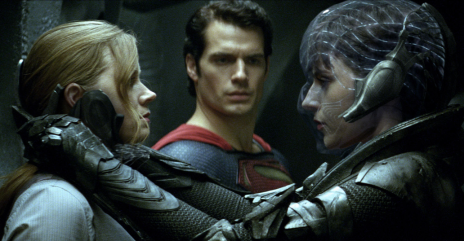
9) MAN OF STEEL

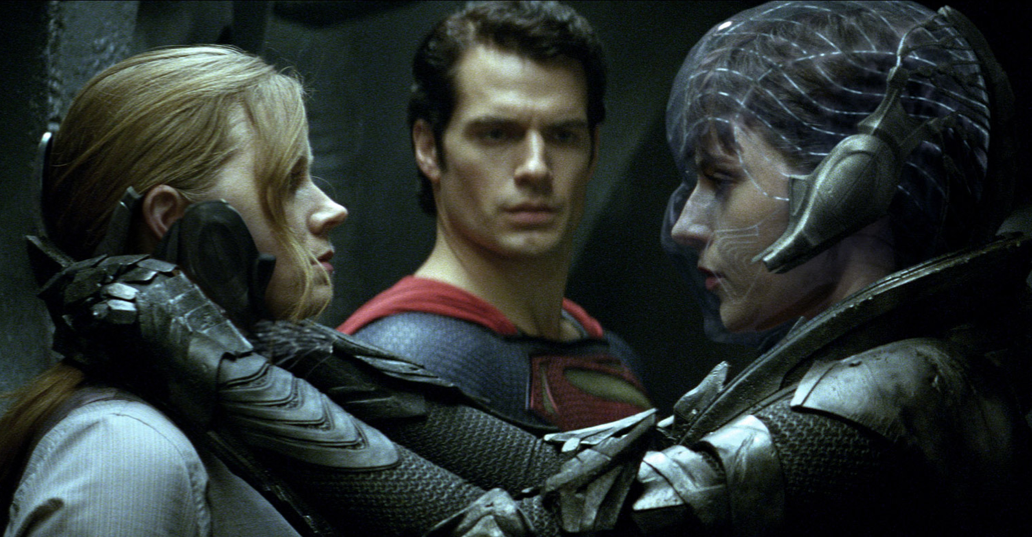
An ambitious and action-packed thrill ride giving new energy and enthusiasm to a cherished American franchise. When Clark Kent (Henry Cavill) discovers that he is a descendent of an extinct alien race from the planet Krypton, Clark needs to embrace his superhuman abilities and become the symbol of hope destined to inspire humanity. Directed by Zack Snyder (300), produced by Christopher Nolan (Inception) and written by David S. Goyer (The Dark Knight Trilogy), Man Of Steel is a superhero epic that fires on all cylinders. The cast is great, the visual effects are striking, the story is compelling, and it looks at Superman from a more humanistic perspective, as an outsider trying to fit in to a world where he doesn’t belong. The definition of a Hollywood Blockbuster. Four stars.

Photo courtesy of Warner Bros.8) 42

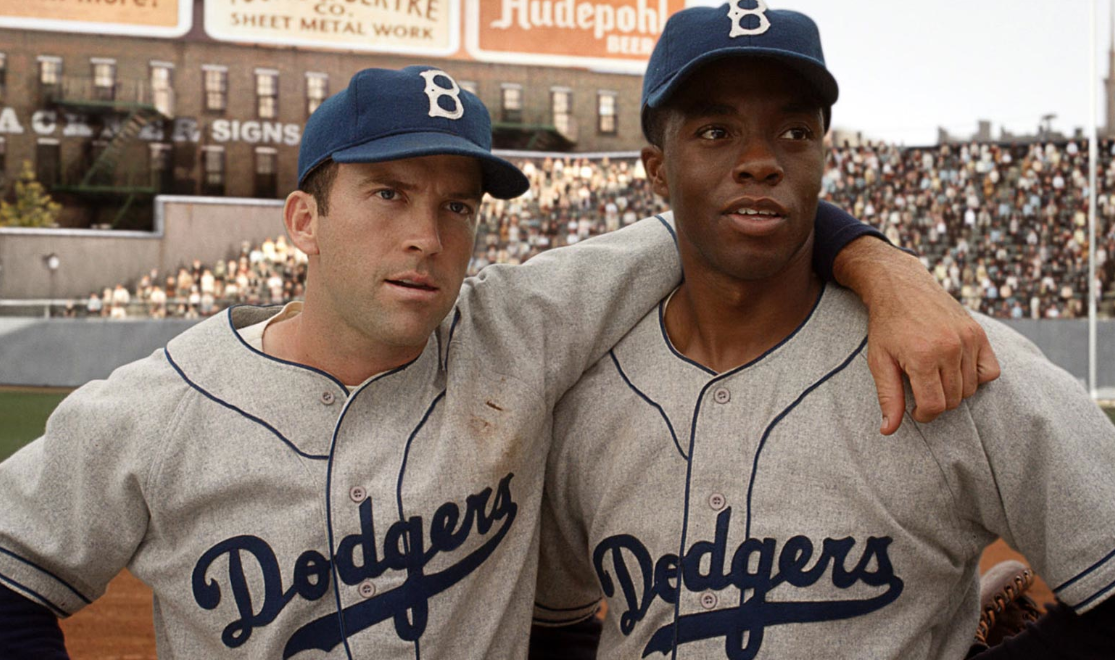
A gripping, well-written sports story with a great cast to compel us through it. Chronicling the true story of the first professional African-american ballplayer in American history, Jackie Robinson (Chadwick Boseman) is asked by baseball executive Branch Rickey (Harrison Ford) to play for the dodgers and unite a country through a time of separation. Written and directed by Brian Hedgeland, 42 does a good job switching between emotions, from that of anger and disappointment to that of happiness and endearment. Ford is good as the headstrong and stubborn Rickey, but the surprise performance comes from the little-known Chadwick Boseman, who portrays Jackie so well that its nearly impossible to think of anyone else portraying him. You’re not watching a movie when you watch 42. You’re watching a legacy. Four stars.
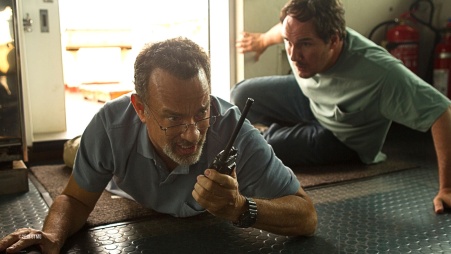
7) CAPTAIN PHILLIPS

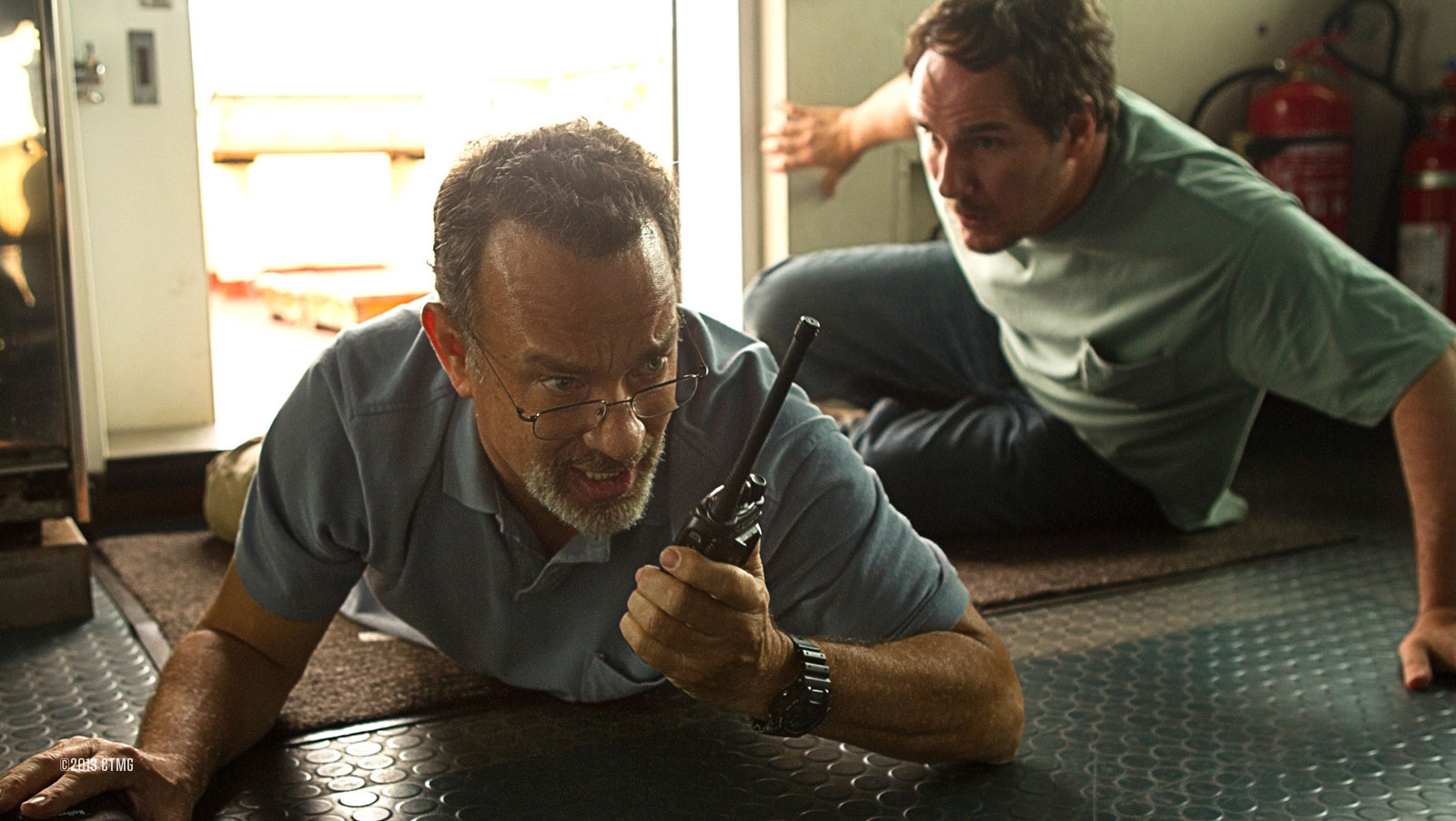
An exciting account on true events that somehow remains suspenseful, despite knowing how its going to end. Captain Richard Phillips (Tom Hanks) leads the cargo ship Maersk Alabama over the pacific ocean when a band of pirates attack the ship, kidnap Phillips, and take him hostage. Now with the Navy and the U.S. Government looking for the pirates at every turn, the quest to find the pirates quickly turns to a race against time to find and save the selfless captain. Paul Greengrass, who helmed the Bourne Supremacy and Ultimatum films, pioneers Hanks through this suspense thriller, and his expert timing combined with Hanks’ heartfelt performance made this film feel very real and fluid. The editing is tight, clean and efficient, cutting in and out at precise moments to give us the most tension and unease.  A convincing portrayal of events that is excellent at orchestrating emotions. Four stars.
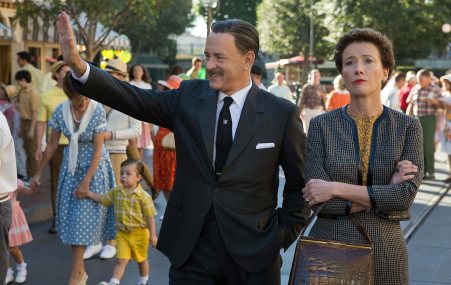
6) SAVING MR. BANKS

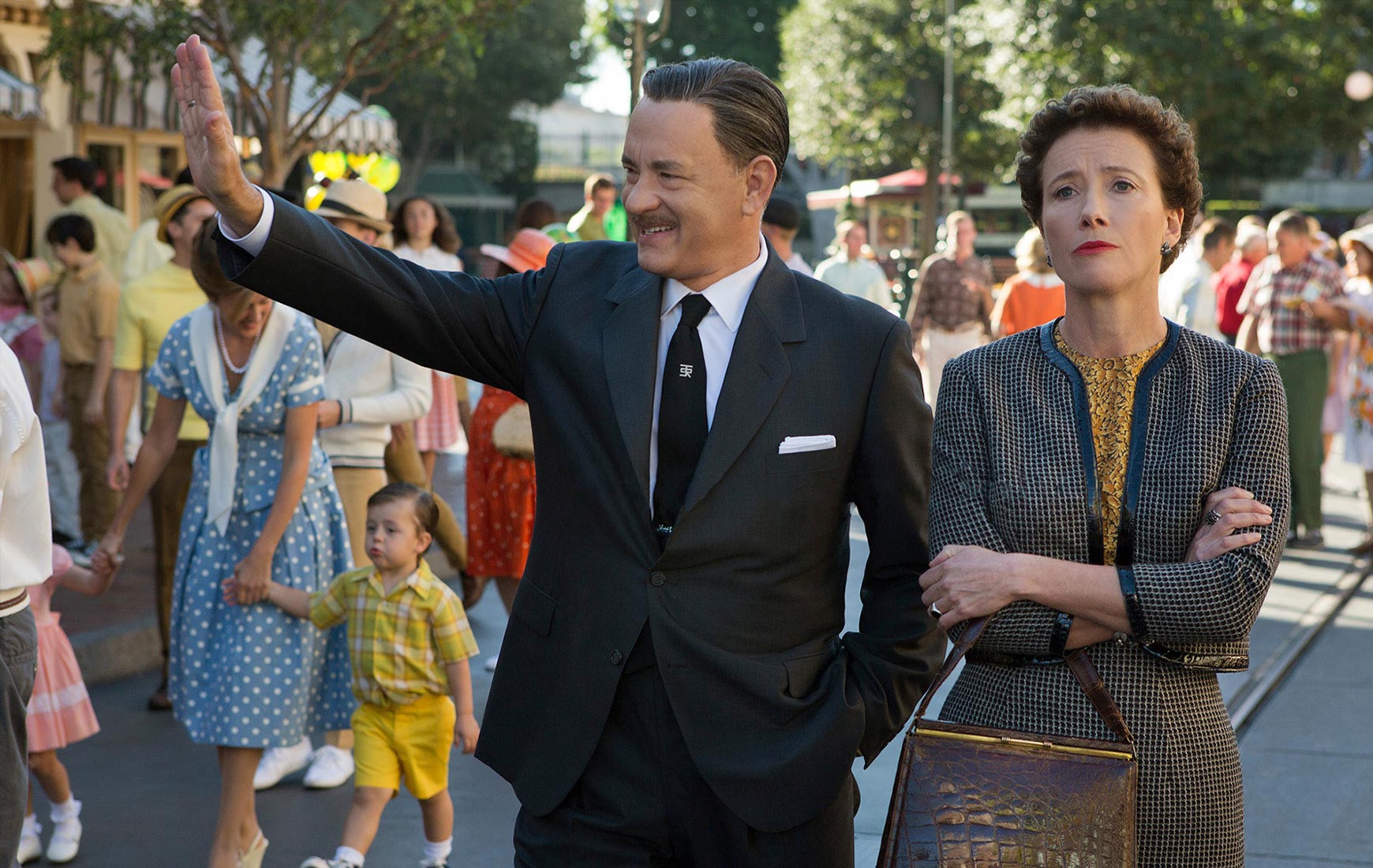
A nostalgic, heartfelt, genuinely touching film about an author worried about her work similar to how a mother worries over her child. Pamela Travers (Emma Thompson) is the author of her acclaimed series of her “Mary Poppins” books, and her war of the creative rights with Walt Disney (Tom Hanks) is nearing its end. However, after confronting her own past and getting to know Walt a little better, Pamela begins to feel more at ease sharing her story not only with Walt, but with the rest of the world. Written and directed by John Lee Hancock (The Blind Side), Saving Mr. Banks is a wonderful film that bounces in between emotions like a kid does inside a bounce house. Hanks is good as Walt Disney, but surprisingly, he isn’t the highlight performance. Emma Thompson is the driving force behind this biopic, delivering a performance so versatile and demanding that she comes to identify the film entirely through her own character. The most magical moment comes when Ms. Travers watches Walt’s film adaptation of Mary Poppins for the first time. Four stars.
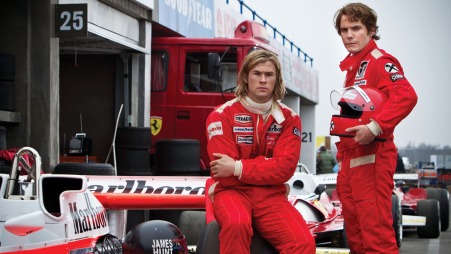
5) RUSH

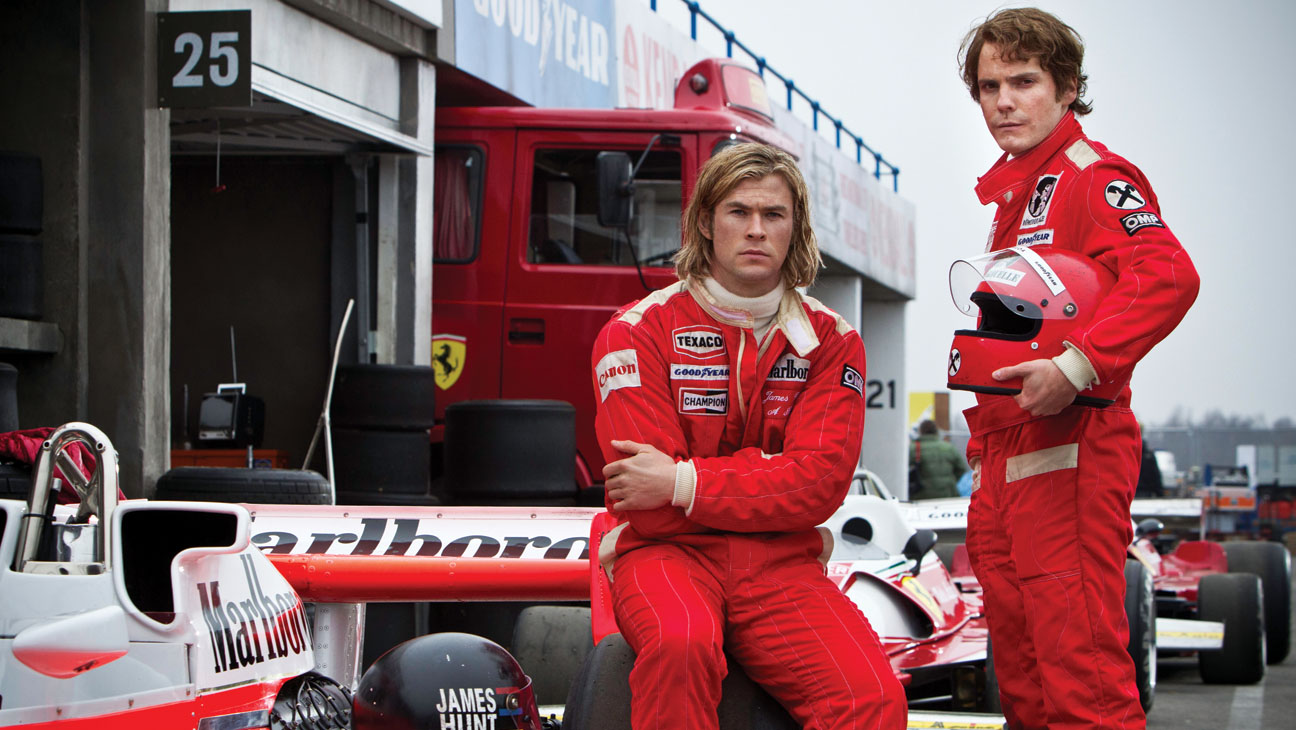
An unstoppable and uncontrollable rush of energy, excitement, and gravitas, a movie that starts on a high note and simply refuses to let up all the way through. James Hunt (Chris Hemsworth) is a hot-headed racer who knows nothing except instinct and winning. Nicki Lauda (Daniel Bruhl) is a german racer who knows nothing except business and blunt honesty. Together these two rivals inspire and fuel each other’s ambition to outdo the other and win first place in the 1976 Formula One Season. This is a movie that is compelled by truth and driven by accuracy, pun intended. Hemsworth and Bruhl are perfect as Hunt and Lauda, their edginess and animosity apparent in every scene, never once breaking character. Ron Howard is documenting the film more than making it, and with the help of his screenwriter Pete Morgan and his editors Daniel Hanley and Mike Hill, he makes a biographical picture that is both relevant and exciting for its audience. An incredibly driven film that is entirely, unforgettably awesome. Four stars.

4) THE BUTLER

An earnest, humble film, parts approachable and observant yet equally ambitious and honest. Forest Whitaker plays as Cecil Gaines, a black butler who grew up during the slave era, growed up learning how to be a white man’s servant, got a job at the White House, and continued to serve there for almost 35 years. As he watches history pass him by from President Eisenhower all the way up until President Regan, Cecil recounts how he’s changed as a husband and as a father and what it means to be a free black man in America. Lee Daniels directs an all-star cast through this gripping, emotionally overwhelming story, with actors like Robin Williams, Alan Rickman, John Cusack, Cuba Gooding Jr., Terrence Howard and Mariah Carrey in it just to name a few. The best performances come from Forest Whitaker and Oprah Winfrey as his wife, whose performances at many times carry the film on their own merit. A film that looks into the reality of circumstances and shows them exactly how they were, no matter how tragic or heartbreaking they were. Four stars.
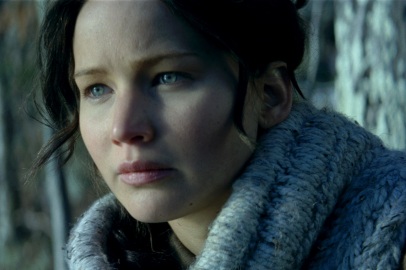
3) THE HUNGER GAMES: CATCHING FIRE

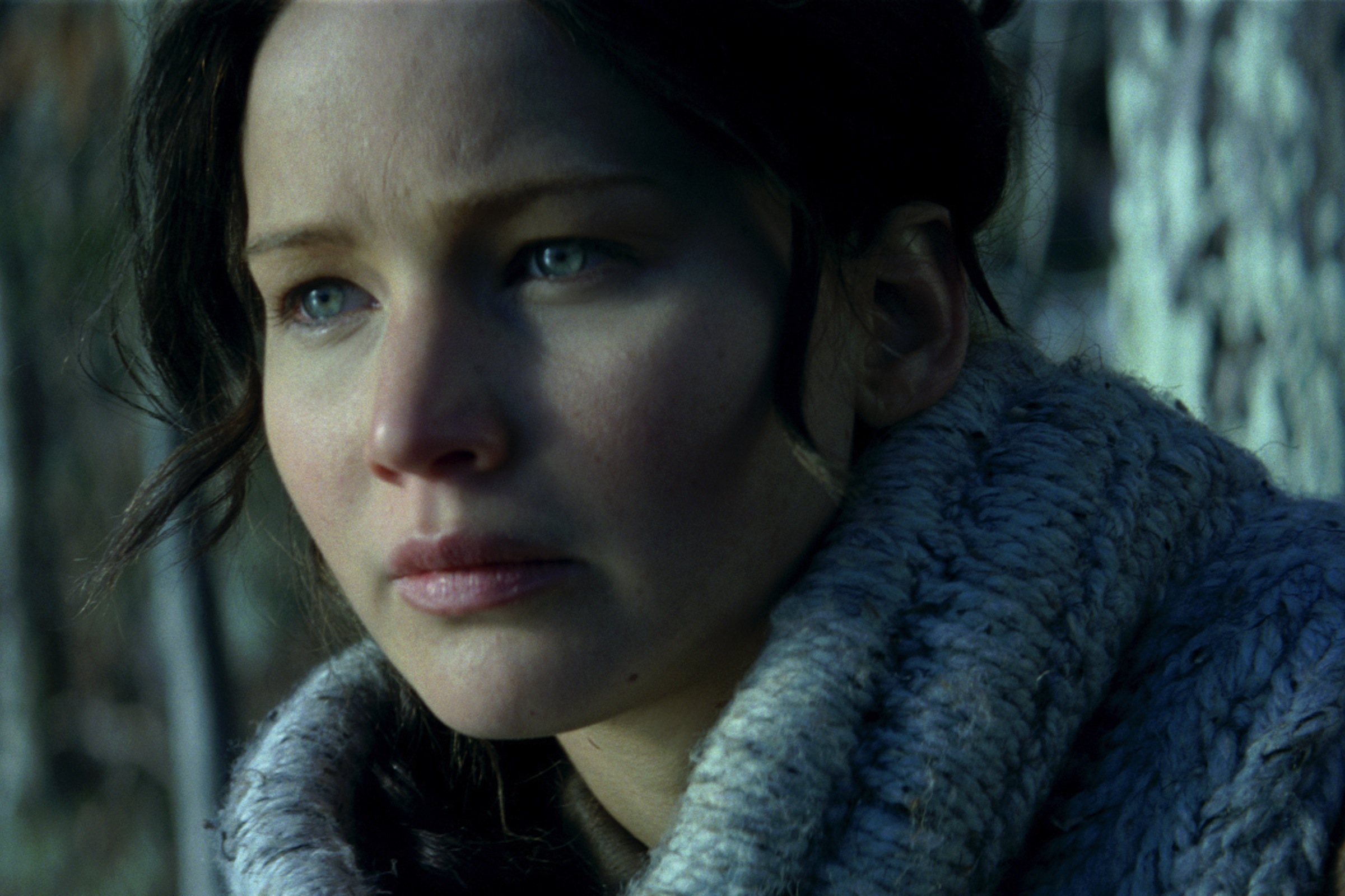
A tense, gripping, and pulsating film crackling with energy and drama. Taking place after their victory at the 74th Hunger Games, Katniss Everdeen (Jennifer Lawrence) and Peeta Mellark (Josh Hutcherson) try to re-adjust to their normal life until President Snow (Donal Sutherland) declares that the 75th Hunger Games will feature all of the previous winners, including Katniss and Peeta. Now shoved back into the horrid games that scarred her in the first place, Katniss must find a way to not only survive the games with Peeta, but to retain her humanity after everything is over. Directed by Francis Lawrence (I Am Legend), Catching Fire is the film that is everything the first thing was except more. The story is captivating, compelling, and deeply emotional. The themes are deep, powerful, and maddening. And the cast is more than exceptional, with Lawrence’s heartbreaking expressions at the center of it all. Not only one of the best sequels of the year, but one of the best movies of the year, period. Four stars.
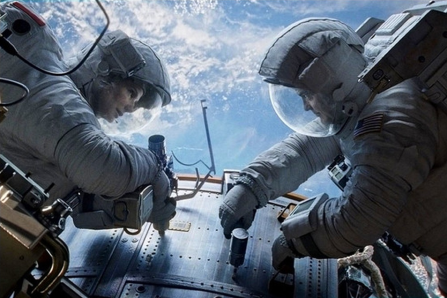
2) GRAVITY

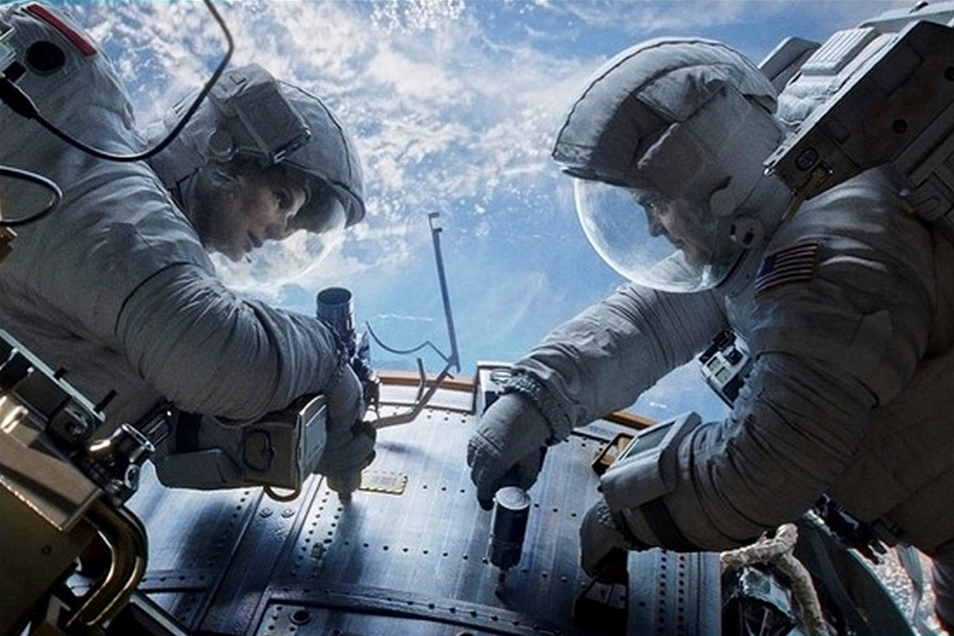
A film for a generation, a picture so convincing in its approach that its nearly impossible to think that it wasn’t even filmed in space. Sandra Bullock stars as Dr. Ryan Stone, a medical engineer out on her very first space mission with veteran astronaut Matt Kowalski (George Clooney). When debris suddenly strikes their station and leaves them astray, Stone and Kowalski need to fight to survive and find their way home back to planet Earth. There is literally not a single technical fault in the film. The visual effects are stunning, eye-popping, and visually-breathtaking. The cinematography by Emanuel Libewski is poignant, curious, and masterfully constructed. But the most credit needs to go to writer-director Alfonso Cuaron, who is so precise with the film’s visuals, story and Bullock’s performance that he makes the film just as emotional as it is anticipative and on the edge of your seat. It blurs the line in between science fiction and science reality, and is probably the best space movie I’ve ever seen. Four stars.
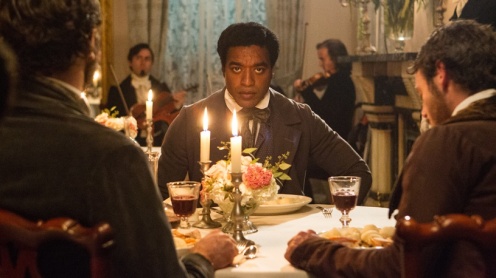
1) 12 YEARS A SLAVE

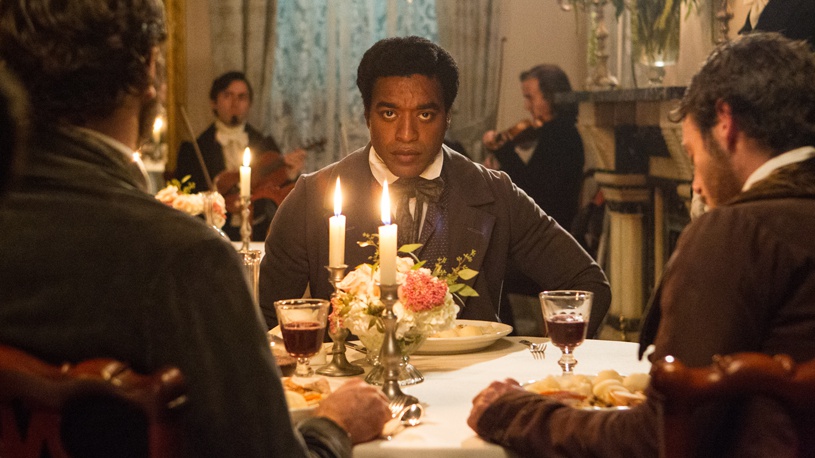
One of the best films of the year, and among the best on the subject of racism and slavery. Based on the true story of a free man named Solomon Northup (Chiwetel Ejiofor), 12 Years A Slave chronicles his story of being drugged, captured, and sold into slavery for over a decade of his life. Directed by Steve McQueen (Hunger, Shame) 12 Years A Slave is this year’s frontrunner of the Oscar for best picture, and it’s very deserving of that title. Not only is it tragic, maddening, and heartbreaking all at once: it is a very diverse and well-made film. The cinematography by Sean Bobbit is lush, broad, and captivating. The soundtrack by Hans Zimmer is slow and dreary, the third of his movies this year to be featured on this list. Ejiofor, however, is the star of this show, with his passionate, tearjerking performance driving us to care for this character and feel what he is feeling. Compels you to experience compassion and sympathy in ways almost no other film can do. Not even with Schindler’s List. Four stars.

Whether you’re a dedicated movie lover or simply a casual viewer, I encourage all of you to see the movies on this list. They did more than impact me: they touched and inspired the people all around me.

-David Dunn

Tagged , , , , , , , , , , , , , , , , , , , ,

“THE WORLD’S END” Review (✫✫✫)

These poor dims have had too much to drink.

We’ve all known that kid somewhere in our high school years. Yes, you know who I’m talking about. That kid. That kid as in, the troublemaker. The smart talker. The womanizer. The drinker. The guy who turns heads and raises eyebrows, the guy whose only concerned with having a good time and not much else. They act on impulse, spontaneity, paying no second thoughts to doubt or common sense. They don’t think about their future or what they’re going to do after high school. They don’t live in the future. They live in the moment.

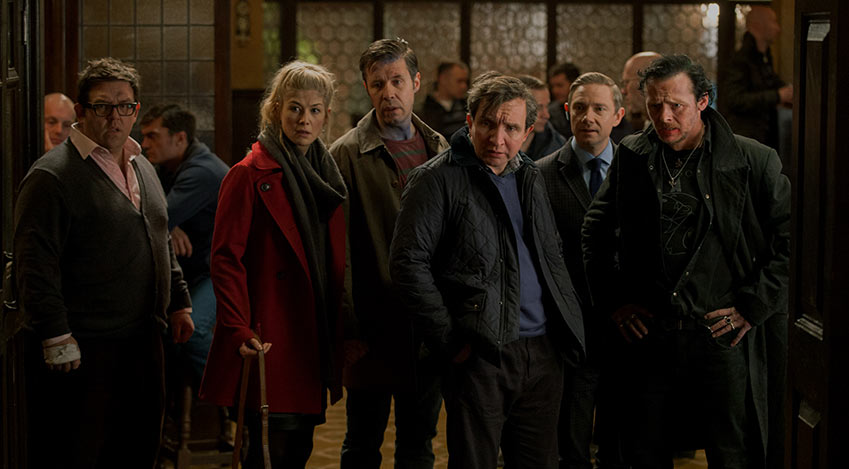
That same trouble-making, lady-loving, drink-guzzling, bad-mouthed rebel is known in this movie as Gary King (Simon Pegg), a poor old sap in rehab who misses the old days and just wants them back again. In order to do this, he reaches out to his old british friends from high school to go and complete “The Golden Mile”, a long pub crawl of twelve different pubs in his old town of Newhaven, where the crawl ends at the most popular pub of all, appropriately called “The Worlds End.”

His friends are now all estranged successful businessmen, but they all lack the energy and perhaps foolhardy excitement that Gary loves to constantly express. Perhaps the best of his friends, however, is one Andy Knighly (Nick Frost), a once-cheerful young fellow, now an old, depressed office worker trying to win back the affections of his wife and children. The last thing he needs is to go on this trip with Gary, but if there’s one thing Andy knows, its that you don’t say no to the King.

They go to their hometown where they started the Golden Mile, and they notice a lot of things have changed since they were last there. Why? Well, that’s because alien robots have taken the town over.

……WHAT?!?!?!? No, dear reader, I am not drunk. Alien robots took over Newhaven, and Gary King discovers this by knocking one’s head off after he slid on his own urine in the bathroom. When he recoups with his friends later on at the bar, they decide that they need to keep going on their route so as not to raise suspicion, and later quietly slip out of town. Sounds pretty simple, right? Not when you have four drunk guys traveling along a total fool. Good luck with that, fellas.

Co-written and directed by Edgar Wright, The World’s End is the birth child of an unofficial trilogy of Pegg, Wright, and Frost’s previous work together, including Shaun Of The Dead and Hot Fuzz. For those who’ve seen those previous movies and are expecting a pompous, outlandish experience just like those pictures, you’re not far off. The World’s End is, by every definition, a ridiculous, ludicrous, and far-out experience, a preposterous and purposefully silly picture to the point where it surpasses being stupid and starts being funny. It’s like those older television skits by Monty Python: they undeniably immature and stupid by nature, but there’s an inherent wit and silliness to them that can’t help but make them so much fun.

Case in point: Simon Pegg and Nick Frost’s chemistry. In the past, their character’s relationship involved a budding romance in a cheesy “You’ve Got A Friend In Me” type of ordeal. Here, the relationship is more strained, almost like Frost is a babysitter and its his turn to supervise little baby Simon so he doesn’t eat sand from the playground. Their characters are hilarious because they’re polar opposites: because Pegg plays the ambitious, over-the-top party boy while Frost is the more conserved, more easily frustrated business man.  Remember the chemistry between John Candy and Steve Martin in Planes, Trains, and Automobiles, where the frustrated business guy (Martin) keeps having to monitor the guy (Candy) who is oblivious, foolish and hopeless? Same case here, although the roles are more or less switched between the two actors.

And then the robots. Oh my God, are they hilarious. In Shaun Of The Dead we had zombies, and in Hot Fuzz we had crooked cops. Now, we have supernatural alien robots, although they hilariously keep insisting that they are not robots because they have sentiment and free will. Anyhow, the funniest thing is how the group reacts to them, tearing off their body parts, whacking themselves with their arms, legs, and anything else they can pull off of their bodies. It’s like someone combined the Lego minifigures with Whack-A-Mole and then decided to throw blue kool-aid somewhere into the mix. Just trust me, it gets messy.

I’m overanalyzing this. The question I should be answering is this: did it make me laugh? The answer: Yes it did, consistently and abundantly, and what’s even more important is that it had something more to offer than simply entertainment. It had a deeper message to tell its audience, and instead of celebrating foolishness and drunkenness, it decided to touch upon a deeper subject involving friendship and true happiness.

I won’t spoil the segment for you, because for me it was the best scene out of the whole movie. I will say this though: most movies, including Project X, 21 And Over, and the dreaded Hangover series take alcoholism and play it out like its fun, like a big party with no consequences or repercussions to the people involved with them. This movie had the opportunity to play it out in that same fashion, but it chose a different direction. It decided to take alcoholism and show it in a more realistic light, maybe even a tragic one. This sequence genuinely touched me, as well as the conversation two characters shared about their life and what exactly they mean to each other. It did more than entertained me: it genuinely surprised me.

As far as comedy and drama goes, I can name a number of films this year that have both made me laugh harder and feel more, among them including the explicit Don Jon, the tamer Monsters University and the other horror-comedy Warm Bodies. Should I take off points, however, if the movie doesn’t match up to the standard of other pictures? The point is that this is a good movie. It had more to offer than just pointless swearing and debauchery: the movie is funny, touching, and original, and there’s a lot of moral truth to it, aside from all of the alien robots mucking everything up.

Tagged , , , , , , , , , , , , , , , , , , , , , , , , , , ,

“DAREDEVIL” Review (✫✫✫)

What is the man without fear afraid of?  

We open on a still, quiet shot, a haunting frame of a rat walking over a pool of blood dripping in front of a church.  As we pan up the window frame, with quick flashbacks cutting in and out as the music crescendos, we reach the top, helicopter spotlights shining on a wounded man in a devil costume grasping onto the holy cross.  This is easily the film’s master shot, and its influence quite possibly lasts throughout the rest of the film, even if nothing else ever comes to live up with this establishing shot.

The man we are looking at is Daredevil, and unless you read the comics, you would never have guessed that he’s blind. Growing up as a young boy in Hell’s Kitchen, Matthew Murdock (Ben Affleck) was the son of former boxer Jack “The Devil” Murdock (David Keith), nicknamed for his brutal fighting style towards his opponents. One day while skating past a construction site, Matt got in the way of a truck carrying barrels of radioactive chemicals when a bar suddenly punctures the metal, spilling the lethal chemical into young Matt’s eyes.

He lost his vision, but what he gained changed him forever. When he woke up in a hospital bed the next day, all of his senses were enhanced to superhuman levels. He could feel the fabrics of his eye bandages without even touching them. He could smell the aroma of bleach permeating off of the tiles in the hallway outside of his room. He could hear the sound of construction work, the cars beeping and the heartbeats of other human beings from miles away. But most impressively, his sense of sound gave him a “radar sense”, allowing him to form images of the people and things that he saw in front of him. He wasn’t just a boy any longer: he became a living sonar.

After witnessing the death of his father (I guess “hearing” his death if you want to get technical), Matt vows to never be afraid of the things he can’t see. To find the killer and bring him to justice. To seek justice, one way or another. To become Daredevil.

Here is a film that has an irresistible sense of style, a movie that takes us through its lavish stunts, choreography, and fight sequences and makes them exhilarating to sit through. It is really exciting, seeing these characters pulling off these crazy, mind-blowing leaps and bounds over buildings, in bars, and on rooftops as they fight each other with lightning-quick movements, attacks and reflexes. It’s even more fascinating seeing it from Daredevil’s perspective, watching bullets fly past him while he slides on railing, flips over tables, and knocks criminals out with his staff and nunchuks. Most would probably view these scenes as silly or preposterous, with characters flying from building to building as if they were in The Matrix. My response? I don’t really care. The fight scenes are choreographed and filmed in a very specific way to where its enjoyable, almost as if the laws of physics don’t matter in a movie like this. You more or less watch it for the joy of seeing the sensational effects rather than criticizing how preposterous and unrealistic it looks.

Oh yes, the action is excellent. Compared to the action, the performances are… inconsistent. Not bad, mind you, just inconsistent, and not all of it is entirely the actors fault. Affleck at least does a good job to keep us interested in between the sensational fight scenes, and even offers some very nice emotional moments where his character experiences both fear and vulnerability. Michael Clarke Duncan, most known as the pure-hearted and innocent miracle-maker in The Green Mile plays here the antonym of that role, a kingpin so foul and villanous that its shocking to see him make the transition. The highlight performance is in breakout actor Collin Ferrel as a hitman named Bullseye, and his presence on the screen is infectious. He is terrifying, his motions, speech and mannerisms forming this character who is so set on making his jobs perfect that he will kill anyone that makes him do something as simple as missing. He is mortifying, and definitely not the kind of guy you want to sit next to on a plane. The only actress I didn’t care much for in this movie was Jennifer Garner, who played a love interest of Matt’s named Elektra, but we’ll get a more into that in a bit.

For simple entertainment, the movie is acceptable. The fight scenes are great, the actors are fitting in their roles and the story advances in a form of pulpy comic book violence, the kind you expect to see when you open a Frank Miller comic and see two superhuman acrobats fighting all over the page.

The problems don’t start at the fight scenes or in its cast: they start at the hands of writer-director Mark Steven Johnson, and that’s a problem because those are two areas that should be the strongest in any film. Johnson, who directed the critically-favorable Simon Birch before this obviously has his “rookie” cap on because the film is so lopsided. It’s so freakingly inconsistent, so much so to the point where I can name an equal number of scenes that I liked side-by-side with the scenes that I disliked.

Do I really need to write out a list? The script switches from serious to silly. So does the acting. The tone can’t decide whether it wants to be dark and dreary or smirking and tongue-in-cheek. I mentioned early in this review that we were introduced with a dark, mesmerizing shot that hooked our attention to the screen. Would you take this movie just as seriously, however, if I told you that there was scene later in the movie where blind lawyer Matt Murdock was kung-fu-fighting against Elektra at a children’s park in broad daylight in public? Probably not, no.

Look, in the eyes of a critic (and I’m not talking about myself), this movie failed. The tone is off-beat, the acting is off-kilter, the scripting is inconsistent, and on that note, so are the visuals. And yet here I stand, giving this movie a marginal positive rating.  Why?  Because I liked it, that’s why. Because I sat down, looked at the movie, compared the good side-by-side with the bad, and ultimately, the good won me over.

I know that won’t be the same case for other viewers, and others are likely to hate the movie for its silliness, for its half-completed visuals, for its inconsistent scripting, filming, editing, and even acting. That’s fine. Different movies appeal to different tastes, and Daredevil won’t appeal to all of them. In the genre of superhero movies, there are many obviously superior to this one,  including the recently-released Spider-man and X-men movies.  If we are going to admit what it is worse than, however, let’s not be forget that Batman and Robin and Howard The Duck also exists. No, that last one was not a typo.

Tagged , , , , , , , , , , , , , , , , , , , , , , , , , ,

“AMERICAN HUSTLE” Review (✫✫✫)

FBI trying to hustle politicians by hustling con artists.

“We’re always conning other people,” says a slurred, yet sure voice in the background. “It’s in our nature. We even con ourselves.” These words are coming from the mouth that belongs to Irving Rosenfeld (Christian Bale), a con artist who quickly learned what it meant to grow up and survive in a harsh economy. Irving is the sort of guy you wouldn’t want to interact with out in public. He is grossly out of shape, he smells of old hairspray and cologne, his crafty eyes hide behind a dark pair of shades, and his diet consists of nothing but beer, fast food and cigars. From an outward appearance, Irving doesn’t really make a good impression. But man, can that guy talk a good game.

After rushing through Irving’s very brief childhood, we are quickly introduced to Sydney Prosser (Amy Adams), a woman in her mid-thirties whose beauty is both ageless and captivating. Despite his nauseating physical appearance, Sydney almost instantly falls in love with Irving, and Irving falls in love with her too. So much so that he discloses his illegal business with her, asking her to become a part of him scamming other people out of their hard-earned cash and checks.

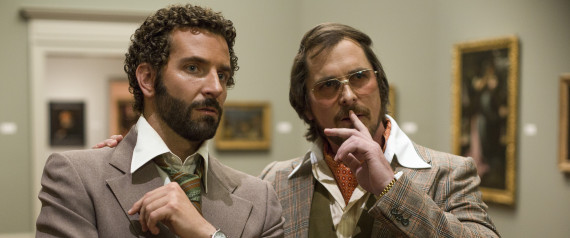
That’s all I’m going to get into as far as the plot synopsis goes. Believe me, I haven’t even gotten to the surface of it. There’s an FBI agent trying to catch them named Richie DiMaso (Bradley Cooper), there’s a New Jersey mayor played by Jeremy Renner somewhere in the mix, Irving has a son and a wife he’s committed to named Rosalyn (Jennifer Lawrence). There’s even a mobster somewhere in this movie where an actor makes a cameo appearance, but I won’t spoil the surprise by revealing who it is (hint hint: He’s got some bad ideas in his head).

Point being: this is a smart movie. It’s funny, original, intelligent, and thoughtful, an observant portrait that looks at the moral and financial struggles of these characters and what impact their actions have on the people in their lives. Part of this, no doubt, is because of the cast’s mastery at delivery. Part of it is also because its writer-director is equally as funny, original, intelligent, and thoughtful as the story is. David O’Russell, who was nominated for best directing and writing Oscars for the past few years now (For Silver Linings Playbook last year and The Fighter in 2010), returns yet again with the same wit, charm, and complexion that made his previous films both unique and entertaining.

The dialogue is authentic, almost like it pops off of the pages of the screenplay just as much as it does in the movie. How though? This is, after all, a work of fiction, right? Wrong. The plot is just is like Irving’s deceptions: they’re only half fake. The movie is based on the real-life ASCAM sting operations of the late 1970’s, in which the FBI arrested over 31 individuals of congress and 7 were convicted of bribery and conspiracy. That sort of realism translates brilliantly to the screen, and makes the conversations characters share feel so personal. Make no mistake, fellow reader: this is, in every definition, a heist picture, because everyone is all after something and are willing to manipulate everyone in order to get to it first.

The cast is unforgettable. So much so that I can’t even pick a favorite among them. Bale is as talented as ever in this movie, a brilliant and dedicated method actor who has immersed himself so much into a role that its hard to imagine that at one point he was Patrick Bateman or Bruce Wayne. Lawrence and Adams are excellent female leads, and are great at expressing how conflicted Irving feels towards the both of them as lovers. Renner is great as the New Jersey mayor, a loving and kind-hearted man, father, and husband who just wants the best for everybody, but ends up making the wrong decisions in trying to do so. If I had to pick a favorite, it would probably be Bradley Cooper, only because he is so passionate and wacky that he could have been redone as a cartoon character. Like I said though, I can’t pick one. This cast is so talented and skilled in their roles that to pick one performance over another would be considered a sin. They are just as responsible for bringing this story to life as David O’Russell is.

This movie has all of the elements of being Oscar-worthy material: a great story, dialogue, characters, direction, and a great cast that fills these figures with vibrant energy and personality. The only real problem with this movie is the setup, and that’s unfortunate because that’s one of the most important parts of any movie.

Let me provide an example: when I first watched Goodfellas, what absorbed me into that picture was the first 15 minutes, a little italian boy learning about the mafia as a child, and the first narration we hear being “Ever since I can remember, I’ve always wanted to be a gangster.” Another one? In the opening scene of There Will Be Blood, we see a touching yet tragic portrait of a man seeing one of his workers die in an oil deposit, leaving behind an infant who can’t even speak, and Daniel Plainview deciding, against his better judgement, to adopt him as his own. Do I even need to mention Up?

All of those pictures started off with a bang because they gave us a perspective into the character’s history before getting into the meat of the story. Not that there needs to be a “How-to” guide for making opening sequences, but American Hustle literally flashes Irving’s childhood for about a minute before throwing us into the plot. I’m all for “show-don’t-tell” stories where they’re all situational, strictly limited to being set in their own present (Such as The King’s Speech or Black Hawk Down), but this one felt too much like being thrown into cold water when you can’t even swim.

Despite my views, I know critics already have their opinions established on this movie. They’re going to say its a masterpiece. That it is masterfully written and acted (which it is) and that it is going going to be nominated for multiple Academy Awards (which it will be as well). What critics won’t realize is the movie itself might be a con, making people believe that it is better than it actually is.

Well, if it is a scam, and David O’Russell is the con artist, then all I’m going to say is that he did a damn good job at it.

Post-script: For you irresponsible parents that are considering taking your teenagers to see this movie, don’t. The MPAA rated this movie R for “pervasive language, some sexual content and brief violence.” The violence is very brief and honestly not a large problem. The sexual content, however, is profuse because of Irving’s two sexual partners, and the movie has no shame for showing us any of it. I noticed over 100 F-words.

Tagged , , , , , , , , , , , , , , , , , , , , , , , , , , ,

The Philanthropist And The Entertainer: A Eulogy

Before I begin, let me start by stating the obvious: yes, I know that I’m late with reporting this. Everyone already knows about the following issues I will be tackling. The information provided in this article is no longer timely. I know that. However, given the gravity of the situations and considering that I’m also writing this from an essential perspective, I write and publish this in the hopes that people will have a changed outlook to similar occurrences in the near future, not that I’m looking forward to these things repeating themselves in any way.

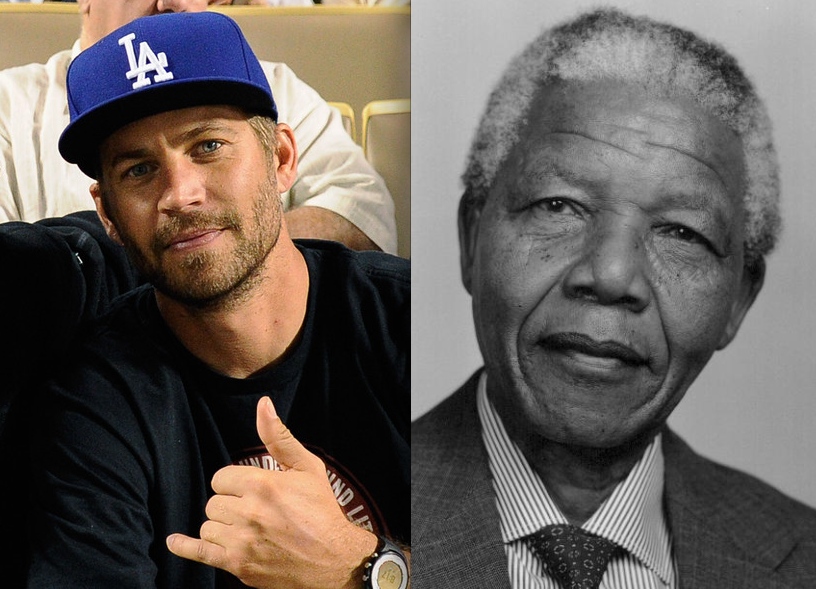
On Saturday, December 5th of last week, Nelson Mandela passed away at his home in Houghton, Johannesburg, succumbing to the respiratory infection he’s been struggling with for years now. He was surrounded by his friends and family when he died. The nation mourned, a memorial was held, and the world leaders all flocked to Africa to celebrate the life of one great man, including President Barack Obama and South Africa’s own Jacob Zuma. Mandela was 95 years old.

A week before, the world was ridden of another great man. On November 30th, two days after thanksgiving, celebrity and actor Paul Walker was killed in a fatal car crash that took him and friend Roger Rodas’ life on the road. The car burst into flames upon crashing into a light pole, which investigators believe the car was going 90 miles per hour in a 45 mph speed zone.

Regardless of the details of the crash, their deaths were tragic all the same. Rodas, who was a raceshop owner and Walker’s financial adviser, was survived by his wife and his two children, one of whom was his eight-year old son who saw him at the crash site. While Walker is most known for the Fast and Furious series, Walker was also known as an avid car lover, racer and a phenomenal philanthropist, founding a charity in 2010 called “Reach Out Worldwide” as a response to the earthquake in Haiti. Him and Rodas were coming back from a philanthropic event hosted by this same charity before they got into the fatal crash.

These three great men passed away under tragic circumstances, all of them leaving behind families who will love them and miss them forever. Two of them were known world-wide, and contributed to the health and well-being of mankind. One of them, however, changed a nation and inspired generations.

If you read that last part and were about to say Paul Walker, I’m going to slap you so hard you won’t be able to tell the difference between a Ferrari and a Volkswaggen. The day I was informed of Walker’s death was surprising in the least. At 24 years old I didn’t expect to hear that he had passed away, though admittedly I wasn’t surprised to hear it was a car crash. All of social media blew up with his death. My Facebook was crammed with status updates. There were too many tweets to count. And in the following days, so many publications were writing about his death he might as well have been Michael Jackson.

Now experiencing the same shock and sadness with Nelson Mandela’s death, I find it interesting that the public’s reaction is mild at best and non-existent at its worst. Looking back at my twitter and Facebook feeds, I notice nearly everyone I followed wrote about Paul Walker almost instantaneously the day he died. When Nelson Mandela died on December 5th, about how many people do you think tweeted or facebooked on his death? On my feeds, I counted five.

Anyhow, back to Paul Walker. On one of the posts I was reading, a close friend of mine commented on the feed which stirred quite a controversy between him and other bloggers. On another friend’s post, he commented bluntly: “What war did he serve in? Oh yeah, that’s right…”

He later came back on Facebook, writing about Paul Walker’s death and criticizing all of the attention people were paying towards it. Obviously, people were angered and offended by his comments, but take a second to understand it from his perspective. My friend, who will remain anonymous out of respect, previously served in the military before going to college. He served in the Iraq war for eight years on two tours of duty. The experience of killing and seeing many of his friends getting killed impacted him deeply, and when he came back to the USA he was mostly alone, suffered from cases of depression and paranoia, and was homeless for many years of his life before a friend convinced him to go to college and change his future. He experienced the worst the world had to offer, came back from it and decided to make himself something out of it. I respect him with great admiration, as I do towards anyone who makes the sacrifices he does and comes back choosing to better themselves out of it.

But this isn’t about him. This is about Paul Walker, Nelson Mandela, and the media that popularizes them both. Answer honestly: in the days you heard about Walker and Mandela’s death, which one did you hear about quicker? Whose death was talked about more? Who’s stories were discussed more in the media? Do you even know who Nelson Mandela is?

If you don’t, here are the bullet points: Nelson Mandela was born into an apartheid and racially segregated Africa. From 1950 to 1962, he protested against his government and the racial evil they advocated, and because he spoke out he was thrown into prison for 28 years of his life. When he finally was released from prison in 1990, he ran an election for presidency over South Africa, and was the first black president ever to be elected into office. During his time as president he brought an end to apartheid, advocated human rights for all African citizens, and unified a country during a time of great tension.

That’s just a summary of his career, but Mandela has done so much more. After his retirement, Mandela focused on charitable foundations and poverty. He communicated to the NAACP on the economic assistance of Africa. He focused on world-wide issues through an organization called “The Elders” founded by himself and others in 2007. And when his son Makgatho died of AIDS in 2005, Mandela lead a campaign aimed towards the improvement of treating and preventing AIDS among other hurting families so they don’t have to go through the same things that he did.

Point being: Mandela changed a nation. For Pete’s sake, he changed the world. There were some things that people were critical of him towards, including his violent protests at the beginning of his career or his condescending views of the United States during the Iraq war. Beyond that though, look at what this man has done. He has taken hardship, unfairness and tragedy, turned it around, and made everything better for an entire nation. I only saw a few facebook updates for this wonderful man, yet Paul Walker looked good and drove sports cars for a living and the internet basically exploded at the mention of his death.

I end mentioning one notable scene from this year’s 12 Years A Slave. In one sorrowful scene, Solomon Northrup is begging to a Canadian carpenter named Samuel Bass, played by Brad Pitt, to write and deliver a letter to his hometown so law enforcement can bring his citizenship papers and free him from his life as a slave. While at first intimidated and afraid at the notion, he eventually comes to resolve, standing up and saying to him:

“I will write your letter, Solomon. If you indeed find freedom, it will not have only been my privilege. It will have been my duty.”

Mandela too recognized freedom from oppression as his duty over of his privilege. And yet we pay more attention to the death of an entertainer over that of the carpenter who freed them.

-David Dunn

Post-Script: Everyone, no doubt, has seen the Fast and Furious movies, because that’s what Paul Walker was most known for. I encourage you then to seek out Clint Eastwood’s phenomenal 2009 sports-drama film Invictus, which not only shows Nelson Mandela’s impact of a nation, but also of the hardships he’s had to endure along the way. Also, Morgan Freeman is in it.

SOURCES: The Guardian, WORLD Magazine, The Huffington Post, NelsonMandela.org
Tagged , , , , , , , , , , , , , , , ,

“Man Of Steel 2” Has Found Its Wonder Woman In One Beautiful Gal

Pardon me for the late news, today has been more than hectic for me.

Casting news emerged earlier today regarding the currently untitled sequel Man Of Steel, featuring a rebooted Batman. Originally, there was a casting call for “a possible love interest for Bruce Wayne”. Then, rumors circulated around that this “love interest” was, in fact, the star-studded amazonian.

Now, it has been confirmed: Wonder Woman is in Man Of Steel 2, and she is being portrayed by israel model/actress Gal Gadot.

“Wonder Woman is arguably one of the most powerful female characters of all time and a fan favorite in the DC Universe,” director Zack Snyder said on Gadot’s casting. “Not only is Gal an amazing actress, but she also has that magical quality that makes her perfect for the role. We look forward to audiences discovering Gal in the first feature film incarnation of this beloved character.”

Gadot is most known for portraying Gisele Yashar in Fast and Furious, Fast Five and Fast and Furious Six. Besides her experience as a temptous and hot-blooded racer in those movies, Gadot also served two years in the Israeli Defense Forces as well as being a personal sports trainer.

I remember Gadot from the Fast movies. While I wasn’t a big fan of the movies themselves, I remember her character fondly and thought she was the more charismatic, more spirited character out of the group. With her experience, filmography and dashingly striking body, I think Gadot is a good choice for Wonder Woman, and am looking forward to her appearing on the big screen besides Henry Cavill and Batfleck.

Agree? Disagree? Should Wonder Woman even appear in Man Of Steel 2?

Comment below, let me know.

-David Dunn

SOURCE: Newsarama, IGN

“FROZEN” Review (✫✫1/2)

The Snow Queen: The Musical

Good news first: Frozen will please its core audience. It’s a cute, cuddly little fairy tale movie with a lot of music and a lot of misplaced optimism. Kids will enjoy it, and there’s a solid chance that the parents might enjoy it too. The bad news: It’s the same Disney Princess movie you’ve seen for the past 50 times now.

Based loosely on the Danish fairy tale “The Snow Queen”, Frozen follows the story of two princess sisters, Anna (Kirsten Bell) and Elsa (Idina Menzel). Being enclosed in a castle all of her life, Anna is a cheery, energetic, happy and overly-optimistic princess who would marry a man after getting to know him for just one day.

Elsa, however, does not have the luxury of being optimistic. Cursed with the ability to create snow and ice at a young age, Elsa has soon realized that she cannot control her powers and decides to escape before she does her kingdom, and her sister, any harm. Now determined to find her sister and mend the relationships that were shattered long ago, Anna sets out with a ice picker named Kristoff (Johnathon Groff), his reindeer Sven and an animate snowman named Olaf (Josh Gad) to find Elsa and save the kingdom.

Written by Jennifer Lee (Wreck-It Ralph) and co-directed by Chris Buck (Tarzan), Frozen is by definition, a family movie. It’s driven by a childish energy, a lively and undiminished spirit that fills children with joy through its wonderful music and its bright, colorful animation.

The characters are enthusiastic (at times, annoyingly so), with the most likable character being a midget snowman called Olaf. Olaf is just funny. He’s the kind of oblivious, clumsy snowman that bumbles around like a lego stick figure, losing his body parts every five minutes, stumbling to get them all back together, and put it on straight before the snow monster eats him. “Go! I’ll distract him!” his head said in one scene as everyone ran away, including his body. “No! Wait! Not you! I was talking to them!”

He also has a ironic fascination to the sun, fire and heat, not realizing what effect they have on snow.

All in all, Frozen is a fun movie. But if you’ve seen Tangled, then you’ve already seen Frozen before. The two movies are so similar, so mirrored in appearance, character, story and animation that the only real difference in between both is that Frozen takes place in a winter wonderland.

See, the problem doesn’t exist in the movie itself: the problem exists in what earlier Disney movies did first and better. Tangled is not the only movie where we’ve seen this story about self-discovery and relationship building. Look at virtually any other Diseny Princess movie on their filmography, including Brave, Mulan, Pocahantus, Princess and the Frog, etc etc. No, none of those movies deals with the theme of sisterhood, but does it need to? Those movies are still so similar in personalities, humor and musical numbers that the story becomes a copy-and-paste convenience rather than an original pleasure.

However, understand that this is not a critical observation of the movie, but rather a neutral one. I stress this point again: this movie will please its core audience, which is little children, the parents of those children and the hardcore Disney lovers. By all means, if you want to see the movie, go ahead and see it. Chances are you’ll enjoy it more than this Scrooge going “Bah humbug” in the corner of the newsroom.

Tagged , , , , , , , , , , , , , , , , , , , , , , , ,

“THE BOOK THIEF” Review (✫✫✫)

“I am haunted by humans.”

For ages now, World War II and the Holocaust have served as powerful inspirations for some of the greatest stories ever told on film. Schindler’s List. Sophie’s Choice. The Pianist. The Thin Red Line. Saving Private Ryan. Here, we have another entry into the holocaust/WWII sub-genre through The Book Thief, and even it doesn’t measure up to the mastery of the previously mentioned pictures, its captivation and its emotional grandeur is more than enough to absorb audiences into its narrative and into its spellbinding story.

Based on the book of the same name by Markus Zusak, The Book Thief follows the story of Liesel Meminger (Sophie Nélisse), a young girl abandoned by her parents to foster care who lost her brother on the way to her new home. Her foster parents, Hans (Geoffrey Rush) and Rosa  Hubermann (Emily Watson) at first intimidate her at her arrival, but after Hans spends some time with her at night teaching her how to read, she soon becomes more accepting and even compassionate towards her new family, even though she can never recover from her brother’s death.

The Book Thief is a wonderful picture, blissfully tragic and eerily optimistic at the same time. It weaves from one emotion to another in, from that of heartbreaking tragedy to that of childlike innocence and joy. Just like the 1997 film Life Is Beautiful, the movie has its fair share of smiles, laughs and tears.

Much of this is credited to the inspiration of the original novel, whose freshness of emotion is retained faithfully in this adaptation. The movie is wonderfully filmed, tightly-edited and affectionately made, its shots lingering on long pauses, allowing us to sit still and silently reflect on the tragedies these characters are experiencing. One of the best scenes in this movie is one where Liesel is simply laying on her mattress in her bedroom, stare lingering on the empty bed next to her. No narration is given, no words are said, yet we can still tell from the sadness in her eyes that she’s thinking about and missing her brother.

Many scenes in the movie are like this, where the best language given is one that isn’t spoken. The cast is brilliant with exhibiting this non-verbal language, with Nélisse and Rush having near-flawless chemistry with each other. Rush specifically has the highlight performance. His character is so upbeat, supportive and optimistic that he reminds us of Robin Williams from movie roles including Good Will Hunting and Patch Adams.

The imposing element, however, is the musical score by John Williams. His music is so effective at highlighting dramatic moments that at times the sound of beautiful strings fills us with more emotion than anything we can watch on screen.

It’s only shame is that the movie doesn’t reach the same level of emotional complexion that the book does. Because it tries to cram everything from the book into the movie, and because its trying to do this in a 125-minute runtime, there are moments that are too quick or even rush to feel the emotional gravity of the situation, especially when it comes to the third act.

Regardless, The Book Thief aims to be a emotional historical epic, and it is an emotional epic indeed. It’s a powerful allegory about a young girl trying to find peace in a world full of chaos.

Tagged , , , , ,

“PACIFIC RIM” Review (✫✫✫)

Transformers meets a whole lotta Godzillas.  

Pacific Rim is an action movie for the action fan, a movie so overblown with giant-sized robots, monsters, explosions and destroyed buildings that I wonder how the planet is still intact by the film’s conclusion. It’s not a bad thing, mind you, that there’s this much action in a movie like this, especially with the release of Man Of Steel earlier this summer. It just means that this is a specific movie for a specific audience: one that is very stylish, visually stunning and hella lot noisy.

The premise is something of a Independence Day meets Transformers. These mythical creatures called “Kaiju”, who are the biological equivalent to the Godzilla monsters, come from a portal deep in the pacific ocean called “The Bridge”, and it is this portal where the Kaiju stem from to attack the human populace. They start at specific locations at first: San Francisco. Hong Kong. Amsterdam. The more frequent the attacks, the more the humans realize that they need a battle plan to counterattack the Kaiju.

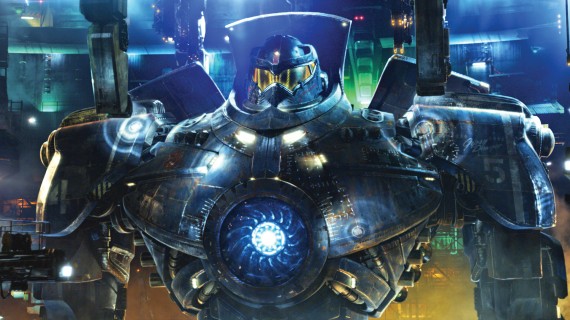
Enter the Jaeger program. “Jaeger”, from what we’re told, is German for “Hunter”, and that’s exactly what this program is. It’s a military initiative designed by the world’s leader, combining their resources to make a weapon to fight the Kaiju with, which in this case, is an army of giant, imposing robots that would make Optimus Prime explode in his diaper.

I know what you’re thinking: “Why use the resources on a robot army instead of finding a way to close the portal?” Because then we wouldn’t have our movie, now would we? The most experienced of these Jaeger pilots is Raleigh Becket (Charlie Hunnam), a retired Jaeger pilot who quit after losing his twin brother in battle. With their resources dwindling by the hour, however, Raleigh is recruited by Commander Stacker Pentecost (Idris Elba) back into the fray, to defend the earth before it is forever lost to the Kaiju army.

Sounds like a movie by Michael Bay, right? No? Well, how about Roland Emerich? Alexander Pryas?  Andy and Lana Wachiowski? All wrong. This movie is written and directed by spanish filmmaker Guillermo Del Toro, who is most known for movies including HellboyPan’s Labyrinth and The Devil’s Backbone. What exactly, convinced him to step out of those realms to traverse into a science-fiction action movie like Pacific Rim?

Doesn’t matter. This is a good movie. A very good movie. How good, you might ask? So good that when you watch the movie, you can’t help but be blown away. It’s the sort of explosive, massive, beat-em-up action movie that functions as a sort of love letter to classic Japanese manga and anime, with shows such as Voltron and Gundam seeming to serve as the inspiration for these crazy monster fights. The fight scenes in the movie are big and boisterous, its level of scale and destruction so disastrous that it made movies like Godzilla and King Kong classics. I remember when I saw the 1939 King Kong for the first time five years ago and being impressed by what they accomplished visually despite the lack of technologies they had back then. Hear me, fellow reader: what Merian Cooper and Ernest Schoedsack did with King Kong, Guillero Del Toro did with Pacific Rim.

In this day and age though, its easy to just focus on a film visually and forget to invest time in the story and characters as well. That’s where most action movies fail and what makes us frustrated by the majority of them, including the Transformers sequels and any Stephen Sommers movie. Here, Del Toro is smart enough to craft an actual story with his visuals, and for this I appreciate his effort. It isn’t just mindless action we’re watching on the screen here: Del Toro takes careful consideration in crafting a smart and interesting story to keep viewers interested, starting with the first day the Kaiju came to earth, to looking deeper into the troubled histories of many of these Jaeger pilots. There was one scene specifically that sticks out in my mind, a troubling and disconcerting memory of one of the female pilots recounting their experiences as a child when a Kaiju came and destroyed her home and her family, all while her male co-pilot tries his best to console her while crying helplessly like a lost child.

This is what turns the movie from good to memorable: the presence of these characters are rich, charismatic and dramatic, a nice combination of an involving, epic story with that of over-the-top stylish and exciting action scenes. Rarely do we get a combination this effective, and Del Toro does a great job delegating both parts of the story when the time calls for it.

It’s a shame, though, that Del Toro doesn’t keep up with that balance all the way through. There is a common problem this movie shares with many other action movies, and that is a final 30-40 minute action sequence that becomes repetitive, boring and predictable that loses all of the momentum and excitement it had at the beginning of the film.  What happened? It’s overstuffed, dear reader. The end sequence takes place in the pacific ocean with two Jaeger’s fighting against an army of Kaiju. There are two things I know for a fact here: 1) The good guys are going to win, and 2) The main character, Raliegh, is going to live. I know thats how its going to end because the film would receive backlash if it ended any other way.

I’m fine with a predictable ending as long as it emotionally satisfies me, but why drag it out this long with action that loses its momentum? I know its for the viewers that just like to see big things blow up on screen and nothing more, but the ending sequence dragged out way too long. It became less of a story about humanity and survival and more of a video game watching things punching each other and screaming.

Okay, now before any sci-fi die-hards pounce on me like a wildcat, let me wrap this up. There may be some problems with this movie. Nevermind that. Take out the huge explosions. Take out the prolonged action scenes. Take out the cheesy dialogue and any of the movie’s supposed faults and just look at the film from the action fan’s perspective. This is an action movie that is exciting, suspenseful, involving, visually stunning, and mind-blowingly spectacular. This is an action movie that has been done right, not that Michael Bay would know about anything like that.

Tagged , , , , ,