Madame Web is an ugly, excruciating, and incomprehensible waste of a film — the cinematic equivalent of excrement if there ever was one. Not a single thing worked in this movie. Every single frame was rancid from cringey dialogue, incomprehensible editing, God-awful visual effects and performances so flimsy and weak that stick figures would have been more convincing. Its failure runs so deep and so thoroughly that I’m more aghast than I am angry. How can you stay mad at something that’s so pathetic?
The movie follows Cassandra Webb (Dakota Johnson), a paramedic who learns that she has precognitive abilities that allows her to see into the future. During one of her visions, she sees a man in a spider costume start killing these innocent teenage girls on a train. His name is Ezekiel Sims (Tahir Rahim), and he has a premonition that these three teenagers will become Spider-Women in the future and kill him. How does he know this, and why do they want to kill him? The movie never explains either because it doesn’t expect you to, well, think, while watching.
This movie is so baffling to me for several reasons, but let me start with one of the more obvious ones — absolutely nobody asked for nor wanted a Madame Web movie. Out of all of Spider-Man’s cast of characters, Madame Web’s role is minimal at best, and her appearances are limited to just a handful of TV shows and video games. She does not have the notoriety to justify a cameo in a Spider-Man movie, let alone getting her own movie.
Still, I always say the idea isn’t what matters most — it’s how it’s executed that makes the difference. Several obscure comic book characters have made their big-screen debuts over the past several years, including Thor, Ant-Man, Shazam, Shang-Chi, and The Suicide Squad. All of those movies were successful because they had a deep-rooted love for these characters and they understood how to translate their stories to the big screen. Ten years ago, I predicted that Guardians Of The Galaxy was going to be the MCU’s biggest flop and thought it was Marvel’s dumbest idea to date. Then just last year, the Guardians deeply moved me and made me sob my eyes out in their third and final movie. Because of this, I will never dismiss a premise outright, even if it’s a bad one. It’s all about how you approach it.
The problem is Madame Web had no approach. No, I don’t mean that it was poorly executed — I mean it had no execution, period. So much is wrong with this movie all at once that it’s hard to break down what exactly went wrong, because EVERYTHING went wrong. It’s like trying to look through a kid’s vomit in the cafeteria — you can see everything that went into him, but it’s harder to see what exactly made him sick.
The biggest problem by far is the film’s writing. I know, surprise surprise that the writers of Morbius turned out yet another dumpster fire. But somehow, Madame Web is even worse. At least Morbius had hilariously bad moments, like when Matt Smith was twerking in the bathroom or when Jared Leto says “I am Venom.” Madame Web’s writing is just as bad as Morbius’ and even less fun, which is really saying something.
I could talk about how God-awful the dialogue is in this movie, like when Cassie tells a young Ben Parker “What, you don’t want to get shot in Queens?” or when another character absolutely BUTCHERS the “with great power comes great responsibility” line. Instead I would like to focus on the characters, because the character work here is horrendous. All of the pre-Spider-Women are brain-dead nitwits who are more concerned about flirting with random guys than they are about avoiding the murderous Spider-killer hunting them. Ezekiel Sims lacks any sort of intimidating presence and feels like he can be shoved aside in the subway. And Cassie is just straight-up unlikeable. Instead of being protective of these girls once she realizes they’re in danger, she immediately tries to pawn them off, saying “You’re your parents’ problem now.” Are you kidding me??? Why are you a paramedic if you don’t give a rip what happens to other people? You’d be better off being a slimy corporate executive, or perhaps more appropriately, a Warner Bros. or Sony Pictures studio head.
The most frustrating thing is that I’ve seen these actors in better movies — they can act, and they can act well. Dakota Johnson was a marvel in Black Mass, Our Friend, and Peanut Butter Falcon and shows that she can display depth and drama when given a good part. Tahar Rahim was nominated for both a BAFTA and a Golden Globe for playing the lead in The Mauritanian and “The Serpent.” But Sydney Sweeney is sadly the absolute worst of them all. This is an Emmy-nominated actress who’s put out one emotional performance after another with the likes of “The Handmaiden’s Tale,” “The White Lotus” and “Euphoria.” Yet here, she’s so clueless and ditzy that she couldn’t even pull off a cameo in “Degrassi.”
And sadly, all of the film’s technical elements are just as awful as the writing and acting is. The CGI is so obviously cartoonish that it looks like PS3-era video game graphics. The sound dubbing is so jarring and awkward that I’m still not entirely convinced the actors didn’t deliver their lines on-set. The editing is so choppy and incomprehensible that it makes Transformers look Oscar-worthy by comparison. I’m not exaggerating when I say that nothing worked in this movie. Say whatever you will about Spider-Man 3, The Amazing Spider-Man 2, or even Morbius — at least those movies had individual elements that were technically impressive, whether it was the music, the action, or the visual effects. Madame Web has none of that. It. Has. Nothing.
Yet as terrible as this movie is, I don’t want to blame the cast, who feel more like victims to the script rather than its stars. I don’t want to blame the film’s director S.J. Clarkson, who prior to this CGI abomination had an illustrious TV career directing for shows such as “Heroes,” “Dexter,” “Orange Is The New Black,” “Jessica Jones,” and more recently “Succession.” I don’t even want to blame the film’s writers which, sure aren’t good, but they’ve previously written projects that are at least watchable.
No, for a stinker this bad, I place the blame squarely on the shoulders of the film’s producers, especially Transformers and G.I. Joe producer Lorenzo di Bonaventura. Because at the end of the day, it’s their responsibility for how poorly this turned out. Whether they were too involved with this film’s production or they weren’t involved at all doesn’t matter — somebody left the wheel in the driver’s seat unattended. And as a result, this train wreck crashed into all of us poor unsuspecting moviegoers.
Madame Web represents everything wrong not just with superhero movies, but with movies period. When people say they don’t like big-budget blockbusters, they aren’t talking about legitimately good movies like Top Gun: Maverick, Avatar: The Way of Water, or John Wick: Chapter 4. They’re talking about movies like this — cheap, insincere, incomprehensible hogwash that would fail a fifth-grader in their English lit class, let alone an entire film production. Madame Web clearly does not have the gift of foresight, because if she did, she would have seen how terribly her story would have turned out and fired her agent ahead of time.
A wonderful web of infinite spider-people and possibilities.
When he accepted the Academy Award for Best Animated Feature for Pinocchio earlier this year, Guillermo Del Toro declared to audiences everywhere that animation is not a genre — it is a medium for art, film, and storytelling. This has always been true, but if you need another reminder, let Spider-Man: Across The Spider-Verse serve as your latest example. Not only is it visually dazzling, eye-catching, emotional, and impactful — it makes the best use of its animation, delivering an unparalleled superhero epic unlike anything we’ve seen before. Not only is this film better than most live-action Spider-Man movies — I genuinely doubt a live-action adaptation can even come close to reaching the cinematic highs that Across The Spider-Verse does.
Taking place after the events of Into The Spider-Verse, Spider-Man: Across The Spider-Verse follows each of our fellow Spider-Men (and women) after they returned to their respective dimensions. Gwen Stacy (Hailee Steinfeld) is back to juggling her life as both Gwen and Spider-Woman. Peter B. Parker (Jake Johnson) is raising a daughter with MJ named MayDay, whose adorable name is matched only by her bubbly personality. And Miles Morales (Shameik Moore) is busy protecting Brooklyn as the one and only Spider-Man.
But across the Spider-Verse, an alternate Spider-Man from 2099 named Miguel O’Hara (Oscar Isaac) is creating a new multi-dimensional organization called “The Spider-Society.” You see, when the Super-Collider went off in the last movie, it sent ruptures throughout the Spider-Verse and put other parallel worlds in danger. With a new multiversal threat on the rise, Miguel assembles a new team to save the Spider-Verse, and Miles has to figure out his place in all of it.
The biggest thing Across The Spider-Verse has working against it by far is the power of expectation. When Into The Spider-Verse came out five years ago, nobody expected it to be the smash hit that it was with its pop-art animation, layered world-building, emotional storytelling, and exciting action sequences that were on par with most live-action movies. That’s because it was made with love and care for the source material and with what Spider-Man means to so many people. It was such a lightning-in-a-bottle experience that everyone wondered if the Spider-Verse team could capture that same magic again.
Well I’m relieved to say that Across The Spider-Verse is just as amazing as its predecessor is — potentially even more so. While Into The Spider-Verse had six Spider-Men and women to focus on, Across The Spider-Verse focuses on a nearly limitless amount of Spider-people that are uniquely different and stand apart from each other. You have the Indian Spider-Man Pavitr Prabhakar (Karan Soni), who is just so happy, fun, upbeat, and has a deep love of chai, while the rebellious Spider-Punk (Daniel Kaluuya) rocks out on his guitar while rebelling against the establishment. There’s a pregnant Spider-Woman (Issa Rae) who is something of a motherly figure to Gwen Stacy, there’s Scarlet Spider (Andy Samberg), a clone of Peter who is way, way, WAY too obsessed with his biceps, and there’s a cowboy Spider-Man who calls himself the Web-Slinger. There are others that are even more ridiculous, including a Cyborg Spider, a Spider-Cat, and even a Spidersaurus Rex.
I list all of these characters to show the depths that the Spider-Verse team goes to explore this vast and infinite playground of possibilities. While Into The Spider-Verse dips its toes into its multiverse concept, Across The Spider-Verse dives headfirst into the whole thing like it’s cliff diving into an infinite sea of Spider-Men. And it would be one thing to just arbitrarily toss these characters into the plot like action figures into a play set, but each of them has their own animation and art styles that speak to their characters and the worlds they’re from. Pravitr looks like he jumped directly out of an Indian painting, while Spider-Punk looks like he was ripped straight out of a rock magazine. Surprisingly, a few live-action Spider-Men make up some cameo appearances as well, though probably not the ones you’re expecting.
My favorite of all of these new Spider-Men, however, is Miguel. As Peter himself observes, he isn’t like the rest of the Spider-Society. He isn’t quippy, funny, light-hearted, or anything friendly neighborhood. He’s a much grimmer, darker, more serious no-nonsense Spider-Man, so much so that others question if he’s even a “good guy.” That makes him so, so interesting because it exemplifies the idea that being Spider-Man is not a privilege or a pastime — it is a burden. It is a responsibility. That responsibility weighs down on Miguel harder than any other Spider-Man, and at times, his fear pushes him to make the wrong choices.
This is yet another multiverse film in a long pattern of recent multiverse films, from Doctor Strange In The Multiverse Of Madness to the upcoming Flash movie. So just like the superhero genre itself, I understand if people are somewhat tired of seeing this trend in movies overall.
But the fact is Across The Spider-Verse utilizes its multiverse concept so much better than most other movies do. In fact, Across The Spider-Verse shares more similarities to Everything Everywhere All At Once than it does to its live-action counterpart, No Way Home. That’s because like Everything Everywhere All At Once, it uses its alternate realities to challenge its characters and ask them who they are under the mask.
Here is a movie that just works on every level. The script by Phil Lord, Chris Miller, and Dave Callaham is fleshed out, fully realized, and completely understands every character and the arcs they need to go through. The voice acting by Shameik, Hailee, and Oscar Isaac is passionate and even more compelling than their first time voicing these characters. The animation is jaw-dropping, deftly blending several different art styles and making it all feel seamless and cohesive with each other. There are some shocking plot twists that completely flip the narrative on its head and leave a waking impact on everyone watching. And the movie offers some smart commentary on Spider-Man fandom overall, with an especially scathing critique of those ignorant enough to claim “Miles Morales isn’t Spider-Man.”
But the most impressive thing by far is that by the time the movie ended, I wasn’t thinking about the fast-paced action or the visual effects. I wasn’t thinking about the vast wealth of Spider-people and how awesome they all looked. I wasn’t even thinking about this movie’s jaw-dropping revelations. No, by the end, I was thinking about Miguel and the weight of the multiverse quite literally being on his shoulders. I was thinking about Gwen and how she struggles between her double life of a growing teenager and a multiverse-jumping superheroine. And I was thinking about Miles and how he struggled to fit into this big and wonderful universe that says he doesn’t belong there.
Six years ago, Spider-Man: Into The Spider-Verse proved just how fitting animation works for the web-slinger and how it could be used for greater feats of storytelling. By every definition, Into The Spider-Verse was a miracle in comic book moviemaking. Now we have another, and it is across the Spider-Verse.
To say that Spider-Man was an important part of the foundation of superhero cinema is a severe understatement. In many ways, he paved the way for many superhero films to come after, including Daredevil, The Incredible Hulk, Iron Man, Thor, Captain America: even The Avengers.
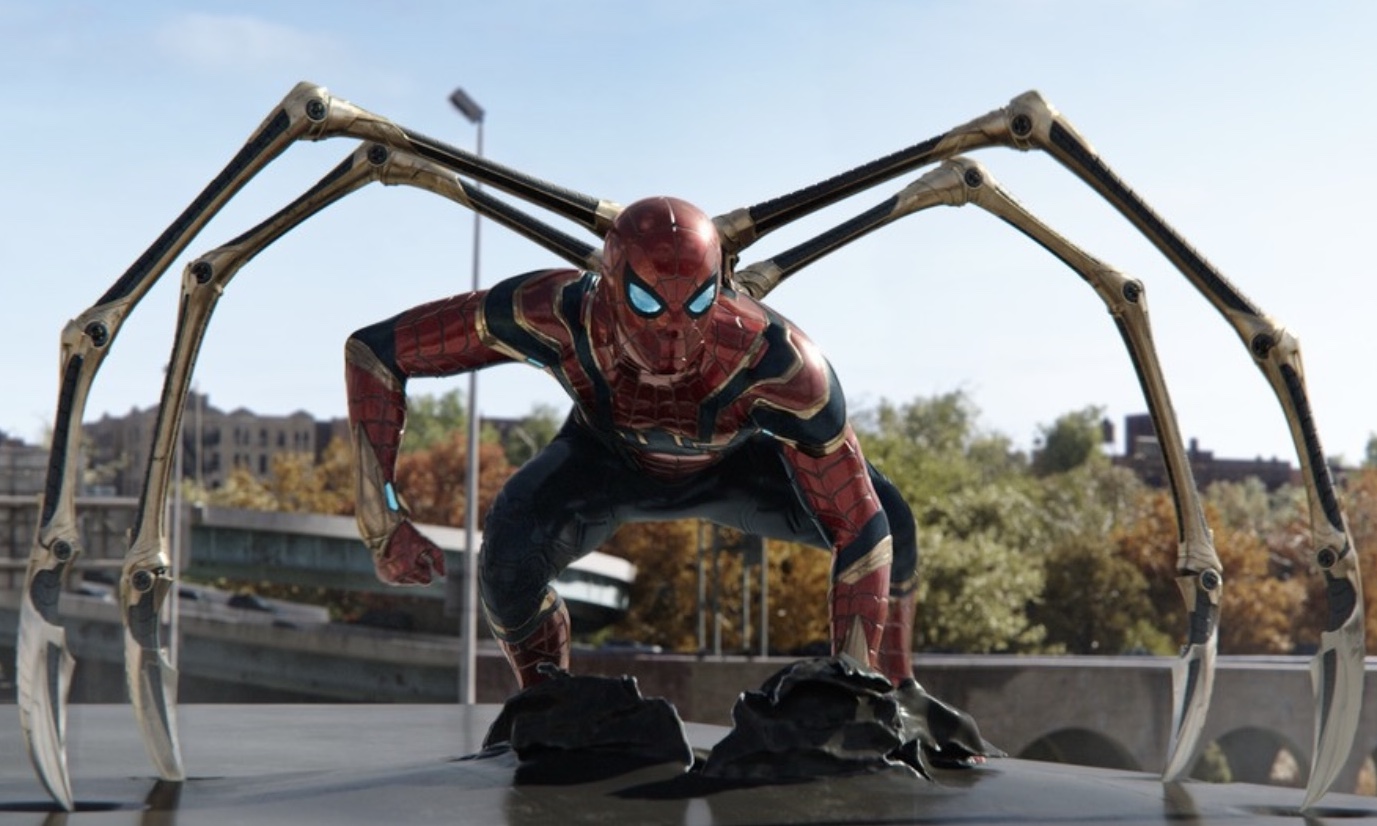
Today Spider-Man continues to pave new paths forward, whether its Andrew Garfield and his quick-witted, off-brand sense of humor in the Amazing Spider-Man movies or Miles Morales crashing into other multiverses in Spider-Man: Into The Spider-Verse. Now Tom Holland is doing his own multiverse-crashing in Spider-Man: No Way Home, a movie that is bigger and bolder than anything we’ve ever seen from Spider-Man in the movies yet.
WARNING: This will be a very spoiler-filled analysis of Spider-Man: No Way Home. If you have not seen Spider-Man: No Way Home yet, don’t read this article. I have a shorter, spoiler-free review you can read here. You have been warned.
When Spider-Man: No Way Home begins, we think the premise speaks for itself. The whole world now knows that Peter Parker is Spider-Man, his family and friends’ lives are ruined just because they know him, Peter enlists in the help of Doctor Strange (Benedict Cumberbatch) to try and make the world forget his secret identity only for it to go horribly, horribly wrong in every way that it can. Now all of these villains from other Spider-Man movies are pouring into Peter’s universe trying to kill him. The whole plot seems pretty straightforward… until it isn’t.
One of the most brilliant aspects of this movie is easily its villains. For years, Sony has struggled to reboot Spider-Man’s villains as successfully as they did with Tom Holland’s Spider-Man. After all, Willem Dafoe and Alfred Molina already gave us the definitive versions of Green Goblin and Doctor Octopus in Sam Raimi’s Spider-Man movies. Even in the unpopular Spider-Man 3 and Amazing Spider-Man films, Thomas Hayden Church, Rhys Ifans, and Jamie Foxx also delivered excellent portrayals of Sandman, Lizard, and Electro respectively. How could the MCU possibly hope to reboot these characters and make them feel more realized than their previous iterations?
Well, they don’t. The genius move that No Way Home pulls is bringing all of these villains into the MCU while retaining the original essence that made them excellent characters in the first place. When Doc Ock reappears on the bridge after Peter’s spell goes haywire, he remains driven by madness and tragedy like he was in Spider-Man 2. Lizard is more animalistic and savage in his reappearance and has reverted to an even more reptilian state since The Amazing Spider-Man. And when Electro and Sandman surface at the power plant, their respective themes blossom into nostalgic bliss as they lash out in confusion at this new world they stumbled onto. When these villains are reintroduced, we not only don’t have to waste time with their backstories since we already know them: we’re able to quickly cut to the chase and get to the heart of this story.
And what exactly is this movie about? Mercy. When these villains are brought into the fold, Doctor Strange tells Peter that they all die fighting their respective versions of Spider-Man. So by sending them back to their world, they would essentially be dooming them to their deaths. By imposing this moral dilemma, the movie is introducing a conflict much more interesting than the usual punching and acrobatics you’re using to watching in most superhero movies. Instead it asks if you could save the life of a total stranger, would you?
Now if it were me or any other cinematic cynic out there, my response would be to hit the button, say “adios” to these loonies, and then sleep like a baby afterwards. But Peter is better than most people and believes in second chances, even for people that don’t deserve them. That’s why he’s committed to helping these people, even if they are quote-unquote “bad guys.”
This fundamental difference leads Peter to one of the most interesting fights in the movie — not against another villain, but against Doctor Strange himself, who sees this issue more like a cosmic inevitability rather than a moral question that has to be answered. Pitting their ideals against each other was one of the more interesting moments of the movie, and seeing them fight against each other in the upside-down physics of the the Mirror dimension made excellent use of each other’s abilities.
And the way Spider-Man beats Strange is just so darn clever, using his geometry smarts to spin a web and trap Doctor Strange inside his own spell. To see this kid who used to need a hand from Iron Man now overcome the Sorcerer Supreme himself shows just how much the character has grown over the years and how much he can stand on his own without needing help from another Avenger.
Peter and his friends resolve that the only way to send these villains back home without killing them is by curing them of their abilities so they’re less of a threat to their own Spider-Men. He starts by replacing Doc Ock’s inhibitor chip, placing him in control of his arms rather than the other way around. Then he puts a power dampener on Electro that will revert him back to normal.
Peter begins to move on to curing the other villains when a sinister persona emerges from the deep recesses of Norman Osborn’s mind: the Green Goblin. Willem Dafoe’s return to this character was one I was most looking forward to, not just because this is his first time playing the role in 20 years, but also because his costume design looks starkly different from his last big-screen appearance. I knew from the trailers that he wasn’t going to have his iconic mask from the original Spider-Man movie. The question I was left with was how well that would work for the film overall? Would he be as terrifying, as loathsome, as unsettling a presence as he was in the first movie, or would he just be stuck feeling like wimpy old Norman Osborn?
Well surprisingly, the omission of his mask actually added to his portrayal. When the Goblin reveals himself, Willem Dafoe’s twisted, sinister expression emerges from Norman’s warm and friendly face, his sick and disturbing laugh echoing from behind his throat. It reminded me of that scene from the original Spider-Man where Norman was talking to himself in the mirror. It also reminds the audience that the thing to fear most about the Green Goblin isn’t his suit, his glider, his pumpkin bombs or even his mask: it’s his bloodlust and his vicious capacity for violence.
Peter and the Goblin fight, and man this fight is hard to watch: easily the grittiest and most brutal fight out of the entire Homecoming trilogy. Goblin is throwing Peter through walls, Peter is frantically punching him in the face, only for the Goblin to maniacally laugh at his feeble attempts to stop him.
Then at the very end of the fight, Goblin does the most shocking thing of all: he kills Aunt May. He summons his glider, stabs May in the back, and even chunks a pumpkin bomb at her for extra measure. And before May collapses in Peter’s arms, she passes on that iconic line “with great power comes great responsibility” before she dies.
This scene is so great for so many reasons. One is because Willem Dafoe’s performance as the Goblin is just so frightening and sadistic. He genuinely feels like the Green Goblin from the comics, the one that hates Peter so much and desires nothing more than to hurt him in the deepest and most personal ways possible. The fact that he specifically targets May just to hurt Peter makes him feel that more nefarious as a villain. In many ways, Dafoe’s performance as the Goblin here outdoes previous adaptations of the character. That does, by the way, include his appearance in the original Spider-Man.
But on a deeper level, this is a much more significant character-defining moment for Peter. By uttering that iconic line moments before she dies from a villain born from Peter’s mistakes, she becomes the catalyst for his growth as Spider-Man. She’s essentially become the MCU’s Uncle Ben, which is why I’m okay if he’s never referenced again in future Spider-Man movies: because Aunt May’s death has now become Peter’s main motivation for continuing his crusade as Spider-Man, not Uncle Ben.
But right at Peter’s lowest moment, two new contenders enter the fray: Tobey Maguire and Andrew Garfield’s Spider-Man. You see, Strange’s spell also summoned them into this universe alongside their respective villains, and it’s their words that push Peter to keep going. After all, they’ve been at the same hopeless place Tom Holland’s Peter is at right now. If anybody understands what he’s feeling, it’s them.
Long rumored to appear in No Way Home, I can’t tell you how exciting it was to finally see Tobey and Andrew suit up as Spider-Man again after hanging up the mask for over seven years. We learn a lot about both Peters after their stories concluded in Spider-Man 3 and Amazing Spider-Man 2. Tobey Maguire’s Peter married MJ and grew a life with her while juggling his double-life as Spider-Man. Andrew Garfield’s vigilantism took a darker, more violent turn after he failed to save Gwen Stacey in his last movie.
But the important thing to take away from both of these Peter’s monologues is their wealth of experience. It isn’t just their fates that we’re interested in: we’re invested in their words of wisdom and what they can pass on to Tom Holland’s Peter during his time of need. I love the fact that some of my favorite moments in this movie aren’t high-stakes action of fight sequences: they’re character-building moments between the three different Spider-Men. Their dialogue and chemistry with each other just feels so natural, like three brothers meeting up together after a long time apart.
It really demonstrates that each of these actors brought something unique and distinct to their respective portrayals of Spider-Man, and none of them have deserved the animosity they’ve received from Spider-Man fans over the years. They’re all special in their own ways, and I hope No Way Home finally helps fans realize that.
I also really like that despite each of these actors having their own moment in the film, neither Tobey or Andrew steal the spotlight from Tom Holland’s Spider-Man. This is, after all, still his movie, and it is his arc that we’re invested in. Tobey and Andrew are more like mentors to Tom Holland, and they fit perfectly as the most important supporting cast members in the movie.
The three Spider-Men collaborate to cure the remaining villains as they set a trap on the Statue of Liberty. Electro, Sandman, and Lizard appear as the three Spider-Men duke it out against their respective villains. Sandman and Lizard are both turned back into their normal human selves, Doc Ock shows up and helps the remaining Spider-Men cure Electro, and the two Peters share a heart-to-heart with the villains, telling them that they never wanted them to die and only ever wanted to help them. Andrew Garfield even experienced a full-circle moment saving MJ from a fatal fall, redeeming himself from his failures in Amazing Spider-Man 2.
Then Green Goblin shows up again and nearly ruins everything. He blows up the box that Strange used to contain the spell, allowing the multiverse to break open and have an infinite number of Spider-villains pour into their universe. Tom Holland’s Spider-Man and Goblin fight again at the base of the statue, brutally trading punches as they’re committed to killing each other. Tom’s Spider-Man ends up webbing Goblin in place as he lands one blow after another, then in a fit of rage, picks up the Goblin’s glider, ready to end his life.
Only he doesn’t kill him. As he brings down the glider, Tobey’s Peter jumps in the way and stops Tom’s Peter from landing the killing blow. As they struggle against each other for a moment, Tom slowly eases himself and sets the glider down, only for Goblin to stab Tobey in the back at the last second.
This is yet another great full-circle moment that speaks to the hearts of these characters. Tom’s Peter is still in a state of grieving, and in a moment of weakness, gives in to his hate to try and kill his greatest foe. Tobey’s Peter steps in to stop him, giving him this piercing, firm gaze that tells Tom’s Peter that he has to be better than this. And in a throwback moment to the very first Spider-Man, Goblin stabs Tobey’s Peter in the back, something he tried to do the last time they faced off. It shows in a very powerful moment that not only is doing the right thing sometimes hard to do: in many ways, it can also backfire on you in very personal ways. But taking the right path is often not the same thing as taking the easiest path: that’s what makes taking it so virtuous and noble.
Andrew throws Tom the anti-Goblin serum and they succeed in injecting it, effectively killing the Goblin while still saving Norman’s life. But the Goblin’s damage has already been done, and the villains are beginning to pour into their universe. So Peter does the only thing he can do: he asks Doctor Strange to make everybody forget Peter Parker ever existed. By doing this, he sends both of the Spider-Men home, the villains go back to their respective universes, and the multiverse is saved from collapsing.
But in the same stroke, both MJ and Ned forget everything they ever experienced with Peter, and the following montage is probably the most tragic moment out of the whole picture. Because you see Peter approaching the coffee shop MJ is working at, rehearsing his lines, ready to reconnect with them after they’ve lost all memory of him. But when he sees that she has a cut on her forehead from his battle on the Statue of Liberty, he forgets the whole plan and walks away. Loving her has only put MJ in harms way every time he suits up as Spider-Man. If keeping her out of his life means she’s safe, that’s a small price to pay for Peter: even if it means he ends up all alone.
This is what I love most about this movie, and really what most of these Spider-Man movies have been missing since the original Sam Raimi films. More than any other movie in the Homecoming trilogy, more than most other movies in the MCU, Spider-Man: No Way Home shows the sacrifice that comes with being a hero. In Spider-Man: Homecoming, Spider-Man was having fun web-zipping around the city as an excitable teenager, while in Spider-Man: Far From Home he needed to step up and stand on his own as the world wrestled with its mightiest heroes being gone. No Way Home is the first movie in Tom Holland’s trilogy where it shows the true cost of being Spider-Man. Aunt May said it best in Spider-Man 2 where she says that sometimes being a hero means giving up the thing we want the most: even our dreams.
There are some things that don’t work quite as well in the movie. For instance, Sandman and Electro’s costume designs aren’t as interesting alongside their supervillain counterparts, with Thomas Hayden Church looking like a literal CGI sand man while Electro looks as generic as an electrical worker. Some of the movie’s multiversal logic also doesn’t hold up that well, especially when you begin to question when these villains specifically got pulled from their universes. Because if they got pulled moments before their deaths, then Peter’s actions in this movie could end up meaning nothing anyway.
There was also a post-credits scene involving Tom Hardy’s Venom that was just straight up DUMB, and I do mean it with the all caps. Here was Venom: Let There Be Carnage, teasing Venom’s appearance in No Way Home and what it could mean for Venom in the MCU. Then not only does the movie decide not to use him at any capacity: they decide to send him back without any further interaction. If you weren’t going to use him in the movie, then what on Earth was the point to teasing him in Venom: Let There Be Carnage? Couldn’t you have just cut both credit scenes from those movies, shave down the run time, and save the audience the frustration?
Aside from those irritations, Spider-Man: No Way Home shows Peter at his most human: his most flawed, fallible, and vulnerable. By the end of the movie, Peter gives up everything he cares about most: his Aunt May, his best friend, his true love, even his literal identity. Yet he gives it all up anyway just to do the right thing. Because at the end of the day, that’s what being Spider-Man is all about. It’s not about the webs, the cool Stark suits, the wall-crawling or the amazing adventures. It’s about wielding great power, and bearing the responsibility and the sacrifice that comes with it.
About halfway through Spider-Man: No Way Home’s runtime, one of the movie’s newest multiversal villains looks out at the new world he’s stumbled onto and says “Look at all the possibilities.” I feel like right now we’re on the cusp of a whole new universe of our own, imagining all of the possibilities for our friendly neighborhood wall-crawler as he plunges ahead into new and unexpected adventures. No matter what your expectations are, Spider-Man: No Way Home absolutely lives up to every bit of the hype surrounding it. The fact that you can say that even when our expectations were insanely high to begin with is more impressive than anything I can share in this review.
After that shocking twist ending in Spider-Man: Far From Home, Peter Parker’s (Tom Holland) secret identity has been revealed thanks to Mysterio’s manipulation. Now the whole world knows he’s Spider-Man, and Peter isn’t the only one facing the consequences. So too is his best friend Ned (Jacob Batalon), his girlfriend MJ (Zendaya), and his Aunt May (Marissa Tomei).
Feeling guilty for how he caused ripple effects throughout the lives of the people he loves most, Peter turns to the sorcerer supreme Doctor Strange (Benedict Cumberbatch) asking him if he can use his magic to make it so the whole world forgets that he’s Spider-Man. He does, but it comes at a cost: now villains have poured in from other Spider-universes looking to kill Peter Parker. There’s the sinister Green Goblin (Willem Dafoe). There’s the menacing Doctor Octopus (Alfred Molina). There’s the rage-filled Electro (Jamie Foxx), the elusive Sandman (Thomas Haden Church), and the slithering Lizard (Rhys Ifans). Now Peter has to team up with his friends to round up these villains and send them back to their universes before they destroy his.
I’m going to start by saying this review will be very brief and very spoiler-free, because this film is best experienced knowing as little as possible about it, and I don’t want to compromise the surprises for my fellow spider-fans out there. Because of this, my review will seem very vague and very nondescript. Don’t worry, I’ll be publishing a spoiler-filled review later on.
For now, all you need to know about Spider-Man: No Way Home is that it is a masterpiece. You absolutely should go and watch it. Not only does Spider-Man: No Way Home do justice to Peter Parker’s arc that has been building up ever since his first appearance in Captain America: Civil War — it’s also a beautiful and heartfelt love letter to Spider-Man’s cinematic legacy. One of the things that makes Spider-Man such an endearing character is the fact that his greatest superpower isn’t his webs, his wall-crawling or his spider-sense: it’s his heart and his unwavering will to do the right thing even when it’s the hardest road you can take.
A lot of that is in large part thanks to Tom Holland, who gives his most passionate and emotional performance as Spider-Man to date. A lot of fans (myself included) questioned at the beginning how much Tom Holland stacked up against fellow Spider-Man veterans Tobey Maguire and Andrew Garfield, especially when his earlier movies traded out a lot of the dramatic moments for jokes and quippy one-liners. No Way Home shows him at his most challenged and vulnerable, and Tom Holland naysayers are very quickly proven wrong with his acting chops here. Not only is this Tom’s most dramatic, daring, and darkest portrayal of Spider-Man yet: it is also his rawest and most human. Not since Spider-Man 2 has a Spider-Man performance felt so natural and real, and that’s the best compliment I can give to Tom Holland regarding No Way Home.
But it isn’t just Tom Holland who is at his best: director Jon Watts also delivers the best Spider-Man story in the MCU yet with this sprawling cinematic crossover. It isn’t just the fact that he’s bringing in the villains from pre-existing Spider-Man properties: it’s that he’s using them in interesting and engaging ways while staying true to their original characters. In a recent panel, Alfred Molina mentions that what makes these villains so interesting is that they aren’t just some mustache-twirling charlatans, but they carry a depth and complexion as real people who have been changed by unspeakable tragedies and accidents in their lives. That made them so interesting in their initial cinematic appearances, and that makes them just as interesting here because Jon Watts paid them the attention they deserved. They aren’t just dropped into the plot here for cheap fan service: their appearance in this story feels earned and they have a point and a purpose for this crossover with the MCU’s Spider-Man.
Look, I can only go so far without talking about spoilers, so I am going to end the review here. All I can say is this: if you are a Spider-Man fan, Spider-Man: No Way Home will not disappoint you. Not only is the action fresh, fast-paced, and exciting, but the characters’ presence in this sprawling story makes it feel gripping and engaging at the same time. To think that five years ago, we questioned how Tom Holland would not only fit into the MCU, but into the constantly expanding Spider-Man mythos overall. No Way Home gives us our answer, and the payoff is so, so satisfying. What else can I say? The possibilities are quite literally endless.
With the Marvel franchise going on 22 movies strong and counting, it seems impossible to think that an era is about to come to an end with Avengers: Endgame, which is releasing in theaters this weekend. I personally don’t believe it is the end. For one thing, Spider-Man: Far From Home is scheduled for release later this summer, despite Peter’s seeming demise in Avengers: Infinity War. Sequels for Black Panther, Doctor Strange, and Guardians of the Galaxy are also slated for production as well. And with Disney’s recent acquisition of 20th Century Fox, that gives Marvel a slew of new characters to bring into the fold of their cinematic universe, including the Fantastic Four, the X-Men, and Deadpool.
Still, Avengers: Endgame does seem to be the big finale for a lot of big stars that have been attached to the series for a long time now. Samuel Jackson, for instance, has been attached to the series as Nick Fury ever since 2008, playing the one-eyed S.H.I.E.L.D. director a whopping nine times and counting. Chris Evans has been attached to the series nearly as long as Captain America ever since his first movie in 2011. And don’t even get me started on Robert Downey Jr., who has played Iron Man now 10 times for over 10 years.
It does seem like there will be a finality to Avengers: Endgame when it comes out this weekend – although how exactly remains to be seen. Still, if anything, let’s be grateful that we’ve gotten to go on this 20-plus movie journey together, alongside Earth’s mightiest heroes.
With that being said, let’s take a look back at some of Marvel’s best, leading up to Avengers: Endgame.
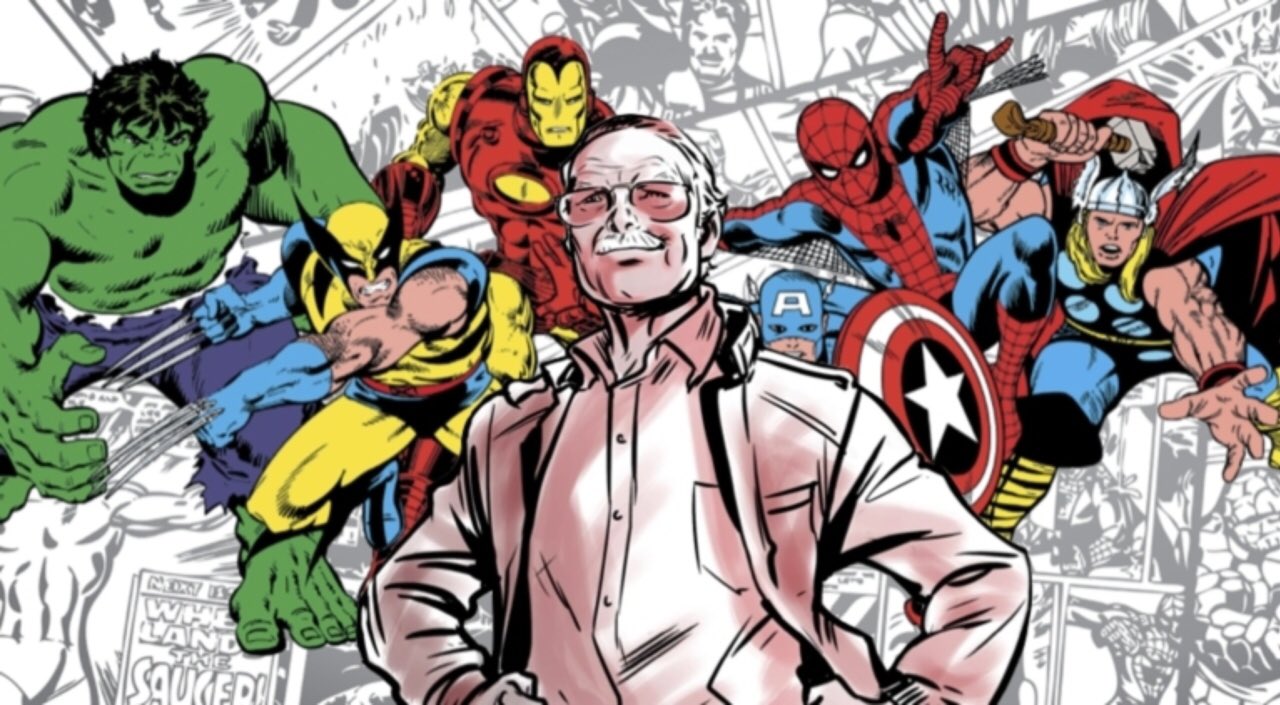
Stan Lee was always recognized as the guy who wrote Spider-Man. Not the Fantastic Four. Not the Hulk. Not the X-Men, or Iron Man, or Doctor Strange, Black Panther, or the Avengers. “Nope,” he wrote in a foreword to one of his books. “It’s always ‘Aren’t you the one who wrote Spider-Man?’”
Stan had a theory for why he was recognized for Spider-Man more than any of his other heroes: it was because of his humanity. “He never has enough money,” Stan continued. “He’s constantly beset by personal problems, and the world doesn’t exactly applaud his deeds. In fact, most people tend to suspect and distrust him.”
“In short, he’s a lot like you and me.”
I don’t disagree with him. Long before I became absorbed into the world of Marvel, superheroes, villains, and amazing fantasies, I was just a kid on my elementary school playground, my daydreams limited only to the far reaches of my imagination. It was on that playground where I saw other kids going bam, pow, and ka-blooey with their colorful action figures, one of them wearing red and blue spandex covered in webbing and a spider symbol. I pointed to the figure, and I asked them “Who’s that?” The kids all laughed in unison. “That’s Spider-Man, dummy,” one of them piped to me. “You’ve never heard of him?”
I didn’t know about him then, but as the years passed I learned much more about him and became completely enamored by his story. I read the original comic where he made his debut appearance in 1962’s “Amazing Fantasy #15” and became heartbroken by the loss of his Uncle Ben, but touched when he realized his mistakes and promised to set out and be better. I felt excitement as I watched him battle incredible enemies such as the energetic Electro, the multi-metal-limbed Doctor Octopus, the ghastly Mysterio, the brutish Venom, and of course the menacing Green Goblin. I was crushed when I not only saw the love of his life, Gwen Stacy, killed on the fateful Brooklyn Bridge but killed by his own webbing no less when he tried to save her but accidentally snapped her neck. And I felt resolution years later when he found new love in the breathtaking Mary Jane Watson and had moved on to start a family with her.
Spider-Man was my introduction to the Marvel universe, but when I learned how big and expansive it truly was, I was nearly overwhelmed. I quickly became absorbed by all of Stan Lee’s stories and learned about the many subjects that he touched upon. I read the Incredible Hulk and learned how dangerous it was to inhibit your emotions. I read about Daredevil and learned that your disability doesn’t define you, and in some ways, it can embolden you. I read about Doctor Strange and learned that when you lose one gift, sometimes it opens up a path to receive another. I read the X-Men and learned that our differences are nothing to be ashamed or afraid of. In many ways, it is our very strength and represents the best humanity has to offer.
Stan Lee’s superheroes and stories have touched many lives – my own included. It becomes nearly impossible not to become enamored by his stories, or the person who created them.
But the truth was Stan was not a superhero. Far from it. Throughout his life, there was much argument over how much of a hand he really had in his characters and for sometimes hogging the spotlight from his fellow co-creators. Comic book legend Jack Kirby, who co-created the Fantastic Four and the X-Men alongside Lee, even went so far as to claim that he’s “never seen Stan write anything.” And artist Steve Ditko arguably had just as much a hand in creating Spider-Man as much as Lee did. Yet, you might be surprised to find out that he also died earlier this year to a significantly lesser tribute.
And then there are the even further complications of his last years on Earth. In July 2017, Stan lost his wife Joan died due to stroke complications. In April earlier this year, The Hollywood Reporter published an expose on Lee suffering from elder abuse from several associates looking to gain control over his assets, including one Keya Morgan whom he filed a restraining order against in August. Later, The Daily Mail published a story claiming that Lee repeatedly sexually harassed the nurses that came to take care of him by asking them to join him in the shower, walking around naked, and requesting sexual favors. Then, just as quickly as the story broke, it faded from memory. I have no idea whether those rumors are true or not. I pray they are not.
I say all this not to tarnish his legacy, but to be honest about it. Stan was a comic-book visionary, a passionate storyteller and a gargantuan pop-culture icon. He will no doubt be among history’s greatest creators, not unlike Walt Disney with animation or Alfred Hitchcock with the movies. And like these men, he had a complicated legacy with his success – one that should not be ignored or skipped over. How people react to that context is up to them. All I can do is speak for myself, and I know for a fact that Stan Lee’s characters and stories have had a profound impact on my life and the person that I have become – regardless of the confused, flawed human being who is behind them.
I will say this: regardless of what you may feel of Stan Lee or his history, I hope you remember and appreciate his many contributions to the entertainment industry. His stories have been compelling, thought-provoking, and relevant to the real world. His characters have been memorable, dazzling, and relatable. And the impact he’s left on the comic-book and movie scene has been mighty, uncanny, incredible, spectacular, fantastic, even amazing.
Stan Lee has passed, but his heroes live on. They will always live on. I cried this weekend while revisiting Spider-Man 2, realizing that the most profound thing about Peter Parker wasn’t his spider powers, his wall-crawling, web-slinging, or his Spider-sense. It was the fact that he was a person, and despite his personal troubles and issues, he was always trying to do the right thing for everybody – despite not knowing them or what they go through themselves.
I hope as time passes, people will remember that sentiment. That with many gifts comes much giving. That with our many talents comes the duty of sharing it with others. And yes, the lesson that has stuck with me all these years and will carry me for many more – with great power comes great responsibility.
Anyone can be Spider-Man under the mask. In Spider-Man: Into the Spider-Verse, not only does it feature the first big-screen incarnation of an Afro-Latino Spider-Man: it also features a middle-aged Spider-Man, a Spider-Woman, a Japanese Spider-Girl, Spider-Nicolas Cage, and even a Spider-Pig. PETA had to appreciate the representation on that last one, although I’m not sure how they felt watching the Spider-Pig eating a hot dog.
Like the rest of the Spider-Man movies, Spider-Man: Into the Spider-Verse features Peter Parker (Chris Pine) in the titular role. Unlike the previous movies, however, Parker is not the main star here – and he isn’t the only Spider-Man. In Into The Spider-Verse, Miles Morales (Shameik Moore) is bitten by a radioactive spider and gets spider-powers all his own. While looking for the original Spider-Man to help him get acquainted with his newfound abilities, Miles stumbles upon the witty wall-crawler fighting the Green Goblin (Jorma Taccone) and the Kingpin (Liev Schreiber). In the middle of their fight, the Kingpin’s particle accelerator – a machine that can access alternate dimensions – goes off, killing Peter and splintering five different Spider-Person’s realities into Miles’ dimension.
There’s an older, chubbier Peter Parker (Jake Johnson) who is going through a mid-life crisis, there’s the rebellious rock star drummer Spider-Woman (Hailee Steinfeld), a private-eye detective from 1930’s New York (Nicolas Cage), a Japanese school girl with her own robotic Spider-suit (Kimiko Glenn), and a spider who was bitten by a radioactive pig to become Spider-Ham (John Mulaney). All of these Spider-People must help Miles realize his true potential to become the Spider-Man that he needs to be. Because if they can’t help him, he can’t get them home – and then all of their realities will be lost forever.
One of the immediate things you notice about this movie is its animation style. I’ll admit I was hesitant when I first heard about this project. Superheroes are not known for being very prominent in the animation genre outside of The Incredibles or Big Hero 6. In the case of a blockbuster name as big as Spider-Man, who has found massive live-action success with the likes of Spider-Man 2 and Homecoming, an animated movie felt like it was short-changing the character’s potential. It would be like hearing Warner Bros. announce that the Justice League sequel was going to be animated. You would, very reasonably, wonder A) Why this is happening, and B) How does this do the characters justice?
Any doubt over Into the Spider-Verse, however, was immediately dashed when I saw the first few frames of this gorgeous animated superhero epic. One of the first things you recognize about this movie is how it mimics the old pop-art design of 1990’s comic books. The entire film feels and breathes of comic book euphoria, with the cell-shaded colors popping out of the screen as if it was from a comic book panel, character monologues appearing in caption boxes above their heads, and actions flashing in those “BAM!”, “SMACK!”, and “POW!” bubbles harkening back to Adam West’s days as Batman. I was surprised to find that in the movie’s more exciting moments, the action was so quick-paced and enthralling that I felt like I was watching one of the live-action Spider-Man movies. But even in the slower moments, the art was eye-catching, colorful, and beautiful to look at. This is one of the few movies where the animation not only works well for this type of story: it actually benefits it even more so than if it were in live-action.
And the voice talent here is simply incredible. Johnson and Cage are reliable in the two main versions of Peter Parker (no surprise there). I personally found myself more impressed by the younger names involved with this production. Steinfeld, who has been picking up speed lately in big projects including Bumblebee, Pitch Perfect 3, and The Edge of Seventeen, really puts her own spin on Spider-Woman, playing equal parts sassy, spunky, yet affectionate in cinema’s first female Spider-Man. John Mulaney was pitch-perfect casting for Spider-Ham, and he gave the movie some much-needed comedy without ever feeling corny or ham-fisted (snort). And Moore outshines everybody as Miles Morales, a kid who is growing into his own but doesn’t know how to stand out from a long line of spectacular Spider-People. His story of not fitting in and trying to find his place in this already packed world is one every kid can relate to – especially in a genre as overstuffed and overpacked as the superhero genre.
All of this is to say that the beautiful animation, the spectacular fight sequences, and the voice acting would have all gone to waste if the story was lacking. Luckily, the story is the strongest aspect of Into the Spider-Verse. Phil Lord, who is most known for 21 Jump Street and Lego Movie fame, wrote the film and co-produced it with his collaborator Chris Miller, and he brings a maturity and poignancy to Miles’ story that you wouldn’t expect in a movie like this. After all, this is an animated superhero movie. It would have been easy enough for Lord to write in a bunch of action sequences, take a paycheck, and call it a day.
That’s not what happened though. The people involved with Spider-Verse cares very deeply about Spider-Man. And when I say ‘Spider-Man,’ I don’t just mean Peter Parker. I also mean Miles Morales, Gwen Stacy, Peni Parker, Peter Porker, and all the other Spider-Men after that. All of them are quirky, weird, off-the-cuff, nimble, and have witty one-liners for days. But they all carry that same burden of power and responsibility with them. All of them are Spider-Man.
I loved Spider-Man: Into the Spider-Verse. Not only is it one of the stronger Spider-Man films out there – it is also one of the best Marvel films to date and one of the best films of the year, period. If I had any criticism, it would be that some of the plot holes in the movie are a little too noticeable to ignore (like how the particle accelerator can link Peter Parker to Gwen Stacy even though they have different strands of DNA). But these are minor complaints in an otherwise brilliant movie. For nearly 20 years, we have been getting the same Spider-Man with the same alter-ego, same origin story, same costume, same villains, and same expectations. Spider-Man: Into the Spider-Verse opens the door to new possibilities and celebrates the differences that make each of us our own unique superhero.
I’ll end my review on a critical line that Peter tutors to Miles during the movie: “What makes you different is what makes you Spider-Man.”
There is a moment in Venom where the titular multi-tentacled anti-hero is threatening a burglar inside a convenience store. He tells him he’s going to eat both of his arms, both of his legs, and then eat his face right off of his head. “You will be this armless, legless, faceless thing, won’t you?” he narrates to the petrified thief. “Rolling down the street: like a turd in the wind.”
Why am I opening my review talking about turds? Because as awkward and misplaced as that line sounds, it is perhaps the most accurate description of this entire movie. Venom is violent, creepy, edgy, seethingly disturbing, and just when it begins to build up into something interesting… it takes a wrong turn and nosedives into the pavement. It’s already been demonstrated countless times before, but if you need further proof as to why great comic book supervillains make for terrible superhero movies, look no further than Venom.
Based on the Marvel comic supervillain of the same name, Venom follows Eddie Brock (Tom Hardy), an investigative journalist who has a nasty habit of following people who do not want to be followed. After accusing a high-profile tech CEO of purposefully murdering test subjects at an alarming rate, Brock loses his job and is abandoned by his fiancee Ann Weying (Michelle Williams). Now without a job, a career, and a love life, Brock just sits alone in his apartment, drowning himself in pity and alcohol.
One day, Brock unknowingly comes into contact with a gooey substance that reveals itself as a life form: a symbiote that physically and mentally bonds itself with Eddie. Granting Eddie super-strength, speed, agility, and a menacingly toothy grin, the symbiote creates a new life form that is neither Eddie Brock or the symbiote. Together, they are reborn as the man-eating monster known as Venom.
You might remember that this is not Venom’s first live-action outing for the big screen. You might be better off forgetting it. His first attempt at the spotlight was in 2007’s Spider-Man 3, where he was played by “That 70’s Show” actor Topher Grace. He was rightfully and relentlessly mocked for his insipid, whiny, pathetic portrayal of an otherwise terrifying character. If I come out of the theater and I am annoyed by Eric Forman instead of shaken by Eddie Brock, you know there’s a serious problem here.
The best thing I can say about this new Venom movie is that it does an excellent job rebooting the character, washing your memory of his God-awful debut a decade earlier and updating him with a sicker, more menacing design. A large part of that is in thanks to Tom Hardy, who switches between playing the two different characters here in mesmerizing contrast. When he portrays Eddie Brock, he molds him as a sort of vulnerable, pitiful character: a failing journalist who is drunk for half of the day and down on his luck for the other half. But besides playing the exasperated and horrified Eddie Brock, Hardy also voices the Venom symbiote possessing his body, and the way he expresses Venom’s menacing, snake-like delivery is just downright chilling to listen to.
This in combination with the efforts from the visual effects team makes for an ominous, visceral presence in this 10-foot CGI creature. One of the best things about this movie is when the Venom symbiote breaks out into his full form, taking complete control over Brock’s body and just starts running over any enemy in his path. When the movie breaks out into full-blown creature-feature action, that’s when the film is at its best, with Venom’s tentacles flailing about, making giant spider-like leaps, and chomping off bad guy’s heads like they’re the stem of a Tootsie pop. Many fans were reasonably concerned what Venom was going to look like in this movie with his last big-screen appearance still in our memory. I want this on the record: Venom looks and feels vicious, and he rightfully earns the title of lethal protector.
So the Eddie Brock and Venom characters are fleshed out very well in this movie. What isn’t done as well? Essentially everything else.
For one thing, Michelle Williams does nothing for this movie. Her character could literally have been portrayed by Megan Fox, and she would carry the same emotional relevance throughout the movie. That goes double for Riz Ahmed, who plays the movie’s villain named Riot. His character is essentially a gray-scaled clone of Venom, which doesn’t do any favors for the movie’s final battle where black and gray goo basically just splashes against each other over and over again.
The real problem here lies in how the characters are written. They aren’t organic. They don’t feel like they belong here. And unlike Eddie Brock and his venomous alter-ego, their roles don’t have any real impact on the story as a whole. Ann Weying is here because every superhero apparently needs a love interest, and this story wouldn’t be complete without some complicated romantic feelings involved. Riot feels especially shortchanged. Instead of being the relentless, unhinged force he’s supposed to be, he just feels flat and artificial: like a final boss in a video game instead of a mortal enemy for our hero. That lack of effort into fleshing out these characterizations makes for dull, uninspired portrayals, which is especially unfair given the talent and caliber of these two actors. If you don’t believe me, look at Williams’ work in My Week With Marilyn and Ahmed’s work in Nightcrawler. Then look at their performances here and tell me they were given ample material to work with.
All in all, Venom is not the worst movie in the world, but it isn’t really a good one either. It’s just sort of there flailing in the whirlwind of superhero mania that hops from one franchise to another. I am curious as to how the series will progress from here, as Sony has relentlessly teased that they wanted to launch their own cinematic universe from this movie. I at least have more hope for the Venom cinematic universe than I do for, say, the DC Extended Universe. But on its own two tentacles, Venom is ugly, messy, and something I’d much rather forget about: like a turd in the wind.
If you had told me in 2008 that Iron Man would propel a cinematic franchise that’s made more money and movies than the Star Wars, Batman, and Harry Potter franchises, I would have laughed at you all the way to class. “How could that be?” I would’ve asked. “Marvel doesn’t even own the rights to its most popular character, Spider-Man!” A decade later, I’m eating my words, and I couldn’t be happier for it.
It’s amazing to see how far Marvel has come since then. Avengers: Infinity War is the 19th film in the Marvel Cinematic Universe, and later this year, Ant-Man & The Wasp will be the 20th. That means Marvel has pumped out an average of two films every year since Iron Man’s release. The fact that Marvel has pushed out that many movies is impressive enough on its own. The fact that nearly all of them were as financially and critically successful as they were makes their feats all the more impressive. Before Marvel, Star Wars was the highest-grossing film franchise at $8 billion. The MCU has blown that away with a whopping $15 billion.
To say that Marvel has become successful at the movie business would be a severe understatement. It became successful, stacked billions of billions of dollars on top of it, threw on a cosplay, then break-danced in front of the movie theater like it was Flash Gordon. I would go so far as to say it’s the only considerable force at the box office. Even when you include Star Wars as competition, Walt Disney still owns both of those properties. So who else is there to offer serious cinematic competition at the likes of Disney?
With Avengers: Infinity War releasing past week and quickly on its way to grossing one billion dollars at the box office, it’s worth taking a look back at the Marvel Cinematic Universe’s best. So without further adieu, here are my Top 10 films from the Marvel Cinematic Universe.
I’m going to make a bold claim here. Captain America: Civil War is the best MCU movie to be made to date.
I know, I know, I’m probably a little overzealous when I say that. Except that I’m not. I’m fully aware of what its competition is. There are two other Marvel movies that I can compare Captain America: Civil War with. Those two are Iron Man and The Avengers. All three of them are exciting, suspenseful, nail-biting, eye-widening entertainment that are just as fun and memorable as they are emotional and meaningful. They’re not just great superhero dramas. They’re great human dramas.
But Captain America: Civil War is especially unique to even these entries. How? The biggest reason is because it isn’t formulaic. In Iron Man and The Avengers, we had our heroes, our villains, and they went at each other like rock-em sock-em robots. Granted, there’s deeper insight and perspective than just the two-dimensional hero/villain foreplay, but you can’t deny the framework that’s there. There’s a clear cut good guy and bad guy, as there is in most superhero movies.
But that black-and-white sense of morality isn’t well defined in Captain America: Civil War. In fact, there isn’t really an established sense of right and wrong in the picture, just characters whose ideals and values clash violently with each other. You can argue that there is a quote-unquote “villain” in the movie, but he’s more of a viewer than an active participant to the conflict involved. If we have to go by titles in this movie, what we have then is hero against hero, Avenger against Avenger, and friend against friend. The ensuing action is nothing else but thrilling, thought-provoking, mind-blowing, and heartbreaking.
In this sequel to both Captain America: The Winter Soldier and Avengers: Age of Ultron,Steve Rogers, a.k.a. Captain America (Chris Evans) leads a new team of Avengers, consisting of Black Widow (Scarlett Johannson), War Machine (Don Cheadle), Falcon (Anthony Mackie), Vision (Paul Bettany) and Scarlet Witch (Elizabeth Olsen). After an international event involving the Avengers ends in high casualties, General Thaddeus Ross (William Hurt) and Tony Stark, a.k.a. Iron Man (Robert Downey Jr.) step in to introduce the Sokovia Accords, which states that the Avengers would no longer be a private organization, but instead will be employed and assigned missions by a United Nations panel.
There are two perspectives to the Accords. On one hand, the Accords would give a new level of accountability to the Avengers. They would be restricted in where they could go and what they could do, and the public casualties in turn could be lessened. Plus, the Avengers would now get paid for all of their superheroing. On the other hand, this could put a level of control and interference on the Avengers that would prevent them from doing the most good. Plus, being assigned to report to a panel leaves them vulnerable for manipulation, forcing them to do things that they wouldn’t otherwise.
Iron Man leads the side that’s for the Accords: Cap leads the side that’s against it. But regardless of both sides, there’s another player in the field whose looking to manipulate both sides to his advantage. And neither side realizes it until its too late.
The second Marvel movie to be directed by brothers Anthony and Joe Russo and the fourth to be written by Christopher Markus and Stephen McFeely, Captain America: Civil War is a superhero movie ripe with context, a movie that asks uncomfortable questions that we would much rather remain unanswered. Just like how The Winter Soldier related its plot to today’s world of government control, survaillance, and corruption, Civil War also relates to real-world issues that appeals just as much to reality as they do to fantasy.
Take, for instance, the introduction of the Sokovia Accords. These documents, much like the connection between S.H.I.E.L.D. and H.Y.D.R.A. in The Winter Soldier, presents the theme of government interference and how those implications affect our world. Yes, the Accords would impose an element of control and responsibility over the heroes, but at what cost? This is a situation where civil liberties are being traded for security, and the question is raised on whether its a good trade or not. Juxtaposing this idea of control in between our heroes raises very important questions: questions that are startlingly resemblant of our world abundant with government surveillance and manipulation.
But the movie doesn’t suffer under its philosophical weight. This is still one of those fast-paced, funny, exciting Marvel movies that you’ve come to love. It’s just now a fast-paced, funny, exciting action movie that has deeper insight and drama than the previous entries did. The issues involved draw us deeper into the film’s conflict and to each of the outcomes that these characters face.
There are two of these characters that I haven’t mentioned yet. One of them is the rebooted Peter Parker/ Spider-Man, who is played here by Tom Holland as opposed to the recently discontinued Andrew Garfield. Holland’s appearance in the film is brief yet significant, and while he doesn’t serve a role as important as the others, his charisma, immaturity, and innocent charm makes him for a very entertaining and memorable character, one who sticks out in my mind just as much as Captain America and Iron Man. To be rebooted in just two years time is definitely too soon, and part of me wonders how well Garfield would have done if he had been given the same opportunities as Holland was. That doesn’t take away from the fact that Holland still wins us over and sticks out in our minds just as strongly as Garfield and Toby Maguire does. He makes me very excited to see what’s in store for him for his eventual return in Spider-Man: Homecoming.
The other character is T’Challa, a.k.a. the Black Panther (Chadwick Boseman). If there is a neutral side in this conflict, it is in T’Challa, although at one point he does fight on Iron Man’s team. He’s so great because unlike Iron Man or Cap, his perspective is the most human out of the other players. He is the citizen Cap and Iron Man are fighting to protect. He is the one that faces the most casualty out of any of the other players. This natural perspective into the film is so important, because it demonstrates an investment that isn’t coming from another superhero: it’s coming from the victim of both sides of the conflict. That pain and confusion is so important to understand Captain America: Civil War not just as a Marvel movie, but as a complex drama on its own two legs.
The performances, the action, the visual effects, and the direction all accumulate masterfully, and the Russo brothers demonstrate a better understanding of their characters than they did in Captain America: The Winter Soldier. What we have left, then, is an unchallenged masterpiece, a moral dilemma packaged as a superhero blockbuster that excites us just as much as it challenges us. Iron Man and The Avengers both challenged themselves morally and ethically, but not so much to the point where it’s entire plot was founded around it. There was still a right or wrong in those movies. There isn’t in Captain America: Civil War, and that makes it just as compelling as it is entertaining. The one downside to this film’s success: now the Russo brothers have to follow this up with Avengers: Infinity War. I don’t know how they’re going to do it. I would personally guess that they can’t do it. But I’ve been wrong before.






 DAVID DUNN