Tag Archives: Psychological

“THE NICE GUYS” Review (✫✫)

Not so nice. 

The fundamental mistake that Shane Black made with The Nice Guys was thinking that the frosting could count for the cake. The Nice Guys wants so badly to be the next buddy-cop film: the next Lethal Weapon or Rush Hour. In order to be that, however, it needs a story that is coherent and believable, neither of which are adjectives that can describe the plot for Nice Guys. If Shane Black wanted a more thorough crime-comedy thriller, he should have focused just as much on the story’s larger consequences as he did on character’s conversations.

Taking place in 1977 Los Angeles, The Nice Guys opens up on porn star Misty Mountains (Murielle Telio) getting killed in a car crash, where we get to see the features bare all (I’m talking about the actress, not the car). A few days later, enforcer Jackson Healy (Russel Crowe) and private eye Holland March (Ryan Gosling) cross paths. March is looking for Misty’s porn-acting colleague, Amelia (Margaret Qualley), while Healy was hired to get March off of her trail. When their cases supposably line up in interest, these two wannabe detectives need to team up to find Amelia and save her from whatever threat is pursuing her.

Positives first. The dialogue is the best of the year so far. Seriously. Like Shane Black’s other credits, including Kiss Kiss, Bang Bang and Iron Man 3, The Nice Guys is a fast-paced film driven by witty, electric dialogue between its characters. Like any great comedy, the dialogue is key to this film’s comedic moments, and thanks to some great one-liner delivery from its leads, the jokes punch you in the laughing gut very hard. Take the following scene as an example, where March takes his daughter Holly (Angourie Rice) to the last place that she should be going to: a Los Angeles night party.

Holly: Dad, there are whores here and stuff.

March: Don’t say “and stuff.” Just say, “Dad, there are whores here.”

Another moment I appreciated was one where March shows an ad to a friend featuring the two of their likenesses on it. “I made your head small because I know you’re sensitive about how big it is,” March quipped.

The dialogue and the interactions surrounding the characters are timely and humorous, believable in every second not just because of Crowe and Gosling, but also because of Rice, who displays a surprising amount of maturity for an actress at 14 years old. The problem, however, doesn’t lie in the dialogue or delivery. It lies in the screenplay, which throws our heroes through situations and conspiracies so unbelievable that convincing us about the existence of aliens is an easier task. There’s so many unraveled strings, so many stretched out threads that never really weave together fluidly for one larger story. In fact, Black tries to tie in a ridiculous underlying theme about climate change that is so forced into the narrative that it makes PETA look like a passive organization.

Then there’s the whole issue regarding the film’s promiscuous premise. I’ve been vocal about explicit content being featured uselessly in motion pictures before. The Nice Guys is no exception. Tell me, why exactly is this film focused so much on the porn industry? Why is it so intent on showing us clips of two people in the middle of intercourse, scantily clad woman flaunting their bare breasts to attending patrons, or when most horrifyingly, a bloody, beaten, and nude woman flies out of a car before she dies? What do any of these things accomplish? What do any of these things add to the plot that isn’t already there? Couldn’t you have replaced all of these porn stars with supermodels and essentially have the same structure? What reason was there to be so sex obsessed?   

The Nice Guys is not a bad picture: just a misguided one. Black has written his dialogue skillfully, and it’s one of those rare films where the characters are more fun than the action is. The areas it’s lacking in are in its flow, clarity, and basic decency, adding too many elements that distract us from the larger picture rather than entertain us by what’s already going on. If Black made his story simpler, he would have had a better movie, and stuff.   
Tagged , , , , , , , , , , , , , , , , , , ,

“X-MEN: APOCALYPSE” Review (✫✫1/2)

En Sabah No.

The biggest problem X-Men: Apocalypse faces is one it isn’t even responsible for. X-Men: Days of Future Past was and will always be one of the most definitive superhero experiences at the movies. Asking for follow-up to that is unreasonable, let alone damn near impossible, and to its credit, X-Men Apocalypse tries. It tries too hard, but at least it tries.

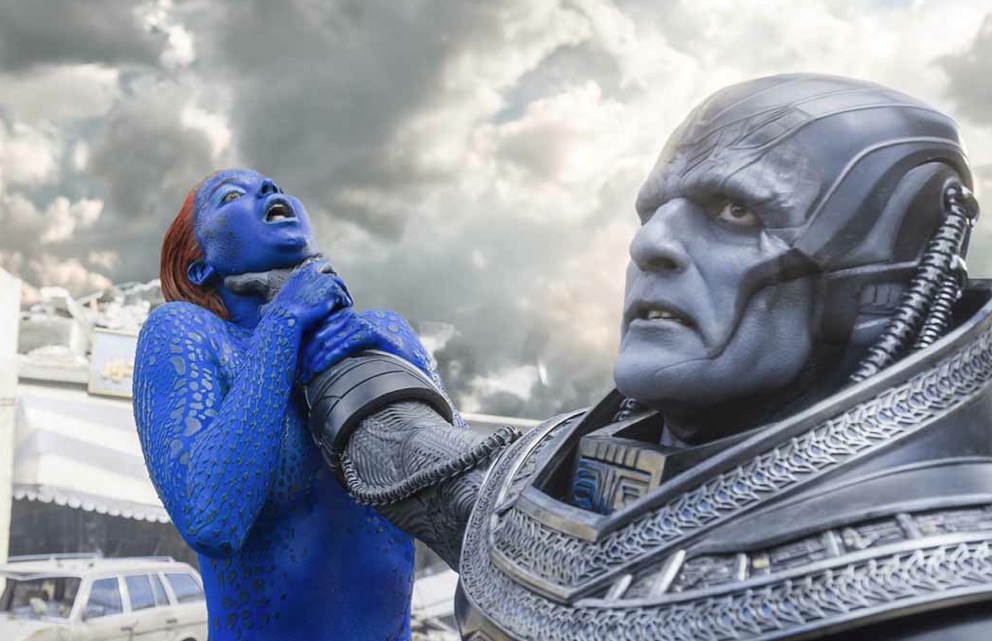
Taking place ten years after the events of Days of Future Past, Apocalypse shows an ancient threat that reawakens deep within the pyramids of Egypt. The first known mutant to ever historically exist, En Sabah Nur (Oscar Isaac) awakens to a world ran amuck in chaos and disorder. Political corruption. Poverty. War. Violence. En Sabah Nur sees all that’s wrong with the world and decides that, in order to save it, it must be destroyed and rebuilt.

Back in Westchester, at Xavier’s School for Gifted Youngsters, Jean Grey (Sophie Turner) awakens from a horrible nightmare. Witnessing horrible visions of the end of the world, Jean is convinced that these visions are real and that they will come to pass. Her professor Charles Xavier (James McAvoy) thinks these are just dreams. Yet, as one thing happens after another, he begins to think there is something devestating going on that even the X-Men might not be able to stop.

The third movie for the newly rebooted X-Men universe, X-Men: Apocalypse boasts a lot of the strengths that its predecessors have. For one thing, the performances are superb, and the actors exemplify their characters down to the molecule. McAvoy is earnest and well-intentioned as Xavier, while Jennifer Lawrence is motivated and sharp-shooting as Mystique. The actor I noticed most, however, was Michael Fassbender, once again adopting the role of Magneto. Every time I watch him, I am reminded of this character’s tragic history and how other people’s cruelty has driven him towards violence and extremism. Without giving too much away, there is one moment where Magneto sustain a crippling loss that comes to define his character the most throughout the picture. These moments remind us that Magneto is not a villain, but rather a tragic hero who fell through grace, and Fassbender is brilliant in capturing both the character’s regret, penance, and guilt throughout the movie.

The action is also incredibly polished, especially for an X-Men film. En Sabah Nur himself is the most omnipotent, wiping enemies away with a dash of his hand or the white glow of his eyes. Havok (Lucas Till) reappears alongside his brother Cyclops (Tye Sheridan) for the first time, and their red energies run amuck obliterating anything in their path. The most fun X-Man to make a return, however, is Evan Peters as the speedster mutant Peter Maximoff. You remember his signature scene at the Pentagon in X-Men: Days of Future Past. His scene in this movie blows that one out of the water. I won’t give much away, but saving over 30 people at superspeed is much more impressive than taking out six security guards in a kitchen. This sequence was funny, exciting, and most importantly, entertaining. His scenes were easily my favorite from the film.

The action and the characters culminate together fluidly, similar to the other X-Men films. The differences lie in its story, or more specifically, in its lack of focus. There are about five different stories packed into one in X-Men: Apocalypse, and most of them are unnecessary. You have so many unraveled narratives trying to weave together into one that quickly falls apart once the plot starts picking up speed. 

Take, for instance, the plight of Magneto. His story is pure tragedy. His hearbreak, his pain, his loss, it echoes of Magneto’s earlier history and builds into a climactic moment between himself and his transgressors. The scene should have been a moment of suspense and satisfaction, but then all of a sudden, En Sabah Nur appears on the scene and completely disjoints the narrative.

The whole film is like that, building up to big moments and then suddenly switching to other ones. There’s Xavier’s arc, then there’s Mystique’s, then Magneto’s, then Jean’s, and then Cyclops’. The most dissapointing to me is Peter. His story has to deal with his true parentage, but it never even leads anywhere. Screenwriter Simon Kinberg and director Bryan Singer build all of this effort up for nothing. No conclusion. No resolution. No payoff. That’s because they don’t have a focus, and the picture ends up losing our interest, despite all of its spectacular action.

X2 and X-Men: Days of Future Past remain to be the best entries of the franchise, while X-Men Origins: Wolverine is the unoquivocal worst. This movie falls in the middle ground. Like its predecessors, X-Men: Apocalypse has great action pieces and performances, but it collapses under the weight of its narrative while simultaneously lacking in depth and development. As Jean Grey observes after seeing Return of the Jedi, “At least we can all agree that the third one is always the worst.” You read my mind, sister.

Tagged , , , , , , , , , , , , , , , , , , , , , , , , , , , , , , , , , , , , , , , , , , , ,

“THE JUNGLE BOOK (2016)” Review (✫✫✫)

Introducing the legend of Tarza– oops, I meant Mowgli.

What is it with Jon Favreau taking the most obscure ideas and actually making good movies out of them? In 2008 he brought us Iron Man, which initially seemed like a sub par idea for a superhero, but then he delivered one of the greatest superhero films of our generation. Then he made Cowboys & Aliens, which sounds stupid by the title alone, yet he still managed to make a unique blend of genres in one exciting and interesting sci-fi western. Now we have his answer to Walt Disney’s The Jungle Book, and even though it’s a remake, it’s remains to be one of the most original and compelling experiences you can have at the movies this weekend.

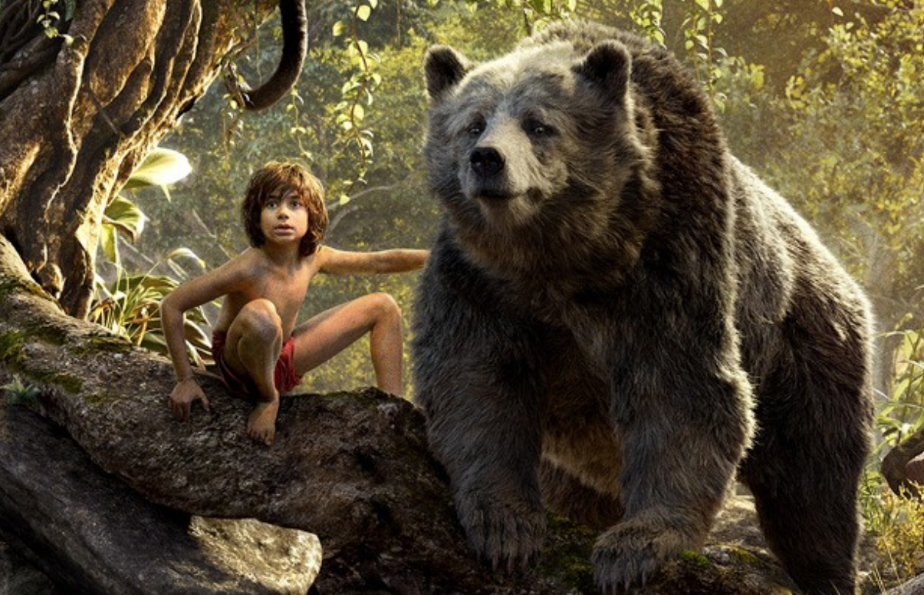
Anyone who is watching this movie already knows the story of The Jungle Book. There’s a jungle, an adventurous human child named Mowgli (Neel Sethi), his wolf pack family, a lazy, carefree bear named Baloo (Bill Murray), a black panther named Bageera (Ben Kingsley), and a vicious tiger named Shere Kahn (Idris Elba), who harbors an intense hatred of mankind. At learning about Mowgli’s presence in the jungle, Shere Kahn swears to find the child and maul him limb-from-limb. The jungle unites together to take Mowgli away to a human village and save him from Shere Kahn.

Those of you who frequently read my reviews will notice that I am not a big fan of remakes. I am also, surprisingly, not a big fan of the original Jungle Book, which I thought was thinly written despite some outstanding musical numbers. Yet, despite my negative outlook for both of these things, I found myself quite pleased with this movie, both as a remake and as an adaptation of The Jungle Book.

The first improvement Favreau makes over its predecessor is its characters. Yes, we liked Mowgli, Baloo, Bageera and others in the 1969 quote-unquote “classic”, but we didn’t really know them. We didn’t really understand them. We had their surface personalities to admire, but that’s it. Where did Mowgli come from? Why does Baloo want to adopt this man-cub straight for no reason whatsoever? Why does Shere Kahn hate mankind?

All of these are questions I had as a kid that 2016 provided me the answers to. This is a jungle fable that is fully fleshed out and realized, not unlike most of today’s modern fantasy epics. The characters of Mowgli, Baloo, Bageera, Shere Kahn, Kaa and others all have their place and function in the story, and their narrative flows as freely as the nile river. We come to relate to these characters not as Disney properties, but as personalities in their own right.

But the best thing about The Jungle Book is easily its visual effects. Yes, I know that’s a recycled compliment in today’s visually-dominated industry, but its a compliment that The Jungle Book is more than deserving in. Utilizing both motion capture from the voice actors and studying the motions and movements of real jungle animals, Favreau illustrates a smart attention to detail as these animals breathe, move, and feel like their real life counterparts, minus their speaking. Neel’s interactions with the environment, likewise, feel vivid and alert, as if he truly is swinging on vines, jumping into rivers, and running through the jungle, as opposed to acting in front of a green screen. For most other movies, it’s easy to say it’s visually stimulating because it has big explosions or large collateral damage. What makes The Jungle Book so praiseworthy is that it has none of these things, and yet, it has no evidence of being unreal despite being almost entirely computer-generated. This is easily an early contender for the visual effects Oscar at the Academy Awards, and even if it doesn’t win, it definitely deserves a nomination at the very least.

Neel is functional but not outstanding as Mowgli. What do you expect? The kid is 13 years old, barely enough to be in junior high. He’s not expected to demonstrate a bravura performance at his age, and he doesn’t. His performance centers mostly on his choreography and stuntwork, and that’s just about as far as his acting skills reach as well.

The key performance, however, doesn’t come from Neel. It comes from these jungle animals, captured so accurately on screen visually and aesthetically to its environment. It’s true, Neel isn’t that impressive on his own, but he doesn’t need to be. His interactions with the other animals is what makes this story believable and so easy to get wrapped up into.

The Jungle Book, of course, wraps its adventure up all nice and tidy, almost too much so in regards to my tastes with Disney. But the plain fact of the matter is that I was surprised. Surprised that I was actually invested in Mowgli and his jungle adventures. Surprised that when I saw the jungle and its inhabitants, my first instinct wasn’t to make fun of them, but to be absorbed by them. Surprised that when watching The Jungle Book, I was looking at it through the eyes of wonder and curiosity as a child, not the hardened, distrusting gaze of a critic.

Disney has plans to produce live-action remakes of many of their animated classics, among them including Pete’s Dragon and Beauty and the Beast. If they follow the pattern of The Jungle Book, Disney has a good road ahead of them.

Tagged , , , , , , , , , , , , , , , , , , , , , , , , , , , , ,

“CAPTAIN AMERICA: CIVIL WAR” Review (✫✫✫✫)

A war of humans, not heroes. 

I’m going to make a bold claim here. Captain America: Civil War is the best MCU movie to be made to date.

I know, I know, I’m probably a little overzealous when I say that. Except that I’m not. I’m fully aware of what its competition is. There are two other Marvel movies that I can compare Captain America: Civil War with. Those two are Iron Man and The Avengers. All three of them are exciting, suspenseful, nail-biting, eye-widening entertainment that are just as fun and memorable as they are emotional and meaningful. They’re not just great superhero dramas. They’re great human dramas.

But Captain America: Civil War is especially unique to even these entries. How? The biggest reason is because it isn’t formulaic. In Iron Man and The Avengers, we had our heroes, our villains, and they went at each other like rock-em sock-em robots. Granted, there’s deeper insight and perspective than just the two-dimensional hero/villain foreplay, but you can’t deny the framework that’s there. There’s a clear cut good guy and bad guy, as there is in most superhero movies.

But that black-and-white sense of morality isn’t well defined in Captain America: Civil War. In fact, there isn’t really an established sense of right and wrong in the picture, just characters whose ideals and values clash violently with each other. You can argue that there is a quote-unquote “villain” in the movie, but he’s more of a viewer than an active participant to the conflict involved. If we have to go by titles in this movie, what we have then is hero against hero, Avenger against Avenger, and friend against friend. The ensuing action is nothing else but thrilling, thought-provoking, mind-blowing, and heartbreaking.

In this sequel to both Captain America: The Winter Soldier and Avengers: Age of Ultron, Steve Rogers, a.k.a. Captain America (Chris Evans) leads a new team of Avengers, consisting of Black Widow (Scarlett Johannson), War Machine (Don Cheadle), Falcon (Anthony Mackie), Vision (Paul Bettany) and Scarlet Witch (Elizabeth Olsen). After an international event involving the Avengers ends in high casualties, General Thaddeus Ross (William Hurt) and Tony Stark, a.k.a. Iron Man (Robert Downey Jr.) step in to introduce the Sokovia Accords, which states that the Avengers would no longer be a private organization, but instead will be employed and assigned missions by a United Nations panel.

There are two perspectives to the Accords. On one hand, the Accords would give a new level of accountability to the Avengers. They would be restricted in where they could go and what they could do, and the public casualties in turn could be lessened. Plus, the Avengers would now get paid for all of their superheroing. On the other hand, this could put a level of control and interference on the Avengers that would prevent them from doing the most good. Plus, being assigned to report to a panel leaves them vulnerable for manipulation, forcing them to do things that they wouldn’t otherwise.

Iron Man leads the side that’s for the Accords: Cap leads the side that’s against it. But regardless of both sides, there’s another player in the field whose looking to manipulate both sides to his advantage. And neither side realizes it until its too late.

The second Marvel movie to be directed by brothers Anthony and Joe Russo and the fourth to be written by Christopher Markus and Stephen McFeely, Captain America: Civil War is a superhero movie ripe with context, a movie that asks uncomfortable questions that we would much rather remain unanswered. Just like how The Winter Soldier related its plot to today’s world of government control, survaillance, and corruption, Civil War also relates to real-world issues that appeals just as much to reality as they do to fantasy.

Take, for instance, the introduction of the Sokovia Accords. These documents, much like the connection between S.H.I.E.L.D. and H.Y.D.R.A. in The Winter Soldier, presents the theme of government interference and how those implications affect our world. Yes, the Accords would impose an element of control and responsibility over the heroes, but at what cost? This is a situation where civil liberties are being traded for security, and the question is raised on whether its a good trade or not. Juxtaposing this idea of control in between our heroes raises very important questions: questions that are startlingly resemblant of our world abundant with government surveillance and manipulation.

But the movie doesn’t suffer under its philosophical weight. This is still one of those fast-paced, funny, exciting Marvel movies that you’ve come to love. It’s just now a fast-paced, funny, exciting action movie that has deeper insight and drama than the previous entries did. The issues involved draw us deeper into the film’s conflict and to each of the outcomes that these characters face.

There are two of these characters that I haven’t mentioned yet. One of them is the rebooted Peter Parker/ Spider-Man, who is played here by Tom Holland as opposed to the recently discontinued Andrew Garfield. Holland’s appearance in the film is brief yet significant, and while he doesn’t serve a role as important as the others, his charisma, immaturity, and innocent charm makes him for a very entertaining and memorable character, one who sticks out in my mind just as much as Captain America and Iron Man. To be rebooted in just two years time is definitely too soon, and part of me wonders how well Garfield would have done if he had been given the same opportunities as Holland was. That doesn’t take away from the fact that Holland still wins us over and sticks out in our minds just as strongly as Garfield and Toby Maguire does. He makes me very excited to see what’s in store for him for his eventual return in Spider-Man: Homecoming.

The other character is T’Challa, a.k.a. the Black Panther (Chadwick Boseman). If there is a neutral side in this conflict, it is in T’Challa, although at one point he does fight on Iron Man’s team. He’s so great because unlike Iron Man or Cap, his perspective is the most human out of the other players. He is the citizen Cap and Iron Man are fighting to protect. He is the one that faces the most casualty out of any of the other players. This natural perspective into the film is so important, because it demonstrates an investment that isn’t coming from another superhero: it’s coming from the victim of both sides of the conflict. That pain and confusion is so important to understand Captain America: Civil War not just as a Marvel movie, but as a complex drama on its own two legs.

The performances, the action, the visual effects, and the direction all accumulate masterfully, and the Russo brothers demonstrate a better understanding of their characters than they did in Captain America: The Winter Soldier. What we have left, then, is an unchallenged masterpiece, a moral dilemma packaged as a superhero blockbuster that excites us just as much as it challenges us. Iron Man and The Avengers both challenged themselves morally and ethically, but not so much to the point where it’s entire plot was founded around it. There was still a right or wrong in those movies. There isn’t in Captain America: Civil War, and that makes it just as compelling as it is entertaining. The one downside to this film’s success: now the Russo brothers have to follow this up with Avengers: Infinity War. I don’t know how they’re going to do it. I would personally guess that they can’t do it. But I’ve been wrong before.

Tagged , , , , , , , , , , , , , , , , , , , , , , , , , , , , , , , , , , , , , , , , , , , , , , , , , , , , , , , , , , ,

“CAPTAIN AMERICA: THE WINTER SOLDIER” Review (✫✫✫)


Patriotism replaced with fast-paced spy action and conspiracy.

In his review for the Toronto Sun, writer Jim Slotek says that “Captain America: The Winter Soldier is actually a Jason Bourne film masquerading as a superhero movie.” Right there is your first problem. Captain America is not Jason Bourne. He does not need to be Jason Bourne. Captain America is Captain America. He has his own arc, history, complexions, motivations, and conflicts that make him a fascinating character in his own right. He is as noble as he is heroic, and in just the two appearances he’s had in the MCU so far, he’s already cemented himself as an icon and staple in this expanding universe.

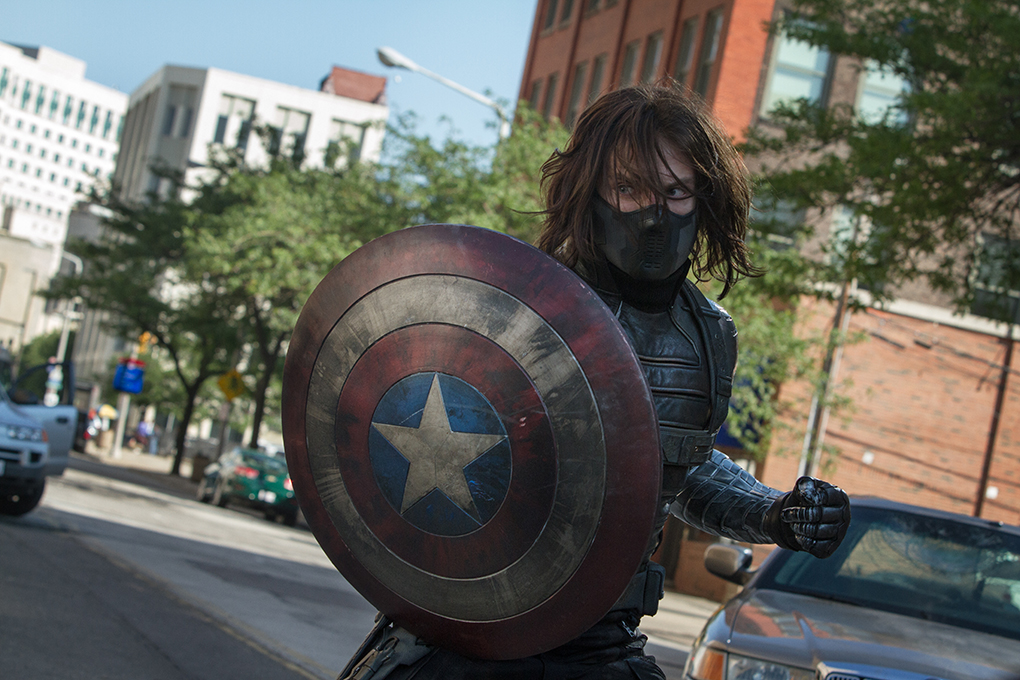
Tonally, there’s a severe shift in between The First Avenger and The Winter Soldier. Captain America: The First Avenger was exciting, old-fashioned, comic-book fun, and had the look, feel, and nostalgia of those 1940’s pulp magazines. The Winter Soldier, in comparison, feels like a dark, gritty espionage thriller, and our hero wears a red, white, and blue costume instead of the atypical black motorcycle jacket and jeans. This time around, Steve Rogers, a.k.a. Captain America (Chris Evans) isn’t fighting Nazi-clad super soldiers or aliens from outer space. This time, Cap is after the Winter Soldier, a expert assassin who has a metal arm and has been operating for decades under the world’s nose. When one of Cap’s closest friends gets caught in the crossfire, Cap goes on the hunt for the Winter Soldier, along with an underlying conspiracy that he’s quickly unraveling.

The script is easily the best thing about Captain America: The Winter Soldier. Screenwriters Marcus Freely and Warren McAllen, who also penned the first Captain America movie as well as Thor: The Dark World, have made an incredibly thoughtful and politically-driven film, a story that, if put into book format, would arguably be more compelling than the movie is. Without giving too much away, Cap gets stuck into a position that pits him both against his own country and against his enemies, making him question himself and the ideals that he’s been fighting for all along. Is America the same country he knew during World War II? Is there any more life, liberty, and the pursuit of happiness in the American dream? Is the American dream even alive any more? All of these questions are what drives the story and its characters forward, and sets up a very hard-hitting, close-to-home conflict with our favorite Captain. This is a movie that has severe repercussions towards the future of the MCU, and the twists are so hard-hitting that they surprised me, even with the ones that I was expecting.

The plot is sound and strong for the purposes of the film. But the problem doesn’t exist in the screenplay, it exists in how it’s handled. Directors Anthony and Joe Russo, whose last film credit before this was 2006’s You, Me and Dupree, didn’t see a superhero story in Captain America: The Winter Soldier. They saw a political thriller, and they decided to live up to that in every way that they could.

Take, for instance, the choreography and the motion of the action in the film. It is straight up Jason Bourne. In Captain America: The First Avenger, the action was unique, creative, and dynamic, with Cap flipping around with his shield and beating up HYDRA soldiers in classic, swashbuckling fashion, making it fun and refreshing escapism from all of the action fanfares we’ve gotten throughout the years. Here, the action feels like a retread. We’ve seen this sort of lightning-quick, fast-paced fighting in virtually every action thriller, from James Bond all the way to Mission Impossible. Why should The Winter Soldier feel any more special?

The thing that makes Captain America unique, especially in The First Avenger, is his patriotic loyalty and his unwavering sense of justice. He looks out for the little guy. He cares about such things as self-respect and manners. He won’t throw a punch unless he has to. At heart, he is this small, skimpy, honest, good-hearted kid from Brooklyn, and this is the kid that Dr. Erskine saw in the first Captain America. Here, he’s in full hero mode as he kicks, punches, tackles, slams, and throws shields at all of the bad guys, and brings everything down all around him, including buildings, bridges, and S.H.I.E.L.D. helicarriers.

Tell me, where is the patriotism? Where is the nobility? Where is the sense of joy and adventure in this movie? In its two hour runtime, we don’t get a strong sense of these things that make Captain America who he is. What we get instead is quickly-edited action, punctuated in between moments of heavy exposition and backstory, which always feels like its building up to something big, but never really pays off.

I say this again: Captain America is not an action hero! He is not Jason Bourne, or Ethan Hunt, or James Bond, or John McClane. He is Steve Rogers, and he builds this identity of Captain America to protect those who can’t protect themselves. But The Winter Soldier does not focus on the theme of protection, unlike The First Avenger. Instead, it chooses to focus on distrust and political paranoia. In doing that, it takes away something very important from Captain America: his sense of character.

As it stands, Captain America: The Winter Soldier is a good movie and not a great one. It’s serviceable in what it needs to do, and not much else. Instead of likening to Cap’s sense of bravery and heroism, we instead look to his aggression and fighting. In doing that, we lose a part of him that we wish we had back. In this day and age, dry, drab, joyless action movies are Hollywood’s currency, and all of the world is buying. The deeper we sink into this culture of entertainment and violence, the more we need our favorite Captain to stand above it. 

Tagged , , , , , , , , , , , , , , , , , , , , , , , , , , , , , ,

“IRON MAN 3” Review (✫✫✫1/2)


Tony Stark facing fire and PTSD.

Take a breath before you yell at me about my star rating, Marvelites. Yes, I know you’re upset. I know Iron Man 3 changed one of your favorite characters. I get it. I would be upset too, if that happened to one of my favorite comic book heroes. But you have to understand that this is a movie and not a comic book. It’s not trying to accomplish the same thing. It’s playing by different rules. And since it’s a different ballgame, we need to judge it fairly, on its own terms as a movie and not as a Marvel property.

If you’re able to do that, you will find that Iron Man 3 is quite excellent. It is a grand extravaganza of smart writing, great acting, witty comedy, and explosive action that’s all bow-tied together into one climactic and exciting superhero blockbuster. You couldn’t possibly get a better follow-up to The Avengers than this.

Set a few months after the events of The Avengers, Tony Stark, once portrayed by Robert Downey Jr., is struggling with post-traumatic anxiety attacks after fending off the alien invasion of New York with his other fellow heroes in The Avengers. While recovering, Tony is faced with a new threat: the Mandarin (Sir Ben Kingsley) the heinous terrorist leader of the Ten Rings army, who wages a one-man war against the United States of America. When one of Tony’s friends becomes injured in the crossfire, Tony vows to find the Mandarin, fight him, and bring him to justice for his malevolent crimes.

The first of the Iron Man trilogy not directed by filmmaker/actor Jon Favreau — who also portrays Tony’s driver Happy Hogan — Iron Man 3 is instead helmed by writer/director Shane Black, who is most known for directing Kiss Kiss, Bang Bang and writing the first two Lethal Weapon movies. Seeing him at work here is a blessing to the superhero industry. His wit, sarcasm, and charisma come off of the pages as fluently as Stark’s highly entertaining ego does. Black provides great dialogue for Tony, and often the delivery of the lines result in wild hilarity and laughter. Take, for example, one scene where a small, blond child with glasses comes up to Stark in a restaurant asking for his autograph.

“I liked you in A Christmas Story, by the way,” Stark quipped.

Blacks writing was the best thing that could have happened to Iron Man 3. The writing feels so fluid and natural that Stark might as well be writing the script for himself.

Speaking of Stark, it’s impressing at how well Robert Downey Jr. inhabits Tony Stark yet again. He always seems to just disappear into this role, and he always portrays Stark in a crass, crude, witty, yet concerned and somewhat heroic fashion. There is such fascination with his character that he keeps watchers interested even when there isn’t something blowing up on the screen. In this case even more so, since Tony is facing the added complexion of PTSD and panic attacks in the film. This humanized the character in a different way than the previous Iron Man movies did, as we see him less as this larger-than-life egotistical figure, but more as this shallow, frightened, and troubled young man. It brought to mind the experiences of war-torn veterans after coming home from a long battle. And yes, I know they’re different scenarios. They still invite the same reaction, which is sympathy.

And then there is the action. Boy, is there the action. Similarly to how The Avengers kept building its suspense by repeatedly raising the stakes of the threat, Iron Man 3 also builds excitement and anticipation through every explosion, every punch, every rocket, every bullet and every armor piece Stark puts on. In one of the most exciting moments of the picture, Tony assembles an armada of all of his robot suits, remotely-controlled by his A.I. companion. J.A.R.V.I.S. I thought two things when I saw this: 1) Why didn’t he bring these suits out during The Avengers? 2) Since J.A.R.V.I.S. can control his own suits, is there really a need for Tony to be Iron Man? I suspended both plot holes for the sake of enjoying the moment. Seeing robot suits and bad guys firing at each other in brilliant, mid-air acrobatic stunts was so much fun that it was easy to throw disbelief out the window. There are a few films that can do that, where they not only encourage you to suspend your criticisms, but they also succeed in doing that. Iron Man 3 succeeded in its task, and I found myself smiling a lot throughout the movie, even in the face of its flaws.

And then, of course, there’s the plot twist. How can I so easily accept it, whereas I know other comic book fans won’t be able to? I think it’s because Black saw a deeper story at play than the comic book’s mythos, and that is a story of conspiracy of deceit. Say it’s unfaithful. Say it’s inaccurate to the comics. You’re right in both statements. But you can’t deny that Iron Man 3 is a deftly intelligent story, a compelling drama, a quirky comedy, and an explosive action fest. Iron Man 3 is more than a great sequel. Iron Man 3 is great entertainment.

Tagged , , , , , , , , , , , , , , , , , , , , , , , , , , , , , , , , , ,

“THE DARK KNIGHT” Review (✫✫✫✫)

Two madmen at war with each other and themselves.

Editor’s note: I was originally going to hold off on publishing this review due to an upcoming in-depth article I’m working on. However, upon learning that today would have been Heath Ledger’s 37th birthday, I couldn’t miss the opportunity to honor the late actor’s magnificent work. So, without further adieu, here is my review for the magnificent superhero epic that is ‘The Dark Knight.’

The Dark Knight is a moral dilemma about two madmen trying to make sense out of their own worlds. One hides his madness with a mask. The other demonstrates it proudly with a crooked smile and a demented laugh. We define one as “good” and the other as “bad”, but really, what’s the real difference between these two? They are both traumatized by tragedies they’ve experienced at very young ages, and one was clearly more devastating than the other. Just switch around Bruce Wayne’s childhood with that of the Joker’s for a second. Is it really that far-fetched to think that they could have grown up to become the other person?

It’s difficult to draw such similar parallels between a film’s protagonist and antagonist, especially in a superhero movie where everything is supposed to be so cut and dry. But Christopher Nolan orchestrates his characters masterfully here in The Dark Knight, a film that feels more like a Shakespearean tragedy than it does as a superhero blockbuster. It isn’t a film that is driven by big-budget fights and special effects, although those technical elements definitely don’t suffer in the movie all the same. This is a movie driven by character’s ambitions, desires, loss, and pain. Rarely does a film reach into such dark depths and have such outstanding payoff.

This movie is, of course, the sequel to Nolan’s highly praised 2005 prequel Batman Begins, which too succeeds in showing Bruce Wayne not as a comic book icon, but as a human being, reliably portrayed by Christian Bale with his own complexions and regrets. The Dark Knight continues Bruce’s story, but takes focus off of Batman and puts a larger focus on Gotham, the city Bruce is sworn to protect. In doing that, Nolan inadvertently creates another character in the Batman story, and you only need to look at its citizens to see what the character is like. It’s manipulative, murderous, deceitful, selfish, and crooked, with the only evidence of decency in only a handful of citizens wanting to do the right thing.

Heath Ledger’s Joker, of course, sees the sick nature of Gotham and imposes his own version of justice upon the city. From a different perspective, could the Joker be considered the hero of the story? Both Batman and the Joker are vigilantes in their own ways. The difference is who they see as the main poison to Gotham.

Like any other superhero, Batman sees the criminals and mob bosses as the biggest culprits to Gotham’s decay. The Joker, however, sees it differently. He sees the city’s politicians, judges, police officers, and commissioners as the real criminals. Technically, neither is wrong. All of these people are responsible for the state that Gotham is in, and Batman and Joker are just picking two different sides to the same coin. Our instinct tells us to root for Batman, mostly because we are the everyday regular citizen he’s fighting to protect. But the Joker has been hurt day-in and day-out by regular citizens. So has Batman. His parents were killed by a citizen of Gotham. The Joker forces citizens to kill each other in The Dark Knight. In witnessing all of this murder and corruption taking place, you can’t help but ask yourself one question: are we even worth saving?

This gloomy idea of morality has been explored by Christopher Nolan before. Indeed, his career has been defined by character’s questioning ethics in 2000’s Memento and 2006’s The Prestige. Look at those films and how eerily similar they are to The Dark Knight. Look at the parallels not just in character and theme, but in tone and aesthetic. Look at how closely they are shot. Look at how tightly the action is edited together, yet coherent enough to understand everything we need to. Look at the character’s conflicts that test them and, in some cases, even break them. Look at their state of mind and security, and how quickly they decay in the midst of crippling loss, paranoia, and distrust.

This is why The Dark Knight is almost universally seen as the best comic book movie of all time: because it is not a comic book movie. Nolan didn’t film it like a comic book movie. He didn’t want to make a comic book movie, or at least, in the conventional sense. Everything involved with this movie, from the writing to the framing to the visual effects to the acting, was constructed with the idea that Nolan and Warner Bros. were making something much more than a comic book movie. They were making a crime film, a psychological drama, and a visual poem in disguise as a superhero blockbuster.

Just to clarify, I’m not knocking the superhero genre. Some of the greatest movies of all time spawned out of that genre, and if done right, it can be the best out of any of the other film genres. Christopher Reeve’s Superman and Superman II humanized a superhero that was anything but human. Spider-Man made an ordinary character extraordinary. X2 embedded a message of prejudice into an action-fueled sci-fi thriller.

Great superhero movies have come before The Dark Knight, and many more will come after. But what makes The Dark Knight unique is not its status as a quote-unquote “superhero” movie. It is its mirroring psychology that makes you question what is truly right or wrong. Superhero movies don’t normally do that. They normally provide our hero and our villain and have them go at each other in fun, comic-booky fashion. But that wasn’t enough for The Dark Knight. It needed to ask why they were going after each other, and what was at stake if they didn’t do so? This is one of the rare action movies that questions if our hero is actually doing the right thing, and if he’s fighting this labeled villainy in the right way.

In these characterizations, the performances are key, and Bale and Ledger alike to brilliant work in not just bringing their characters to life, but their beliefs as well. Ledger has received all the acclaim and the Academy Award for best supporting actor as the Joker, and he’s right to. He’s delivered a downright chilling portrayal of a mentally disturbed madman: a brilliant finish to a long and successful career up until his death in 2008. Yet, I don’t think many people notice Bale’s nuanced performance as a man struggling to know and do the right thing. That’s genuinely a shame, because the movie is a success due to their acting together, not just one performance over the other. Again, they treat their characters not as superheros and supervillains, but as competing complexions, battling each other not for the sake of justice, but for the sake of proving their own personally defined morality. At the end of the day, isn’t the battle of morality more powerful than any physical battle can ever be?

The film builds up to it’s highly-anticipated climax in classic Nolan fashion. The final battle, however, is not between our hero and villain, but instead between the two sides of Gotham. One side has been convicted by the law. The other has been convicted by God. And in their convictions, both sides are forced to make a choice. I won’t spoil what happens, but I will say this: they make the right one.

Batman and Joker are not two different people. They are two sides to the same coin. We too exist on a coin and have the equal potential of being either Batman or the Joker. It’s only a matter of what we choose to be.

Tagged , , , , , , , , , , , , , , , , , , , , , , , , , , , , , , , , , ,

“BATMAN V SUPERMAN: DAWN OF JUSTICE” Review (✫✫)

How’s does the peach tea taste, Mr. Wayne?

Let’s start with the obvious: Batman v Superman: Dawn of Justice is the worst title for a superhero movie since Superman IV: The Quest For Peace. And yet, it’s so appropriate for a movie like this. The title is on-the-nose, hokey, ridiculous, and clearly unfocused, just like the movie itself is.

Taking place a few years after the events of Man of Steel, Batman v…. screw it, I’m not going to repeatedly spell out a bad title. BvS: DOJ picks up in the aftermath of the disaster that struck Metropolis during the battle between Superman (Henry Cavill) and the Kryptonian army. The city is dismantled. Hundreds of casualties have been named. A memorial that evokes the tragedy of 9/11 sits in the heart of the city, right next to a monument dedicated to the superhero that saved everyone. It is a tense time for Metropolis as they’re trying to rebuild, and everyone has one question on their minds: Is Superman doing more harm than good?

Enter billionaire Bruce Wayne (Ben Affleck), who unequivocally sees Superman as mankind’s enemy. During the day of the attack, Superman fought inside of one of Wayne’s corporate buildings, which had many of his employees still inside when it fell. Wayne took the hit very hard. He’s too familiar with losing a family, and here he lost his second one. Now, he once again adopts his criminal-fighting personality of Batman with one focus: to kill the Superman.

Let me start with the positives. First of all, Ben Affleck was incredible as Bruce Wayne and Batman. That genuinely surprises me, because A) Christian Bale’s Batman is still fresh on my mind, and B) Ben Affleck isn’t normally a great actor, minus the movies that he’s written or directed. This movie is a game changer for him. He’s playing Batman with a more grim facade; an older, meaner, more coarse attitude that is even more distrusting of people than The Dark Knight’s Batman was. This is not the same Batman that you’re familiar with. His psychological trauma and torture tactics have intensified, and he isn’t above killing criminals. This might be maddening for some comic purists out there, but I found it to be a refreshing take on the caped crusader. After all, in a DC Universe where you’re fighting for your life against space aliens and Frankenstein monsters, I think it’s reasonable to say that the stakes have been raised on all fronts.

And the Batman/Superman dynamic was equally amazing. The thing I liked most about this movie, and what I think most fans were looking forward to, was the contrasting nature between Batman and Superman. I’m not talking about the fight itself, although the buildup and the payoff to that sequence definitely did not disappoint. I’m talking about the real conflicting ideals of Batman versus Superman. Batman is a mortal who has faced cuts, bruises, and bloodshed all his life. Superman is an indestructible alien from outer space. Batman believes torture and intimidation are effective tactics for fighting crime. Superman finds those things to be disturbing and unnecessary. Batman sees a Kyryptonian alien as mankind’s greatest threat. Superman sees it as a vigilante that answers to no one. I was expecting their ideals to clash in this movie, but I wasn’t expecting to be rooting for them both when the film built to its climactic titular fight. The fact that we’re engaged in a superhero beatdown between our two protagonists and we can understand where both are coming from is the evidence of strong, smart writing, and Affleck and Cavill alike do very well in bouncing their personalities off of each other to make a strong, rivalrous relationship between the two.

Unfortunately, as far as positives for the movie goes, it ends there. Where do I start with the mistakes of Batman v Superman? First of all, its editor David Brenner needed to be fired. Either him or director Zack Snyder, depending on which one decided this movie needed to be two hours and 30 minutes long. There were so many unecessary scenes in the movie, so many sequences that added nothing and truly took away from the larger conflict between Batman, Superman, and our mischievous third player Lex Luthor (Jesse Eisenberg). Don’t worry, we’ll get to him in a bit.

Look at the first act as an example of the film’s poor editing. If Brenner knew what he was doing, he would open the film right on the destruction going on in Metropolis, with Bruce frantically driving and running around in a quickly collapsing city trying to save as many people as he can. That was a great scene that showed Bruce’s vulnerability, and even more rarely, his fear. We didn’t start with that though. We start with the same sequence we’ve seen in every Batman movie now, which is the death of Bruce’s parents. Why? Why do we need to see this again? Haven’t we seen it enough in Tim Burton and Christopher Nolan’s Batman movies? What is the purpose in showing this again? And also, when a younger Bruce falls into the cavern and becomes enveloped in bats, is there any reason to show him as a levitating Bat messiah floating to the top of the cave?

I’m blaming Brenner because he didn’t cut the sequence out, but the truth is it is just as much Snyder’s fault as it is Brenner’s. Why did he choose to even film these scenes in the first place? Didn’t either of them see that these scenes weren’t necessary? That the dream and hallucination sequences added nothing to the plot, that the easter eggs to the DC Universe did nothing to develop the story, or that the epilogue of the film was sappy and dragged out? There were so many stupid scenes in this movie that made no sense and formed no coherency with the greater ideas of the film. You could have cut 30 minutes from the film, make it shorter than The Dark Knight, and have a better movie.

And then we get to Eisenberg. Ugh. Remind me again why he is Lex Luthor? I get that he’s a great actor and that he was enthusiastic for the role. That doesn’t make him right for it, and he’s definitely not right for it.

I’ll give Eisenberg this: he tried. But he tried too hard. We’re not seeing Lex Luthor here as much as we are seeing a B-grade Joker or Riddler. He’s not the smart, calculated supervillain you remember. He’s ecstatic, chaotic, and impulsive, which makes him a good villain archetype, but not a good Lex Luthor. Eisenberg throws himself into the role and succeeds in portraying it, but it’s not his portrayal that’s the problem. It’s the way him and Snyder envision the character, as a psychotic messenger of doom rather than the intelligent, well-crafted, yet connivingly evil gentlemen that he’s supposed to be. If Batman was my favorite part of the movie, Lex Luthor was my least favorite. He’s that far off of the map from what Superman’s arch-nemesis is supposed to be.

What we end up having then, is an out-of-focus movie that does a lot of things right, and then equally does a lot of things wrong. That’s the most disappointing thing about this movie, is seeing its potential and how wasted it is by stupid editing and even stupider characters. And this is the movie that’s supposed to set up the Justice League films. Pray that those movies display smarter storytelling and editing. And a better title.

Tagged , , , , , , , , , , , , , , , , , , , , , , , , , , , , , , , , , , , , , , ,

“10 CLOVERFIELD LANE” Review (✫✫✫)

You’re not safe inside. You’re not safe outside either.

Whether you love him or hate him, you gotta admit one thing about J.J. Abrams: he knows how to sell a film.

Take 10 Cloverfield Lane as a testament to his skill. When the trailer dropped out of nowhere back in January, nobody knew anything about the plot, characters, or premise of this movie. That’s rare in today’s industry, especially with all of the casting and production announcements circulating daily on today’s news platforms. The fact that 10 Cloverfield Lane’s producers, director, writers, and actors were able to keep it a secret up until now is genuinely surprising, and I think it will pay off for them. It’s built up anticipation for the movie in ways no major blockbuster can do, and it will equally fulfill it’s audience in ways only this movie can supply.

In their excitement, some fans speculated that this movie is a sequel to Cloverfield, a risky yet innovative 2008 monster thriller also produced by Abrams. You would be wrong. 10 Cloverfield Lane is about as related to Cloverfield as Star Wars is related to Star Trek. Same genre, different execution. Much different.

This time around, 10 Cloverfield Lane ditches the nauseating shaky cam from Cloverfield and chooses instead to focus on a few survivors in a bomb shelter as opposed to a collapsing New York City. These survivors consist of Michelle (Mary Elizabeth Winstead), Emmett (John Gallagher Jr.), and Howard (John Goodman), the last of whom built the shelter in the first place. These three are forced into the shelter after a chemical attack cripples the U.S..

Or so Michelle is told.

Before coming to the shelter, Michelle got into a devastating car crash that left her injured and unconscious. She wakes up chained to a small bed on the floor next to Howard, who doesn’t quite seem all there if you know what I mean. Michelle is left with a difficult decision. Does she choose to trust her instincts, or this man that’s telling her that the world has ended?

The special thing about 10 Cloverfield Lane is that it focuses on its setting and performances to provide suspense instead of an overflow of visual effects. This is not an aesthetic Abrams is unfamiliar with. Ever since producing Cloverfield, he’s mostly understood that it is not spectacle that provides thrills, but rather, perspective. And whether it’s through the eyes of a producer, or through the lense of directing Mission Impossible III or Super 8, he’s always been a filmmaker that’s understood the value of perspective.

Take, for instance, Michelle’s perspective in the movie. Through her eyes, she’s just a prisoner who woke up in someone’s basement chained up to a mattress on the floor. The man who says he saved her life isn’t entirely a friendly guy. He’s old, unsettling, awkward, unreasonable, and demanding, running his bomb shelter like a warden runs a prison. Michelle is understandably terrified with him, but then she’s told that there’s been an attack on the world outside. Now what do you do? Do you try to escape and possibly face death, or do you believe this stranger and confide in the safety of his shelter?

Such psychological dilemmas is what compels the film forward, and director Dan Trachtenberg handles this cast skillfully in the small space that they are confined in. Winstead and Goodman bounce off of each other perfectly in the film, like a cat and mouse locked together in the same cage. Winstead, who’s played the survivors role in quite a few films (Live Free Or Die Hard, The Thing prequel), displays her trauma and distress here effectively without overacting or reaching for an emotion. Goodman is just downright chilling. He’s a man who seems like he has good intentions, but has a dark side to him that he demonstrates with disturbing normalcy. Their dynamic together felt eerily resemblant of Clarice Starling and Hannibal Lecter from 1991’s The Silence of the Lambs, which also featured a chilling relationship formed more out of necessity rather than comfort.

All of this builds to a well-paced, tense, and uncomfortable film driven almost entirely through performance, which is a very special thing in today’s industry. My biggest regret is that given the talent and the uniqueness involved with this production, it has to undercut its own success by throwing a CGI action spectacle in the third act of the film. While I won’t spoil it by saying what exactly happens, I will say it’s a severe shift in genre by the time the third act rolls around. We go from a tensely-wrought suspense-thriller to what is typically considered a Hollywood blockbuster. In making that transition, the film loses a part of its spirit and what makes it special from other thriller films.

“But it’s science-fiction,” you might argue with me. Yes, but did it need to be? Damien Chazelle made an incredible, heart-racing thriller in 2014’s Whiplash, and that was a film about the sharp rivalry of two passion-fueled musicians. Chazelle also worked on the script for 10 Cloverfield Lane, and I’m convinced that Howard’s uneasy presence originated from Chazelle’s ideas. The studio should have followed in his lead. The creepiest scenes in this movie remains to be from the tension between the characters and for what they can or can’t do to each other: not some supernatural force that threatens these people from outside the shelter. A quick rewrite of the ending and a few reshoots could have shifted this picture from a good movie to a great one.

All in all, 10 Cloverfield Lane is an effectively creepy film that you just wish would follow through on its intentions. The movie draws a line between fearing what is reality and what is fiction, and at looking at that line, isn’t it reality that seems more scary to us? That’s the thought that stuck with me when I left the theater. Well, bomb shelter.

Tagged , , , , , , , , , , , , , , , , , , , , , , , ,

“CLOVERFIELD” Review (✫✫✫)

Turn the camera on.

Why is it when we think of monster movies, we remember the larger-than-life creatures more easily than we do the main characters? For instance, we don’t remember Ann Darrow as easily as we remember King Kong. We don’t remember Hideto Ogata over Godzilla. It’s simpler to remember Frankenstein’s monster rather than Dr. Frankenstein himself. And it’s easy to see why too: the monsters are more interesting than their human co-stars are. We all know someone like Ann, Hideto, or Victor because they’re all human beings, just like us. King Kong, Godzilla, and Frankenstein’s monster have never existed and can never exist. Perhaps that’s why they fascinate us so much: because they play on fantasy rather than reality.

Let Cloverfield, then, be the monster movie to flip the genre on its head. Not only do we not know the name of the monster that is tearing apart New York City, but our focus is poured almost entirely into the human survivors. It’s just as well too. Cloverfield is one of those rare movies that blends entertainment with art, method with innovation, fantasy with reality.

So yes, if you happened to miss the highly talked-about teaser trailer before the movie’s release, Cloverfield is another monster movie. There’s a big baddie, there’s a city, and chaos and destruction ensues. That’s how far the similarities extend. The difference in its approach this time around lies is its execution. While King Kong and Godzilla are framed and staged on a massive scale as monsters clobber each other and throw each other into buildings and landmarks, Cloverfield instead focuses on a smaller scale as found footage off of a New York City regular’s camcorder. This New Yorker is named Rob (Michael Stahl-David), and he is accompanied by his friend Hud (T.J. Miller) and his lover Beth (Odette Annable), of whom he has a complicated past with. Great time to have relationship problems, isn’t it? In the middle of a destroyed New York City while a monster is obliterating everything in sight.

Here is a movie that succeeds more as an experiment than it does as a film. Cloverfield is a movie that takes genre conventions and throws them out the back window, taking any direction it wishes as it propels its humans through the chaos of a quickly collapsing New York City. The risks it takes both pays off for itself and then doesn’t. Most of the time, the movie’s intentions shine clear and have a strong payoff for its audience. At other times, it’s shaky and unstable, much like this movie’s handheld shooting method.

I’ll start with the positives. First of all, it’s different. That much is a compliment you don’t hear too much nowadays in corporate Hollywood, which pushes out sequels and remakes like the happy meals at McDonalds. Yes, Cloverfield’s overall premise has been used and reused, but it’s originality comes from its forced perspective towards these human characters. Here’s a question for you: out of all of the horror movies you’ve seen, how many characters have you been able to relate to on a personal level? No, I’m not talking about relating to them in the sense that they’re running away from giant monsters or psychotic axe murderers. Sure, we like to root for Ellen Riply in Alien or Sally in The Texas Chainsaw Massacre, but take them out of their own movies for a second. How many of them can you relate to as people rather than as movie characters?

Cloverfield is one of those rare movies that understands its characters before it understands its visual effects. This is in credit to both screenwriter Drew Godard and cinematographer Michael Bonvillain, who both understand that for this story to work, we need to relate to the characters as regular people rather than as survivors. Them taking the time to change their focus and build on exposition works. After a very brief introduction, we understand who these characters are, their motivations, and their relationships to each other. When they die, it’s genuinely heartbreaking. It means something when they’re killed, as opposed to being just another number for the monster’s kill count. Because of our investment into Rob, Beth, Hud and others, we’re scared for them and with them as they’re running through a violently torn apart New York City, desperately searching for the people they love most. By making that the focus, Cloverfield works not just as a horror or monster movie, but also as a tragedy. Such deepness is rare for disaster pictures nowadays, but Cloverfield pulls it off well, unlike most of today’s big-budget blockbusters.

Of course, with this “found-footage” method of shooting, it also raises some problems for this production. For one thing, there is not a single steady shot in the movie. The camera is always shaking back and forth, which didn’t bother me as much, but I know it will cause motion sickness for some unfortunate viewers. Another problem is that with this shaky-cam method of shooting, some of the action flow is incoherent, or sometimes, lost altogether in a tense disaster scene. Most of the time, Bonvillain handles the camera well enough to capture important moments, like to focus on the tail of the monster or on a character when they are wounded. Sometimes though, Bonvillain’s method of shooting exceeds his talent on the camera. For instance, what do you see during a chase scene? A lot of the camera rocking back and forth between the motion of a character’s legs as they’re trying to get away.

The sad part is that Bonvillain is almost powerless to do anything about this. Making this a steady shot would do nothing to convince us that this was really happening, considering the camera is being supposably held by a movie character that A) Doesn’t know how to shoot, and B) Is in the middle of a literal disaster. But then again, the shakiness doesn’t do any favors for our eyesight either. You’re screwed either way.

I’ve repeatedly went back and forth on this movie, bobbling the pros and cons around in my head, trying to decide on which element beats out the others. There’s good cases to both sides. We identify with our heroes as people rather than as movie characters, and that humanity makes their crusade all the more important to us. The sense of mystery, eeriness, and hopelessness plays out perfectly like an H.P. Lovecraft novel. The scares and the thrills are all there. That much the movie has going for it. On the opposite end, though, we have a shaky camera that makes people want to vomit, a few genre cliches that the movie can’t escape from, and a pathetic, lackluster ending that just suddenly cuts off and leaves an empty, unfulfilled feeling for its desperately hungry audience. I have no problem whether a character lives or dies for the sake of drama, but when you’re stuck not knowing, that’s just dangling a hook in front of your audience that they’re never going to reach.

I’m giving the movie a thumbs up for one reason: it tried. It experimented. It did something different, and it partially worked out for itself. That’s a thumbs up not for the movie itself, but for the movie-making business.

Years ago, aspiring filmmakers dreamed of big visions in their heads. They experimented, they failed more times than they succeeded, but they took steps towards creating their visions, and their reward was seeing their beautiful, breathtaking ideas playing on the big screen. Filmmakers these days lack that creation or that aspiration, and they prefer piggybacking off of other people’s creations just for the big buck. The creators behind Cloverfield need to be honored not necessarily for their movie, but for their aspiration to create. They sought to make something all their own, and whether you like it or not, that’s exactly what they did.

Tagged , , , , , , , , , , , , , , , , , , , , , , , , , , , , ,