Tag Archives: Legacy

“THE LEGO MOVIE” Review (✫✫✫1/2)

Bricks, businessmen, and Batman.

The last thing I expected from anything titled The Lego Movie was anything good. How could I? The trailer had the reeking stench of an advertisement, barely differentiating itself from the Lego set commercials that air on children’s cartoon networks. Believe me, I went into this movie expecting an artificial, brainless experience looking only to profit itself from the name of it’s toy line. Boy, do I love it when I am proved wrong.

Based in a colorful world full of Lego bricks, buildings, and set pieces, The Lego Movie follows Emmett (Chris Pratt), an average, regular, 100% ordinary minifigure who loves coffee, people, Taco Tuesdays, cats, cars, work, television, and just about everything else under the orange Lego-bricked sun. If any of the characters in the film knew that they were in a movie, none of them would expect Emmett to be the main character: he has the personality and the appearance of a background character if anything.

One day, while working at his construction job, Emmett comes into contact with a strange red object called “The Piece of Resistance”, and passes out. When he wakes up, he is recruited by Wyldstyle (Elizabeth Banks), a punky and feisty master builder who tells Emmett that he is part of a prophecy that declares that a powerful being called “The Special” will find the Piece of Resistance and use it to overthrow Lord Business (Will Ferrell) and his plans to conquer the Lego-verse. As a result, Emmett gets catapulted into a decade-long conflict between wizards, robots, businessmen, DC superheroes, crazy cats, cyborg pirates, spacemen, and Batman.

Good God, where do I start with this? The Lego Movie is by every definition, a surprise; a fun and wacky little adventure that is just as original and audacious as it is clever and funny. Written and directed by Phil Lord and Chris Miller, the same guys who co-wrote and co-directed Cloudy With A Chance of Meatballs, these filmmakers worked to instill the same sense of energy, youth, and entertainment from that movie into this one. It’s surprising that the movie is not just good: it’s borderline great.

One of the things I love most about the movie is the animation. Like any great animated film, it reaches out to you in vivid, eye-catching detail, it’s beautiful colors and visuals striking out to you like a panel on a beautifully-crafted graphic novel. But it’s not just how the animation looks in itself: it’s also in how Lord and Miller achieved the effects they were going for. Nearly everything in the film was modeled from lego bricks and pieces, and I do mean everything. The buildings, the vehicles, the space stations: even seemingly trivial things such as the water, lava, and clouds are all made out of lego pieces, with explosions literally showing red-and-orange lego studs as they blow up. It would be so easy just to be cheap and give basic effects for the wind, the water, fire, sky, and everything else in the film, but Miller and Lord didn’t want to go that route. They wanted to make an authentic, accurate world jam-packed with lego pieces and objects. To put anything else in there would just cheapen the effects, and their persistence made for the best visual result that they could possibly have had.

Just as much though, I love the characters Lord and Miller wrote for this movie. Like the animation and lego bricks, they all have variety to them, and they all have colorful, unique personalities that make you want to relate to each character. You have Benny, a 1980’s space astronaut who is so obsessed with spaceships that he could build one from a pile of garbage bricks if you dared him to. You have UniKitty, a unicorn/kitten that has such a split sweet/violent personality that she would scare little children if they were locked in the same room with her. There’s Metal Beard, a pirate-turned-cyborg whose body literally blows up like a amalgam of lego bricks like a real lego mini figure. Also, Batman is in the movie.

The key character here, however, is Emmett, a sweet and charming little mini figure with intentions so pure, he at times can seem like a child with his quirky little antics. Emmett is the epitome of childhood in this movie: innocent, curious, creative, passionate, and at times a little too immature for his own good. His strengths and his flaws both make up for a very interesting character, a mini figure that we can all relate to because of his average nature and his desire to be greater than he already is. He may be made out of Lego pieces, but Emmett is more human than most of the live-action actors you’ve seen in motion pictures this year.

The movie does suffer from a slight drag in run time, and like it’s protagonist, the movie is at times too childish for it’s own good. That doesn’t change the fact that this movie is a clever, funny, original, and heartfelt take on childhood and what it means to be grown up, but always remain young at heart. The Lego Movie is much more than just a movie. It’s a celebration of creativity.

Post-script: Did I forget to mention that Batman is in the movie?

Tagged , , , , , , , , , , , , , , , , , , , , , , , , , , , , , , , , , , , , , , , , , , , , , , , , ,

Top Ten Films Of 2014

Has anyone ever stopped to wonder why all of the best of the year lists have to be in the top ten? Like, what sort of critic was working on his list and thought that ten would be the magic number? Why ten and not twelve? Or fifteen? Five? Twenty? Eight? Why was ten specifically chosen as the big number? Was it chosen at random, or was it actually chosen for some relevant, significant reason?

Regardless of whatever the case may be, I’m choosing to be a little rebellious this year. For the past few years, I’ve seen enough films to make a “Top 15″ list if I wanted to, but if I had done that, my site viewership would go down by about twenty views.

So this year, to battle the preconceived notion that “best of the year” lists have to have ten movies, I’m doing two different things. 1) I’m adding an “honorable mentions” selection that while those films aren’t necessarily in my top ten, they are still significant films that have contributed to the year’s industry regardless. 2) In honor of our first full year without the wise, sometime snarky, words of film critic Roger Ebert, I’m offering a special Grand Jury Prize, which honors a film from the year which has made a notable accomplishment that fits outside of my year’s top ten.

As always, there is a few things you need to know before I get into my year’s best. First of all, I haven’t seen all of the films the year has had to offer. I’ve heard from so many people how Jean-Marc Vallee’s Wild was emotionally stirring, with Reese Witherspoon’s performance being the greatest highlight of the film. I’ve also read from critics that Selma, A Most Violent Year, and American Sniper were great movies as well, but guess what? None of those movies get a wide release until after Dec. 31, so I’m not able to even see those films until after the year anyway. So what am I going to do? Release a revision to my current list, or add those films to 2015 if they’re good enough? I’ll make a decision when it comes to that. It’s the studio’s faults for releasing those movies so late into the year anyway. Blasted film mongers.

Secondly, and perhaps more significantly, this is my list for the best films of 2014. Not yours. There has been high praise from many notable films of the year, including Edge of Tomorrow, The Theory of Everything, and Captain America: The Winter Soldier. None of those films will be on my top ten list because I didn’t deem them worthy enough to be on there. It’s nothing against the films or the filmmakers: I just didn’t think they were good enough.

If you’re not satisfied with that, then please, make your own top ten list. I’d love to read it, and if your reasonings are sound enough, I’d like to share it with others.

Now then, let’s hop to it, shall we? Here are my top ten films of 2014:

10. Interstellar 

A mesmerizing, breathtaking, and exhilarating journey that may have only slightly exceeded it’s grasp. Based on an idea by physicist Kip Thorne and directed by Christopher Nolan, Interstellar takes place in the future on a dying planet Earth, where the only source of sustainable food is by growing corn. When former aircraft pilot Cooper (Matthew McConaughey) stumbles upon a secret station that has been hiding NASA for so many years, Cooper enlists in a daring space mission to find a new planet that will be able to sustain and save the human race. A testament to the quality of film that Nolan is consistent in making, Interstellar is a brilliantly woven, thought-provoking plot, invoking the same themes of humanity and identity that Nolan exercises in all of his films. McConaughey reaches an emotional depth much deeper than past “Nolan” actors, and succeeds in making his character more human than hero. This is Nolan’s most emotional movie yet, but it’s also his most complicated and convoluted. But if Nolan’s only real flaw with this film is being overly ambitious, I don’t consider that a flaw at all. Three and a half stars.
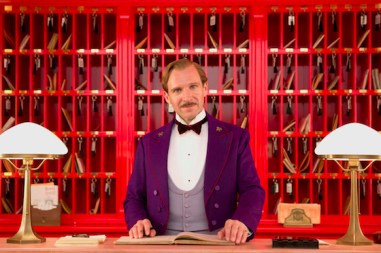
9. The Grand Budapest Hotel

A crafty and artsy film that acts as a homage to the early days of cinema. After being framed for a violent murder of one of his former hotel guests, Concierge Gustave (Ralph Fiennes) teams up with his young apprentice Zero (Tony Revolori) to set out and prove his innocence through a series of weird, wacky, and crazy adventures. Written and directed by Wes Anderson, who was nominated for an Academy Award for The Royal Tenenbaums and Moonrise Kingdom, The Grand Budapest Hotel is a peculiar, quirky film, a fun and enjoyable ride in it’s own singular way. Anderson is very specific with the direction of the film, using practical effects and set pieces that gives the film a very distinct visual style and aesthetic. The antics Gustave and Zero go through are the stuff of slapstick gold, with these guys doing silly stunts and chase sequences that reminds me of the silent film days of Buster Keaton and Charlie Chaplin. It’s definitely seasoned for the art house crowd, and it’s definitely more difficult to appeal to the masses. But if you allow yourself to be lost in it and have fun with it, you’ll find that it is easily the most unique film of the year. Three and a half stars.

8. How To Train Your Dragon 2

A wildly exciting and entertaining animated ride that appeals to both kids and adults. When a crusade of dragon-hunters reach the land of Berk and begin their hunt for the flying beasts, Hiccup (Jay Baruchel) must team up once again with his dragon Toothless to stop the brigade and save Berk’s dragons and dragon riders. Written and directed by Dean DuBlois, who returned from directing the first film, How To Train Your Dragon 2 is a near-perfect follow-up. It hits on every note it needs to, from the comedy, to the animation, to the action, to the emotion. Hiccup is a much stronger, yet more vulnerable, character now, and needs to face more mature situations now as a grown man rather than as he did when he was a boy. In many ways, How To Train Your Dragon 2 is to it’s first counterpart as Hiccup is to his younger self: they both grew. Three and a half stars.

7. Gone Girl

A brilliantly frustrating thriller that exercises themes of infidelity and media harassment. When Nick Dunne’s (Ben Affleck) wife Amy (Rosamund Pike) goes missing, all eyes turn to Nick for what happened to his wife. When clues slowly surface and more details surrounding the disappearance reveal themselves, everyone is asking the same question: did Nick Dunne kill his wife? Directed by David Fincher and written by author Gillian Flynn, Gone Girl is a masterfully orchestrated thriller, equal parts daring, inventive, intelligent, and unpredictable. Fincher propels Flynn’s brilliant plot forward with expert direction, eye-striking camerawork, and a cast that Fincher pulls the best from. This movie is like a game of cat and mouse, except no one really knows who is the cat or mouse. There is not one note in the film that you can guess is coming. Three and a half stars.
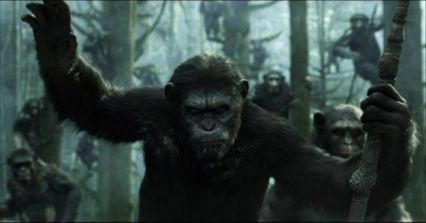
6. Dawn of the Planet of the Apes

A compelling and exciting survivalist-drama that looks at the human/primate condition as two sides to one coin. After the chemical attack on planet Earth that took place at the end of Rise of the Planet of the Apes, Dawn of the Planet of the Apes follows the story of Caesar (Andy Serkis) and Malcolm (Jason Clarke), the leaders of the apes and the humans, respectively. As the human-primate war rages on violently, Caesar and Malcolm begin to see that the apes and the humans aren’t so different from each other, and they begin to explore any possibilities of peace between two races. Matt Reeves builds an intelligent, in-depth story around Dawn of the Planet of the Apes, and handles its premise with skill and precision.  It surprising that the basis of this film wasn’t grounded in action or ridiculous CGI stunts, but rather in small, intimate moments of conversation and ape-sign-language that characters share with each other. Serkis is a revelation in the movie, and deserves an Oscar nomination for both his physical and emotional performance. Four stars.

5. Birdman

One of the most mesmerizing, unique, disturbing, shocking, and darkly funny films I’ve ever seen. Alejandro Gonzalez Inarritu writes and directs this ingenious dramedy starring Michael Keaton as Riggan Thompson, a washed-up movie actor trying to escape his image in a former superhero role by adapting his favorite broadway play to the stage. Keaton is a natural in the role, relating his own experience to portraying Batman in order to further authenticity for the character. Cinematographer Emanuel Lubeski contributes to the visual design of the film, shooting and editing it to look like one, continuous shot rather than multiple longer takes. But Inarritu is the most essential storyteller here, making a visual and emotional masterpiece that is so distinct in its own language that it is impossible to define it, let alone replace it. Four stars.

4. Whiplash

One of the most edgy, thrilling, and provocative films of the year. Miles Teller stars as Andrew, an upcoming college student who is majoring in music and dreams of becoming one of the best drummers in the country. A series of events lands him in the top jazz orchestra of Shaffer Conservatory and under the tutelage of Terrence Fletcher (J.K. Simmons), a brilliant but harsh and antagonistic instructor who is known to go very hard on his students. Andrew and Fletcher both develop an intense rivalry that both hurts Andrew, angers Fletcher, and yet equally compels them both to become the very best they can be. Writer/director Damien Chazelle conducts both actors through his sophomore effort, and does a great job in producing a tense, electric vibe consistently throughout the film. Teller and Simmons’ chemistry with each other is equally perfect, with the both of them bouncing off of each other’s words and emotions as perfectly as a drum beat. This film is about more than just music. It’s about the human desire to be great and what sacrifices we’d make to get there. Four stars.

3. Boyhood

The most revolutionary film of the year, ambitious in both production and vision. A twelve-year project pioneered by writer/director Richard Linklater, Boyhood tells the story of Mason’s (Ellar Coltrane) childhood, chronicling his entire life from when he was six years old, up until when he turns 18 and leaves for college. The movie isn’t so much a story as it is a scrapbook of memories, and Linklater is pulling each photograph out of it just to show it to us. When he is younger, Ellar isn’t acting but living, behaving like any other child would in the moment because he is in the moment. As he gets older, his performance gets more stagnant and Coltrane becomes more of a surrogate for us to express our emotions through, rather than experiencing his own. In this day and age, it’s rare to find a film as real and honest as Boyhood is. Four stars.
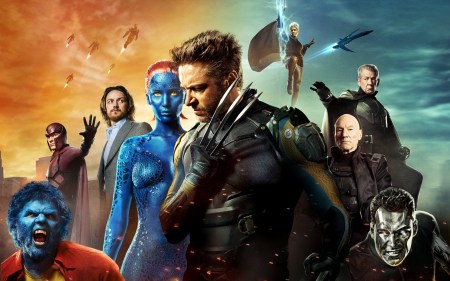
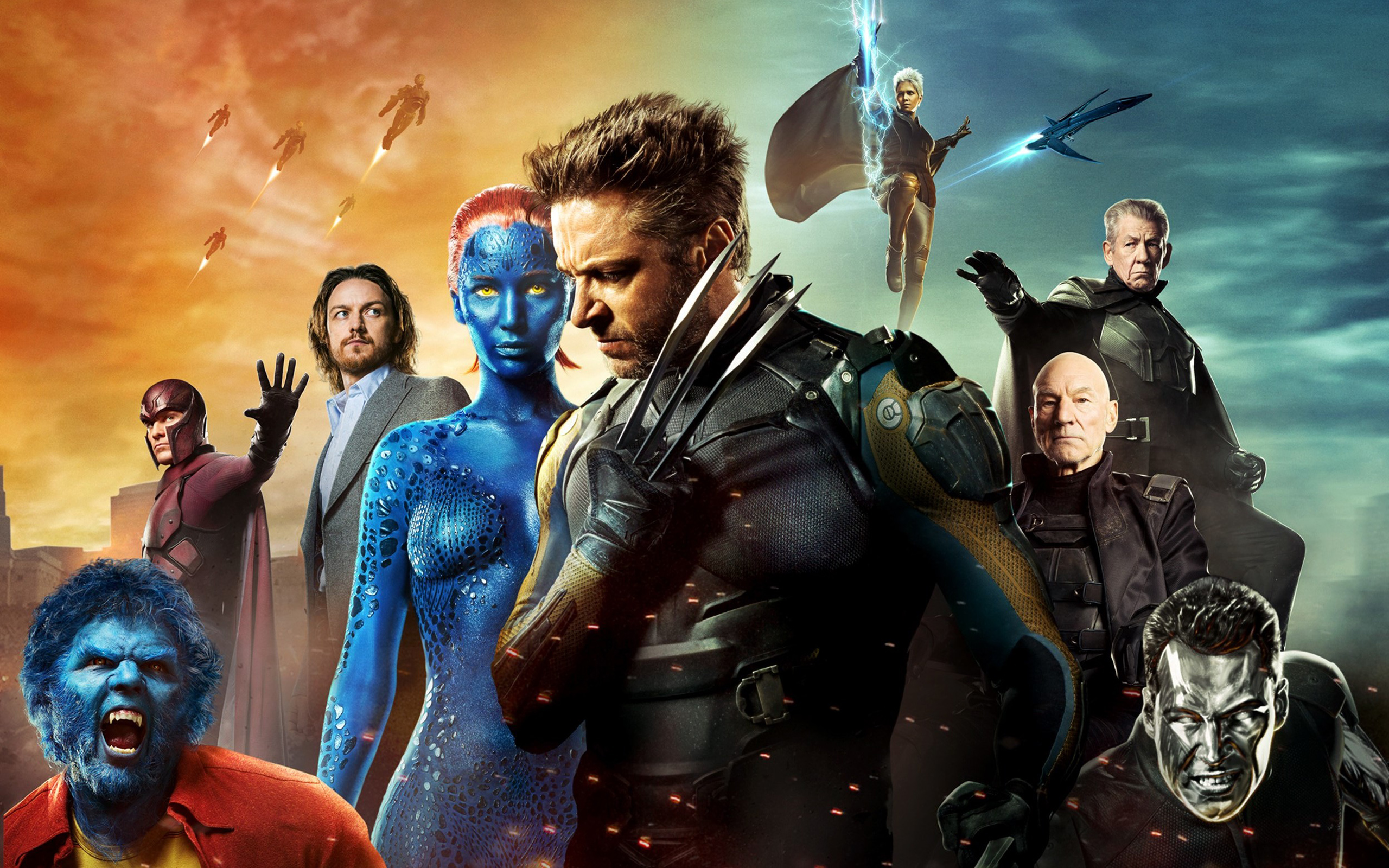
2. X-men: Days of Future Past

The best entry out of the X-men franchise, and the best superhero movie of the year. Serving as a sequel to both 2011’s X-men: First Class and 2006’s X-men: The Last Stand, X-men: Days of Future Past is set in the apocalyptic future where mutants are being exterminated by humanoid robots called “Sentinels”. Having only one chance to go back in time and stop this future from ever happening, Charles Xavier (Patrick Stewart) and Magneto (Ian McKellen) send Wolverine (Hugh Jackman) through time to their younger selves (Portrayed by James McAvoy and Michael Fassbender) so they can stop the triggering event and save the future. Directed by Bryan Singer, who formerly helmed the first two entries in the franchise, X-men: Days of Future Past is a game changer. It is not only a visually-dazzling and highly climactic sci-fi blockbuster: it is a vastly intelligent and contemplative story that focuses on its recurring themes of racism and xenophobia, once again bringing the consequences of discrimination to the forefront. X-men: Days of Future Past is one of those movies that restores your faith in the superhero genre. Four stars.

And finally, my number one film of the year is —
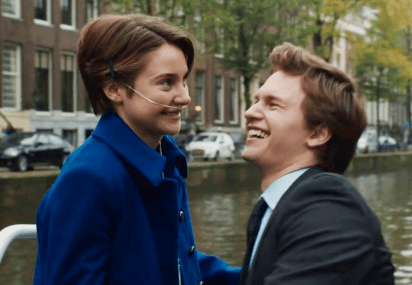
1. The Fault In Our Stars

Surprised? I’m not. The Fault In Our Stars is one of the most magical, heartbreaking, and genuine films you will ever see, and is more than worthy of being called the most emotional film of the year. Based off of the novel by John Green, The Fault In Our Stars follows the love story of two Cancer-stricken teenagers: the shy and book-loving Hazel Grace (Shailene Woodley) and the optimistic amputee Gus (Ansel Elgort). Written and directed by independent filmmaker Josh Boone, The Fault In Our Stars is one of the best stories ever translated from book to film. I initially was skeptical on seeing this film, considering how much it seemed to have been doused in rom-com syndrome. The reality couldn’t be further from the truth. Boone adapts Green’s story perfectly to the big screen, retaining everything in the novel from the visual details to the words that were written. But its Woodley and Elgort that sells it so well, their chemistry that vibrates so wonderfully with each other and leaves such an impression on you. Trust me when I say this isn’t your typical rom-com: it’s a heartfelt drama disguised as a tween movie, and it is the best of it’s kind. Four stars.
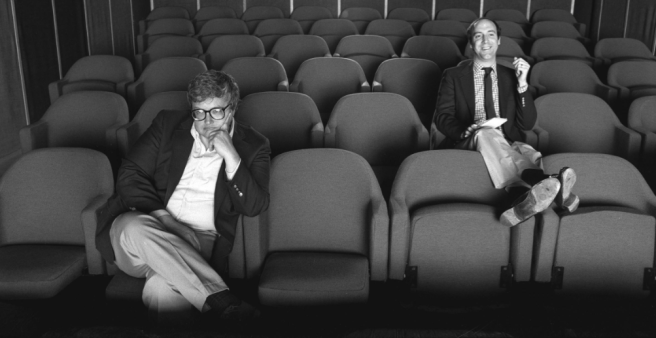
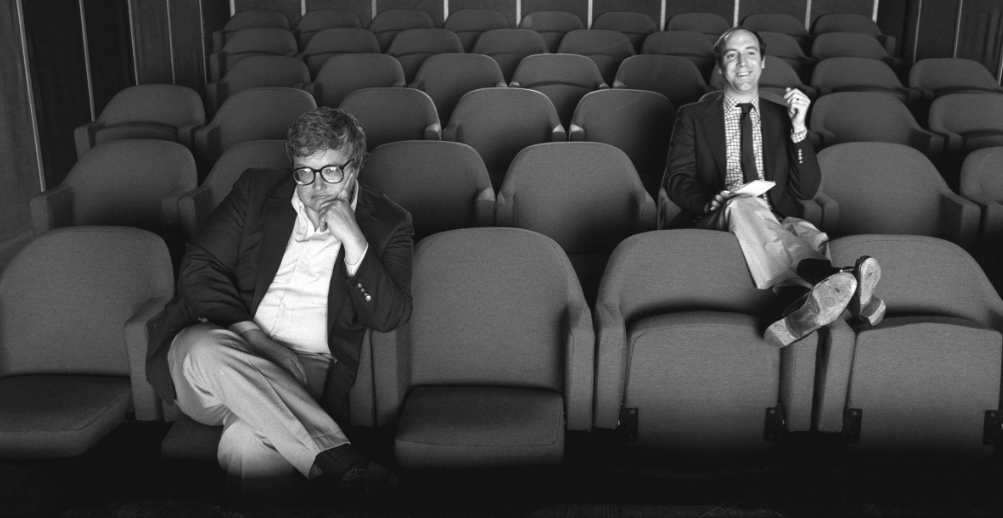
And finally, this year’s first Grand Jury Prize appropriately goes to Steve James’ documented biography Life Itself. Following Roger Ebert’s life and career from him growing up in Chicago, to when he got his first reporting job, to when he won the Nobel Prize for film criticism, to when he lost his best friend, to when he got Thyroid cancer, this film is everything that Roger Ebert is: funny, honest, heartfelt, unabashed, unflinching, and real. It doesn’t give you a peppered-up look at his life: it’s whole and accurate, as genuine as any of the reviews he’s written. I’m probably biased towards this subject, but the subject doesn’t count as long as it is handled well. James’ handles this story with respect and humility, and ends up telling a story about life itself rather than just limiting it to Roger’s story. It’s my favorite documentary of the year, and it brings me great pleasure to award my first Grand Jury Prize to this wonderful film tribute.

Honorable mentions include the creepy and morally ambiguous Nightcrawler, the funny yet stylish Guardians of the Galaxy, the humorously innovative The Lego Movie, and the quietly thrilling The Imitation Game, featuring the year’s best performance from actor Benedict Cumberbatch. Not all films can be honored at the end of the year compilations, but this year I was glad to have seen so many films and give each of them a chance to shine in their own way.

All the same, if you feel differently about some of the films on my list, or you have seen another film that deserves to be recognized, please comment about it. Or make your own list. Movies are deemed as great films not from individuals, but from the masses, and the only way you can tell if a movie has truly accomplished something is if it has the same effect on all its viewers.

On that note, my fellow moviegoers, I end with a classic line from my favorite film critic: “I’ll see you at the movies.”

– David Dunn

Tagged , , , , , , , , , , , , , , , , , , , , , , , , , , , , , , , , , , , , , , , , , , , , , , , , , , , , , , , , , , , , , , , , , , , , , , , , , , , , , , , , , ,

“THE HOBBIT: THE BATTLE OF THE FIVE ARMIES” Review (✫✫✫)

And the Dwarf King: The Battle for Himself. 

Here it is, at last: the end of Peter Jackson’s Hobbit trilogy. It hasn’t arrived without it’s challenges. Originally, the series was supposed to be directed by Hellboy director Guillermo del Toro before he dropped out and let Peter Jackson hop back in the director’s chair. Then, Jackson decided to turn it from two movies into three because he wanted to “expand the story.” Then in April, he decided to retitle the third film from There and Back Again to The Battle of the Five Armies. Every indication from the production of this film has shown that the movie was going to be either the weakest entry or the most unnecessary film out of the series. Jackson, however, has overcome every obstacle in his path and made a film that is just as exciting, enduring, and memorable as any other film in the series. Jackson’s persistence is something to be admired.

Picking up after that horrible cliffhanger of an ending we got from The Desolation of Smaug, The Battle of the Five Armies opens with Smaug the Dragon (Benedict Cumberbatch) laying waste to the village of Laketown shortly after he was set free by Bilbo Baggins (Martin Freeman) and Thorin Oakenshield (Richard Armitage). After setting the village on fire and killing many of the villagers, Bard the bowman (Luke Evans) escapes from prison, climbs the highest tower he can find, and kills the dragon with the black arrow he inherited from his father.

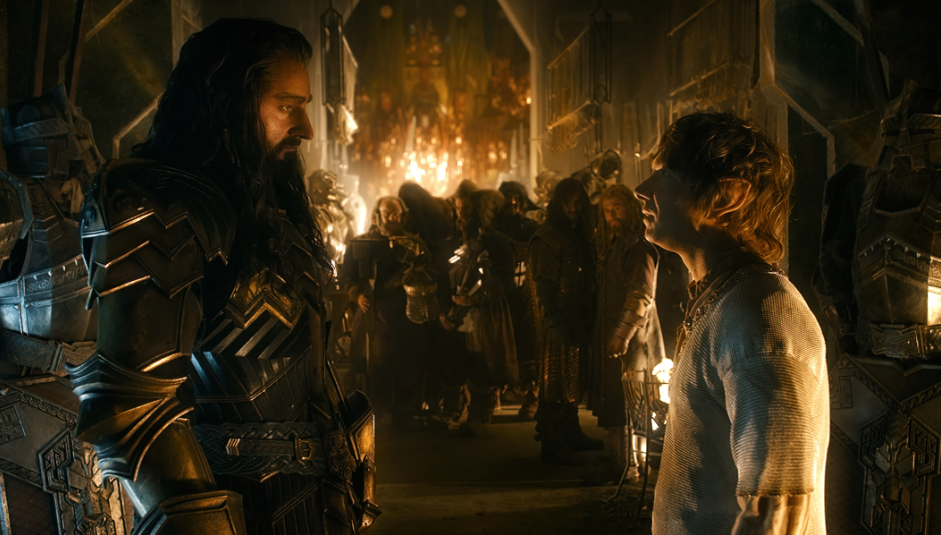
With Smaug dead, the dwarves have taken possession of the Lonely Mountain. However, something strange is happening to Thorin. He has become more greedy, violent, and eager to find the Arkenstone in the chamber and become the next king of the mountain. Bilbo has noticed his new attitude, and finds it disturbingly similar to that of Smaug’s personality. As tensions grow inside the mountains, things heat up with elven, eagle, orc, and human armies assembling outside of the mountains as well. Now with the four armies gathering to take the mountain from the dwarves, Thorin gathers his own dwarf (and hobbit) army to protect their inheritance and keep it from unworthy hands.

The third movie in any trilogy is always the most crucial. It either makes or breaks the series, making it just as memorable as The Lord of the Rings trilogy, or as half-baked as the Matrix trilogy. Part of me wonders why they even had to make a third movie at all, and why they couldn’t just combine this with The Desolation of Smaug. That was originally the plan, after all, but I guess if they did that, they would run the risk of shoehorning two plots into one film.

Honestly though, I don’t know if it would have been that big of an issue. The Hobbit: The Battle of Five Armies offers exactly what the title suggests: a battle which is bigger and bolder than any other fight in the Lord of the Rings movies. Yes, that includes the final siege on Sauron in Return of the King and the fight against Smaug in Desolation of Smaug. The scale and scope is bigger here than any other Lord of the Rings movie, with elves, dwarves, eagles, orcs, villagers, trolls, wizards, spirits, and a hobbit crashing, slashing, and colliding into each other like nobody’s business. This is the most action-packed Lord of the Rings movie yet, with it’s final lengthy action sequence clocking in at about over an hour.

Some of the action runs rampant and gets repetitive now and then. In one scene, for instance, Legolas the elf fights against an orc on a tumbling castle. The scene ran for well over 20 minutes, with them clashing swords and fists against each other, and I sat there wondering to myself “Why couldn’t he just trip him off and be done with it?”

But here’s the interesting thing: no matter how long the action ran, it kept me engaged. If this were a Michael Bay or a John Woo picture, the action would have ran wild and I would have gotten bored about 10 minutes into it. But Jackson is more talented than most filmmakers. He understands that in order for your audience to be invested in the action, they need to be invested in the characters first, because what’s the point of having characters go through these epic fights if you don’t care about them?

With this movie, I noticed that the character I cared most for was not Bilbo Baggins, but Thorin Oakenshield. He has the most interesting arc out of any other character in the movie, spending one half of the film fighting orcs, and the other half fighting himself. His character in the film reminds me a lot of Gollum: his conflict isn’t so much with others trying to take the things precious to him, but with himself in how the things he values most changes him. He especially serves a crucial part in the film’s final climatic battle scene, which is so nerve-wrecking and heart-pounding that it brought me just as much excitement as the climax in Return of the King did. The impressive part? Return of the King’s climax featured an entire armada of warriors, while The Battle of the Five Armies’ climax only needed two.

All in all, The Battle of the Five Armies did to The Hobbit what The Return of the King did to The Lord of the Rings: it wrapped it up nicely into a tight, satisfying conclusion, bringing excitement, emotion, and resolution to these characters that we’ve cared so much for so long now. Granted, it didn’t do as well as The Return of the King did with this, and I personally would have wished that Jackson would have made it less messy and cluttered than it already was. Does that ultimately matter, though, if I had fun watching it? Let’s just be glad that Bilbo made it there and back again in one piece.

Tagged , , , , , , , , , , , , , , , , , , , , , , , , , , , , , , , , , , , , , , , ,

“THE HOBBIT: THE DESOLATION OF SMAUG” Review (✫✫✫)

Be honest, Mr. Smaug: do you need a breath mint?

The Hobbit: The Desolation of Smaug is both one of the most satisfying and maddening films of the year. It’s visually splendid, illustrating the joys and perils of the world of Middle-Earth as finely as any movie before it did. It’s emotionally versatile, being comical and lighthearted at certain moments and then treacherous and gloomy in others. The performances are sound, with CGI characters being just as memorable as the live ones. Everything in the film was perfect up until it came to it’s end, which ended on a cliffhanger so big that a slackwire artist couldn’t tightrope across it.

Taking place shortly after the events of An Unexpected Journey, The Hobbit: The Desolation of Smaug continues the journey of Gandalf the Grey (Ian McKellan), Thorin Oakenshield (Richard Armitage), his troop of dwarves, and the slight hobbit Bilbo Baggins (Martin Freeman). After narrowly escaping the clutches of the white orc Azog (Manu Bennett), Bilbo and the rest of the dwarves venture on towards the Lonely Mountains, only having a few days left until the secret entrance closes, leaving them forever locked outside of the Lonely Mountains.

Bilbo, however, has greater concerns if the dwarves do manage to get inside. Deep within the twisty lairs of the mountain lies an endless sea of gold and jewels, and asleep among these riches is the vicious Smaug (Benedict Cumberbatch), a violent, terrifying dragon that formerly laid waste to the dwarves’ land and took their possessions all for himself. If the company does manage to get inside the mountains, Smaug will be waiting there for Bilbo, and there will be a massive conflict between the 100-foot tall fire-breathing dragon and the small, terrified hobbit.

One of the things I love about The Lord of the Rings movies is that the stakes are set up really well in them. Peter Jackson, who has been writing/producing/directing/godfathering the series since The Fellowship of the Ring has proven time and time again how well he can make depth-defying set pieces and visual spectacles, all while raising the emotional stakes of the movie.

Here is yet another example of what Peter Jackson can do in a movie. Visually, the film is unparalleled. There were many moments in the film that I recalled for being either visually spectacular or heart-poundingly exciting. One of them was a eerily creepy fight scene where Bilbo and the dwarves were fighting off an army of spiders in a cursed forest. Another was a chase scene where the crew was stuck in a line of barrels while falling down a waterfall. Other instances in the film include when the dwarves encountered a giant who could transform into a bear, or when Gandalf confronted an early confrontation of Sauron in his own castle. And don’t even get me started on when we meet Smaug for the first time. Jackson’s visual prowess excels just as much as his emotional involvement, and with each of his movies, he always seeks how to outdo himself from his last effort. I’d say he’s outdone himself tremendously here: the look of the film shows just that.

The performances are just as refined as the action and visual effects are. Martin Freeman was just as charismatic and loveable as he was the first time he was Bilbo in An Unexpected Journey, and Ian McKellen once again does well as the wise, ambitious, righteously-driven wizard Gandalf. And Richard Armitage has gained traction as Thorin Oakenshield since the first movie, showing that he can be more than the brutish tough guy. He’s a more vulnerable, more fleshed-out character here, with deep desires and hidden intentions showing that perhaps will be explored more in the third installment.

My favorite character by far, however, wasn’t even from a live performance. Benedict Cumberbatch was frightening, fearsome, and daunting as the terrible Smaug, his articulate, vocabulary-filled speech lining up perfectly with his sinister, seething voice. The visual spectacle of Smaug is perfect, with the dragon leaning luminously over his small, feeble enemies, while his long, slender, scaly arms and body lunge across the dungeon like an elongated spider. But the vocal performance is what makes him convincing, what makes him more than just a CGI creation and a terrifying villain in his own right. The minute I heard Smaug speaking to a shaking Bilbo, I had shivers run down my spine. The entire time he was speaking to Bilbo in mysterious anecdotes and sinister undertones, I was on the edge of my seat. When he started to attack, I clutched my mouth and stared endlessly at the screen, wondering and hoping for the fate of these characters in Smaug’s way.

In An Unexpected Journey, Bilbo benefits from being a more active protagonist than that of Frodo. Here we have Smaug, a giant, fearsome beast that is more actively sinister and spiteful than the stillness of Sauron from The Lord of the Rings.

Everything in the film is refined to the quality of film that you’d recall from The Lord of the Rings trilogy. My only regret is the copout, cliffhanger of an ending that inspired my theater to erupt into boos and groans. I hate it when movies do this to me. They put in so much effort to make a great film up until the last five minutes, where they pull the rug from under you and say “Sorry, that’s all for now! See you next year!” What was Peter Jackson thinking when he went with this ending? At the end of each Lord of the Rings movie, it ended with some form of closure and assurance that the adventure would continue into the next installment, but you didn’t know how it was going to pan out. It kept us intrigued, and it kept us wondering what would happen next. With this movie, it sets itself up to where we already know how it’s going to end: we just don’t get the payoff along with it.

I quote J.R.R. Tolkien: “Books ought to have good endings.” The same should be said for movies.

Tagged , , , , , , , , , , , , , , , , , , , , , , , , , , , , , , , ,

“THE HOBBIT: AN UNEXPECTED JOURNEY” Review (✫✫✫✫)

A journey J.R.R. Tolkien would want to go on. 

The Hobbit: An Unexpected Journey is the story I first experienced when I saw The Lord Of The Rings: The Fellowship Of The Ring for the first time. Like The Wizard Of Oz or Harry Potter and The Sorcerer’s Stone, it’s a sweeping fantasy about ordinary characters getting thrown into extraordinary circumstances. So if hobbits, dwarves, wizards, and fire-breathing dragons constituted as “ordinary” in this universe, imagine the extraordinary circumstances that they go through.

Serving as a prequel to the J.R.R. fantasy epic The Lord Of The RingsThe Hobbit tells the story of Bilbo Baggins (Martin Freeman), a relaxed and easygoing hobbit who doesn’t like to do much throughout the day except for eat, sleep, and smoke his pipe every now and then. One day, he gets a visit from a mysterious stranger named Gandalf (Ian McKellen), an elderly wizard who is looking for shelter and a young companion to go on an adventure with. Much against Bilbo’s wishes, Gandalf not only stays in his small village home: he invites an entire company of dwarves, who proceed to wreck Bilbo’s house and eat everything in his fridge.

After having a nervous breakdown and cleaning up his entire house, Bilbo overhears Gandalf and the small dwarf brigade’s plans. Ages ago, the dwarves‘ prized possession, the Lonely Mountain, was overtaken by a vicious fire-breathing dragon named Smaug, who destroyed their village and stole the castle and all of it’s gold for his own desires.

After being betrayed by their allies, the elves, and being left to fight for their land all by themselves, the dwarves are determined to travel back to the mountain and fight for their home. Bilbo must make a decision of continuing to live on his normal, uneventful life, or to reach out, travel with the dwarves, and seek out adventure the likes of which he’s never experienced before.

Remembering that it was only a few years ago when I originally fell in love with The Lord of the Rings: The Fellowship of the RingThe Hobbit: An Unexpected Journey is a prequel that hits on all of the right notes, and then some more that I wasn’t expecting. In comparison to it’s elder companion, The Hobbit is uncanny. It has a wide verse of characters, each one being unique and memorable both in appearance and personality. It has a dynamic and involving story, ripe with exposition and emotion, retaining your full attention despite the lengthy run time. And it has highly stylized set pieces and visual spectacles that excite the eyes and overwhelm the mind. Do not mistaken Peter Jackson’s intentions here: he was inspired by Lord of the Rings when he was making The Hobbit.

And yet, there are so many differences from The Hobbit to The Lord of the Rings. One of the biggest, I think, would be it’s protagonist. Bilbo is different from Frodo, his nephew in Lord of the Rings whom Elijah Wood inhabited so wonderfully. They’re similar, of course, in that they are small hobbits not necessarily fit for fighting, but are clever, creative, and courageous nonetheless.

And yet, Bilbo is so much more than Frodo is. He’s funnier, for one thing, a bumbling, clumsy little hobbit that reminds me so much of the antics between Pippin and Merry in the original movies. He’s also more outgoing, a more active protagonist doing more in the film than just holding a ring and trekking long miles. He does so much in the film, sneaking around trolls, fighting Orcs, going through traps and mazes, and having a first-hand involvement in many of the film’s biggest fights. My particular favorite scene is one where he is talking to a fan favorite from The Lord of the Rings about the possession of a mysterious gold, rounded object. Hint: His favorite word is “precious.”

My point in saying all of this is that Bilbo is a dynamic character in his own right, and Martin Freeman handles the character very well. In the previous movie trilogy, Freeman had four hobbit inspirations to pull from, and instead of following just one of them, he took characteristics from all of them and made a character all his own. That took great talent and risk, and Freeman’s efforts paid off, making a character that I think is the most memorable and charismatic hobbit out of all of them.

Without a doubt, the best film in the series is Return of the King. This film is perhaps the second best. Sure, at times it might suffer from a slight overdose on exposition, but doesn’t all of the films? The Hobbit: An Unexpected Journey is an adventurous, ambitious gamble of a film, and it makes me believe once again in the power that a wizard, a slew of dwarves, and a brave little hobbit can have.

Tagged , , , , , , , , , , , , , , , , , , , , , , , , , , , , , ,

“INTERSTELLAR” Review (✫✫✫1/2)

A space odyssey led by Christopher Nolan. 

The first time I watched Christopher Nolan’s Interstellar, I knew I had found something special, but didn’t know if I fully comprehended everything I saw. I just finished watching it a second time, and now I understand I’m not supposed to comprehend everything I saw. Interstellar is mesmerizing and breathtaking, a highly ambitious and exhilarating journey taking you through the far reaches of time, space, planets, wormholes, black holes, stars, and anything else in space that you can think of. But just like space, it is also vast and daring, reaching for a vision that it cannot possibly hope to grasp. That’s okay. It’s better to aim for too much rather than too little.

Based off of an idea conceived by theoretical physicist Kip Thorne, Interstellar takes place in the distant future, where the Earth is slowly dying and the only source of sustainable food is by growing corn. Cooper (Matthew McConaughey), is an aerospace engineer-turned-farmer just trying to make it day to day with his small family, consisting of his father-in-law Donald (John Lithgow), his son Tom (Timothée Chalamet), and his daughter Murphy (Mackenzie Foy). Like the great astronauts Neil Armstrong and Buzz Aldrin, Cooper dared greater things in his younger years. He wanted to fly. He wanted to explore. He wanted to traverse and discover new spaces that he hasn’t seen before. Now he’s only concerned about making sure his family survives.

One day, him and Murph discover a secret space station that has been hiding NASA, which has been operating in secret since the world state of health has declined over the years. When Cooper finds out that the Earth will soon be unable to sustain life and that his daughter’s generation will be the Earth’s last, Cooper is recruited on a daring space mission to find a new planet that is able to sustain and save the human race.

Written and directed by Christopher Nolan, Interstellar is a testament to the quality of film that Nolan is consistent in making. It has all of the elements that you appreciate in all of his films. It has a grounded, human story intertwined in a brilliantly woven, thought-provoking plot. It has well-rounded, relatable characters that you root for and admire deeply. It has incredibly breathtaking visuals, created with the same visual and cinematic sense of style that is unique only to Nolan’s movies. And it has plot twists the size of Mount Everest, taking complete 180 turnarounds when you least expect it. You will not see the end of this movie coming.

Interstellar is up to par with many of Nolan’s other works, including The Prestige, Inception and The Dark Knight. If I’d continue on about those qualities, however, I’d be writing the same review for those films. It’s easy to write about the things you’ve already seen: I’d like to write about how this film is different from Nolan’s past work.

For one thing, the performances are the best they’ve ever been in any of Nolan’s films, and the heart of this film’s emotion comes from that of Matthew McConaughey. I love how his character is represented in this film, and I especially love how McConaughey handles him. He isn’t handled as a bold science-fiction action hero similar to the likes of Han Solo from Star Wars or James Kirk from Star Trek. He’s more human than hero, a vulnerable and quietly suffering man who just wants to go home to his daughter, but knows he has a greater duty in fighting for the Earth’s survival. I’ve always appreciated the humanity Nolan has always instilled in his characters, but somehow McConaughey reaches an emotional depth much deeper than that of his predecessors. I like seeing McConaughey jumping from such polar opposite roles as this from Dallas Buyers Club, yet giving the same dedication and credibility to both characters. He has proven himself to be an extremely versatile actor, whether it be for small, independent films like Dallas Buyers Club, or big Hollywood productions such as Interstellar.

I am also led to believe that this is the most scientifically accurate out of any of Nolan’s other films. Working closely with Kip Thorne on how accurate the film would be, Nolan worked hard to realize both his vision and Thorne’s, abiding by Thorne’s recommendations and notations as closely as possible. His representation of a wormhole in space. His portrayal of relativity to time and space. Thorne has gone on record to say that there is one major scene demonstrating high artistic freedom, and that is when Cooper visits a planet that has “ice clouds”. This film is intensely interesting and fascinating, and the coolest part to me is knowing that most of this was reviewed by a well-known physicist who has deemed it all possible.

Side note: please excuse me for using the word “coolest.”

There are a few weaknesses to mention. As a Nolan film, it is expected to be extremely complicated, and I admit to needing to see the film multiple times to even begin to understand it. I know many others will have a harder time at understanding it than I did. There were a few slow lulls in the film that detracted from its steady pace, and there were severe sound mixing issues at the beginning of the film that I noticed almost immediately. I’m no sound expert, but when the music is so loud that I can’t even hear what a character is saying, I think you need to fix something before you release the film.

I think it was the third act that really sold me on this film, the last half of the story that compelled me to believe that this was a very memorable journey, and it was. I won’t go into the particulars for the sake of spoilers, but I will say that Nolan is a master at orchestrating thrilling and tense-heavy climaxes. Sure, I would like that to persist throughout the rest of the movie, but I won’t complain. I appreciate Nolan’s ambition, if I appreciate nothing else.

Tagged , , , , , , , , , , , , , , , , , , , , , , , , , , , , ,

“THE BOOK OF LIFE” Review (✫✫✫)

book of life

Ay caramba, tu joven amantes.

As children, we were told many fairy tales that filled our young minds with wonder and imagination. We looked at the pictures in our tiny children’s books as our parents narrated the words to us, but did we ever stop to think about where these fairy tales came from? The Three Little Pigs came from England. The Little Red Riding Hood, London. The Fountain of Youth, Japan. The Little Mermaid, Denmark. The Sorcerer’s Apprentice, Germany. So many stories have come from so many places all around the world that by the time they reach us, we have “cleansed” it of it’s culture and Americanized it for our own comfort.

Here, we have Jorge Gutierrez’s own fairy tale called The Book Of Life, and for the sake of the movie I’m glad it didn’t succumb to mainstream appeal by having it take place in Colonial America. The Book Of Life is splendid, a wonderful, uplifting, joyous, and immensely entertaining animation engulfed and inspired by the culture Gutierrez came from. Think about how quickly you are swept away when you read the fairy tales by the Brothers Grimm, and you can imagine how this film sweeps you up in that exact same way.

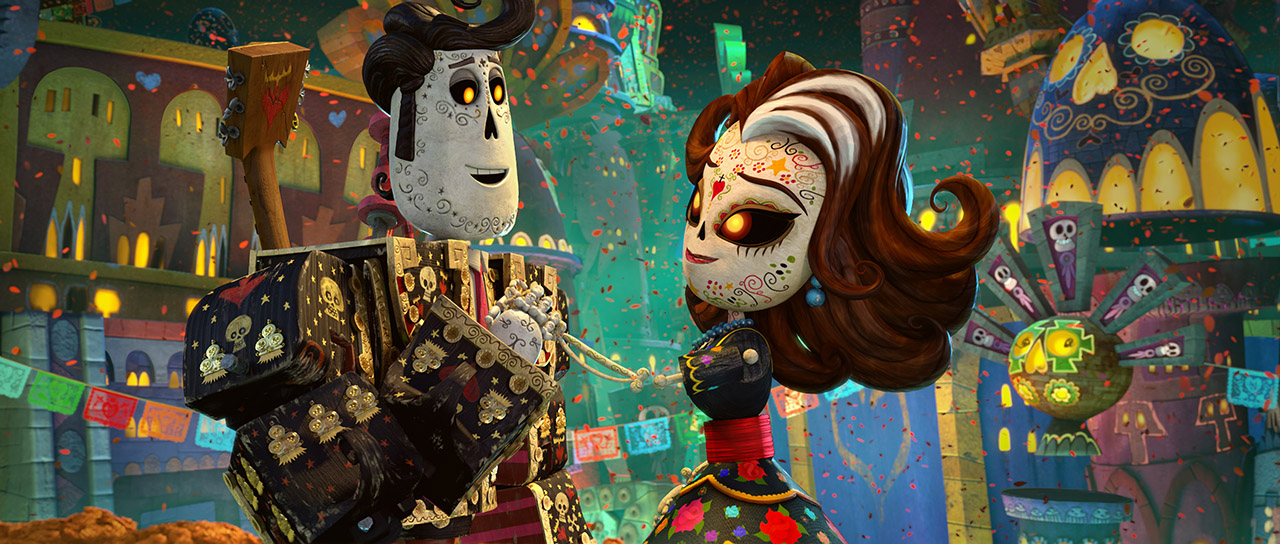
Told as a story within a story similar to Rob Reiner’s The Princess Bride, The Book Of Life follows a group of schoolchildren through a museum as they are told the tale of Manolo (Diego Luna), a Mexican bull fighter who is fighting for the heart of his childhood friend Maria (Zoe Saldana). His closest friend and rival, Joaquin (Channing Tatum) is also fighting for her love, and when they finally see each other after many years apart, they begin their pursuit for Maria’s love.

Unbeknownst to any of them, however, a heavy secret hides behind their innocent intentions. The spirits of the afterlife La Muerte (Kate del Castillo), who rules the world of the remembered, and Xibalba (Ron Perlman), the one who rules the world of the forgotten, have placed a bet on these three friends. If Manolo ends up marrying Maria, La Muerte wins and gets to rule both the land of the remembered and the forgotten. If Joaquin marries Maria, Xibalba wins and he gets to rule the land of the remembered. The world of the undead is at stake here, and it’s up to Manolo, Maria, and Joaquin to set things right.

What do I say about an animated children’s film that’s based around Mexican fables and customs? The Book Of Life is a wonderful animation: bright, vibrant, colorful, and lively all at once. Writer/director/animator Jorge Gutierrez has a careful eye for detail, and does well in visually adapting to different scenes, settings, and moods.

In one scene, after one of the supporting characters die, the setting suddenly becomes dark. The sun drops. The candles burn out. A cloudy fog envelops in the sky as rain drops pellet onto the ground. In the very next scene, however, we see the world of the remembered from this deceased person’s perspective, and it is lively colors light up with shiny, gold-brick pathways illuminating everywhere and with Churros and balloons floating as far as the eye can see.

This is what I mean when I say the animation is versatile: it’s attentive, eye-catching, and delightful, demanding your attention the minute you lay your eyes on it. But it’s not just the animation that works so well with this movie. The Book of Life is entrenched and inspired in its own culture, living and breathing the Mexican customs though every frame of its run time.  There is one work that Gutierrez did this with before The Book Of Life, and that is the Annie award-winning Nickelodeon cartoon series “El Tigre: The Adventures of Manny Rivera.” Now we have The Book of Life, and I feel it will spur on many Mexican children and families to pick up their heritage and be proud to represent it. In a day and age where Hollywood feels they need to Americanize everything, The Book of Life is a Godsend.

Everything else in this film functions exactly as it is supposed to. The story is mostly formula in that there has to be a good guy, a bad guy, a forbidden love, a big fight scene at the end, and a happy ending. The voice cast is solid, and Channing Tatum didn’t annoy the living daylights out of me for a change. And the music by Gustavo Santaolallo is pristine and authentic, with the plucking of the Mexican guitar strings filling your ears with wonderfully harmonic sound.

But make no mistake. The best thing about this film is the inspiration Gutierrez instills in it, the inspiration that his parents most likely instilled in him when he was still just a little boy. I hope there will be a children’s novelization of this film in the future and that it too will inspire children of all ages, regardless of their heritage.

Tagged , , , , , , , , , , , , , , , , , , , , , , , , , , , , , , , ,

“BIRDMAN” Review (✫✫✫✫)

The artist’s struggle, all in one take. 

Birdman, or otherwise known as The Unexpected Virtue of Ignorance is one of the most mesmerizing films I’ve ever seen. It is also one of the most unique, disturbing, shocking, and confusing films I’ve ever seen too. That’s okay. This film was reaching for a specific vision, and director Alejandro Inarritu has expanded beyond it. I admit I don’t know what to expect as far as the public reacting to this, and I also don’t know how accessible it is to non-film aficionados either. But I have seen the movie frame by frame, and I think it’s one of the best films of its kind. On the surface value, it’s about the struggles of Broadway theatre. In deeper insight, it’s about ego and the obsessive human condition.

The film stars Michael Keaton as washed-up actor Riggan Thompson, who has been forgotten by his adoring public after portraying the lead role in a series of superhero films titled Birdman. This is ironic, because in real life, Keaton portrayed a superhero in Tim Burton’s 1989 film Batman. Desperate for a comeback, Thompson sets out to write, direct and star in his favorite Broadway play: What We Talk About When We Talk About Love by Raymond Carver.

Things immediately hit the fan during the week of their first preview. One of Riggan’s actors gets a head injury from a loose light on the set. His replacement, Mike Shiner (Edward Norton) is a talented but brash and arrogant actor who sees himself as Riggan’s superior. And, as he faces personal problems with his estranged daughter Sam (Emma Stone), Riggan begins to feel the closing pressures of Broadway when a malicious theatre critic tells him she’s going to “kill his play.” Now Riggan is trying to keep the play and his sanity afloat, and he will make whatever sacrifices he needs to make sure both happens.

Written, directed and produced by Inarritu, Birdman is the first black comedy made by the filmmaker, his most successful films to date being Oscar nominees Babel and Biutiful. Now he has made Birdman, and I am tempted to say it’s the best film he’s made yet.

What worked so well with the film? The first thing is the editing and the cinematography, which was shot so wonderfully by Oscar winner Emmanuel Lubezki that it places you in the moment, in the reality of the film, not making you watch it from a cushion seat on the eighth row of a dark movie theater. Lubezki, who worked with Inarritu on short films in the past, decided to shoot the film and edit it into a continuous fashion, giving off the illusion that the entire film was filmed in one take. Even though the movie wasn’t filmed in one shot, the feeling it gives off makes it feel alive and moving, not unlike the world of theatre that Riggan is trying to prove himself in.

I wonder how much effort this takes, not just from the cinematographer and director’s point of view, but from everyone else involved in the film as well. How many hours did the actors need to rehearse their lines in order to get their roles right? How much pressure was the tech and lighting crew under while they were filming, knowing that if they screwed up, everyone would have to start back to square one? How many hours did film editors Douglas Crise and Stephen Mirrione have to sit in front of a computer, making sure the shots transitioned so well that you couldn’t even see the transitions? The illusion not only worked because of the idea that Lubezki and Inarritu offered, but because of the commitment it received from everyone involved with the film. In many ways, their efforts were all worth it: the camerawork here expresses more of the story than the character’s dialogue does.

The parallels in this movie are also ingenious. How does Keaton feel playing as Riggan Thompson in the movie, knowing that he reached international fame as Batman earlier in his career and having since then never been able to match a more recognized role? How does Inarritu feel, going through all of the production pressures Riggan did in making the play as he himself did in making the movie? Did he intend this movie as self-reflection? Is he telling the audience what he goes through daily as a filmmaker? Or is he using his struggles as a platform to tell a much deeper, more important story to the audience?

For me, I don’t get as much joy out of interpreting as much as I do out of experiencing. And make no mistake: Birdman is an experience, surreal, tantalizing, and thought-provoking all at once. I’m still sitting here, hours later, not quite fully realizing what exactly Inarritu was trying to portray in this film. Is he commenting on the artist’s struggle? Commercial vs. independent film? Fatherhood? Friendship? Family? Lost love?

I think it’s all of the above. Or maybe none of the above. I honestly don’t know. In the movie, Inarritu battles labels that are placed on artists and on the art that they produce. Is Riggan Thompson a superhero, or an actor portraying a superhero? Is he a former shell of who he is, or a flower that has yet to bloom? We see in this film how these labels influence his life and how much stress and anxiety it presses upon him. To put labels on the movie would contradict Inarritu’s intentions. It would be offensive to the film.

My bottom line: Birdman is a masterpiece. It is so distinct in its own language and style that I think it is impossible to define it, let alone replace it. Critics will applaud it for it’s technical and emotional achievements. It will definitely garner some Oscar nominations. It’s a sure contender for visual effects, cinematography and editing. It is also sure to confuse certain people, to which I would recommend stop trying to understand it. Birdman is not meant to be understood. It is meant to be experienced, and if you can help it, interpreted.

Post-script: A thought I had after seeing the movie that I think viewers will also have. Because of how profoundly his role as Birdman affected Riggan, is Inarritu attacking the superhero genre of film? I believe he is, but I choose not to acknowledge that. After all, for every time a superhero film was called too simple, couldn’t you call any art film too complicated? I quote Mark Twain: “Too much of anything is bad.” 

Tagged , , , , , , , , , , , , , , , , , , , , , , , , , , , , , , , ,

An Afternoon With Alejandro Inarritu

“And did you get what you wanted from this life, even so?

I did.

And what did you want?

To call myself beloved, to feel myself beloved on the earth.”

– Raymond Carver

These were the words that director Alejandro Inarritu (Babel, Biutiful) chose to quote at the beginning of his meticulous film Birdman, or The Unexpected Virtue of Ignorance. It was also the first words that came back into my head minutes before I was to interview him.

This weekend, I had two great experiences happen to me. Firstly, getting to see Birdman, a viciously unique film that tackles it’s characters and themes with pinpoint precision: a masterwork by a master director. The second you already know. If you don’t, you didn’t read my first paragraph.

Alejandro gave myself, along with about ten other college journalists, the privilege to talk to him about his upcoming limited release. After seeing the movie, this surprised me, because there was a moment in the film where a journalist accuses the main character of injecting semen into his pores to maintain his young features. I suspect Mr. Inarritu hosts a very guarded spirit while being interviewed by the press, and I certainly don’t blame him for that if that is the case. Now that I think about it, maybe that’s why Inarritu wanted to host the interview over the phone in the first place.

Anyhow, I had 20 minutes to listen to the director’s innermost thoughts, and while I only got to ask him one question, I enjoyed the experience as much as any other college journalist who participated in the call. While all of these aren’t my questions, these are the ones I found the most relevant to the film, and the ones I believed Inarritu would have preferred to be answered in the first place. So without further adieu, here is Alejandro Inarritu on the unexpected virtue of ignorance.

Question: Your film is unique, hyperactive and full of energy. How do you communicate to your cast the complex tone you’re wanting to portray?

Answer: I always try to be very specific, help them to clarify and simplify things by having a very clear objective. I think every scene has an objective, and every character has something they want to achieve in each scene. When you have cleared your objective, and to try one or two possible ways to get that done through an action verb, I think that would simplify the work not only for me, but for everybody.

Q: What were some of the challenges you faced while making the film? 

A: It was a very short shooting — 29 days. We rehearsed a lot before arriving to the set, so basically it was a very intense and meticulous work of precision with actors, camera and crew. Everything was designed and matched the needs of the film that was basically predecided in rehearsal.

Q: You have a big role behind your scenes in producing, writing and directing all of your films. What is it like taking on all of those jobs at once? 

A: I have been lucky to have been the producer and be involved in all of my films in a very personal way. I think there is no other way to make it. I think if you have a film that is personal, if you are doing your own film, there is no other way to not produce it, because I think it’s a part of the film. Producing means a lot of decisions that will impact your film one way or another.

Q: In the movie, Riggan Thompson is overshadowed by a superhero role he played earlier in his career. In real life, Keaton is overshadowed by his role in Tim Burton’s Batman. Is that an intentional casting decision that you made?

A: Keaton adds a lot of mental reality to the film, being an authority and one of the few persons of his work that pioneered the superhero thing. But at the same time, he has the craft and the range to play in drama and comedy, and very few actors can do that. He plays a prick in this film, and I need someone who was adorable, somebody who you can really like. He has that likeness, that likeness that was required. All of these things made him the perfect choice for it. I think he was very bold in trusting me with this role.

Q: One of the things that is particularly interesting with the film is the long take. Can you talk about why you made that visual choice?

A: I wanted the long take to make the people really feel the experience of this guy. I think it’s important for every director in every film to pick the point of view, and in this case I wanted radical point of view, and the people were in the shoes of the character to experience his emotions. I felt that was the most effective way to do that.

Q: Why did you choose to portray mental illness in a film that is at least extensively a comedy?

A: I think ego is a part of our decease as a society. I think the ego is a necessity, but I think when the ego takes over and we attach our personalities to the ego, and he domains a person absolutely without being discovered or controlled. That’s mental deceit, and I see in a way Riggan Thompson suffering from that illusion of ego that’s distorting him. He thinks he does things that he does not do, he’s in like a manic state of mind. He’s an extreme case of ego.

Q: Is that part of the commentary?

A: Everything is part of the tone of the film. That’s why it opens with a guy meditating in tidy whites.

– David Dunn

Tagged , , , , , , , , , , , , , , , , , , , , , , , , , , , , , ,