Tag Archives: Biography

“STRAIGHT OUTTA COMPTON” Review (✫✫✫✫)

The biography of the boyz in the hood. 

Perception is reality.

That’s a motto my newsroom lives and dies by. That’s also a truth that the boys from Straight Outta Compton live and die by. The only difference between us is that we experience it figuratively: they experience it literally.

We witness this early in Straight Outta Compton; as early as the first scene, in fact. Eric Wright, a.k.a. Eazy E (Jason Mitchell) confronts his cousins, who hasn’t paid him yet for the dope that he sold them a few weeks ago. Suddenly, like an Earthquake striking a town, the police ram into the house and start raiding it, arresting any African-American they can find in there. E slips out of the window and onto the roof just in time. He’s survived. For now.

We switch to a less tense scene. Andre Young, a.k.a. Dr. Dre (Corey Hawkins) is sitting on his bedroom floor, listening to classic funk and R&B records on his record player. Dre isn’t like the others in the streets. He doesn’t want to sling dope or be in a gang. He just wants to produce beats and music: a mozart to his suburbs.

His mother Verna (Lisa Renee Pitts), however, isn’t so enthused about his career path. He has a family and a daughter to care for, and he isn’t going to do it sitting on the floor listening to a record player, DJ’ing for a club at night. Dre, however, has his mind set. His future doesn’t lie in cleaning toilets and taking fast food orders. It lies in a DJ mixer and a pair of headphones. Dre knows what he needs to do.

Meanwhile, on the other side of Compton, O’Shea Jackson, a.k.a. Ice Cube (played by his own son, O’Shea Jackson Jr.) is sitting on a bus waiting to go to school. He sees the white kids in another school yard, all dressed in nice clothes, all with newly-bought school supplies and slick cars. Meanwhile, Cube sits in his creaky bus seat, looking at his clothes he probably wore yesterday, and his worn pencil and notepad, which is the only school supplies he has.

He takes his pencil and notepad and starts writing.

These three men, alongside Lorenzo Patterson, a.k.a. MC Ren (Aldis Hodge) and Antoine Carraby, a.k.a. DJ Yella (Neil Brown Jr.) make up the notorious hip-hop group N.W.A. The last two words stand for “With Attitude.” You can imagine what the letter “N” stands for.

Here is a film that, by any standards, is morally despicable. I go on and on in some of my reviews how movies are either incredibly violent, shamelessly sexual, or blatantly vulgar. This movie is all of those things and more. F-words fly out of their mouths like bullets in an uzi. Nude and scantily-clad women flock to these rappers in herds. In some scenes, they engage in sexual intercourse with many attendants watching, all with drugs and alcohol present. Police and gang violence is also present in the film, with crips, bloods, and officers shoving, punching, shooting, assaulting, and harassing each other in very violent, confrontational fashions.

Do not be fooled. This is not an easy film to watch, and if you don’t have a strong moral compass, you will get lost in the violent, sexual, promiscuous, profane, and blatantly explicit content you will find in this motion picture. If you hate hip-hop, you will hate Straight Outta Compton.

That being said, Straight Outta Compton is one of the most compelling films I’ve seen so far this year. The movie is more than the problems it poses. In fact, I’m happy that the film shows the content that it does in the film. It shows the destructive lifestyle these people experience, both on and off the streets, and they confront very real issues that hits them hard at home and at heart. The most significant issue that the movie covers is, of course, police violence. In one of my favorite scenes from the film, one of the police officers that was harassing these young men was not white, but black. My jaw dropped as he continued to berate these men as they were walking away: “Listen to your master!” he said, referring to their white manager.

What I love most about this movie, though, is that it isn’t biased. It isn’t pro-police or anti-police or pro-gangs or anti-gangs. It shows the ugliness of every side of Compton, whether it exists on a badge or on a bandana. Police cruelty is an obvious focus of the film, because it’s a recurring theme in hip-hop and rap culture. I was pleasantly surprised, though, to find at how much the film delved into hood culture and how damaging it is to these young men’s lives. The biggest instances of cruelty came from record producer Suge Knight, portrayed here by R. Marcus Taylor, whose business tactics include physical intimidation, humiliation, fear, confrontation, and violence. If the movie is anything to go by on how the real events transpired, Suge is a monster. He is painted as nothing less than the Godfather of suffering in this movie.

The parallels this movie draws on is ingenious, and director F. Gary Gray is exemplary in realizing the African-American struggle in a poverty-stricken neighborhood and in their aspiration to escape from it. Jackson does very well in portraying his father, and demonstrates the same snarl and attitude with such accuracy that it made me laugh at how similar he looked to his father. Hawkins is passionate and driven in portraying Dre, and while he physically looks smaller than the real-life Dr. Dre, his performance and his versatility in emotion more than makes up for lacking in physical similarities.

The greatest performance, however, comes from Jason Mitchell. In hindsight, he is the character with the most problems. He’s egotistical, he objectifies women, he betrays his friends, he resorts to violence, and he flourishes in the most destructive lifestyle as he bathes himself in a plethora of drugs, alcohol, and sex. In comparison to his N.W.A. companions, he is the most flawed character. But with his flaws comes his emotions to those flaws, his own moments of self-reflection that makes him think back at his decisions, his career, and the life that he’s trapped in. E goes through many emotions in this film, from fear, to anger, to happiness, to sadness, to heartbreak, and Mitchell portrays all of those emotions perfectly. If he doesn’t deserve the Academy Award for best supporting actor, he definitely deserves a nomination.

But at the heart of this movie is the struggle, the struggle that these five young men go through together, apart, individually, and inseparably. Their struggle being not having enough money. Their struggle being having too much money. Their struggle of not having a place in the world, and their struggle of what to do after establishing their place in the world. Like hip-hop, this movie will stir some major controversy for its content and for what messages it sends to its younger viewers. But it’s important to understand that this movie doesn’t set out to prove who is right and wrong. This movie sets out to show a reality. This movie sets out to show their reality.

Tagged , , , , , , , , , , , , , , , , , , , , , , , , , , , , , , , , , ,

“AMERICAN SNIPER” Review (✫✫✫1/2)

And hero, husband, and father.

Chris Kyle was an American sniper. Serving four tours in Iraq, with 160 confirmed kills and approximately 95 more unconfirmed, Kyle earned the title of being called the most lethal sniper in American history. More than being a soldier, though, he’s a father, a husband, and a friend. He was killed in 2013 at age 38. He was shot by a soldier suffering from PTSD that he was trying to help.

We know all these details going into Clint Eastwood’s American Sniper. We already know how it ends, we just don’t know everything leading up to it. Eastwood understands this, and uses it to his advantage as his film not only gives an honorable tribute to one of America’s most committed soldiers, but also foreshadows to a sad fate that we already know is coming. Gee, thanks a lot Clint. I didn’t even bring my tissues.

The film opens on the same startling scene that the book does: with Kyle looking down the scope of his sniper rifle at an Iraqi mother and her child, both of whom were aiming to suicide bomb a battalion of soldiers on the street. Eastwood sets up the tension of the scene perfectly here, with Kyle’s sweaty, darting eyes surveying the scene and desperately trying to see any way out of the tormenting choice he has to make. He soon dreadfully realizes there is no way out: it’s either the mother and her child, or the 15 soldiers and the suffering of their families back at home.

Think about being given that situation, about how devastating the experience must be and how haunting it must be to the person who has to make it. Now imagine having to make that same choice day, after day, after day, with your numbers climbing up until you’ve reached over 250 kills.

That’s the life of a soldier that Kyle has lived.

Kyle is portrayed in the film by Bradley Cooper, and both Cooper and Eastwood do a wonderful job representing Kyle here. They show that before he was a soldier, he was a citizen, an American with strong ideals and opinions and unafraid to show them or fight for them. Before he was shipped out and went on tour, they showed how normal Kyle was.

They showed that before he was a soldier, he was a man.

After having to make those difficult decisions day after day, how do you think that affects a man? In interviews, the real-life Kyle has said that he would not take back a single shot because every one that he took was to defend his brothers in uniform. I believe him when he says that, but I don’t believe that it didn’t leave an impact on him. Some soldiers suffer PTSD from killing just one man. How do you think more than 200 may have impacted Kyle?

Both Eastwood and Cooper do a great job humanizing Kyle here, and show that he’s more than the record kills he’s garnered. They show that Kyle is a man of coarse humor and blunt honesty, a man with a thick Texan accent and ideals, a man who tries to show that he’s strong and dependable, but who deep down is hurting and alone. The film is intimate in the ways that it shows Kyle, both in the chaos of battle and in the quietness of being home.

Cooper especially does a skillful job in portraying the iconic war hero. He expresses trauma and subtlety with the character so masterfully that the only differences I can tell between him and Kyle are minor facial features.

This movie has stirred controversy as of late for being “pro-war,” and for glorifying a man who was essentially labeled a murderer. I’m convinced these same people haven’t seen the same movie I saw, because the movie I watched unabashedly looks at the miseries of war and how the deaths Kyle could and couldn’t prevent affected him. The movie does suffer some slight pacing issues (not to mention the infamous “fake baby” seen in one of the shots), but when Eastwood resurrects a war hero to show the man behind the legacy, how can you look at this movie’s scope and not feel something for all of the physical and moral sacrifices Kyle had to give for his home? When the trumpet plays proudly over the solemnity in the end credits, you know that Eastwood represented a warrior in heart and a human in spirit.

Tagged , , , , , , , , , , , , , , , , , , , , , , , , , , , , ,

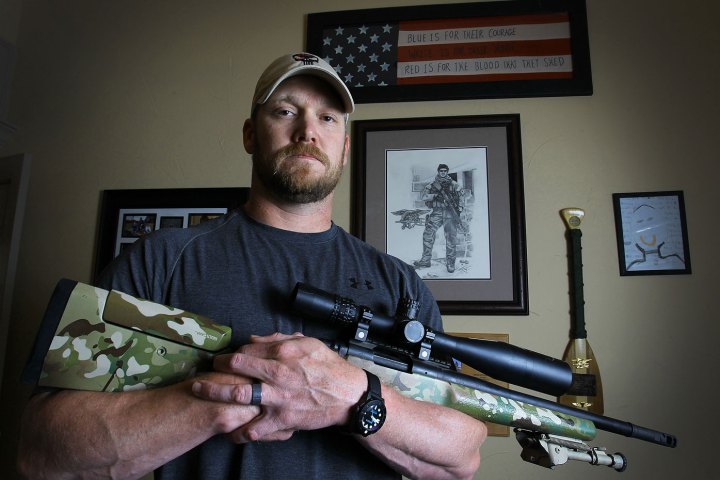
For The Man Who Died So I Could Write This.

Chris Kyle was not a murderer. He was a hero.

The military sniper’s story came under fire last week after Clint Eastwood’s biographical war drama American Sniper was released in theaters. Critics have called it many things, many of which I am not fond of. Some have called it pro-war. Others have called it “bigoted.” Filmmakers Michael Moore and Seth Rogan also fired shots at the film, with Rogan comparing the film to the Nazi propaganda seen in the third act of Quentin Tarantino’s Inglorious Basterds.

Coming from the guy who almost blew America up with his controversial film The Interview, which fantasized about killing North Korean leader Kim Jong-un, I can’t say I care much for his opinion.

Since the conversation sparked intense debate over the nation, Moore and Rogan has since redacted their statements, apologizing and claiming they were taken out of context. Their supporters, however, have not silenced themselves, and continue to persist saying that the film is a dishonest piece of propaganda that glorifies a murderer that shot and killed not only Iraqi men, but also women and children during the Iraq war.

It’s important to note, both sides have merit to their opinions. Both sides have their perspectives, and both have evidence to back up their claims.

The critics have claimed that Kyle was not as remorseful in real-life as he was depicted in the movie. That he felt no shame in killing Iraqi men, women and children, and would probably kill more if he needed to. This is supported by the fact that he used very blunt descriptions and vocabulary in his book, with one sentence reading “I hate the damn savages.”

He’s been confirmed as the most lethal sniper in American history with an estimated 255 kills, 160 of them being confirmed by the Pentagon. His first few pages in the book opens on him shooting a child and his mother. There is no fighting the horrible things he’s done in Iraq: Kyle has described the events himself in text.

At the same time though, the supporters of Kyle’s story have equal leverage on their perspectives. He felt no remorse with his kills because he was always shooting in defense of his brothers in uniform. The woman and her child that he shot were both going to blow up a convoy with a hidden grenade, which blew up shortly after they dropped it. The many seemingly-innocent Iraqi’s after that were also visibly going to initiate violence against the military, whether they were picking up a bomb, or aiming an RPG.

If you’re focused on how many kills he’s made, think also about how many lives he’s saved. He shot an estimated 255 enemy kills in Iraq. If each one was going to attack a group of military soldiers, how many fathers do you think were able to go home because of him?

We have a much bigger issue at hand here than just who is right. Our culture is so quick to attack and criticize our military, when they’re the ones fighting so that we can have the right to attack and criticize. In the midst of moral ambiguity and political correctness, men and women are on the other side of the world fighting and dying for our rights. Their last concern is being politically correct. Freedom isn’t free.

So if you want to criticize Kyle or the book and movie, American Sniper, be my guest. But understand that Kyle shot from the barrel and died from the barrel so you could have that right.

– David Dunn

Tagged , , , , , , , , , , , , , , , , , , ,

Top Ten Films Of 2014

Has anyone ever stopped to wonder why all of the best of the year lists have to be in the top ten? Like, what sort of critic was working on his list and thought that ten would be the magic number? Why ten and not twelve? Or fifteen? Five? Twenty? Eight? Why was ten specifically chosen as the big number? Was it chosen at random, or was it actually chosen for some relevant, significant reason?

Regardless of whatever the case may be, I’m choosing to be a little rebellious this year. For the past few years, I’ve seen enough films to make a “Top 15″ list if I wanted to, but if I had done that, my site viewership would go down by about twenty views.

So this year, to battle the preconceived notion that “best of the year” lists have to have ten movies, I’m doing two different things. 1) I’m adding an “honorable mentions” selection that while those films aren’t necessarily in my top ten, they are still significant films that have contributed to the year’s industry regardless. 2) In honor of our first full year without the wise, sometime snarky, words of film critic Roger Ebert, I’m offering a special Grand Jury Prize, which honors a film from the year which has made a notable accomplishment that fits outside of my year’s top ten.

As always, there is a few things you need to know before I get into my year’s best. First of all, I haven’t seen all of the films the year has had to offer. I’ve heard from so many people how Jean-Marc Vallee’s Wild was emotionally stirring, with Reese Witherspoon’s performance being the greatest highlight of the film. I’ve also read from critics that Selma, A Most Violent Year, and American Sniper were great movies as well, but guess what? None of those movies get a wide release until after Dec. 31, so I’m not able to even see those films until after the year anyway. So what am I going to do? Release a revision to my current list, or add those films to 2015 if they’re good enough? I’ll make a decision when it comes to that. It’s the studio’s faults for releasing those movies so late into the year anyway. Blasted film mongers.

Secondly, and perhaps more significantly, this is my list for the best films of 2014. Not yours. There has been high praise from many notable films of the year, including Edge of Tomorrow, The Theory of Everything, and Captain America: The Winter Soldier. None of those films will be on my top ten list because I didn’t deem them worthy enough to be on there. It’s nothing against the films or the filmmakers: I just didn’t think they were good enough.

If you’re not satisfied with that, then please, make your own top ten list. I’d love to read it, and if your reasonings are sound enough, I’d like to share it with others.

Now then, let’s hop to it, shall we? Here are my top ten films of 2014:

10. Interstellar 

A mesmerizing, breathtaking, and exhilarating journey that may have only slightly exceeded it’s grasp. Based on an idea by physicist Kip Thorne and directed by Christopher Nolan, Interstellar takes place in the future on a dying planet Earth, where the only source of sustainable food is by growing corn. When former aircraft pilot Cooper (Matthew McConaughey) stumbles upon a secret station that has been hiding NASA for so many years, Cooper enlists in a daring space mission to find a new planet that will be able to sustain and save the human race. A testament to the quality of film that Nolan is consistent in making, Interstellar is a brilliantly woven, thought-provoking plot, invoking the same themes of humanity and identity that Nolan exercises in all of his films. McConaughey reaches an emotional depth much deeper than past “Nolan” actors, and succeeds in making his character more human than hero. This is Nolan’s most emotional movie yet, but it’s also his most complicated and convoluted. But if Nolan’s only real flaw with this film is being overly ambitious, I don’t consider that a flaw at all. Three and a half stars.

9. The Grand Budapest Hotel

A crafty and artsy film that acts as a homage to the early days of cinema. After being framed for a violent murder of one of his former hotel guests, Concierge Gustave (Ralph Fiennes) teams up with his young apprentice Zero (Tony Revolori) to set out and prove his innocence through a series of weird, wacky, and crazy adventures. Written and directed by Wes Anderson, who was nominated for an Academy Award for The Royal Tenenbaums and Moonrise Kingdom, The Grand Budapest Hotel is a peculiar, quirky film, a fun and enjoyable ride in it’s own singular way. Anderson is very specific with the direction of the film, using practical effects and set pieces that gives the film a very distinct visual style and aesthetic. The antics Gustave and Zero go through are the stuff of slapstick gold, with these guys doing silly stunts and chase sequences that reminds me of the silent film days of Buster Keaton and Charlie Chaplin. It’s definitely seasoned for the art house crowd, and it’s definitely more difficult to appeal to the masses. But if you allow yourself to be lost in it and have fun with it, you’ll find that it is easily the most unique film of the year. Three and a half stars.

8. How To Train Your Dragon 2

A wildly exciting and entertaining animated ride that appeals to both kids and adults. When a crusade of dragon-hunters reach the land of Berk and begin their hunt for the flying beasts, Hiccup (Jay Baruchel) must team up once again with his dragon Toothless to stop the brigade and save Berk’s dragons and dragon riders. Written and directed by Dean DuBlois, who returned from directing the first film, How To Train Your Dragon 2 is a near-perfect follow-up. It hits on every note it needs to, from the comedy, to the animation, to the action, to the emotion. Hiccup is a much stronger, yet more vulnerable, character now, and needs to face more mature situations now as a grown man rather than as he did when he was a boy. In many ways, How To Train Your Dragon 2 is to it’s first counterpart as Hiccup is to his younger self: they both grew. Three and a half stars.

7. Gone Girl

A brilliantly frustrating thriller that exercises themes of infidelity and media harassment. When Nick Dunne’s (Ben Affleck) wife Amy (Rosamund Pike) goes missing, all eyes turn to Nick for what happened to his wife. When clues slowly surface and more details surrounding the disappearance reveal themselves, everyone is asking the same question: did Nick Dunne kill his wife? Directed by David Fincher and written by author Gillian Flynn, Gone Girl is a masterfully orchestrated thriller, equal parts daring, inventive, intelligent, and unpredictable. Fincher propels Flynn’s brilliant plot forward with expert direction, eye-striking camerawork, and a cast that Fincher pulls the best from. This movie is like a game of cat and mouse, except no one really knows who is the cat or mouse. There is not one note in the film that you can guess is coming. Three and a half stars.

6. Dawn of the Planet of the Apes

A compelling and exciting survivalist-drama that looks at the human/primate condition as two sides to one coin. After the chemical attack on planet Earth that took place at the end of Rise of the Planet of the Apes, Dawn of the Planet of the Apes follows the story of Caesar (Andy Serkis) and Malcolm (Jason Clarke), the leaders of the apes and the humans, respectively. As the human-primate war rages on violently, Caesar and Malcolm begin to see that the apes and the humans aren’t so different from each other, and they begin to explore any possibilities of peace between two races. Matt Reeves builds an intelligent, in-depth story around Dawn of the Planet of the Apes, and handles its premise with skill and precision.  It surprising that the basis of this film wasn’t grounded in action or ridiculous CGI stunts, but rather in small, intimate moments of conversation and ape-sign-language that characters share with each other. Serkis is a revelation in the movie, and deserves an Oscar nomination for both his physical and emotional performance. Four stars.

5. Birdman

One of the most mesmerizing, unique, disturbing, shocking, and darkly funny films I’ve ever seen. Alejandro Gonzalez Inarritu writes and directs this ingenious dramedy starring Michael Keaton as Riggan Thompson, a washed-up movie actor trying to escape his image in a former superhero role by adapting his favorite broadway play to the stage. Keaton is a natural in the role, relating his own experience to portraying Batman in order to further authenticity for the character. Cinematographer Emanuel Lubeski contributes to the visual design of the film, shooting and editing it to look like one, continuous shot rather than multiple longer takes. But Inarritu is the most essential storyteller here, making a visual and emotional masterpiece that is so distinct in its own language that it is impossible to define it, let alone replace it. Four stars.

4. Whiplash

One of the most edgy, thrilling, and provocative films of the year. Miles Teller stars as Andrew, an upcoming college student who is majoring in music and dreams of becoming one of the best drummers in the country. A series of events lands him in the top jazz orchestra of Shaffer Conservatory and under the tutelage of Terrence Fletcher (J.K. Simmons), a brilliant but harsh and antagonistic instructor who is known to go very hard on his students. Andrew and Fletcher both develop an intense rivalry that both hurts Andrew, angers Fletcher, and yet equally compels them both to become the very best they can be. Writer/director Damien Chazelle conducts both actors through his sophomore effort, and does a great job in producing a tense, electric vibe consistently throughout the film. Teller and Simmons’ chemistry with each other is equally perfect, with the both of them bouncing off of each other’s words and emotions as perfectly as a drum beat. This film is about more than just music. It’s about the human desire to be great and what sacrifices we’d make to get there. Four stars.

3. Boyhood

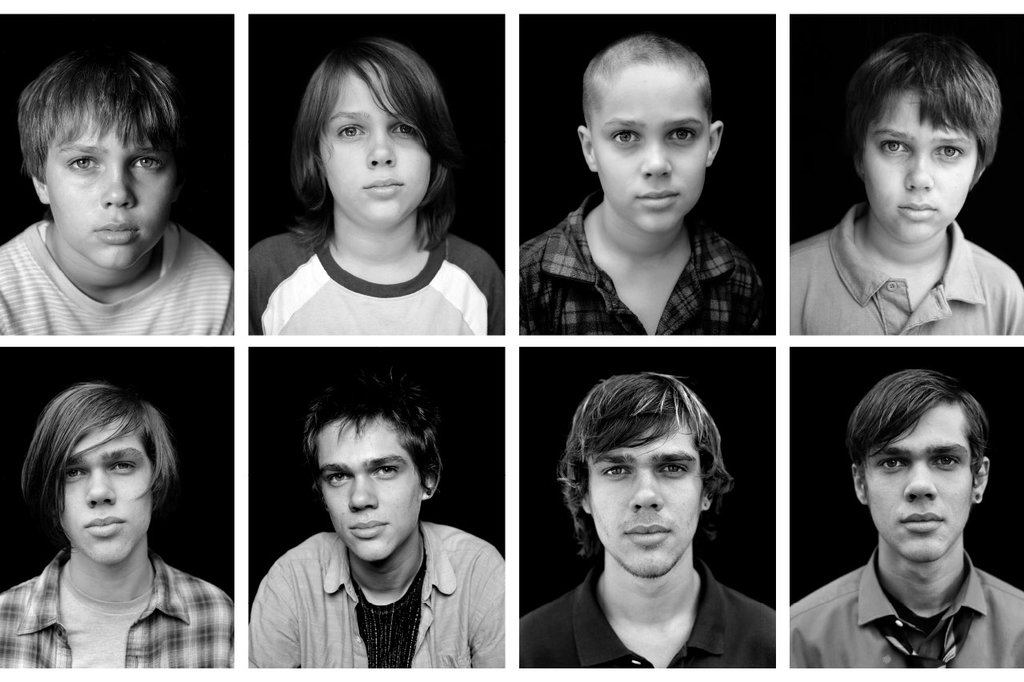
The most revolutionary film of the year, ambitious in both production and vision. A twelve-year project pioneered by writer/director Richard Linklater, Boyhood tells the story of Mason’s (Ellar Coltrane) childhood, chronicling his entire life from when he was six years old, up until when he turns 18 and leaves for college. The movie isn’t so much a story as it is a scrapbook of memories, and Linklater is pulling each photograph out of it just to show it to us. When he is younger, Ellar isn’t acting but living, behaving like any other child would in the moment because he is in the moment. As he gets older, his performance gets more stagnant and Coltrane becomes more of a surrogate for us to express our emotions through, rather than experiencing his own. In this day and age, it’s rare to find a film as real and honest as Boyhood is. Four stars.

2. X-men: Days of Future Past

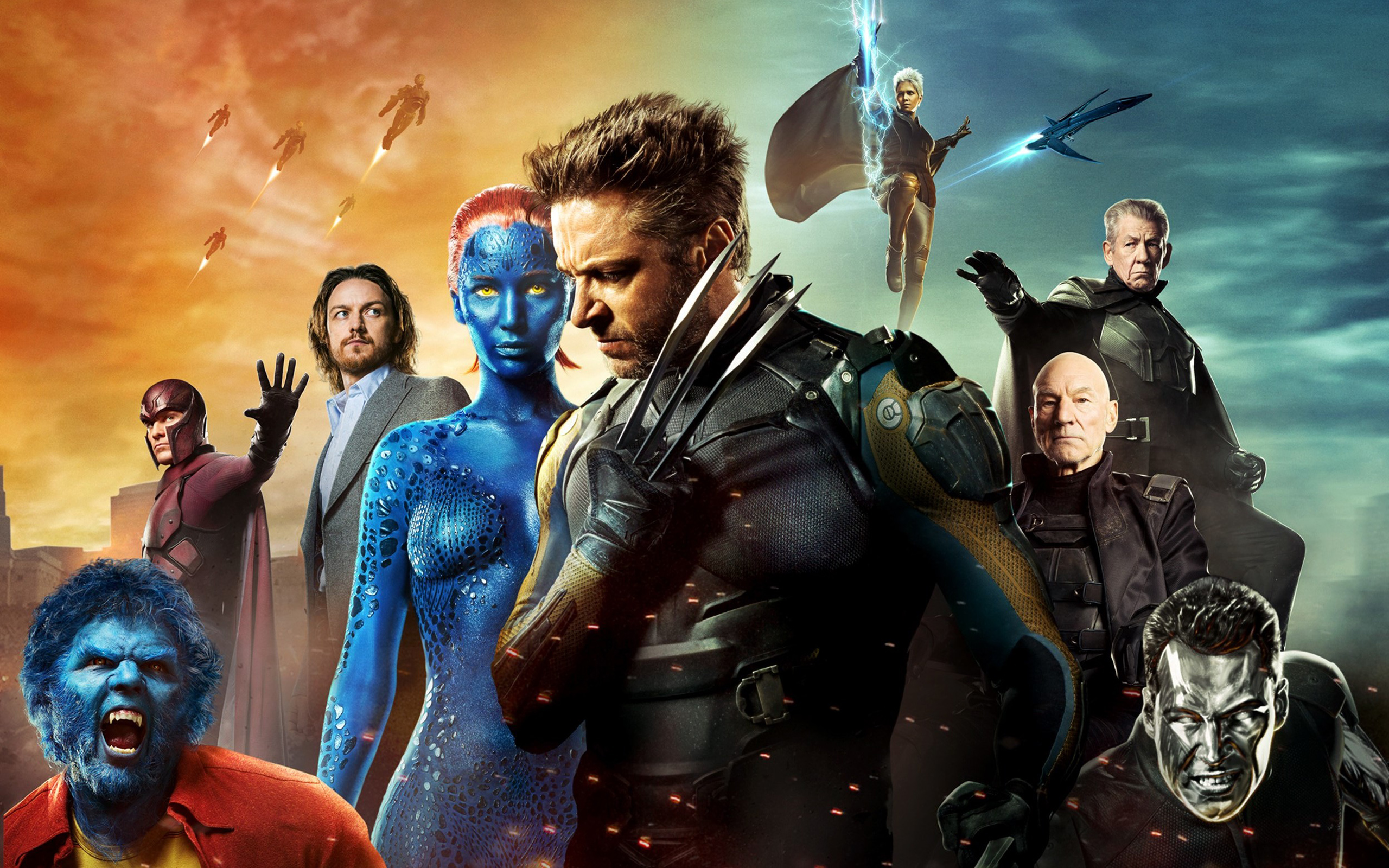
The best entry out of the X-men franchise, and the best superhero movie of the year. Serving as a sequel to both 2011’s X-men: First Class and 2006’s X-men: The Last Stand, X-men: Days of Future Past is set in the apocalyptic future where mutants are being exterminated by humanoid robots called “Sentinels”. Having only one chance to go back in time and stop this future from ever happening, Charles Xavier (Patrick Stewart) and Magneto (Ian McKellen) send Wolverine (Hugh Jackman) through time to their younger selves (Portrayed by James McAvoy and Michael Fassbender) so they can stop the triggering event and save the future. Directed by Bryan Singer, who formerly helmed the first two entries in the franchise, X-men: Days of Future Past is a game changer. It is not only a visually-dazzling and highly climactic sci-fi blockbuster: it is a vastly intelligent and contemplative story that focuses on its recurring themes of racism and xenophobia, once again bringing the consequences of discrimination to the forefront. X-men: Days of Future Past is one of those movies that restores your faith in the superhero genre. Four stars.

And finally, my number one film of the year is —

1. The Fault In Our Stars

Surprised? I’m not. The Fault In Our Stars is one of the most magical, heartbreaking, and genuine films you will ever see, and is more than worthy of being called the most emotional film of the year. Based off of the novel by John Green, The Fault In Our Stars follows the love story of two Cancer-stricken teenagers: the shy and book-loving Hazel Grace (Shailene Woodley) and the optimistic amputee Gus (Ansel Elgort). Written and directed by independent filmmaker Josh Boone, The Fault In Our Stars is one of the best stories ever translated from book to film. I initially was skeptical on seeing this film, considering how much it seemed to have been doused in rom-com syndrome. The reality couldn’t be further from the truth. Boone adapts Green’s story perfectly to the big screen, retaining everything in the novel from the visual details to the words that were written. But its Woodley and Elgort that sells it so well, their chemistry that vibrates so wonderfully with each other and leaves such an impression on you. Trust me when I say this isn’t your typical rom-com: it’s a heartfelt drama disguised as a tween movie, and it is the best of it’s kind. Four stars.

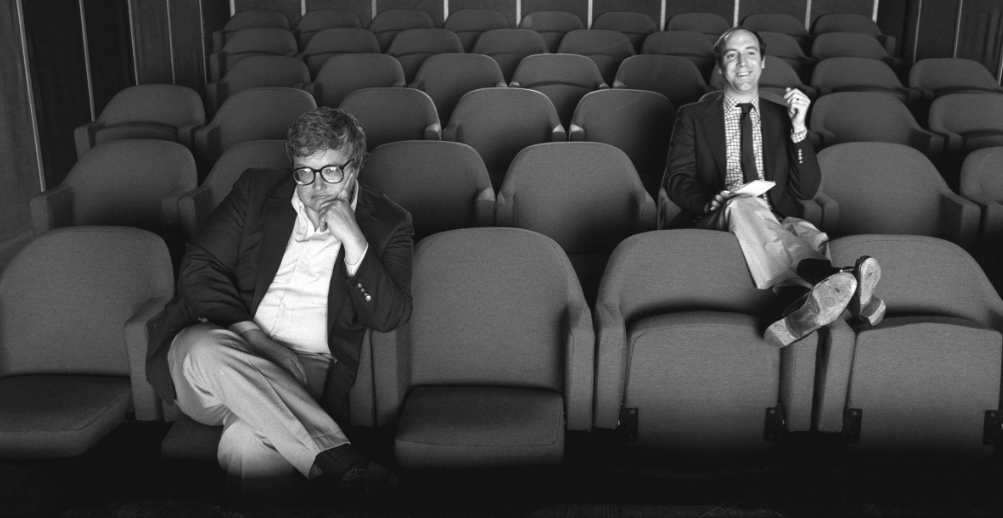
And finally, this year’s first Grand Jury Prize appropriately goes to Steve James’ documented biography Life Itself. Following Roger Ebert’s life and career from him growing up in Chicago, to when he got his first reporting job, to when he won the Nobel Prize for film criticism, to when he lost his best friend, to when he got Thyroid cancer, this film is everything that Roger Ebert is: funny, honest, heartfelt, unabashed, unflinching, and real. It doesn’t give you a peppered-up look at his life: it’s whole and accurate, as genuine as any of the reviews he’s written. I’m probably biased towards this subject, but the subject doesn’t count as long as it is handled well. James’ handles this story with respect and humility, and ends up telling a story about life itself rather than just limiting it to Roger’s story. It’s my favorite documentary of the year, and it brings me great pleasure to award my first Grand Jury Prize to this wonderful film tribute.

Honorable mentions include the creepy and morally ambiguous Nightcrawler, the funny yet stylish Guardians of the Galaxy, the humorously innovative The Lego Movie, and the quietly thrilling The Imitation Game, featuring the year’s best performance from actor Benedict Cumberbatch. Not all films can be honored at the end of the year compilations, but this year I was glad to have seen so many films and give each of them a chance to shine in their own way.

All the same, if you feel differently about some of the films on my list, or you have seen another film that deserves to be recognized, please comment about it. Or make your own list. Movies are deemed as great films not from individuals, but from the masses, and the only way you can tell if a movie has truly accomplished something is if it has the same effect on all its viewers.

On that note, my fellow moviegoers, I end with a classic line from my favorite film critic: “I’ll see you at the movies.”

– David Dunn

Tagged , , , , , , , , , , , , , , , , , , , , , , , , , , , , , , , , , , , , , , , , , , , , , , , , , , , , , , , , , , , , , , , , , , , , , , , , , , , , , , , , , ,

“BOYHOOD” Review (✫✫✫✫)

A scrapbook by Richard Linklater.

The main character’s name in Boyhood is not Mason. His name is also David. And Connor. And Warren. Aaron. Stacey. Tony. Eric. Steven. Ben. Richard. And so on and so forth until you’ve listed every masculine name in the dictionary. I probably went eight names over how many I needed to list, but you get my point. We’re doing more than just watching one boy’s journey into adulthood here. We’re watching ourselves grow with him.

Strange, I think. I don’t normally sympathize with characters to the point where I feel like I AM them. Relating to protagonists is a somewhat straightforward task; you merely need to introduce the character along with their conflict, and then let the filmmaker do his work to bringing their arc to life.

But with Boyhood, I face an interesting prospect: there is no one conflict that Mason faces in the story. Like myself and my closest family and friends, Mason’s conflict is life itself, complete with all of its blessings, gifts, challenges, and turmoils alike. If you’re still not getting the picture, let me put it to you this way; if I were a filmmaker, and I were adapting the full story of your life, would I be able to condense it into one or two events?

The answer is no, I couldn’t. There is a whole multitude of issues you’ve faced in your life, just like I did, and I’m sure we could turn those issues into ten or twelve more movies if we tried. Director Richard Linklater chose not to do that. With Boyhood, he took one boy’s life, a small child he found named Ellar Coltrane, and followed him from age six until age 18, gradually showing his life progress and the challenges he faced as he grew into a man year, by year, by year.

It’s fascinating I tell you, to watch a movie progress from one generation to another. I look at Ellar as a young boy obsessing over cartoons and action figures while his sister, portrayed by Linklater’s daughter Lorelei, constantly talks about makeup and Britney Spears. I look at these children’s parents, played by a significantly younger Patricia Arquette and Ethan Hawke, as they struggle to connect and be there for their children and to be the best parents they possibly can be. It’s interesting to see these children mature from young, simple-minded beings to young adults, trying to find their own paths in life while their parents mature from being those young adults to the older, more mature parents that have faced, and survived, every difficulty they could have ever faced.

It’s pointless to describe what the plot of the movie is like. What is the plot of the movie? Fill the movie with your life experiences, and you have the plot. I caught myself many times reliving past memories while watching the movie, sympathizing with Mason as I remember how I too faced issues such as bullying, peer pressure, puberty, growing up, and finding a place where I belonged.

It’s not so much a movie as it is a scrapbook of memories, and Linklater is merely showing the memories on screen like he’s pulling a photograph out of a book.

What of the performances then? Patricia and Ethan are the most emotive performances out of the movie, but that’s to be expected considering they’ve been working on this movie, among others, for literally a decade. Lorelei is cute as a child at the beginning of the film, but as the movie continues on, it begins to focus more on Ellar while Lorelei, more or less, fades in to the background.

That being said, Ellar isn’t the most compelling actor in the film. As a child at the beginning, he is the most believable, but that’s because he’s living, not acting, in the moment. When he’s playing with his friends or when he’s dressed up for the Harry Potter premiere, you know that’s him being excited in the moment, similar to how Drew Barrymore believed E.T. was real during the filming for E.T: The Extra Terrestrial. As he gets older, however, he gets less emotional about things and more or less goes through the motions wherever Linklater guides him.

At first, I thought this was an obvious criticism to the film, because how is a kid going to maintain his acting ability through 12 years of his life? As I look deeper, however, I realize that Ellar isn’t intended to give a performance. He isn’t meant to be an actor, but a surrogate, a character whose emotions and memories we fill in the film and then we sympathize with because those are the same emotions we faced when we were his age.

Mason goes through a lot in this movie. As a toddler, he witnesses his parents go through divorce. As a child, he faces abuse from his alcoholic stepfather. As a teenager, bullying. As a high schooler, heartbreak. This movie is so tangible that it made me want to grab hold of Mason. It made me want to hold him and hug him, telling him the same thing my mother told me when I was going through my own issues at his age.

I want to grab him and say to him, “You’re going to be okay, Mason. You’re going to be okay.”

Tagged , , , , , , , , , , , , , , , , , , , , , , , , ,

OSCAR REACTIONS 2013

Well, that was anti-climactic.

For those of you who live under a rock and don’t know who I’m talking about when I mention the word “oscar”, the 86th Academy Awards took place yesterday on ABC, hosted by comedian Ellen Degeneres. Needless to say, Degeneres was brilliant, taking selfies, buying pizza, crashing twitter, bringing the stage down for Jennifer Lawrence, and calling Liza Minelli a man all in one night. And yet, despite all of her efforts, the oscars seemed so… boring.

How did this happen? The nominees, dear reader. Out of the 24 categories in the ceremony I got twenty right, beating most of my Shorthorn peers and family members for the potluck we held that night. The most I’ve gotten previously was sixteen. I’m inclined to believe that the academy made the winners of these awards too obvious by building up too much hype of them during the buzz of the past few months.  Case in point: was there any argument that Frozen was going to take home best animated feature?

It doesn’t matter now, anyway. It happened, and I got 20 right out of 24 categories. Yes!!! Just because I predicted them correctly, however, doesn’t mean I need to be happy for their win. Let’s go through each of the categories and see whether or not they really deserved it or not…

BEST PICTURE (CORRECT!) The best picture of the year rightfully won best picture at the Academy Awards: Steve McQueen’s phenomenal, gripping, heart-wrenching, spellbinding and immensely powerful 12 Years A Slave won best picture. While I’m ecstatic for its win and could not agree more with the Academy’s consensus, I find it very strange that it won the Academy’s highest honor despite it only winning two other awards. But we’ll talk more about that later.

BEST DIRECTOR (CORRECT!) Also correctly predicted is Alfonso Cuaron for his nerve-wracking and tensely-directed sci-fi thriller Gravity. I already mentioned this in my predictions, but the best director award needs to be reserved for the best picture of the year. I loved Gravity with every fiber of my being, but it simply does not match the cinematic caliber to that of McQueen’s 12 Years A Slave. It would be like comparing The Dark Knight to that of Slumdog MillionaireThe Fugitive to that of Schindler’s List, or Jaws to that of One Flew Over The Cuckoos Nest. They are all ingenious, brilliant and incredibly memorable pictures, but the best picture of the year is awarded that because of the direction and treatment that it was given.

That’s not intended as an insult towards Cuaron, and I definitely believe he deserves it based on the physics and tension of the movie alone. If I’m thinking about which movie had the bigger impact, however, it’s no contest on which one it deserves to go to: McQueen for 12 Years A Slave. Nevertheless, I congratulate Cuaron on his many accomplishments regarding Gravity. Lord knows my heart stopped at least a few times while watching that picture.

BEST ACTOR (CORRECT!) Matthew McConaughey took home the award for best actor as a rowdy texas cowboy dying of AIDS in Dallas Buyers Club. While the award could have gone to either him or Chiwetel Ejiofor for 12 Years A Slave, there’s no denying the power, the energy, and the raw gravitas that he brought to a man’s desperate journey to survive. Plus, I love his acceptance speech and how he dedicated the award to God and to “himself in ten years”. That’s a wise goal that any man should strive for.

BEST ACTRESS (CORRECT!) Cate Blanchett won best actress for Woody Allen’s Blue Jasmine. While I have regretfully not seen the movie yet, I will say that the few scenes I have seen her in impressed me very much, and that she did a solid job portraying a deeply bothered woman who is in deep depression and alcohol addiction. Congratulations to her. I look forward to watching the film, as well as Blanchett’s performance in it.

BEST SUPPORTING ACTOR (CORRECT!) Did Michael Fassbender win best supporting actor like I wanted him to? No, he did not. Instead, Jared Leto took home the award portraying the transgender AIDS victim Rayon in Dallas Buyers Club

The more I think about it, the more ridiculous I think it is that the best picture winner of the year did not get recognized in so many categories. Why the snubbing from Fassbender? Half of the movie’s turmoil and conflict came from this despicable character, a man so inhumane and abominable that Calvin Candy from Django Unchained would have broke down in tears after seeing what this man forced people through. Fassbender was pivotal, aggressive, violent, and hateful as Edwin Epps, and incurred more emotions from audiences than that of a transgender AIDS patient in Dallas Buyers Club. I know 30 Seconds To Mars fans will hate me for saying this, but the more vital role needs to go to the more vital performance. I said it once, I’ll say it again: Leto is not as deserving in the award as Fassbender is.

Again, no disrespect, and I acknowledge that Leto gave a great performance in the picture. But like Cuaron with best direction, the more compelling presence needs to go to the more compelling artist. Sorry, Rayon.

BEST SUPPORTING ACTRESS (CORRECT!) Lupita Nyongo won (and deserved) the academy award for best supporting actress for her heartbreaking role as a desperate and depraved cotton picking slave in 12 Years A Slave. No qualms here.

BEST ORIGINAL SCREENPLAY (CORRECT!) I also correctly predicted that Spike Jonze would win the best original screenplay award for his sci-fi romance story Her. Comparing Her to the genius of David O’Russell’s American Hustle, I mentioned in my original predictions list that “just because its a smarter story doesn’t necessarily mean that it is a better one.” I do not retract my statement.

BEST ADAPTED SCREENPLAY (CORRECT!) John Ridley won best adapted screenplay for his incredibly well-documented 12 Years A Slave. He equally deserved it, as Solomon Northrup’s story, or legacy, could not have translated any better to the screen if the filmmakers tried. Great job, Ridley. You gave us an unforgettable and incredible story, the likes of which no one has seen since Steven Spielberg’s Schindler’s List. 

And this is the only other award 12 Years won for the night. No cinematography. No editing. No costume or production design. No supporting actor. No other award that would further substantiate and support its win for best picture.

Am I the only one that finds this completely ludicrous? To date, there are only three best picture winners to win only three academy awards. Those movies are The Godfather, Crash and Argo, and two of them didn’t even win in major categories. Seriously, what is going on? Why are we being so insubstantial towards movies that have been deemed the best of the year? Do academy voters not realize that by naming this the BEST PICTURE OF THE YEAR that they’re saying that its better than everything else? And according to this ceremony, not only are they saying that it is the equivalent of Dallas Buyers Club (they both won three academy awards), but that Gravity is superior to it with seven wins and no awarding of best picture.

Seriously. Make up your mind. I’m fine with you saying one picture is better than another, but substantiate that by what awards you give it. I seriously doubt that 12 Years is best picture because of its screenplay and its supporting actress alone. Likewise, I doubt that Gravity isn’t the best picture of the year because it has the best direction, camerawork, editing, sound mixing, and visual effects out of any other picture.

That’s all I ask, folks. Not preference. Fairness.

BEST FOREIGN LANGUAGE FILM (CORRECT!) The Great Beauty won for best foreign-language film. That’s the one that everyone saw, right? It obviously deserved to win.

BEST DOCUMENTARY FILM (INCORRECT!) I incorrectly predicted that Act Of Killing would win the award, but no, 20 Feet From Stardom took the award home, with featured artists on the film including music legends Mick Jagger, Bruce Springsteen and Stevie Wonder. I haven’t seen the film, so I have no place on commenting on it, but it seems odd that the Academy would reward a movie about background singers over that of a tragic confrontation of death and social issues. I’ve yet to see either of them though, so like I said, my opinion is invalid in this category.

BEST ANIMATED FILM (CORRECT!) Disney won best animated feature for Frozen. While I didn’t care much for it, I know it made a wide impact on its audience and that it will go on to be fondly remembered by many animated movie lovers for years to come. So congratulations for its win, even though I’m no fan of the cold weather this time around.

BEST ORIGINAL SONG (CORRECT!) Frozen won best original song for its memorable song “Let It Go”. It certainly didn’t win for Idina Menzel’s performance, that’s for sure. What the heck happened with her? Her pitch was all over the place, her control was wonky, and her whiny voice was the contrast of the powerful, beautifully controlled voice she exhibited in the movie itself. Seriously. What happened?

One song I’ve really been getting into recently (and I think you’ll agree with me) is Pharell Williams’ “Happy”. The performance proved why. Not only was it energetic, upbeat, and undeniably catchy, but Williams gave a great performance, he exhibited great control and showed very few differences from the studio version of his song. Menzel’s performance, in comparison, was completely and utterly horrendous.

But hey, I guess that’s why the award is called “best original song” and not “best performance”. Otherwise, I think we both what the turnout would be.

BEST ORIGINAL SCORE (CORRECT!) Steve Price took home the award for best original score with Gravity. He completely deserved it. Not only did it match the tension, edginess and unease of the movie, but it also gave a dignified sense of hope and accomplishment after a long journey of heart-pounding danger and peril. Listening to the soundtrack alone gave you the feeling of identity and survival, and Price was definitely the most deserving out of any nominee. Congrats to him for his win.

In the meantime, I’m still wondering where is Hans Zimmer’s nomination for Rush. Remind me again why this movie wasn’t nominated for anything?

BEST CINEMATOGRAPHY (CORRECT!) In 2011, Emanuel Lubewski was mercilessly snubbed for his masterful, Stanley Kubrick-esque camerawork in The Tree Of Life. If he didn’t win it this year, I was literally planning on flipping out.

Luckily, he did.

BEST FILM EDITING (CORRECT!) Another category that I felt 12 Years was superior to Gravity, yet it still lost to it. Must I keep beating a dead horse? Gravity was a more visually stellar and energetic picture. 12 Years was the more engaging and involved one. Part of that was because of how the film was put together in a traditionalist style that was reminiscent of Dylan Tichenor’s work from movies including There Will Be Blood and Brokeback Mountain, where he focused most of the runtime on the film’s subjects rather than worrying about flashy cuts or transitions. Film editing is one of the most important part of storytelling, and what have I been saying is the best story of the year? 12 Years A Slave.

I’m not going to drag this out though. Gravity was a great picture, and editors Alfonso Cuaron and Mark Sanger definitely reached outside the box to accomplish things visually no other film did this year. It did a good job. Moving on.

BEST PRODUCTION DESIGN (CORRECT!) The Great Gatsby won for best production design. Considering the sets were the most colorful and visually appealing out of the year, that isn’t very surprising.

BEST COSTUME DESIGN (INCORRECT!) Unfortunately, I predicted this category wrong, thinking that 12 Years was going to get this one. The only reason I went with that instead of winner The Great Gatsby was because I knew Catherine Martin was already going to win for best production design, and any more than that would have been greedy. I forgot that “spreading the wealth” isn’t a phrase the academy is most well known for.

BEST MAKEUP (CORRECT!) Thankfully, Dallas Buyers Club won for best makeup and hairstyling. As long as Jackass: Bad Grandpa didn’t walk home with the award, I’m satisfied.

BEST SOUND EDITING (CORRECT!) Gravity won.

BEST SOUND MIXING (CORRECT!) Gravity won. Again.

BEST VISUAL EFFECTS (CORRECT!) If you even thought this award was going to anything other than Gravity, you’re either insane, or blind.

And at last, the long-dreaded short film categories.

BEST LIVE-ACTION SHORT FILM (CORRECT!) Surprisingly, I got this category correct with predicting Helium. I haven’t seen the film though, so it was only by sheer luck that I got this right.

BEST ANIMATED SHORT FILM (INCORRECT!) Mr. Hublot took home this award. That’s surprising, considering how clever and fun Get A Horse! was, but nevermind. I haven’t seen the movie, so I can’t comment on it.

BEST DOCUMENTARY SHORT (INCORRECT!) The Lady In Number 6: Music Saved My Life. Again, just like any other films in these categories, I haven’t seen it, so how would you expect me to get it right? You might as well blindfold me and ask me to just write on the flipping ballot.

Overall, this has been a fun ceremony, and I’m grateful to Ellen Degeneres for making it a happy-go-lucky and loveably quirky time. Just please, make the ceremony less predictable next time, okay? I’d rather not have a film come in and just know that its going to dominate in all of the categories. You would have been better calling it “The First Annual Gravity Awards”.

-David Dunn

Tagged , , , , , , , , , , , , , , , , , , , , , , , , , , , , , ,

Vanessa Hudgens Is The Apple Of Our Eyes

I once again had the pleasure of sitting down at a journalist’s roundtable for an in-person Q&A with actress/singer/songwriter Vanessa Hudgens, who came to Dallas to provide publicity for her newest role in a wonderful little picture called Gimme Shelter, directed by Ron KraussHudgens, who started off her career as an energetic young singer in High School Musical has been everywhere and back again in her career, with film roles ranging from the family-friendly Thunderbirds and Bandslam, to that of the more adult-oriented Sucker Punch and Spring Breakers.

With movies like those under her belt, I’ll admit I went into the screening a little less than underwhelmed. After watching it, however, I couldn’t have been more surprised. The movie is not only emotional, relevant, powerful and provocative: Hudgens gives the performance of her career, portraying a troubled pregnant teen named Apple who runs away from her abusive mother in order to find a better life. Hudgens was so striking, so compelling and authentic that for more than half of the movie I barely recognized her.

I, however, did recognize the woman who came into our conference room, and just like with Joseph Gordon-Levitt, I was instantly surprised at how… human she was. Society builds up actors like they’re otherworldly deities of the sort, and that couldn’t be further from the truth. The woman we were speaking to was not Vanessa Hudgens, but rather, a beautiful, humble young actress who had dreams, goals and aspirations and was at a high point at this portion of her life.

All of the publications were very grateful for the opportunity to introduce ourselves to her, myself included. The following transcript is a compilation of their questions and mine. See if you can guess which one is which.

Question: Hello Ms. Hudgens. How are you today?

Vanessa Hudgens: Good, how are you guys?

Q: Excellent. How are you handling the Dallas weather?

VH: It’s really not bad. I was in Chicago a few weeks ago.

Q: I have some family up in Chicago, its horrible up there. 

VH: It’s crazy, I was there for one day and it was the coldest day they’ve ever had.

Q: I’m sorry. 

VH: The wind was just so blistery. It was cold.

Q: So how’d you come to get involved with this project?

VH: Just like I would with any other one. My agent sent me a script, no urgency behind it at all, and it was just another one that was floating around. I gave it a read, and I knew that it was going to be my next project. I went in, I read for Ron [the director], sent him an email, and through the power of persuasion, I got the part.

Q: What was the most difficult experience for you during filming?

VH: You know, it’s really interesting because I don’t think of it as difficult. I think of it as exciting, because I was so passionate about the project I was more than willing to put in the work. The deeper I got, the more thrilled I became. I mean, I did have a moment where I personally broke down just because I was really uncomfortable in one of the scenes and I was afraid of someone getting hurt. Aside from that, I had Ron by my side, who was constantly putting me in the right direction, and I would kind of celebrate myself after every scene. It was a fun but challenging process.

Q: What scene specifically was that? 

VH: It’s so random, it’s the scene where I’m walking on the street and a pimp rolls up to me right before I get into a car crash. They wanted me to drive as close to him as possible. His name was Jeff, he was my bodyguard while we were filming in the dodgy areas. I just don’t like the idea of people getting hurt, and it just really freaked me out. It gave me serious anxiety, and I had to stop and remind myself how to breathe.

Q: Apple was dragged a bunch of directions in the movie, how do you think that could possibly parallel your career in the past few years? 

VH: I mean, Apple is strong. She’s such a survivor, and I love strong women. That’s one thing that really attracted me to her. But she does take her life into her own hands, and she doesn’t look at her circumstance or her condition and she has her own will. I definitely think that reflects my career. I had my circumstance, but I am taking things into my own hands as well and just fighting for the things that I want.

Q: Did you have any conversations with the real-life Apple about her relationship with the Chaplin? I mean, James Earl Jones is only in three scenes of the movie.

VH: Well, not necessarily. I feel like the religion and faith aspect is something that I see more so now after being able to see what it’s doing to people in the way that its connecting with people. But in the present moment, that wasn’t necessarily my focus.

Q: There is a moment early in the film where Apple is giving herself a pep talk before she cuts nearly all of her hair off as a sort of act of rebellion towards her cruel mother. Was that acting or did you really have to give yourself a pep talk before you did that?

VH: I mean, I would always try to stare at myself in the mirror before a scene just so I can remember who I’m playing, and I think that really just set the tone for me. But in that scene, I was cutting a wig. That would be way to messy to try to do that on film.

Q: I was just thinking of Joseph Gordon-Levitt with 50/50 in that scene.

VH: Yeah.

Q: And how did you prepare yourself with the birthing scene? That was one of the most moving scenes in that movie.

VH: Thank you, all of it. I mean, every single scene was just putting myself in that circumstance. I popped a bunch of blood vessels in my neck and in my cheek afterwards I realized, so I was really going for it. The most powerful part of that for me was when they put the baby on my chest. That was when the acting disappeared. I mean, there’s nothing more powerful and profound than childbirth. It’s a miracle. So to have that moment, even though I know its acting and I know its not my baby, putting myself in that circumstance it just really resonated in my heart and filled me with so much love and hope and its really overwhelming.

Q: Do you still stay in touch with the girls at the shelter?

VH: Yeah, one in specific, Darlisha, she’s the one who had the events happen to her with the mother, and she was in the shelter when I was there. We still chat, she’s amazing, she just got her drivers license which she’s very excited about, she’s studying to be a nurse, and she’s really starting to love herself and just seeing her transformation is really, really beautiful. She’s being released into this world, and she’s starting to become independent. And now she’s got a beautiful little boy. He’s amazing.

Q: What was it like working with Rosario Dawson?

VH: Incredible. She’s amazing. That woman is a powerhouse. She consistently surprises me in every single thing that she does. Just her dedication and her hard work and just how she really spreads her act over a wide spectrum. She’s an amazing actress, she really understood this character. I think she came from a poverty family growing up and she got it. She had seen this side of motherhood. She connected, I connected, we both understood our characters, so when we worked together it was just organic. Things were just happening naturally and we just let it play out. It was nice.

Q: Regarding your past filmography, how much different taking on this role and were you a little intimidated taking it on?

VH: Yeah, of course. It’s terrifying to really dive into something and not know if you can actually go there because you’ve never tried to before, and to know that it’s going to be documented forever. So there really is no second chances with it. It’s a complete 180. I’ve never really been able to transform myself like this. Everything. I mean, the way that I walked, the way that I talked, the way that I moved my face, it was so much fun. Because its really just creating someone new and living within that. I really had such a blast. If I could do something like this again but a completely different character I would jump at it. Because it’s really a dream role.

Q: I’d love to see it again. 

VH: Oh, it’ll happen.

Q: How was it walking away from it? 

VH: It sucked. It was really hard just because I think subconsciously, I stayed in the character the entire time. I put in so much work into becoming that person, stepping out of it would just be taking away from the work that I put in. So I got home, and I looked in the mirror, and I still saw Apple. I didn’t see Vanessa, I didn’t know who Vanessa was, I didn’t know what she was interested in, I just completely lost sight of myself. It took a while, it took a lot of time just taking care of myself and giving myself love and getting back in my body, and just being comfortable with me again. It was tough though.

Q: What are your expectations of the movie?

VH: I expect it to bring people healing, and to bring them a wider view of the world and of human nature. I think that a lot of humans naturally suppress pain and I think this movie brings it back up again, and you have to sit in that and you have to feel it and you have to deal with it. So I think from that brings a lot of healing and compassion. I got so much out of this movie myself and that’s what I love about it, is that it touches on so many different subjects. There’s abandonment, there’s abortion, there’s homelessness, there’s abuse, so I think everyone is going to get something different out of it.

-David Dunn

Tagged , , , , , , , , , , , , , , , , ,

“AMERICAN HUSTLE” Review (✫✫✫)

FBI trying to hustle politicians by hustling con artists.

“We’re always conning other people,” says a slurred, yet sure voice in the background. “It’s in our nature. We even con ourselves.” These words are coming from the mouth that belongs to Irving Rosenfeld (Christian Bale), a con artist who quickly learned what it meant to grow up and survive in a harsh economy. Irving is the sort of guy you wouldn’t want to interact with out in public. He is grossly out of shape, he smells of old hairspray and cologne, his crafty eyes hide behind a dark pair of shades, and his diet consists of nothing but beer, fast food and cigars. From an outward appearance, Irving doesn’t really make a good impression. But man, can that guy talk a good game.

After rushing through Irving’s very brief childhood, we are quickly introduced to Sydney Prosser (Amy Adams), a woman in her mid-thirties whose beauty is both ageless and captivating. Despite his nauseating physical appearance, Sydney almost instantly falls in love with Irving, and Irving falls in love with her too. So much so that he discloses his illegal business with her, asking her to become a part of him scamming other people out of their hard-earned cash and checks.

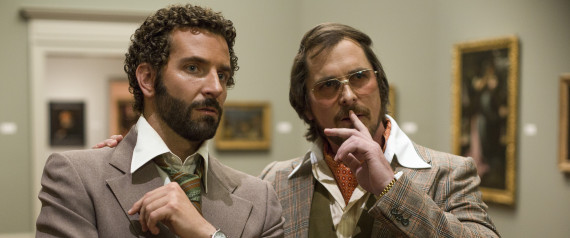
That’s all I’m going to get into as far as the plot synopsis goes. Believe me, I haven’t even gotten to the surface of it. There’s an FBI agent trying to catch them named Richie DiMaso (Bradley Cooper), there’s a New Jersey mayor played by Jeremy Renner somewhere in the mix, Irving has a son and a wife he’s committed to named Rosalyn (Jennifer Lawrence). There’s even a mobster somewhere in this movie where an actor makes a cameo appearance, but I won’t spoil the surprise by revealing who it is (hint hint: He’s got some bad ideas in his head).

Point being: this is a smart movie. It’s funny, original, intelligent, and thoughtful, an observant portrait that looks at the moral and financial struggles of these characters and what impact their actions have on the people in their lives. Part of this, no doubt, is because of the cast’s mastery at delivery. Part of it is also because its writer-director is equally as funny, original, intelligent, and thoughtful as the story is. David O’Russell, who was nominated for best directing and writing Oscars for the past few years now (For Silver Linings Playbook last year and The Fighter in 2010), returns yet again with the same wit, charm, and complexion that made his previous films both unique and entertaining.

The dialogue is authentic, almost like it pops off of the pages of the screenplay just as much as it does in the movie. How though? This is, after all, a work of fiction, right? Wrong. The plot is just is like Irving’s deceptions: they’re only half fake. The movie is based on the real-life ASCAM sting operations of the late 1970’s, in which the FBI arrested over 31 individuals of congress and 7 were convicted of bribery and conspiracy. That sort of realism translates brilliantly to the screen, and makes the conversations characters share feel so personal. Make no mistake, fellow reader: this is, in every definition, a heist picture, because everyone is all after something and are willing to manipulate everyone in order to get to it first.

The cast is unforgettable. So much so that I can’t even pick a favorite among them. Bale is as talented as ever in this movie, a brilliant and dedicated method actor who has immersed himself so much into a role that its hard to imagine that at one point he was Patrick Bateman or Bruce Wayne. Lawrence and Adams are excellent female leads, and are great at expressing how conflicted Irving feels towards the both of them as lovers. Renner is great as the New Jersey mayor, a loving and kind-hearted man, father, and husband who just wants the best for everybody, but ends up making the wrong decisions in trying to do so. If I had to pick a favorite, it would probably be Bradley Cooper, only because he is so passionate and wacky that he could have been redone as a cartoon character. Like I said though, I can’t pick one. This cast is so talented and skilled in their roles that to pick one performance over another would be considered a sin. They are just as responsible for bringing this story to life as David O’Russell is.

This movie has all of the elements of being Oscar-worthy material: a great story, dialogue, characters, direction, and a great cast that fills these figures with vibrant energy and personality. The only real problem with this movie is the setup, and that’s unfortunate because that’s one of the most important parts of any movie.

Let me provide an example: when I first watched Goodfellas, what absorbed me into that picture was the first 15 minutes, a little italian boy learning about the mafia as a child, and the first narration we hear being “Ever since I can remember, I’ve always wanted to be a gangster.” Another one? In the opening scene of There Will Be Blood, we see a touching yet tragic portrait of a man seeing one of his workers die in an oil deposit, leaving behind an infant who can’t even speak, and Daniel Plainview deciding, against his better judgement, to adopt him as his own. Do I even need to mention Up?

All of those pictures started off with a bang because they gave us a perspective into the character’s history before getting into the meat of the story. Not that there needs to be a “How-to” guide for making opening sequences, but American Hustle literally flashes Irving’s childhood for about a minute before throwing us into the plot. I’m all for “show-don’t-tell” stories where they’re all situational, strictly limited to being set in their own present (Such as The King’s Speech or Black Hawk Down), but this one felt too much like being thrown into cold water when you can’t even swim.

Despite my views, I know critics already have their opinions established on this movie. They’re going to say its a masterpiece. That it is masterfully written and acted (which it is) and that it is going going to be nominated for multiple Academy Awards (which it will be as well). What critics won’t realize is the movie itself might be a con, making people believe that it is better than it actually is.

Well, if it is a scam, and David O’Russell is the con artist, then all I’m going to say is that he did a damn good job at it.

Post-script: For you irresponsible parents that are considering taking your teenagers to see this movie, don’t. The MPAA rated this movie R for “pervasive language, some sexual content and brief violence.” The violence is very brief and honestly not a large problem. The sexual content, however, is profuse because of Irving’s two sexual partners, and the movie has no shame for showing us any of it. I noticed over 100 F-words.

Tagged , , , , , , , , , , , , , , , , , , , , , , , , , , ,