Charlize Theron buckles up for Fast & Furious 8

Looks like Charlize Theron is making Fast & Furiosa.

The Oscar-winning actress, whose performances have been featured in films including The Cider House Rules, Monster, and recently Mad Max: Fury Road, has been confirmed to appear in the upcoming Fast & Furious 8. The sequel will have Vin Diesel and others racing against her, as it was reported that she will be playing the film’s villain.

Personally, I see no need to have a Fast & Furious 8, 9, 10, or the upcoming spin-offs that will be attached to the series. It’s too long. Waaaaayy too long. If you’re passing The Lord of the Rings, Star Wars, and Harry Potter series’, you’re pushing it. There’s no reason to have this be a 10-movie franchise, then to plan more on top of that.

Grievances aside, I’m happy to hear that Theron is going to be the movie’s antagonist. Her recent performances in Mad Max: Fury Road and Prometheus shows that she’s still got the chops, and putting her in an opposing role with the rest of the cast seems like it’ll give her a good opportunity to stretch her “villain” muscles. The film reunites Theron with Straight Outta Compton director F. Gary Gray, their first collaboration being the 2003 heist film The Italian Job.

What do you guys think? Are you excited that Theron is joining Fast & Furious, or do you wish she’d get off at the next stop sign? Comment below, let me know.

– David Dunn

SOURCE: ComingSoon.net, Entertainment Weekly

“THE DARK KNIGHT” Review (✫✫✫✫)

Two madmen at war with each other and themselves.

Editor’s note: I was originally going to hold off on publishing this review due to an upcoming in-depth article I’m working on. However, upon learning that today would have been Heath Ledger’s 37th birthday, I couldn’t miss the opportunity to honor the late actor’s magnificent work. So, without further adieu, here is my review for the magnificent superhero epic that is ‘The Dark Knight.’

The Dark Knight is a moral dilemma about two madmen trying to make sense out of their own worlds. One hides his madness with a mask. The other demonstrates it proudly with a crooked smile and a demented laugh. We define one as “good” and the other as “bad”, but really, what’s the real difference between these two? They are both traumatized by tragedies they’ve experienced at very young ages, and one was clearly more devastating than the other. Just switch around Bruce Wayne’s childhood with that of the Joker’s for a second. Is it really that far-fetched to think that they could have grown up to become the other person?

It’s difficult to draw such similar parallels between a film’s protagonist and antagonist, especially in a superhero movie where everything is supposed to be so cut and dry. But Christopher Nolan orchestrates his characters masterfully here in The Dark Knight, a film that feels more like a Shakespearean tragedy than it does as a superhero blockbuster. It isn’t a film that is driven by big-budget fights and special effects, although those technical elements definitely don’t suffer in the movie all the same. This is a movie driven by character’s ambitions, desires, loss, and pain. Rarely does a film reach into such dark depths and have such outstanding payoff.

This movie is, of course, the sequel to Nolan’s highly praised 2005 prequel Batman Begins, which too succeeds in showing Bruce Wayne not as a comic book icon, but as a human being, reliably portrayed by Christian Bale with his own complexions and regrets. The Dark Knight continues Bruce’s story, but takes focus off of Batman and puts a larger focus on Gotham, the city Bruce is sworn to protect. In doing that, Nolan inadvertently creates another character in the Batman story, and you only need to look at its citizens to see what the character is like. It’s manipulative, murderous, deceitful, selfish, and crooked, with the only evidence of decency in only a handful of citizens wanting to do the right thing.

Heath Ledger’s Joker, of course, sees the sick nature of Gotham and imposes his own version of justice upon the city. From a different perspective, could the Joker be considered the hero of the story? Both Batman and the Joker are vigilantes in their own ways. The difference is who they see as the main poison to Gotham.

Like any other superhero, Batman sees the criminals and mob bosses as the biggest culprits to Gotham’s decay. The Joker, however, sees it differently. He sees the city’s politicians, judges, police officers, and commissioners as the real criminals. Technically, neither is wrong. All of these people are responsible for the state that Gotham is in, and Batman and Joker are just picking two different sides to the same coin. Our instinct tells us to root for Batman, mostly because we are the everyday regular citizen he’s fighting to protect. But the Joker has been hurt day-in and day-out by regular citizens. So has Batman. His parents were killed by a citizen of Gotham. The Joker forces citizens to kill each other in The Dark Knight. In witnessing all of this murder and corruption taking place, you can’t help but ask yourself one question: are we even worth saving?

This gloomy idea of morality has been explored by Christopher Nolan before. Indeed, his career has been defined by character’s questioning ethics in 2000’s Memento and 2006’s The Prestige. Look at those films and how eerily similar they are to The Dark Knight. Look at the parallels not just in character and theme, but in tone and aesthetic. Look at how closely they are shot. Look at how tightly the action is edited together, yet coherent enough to understand everything we need to. Look at the character’s conflicts that test them and, in some cases, even break them. Look at their state of mind and security, and how quickly they decay in the midst of crippling loss, paranoia, and distrust.

This is why The Dark Knight is almost universally seen as the best comic book movie of all time: because it is not a comic book movie. Nolan didn’t film it like a comic book movie. He didn’t want to make a comic book movie, or at least, in the conventional sense. Everything involved with this movie, from the writing to the framing to the visual effects to the acting, was constructed with the idea that Nolan and Warner Bros. were making something much more than a comic book movie. They were making a crime film, a psychological drama, and a visual poem in disguise as a superhero blockbuster.

Just to clarify, I’m not knocking the superhero genre. Some of the greatest movies of all time spawned out of that genre, and if done right, it can be the best out of any of the other film genres. Christopher Reeve’s Superman and Superman II humanized a superhero that was anything but human. Spider-Man made an ordinary character extraordinary. X2 embedded a message of prejudice into an action-fueled sci-fi thriller.

Great superhero movies have come before The Dark Knight, and many more will come after. But what makes The Dark Knight unique is not its status as a quote-unquote “superhero” movie. It is its mirroring psychology that makes you question what is truly right or wrong. Superhero movies don’t normally do that. They normally provide our hero and our villain and have them go at each other in fun, comic-booky fashion. But that wasn’t enough for The Dark Knight. It needed to ask why they were going after each other, and what was at stake if they didn’t do so? This is one of the rare action movies that questions if our hero is actually doing the right thing, and if he’s fighting this labeled villainy in the right way.

In these characterizations, the performances are key, and Bale and Ledger alike to brilliant work in not just bringing their characters to life, but their beliefs as well. Ledger has received all the acclaim and the Academy Award for best supporting actor as the Joker, and he’s right to. He’s delivered a downright chilling portrayal of a mentally disturbed madman: a brilliant finish to a long and successful career up until his death in 2008. Yet, I don’t think many people notice Bale’s nuanced performance as a man struggling to know and do the right thing. That’s genuinely a shame, because the movie is a success due to their acting together, not just one performance over the other. Again, they treat their characters not as superheros and supervillains, but as competing complexions, battling each other not for the sake of justice, but for the sake of proving their own personally defined morality. At the end of the day, isn’t the battle of morality more powerful than any physical battle can ever be?

The film builds up to it’s highly-anticipated climax in classic Nolan fashion. The final battle, however, is not between our hero and villain, but instead between the two sides of Gotham. One side has been convicted by the law. The other has been convicted by God. And in their convictions, both sides are forced to make a choice. I won’t spoil what happens, but I will say this: they make the right one.

Batman and Joker are not two different people. They are two sides to the same coin. We too exist on a coin and have the equal potential of being either Batman or the Joker. It’s only a matter of what we choose to be.

Tagged , , , , , , , , , , , , , , , , , , , , , , , , , , , , , , , , , ,

The Biggest Problem With ‘Batman v Superman: Dawn of Justice’

It’s been a week after the release of Batman v Superman: Dawn of Justice and I still can’t shut up about it. Can anybody? Whether you see it as good or bad, you no doubt can see the impact it’s having on the comic book and movie communities alike. Some fans like it. Most critics don’t. But regardless, Batman v Superman has caused a massive divide in the DC Comics fan base and on how to best proceed with the DC cinematic universe.

I myself didn’t care much for it. I gave the movie two stars out of four, citing Ben Affleck and Henry Cavill’s performances as the best things about the movie, but Jesse Eisenberg and the editing as the worst things. As a comic book movie, fans might see the movie as passable. But as a movie standing on its own two feet, I found it to be pitiful. At least be honest with yourselves, DC fans: if this movie had anyone as its leads besides Batman and Superman, you would not have enjoyed this movie as much.

My biggest gripe with the movie was one that I didn’t even mention in my review. I had a good reason for doing so too: it had to do with the movie’s ending. Even now, I still hesitate to mention it because of my extreme hatred for spoilers. Yeah I didn’t enjoy the movie, but that doesn’t mean that somebody else out there won’t, and the last thing I want to do is to ruin the experience for them.

All the same, if you’ve already seen the movie and are curious as to my biggest gripe with the film, check out my commentary video below to see my biggest problem with Batman v Superman and the upcoming DC cinematic universe.

And of course, obvious spoiler warning ahead.

– David Dunn

Tagged , , , , , , , , , , ,

“BATMAN V SUPERMAN: DAWN OF JUSTICE” Review (✫✫)

How’s does the peach tea taste, Mr. Wayne?

Let’s start with the obvious: Batman v Superman: Dawn of Justice is the worst title for a superhero movie since Superman IV: The Quest For Peace. And yet, it’s so appropriate for a movie like this. The title is on-the-nose, hokey, ridiculous, and clearly unfocused, just like the movie itself is.

Taking place a few years after the events of Man of Steel, Batman v…. screw it, I’m not going to repeatedly spell out a bad title. BvS: DOJ picks up in the aftermath of the disaster that struck Metropolis during the battle between Superman (Henry Cavill) and the Kryptonian army. The city is dismantled. Hundreds of casualties have been named. A memorial that evokes the tragedy of 9/11 sits in the heart of the city, right next to a monument dedicated to the superhero that saved everyone. It is a tense time for Metropolis as they’re trying to rebuild, and everyone has one question on their minds: Is Superman doing more harm than good?

Enter billionaire Bruce Wayne (Ben Affleck), who unequivocally sees Superman as mankind’s enemy. During the day of the attack, Superman fought inside of one of Wayne’s corporate buildings, which had many of his employees still inside when it fell. Wayne took the hit very hard. He’s too familiar with losing a family, and here he lost his second one. Now, he once again adopts his criminal-fighting personality of Batman with one focus: to kill the Superman.

Let me start with the positives. First of all, Ben Affleck was incredible as Bruce Wayne and Batman. That genuinely surprises me, because A) Christian Bale’s Batman is still fresh on my mind, and B) Ben Affleck isn’t normally a great actor, minus the movies that he’s written or directed. This movie is a game changer for him. He’s playing Batman with a more grim facade; an older, meaner, more coarse attitude that is even more distrusting of people than The Dark Knight’s Batman was. This is not the same Batman that you’re familiar with. His psychological trauma and torture tactics have intensified, and he isn’t above killing criminals. This might be maddening for some comic purists out there, but I found it to be a refreshing take on the caped crusader. After all, in a DC Universe where you’re fighting for your life against space aliens and Frankenstein monsters, I think it’s reasonable to say that the stakes have been raised on all fronts.

And the Batman/Superman dynamic was equally amazing. The thing I liked most about this movie, and what I think most fans were looking forward to, was the contrasting nature between Batman and Superman. I’m not talking about the fight itself, although the buildup and the payoff to that sequence definitely did not disappoint. I’m talking about the real conflicting ideals of Batman versus Superman. Batman is a mortal who has faced cuts, bruises, and bloodshed all his life. Superman is an indestructible alien from outer space. Batman believes torture and intimidation are effective tactics for fighting crime. Superman finds those things to be disturbing and unnecessary. Batman sees a Kyryptonian alien as mankind’s greatest threat. Superman sees it as a vigilante that answers to no one. I was expecting their ideals to clash in this movie, but I wasn’t expecting to be rooting for them both when the film built to its climactic titular fight. The fact that we’re engaged in a superhero beatdown between our two protagonists and we can understand where both are coming from is the evidence of strong, smart writing, and Affleck and Cavill alike do very well in bouncing their personalities off of each other to make a strong, rivalrous relationship between the two.

Unfortunately, as far as positives for the movie goes, it ends there. Where do I start with the mistakes of Batman v Superman? First of all, its editor David Brenner needed to be fired. Either him or director Zack Snyder, depending on which one decided this movie needed to be two hours and 30 minutes long. There were so many unecessary scenes in the movie, so many sequences that added nothing and truly took away from the larger conflict between Batman, Superman, and our mischievous third player Lex Luthor (Jesse Eisenberg). Don’t worry, we’ll get to him in a bit.

Look at the first act as an example of the film’s poor editing. If Brenner knew what he was doing, he would open the film right on the destruction going on in Metropolis, with Bruce frantically driving and running around in a quickly collapsing city trying to save as many people as he can. That was a great scene that showed Bruce’s vulnerability, and even more rarely, his fear. We didn’t start with that though. We start with the same sequence we’ve seen in every Batman movie now, which is the death of Bruce’s parents. Why? Why do we need to see this again? Haven’t we seen it enough in Tim Burton and Christopher Nolan’s Batman movies? What is the purpose in showing this again? And also, when a younger Bruce falls into the cavern and becomes enveloped in bats, is there any reason to show him as a levitating Bat messiah floating to the top of the cave?

I’m blaming Brenner because he didn’t cut the sequence out, but the truth is it is just as much Snyder’s fault as it is Brenner’s. Why did he choose to even film these scenes in the first place? Didn’t either of them see that these scenes weren’t necessary? That the dream and hallucination sequences added nothing to the plot, that the easter eggs to the DC Universe did nothing to develop the story, or that the epilogue of the film was sappy and dragged out? There were so many stupid scenes in this movie that made no sense and formed no coherency with the greater ideas of the film. You could have cut 30 minutes from the film, make it shorter than The Dark Knight, and have a better movie.

And then we get to Eisenberg. Ugh. Remind me again why he is Lex Luthor? I get that he’s a great actor and that he was enthusiastic for the role. That doesn’t make him right for it, and he’s definitely not right for it.

I’ll give Eisenberg this: he tried. But he tried too hard. We’re not seeing Lex Luthor here as much as we are seeing a B-grade Joker or Riddler. He’s not the smart, calculated supervillain you remember. He’s ecstatic, chaotic, and impulsive, which makes him a good villain archetype, but not a good Lex Luthor. Eisenberg throws himself into the role and succeeds in portraying it, but it’s not his portrayal that’s the problem. It’s the way him and Snyder envision the character, as a psychotic messenger of doom rather than the intelligent, well-crafted, yet connivingly evil gentlemen that he’s supposed to be. If Batman was my favorite part of the movie, Lex Luthor was my least favorite. He’s that far off of the map from what Superman’s arch-nemesis is supposed to be.

What we end up having then, is an out-of-focus movie that does a lot of things right, and then equally does a lot of things wrong. That’s the most disappointing thing about this movie, is seeing its potential and how wasted it is by stupid editing and even stupider characters. And this is the movie that’s supposed to set up the Justice League films. Pray that those movies display smarter storytelling and editing. And a better title.

Tagged , , , , , , , , , , , , , , , , , , , , , , , , , , , , , , , , , , , , , , ,

Living On The Autism Spectrum

I think it’s time I made a confession, although I consider it less of a confession and more of a confirmation. I have Asperger’s syndrome.

“What’s that?” you might ask. Asperger’s is a mental disorder that has extreme irregularities with social development and nonverbal communication. Think of Mark Zuckerberg from The Social Network, Steve Jobs or Michael Burry from The Big Short, and you’ll have a pretty good idea of what the disease is like. It’s a condition that exists on the Autism spectrum, and many doctors consider it a high-functioning form of Autism.

In a way, I guess you could say I’m half Autistic.

I’ve known this for a long time. In many ways, I’ve always known. Ever since I was a child, I struggled to understand my peers and to talk and communicate with them. I couldn’t read facial expressions. I couldn’t interpret sarcasm. I couldn’t tell whether someone liked me or if they were afraid of me. I said things in the wrong way, or used the wrong tone of voice. I hurt people’s feelings and I didn’t even know I was doing it. I’ve always felt like an alien inside of my own body, and I sometimes wondered if everyone else was clued in on some big secret that they were all intentionally hiding from me. It was a very lonely, confusing experience, and most of the time, I didn’t know what was happening with myself or the people around me.

When I was 12 years old, my dad pulled me aside and told me that I had Asperger’s syndrome. Like you, I didn’t know what it was at first. Then my dad read to me all of the symptoms of Asperger’s syndrome. That kids displaying traits of Asperger’s were socially inept. They couldn’t read nonverbal cues. They were hypersensitive. They could spend hours over subjects or tasks they found interesting. They could hyper-analyze on anything they wanted to focus on, even to the point where it hurt them to keep thinking about it.

I had listened to all of these symptoms, and wondered if they were writing about Asperger’s or if they were writing about me.

Over time, I’ve learned to live with the both the good and bad of Asperger’s. On one hand, thanks to my intense interest in certain subjects (like movies), I’ve become very knowledgable on the ins and outs of certain fields. I don’t know many people that can recall most best picture, director, screenplay, and acting winners at most awards ceremonies. I can, and that’s a small thing about myself that I’m proud of.

On the other hand, the negative effects of Asperger’s has been obviously detrimental to say the least. In terms of building relationships, it is a never-ending battle of interpretation and understanding, and usually, I’m always on the losing end.

I’ve recently had the motivation to publish an opinion column on The Dallas Morning News about my struggles with Asperger’s. There was no particular reason behind this. I’ve just felt that the disease has been something that I’ve been unintentionally hiding for some time, and it wasn’t something that needed to be hidden. Like most kids with Autism, they don’t have a choice in hiding what they have to the people around them, and it subjects them to insults and cruelty. Since they don’t have a choice in being Autistic, why should I have a choice in having Asperger’s?

Yet, I’ve learned to cope with my illness not in negativity, but in practicality. In one of my favorite stories I’ve ever reported on, I profiled a college student that had dyslexia, dysgraphia, auditory processing disorder, and attention deficit disorder. I don’t know how he does it. Asperger’s has been enough of a struggle for me. How does he deal with struggling to read, hear, write, and keep up with daily tasks?

The thing that had the most profound effect on me while interviewing him was how casually he saw his illness. He often laughed about it and smiled about the funny things he did, not drowning himself in sadness over what he could or couldn’t do.

He didn’t see his dyslexia. He saw himself.

“Someone with dyslexia is no better or worse than someone without it,” I remember him saying. “They’re just different.”

I listened to this statement, and pretended “dyslexia” was replaced with “Asperger’s.” I have since chosen to see myself in this same light, and I encourage other people to do the same. We all have struggles in one way, shape, or form. Mine just comes with a diagnosis. In realizing that disability does not define, I give power to the fact that I am David Dunn and I am not Asperger’s syndrome. I hope others choose to pursue their identities over their illness as well.

To read my piece in The Dallas Morning News, click here

 David Dunn 

Tagged , , , , , , , , , , , , , , , , , , ,

“ZOOTOPIA” Review (✫✫✫)

And don’t forget the Zoopocalypse.

Zootopia is a movie just about as good as a movie titled Zootopia can be. There’s animals, a cute bunny protagonist (although she doesn’t like to be called “cute”), an underdog story for her to go through, and a colorful city, of which the title derives its name from. Kids will love it, adults not as much. But Zootopia has enough uniqueness to distance itself from the rest of the competition, and make itself stand out in a long line of successful Disney movies.

The plot takes place in an alternate reality where animals have evolved from their primitive, savage states into civilized, anthropomorphic beings, allowing predators and prey to coexist peacefully in the same society. Judy Hopps (Ginnifer Goodwin), a young rabbit who’s wanted to be a police officer ever since she was a kid, dreams of going to Zootopia, the heart of this new co-existing world. But as she soon finds out, Zootopia is not the city of paradise and tolerance that she had hoped. She quickly discovers that the big guys overpower the little ones on almost every block and street, and considering she’s just a wee rabbit, she quickly gets slapped onto parking duty in her district.

Enter Nick Wilde (Jason Bateman), a sniveling fox that is so coy in his craft that he could give Gordon Gecko a run for his money. Wilde becomes a witness to a kidnapping that Hopps is suddenly thrown into investigating. As this unlikely duo burrows deeper and deeper into the investigation, they discover a secret that may impact the future of Zootopia forever.

A question I wondered while watching Zootopia: where are all the humans? The animals have been on the Earth long enough to evolve into a more civilized state. Where did they learn to be civilized from? Did the animals overthrow the human race in an epic revolution? Did the humans become extinct as the animals evolved? I thought of all of these possibilities while Hopps stared in awe at Zootopia, which may or may not have been built on top of piles of human corpses. Of course, these are probably thoughts only I would think of, and a mystery I’ll have to be content with being unsolved, just like with what happened to the humans in Cars.

How do you expect Zootopia to play out? Whatever you’re thinking, the answer is yes, it plays out like that. Like every other animal-loving animated movie out there, Zootopia is filled with cute, cuddly creatures and colors that will liven up a child’s day. Are the beats too familiar for those who are experienced moviegoers? Of course they are, but at least we can still have fun with it.

Let’s run through the cast of characters, shall we? The rabbit is excited, energetic, and optimistic? Check. The fox is sly, slick, and wickedly sarcastic? Check. The Cape Buffalo is big, blunt, and a to-the-point, no-nonsense bovine? Check. Most of the animals you think of will fit their stereotypes, with one notable exception: Benjamin Clawhauser (Nate Torrence), an obese cheetah who works as a police dispatcher and has an obvious obsession for donuts. See the irony here? The fastest animal alive, now being the fattest animal alive. There’s a self-awareness to his character that makes him fun to watch and laugh at. Watching him makes you wish there was as much self-awareness in the entire movie as there is with this one character.

Still though, there are elements to appreciate with this movie. There’s a good reason why kids will enjoy it: it’s because the animation is vivid, detailed, and colorful. Not much of a surprise, considering all of the colorful worlds we witness in Disney movies like Tangled, Frozen, and Wreck-It Ralph. But the other thing I like with this movie is the creativity of its premise, in how vast Zootopia itself is and how different cultures of animals interact with each other.

In the movie, there is a big divide between the animals that are natural predators and prey. Watching this conflict draw out reminded me of the Black Lives Matter movement in today’s world, and the sharp disagreements that sprout in between black communities and the police force. You might find it funny how an animated movie can demonstrate a message of equality, but it pulls it off with immediate relevance while not straying away from its family-friendly tones. There was one moment where an animal shouted at a leopard to “Go back to Africa.” The leopard replies in shock “I’m from Zootopia.” I sadly wondered how many Americans have to repeat a similar conversation on a daily basis.

In its whole scope, Zootopia is a fun movie that is even more fun for the kiddies. I enjoyed it, but I wish it could have escaped from some of its conventions, and even further explored some of the deep ideas that it was already exploring. I guess I’m thinking too much like an adult though and not enough like a kid. Adults already have FOX and CNN. The kids can have Zootopia.

Tagged , , , , , , , , , , , , , , , , , , , , , , , ,

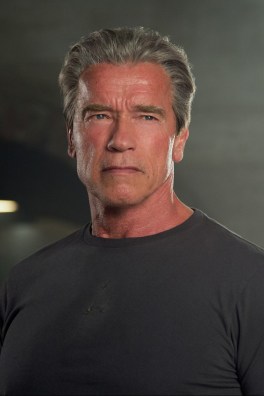
6th Model of the Terminator Franchise is Coming. I can’t.

Enough.

Enough. 

Enough. 

ENOUGH.

ENOUGH. 

So yeah. In case you didn’t already find out, Arnold Schwarzenegger recently confirmed that Terminator 6 was happening, despite the critical failure of Terminator Genisys. Here’s what he said to Australia’s Channel 9:

“I am looking forward to it,” he said. “Absolutely.” 

Yeah, well we’re not.

– David Dunn

SOURCE: Telegraph, Cinemablend

“10 CLOVERFIELD LANE” Review (✫✫✫)

You’re not safe inside. You’re not safe outside either.

Whether you love him or hate him, you gotta admit one thing about J.J. Abrams: he knows how to sell a film.

Take 10 Cloverfield Lane as a testament to his skill. When the trailer dropped out of nowhere back in January, nobody knew anything about the plot, characters, or premise of this movie. That’s rare in today’s industry, especially with all of the casting and production announcements circulating daily on today’s news platforms. The fact that 10 Cloverfield Lane’s producers, director, writers, and actors were able to keep it a secret up until now is genuinely surprising, and I think it will pay off for them. It’s built up anticipation for the movie in ways no major blockbuster can do, and it will equally fulfill it’s audience in ways only this movie can supply.

In their excitement, some fans speculated that this movie is a sequel to Cloverfield, a risky yet innovative 2008 monster thriller also produced by Abrams. You would be wrong. 10 Cloverfield Lane is about as related to Cloverfield as Star Wars is related to Star Trek. Same genre, different execution. Much different.

This time around, 10 Cloverfield Lane ditches the nauseating shaky cam from Cloverfield and chooses instead to focus on a few survivors in a bomb shelter as opposed to a collapsing New York City. These survivors consist of Michelle (Mary Elizabeth Winstead), Emmett (John Gallagher Jr.), and Howard (John Goodman), the last of whom built the shelter in the first place. These three are forced into the shelter after a chemical attack cripples the U.S..

Or so Michelle is told.

Before coming to the shelter, Michelle got into a devastating car crash that left her injured and unconscious. She wakes up chained to a small bed on the floor next to Howard, who doesn’t quite seem all there if you know what I mean. Michelle is left with a difficult decision. Does she choose to trust her instincts, or this man that’s telling her that the world has ended?

The special thing about 10 Cloverfield Lane is that it focuses on its setting and performances to provide suspense instead of an overflow of visual effects. This is not an aesthetic Abrams is unfamiliar with. Ever since producing Cloverfield, he’s mostly understood that it is not spectacle that provides thrills, but rather, perspective. And whether it’s through the eyes of a producer, or through the lense of directing Mission Impossible III or Super 8, he’s always been a filmmaker that’s understood the value of perspective.

Take, for instance, Michelle’s perspective in the movie. Through her eyes, she’s just a prisoner who woke up in someone’s basement chained up to a mattress on the floor. The man who says he saved her life isn’t entirely a friendly guy. He’s old, unsettling, awkward, unreasonable, and demanding, running his bomb shelter like a warden runs a prison. Michelle is understandably terrified with him, but then she’s told that there’s been an attack on the world outside. Now what do you do? Do you try to escape and possibly face death, or do you believe this stranger and confide in the safety of his shelter?

Such psychological dilemmas is what compels the film forward, and director Dan Trachtenberg handles this cast skillfully in the small space that they are confined in. Winstead and Goodman bounce off of each other perfectly in the film, like a cat and mouse locked together in the same cage. Winstead, who’s played the survivors role in quite a few films (Live Free Or Die Hard, The Thing prequel), displays her trauma and distress here effectively without overacting or reaching for an emotion. Goodman is just downright chilling. He’s a man who seems like he has good intentions, but has a dark side to him that he demonstrates with disturbing normalcy. Their dynamic together felt eerily resemblant of Clarice Starling and Hannibal Lecter from 1991’s The Silence of the Lambs, which also featured a chilling relationship formed more out of necessity rather than comfort.

All of this builds to a well-paced, tense, and uncomfortable film driven almost entirely through performance, which is a very special thing in today’s industry. My biggest regret is that given the talent and the uniqueness involved with this production, it has to undercut its own success by throwing a CGI action spectacle in the third act of the film. While I won’t spoil it by saying what exactly happens, I will say it’s a severe shift in genre by the time the third act rolls around. We go from a tensely-wrought suspense-thriller to what is typically considered a Hollywood blockbuster. In making that transition, the film loses a part of its spirit and what makes it special from other thriller films.

“But it’s science-fiction,” you might argue with me. Yes, but did it need to be? Damien Chazelle made an incredible, heart-racing thriller in 2014’s Whiplash, and that was a film about the sharp rivalry of two passion-fueled musicians. Chazelle also worked on the script for 10 Cloverfield Lane, and I’m convinced that Howard’s uneasy presence originated from Chazelle’s ideas. The studio should have followed in his lead. The creepiest scenes in this movie remains to be from the tension between the characters and for what they can or can’t do to each other: not some supernatural force that threatens these people from outside the shelter. A quick rewrite of the ending and a few reshoots could have shifted this picture from a good movie to a great one.

All in all, 10 Cloverfield Lane is an effectively creepy film that you just wish would follow through on its intentions. The movie draws a line between fearing what is reality and what is fiction, and at looking at that line, isn’t it reality that seems more scary to us? That’s the thought that stuck with me when I left the theater. Well, bomb shelter.

Tagged , , , , , , , , , , , , , , , , , , , , , , , ,

Fifth Indiana Jones Movie Is Swinging Our Way

Indy’s coming back to the movie theaters, and this time, he’s hopefully leaving the aliens behind.

Disney announced a few hours ago that producer Kathleen Kennedy, director Steven Spielberg, and actor Harrison Ford are returning to collaborate on a fifth Indiana Jones movie. While a title has not yet been decided upon, Disney did confirm that the movie would be released in July 2019.

The last time we got an Indiana Jones movie was with The Kingdom of Crystal Skull, which was also produced by Kennedy and directed by Spielberg.  The movie was panned by both critics and fans alike, with many people criticizing the fact that Indy went head to head against Soviet spies and… aliens?  Weird combination, to say the least.

Kennedy, Spielberg, and Ford collaborated on all four Indy movies prior to this announcement, so this new production can go one of two ways. 1) It will be a hit, just like the first one, or 2) It will flop as badly as the fourth. Here’s to hoping it’s the first instead of the latter.

What do you think? Are you excited that we’re getting another Indy adventure, or do you think the series should stay in the snake pit? Comment below, let me know.

– David Dunn

SOURCE: Deadline, The Guardian

“CLOVERFIELD” Review (✫✫✫)

Turn the camera on.

Why is it when we think of monster movies, we remember the larger-than-life creatures more easily than we do the main characters? For instance, we don’t remember Ann Darrow as easily as we remember King Kong. We don’t remember Hideto Ogata over Godzilla. It’s simpler to remember Frankenstein’s monster rather than Dr. Frankenstein himself. And it’s easy to see why too: the monsters are more interesting than their human co-stars are. We all know someone like Ann, Hideto, or Victor because they’re all human beings, just like us. King Kong, Godzilla, and Frankenstein’s monster have never existed and can never exist. Perhaps that’s why they fascinate us so much: because they play on fantasy rather than reality.

Let Cloverfield, then, be the monster movie to flip the genre on its head. Not only do we not know the name of the monster that is tearing apart New York City, but our focus is poured almost entirely into the human survivors. It’s just as well too. Cloverfield is one of those rare movies that blends entertainment with art, method with innovation, fantasy with reality.

So yes, if you happened to miss the highly talked-about teaser trailer before the movie’s release, Cloverfield is another monster movie. There’s a big baddie, there’s a city, and chaos and destruction ensues. That’s how far the similarities extend. The difference in its approach this time around lies is its execution. While King Kong and Godzilla are framed and staged on a massive scale as monsters clobber each other and throw each other into buildings and landmarks, Cloverfield instead focuses on a smaller scale as found footage off of a New York City regular’s camcorder. This New Yorker is named Rob (Michael Stahl-David), and he is accompanied by his friend Hud (T.J. Miller) and his lover Beth (Odette Annable), of whom he has a complicated past with. Great time to have relationship problems, isn’t it? In the middle of a destroyed New York City while a monster is obliterating everything in sight.

Here is a movie that succeeds more as an experiment than it does as a film. Cloverfield is a movie that takes genre conventions and throws them out the back window, taking any direction it wishes as it propels its humans through the chaos of a quickly collapsing New York City. The risks it takes both pays off for itself and then doesn’t. Most of the time, the movie’s intentions shine clear and have a strong payoff for its audience. At other times, it’s shaky and unstable, much like this movie’s handheld shooting method.

I’ll start with the positives. First of all, it’s different. That much is a compliment you don’t hear too much nowadays in corporate Hollywood, which pushes out sequels and remakes like the happy meals at McDonalds. Yes, Cloverfield’s overall premise has been used and reused, but it’s originality comes from its forced perspective towards these human characters. Here’s a question for you: out of all of the horror movies you’ve seen, how many characters have you been able to relate to on a personal level? No, I’m not talking about relating to them in the sense that they’re running away from giant monsters or psychotic axe murderers. Sure, we like to root for Ellen Riply in Alien or Sally in The Texas Chainsaw Massacre, but take them out of their own movies for a second. How many of them can you relate to as people rather than as movie characters?

Cloverfield is one of those rare movies that understands its characters before it understands its visual effects. This is in credit to both screenwriter Drew Godard and cinematographer Michael Bonvillain, who both understand that for this story to work, we need to relate to the characters as regular people rather than as survivors. Them taking the time to change their focus and build on exposition works. After a very brief introduction, we understand who these characters are, their motivations, and their relationships to each other. When they die, it’s genuinely heartbreaking. It means something when they’re killed, as opposed to being just another number for the monster’s kill count. Because of our investment into Rob, Beth, Hud and others, we’re scared for them and with them as they’re running through a violently torn apart New York City, desperately searching for the people they love most. By making that the focus, Cloverfield works not just as a horror or monster movie, but also as a tragedy. Such deepness is rare for disaster pictures nowadays, but Cloverfield pulls it off well, unlike most of today’s big-budget blockbusters.

Of course, with this “found-footage” method of shooting, it also raises some problems for this production. For one thing, there is not a single steady shot in the movie. The camera is always shaking back and forth, which didn’t bother me as much, but I know it will cause motion sickness for some unfortunate viewers. Another problem is that with this shaky-cam method of shooting, some of the action flow is incoherent, or sometimes, lost altogether in a tense disaster scene. Most of the time, Bonvillain handles the camera well enough to capture important moments, like to focus on the tail of the monster or on a character when they are wounded. Sometimes though, Bonvillain’s method of shooting exceeds his talent on the camera. For instance, what do you see during a chase scene? A lot of the camera rocking back and forth between the motion of a character’s legs as they’re trying to get away.

The sad part is that Bonvillain is almost powerless to do anything about this. Making this a steady shot would do nothing to convince us that this was really happening, considering the camera is being supposably held by a movie character that A) Doesn’t know how to shoot, and B) Is in the middle of a literal disaster. But then again, the shakiness doesn’t do any favors for our eyesight either. You’re screwed either way.

I’ve repeatedly went back and forth on this movie, bobbling the pros and cons around in my head, trying to decide on which element beats out the others. There’s good cases to both sides. We identify with our heroes as people rather than as movie characters, and that humanity makes their crusade all the more important to us. The sense of mystery, eeriness, and hopelessness plays out perfectly like an H.P. Lovecraft novel. The scares and the thrills are all there. That much the movie has going for it. On the opposite end, though, we have a shaky camera that makes people want to vomit, a few genre cliches that the movie can’t escape from, and a pathetic, lackluster ending that just suddenly cuts off and leaves an empty, unfulfilled feeling for its desperately hungry audience. I have no problem whether a character lives or dies for the sake of drama, but when you’re stuck not knowing, that’s just dangling a hook in front of your audience that they’re never going to reach.

I’m giving the movie a thumbs up for one reason: it tried. It experimented. It did something different, and it partially worked out for itself. That’s a thumbs up not for the movie itself, but for the movie-making business.

Years ago, aspiring filmmakers dreamed of big visions in their heads. They experimented, they failed more times than they succeeded, but they took steps towards creating their visions, and their reward was seeing their beautiful, breathtaking ideas playing on the big screen. Filmmakers these days lack that creation or that aspiration, and they prefer piggybacking off of other people’s creations just for the big buck. The creators behind Cloverfield need to be honored not necessarily for their movie, but for their aspiration to create. They sought to make something all their own, and whether you like it or not, that’s exactly what they did.

Tagged , , , , , , , , , , , , , , , , , , , , , , , , , , , , ,