Category Archives: Reviews

“ROGUE ONE” Review (✫✫✫)

With a sequel titled ‘A New Hope.’

If anyone ever tells you that making a prequel is lazy filmmaking, show them Rogue One as evidence to the contrary. This is an exciting, riveting, action-packed Star Wars prequel, filled to the brim with nostalgia and passionate love for the originals. With a few quick rewrites and some tighter editing on the action, this could’ve turned from a good prequel to a great one. Maybe even comparable to the originals.

Taking place directly before the events of Star Wars: A New Hope, Rogue One follows the rag-tag team of rebels who discover the Death Star plans and are committed to bringing them to the rebel army, henceforth setting up the events for the original trilogy. These rebels include newcomer Jyn Erso (Felicity Jones), whose father had a direct hand in creating the Death Star, rebel Cassian (Diego Luna), defected empire pilot Bodhi (Riz Ahmed), heavy arms aficionado Baze (Jiang Wen), temple guardian Chirrut (Donnie Yen), and defected empire droid K-2SO (Alan Tudyk).

This team of misfits are expected to go up against the empire, Darth Vader himself, and commander Orson Krennic (Ben Mendelsohn) to steal the Death Star plans and send them on a rendezvous mission to the rebel army. So. You know. No pressure.

Right off of the bat, I need to praise the film for its buildup. Since this is a prequel and we already know how the original Star Wars begins, we can safely assume that most of the characters don’t make it out alive by the end of the film. While Rogue One more or less follows the route that you expect it to take, what’s surprising is that we’re actively engaged and invested in the action while it’s happening on screen. That’s because these are fully fleshed out and realized characters, their personalities and motivations established early on and following through until the movie’s inevitable conclusion.

When you watched the original Star Wars movies, weren’t the characters the best part in every scene? Didn’t you fall in love with Luke’s sense of adventure, Han’s rebellious swagger, Obi-Wans quips of wisdom, Darth Vader’s foreboding presence, and C-3PO’s clunky awkwardness? Here we have a new lineup of characters to admire and appreciate, and while they may borrow some qualities from other characters, their appeal is their own and it stands strong alongside the rest of the Star Wars cast.

Jyn, for instance, is another strong heroine type, a go-getter kind of woman not unlike Rey from The Force Awakens. Chirrut is a character as quirky and wise as Yoda himself is, and even though he isn’t a jedi, his conversation regardless lends to the film’s more fun and thoughtful moments. My favorite character easily lies in the quippy and sardonic K-2SO, who can be seen as a more condescending version of C-3PO. His entire character can be summed up in one line that he utters: “I will fight with you. The captain said I had to.”

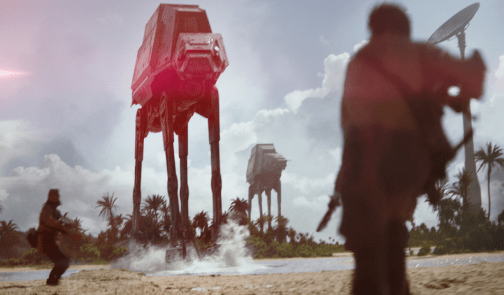
There are two things that stand out exceptionally in Rogue One: the visual effects, and the cameos. Any time my jaw dropped in the film, it was from one of those two things. We expect the visuals to be impressive in the action scenes alone, and rest assured, they don’t disappoint. The blaster fights, the AT-AT’s, and the space battles are as grand as they ever were, and they flash you back to the first time you saw the iconic Death Star battle in the original Star Wars movie.

But that’s not even the full display of this film’s visual effects. With certain cameos, CGI is layered over the actor’s faces to make older characters look younger. This has been done to many actors before, including Jeff Bridges in Tron: Legacy and Arnold Schwarzenegger in Terminator Salvation. Here though, the CGI is so detailed that it doesn’t even look like computer imagery. It looks like actors who are 60 years or older have suddenly reappeared as their younger selves, giving the same performance they gave 30 years ago. Try to imagine, for instance, if Han Solo were in this movie. We saw Harrison Ford’s 70-year old self in The Force Awakens last year. Imagine your surprise if he reappeared here 30 years younger, back to his original self at the start of the trilogy.

That is how impressive the visual effects are in this movie. If you don’t believe me, wait until this film’s last cameo near the end. Their appearance was so mind-blowing that I had to rub my eyes and be sure that I was seeing correctly. I was.

I like a lot of things about this movie. The characters, the action scenes, how the film intelligently relates itself to the original trilogy. There’s a lot to admire here both as a Star Wars fan and as a movie fan. In that regard, I was impressed.

There are, however, a few slip-ups that count against Rogue One’s achievement. For one thing, there’s the pacing. While Rogue One has a good buildup in its second and third acts, it takes too long to get there. The first act specifically drags on for too long and takes too much time to introduce these characters, feeling more like a setup than a story.

I understand that setup is needed to introduce these characters and understand their motivations for being there. Still, couldn’t you have cut corners in appropriate areas to make the story more concise? At the beginning of the film, only two of the Rogue One members are rebels. The rest are either recruited into the cause, or defect from the Empire into the rebellion. Wouldn’t it have been simpler if they all just started off as rebels, weary and exhausted from years of resisting the empire? It would have set the conflict up quicker, and we wouldn’t have to waste so much time on why each individual member joins the cause. The fact that most of the Rogue One members are new recruits slows the film down immensely, and the film never really picks up speed until much, much later than is necessary.

And the final battle sequence, while impressive, is also too long. Simply put, there’s too much going on in this scene. First, there’s Jyn and Cassian’s race against time to get the Death Star plans. Then there’s the beach battle on the ground against rebels and stormtroopers. Then there’s K-2SO’s firefight, then there’s Chirrut’s fight, then Baze’s fight, then Bodhi’s fight, then there’s what’s going on at rebel control, and blah blah blah blah blah. It’s too much. I understand there’s a lot building up to this point in the film, but you could have safely shaved off 15 minutes from this sequence and have a more exciting, and efficient, climax. This movie is two hours and 10 minutes long. With all of the added material in it, there’s no reason why it couldn’t be an hour and 50 minutes.

Still, Rogue One is a blast, and it adds plenty of mythology for the expanded universe and for the joy of any Star Wars fan out there. In the past, the word “prequel” made fans shudder at the thought of the earlier films, including The Phantom Menace and Attack of the Clones. I think Star Wars fans can breathe easier knowing that Rogue One is out there.

Tagged , , , , ,

“STAR WARS EPISODE III: REVENGE OF THE SITH” Review (✫✫✫✫)

anakin

Hate leads to suffering.

At long last, we finally have it: the first genuinely good Star Wars prequel film. Not just good, but exceptional. Took them long enough. After grudging through two movies filled with stupid characters, incoherent writing and just plain bad acting, we finally get a film that delivers on all fronts: an exciting, thrilling parable that has a surprising amount of purpose and meaning behind it. Like its early predecessors, Star Wars Episode III: Revenge of the Sith defies expectations and sets new standards narratively and visually for the science-fiction genre. I have no doubt that many passionate fans will watch this movie and have fevered discussions long after the film’s closing shot.

The final part in what is the mostly failed prequel trilogy, Star Wars Episode III: Revenge of the Sith takes place where the second one left off, in the heat of the Clone Wars. At the beginning of Revenge of the Sith, Anakin Skywalker (Hayden Christensen) and Obi-Wan Kenobi (Ewan McGregor) are on a mission to rescue Chancellor Palpatine (Ian McDiarmind) from the clutches of General Grievous (Matthew Wood), the commander of the droid army. In the aftermath of the mission, Anakin goes home to his beloved wife Padme (Natalie Portman), where she reveals to him that she is pregnant. While he’s excited at hearing that he will be a father, Anakin keeps having visions of a terrible future that haunts him day and night. As Anakin keeps seeing these visions over and over again, he soon resolves to stop this terrible future from happening, no matter what dark consequences may come of it.

A Star Wars fan for a long time now, one of the things I love most about the series is its mythology. The light and the dark side, the jedi, the force, all of it builds up very interesting ideas of good versus evil, moral philosophy, and the power of belief. The fact that Star Wars is an exciting, entertaining, and visually spectacular franchise is one achievement. The fact that it has added context behind it makes it all the more powerful.

But one topic that’s always evaded me is how exactly Anakin became Darth Vader. His backstory was mentioned in the original movies, but was never delved much further beyond dialogue.

Then we watched the prequel movies, and we desperately wished that his backstory was limited to only dialogue. 

The Phantom Menace was a boring, useless insight into Anakin’s childhood, and Attack of the Clones provided a whiny, bratty Anakin that seemed like he belonged on MTV more than he did in a Star Wars film. But the Anakin in Revenge of the Sith is a much more visceral, passionate, mature portrayal of the young jedi. He’s much more believable as a character and as a soon-to-be Darth Vader than he is in any of the previous movies.

This is praise for both Christensen and writer-director George Lucas, who is finally back to his A-game that he demonstrated having in A New Hope. The first thing that I love about this movie is the moral dilemma that it presents. In each of the Star Wars films, the main character was a do-gooding, courageously heroic archetype that fought for moral reasons rather than personal ones. Obi-Wan Kenobi in The Phantom Menace. Luke Skywalker in the original trilogy. Shoot, even Anakin in Attack of the Clones felt more like a larger-than-life movie hero than he did as a grounded character. 

Here though, Anakin and his twisted arc is the central focus. There is no “light side” to his character. He’s not concerned about the ways of the force, the principles of the jedi, the balance of the universe, or anything like that. He is a very self-centered, arrogant, fearful character: one who desperately wants to change his future, but who ultimately feels powerless in doing so, no matter how hard he tries.

I am reminded of a quote from The Phantom Menace spoken by the wise Yoda (Frank Oz), one of the very few good lines in the film. “Fear leads to anger. Anger leads to hate. Hate leads to suffering.” This film is, in many ways, the buildup and resolution of that dark path. Think of the scene in Attack of the Clones where Anakin lost his mother and lashed out in a fit of rage against the raiders who killed her. How powerless do you think he feels when he can see another loss like that coming, but he sees no real way of stopping it?

This makes Anakin much more relatable than just the movie protagonist: it makes him relatable as a human being, complete with his own needs, desires, and fears. Revenge of the Sith is, at its heart, a tragedy, a hero’s fall from grace not unlike what we see in Julius Caesar or The Godfather. The only difference between those tragedies and this one is that this movie has lightsaber duels, blaster fights, space battles, quirky droids, and John Williams, along with everything else you love about Star Wars.

There is only one other Star Wars film that I can think of that is better than Revenge of the Sith, and that is the iconic 1980 film The Empire Strikes Back. They are both masterful for similar reasons. Both are fiercely strong in understanding their mythology and message. Both are relentlessly exciting, climactic, and entertaining. And both show, very importantly, that the greatest enemy that we must overcome is not the Sith or the Dark Side. It is ourselves.

Tagged , , , ,

“HACKSAW RIDGE” Review (✫✫✫✫)

Convicted by belief.

I don’t believe in God anymore.

The first time I heard those words uttered from one of my closest friends’ lips, I was shaken. Growing up in a deeply spiritual household, I’ve always held the notion that God was quietly watching over everything. The thought that he didn’t even exist truly frightened me. To me, it was as if hearing love doesn’t exist.

But as my friend continued his testimony, my shock turned into sadness as I slowly realized where he was coming from. Fighting in the Iraq war, he saw things nobody should ever see, not even soldiers. He saw his friends blow up right in front of his face. People he called his brothers, suddenly turned into small, bloody piles of meat laying on top of the dirt. He saw women and children killed daily, and in turn, he also saw women and children kill others. He does not exaggerate when he says he saw a very real picture of hell, and at the end of it all he looked at me and asked “How can a God see that and let it exist?”

I’ve never agreed with him, but I’ve always understood where he came from and why he held the position that he did. I’m sure he looks at other war films, such as Saving Private Ryan or Black Hawk Down, and is tragically reminded of the horrifying images he saw half a world away. I can watch a movie. He only needs to watch his nightmares.

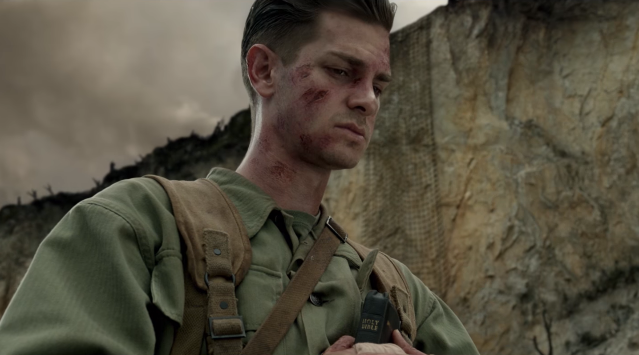
I would like this same friend of mine to watch Hacksaw Ridge. It is a powerful, emboldening film, one that does not shortchange the horror of war, but equally does not shortchange the power of belief either. This is a movie that does more than strengthen the soldier’s spirit. It strengthens the human spirit.

Based on an incredible true story, Hacksaw Ridge tells the story of Desmond Doss (Portrayed by Andrew Garfield), a combat medic during WWII that saved the lives of over 75 American soldiers during the battle of Okinawa. That much I already knew. What I didn’t know was that he exhausted and nearly killed himself saving most of those men in one single night. The number of lives that he saved is impressive enough on its own. The fact that he did it within a 12-hour period makes his story seem impossible.

And yet, Desmond Doss did exist, he did save 75 soldiers, and he did do all of it in one night. Even more impressive is the fact that he did so without arming himself with a single weapon. Yes, dear reader: he was a conscientious objector, and he is the only war hero in history to have earned that title alongside a Medal of Honor.

To try and verbalize the feelings that the film emotes is impossible. Like other great historical epics, such as Schindler’s List or 12 Years A Slave, it pulls emotion out of you to the point where you don’t feel like you’re watching a movie anymore, and are instead completely immersed in its harsh, uncompromised reality. It’s easy to relate to Desmond Doss because you’re not experiencing the film through the third-person perspective as the viewer: you’re experiencing it firsthand as Doss, seeing the same things that he does while reacting to them in real time.

Mel Gibson is no stranger to this sort of storytelling. His previous films, including Apocalypto, Passion of the Christ, and the Oscar-winning Braveheart, each threw our heroes through impossible, monumental, life-changing events that personally challenged each of them as those movies went on. Hacksaw Ridge is a welcome addition to his incredibly impactful filmography. Like each of those films, Hacksaw Ridge finds tragedy in a real-life subject, hammers it mercilessly at our hero, only to see him overcome it with every grit of his teeth, every sweat pouring down his brow, and every grip of his nails digging into the dirt.

The fact that this film exists, and that it is done as well as it is, is a testament to Gibson’s skill as a filmmaker. What is most impressive is the fact that this person existed in real life, and that he really did the things we saw him do on screen. How could this have possibly happened? I’m a believer, and I don’t believe the things I saw on the screen. It’s so far-fetching to think about, but the film is done so vividly well that you can’t see it as anything but real. The film exists in this weird space where you want to question everything you’re told, but then as you watch it, you suddenly silence your questions and your disbelief.

You stop doubting. You start believing.

Garfield deserves equal credit in bringing this man’s story to life. Yes, Gibson is the director in the chair, and his master strokes as an artist is what allows this film to live and breathe. Yet, a movie is nothing without its character, and Garfield performs his role brilliantly. Imagine a character pulled right out of the frames of any other Christian film, professing his status as a believer, hit with some monumental tragedy, then questioning himself and the things that he was raised to believe.

Now throw that character through the gritty, violent, gory battlefields akin to any horror movie, and watch as he reacts to everything he’s witnessing in the moment. That is the role Garfield has to play, and he does it convincingly as his character is scared, fearful, chaotic-minded, and alone. Yet, there is also an earnest courage and bravery to him that feels equally real, and when it overcomes his fear and his sadness, that is when the film is at its most powerful. Garfield is simply stunning in this role. If he does not at least get an Oscar nomination for this performance, the Academy will have truly lost all authenticity as an awards ceremony

To elaborate on this film any further would invite the threat of spoiling it. Go and see this movie. I repeat: GO AND SEE THIS MOVIE. There are films out there that excite us, thrill us, depress us, madden us, scare us, and empower us. Hacksaw Ridge changes us. Even if you do not share the same religious views as Doss, you share the same spiritual views, which is the spiritual power of overcoming.

I don’t know if Hacksaw Ridge will change my friend’s view on God. It probably won’t. But it might change his view on life, on the resilience of the human spirit and the things that it can accomplish. If Hacksaw Ridge doesn’t bring my friend to God, then I pray that it at least brings him to hope.

Tagged , , , , ,

“STAR WARS EPISODE II: ATTACK OF THE CLONES” Review (✫✫)

And more importantly, less Jar Jar.

What was it that Yoda said to Luke on the swampy lands of Dagobah in The Empire Strikes Back? “Do or do not, there is no try.” It seems to me like George Lucas still needs to learn this lesson and should have paid a visit to Yoda himself. Star Wars Episode II: Attack of the Clones is not as much a trainwreck as its predecessor is, although the title certainly makes it sound like it. The mythos is sound, the visual effects amazing, and the pacing builds up well to what will eventually be the fall of Anakin Skywalker. That much is how Episode II improves upon the boring and fatally flawed Episode I. Lucas still can’t direct his actors worth a damn, though.

In this sequel to The Phantom Menace, Padme Amidala (Natalie Portman), now senator of Naboo, was the target of an assassination attempt by Jango Fett (Temuera Morrison), a bounty hunter hired to kill her for reasons unknown. Fearing for her life, the Jedi council assigns Jedi master Obi-Wan Kenobi (Ewan McGregor) and his padawan Anakin Skywalker (Hayden Christensen) to protect senator Amidala from other attackers. As they continue their mission, they make a discovery that spurs on one of the darkest times in the Star Wars universe: the clone wars.

I’ll give Lucas this: he’s a great visual director. Everything visually based in this film is at it’s peak and prime, from the visionary locations to the epic battles. There’s no more butt-ugly, CGI-ridden aliens to look at like the God-awful Gungans from The Phantom Menace (Although Jar Jar still makes a cameo appearance, unbelievably). The visual scope of the picture is absolutely incredible, and if I had to pick my favorite moments from the movie, all of them involve the visuals in some way.

For instance, in the first act of the film, Anakin and Obi-Wan are engaged in a chase through Coruscant after an ally assassin of Jango Fett. The feats of the scene are something else to witness, as we’re seeing Anakin hot-wiring a vehicle, flying through the city, hovercrafts racing against each other while evading other vehicles, and eventually leading to Anakin leaping off of his hovercraft and actively fighting the assassin on her own ship.

I was thinking only one thing through this scene: “Man. Luke would probably already be dead if he had to pull this off in the original trilogy.”

The same standard of visual spectacle is kept up throughout the movie, and it was as exciting and enthralling to witness as the original movies were. The most climactic scene came from not when the clones appeared, or when Anakin and Obi-Wan fought a sith lord: it’s when the sith had to engage in a lightsaber duel with the jedi that we were least expecting to fight. (Hint: Strong with the force, he is.)

But besides these visual breaks, what else did the movie provide? The plot is still paper-thin and unfocused, and we sense that Lucas is more interested in building up the mythology of Anakin Skywalker instead of focusing on the current story. Obi-Wan is caught up in a whole mystery on where the clones came from, and goes through an uninteresting investigation as it leads him to a place we were all expecting. And then the romance builds between two characters, and…

Oh God. The romance.

I’m going to spoil something for you here, okay? If you don’t want a spoiler, skip to the last paragraph. You’ve been warned.

In the film, Anakin and Padme form a romantic love interest that is obviously forbidden, because as we are told, Jedi are not allowed to love. I find multiple issues with this. 1) Forbidding Jedi to love is as awful an idea as forbidding a priest to love. That didn’t work with the Catholic church. Why did you think it would work here? 2) Christensen and Portman are not meshing at all. They are not convincing. Their awkward stares, plastic kisses, and unbearably cheesy dialogue shows that this whole thing is staged. There is not an ounce of true passion or lust in these characters for each other.

But those aren’t even the biggest issues. 3) Wasn’t Anakin just a kid when he met an adult Padme in The Phantom Menace? And if he grew into an adult here, doesn’t that mean that she should have grown too, not stayed the same? Jake Lloyd was 10 years old when The Phantom Menace was released, and Portman was 18. That means these two lovers are eight years apart? Gross.

Granted, Lucas wrote the characters to be only five years apart in the original script, but the original script doesn’t matter. What matters is what we’re seeing on the screen, and on screen, Portman looks like she’s 20 and Lloyd looks like a child. Wondering how that transitions over into Episode II is just too complicated to think about, and it distracts from the badly-acted romance we’re already watching on screen. Either way, its poorly written and poorly executed, and there’s zero excuse for either.

Overall, I had more fun with Attack of the Clones than I did with The Phantom Menace, and we’re at least getting a better buildup to Anakin’s eventual fate that we all know is coming. But this movie did not learn from the mistakes of its predecessor. It’s still too much buildup and not enough payoff, with the script begrudgingly meandering on as we’re supposed to sit through this unexciting, uneventful story waiting to get to the next action sequence. I thought Star Wars used to recognize storytelling more over the action, not the other way around? Get to meditating, George. Looks like you’ve got a lot of it to do.

Tagged , , , , , ,

“MOONLIGHT” Review (✫✫✫✫)

Beautifully broken.

If you can only see one movie this year, make it Moonlight. With most movies, we go with the purposes of either being entertained or enlightened on a particular issue, sometimes both. Moonlight transcends both of those purposes. It is an urgent, important, and timely film that presses the viewer not to understand its characters by their race or sexuality, but by their personal experiences that mold them into the men that they become. Moonlight not only deserves to be seen: it is essential.

Broken up into three parts, Moonlight follows a young man growing up in an ugly urban neighborhood that doesn’t care much about the people that live in it. This man has been called many things during his childhood. Little. Black. Chiron. One of those is his name. All of them define him.

Chiron has had a hard childhood. He was bullied when he was in elementary school. He watched his mother sink into drug abuse with a new man she brought home every night. He witnessed the drug trade up close as he lived with a dealer when he ran away from home.

In high school, bullying further intensified as all the “hard” kids intimidated Chiron because of his small size. His mother’s abuse intensified. His loneliness grew. He fell in love with one of his classmates. He was assaulted on school grounds. And in experiencing the pure essence of hurt and anger, Chiron makes a great mistake that costs him much. We see him sink deeper into this despair that we call life.

Now in adulthood, the older Chiron is starkly different from his younger self. He now deals drugs himself, but he never uses them, fully remembering what it did to his mother. He worked out, got hard, built himself up so that he would never be intimidated by others again. He carries a gun on his waist, gold chains on his neck, and a chip on his shoulder everywhere he goes.

Before I praise anything else in this film, I have to praise the casting. With most movies with flashbacks, the casting isn’t paid much thought when it comes to the younger counterparts. In Batman V. Superman, for instance, the young actor Brandon Spink looks nothing like the elder Ben Affleck, from his bone structure all the way to hairstyle. In last year’s equally failed Fantastic Four, the young Evan Hannemann was chubby and round-faced, looking nothing like the slender, more robust Jamie Bell at an older age. It’s a small element but it’s a noticeable one, and most filmmakers choose to overlook it since the younger actors are in the film for less than 10 minutes.

But Moonlight is not like most movies. In this film, it is written and divided into three parts, with each act resembling a different time and age of Chiron’s life. Because of this, the casting is so crucial, to the point where if it is unbelievable even for a second, the entire film can fall apart.

But the casting in all of the roles are pitch-perfect. None of the actors falter for a second, and it’s at times hard to believe that these are actors that we are watching. Even child actor Alex Hibbert does such a good job expressing the younger Chiron’s innocence and vulnerability. He embodies everything a child is supposed to be: playful, excited, energetic, but also confused, shy, fearful, and sometimes, intimidated. The scenes where Hibbert had to react to his mother’s drug abuse were especially hard, because he just stands there frozen, petrified, unsure of how he’s supposed to react to his mother’s outbursts. It’s a simple role, but one that’s brilliantly filled. Even at such as young age, Hibbert demonstrates a talent that I hope grows as he becomes older.

The other actors are just as great in their performances. Ashton Sanders, who plays the same role in high school, physically resembles his younger and older counterparts, and appropriately identifies with the confused, awkward hormonal period all teenagers go through at his age. The most convincing performance, not surprisingly, belongs to the experienced Trevante Rhodes, who portrays the older Chiron as a broken fragment of himself, trying to piece together his childhood and understand why things happened the way they did. Any one of these actors can be nominated for an Oscar, SAG, or Golden Globe, but if it’s even one actor, it’s an unfair nomination. All three actors need to be recognized, because all three brilliantly portrayed their characters at different, chaotic, messy times in their lives.

This film is directed by Barry Jenkins, who before Moonlight hasn’t made a feature-length film in eight years. How can this guy be out of the director’s chair for so long and come back and make such as minimalist masterpiece as this?

I think it’s because he tried to relate the film on a human level as opposed to a technical one. Look at Chiron’s older self. As a man, he identifies with numerous minority communities that are, as of late, facing discrimination. The African-American community. The LGBT community. The American lower class. For one reason or another, each of these communities have been seen in a negative limelight by parts of our culture either due to current events or moral debate.

The reason why you need to see this film, even if you end up hating it, is because it forces us to think differently from what we’re used to. Chiron commits many wrongs in the film, most of which we might not agree with. But we at least understand where he is coming from and why he behaves the way he does. He might be seen in the wrong, but he is also seen as sympathetic. After all, when a kid grows up in a broken household, neglected by his family, hunted by his community, and emasculated by his peers, do you blame him for coming out a little more confused about life rather than more clear about it?

By the end of the film, we see Chiron for all that he is. Black. Gay. Drug-dealer. Felon. Flawed. We see him as all of these things and more. Yet, under the calming blue hue of the moonlight, we also see something else: that he is still beautiful regardless.

Tagged , , , , , , ,

“DOCTOR STRANGE” Review (✫✫✫✫)

The Marvel universe, but stranger.

It’s so hard to be unique in the day and age of the modern superhero epic. We’re relatively familiar with the formula by now. Guy X gets superpowers, Guy X goes through training to learn how to use powers, Guy X meets Guy Y who becomes his arch nemesis, both Guys have epic fight where Guy X wins and ultimately accepts his superhero destiny. In just one sentence, I’ve more or less named the outline of multiple superhero movies, from Superman all the way to The Avengers. And make no mistake: this is the exact same outline for Doctor Strange as well.

This much is how Doctor Strange is similar to its superheroic peers. Where it’s different is in its execution, in how it handles its title character not as a larger-than-life action hero, but as a man, fatally egotistical, selfish, eccentric, ignorant, and most of all, flawed. This is not a guy who wraps a cape around himself and fights for truth, justice, and the American way. This is the guy who looks at the cape and scoffs, asking why he should put it on if it looks so ridiculous on him.

Perhaps his flaws are exactly why we relate to Stephen Strange as much as we do in the film. In Iron Man, Tony Stark was a war profiteer and shameless opportunist who repented of his ways once he realized the repercussions of his actions. In Batman Begins, Bruce Wayne was a broken and resentful young man bent on revenge before realizing that it would only sink him into a deeper, darker place. For Doctor Strange, Benedict Cumberbatch plays the brilliant surgeon who is as thick-headed and self-centered as he is skilled and talented. Great doctor. Awful person.

This is all before Strange gets into a devastating car crash that crushes his hands and permanently damages the nerves in them, removing his ability to be a doctor. He spends all of his time and money to repair his hands, only to come up short in every direction he turns. His last ditch effort is to visit a monk called The Ancient One (Tilda Swinton) in Nepal, who has helped individuals with impossible recoveries from all around the world. What Strange doesn’t realize is that he’s about the be flung into a world full of sorcery and supernatural forces, and he’s somehow at the heart of it all.

First things first: the visual effects. I know they’re usually my first positive point of mention in most superhero movies, even in bad ones like Batman V. Superman. But Doctor Strange is on a visual caliber on a whole another level. In an early action sequence, sorcerers are shifting buildings, roads, architectures all around them, all while whipping out weapons and kung-fu fighting each other on constantly shifting walls, pillars, windows, ledges, and walkways. In a later scene, Strange is thrown through the multiverse, a constantly-shifting panorama of space that looks like you’re looking through the lens of a kaleidoscope. In most superhero movies, the visual appeal comes from the action scenes and how explosively people can punch or throw each other. But in Doctor Strange, the appeal is in the scenery surrounding Strange, how the sorcerers interact with environments, and how they affect the upside-down, wayward fights that are so mindbogglingly perplexing. Not since Avatar or Inception have the visuals been so sensory that they felt more like an out-of-body experience rather than a cinematic one.

But the visual effects are not the only impressive thing with this film: its also in how they are used. Director Scott Derrickson, who before this has made the equally atmospheric Sinister, smartly uses the visuals not for blockbuster spectacle, but as advancement for the story. In most action movies, the film usually builds up to some action-packed, destructive, prolonged fight that ends with a lot of property damage and civilian casualties. That is what most gripes were with 2013’s Man of Steel, at least. But here, the climax doesn’t involve destroying a city block, but rather trying to save one, as well as the many lives that are on it. I’m not going to reveal any spoilers, but in an entertainment industry that celebrates violence and killing, it’s nice to see a movie that is the antithesis of that, and looks for a smarter, more thoughtful conclusion rather than the more adrenaline-fueled one.

The cast is on par with the rest of the film’s spectacle. Swinton is fierce yet serene as the Ancient One, a mentor figure that isn’t as innocent and angelic as she may appear. Chiwetel Ejiofor is a companion of Strange’s named Mordo, and while most movie sidekicks are passionate loyalists who could never betray their beloved hero, Mordo here has his own motivations and reasonings that make him a complex, fascinating character in his own right. And Mads Mikkelsen portrays the movie’s villain, and while he is slightly typecast, he at least plays the role with passion and intimidation, making him one of the more memorable recent villains in the Marvel universe.

But the most impressive performance is easily Benedict Cumberbatch’s. The more movies you watch him in, the more you see his range as an actor and how he can do different roles so well. Seeing him portray real-life figures in The Fifth Estate and The Imitation Game, then watching him embrace villainous roles in Star Trek: Into Darkness and The Hobbit movies, you wondered how exactly he was going to approach Doctor Strange as something he’s never been before: a superhero. He brings exactly to Doctor Strange what he brings with his other roles: charisma and authenticity. His American accent makes him almost unrecognizable as the good doctor, and the earnest, yet self-centered way he carries himself makes him all the more believable, making Stephen Strange feel more human rather than hero.

Rumors have been swirling around that Doctor Strange might take over for Iron Man as the new face of the MCU. After seeing this movie, I wouldn’t mind that one bit. Cumberbatch plays him as a charismatic, narcissistic, almost Shakespearean character that is regretful of his old self that looks to start anew. Cumberbatch’s performance in conjunction with the film’s writing makes Doctor Strange a very fun, relatable, and likeable character, if not a great superhero already.

Does Doctor Strange break barriers for the superhero genre? Well no, not if you’re comparing it to the likes of Captain America: Civil War, which challenges the heroes morally as it does physically. But for what Doctor Strange does do, it does well, and it stands firmly alongside its Marvel family, including the likes of Iron Man and Spider-Man. This is one doctor you won’t regret calling.

Tagged , , , , , , , , ,

“DEEPWATER HORIZON” Review (✫✫✫✫)


Unexpected emergencies. Unexpected heroes.

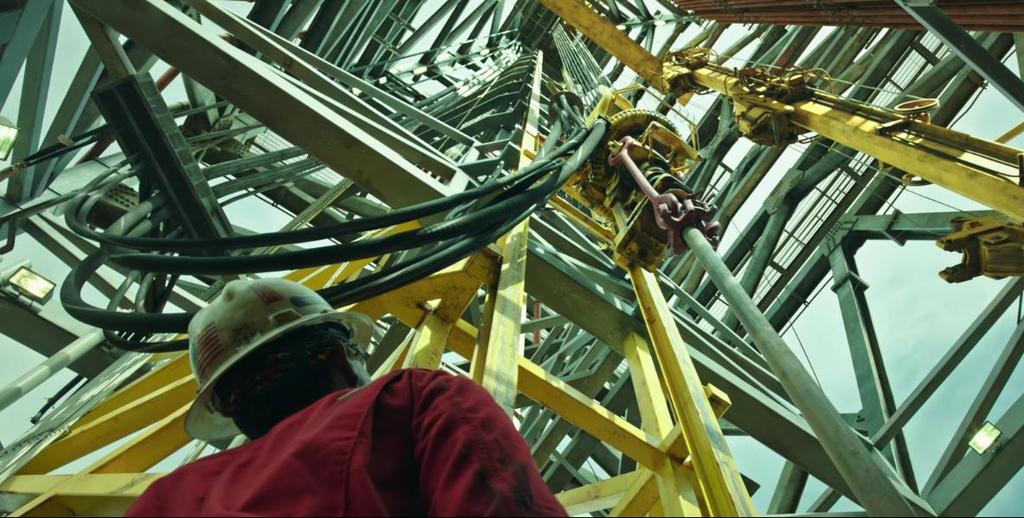
The first thing that surprised me about Deepwater Horizon was realizing that it was rated PG-13. The violence in this movie is graphic and vivid, with its source material translating so well to the big screen that I question how different it really is from its actual events. Through every explosion, every flame set ablaze, every bone that is crushed, and every life that is taken, this is a film that seeks to honor its real-life subjects by showing us exactly what they went through. It is not for the average viewer, and it is definitely not for children. I would say younger than 17 is pushing it. 

In this adaptation of the 2010 BP oil spill directed by Peter Berg (Friday Night Lights, Lone Survivor), Deepwater Horizon follows the oil-drilling crew in their final hours before the notable disaster. Mark Wahlberg plays Mike Williams, who has a family waiting for him at home. Gina Rodriguez plays Andrea, who has her boyfriend and a broken mustang back at shore. Kurt Russell is the hardened captain of the crew Jimmy Harrell. Dylan O’Brien plays Caleb, an oil driller who’s just trying to do his best job on-site. And then there’s John Malkovich, who plays the asshole that got everyone into this mess. 

The standout element of this picture, by far, is Berg’s treatment on this delicate topic. You might remember that I wasn’t very fond of his last film Lone Survivor, which I found to be too generic and predictable to do its source material justice. Here though, there’s nothing generic or predictable, not even in the opening shots. During an early breakfast conversation between Mike and his daughter, she innocently described to him her classroom speech about his job, explaining how her daddy “fights the dinosaurs” underneath the earth. While serving as sweet softener dialogue between these characters, it also doubles as exposition about his job, how he does it, what they do on a day-to-day basis, and what perils come with the occupation.

As she’s speaking, the coke she’s using to demonstrate suddenly bursts and floods the whole table. I’m thinking what would have happened if that coke was a few thousand feet bigger and was carrying oil instead of soda. 

This much is how Berg improves upon his technique from Lone Survivor to Deepwater Horizon. In Lone Survivor, our heroes were thrown into grisly escapades of war violence, with nothing building up beforehand to help us connect with these characters. Here, Berg connects us to the crewmembers’ humanity before ominously foreshadowing to their dreary fate. These are not normal movie characters. These are fathers, mothers, sons, daughters, brothers, and sisters, all of whom are real people outside of the movie theater. They all have someone waiting for them at home, wrecked and nervous for their safety and survival. For the most part in war movies, our heroes more or less made the conscious decision to go fight for their country, regardless of who was waiting for them at home.

Deepwater Horizon’s heroes are different. None of these characters made the conscious decision to plant themselves square in the middle of danger. Nobody in the film was expecting the disaster to occur when it did or with how greatly it devastated them. This is a disaster picture first and foremost, and you’re frantically navigating the action with the film’s survivors as they look for a way past the spewing oil, the collapsing metal frames, the wild fires, and the empty sea gallows looming beneath them. This is a movie that completely understands what the real-life crewmembers were up against, and they bring you every detail of that disaster with nerve-wrecking alertness and urgency.

I have no qualms for this movie. At least, nothing that I can fairly hold against it. If you wanted to be picky, I suppose you could say that the editing was choppy and sometimes made the action hard to follow. But when you see the events unfold on screen, when the metal frames tip over and the rig catches on fire, you’re very quick to forgive the film for its tightly-edited action. After all, Deepwater’s residents barely had any time to process everything themselves. Why should we?

This is a masterful picture, guided delicately through its facts and events with its survivors and victims in mind. In its simplest state, Deepwater Horizon is a unique and riveting action film that perfectly captures the details of its real-life disaster. Through a more complex scope, it is a celebration of life, a commemoration for bravery, and a quiet mourning for the lives lost. 

Tagged , , , , , , , , , , , , , , , , , , , , , , , ,

“STAR WARS EPISODE I: THE PHANTOM MENACE” Review (✫)

Yousa in big doo-doo dis time.

Never again. Don’t ever let this happen to Star Wars ever again. When Star Wars Episode I: The Phantom Menace was announced, George Lucas’ fan base exploded with excitement, preparing themselves to witness the beginning of Anakin Skywalker’s story before he became Darth Vader. Oh, are they going to be disappointed. This movie is every bit as stupid as the title sounds and then some.

Dating back 32 years before the events of the original Star Wars, The Phantom Menace finds the elder Ben Kenobi as the young padawan understudy Obi Wan (Ewan McGregor), serving under his master Qui Gon Jinn (Liam Neeson). They are assigned by the jedi order to defend Queen Amidala of Naboo (Natalie Portman) from the vicious Trade Federation, a group of long-necked, bulgy-eyed aliens that are so bloated and ugly that a Jim Henson puppet would be mortified.

The Jedi meet an assortment of characters along their journey. A younger, more polished R2-D2 sits aboard a Naboo space ship. A C-3PO without any outer plating (or as he likes to call it, being “naked”) wobbles around in a tiny Tatooine hut. A clumsy, idiotic gungan named Jar Jar Binks (Ahmed Best) bumbles and falls everywhere like a ragdoll. And, of course, a young boy named Anakin Skywalker (Jake Lloyd) wanders around the dusty sands of Tatooine, illustrated here as a messiah-like figure to the force and the galaxy.

When I watched Star Wars many years ago as a small boy in Brownsville, TX, the thing I fell most in love with was its characters. The adventurous bounty hunters and princesses, the wise jedi, the noisy droids, the sinister sith, all of them enchanted me with their uniqueness and peculiarity. So many sci-fi epics rely too much on special effects to provide their spectacle. With Star Wars, the humans, aliens, and droids were the spectacle, and the groundbreaking visual effects complimented their presence without taking away focus from the story.

The characters were the best thing to come out of the original Star Wars trilogy. They’re the worst thing here. Oh my God, are they the worst thing. These characters are so bland, dull, and uninteresting that they could have all been replaced by droids and we wouldn’t have noticed the difference.

Take Liam Neeson as one victim, err, example. Here we have a fine actor, demonstrating his finesse in performances for movies including Darkman, Michael Collins, and Schindler’s List, the last of which earned him an Oscar nomination. In all of those movies, he has demonstrated an ability to express fear, anger, disappointment, courage, heroism, and earnest in both big, showy scenes and small, personal ones. Yet here, his ability as an actor is almost completely erased, being asked to throw on robes and swing around a lightsaber in the place of a performance. We have nothing from his character to make us remember or even care about him. He has one, cold-hard emotion throughout the film, and that emotion is serious. There is nothing else about him to make him either fun or fascinating, not in comparison with the charisma and calmness we got from Alec Guinness in the original series.

But Neeson is not the worst part of the movie. Indeed, he is only one victim among an entire assembly line of failures. Portman is plastic and looks like she doesn’t know why she’s on the set. McGregor is functional, but doesn’t demonstrate much purpose beyond linking this movie together with the original. I’ll cut Jake Lloyd some slack since he’s only a child actor at 10 years old, but I will say he did nothing to service his role and make me believe he’s supposed to become the most feared force in the galaxy. That’s not as much his fault as it is others though. I’ll come back around to that in a bit.

The biggest catastrophe in this movie is Jar Jar Binks, and he’s so damaging to the picture that I have to dedicate two paragraphs to his stupidity. He’s supposed to serve as the comedic relief, but believe me when I say there’s nothing comedic about this cretin. He bumbles and trips everywhere like a drunken idiot, speaking in nonsensical English so distorted that it would make Yoda want to take grammar lessons. “Ooey mooey”, “mesa” and “yousa” are not beyond his flawed vocabulary, and his voice is so whiny and high-pitched that it makes me want to strangle him by his flappy ears.

Compare Jar Jar to 3PO, a successful attempt at comedic relief in the series. 3PO is funny because he tries to be serious and fails. Jar Jar tries to be funny and comes off as annoying. If 3PO tripped and fell on himself as often as Jar Jar did, he would dent up his entire body plating and probably damage his processing core. Maybe that’s what happened to Jar Jar: he fell on his head so many times that he forgot how to use it.

Despite my hatred of all of these characters, I don’t blame the actors for their representation. I blame writer-director-creator George Lucas, who arguably had the most involvement in this film as opposed to the previous ones. How could he have misfired with this film so badly? 20 years ago, he gave cinema some of its most cherished characters, and now, he’s given cinema some of its most hated. With the imagination and the ambition he’s committed to the sci-fi genre for years now, I cannot explain how badly he’s written and directed this cast except for sheer lapse of judgement. There’s no other reason to explain how dull and uninteresting these characters are, or how moronic and insipid Jar Jar is.

What of the visual effects? The cinematography? The editing? The score? Read my previous reviews. You know what I think of them. A potentially good movie can be produced poorly, but likewise, a bad movie can also be produced wonderfully. Star Wars Episode I: The Phantom Menace is some of the best-looking garbage you’ll ever see. To quote one of Jar Jar’s companions in the movie: “Yousa in big doo-doo dis time.” In English, that means you’re in deep… well, you know.

Tagged , , , , , , , , , , , , , , , , , , , , , , , ,

“SNOWDEN” Review (✫✫✫)


The persecution of the American dream. 

Before you will have read this review, the government will have read it first. That is a fact that each of us must face and understand, although we shouldn’t necessarily accept it, even though many will tell us that we should. It’s been three years since Edward Snowden has leaked classified information about the NSA spying on its own citizens, and they still haven’t apologized or confronted the issue up front. To me that is an admission of guilt, and the movie Snowden is their sentencing.

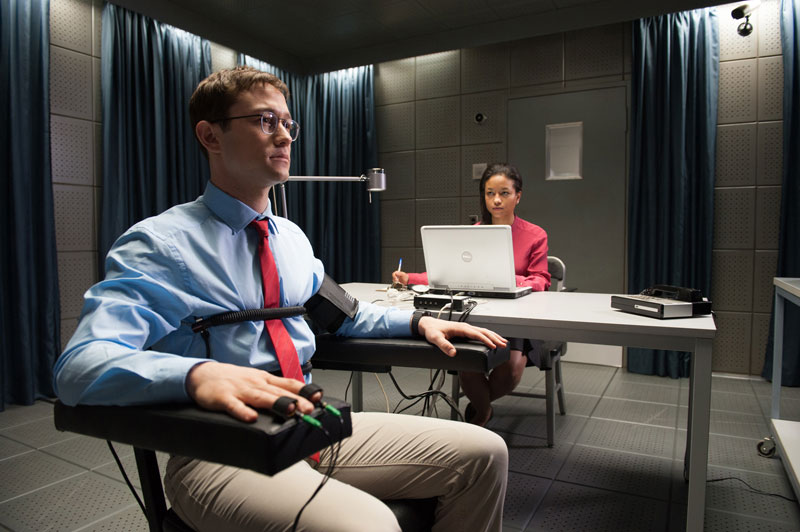
Taking place years before the NSA leak, Snowden, portrayed by Joseph Gordon-Levitt, is an American just wanting to do his best to support his country. He’s worked in numerous jobs with the government before, including the Special Forces and C.I.A. But when Snowden is employed by the NSA, he makes a devastating discovery: the government is surveilling all of its citizens, everywhere, 24/7.

How bad is it? Imagine Uncle Sam looking over your shoulder every second of every day, and you’ve got a pretty accurate idea of the government’s hold on you. Your phone. Your iPad. Your MAC computer. Even if any of these things are off, their cameras and audio software can still pick up everything you’re saying or doing. And that’s not to mention the NSA’s access to your internet, social media, emails, private messages, and video chats, along with every other surveillance tool at their disposal.

This is where the film finds its emotional core, caught square in the middle of political paranoia, distrust, and dread. Our hero is caught in that same place as well, navigating the morality and technicality of this reality trapped, like a mouse running lost through a maze. The end result feels exactly how it sounds: thrilling, revealing, and disturbing.

I’m going to get your biggest concern right out of the way. Joseph Gordon-Levitt is absolutely mesmerizing as Edward Snowden. Like the best method performances, Gordon-Levitt focuses on the slight mannerisms and habits of the real-life figure and mimics them to near exact precision. This is an actor who has taken on a variety of roles in action films, including Inception, The Dark Knight Rises, and Looper. There is no indication in the film that this is the same actor minus appearances. He embodies everything he needs to about Snowden: his social awkwardness, his physicality, his stammering, his idle movements. Everything that he did made me feel like he was a second Edward Snowden. My only complaint is that his voice is a little low-pitched compared to Snowden’s, but for an otherwise flawless performance, this is one flaw I’m willing to forgive.

The screenplay is also very well composed, giving vital insight into this man’s perspective that perhaps we didn’t know how to feel about before. Writer/director Oliver Stone isn’t unfamiliar with controversial subject matter. From confronting the U.S.’s treatment of veterans in Born on the Fourth of July, to conspiracy theories in JFK, to violent escapades in Natural Born Killers, Stone is experienced with telling a wide variety of stories and how they affect modern society. Snowden seems like a perfect fit for him. Stone confronts the facts headfirst, not shying away from any of the details, no matter how disturbing they may be to us. The resulting message does everything a film is supposed to do: it thrills us while at the same time informing us.

All the same though, there were some moments that just did not work with this picture. I’m talking about scenes and elements that sharply collided with the movie’s tone and took you out of the experience rather than further immersing you. The first thing I’m going to mention is the score by Craig Armstrong, which is an unusual thing to mention because in a movie about Edward Snowden, you would think your first complaint wouldn’t be about the music. In one early scene during Snowden’s special forces days, the score was so soupy and melodramatic you would think they were trying to emulate Saving Private Ryan. Kinda off-tone for a movie about government surveillance and whistleblowers, don’t you think? His score does eventually come back to the sharp rhythms and ominous tones that are appropriate for a subject like this, but even then, the soupy melodies repeat two or three more times in the picture. The inconsistencies in this score take us out of the moment of tension that we’re supposed to be feeling and throws us into a state of perplexity, as if we’re not sure what sort of movie we’re supposed to be watching here.

But then in other scenes of the movie, you can’t fairly place blame on the music. Some scenes were just plain directed badly. In the omnipotent climax of the film, the highlight moment of the picture, the one where Snowden commits the act that we all know he’s inevitably heading towards, he finishes doing what he does, then he… smiles? His life has just been ruined, he’s now officially going to be hunted by the government as a fugitive, he has to run away from his home, his family, his friends, everything he has ever known to live in a country all by himself. And in this moment of self-sacrifice and legal martyrdom, he chooses to smile with the sun brightly illuminating his face, his hair blowing carefree in the wind? That’s not on-the-nose, cheesy, silly, and plain corny in any way, Stone. There’s no way to excuse a scene like that. It demanded a reshoot.

I fully believe everything I saw in Snowden. I don’t doubt a single frame in it. I believe it is real and it scares me. That’s a good thing though, because its supposed to scare you. The things you’re watching are things that have happened to you, and you should not be okay with them. You may not know the full story, but this is your opportunity to know.

Snowden may be the most important film you see this year, even if it isn’t necessarily the most well made.

Tagged , , , , , , , , , , , , , ,

“13 HOURS: THE SECRET SOLDIERS OF BENGHAZI” Review (✫✫✫1/2)

Hell in half a day.

Here are the facts. On Sept. 11, 2012, the same day as another infamous tragedy, a U.S. compound in Benghazi was attacked. Four Americans were murdered that day, one of them being ambassador Chris Stevens. The rest of the on-site personnel fought for their lives for over 13 nightmarish hours against an enemy as cruel as they were relentless. This much is indisputable.

In the aftermath of the Benghazi attacks, there were accusers from all sides looking for someone to blame. The Republicans blamed the Democrats for being ignorant to the threat in the middle east. The Democrats wrote off the Republican’s criticisms as embellishing the truth. In their accusations against the other party, both forgot about the party that mattered the most: the American survivors. They didn’t care about left-wing or right-wing democracy. They cared about one more gasp of breath, the next plane that was flying out, how soon they could see their families again, maybe even hearing their voices one last time. You can talk politics about the situation all you want, but you cannot deny the 13 hours when someone’s family members were stuck in that hellhole.

I myself do not care about two party politics. They distract from the larger issues at hand, such as the growing anti-American sentiment in the middle east or getting our own citizens back home to us. Michael Bay apparently shares my emotions as he brings us 13 Hours: The Secret Soldiers of Benghazi, an exhilarating and heart-racing look at the soldiers fighting on the front lines, not the politicians making speeches from behind them.

In this adaptation of the real-life tragedy, 13 Hours follows the Global Response Staff (GRS), a team of ex-military operatives assigned to protect a U.S. compound based in Libya. Keep in mind, this is not an official embassy. Technically speaking, the U.S. isn’t even supposed to be in Libya. But legalities haven’t stopped the U.S. from operating outside the law before, and it’s not very likely to start now.

There are six men assigned to the GRS task force. One of them is Jack Silva (John Krasinski), a father of three with another one on the way. The rest of the team members aren’t so different from Jack. In one pivotal scene before the aforementioned events take place, all of the soldiers are on phones and videochats, talking to their wives, sons, and daughters back home, all whom are eagerly waiting to see each of them again. In this very important moment, we see these soldiers not as killers, but as human beings.

And of course, you already know what happens from there.

The best thing about this movie by far is the action. That’s so unusual for me to say, because most of the time, the action is the most overused part of any movie. Here though, the firefights are so exemplary, chaotic and explosive all at once, throwing our heroes through nearly impossible stakes that keep building as the movie goes on. The one thing Michael Bay is excellent at directing is action, and the firefights get so intense and on-edge that you question if our heroes can make it out multiple times.

But that’s not all Michael Bay does well here. Surprisingly, he exercises excellent restraint in slower-paced moments as well. In one early scene, Jack and fellow team member Tyrone Woods (James Dale) are at a standstill with a Libyan militia. I think I counted eight men training their guns against the two of them in their car. Woods tells them that a drone is flying over, and if anything happens to them, it’ll launch an airstrike against him and his men. After a narrow escape, Jack asks if they really had a drone on this assignment. Woods scoffs. “What do you think?”

I didn’t notice any obvious political motives from the film. I don’t care about them if they are in there. As a film critic, I’m not looking for those. What I am looking for is emotion, pacing, timing, things that help build the mood of the scene and help further implicate the ideas the movie is expressing. The best movies combine entertainment with relevance, and 13 Hours does that stunningly well. Think of a movie blending the paranoia of Zero Dark Thirty with the violence and grit from Black Hawk Down, and you get 13 Hours.

I’ve been very critical of Michael Bay in the past, and I think rightfully so. His Transformers movies have long plagued Hollywood with its stupid writing and absent-minded, overblown action sequences, while Pain and Gain was as offensive to its real-life subjects as it was to its movie theater attendants. With 13 Hours, however, Michael Bay finds himself in the zone, expressing his own style while at the same time spreading awareness on real-life issues. Thank God for those six men that found themselves fighting for their lives in Benghazi on Sept. 11, 2012. Without them, those 13 hours could have gone a lot worse.

Tagged , , , , , , , , , , , , , , , , , , , , , , , ,