Author Archives: David Dunn

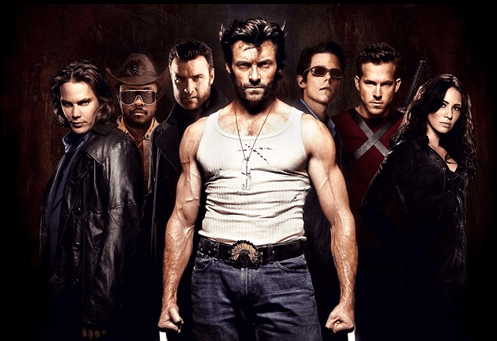
“X-MEN ORIGINS: WOLVERINE” Review (✫)

SOURCE: 20th Century Fox

Pop those claws back in, bub. 

The fatal mistake that X-Men Origins: Wolverine makes besides its God-awful title is focusing more on the “X-Men” part than the “Wolverine” part. We’ve seen three X-Men movies now, guys. We get it. Mankind fears and hates mutants. Mutants are the next stage in human evolution. Blah blah blah, all that jazz. But with a Wolverine-centered movie, I was hoping that they would focus less on the recurring themes of the series and make it a more personal narrative to everyone’s favorite X-Man. Unfortunately, the studio didn’t want the same thing. Instead, X-Men Origins: Wolverine is more focused on making comic book cameos than it is in making a compelling story for its key character. It’s more of an X-Men movie than it is a Wolverine movie, and it’s not a good one at that.

In this prequel to the X-Men trilogy, we discover the origins of Wolverine, A.K.A. James Howlett (Hugh Jackman). When his unusual mutant powers break out and James discovers the claws in his body, James goes on the run with his brother Victor Creed, A.K.A. Sabretooth (Liev Schreiber). After fighting in the Vietnam war together, the two brothers join a mutant task force called Team X that is led by Major William Stryker (Danny Huston). But after one too many violent genocides from the task force, James resigns from Team X and tries to live a normal life by himself and his lover Kayla Silverfox (Lynn Collins). Now Sabretooth and Team X have come back into James’ life, and he has to sink once again into his Wolverine alter-ego to free himself of his past forever.

Right off the bat, I need to point out the biggest flaw with this haphazard of a movie: it’s too much. X-Men Origins: Wolverine tries to do too many things all at once, and it does all of them badly. It tries to be a Wolverine origin story, an X-Men prequel, an introduction to new mutant characters, and a fun action movie on top of all of this.

Let me leisurely break down why it fails in every one of these goals:

1) The screenplay is too by-the-books. Skip Woods, who wrote Hitman prior to this, focuses too much on explaining Wolverine’s history and not enough on how it impacts him as a character. There’s no teeth in it, no grit or compelling force that makes his story worthwhile or meaningful to us. It feels more like fanfiction written for discussion rather than an established continuity for the X-Men universe.

2) Speaking of the X-Men, there are two X-Men here in the movie besides Wolverine. They are the younger Scott Summers/Cyclops, portrayed by Tim Pocock, and Patrick Stewart as Charles Xavier, here with the use of his legs. There is absolutely zero reason to have them in this movie. They contribute nothing to the story, nothing to Wolverine’s origin, and nothing that makes any worthwhile impact on the film. They’re only there as forced cameos so that viewers can point at them and be like “Uh Look! That’s them before the X-Men movies! Huh huh.” Except that this now creates a massive plot hole, once you question how they could be so close to the action, yet not remember him years later.

3) So we already have three characters we don’t care about in the movie. Want to add 15 more just for fun? No? Well too bad, here they are anyway. In most of the X-Men movies, its hard to keep up with the full roster because of how many characters are jam-packed into them. But now it’s getting ridiculous. Besides the aforementioned characters, there are a slew of other mutants here that are not memorable, or useful, in any of their scenes. We have will.i.am as a teleporter, Kevin Durand whose mutant power is literally being fat, Dominic Monaghan as a living battery, Taylor Kitsch as someone who can light cards on fire, and Ryan Reynolds with his mouth sewn shut who has blades coming out of his arms. The logic of that one just baffles me completely. If you have literal swords in your arms, how do you plan to even move them around? One wrong move, and you have a giant blade sticking out of your elbow. Imagine how inconvenient that would be at the dinner table.

4) There’s no excuse for this one. No excuse that in even in a Wolverine movie, the visual effects and the fight scenes are garbage. In X2, we had a great demonstration of Wolverine’s savagery as he ripped, stabbed, and mercilessly shredded people in the mansion raid scene. Here, that grit and violence is gone as Wolverine blows up helicopters, topples over buildings, and even gets into boxing fist-fights just like any other stock action hero would. Some of the fight scenes are so ridiculous that having Arnold Schwarzenegger in them would make more sense than Hugh Jackman. I can’t make this up. It’s so cartoonish and stupid that I was left wondering if this is why Stan Lee didn’t film a cameo for this movie. I wouldn’t put it past him if that were the case.

Does it sound like I’m spreading myself thin here? That’s probably because I’m writing about a movie that is spreading itself thin. X-Men Origins: Wolverine is not only the worst title out of the X-Men movies so far: it is also its unequivocal worst film. I detested every moronic minute of this insipid, idiotic, pretend-thriller. Nothing landed in this movie. The characters, the acting, the writing, the choppy editing, the fights, everything falls apart and fails to deliver anything of any value. Fans complained about X-Men: The Last Stand, but at least that one expressed some interesting ideas. X-Men Origins: Wolverine fails to even be stupidly fun. It just reaches stupid.

I give this film one point, and one point only, and that is that Hugh Jackman, as always, makes a great Wolverine. His snarl, his ferocity, his fierce presence commands the role. He is perhaps one of the greatest superhero casting decisions ever made, next to Robert Downey Jr. as Iron Man or Wesley Snipes as Blade. The problem isn’t Jackman’s performance. The problem is the movie doesn’t know what to do with his performance. Because of this, Jackman’s efforts are in vain as he’s thrown through a silly script and an even sillier movie, downplaying his emotions and his efforts in the role. Say what you will about the previous X-Men movies, but Wolverine deserves better treatment than that.

By the end of the film, Wolverine’s story concludes exactly as you expect it to: with his memory wiped, forgetting everything he just went through. I wish I were in his position.

Tagged , , , , , ,

2016 Oscar Predictions

I’m preparing to rename the 2016 Academy Awards “The La La Land Awards.”

Seriously, ever since it broke award records at the Golden Globes back in January, the amount of traction La La Land has received has been absolutely ridiculous. Almost immediately, everyone started predicting that La La Land would sweep awards season, from the BAFTAs all the way to the Academy Awards. That train kept going and going and going, and like the Energizer Bunny, it never stopped.

I know two things for certain at this point: Jackie Chan will win an honorary Oscar, and La La Land will sweep Oscar night. That’s it. I don’t know how many awards La La Land will win, or what awards the other best picture nominees will win, and I especially don’t know what will win in those blasted short categories. A lot of people are saying that there’s a strong chance that La La Land will win 11 Oscars, putting it in an exclusive club with Lord of the Rings: The Return of the King, Titanic, and Ben-Hur. With my current predictions, I have them winning 10 Oscars, but it can really go in any direction on Oscar night.

Either way, I’m expecting a full rundown of snubs and surprises this year, just as there are a few during every ceremony every year. Let’s go through my predictions and see where they’re expected to be:
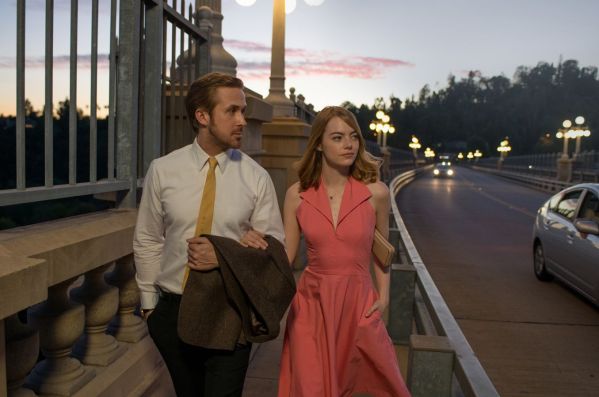
Best Picture: No surprise here. La La Land is going to take home the highly coveted award for best picture. Last year, I went against my gut predicting that The Revenant would beat out Spotlight for best picture. While I was correct in predicting the other categories, Spotlight still managed to nab the top prize, despite only winning one other award from the night. I’m not going to make the same mistake again this year. La La Land it is.

Best Director: Damien Chazelle won the DGA, so more likely than not, that also means he’s going to win the Oscar. He wasn’t nominated in 2014 for his masterful work on Whiplash. Him winning for La La Land this year will make up for that snub years ago.

Best Actor: One of the first categories where the odds are split right down the middle for me. It’s down to Manchester By The Sea and Fences for this one. Casey Affleck won the golden globe. Denzel Washington won the screen actor. Who’s going to take it?

It’s a tough race, but I’m going with Denzel for a few reasons. First, the Screen Actors Guild is more accurate at predicting best acting Oscars than the Golden Globes are, even if it is by a fraction. Second, with most best actor wins, their performances usually break out emotively, expressing a wide range of emotions for voters to judge from. Great as Affleck’s performance was in Manchester By The Sea, it was also very muted and soft spoken, which works against him compared to Denzel’s confrontational, intimidating presence in Fences. This category really is a flip of the coin here, but I’m betting on Denzel.

Best Actress: Another pincher. Emma Stone for La La Land versus Isabelle Huppert for Elle. Who will win? Since Stone has La La Land by her side, I’m betting on her. Again though, this category can go either way.

Best Supporting Actor: Mahershala Ali for Moonlight. Even though you could make a strong argument for Dev Patel in Lion or Michael Shannon in Nocturnal Animals, Ali has had the traction for a long time now and strong support from the acting community. If he didn’t get it now, it would be one of the biggest upsets of the year. Considering we already got one last year with Sylvester Stallone losing for Creed, I’m not looking for another upset anytime soon.

Best Supporting Actress: Can we all agree that Viola Davis was robbed in 2011 from her performance in The Help? Her portrayal as a confused yet courageous housemaid compelled the film forward in its narrative and made her one of the standout performances of the year. She deserved to be recognized alongside her acting colleagues including Jean Dujardin in The Artist, Christopher Plummer in Beginners, and Octavia Spencer in The Help as well. The award instead went to Meryl Streep for her performance in the dull, lifeless, mind-numbingly tedious The Iron Lady. Oh, don’t worry about it Academy voters! Give her all of the awards, why don’t ya?

In the place of that massive snub, Viola Davis will win her first Oscar this year for portraying the supportive, strong-willed, yet heartbroken Rose Maxson in Fences. The fact that she will be recognized for her hard work is encouraging. The fact that she will get it at the cost of Naomie Harris’ performance in Moonlight is not. Different performances, yes. Powerful performances, yes. But when it all comes down to it, it’s a matter of opinion, not quality, as to which performance deserves the Oscar more. I felt Harris’ was superior, but I have a feeling I’m going to be in the minority on that one. It’s a shame Harris and Davis had to go against each other in the same year. They’re both outstanding talent.
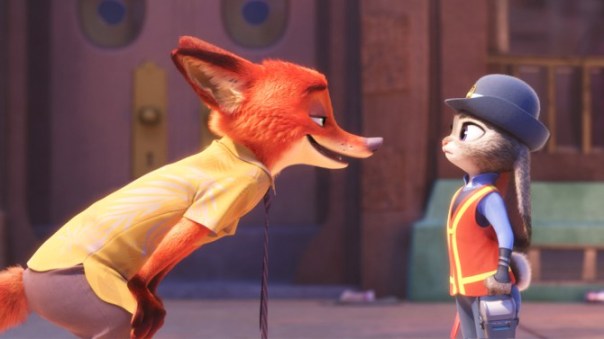
Best Animated Feature: Zootopia. Even though Disney’s other animated nominee Moana is more deserving, there’s no denying the popularity and the influence that people share for Zootopia. Cute and cuddly zoo animals beat The Rock going on a deep sea adventure.

Best Documentary Feature: O.J. Simpson has been getting a lot of attention this year. The TV drama based on his notorious murder case, “The People V. O.J. Simpson: American Crime Story”, broke critical and commercial barriers and won the Golden Globe for best television miniseries. His documentary O.J.: Made In America also swept critics’ top ten lists, both for best of the year and for documentaries. I can’t see another film winning this year, so I’m going with O.J.: Made In America.

Best Foreign-Languge Feature: I have a good feeling about Toni Erdmann. While The Salesman has also been getting a lot of traction and buzz for the Oscar, Asghar Farhadi already won the foreign-language Oscar in 2012 for A Separation. Repeated wins are unusual in this category, so I’m betting on Toni Erdmann in its place.

Best Original Screenplay: The great thing about La La Land is how many layers it has to peel away, not just as a fun and snappy musical and comedy, but also as a complex drama, a heartfelt romance, and a journey towards pursuing your dreams. The script is one of the greatest things about La La Land, but it isn’t the best thing. No, the best things from the film are its brilliant score and standout performances from Emma Stone and Ryan Gosling. The script supplements their talent. It doesn’t provide it.

Since this is the case, I’m going against the grain here and guess that Kenneth Lonergan will win best original screenplay for Manchester By The Sea. That’s a movie that has less to work with than La La Land does, and yet, it ends up doing so much more. It’s a heartbreaking tragedy, a family drama, a dark comedy, and a tale of mending open wounds that achieves everything that it set out to do. For its ambition, bravery, and intimacy in handling the delicate topic of death and how we react to it, I’m going with Manchester.

Best Adapted Screenplay: It’s hard to imagine any other nominee winning this year besides Moonlight. That’s because with it, Barry Jenkins broke barriers in racial, economic, and homosexual communities, and it allowed viewers to understand its characters because of their experiences, not because of what they looked like. Arrival was equally genius in its structure and Fences was faithful to its source material. But I’m going with Moonlight, if for no other reason than it deserves it the most.
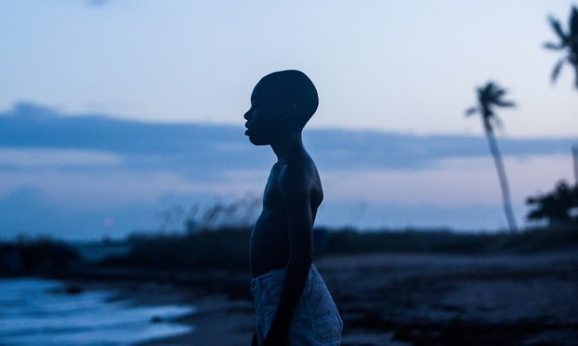
Best Film Editing: I’m going to start this by saying that literally everyone in this category deserves the award over Tom Cross for La La Land. Everyone. Joe Walker’s smart sequencing of events built up the intrigue and the mystery surrounding Arrival. John Gilbert’s assemblage of chaotic, bloody firefights in Hacksaw Ridge made all of the madness clear and readable. And Moonlight was especially outstanding in its editing, in how it gradually built up Chiron’s childhood and how it carried over into his adult years. All of these nominees are most deserving for the Oscar for best film editing. None of them will get it.

Instead, Tom Cross will win best film editing for work on La La Land. Why? Because he won the ACE award for best editing, which is more often than not accurate in predicting the Oscar winner. So Cross it is.

If this goes down as I predict, this will be the win that frustrates me the most on Oscar night. Don’t get me wrong, Cross is an exemplary editor. But the editing is not the thread that holds La La Land together. It is the music, the acting, the story, the cinematography, the art direction. Every element in the film fits and works with each other in the way that it needs to. Cross just had to assemble it all together. I realize that in itself is a time-consuming job, but it required no innovation on his part, no deep attention to detail. Just an observation on the characters and the scenery and arranging clips into the right order.

If you think I’m overreacting, look at his work on Whiplash, which won him his first editing Oscar in 2014. Now compare that to La La Land. You will see for yourself how much more difficult and impressive it was to edit that action together compared to the lighthearted ambiance of La La Land.

Moving on.

Best Cinematography: The best cinematographer in this category easily goes to Bradford Young, whose skillful, deliberate shots built up the suspense and the eerieness of Arrival. But by this point in the night, La La Land will already be on a roll, and I don’t expect Arrival to derail the train anytime soon. Linus Sandgren will win best cinematography for La La Land. Celebrate by singing a song and two-stepping to it.

Best Makeup and Hairstyling: This is a difficult category to pick this year, because unlike previous years, there’s no clear standout among the nominees. A Man Called Ove is so under the radar that it’s barely gotten any attention, so you can already cross that right off the list. And everyone hates Suicide Squad, so I don’t expect a win there either. Since I’m out of options, I’ll begrudgingly guess Star Trek Beyond will win the Oscar, even though it’s only repeating the work that it did the first time it won in 2009.

Best Costume Design: While Jackie and Fantastic Beasts and Where To Find Them both demonstrated some outstanding outfits, it’s hard to imagine La La Land working without the great costume work by Mary Zophres. From Ryan Gosling’s suave jazz suits to Emma Stone’s elegant dresses, her costumes made every scene come alive with the music. For that reason, I’m going with La La Land.

Best Production Design: First thing’s first: Passengers, get your butt out of here. Doctor Strange deserved to be in your place. Second: with a pack of outstanding nominees including Arrival, Fantastic Beasts, and Hail, Caesar!, it’s hard to pick the most worthy out of these nominees. However, none of these films throw you back to the classic Hollywood musical days where sets were filled with bright lights, vibrant colors and beautiful designs. I’m going with La La Land since it does exactly that.

Best Musical Score: La La Land. It will be a national outrage if anything else wins.

Best Original Song: This award is obviously going to go to La La Land. The question is for which song? La La Land is nominated twice here, once for “City of Stars” and another for “The Fools Who Dream.” Considering that I’m still humming “City of Stars” weeks after seeing the film, I’m placing my bet on that one.

Side note: Twenty One Pilots should have been nominated here for their phenomenally dark and ethereal work on “Heathens.” Suicide Squad got straight up robbed on that one.

Best Sound Editing: How many action films have won for best sound editing? Too many, that’s how many. From the past six years, six action films have won the Oscar in this category. Skyfall and Zero Dark Thirty tied in 2012. American Sniper won in 2014. And Mad Max: Fury Road also won last year. At this point, I would be foolish not to go for the action-packed war epic like all of the Academy voters. So I’m going with Hacksaw Ridge. Deepwater Horizon also has a good chance of nabbing it too.

Best Sound Mixing: La La Land. It’s hard to time music to action on-screen, especially when that action includes tap-dancing and motion choreography. La La Land did exceptionally well not only with its music, but with making it relevant in every scene. So La La Land it is.

Best Visual Effects: The most visually impressive out of the nominees here is easily Doctor Strange, whose shape-shifting, mind-bending visuals bend and break reality barriers like you wouldn’t believe. Visual effects are supposed to be transportive in their art, and I haven’t visually seen a film like Doctor Strange since Avatar or Inception.

Unfortunately, I don’t think it’s going to get it. Why? Because a Marvel property hasn’t won a best VFX Oscar since over a decade ago with Spider-Man 2. If Iron Man, The Avengers, Captain America: The Winter Soldier, Guardians of the Galaxy, and X-Men: Days of Future Past couldn’t nab it, then it’s highly unlikely Doctor Strange will now, no matter how good the visual effects may be. The fact that Captain America: Civil War isn’t even nominated in this category should tell you everything about the Academy voter’s opinions of superhero movies.

Since that is the case, I’m going with my runner-up option, which is Jon Favreau’s live-action remake of The Jungle Book. His team expertly combined practical effects with CGI, and the body movements of the animals were so accurately depicted that it’s hard to tell that they’re not real animals. If The Jungle Book had any achievement, it was in its visual effects, so that’s the one I’m going with.

And now we come to the infuriating short categories. I never know what to put any year, considering I’m never able to see any of the nominees. The following are just blind guesses: Piper for animated short, Joe’s Violin for documentary short, and Silent Nights for live action short. Watch me get all of them wrong this year. Just wait.

That concludes my predictions for this year’s La La— oops, I meant Oscar ceremony. I’ll see you guys on awards night, preferably without any singing.

– David Dunn
Tagged , , , , , , , , ,

Diego Luna Is Going To Become Scarface, My Little Friend

Say hello to Diego Luna.

You might remember him from a few movies. The Terminal. Elysium. A small movie released back in December called Rogue One: A Star Wars Story. You know, just a few movies.

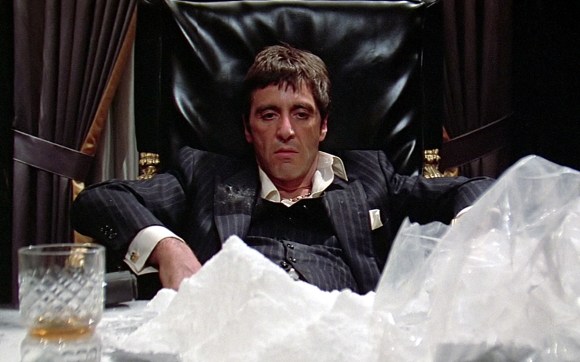
Well now, it looks like Luna is going to have to throw on his gangster’s vest, because he has reportedly been cast as Tony Montana in the remake to 1983’s Scarface. Originally portrayed by “The Godfather” himself Al Pacino, Scarface is loosely based on the life of notorious gangster Al Capone, adapted from the 1930 book of the same name. While not much is known about the production, we do know that Training Day filmmaker Atoine Fuqua was in talks to direct, while The Wolf of Wall Street scribe Terrence Winter will be writing the screenplay. And of course, Luna will be portraying the titular character.

Normally, I don’t like reporting on remakes, because they’re usually so stupidly unnecessary, like when Disney announced doing a live-action Lion King remake. However, I make exceptions when they’re new actors or new interpretations to the work that makes it unique to the original. The Departed was like that, as well as King Kong. And Beauty and the Beast looks like it’s heading that direction too.

kinopoisk.ru

But the sheer fact that it’s Diego Luna portraying the cocaine-selling criminal that makes me all the more excited for it. He was one of the standout performances in last year’s Rogue One, and his talents seem to be paying off well for him. If he’s lining up with the crew that I think he is, this is going to be a very exciting remake to watch, and it will especially be exciting to see how he performs in it.

Are you excited for Diego Luna’s Scarface remake? Or do you want him to say “hello” to his little friend? Comment below, let me know.

– David Dunn

SOURCE: The Independent, Screenrant.

“CRASH” Review (✫✫✫✫)

SOURCE: Lionsgate Films

There is no us against them. It is only us.

“It’s the sense of touch. In any real city, you walk, you know? You brush past people, people bump into you. In L.A., nobody touches you. We’re always behind this metal and glass. I think we miss that touch so much, that we crash into each other, just so we can feel something.”

– Detective Graham Walters, Crash.

I couldn’t sleep the night that I watched Crash. That’s because I crashed into somebody.  26 different people, in fact. In life, we are so self-consumed by the business and burdens of our lives that we never stop to think of how we might affect the lives of the people around us. So we crash into them. Sometimes it’s just a fender-bender. Sometimes it’s a straight-on collision. But it always has repercussions, whether it’s an exchange of flurried insults, or the breaking down of someone’s worth and self-esteem.

There are no characters in Crash, only faces that you remember. Those faces belong to Don Cheadle, Jennifer Esposito, Shaun Toub, Bahar Soomekh, Chris Bridges, Larenz Tate, Sandra Bullock, Brendan Fraser, Matt Dillon, Ryan Phillippe, Terrence Howard, Thandie Newton, Michael Pena, Yomi Perry, Ashlyn Sanchez, Karina Arroyave, Loretta Devine, Beverly Todd, William Fictner, Keith David, Greg Joung Paik, Nona Gaye, Bruce Kirby, Tony Danza, Kathleen York, Sylva Kelegian, and Marina Sirtis. I list all of them out only because they all matter. You’ll only recognize a few by name or from another film. But you care about all of them, no matter how small their role may seem.

To cover the full scope of Crash would be impossible. It takes place over the course of a few days in downtown L.A. and features an assortment of people that affect each other’s lives in one way or another, whether they realize it or not. I use “people” instead of “characters” because these are not fictionalized troupes that could only exist in a movie. These people feel, breathe, talk, and behave like any real person would. Even though the movie is classified as fictional, you can easily see the events happening to someone else in real life. In many cases they’ve already happened, and more than likely they’ve happened to you.

One of them already happened to writer-director Paul Haggis, who was inspired to write Crash after having his car stolen by a pair of carjackers. Playing it back in his head, he creates a path that starts with the carjackers, then it follows to the theft victims. Then it follows the locksmith at their house. Then it follows one of his customers that got his store broken into. Then it follows his daughter at her night job and et cetera, et cetera until it paints a beautifully written, tragic path between all of its subjects, creating a recurring pattern of judgement and apprehension that each person shares, that each person is guilty of.

And none of these people are innocent of prejudice. None of them are blameless for contributing to the problem. All of them are guilty of judging based on appearance, no matter if they’re White, Black, Mexican, Latino, Persian, or Chinese. It shows very vividly that there is not a difference between the perpetrators and victims of racism. There are only victims.

This perspective is so important because it humanizes everyone in the film, no matter what malice or misdeeds they commit. Imagine, if you would, if every character in this film were one race. White, Black, Mexican, Indian, Asian, whatever. Now imagine all of them throwing their same prejudice and judgements on each other even though they all look the same. The movie would look pretty silly, wouldn’t it?

Yet the movie makes complete sense, because of the stereotypes and the xenophobia we learn growing up. How sad is it that as a person, you can identify and understand why these people behave and react the way they do? How maddening is it when in one moment we get angry at a character for calling someone a criminal, a gangster, a hoodlum, or a terrorist, then we look at the mirror and realize we do the same thing? The people in the movie see each other for what they look like, but the movie never does. It only sees them as fathers, mothers, sons, daughters, brothers, sisters, family, friends, people.

I felt genuinely ashamed while watching Crash. Guilt-ridden, heartbroken, frustrated, upset, angry. That’s because I saw myself while watching it. Perhaps not at the level of a racist cop or an opportunistic district attorney, but in the small, subtle moments. When one woman wants to get the locks changed again because she doesn’t trust the Mexican locksmith “homie” over there, I quietly gasped to myself saying “Oh shoot, I do that too.” And then you see “homie” go home, quietly comforting his daughter when she hears gunshots, kissing her forehead, telling her he will protect her. That’s when you realize “homie” isn’t Mexican or gangster. He’s a father. He’s human.

We don’t want these judgements passed on to us. Yet, we pass them on to others. Why? Because that’s our nature, I suppose. We’re engineered at an early age to judge and be cautious of people based on appearance, so this security mechanism is instilled in our mindset to be wary of someone just because of what they look like. It’s saved our lives many times. It’s also ruined the lives of so many others.

Yet, through this brilliantly interwoven narrative that Haggis creates, he also demonstrates the same remedy for this problem. Kindness. Compassion. Empathy. Many times, at the hands of the people who were cruel or inhumane only a few scenes ago. There’s this genius reversal of character between where someone starts at the beginning of the film versus where they are at the end. In the movie, there is a racist cop who ends up saving the life of a black woman in a burning vehicle. There’s a spoiled housewife who’s wary of Mexicans who ends up saying her best friend is her Mexican housemaid. There’s a black man who demonstrates disregard for Asians, only to save the lives of multiple Asians by the end. A white man who saves a black man’s life, only to take another’s later on. Whether they are on one end of the spectrum or another, by the end of the film, they exist on the other end.

This is so important because it demonstrates that we’re capable of that same kindness and cruelty, whether we want to admit it or not. How many times have you been more open to someone of your race rather than another? How many times have you acted more cautious because of someone’s skin color? How many times do you say “I don’t want to be around this person” because of a generalization or an assumption you have on their character because of their appearance? We don’t want to admit that it’s about race, but what else could it be about? Whether they’re matching colors on their outfit?

The movie technically ends on a cliffhanger, because there are still many things that we don’t know. Does John’s dad ever get the medical treatment he needs? Does Graham ever find the man who killed his brother? Does Anthony find redemption or fall back into a life of crime? Does Farhad ever manage to reopen his store? Does Tom remain in the police force?

I don’t know the answers to these questions, just like I don’t know the answers to my questions or to your questions about the future. Perhaps that’s the point. In life, we don’t know where we’re going, where we’re traveling to, or who we meet on the way. We can’t control the people that come into our lives. We can only control how we react to them. And instead of reacting with fear, maybe we can react with curiosity. Confidence. Belief in the best of people. By doing this, we begin to create an atmosphere of change.

And change doesn’t come in big steps. As Crash demonstrates, they come in small doses of change, whether they be positive or negative. If we focus on those changes being kind and compassionate as opposed to cold and fearful, we change many things at once until we change the world entire. That’s the one that I want to be a part of: one where we won’t have to crash into someone ever again.

Tagged , , , , , ,

Oscars Strike Back

You spoke, Academy Award voters listened. Well, mostly.

After the #OscarsSoWhite controversy last year regarding the obvious lack of diversity in their nominations (all 20 acting nominees were Caucasian), the Academy wisened up with their pool of nominees this year. While there are still a healthy amount of snubs (there are every year), most of the nominees are at least well-deserved, and the nominees don’t seem to be lacking diversity-wise in many areas.

For best picture, we have the eerie science-fiction mystery Arrival, the Denzel Washington-directed Fences, the incredible and emotional war epic Hacksaw Ridge, the western-heist film Hell or High Water, the behind-the-scenes story of the moon landing Hidden Figures, the uplifting tap-dancing musical La La Land, the true story that spans technology and time in Lion, the personal family drama Manchester By The Sea, and the pivotal and passionate Moonlight. From the look of these nominees at first glance, it seems clear that the Academy is trying to make up for their relentless snubbing of Creed and Straight Outta Compton last year, as the inclusion of Fences, Hidden Figures, and Moonlight shows they’re trying to atone for past mistakes that they’ve made.

Still, they’re lacking in some areas. Captain America: Civil War is no where to be found, as well as its profane cousin Deadpool. Both of Peter Berg’s films Deepwater Horizon and Patriots Day were skipped over by the Academy, despite them both being biopics and for featuring outstanding talent from its cast and crew. Perhaps most surprising to me is that they decided to snub A Monster Calls, a fantasy drama that has been getting Oscar talk for a long time now. I guess it goes to show that buzz doesn’t equal results, and with how many Christmas releases are included in the lineup, it especially shows how close to the chest Academy voters play with the nominations process.

For best director we have Denis Villenueve for Arrival, Mel Gibson for Hacksaw Ridge, Damien Chazelle for La La Land, Kenneth Lonergan for Manchester by the Sea, and Barry Jenkins for Moonlight. My immediate reaction is that Gibson and Jenkins are most deserving. After all, it’s hard to take the subject matter they’ve had to deal with and translate it into film so well. Myself personally hopes that Gibson will win it, because he’s had a hard few years and made a comeback as powerful and groundbreaking as Hacksaw Ridge. But he already won best director a few years ago with Braveheart, so it’s unlikely the Academy will strongly consider him again, especially with all of the outstanding talent that he’s up against.

For best actor we have Casey Affleck in Manchester By The Sea, Andrew Garfield in Hacksaw Ridge, Ryan Gosling in La La Land, Viggo Mortensen in Captain Fantastic, and Denzel Washington in Fences. Not much to complain about here. All of the nominees are well-deserved in one way or another, and there’s no obvious snubs like Johnny Depp’s absence last year for Black Mass. I’m sure others will raise arguments about one actor or another, but for the most part, this category is well-rounded. No complaints here.

For best actress we have Isabelle Huppert in Elle, Ruth Negga in Loving, Natalie Portman in Jackie, Emma Stone in La La Land, and Meryl Streep in Florence Foster Jenkins. First thing’s first: Meryl Streep again? Really, Academy? This is literally her 20th nomination. I agree that she’s an outstanding talent, but you don’t need to nominate her every time she makes a movie. Amy Adams was subtle yet masterful in her role as a linguist in Arrival. But no, Meryl Streep needs another nomination, for a movie as clunky, awkward and uncomfortable as Florence Foster Jenkins.

Keep in mind I’m not criticizing Meryl Streep, I’m criticizing the Academy. There are outstanding artists every year yearning for recognition, yet the attention the Academy keeps giving her is taking away from those same performers. At this point, I’m expecting her to get a nomination if she portrays a wood table and chair. She could even win it too.

Back to the nominations. I like that Huppert is nominated for Elle, as French actors usually go unnoticed by the Academy unless it’s in the Foreign Language film categories. But I am also pleased to see Stone under the nominations as well. She’s always been a stand-out talent, from The Help all the way to Birdman. I don’t know whether she’ll win this year or not, but I’m excited to see what the race will be like. This is a category to look forward to.

For best supporting actor, we have Mahershala Ali for Moonlight, Jeff Bridges for Hell or High Water, Lucas Hedges for Manchester By The Sea, Dev Patel for Lion, and Michael Shannon for Nocturnal Animals. An oddity I found in this category was Dev being nominated for Lion. Isn’t he the main character? I haven’t seen the film myself, but I know its about a young boy who uses Google Earth to find his birth parents after years of separation, which is the role that Patel plays. Even if the film uses flashbacks, he’s still portraying the elder version of the main character. Why is he nominated in a supporting role?

For best supporting actress we have Viola Davis for Fences, Naomie Harris for Moonlight, Nicole Kidman for Lion, Octavia Spencer for Hidden Figures, and Michelle Williams for Manchester By The Sea. Again, nothing really lacking in this category, although I would have liked to have seen Felicity Jones nominated for A Monster Calls. I’m personally pining for Harris to win for her outstanding work on Moonlight, but this category can really go any way. Cross your fingers on this one.

The most obvious snubs come from films that are frequently ignored by the Academy, although they shouldn’t be. Suicide Squad got a nomination in makeup, although it should have also gotten nominated for best original song for Twenty One Pilots’ “Heathens.” Deadpool also had outstanding makeup and costume work and is nominated for a Writer’s Guild award for best adapted screenplay. Of course, it isn’t nominated for that same award here.

The biggest snub came from Captain America: Civil War, a movie which really deserved to be nominated for anything. Best Picture. Best Director. Best Adapted Screenplay. Best Sound Editing and Mixing. Best Visual Effects. It got nominated for nothing. Yep, that’s right: it got The Dark Knight Rises treatment in 2012.

To me, this really speaks to how disconnected the Academy voters are to moviegoing audiences. Captain America: Civil War is simultaneously the highest-grossing and one of the highest-reviewed pictures of the year. With its complex story, mind-blowing action scenes, as well as its blurred sense of morality, this is a movie that is more resemblant of our politically-polarized society than it is as an action blockbuster. To look at its depth of layers hidden inside a superhero epic and ignore them is just a plain sham. The Academy Award voters should know better than this.

You can check out the full list of nominees here. In the meantime, I’m sharpening my pencil and checking off on my ballot. I’ll see you on Oscar night.

– David Dunn

Tagged , , , , , , , ,

“LA LA LAND” Review (✫✫✫)

So does “LA” refer to music, or Los Angeles?

Musicals don’t exist in realms of reality. If you have this as your mindset when you go into a musical, 9/10 times you won’t be dissapointed. This expectation helped me to enjoy La La Land, a delightful, energetic musical experiment that is equal parts joyful, uplifting, and honest with itself. I enjoyed it very much even though I knew it wasn’t realistic, and that’s part of the influence of cinema: escaping one reality so you may be immersed in another.

Taking place in modern-day Los Angeles, La La Land follows two hopeful dreamers who aspire to be successful Hollywood artists. Mia (Emma Stone) is a down-on-her-luck actress who works as a barista while simultaneously auditioning for shows. Sebastian (Ryan Gosling) is a jazz pianist who was recently fired from his performance job at a nightclub. As these two run into each other coincidence after coincidence, they soon fall in love with their artistry, and eventually, each other.

With La La Land being the third film written and directed by Damien Chazelle, it feels strange that he would want to come back and do a musical. His last film, the masterfully-paced and enthralling Whiplash, was a tense exercise in perfection and practice, while 10 Cloverfield Lane also demonstrated Chazelle’s characteristics of pacing with tension. La La Land, however, feels so starkly different from those films. From the emotional mood to the artistic direction, La La Land exists in ambiance, throwing you back to the classic musical days where characters broke out into song and dance instead of engaging in conversation with each other. If Whiplash is a vicious, violent train chugging down the tracks at a lethal pace, La La Land is like a feather, whimsically dancing in the wind as it quietly falls down to its next restful stop.

That change of mood is fine. What isn’t is sacrificing quality along with it, and La La Land definitely has a few things to answer for, particularly in the runtime. The movie is two hours and eight minutes long, and it definitely feels like it. From the writing to the editing, there were small things in there that were not needed and could have been resolved with a few quick rewrites and tighter edits.

Example: In the middle of the movie, Mia is caught in a love triangle between Sebastian and her boyfriend Greg (portrayed by Finn Wittrock). None of these scenes were needed. None of them. Greg served no purpose in the film other than just to have Finn Wittrock in it, who admittedly is a talented actor, but that’s not a good enough reason to have him awkwardly shoved in here. He offered no development in either Mia or Sebastian’s story, and the film would have moved on much more smoothly without him in there as a distraction.

There’s other small things, from the sudden dance montages to characters conveniently lacking cell phones in really useful moments (I.e. at Sebastian and Mia’s first meeting, when he asks her out on their first date, when she gets an audition callback, etc.). In an age where cell phones flood every part of our culture, it’s so hard to imagine two people lacking them so often, especially in the heart of a city like L.A.

Compare this to the tempo and flow of Whiplash. Nothing is wasted in that film. Nothing. Every practice scene, every beating of the drum, every fiery argument between Neiman and Fletcher drives home a point about passion and sacrifice. Whiplash was tight, effective, and masterful in its art. La La Land has more fun with it.

That’s not to say La La Land isn’t enjoyable. It definitely has an upbeat, feel-good rhythm to it, guaranteed to get you dancing on your feet and humming the song’s melodies out loud. Part of this is because of the wholly earnest energy sprouting from Gosling and Stone’s chemistry. With this being their third collaboration together (the first two being Crazy, Stupid, Love and Gangster Squad), this film is easily the best representation of their talents together. They do well no matter what scene they’re in, whether they’re subtly flirting with each other, sharing a moment of romantic passion, dancing the night away in a wonderful musical number, or are arguing in a heated moment. They make every moment come alive and immediate. Stone especially demonstrates immersive talent, and in her audition scenes as an actress, she feels like she’s playing two characters at once. That’s because she is.

I like a lot of things about this film. The music is catchy and meaningful, with each number saying more in each scene than character’s dialogue can sometimes. The set design is bright, vibrant, and colorful, with some scenes painting a more vivid picture than any painting or photograph can. The choreography is especially impressive, with characters moving, leaping, tap-dancing, and flying into synchronized rhythms in-time with the music.

As a musical, La La Land fulfills every requirement and then some, with it being not just catchy and melodic, but also visually spectacular and dynamic. It could have been more effective in some areas, but at the end of the day, Chazelle is doing what he loves by telling this story about two unlikely lovers pursuing their dreams. We can learn an important lesson here. It’s easy to give up on the impossible. It’s hard to pursue your dreams. Imagine what it feels like reaching them.

Tagged , , , ,

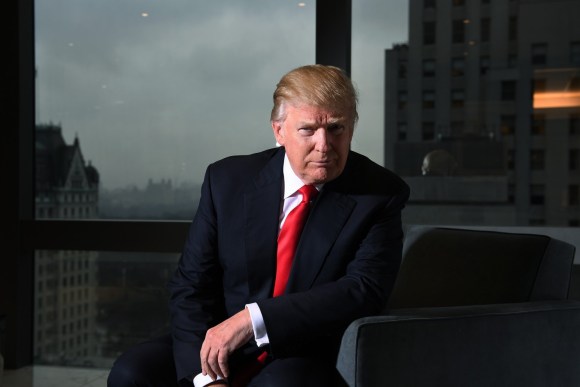
My Final Thoughts On President Trump

Matt McClain/The Washington Post

This is it. This is the last time I’m writing about the 2016 presidential elections. It’s the last time I’m thinking about it, it’s the last time I’m talking about it. After this, if the new administration makes a decision that I feel conflicts or contradicts with America’s ideals, I might write about that then. But I’m done talking about the elections themselves. They’ve far outlived the conversation.

First of all (and I think this is a fair question to ask), what the hell happened? When I wrote my last post about the elections last year, I predicted that Hillary would be the next president of the United States. She had everything working in her favor. A well-spoken demeanor and good articulation of her argument. A political career that spanned more than 20 years. The support of an entire political party, multiple celebrities, and more than half of the country’s millennial population.

And of course, Donald Trump was her opponent.

I didn’t want Hillary to win. I didn’t want either of them to win. Both of them had demonstrated qualities that did not represent the office or America’s best interests, from the email scandal to the “Grab em’ by the p*ssy” video. But seeing her career pitted up against a candidate who had offended women, minorities, immigrants (both legal and illegal), the LGBT community, and war heroes, I didn’t see any chance of Trump winning. Perhaps underestimating him was my mistake.

By the end of it all, Hillary won the popular vote, by a small margin. 65 million votes against Trump’s 62 million. That’s 48 percent against his 46 percent, nearly split even.

But, as we all know, popular vote doesn’t count: electoral vote does. And since Trump’s biggest wins came from swing states (Ohio, Florida, etc.), he won the projected electoral vote and the presidency.

SOURCE: 270 To Win

I’m not surprised that the American people voted the way they did. Since Clinton was announced as the democratic nominee in July, the elections have been split sideways in every which way and direction. Yes, the Democrats had all of the ammo at their disposal that Trump tweeted about, but the Republicans had an equal amount of dirt on Hillary due to the WikiLeaks hacks. Russian interference or not, that information revealed some very important things about the Clintons to the American public.

That Hillary wasn’t as much for climate change and gay rights as she claimed she was.

That she told her Wall Street donors in a paid speech that they need “both a public and a private position.

That she was leaked questions in advance of the first televised debate.

That she hired Debbie Wasserman-Schultz on her campaign after she deliberately shut out Bernie Sanders from the democratic primaries.

That media directly collaborated with the Clinton campaign for coverage, including The New York Times, MSNBC, and The Hill, among many others.

What your opinion is of the information provided is up to you. The fact remains that this information was out there and it stirred up a paranoia of political distrust in the American people. That political distrust went head-to-head against Trump’s uncouthness, and eventually, political distrust won. Donald Trump is the 45th President of the United States.

Honestly, what I’m most surprised about is not that Donald Trump won, but that the electors voted the way that the American public did. In 15 out of the 30 states that Trump won, the electors could have voted for anyone that they wanted to. They were not technically held by the votes of the public, although voting against them would technically be considered unconstitutional. They still had the ability to vote for Clinton against Trump if they wanted to. A few might have been hit with some legal fees or charges, but the vast majority was unhindered by these. Election or not, they had the real choice in their hands. They chose Trump.

What this tells me, then, is that the political paranoia is not just coming from the American people. It’s also coming from the governors, mayors, senators, and former politicians of this country. They could have voted to keep the political wheel spinning. They chose to stop it.

In a way, I’m glad that Trump won. It shows how broken the two-party system really is in our country, and his victory reflects the failures of both of those respective parties. Trump is everyone’s fault. Not just one party or the other’s. Everyone, mine included.

Trump is the Republican’s fault for allowing him to even run in the first place despite his inexperience. Trump is the Democrat’s fault for rigging their primaries and for trying to take advantage of Trump’s nomination. Trump is the Libertarians and the Green Parties fault for splitting the vote and the election. Trump is my fault for writing in a candidate instead of voting against him. But I wasn’t going to vote against my conscience, just as no other voter was going to do anything otherwise.

It doesn’t matter now. Trump won, and earlier today, he has finally been sworn into office. As I see these events unraveling, I keep thinking about what the next step should be for our country. It seems to be unanimous for everyone. “Unite”, is what I hear everyone saying. The Democrats want to “unite” against Trump. The Republicans want to “unite” under the new administration.

I’m offering a different definition. How about “Unite”, because it’s “The United States of America.”

I do not like Donald Trump. I fervently do not like Donald Trump. Anyone who follows my news feeds know this. But as much as I do not like Donald Trump, I like America even more. If it means a chance at sewing the divided seeds of our country, I am willing to put aside some of my contempt to call him “Mr. President” and to understand why half of our country voted for him. I know the thought of supporting President Trump is reviling to some liberals, but I don’t see it as supporting Trump. I see it as supporting our country. I feel we need that healing more than we need that harsh political discourse.

Creative Commons

This does NOT mean normalizing Trump, however, or the values his administration holds, or the hate crimes and xenophobia his platform has helped inspired. No, this means not avoiding the opposite side, but confronting it head-first to understand why events unfolded the way they did. Democrats can’t understand why Republicans would vote for a loudmouth and a Twitter bully. Republicans can’t understand why Democrats would vote for a criminal and a political mastermind. Since the presidential elections, I have renounced identifying with one party or the other in order to understand both sides. What I find is a recurring trend of everyone not understanding a perspective that the other has. The GOP does not see the hate crimes committed in Trump’s name, and the DNC does not see the political distrust brewing under Clinton’s. These may not be equal issues, but they are real issues nonetheless.

Because of this, I offer– no, I assert that we need to come together. Talk to people you disagree with. See why they think the way that they do. Debate on serious issues back-and-forth until you find one thing that you can both agree on. Demonstrate that you’re more American than you are liberal or conservative.

Do this, because if we don’t and we continue this nasty political discourse, we’re creating the social hemisphere that people like Trump can thrive in. I don’t want Donald Trump happening again. I want America happening again.

– David Dunn


Tagged , , , , ,

Miles Morales Will Be The Next Spider-Man

Peter Parker isn’t the only one swinging around in the spider suit anymore.

Mystery has surrounded the Sony-produced animated Spider-Man film slated for a 2018 release. All we knew was that The Lego Movie directors Phil Lord and Chris Miller were producing, animator Bob Persichetti is directing, and that it was an animated Spidey film unrelated to Tom Holland’s MCU Spider-Man. Now, courtesy of Sony, we know a little bit more about the project. In a media presentation from yesterday, Sony showed some exclusive animated footage from the film that revealed something important.

The Spider-Man that would be featured would not be Peter Parker. It would be Miles Morales.

spider-man-miles-morales

For those of you that don’t know, Miles Morales is an alternate version of Spider-Man coming from the Ultimate imprint of Marvel comics. In this version, Peter died at the hands of his arch-nemesis, the Green Goblin, and Morales shortly takes on the Spider-Man mantle after gaining similar powers to Peter.

When Miles Morales was introduced into the comic-book realm, he took the world by storm. While not being the first African-American superhero to be featured in comics, he is the first ethnic Spider-Man to be introduced into mainstream media. The fact that a black latino Spider-Man could be published and get as popular as he did spoke volumes on the growth of diversity in America, and how it’s slowly spreading and influencing comic book culture as a whole.

There are no further details on who is voicing Morales or who exactly he will be going up against in the film. All we know is that the film is set for a release date of Dec. 21, 2018 and that this is the first time a black Spider-Man will be featured on film. Both possibilities are very exciting.

– David Dunn

SOURCE: Forbes, Sony.com

“ASSASSINS CREED” Review (✫1/2)

Nothing is true, so nothing should be permitted.

There should be a special recognition for filmmakers who somehow squander great material set at their feet. Zack Snyder, for instance, had DC Comics’ two staple characters at his disposal, and yet somehow made a movie as incompetently dull as Batman V. Superman. Gary Ross had Oscar-winner Matthew McConaughey, an intriguing premise, and the historical relevance to back up Free State of Jones, but he didn’t do anything with it despite having that much to work with. And don’t even get me started on Michael Bay and Transformers. That guy deserves an Oscar for how much he ruined a series about a galactic robot war on Earth.

Now we have Justin Kurzel here to continue the trend with Assassin’s Creed, a boring, stupid, frustrating experience that kills any of the fascination or thoughtfulness the video games inspired. Kurzel literally had everything to work with. Oscar-winning talent. A deep mythology built from its source material. Incredibly choreographed action that blows even Mad Max: Fury Road away. None of it amounts to anything worthwhile. Besides Batman V. Superman: Dawn of Justice, Assassin’s Creed is this year’s biggest disappointment.

Based on the video game series of the same name, Assassin’s Creed is set in the present day where a corporation named Abstergo is after an ancient macguffin called “The Apple of Eden”, a device which can control man’s free will and “cure them of violence” (The script’s words, not mine). The head of Abstergo, Alan Rikkin (Jeremy Irons), charges his daughter Sophia (Marion Cotillard) with finding the artifact by tracking the ancestry line of the last man known to have it, an assassin from 15th Century Spain named Aguilar (Michael Fassbender). Tracking his descendants from Spain onward, Sophia discovers his only living descendant: Callum Lynch (Michael Fassbender), an inmate waiting on death row. After rescuing him from his execution, Sophia hooks Lynch up to this machine called the Animus, which allows you to relive the memories of your ancestors, and begins their search for the Apple of Eden.

Let me start with the film’s biggest and most fundamental flaw: the animus. This is, from what I understand, a virtual-reality machine, intended to allow users to relive the memories of their ancestors. Since its making users relive their ancestors memories, why is there a need for a crane? When Callum Lynch is in the present, he is re-enacting the movements of his ancestor from decades ago in real-time, with the crane throwing him around like a rag doll on a puppet string. Why is this necessary? If the Abstergo scientists built a machine that literally allows you to relive the past, why would anyone care if you’re mimicking them in the present? From an efficiency standpoint it makes no sense, and it seems really stupid to be flinging Michael Fassbender around in a big crane while he’s in the machine.

But you know what, that’s fine. Whatever. If Lynch has to move during his animus sessions, I can get behind that. But then that brings up another problem: the editing of these action sequences. While he’s reliving his ancestor’s memories, he’s also mimicking his actions in real-time in the animus. Because of this, the film cuts back and forth between the past and present to illustrate that Lynch is doing this. That would be fine if they did this at the beginning just to assert the idea, but then they keep cutting back and forth between the action throughout the movie. They do this constantly, like we won’t know that Lynch is re-enacting his ancestor’s movements unless they remind us every 30 seconds. The action is so choppy and poorly intercutted that its akin to switching in between two different channels on a television. You can’t keep up with what’s happening on one channel or the other, so why even bother to show us both at the same time?

This film is from Justin Kurzel, who before this has received critical acclaim for directing Snowtown and last year’s adaptation of Macbeth. What happened to him? My guess is studio interference. With this being a video game adaptation, there is an obvious pressure to relate to the aesthetic and feel of the source material in order to satisfy gamers of the original series. Add that on top of the pressure that there hasn’t be a satisfying video game movie ever (See Resident Evil, Doom, Prince of Persia, Mortal Kombat, Super Mario Bros., etc), and you have an unreasonable amount of expectation to set on one director’s small shoulders.

All of the elements technically function in the movie. Fassbender is a powerhouse in the lead and firmly demonstrates why he’s one of the biggest rising stars in Hollywood. The premise is interesting and has the potential to explore deep ideas. And the action is impressive and depth-defying, when it isn’t cutting back and forth between the past and present.

The problem is Kurzel, and 20th Century Fox, focus on adapting the wrong parts of Assassin’s Creed. Yes, you want the action. Yes, you want the choreography. But beyond that, you also want the elements that made the video games so successful. The deep themes of religion versus identity. The lore of the Assassins and Abstergo. How it subtly ties itself to history and how it relates to humanity’s nature. The video games were successful not just because of the action. They were successful because they had a compelling, thought-provoking plot that made us question everything and trust nothing.

I think that’s the worst part of this movie, is seeing the potential in every scene, in every shot Kurzel sets up, only for it to get shot down due to one easily fixable mistake or another. If there is one thing I hate more than a bad idea, it is a good idea wasted on poor execution. Assassin’s Creed is not just a wasted film: it’s a wasted opportunity. To me, that is worse to stomach.

This is a stupid, sloppy, poorly assembled mess of a film that further asserts why video games make terrible movie adaptations. Kurzel should have saved us the trouble and chopped up the film stock into confetti. At least then it could serve a more useful purpose.

Tagged , , , ,

Top 10 Films Of 2016

I think I speak for everyone when I say this has been an exhausting year for us all. The politics. The presidential elections. Not to mention all of the celebrity deaths. I thought last year was bad. 2016 felt like it was having a competition with 2015 on how much more miserable it could make everyone feel. If I were judging, it wouldn’t even be a contest for me. 2016: you win.

During these difficult times, I try to find some positive from the year that everyone can take away to make the next year more positively impactful. Most years, they are the movies, because they usually reflect our mindset, where we’re at socially, and where we need to go from here together as a society. This year, however, my point of positive is not the movies (although that is a close second).

No, this year, its the people.

No matter what we’ve faced this year, there were always people there to help others with the horrible things they were going through. There were Christians that helped the homosexual community after the Orlando nightclub shooting in June. Legal citizens helping their fleeing refugee neighbors from war-torn countries. The Americans that banded together for the ethnic minorities that were targets of many hate crimes during the presidential elections. On and on.

My point being, no matter who is triumphing over whom, there will always be a group of people there to hold everyone accountable for their actions. Cries for justice may go unanswered, crimes may go unpunished. But we as a people, for the most part, know the difference between right and wrong. And you can’t ever escape morality, no matter what office you hold or what seat you sit in. These same unnamed heroes are the same people who made the year’s most important stories on the big screen. Perhaps that is why 2016 is one of my least favorite years, but one of my favorite years in film.

Before we get into my top 10 list for the year, it’s important for you to understand that I have not seen every movie made this year. I tried. Films that I wanted to see but didn’t get the chance to view included A Monster Calls, La La Land, Silence, Patriots Day, and Fences. What can I say? 2016 is a year filled with movies, but since the other 11 months aren’t close enough to awards season, those filmmakers decide to push those releases to the very end in December next to all the other Holiday releases. Since they’re more concerned about trophies than they are in reaching their audience, they will not be included on this list, even if their films deserve to be.

Also, this is my top 10 list. My favorite films. My opinion. You will notice that Rogue One: A Star Wars Story is not included on this list. That is because I saw 10 other films that I enjoyed more than I did Rogue One. That does not lessen or expand upon Rogue One’s success, or the success of many other films. It just means that I liked these movies more.

That being said, let’s hop into my favorites from this year:


10. Kubo and the Two Strings

A movie that is not only better than most of today’s animated films, but also better than most of its live-action ones as well. When Kubo (Art Parkinson) is being hunted by his evil grandfather the Moon King (Ralph Fiennes), he enlists in the help of two new friends he’s met along his journey: Monkey (Charlize Theron) and Beetle (Matthew McConaughey). Together, these three embark on an adventure to defeat the Moon King and free Kubo from his clutches forever. Filmed using stop-motion technology, Kubo and the Two Strings feels and breathes of Japanese mythology, its characters talking, fighting, flipping, and moving like the origami figures Kubo loves to craft. The action is also surprisingly exciting, with its fast-moving and acrobatic characters fighting in sequences that are more impressive than most of the year’s live-action films. There is one plot twist that doesn’t fit in with the overall plot, but beyond that, this is an excellent movie. Like Akira and Spirited Away, this is a movie that challenges animated movies and what they can accomplish. If Kubo is anything to go by, they can accomplish a lot. Three and a half stars.

9. Moana

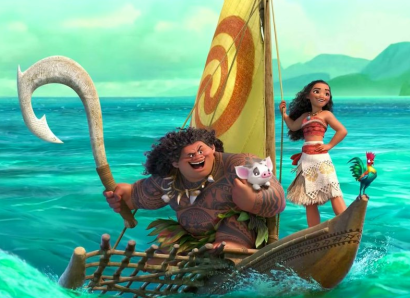
A great deep sea adventure and memorable animated odyssey. When the powerful demi-God Maui (Dwayne “The Rock” Johnson) loses an ancient artifact known as the Heart of Te Fiti, he sends the world spiraling into a pit of darkness that is polluting all of the Earth’s crops and lands. But when the ocean picks Moana (Auli’i Cravalho) as the one who will rescue Maui, find the heart of Te Fiti, and restore the planet, she embarks on an epic journey to find the stone, and along the way, herself. Disney outdoes themselves yet again with this one. The animation alone is visually colorful and dynamic, even the waves are so detailed and accurate in their movement that its hard to tell the difference between it and the real ocean. The voice talent is outstanding, with newcomer Auli’i Cravalho surprising us at every turn with her singing and projection. A great throwback to classic Disney adventures and a great tribute to female empowerment. Three and a half stars.

8. Miracles From Heaven

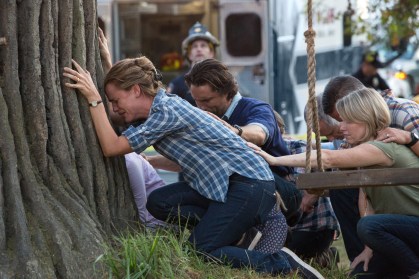
Part medical drama, part family drama, part spiritual drama, all human drama. Based on a true story, Miracles From Heaven follows a tight-knit Texas family when their middle daughter is diagnosed with intestinal pseudo-obstruction, a fatal disease that freezes the intestines and makes it nearly impossible to digest food. Now left wondering how something so terrible could happen to a girl so sweet, Christy Beam (Jennifer Garner) is determined to nurse her daughter back to health, no matter how many pills, tests, or doctor visits it takes. Jennifer Garner is a standout in this movie, expressing genuine joy and relief in some moments, while in others demonstrating genuine grief and depression, just like all of the ups and downs a mother would go through with her child. Despite this film being labeled a “Religious” film, it isn’t preaching to the choir, and is considerate and respectful to viewers of all faiths, especially those who don’t believe. Other movies should follow its template if they want to be as impactful and meaningful. Not just a good Christian film, but a great one. Three and a half stars.

7. Doctor Strange

A unique, compelling, visually spectacular entry into the superhero genre: one of the best. When Stephen Strange (Benedict Cumberbatch) gets into a devastating car accident, he loses the nerves in his hands and his career as a neurosurgeon. When he is told that a monk called the Ancient One (Tilda Swinton) can help him, he traverses to the deep mountains in Nepal to be cured, only to be introduced to a world full of magic and sorcery that he’s only beginning to understand. The visual effects are easily the standout element of this movie, with sorcerers kung-fu fighting each other on constantly shifting walls, windows, pillars, ledges, and anything else that can turn into a kaleidoscope of architecture. Not since Avatar or Inception have the visuals been so sensory that they felt more like an out-of-body experience rather than a cinematic one. Cumberbatch, just as well, plays his role with charisma and gravitas, making his character feel more tragically Shakespearean rather than larger-than-life. A great moviegoing experience that shows our titular character not as a superhero, but as a man, fatally egotistical, selfish, eccentric, ignorant, and most of all, flawed. Four stars.

6. Finding Dory

A surprisingly meaningful animated sequel that is every bit as good as its predecessor. Taking place years after the events of Finding Nemo, Dory (Ellen DeGeneres) suddenly remembers her parents and her life before meeting Marlin (Albert Brooks) and Nemo (Hayden Rolence). Now determined to reunite with her parents, Dory, Marlin, and Nemo embark on yet another journey across the ocean to find Dory’s family. With Finding Nemo writer-director Andrew Stanton returning to once again helm this oceanic odyssey, Finding Dory displays a fine understanding of everyone’s favorite forgetful fish. So fine, in fact, that this movie truly stands on its own, needing almost no support from its previous entry. From its animation to its screenplay, Finding Dory is a smart homage to its origins, but also a funny, unique, and emotional roller coaster of a film that stands very well on its own two feet (well, fins). Four stars.

5. Don’t Breathe

An intense, immersive experience that makes the best use out of its limited premise. When a team of professional thieves decide to rob the home of a retired blind veteran, they think its an easy job. But when one thing happens after another, they realize this veteran is not all that he seems, and soon they’re the ones fearing for their lives. This cat-and-mouse invasion thriller is excellently paced and tightly edited, with director Fede Alvarez making the best use of his environments and with how characters react to shocking revelations. He also makes great use of sound space, with the most tense moments often being the most silent. The cast is convincing in their roles, and Stephen Lang demonstrates the full capacity of his skills as this spine-chilling, creepy, yet sympathetic veteran desperate for the things that he’s lost. A creative, captivating thriller that is as unconventional as it is unpredictable. Four stars.

4. Deepwater Horizon

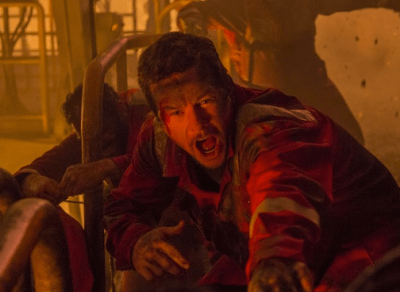
A unique and riveting action film that seeks to honor its real-life subjects by showing us exactly what they went through. Mark Wahlberg stars in this adaptation of the 2010 BP oil spill directed by Peter Berg (Friday Night Lights, Lone Survivor), and he handles this subject with delicate treatment of the events and for the real-life figures involved in the tragedy. Berg connects us to the crew members’ humanity before ominously foreshadowing to their dreary fates beyond the spewing oil, the collapsing metal frames, the wild fires, and the empty sea gallows looming beneath them. This is a movie that completely understands what the real-life crew members were up against, and they bring you every detail of that disaster with nerve-wrecking alertness and urgency. The PG-13 rating is deceiving. Definitely do not bring your children. Four stars.

3. Arrival

A science-fiction drama that starts out as one thing, only to slowly transform into another. When aliens land on multiple places at once on Earth, the U.S. army enlists in the help of Louise Banks (Amy Adams), a linguist who is notable for her translation of thousands of languages on the planet. As she investigates deeper into the reasons why the aliens are there, she makes a discovery that will change the course of the human species forever. Smartly crafted from the mind of director Denis Villenueve (Prisoners, Sicario), Arrival is an intelligent observation of the extraterrestrial, how humans react to the unknown and how they build and learn foreign communication. Adams is a powerhouse as the lead, a hero who is intelligent, vulnerable, yet persistent in doing what she has to do. Smart, emotional, and leaving you with plenty to think about long after you’ve left the movie theater, Arrival is a science-fiction experience that you simply must see. The twist near the end will guarantee have your jaw dropping. Four stars.

2. Captain America: Civil War

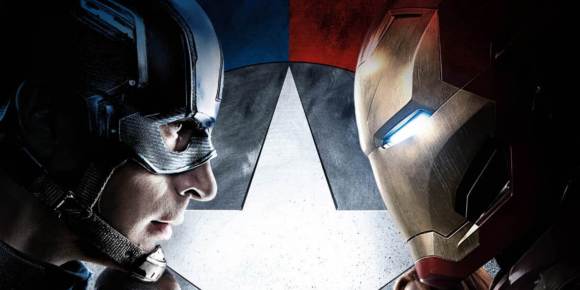
The best MCU movie to be made to date. When the United Nations decides that the Avengers are too dangerous to be left unchecked, the team is split into two factions. Captain America (Chris Evans) believes that the team should be allowed to continue to operate freely without interference. Iron Man (Robert Downey Jr.) thinks that the team needs to be held accountable in some way, shape or form. As tensions between the two sides rise, the team eventually collapses and comes to blows with each other, never to leave them the same again. A film as politically-charged as it is fast-paced, fun, and exciting, Captain America: Civil War is unique in the superhero genre in that there is no black-and-white sense of morality. No established sense of right and wrong in the picture, just characters whose ideals and values clash violently with each other. What’s left is an unconventional masterpiece, a moral dilemma packaged as a superhero blockbuster that excites us just as much as it challenges us. Chadwick Boseman and Tom Holland shine in their breakout roles as Black Panther and Spider-Man. Four stars.

1. Hacksaw Ridge

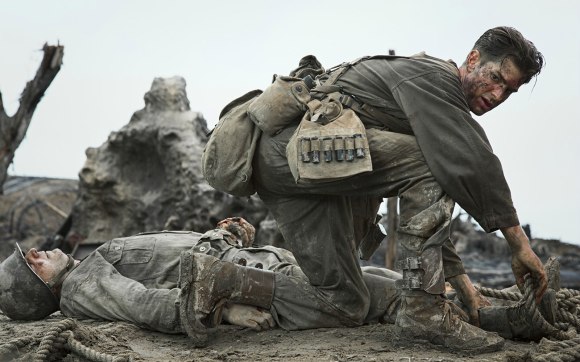
A powerful, emboldening film, one that does not shortchange the horror of war, but equally does not shortchange the power of belief either. Hacksaw Ridge is based on the incredible true story of Desmond Doss, a WWII combat medic who saved over 75 soldiers during the battle of Okinawa. Most impressively, he did it armed without a single weapon. Directed by Mel Gibson, who is a master at epic filmmaking with Braveheart and Passion of the Christ, Hacksaw Ridge pulls emotion out of you to the point where you don’t feel like you’re watching a movie anymore, and are instead completely immersed in its harsh, uncompromised reality. Andrew Garfield equally commits to this uncompromising role, showing how his character is scared, frightened, yet earnest and determined all the same. I can’t praise this movie enough. Hacksaw Ridge does more than strengthen the soldier’s spirit. It strengthens the human spirit. Four stars.


And now for my special prize. For those of you that don’t know, every year I award a special prize to a limited release that not many people heard of, but nonetheless deserves to be sought out just like any blockbuster out there. This year’s selection was difficult, because for the longest time, I debated if this film should be placed as my number one in my list over Hacksaw Ridge. I eventually decided that its achievement places itself at a higher, more important caliber than a top ten list. So I decided to give it the appropriate award for its uniqueness.

And my special prize this year goes to…

Special Prize: Moonlight

An urgent, important, and timely film that presses the viewer not to understand its characters by their race or sexuality, but by their personal experiences that mold them into the men that they become. Broken up into three parts, Moonlight follows a young man growing up in an ugly urban neighborhood that doesn’t care much about the people who live in it. As he is hit with one childhood trauma after another, we watch as they shape him into the man that he grows up to become, with all of his flaws, scars, and burdens on his shoulders intact. A great movie that hits on many important issues, Moonlight absorbs great performances from Trevante Rhodes, Ashton Sanders, and even child actor Alex Hibbert, who surprisingly keeps up with the outstanding talent surrounding him. Barry Jenkins, who hasn’t made a film in eight years, comes back center stage with a film that is technically immaculate, creatively shot, and emotionally absorbing. It is a personal, astounding film that shows while a person may be scarred, hurt, maybe even broken, they are no less beautiful because of it.

I can’t make it any simpler than this. If you can only see one movie from this year, make it Moonlight.

And that’s my list, folks. Here’s to leaving 2016 behind, and looking forward to making 2017 better.

– David Dunn

Tagged , , , , , , , , , , , , ,