Author Archives: David Dunn

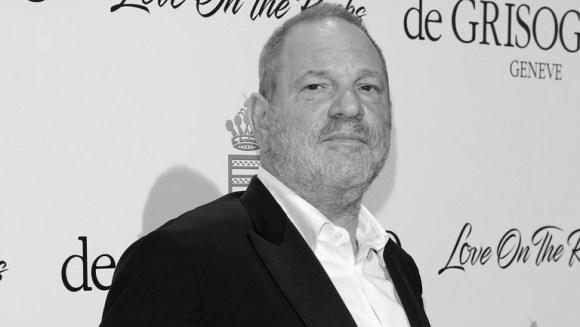
Harvey Weinstein Fired In Midst Of Sexual Harassment Allegations

CREDIT: Andreas Rentz/Getty Images

The Weinstein Company has officially removed the “Weinstein” part from its name.

After The New York Times broke the story that studio executive Harvey Weinstein had spent three decades paying off sexual harassment accusers, his own company officially fired him Sunday after the board of directors learned about the allegations. The company released their official statement below:

“In light of new information about misconduct by Harvey Weinstein that has emerged in the past few days, the directors of The Weinstein Company – Robert Weinstein, Lance Maerov, Richard Koenigsberg and Tarak Ben Ammar – have determined, and have informed Harvey Weinstein, that his employment with The Weinstein Company is terminated effective immediately.”

A media mogul and a pioneer in promoting independent cinema, Weinstein has served as executive producer for multiple Academy Award-winning films, including best picture winners Shakespeare In Love, The English Patient, Chicago, Lord of the Rings: Return of the King, The King’s Speech, and The Artist. He also co-founded Miramax films, which produced the movies Pulp Fiction, The Crying Game, and Sex, Lies, And Videotape. Allegations or not, Weinstein has introduced many filmmakers into mainstream cinema, and helped shape entertainment culture for years to come.

It is understandable, then, that the allegations have shaken up Hollywood as we know it. According to The New York Times, the allegations go as far back as 1990, during Weinstein’s first marriage with Eve Chilton. His accusers consist of eight former employees, including actress Ashley Judd. Of the allegations, Weinstein said:

“I appreciate the way I’ve behaved with colleagues in the past has caused a lot of pain, and I sincerely apologize for it. Though I’m trying to do better, I know I have a long way to go.”

Weinstein’s attorney Charles Harder said that the producer plans to sue The New York Times over the story’s publishing. The Weinstein Company has launched an official investigation into the full extent of the allegations.

– David Dunn

SOURCE: The New York Times, Variety


J.J. Abrams Bringing ‘Your Name’ Into Theaters

Oh boy. Let the anime fan rage resume.

After the astronomical success of Makoto Shinkai’s Your Name, director J.J. Abrams (Super 8, Star Wars: The Force Awakens) reserved the rights to adapt a live-action version of the animated film, bringing Arrival screenwriter Eric Heisserer on board to pen the screenplay. The film tells the story of two different individuals in Japan who inexorably switch bodies on opposite ends of the continent. Their journey to get back into their own bodies eventually leads them to meet each other, gaining a greater understanding of their shared experiences and how it’s led them both to grow as people.

This announcement comes after a year jam-packed with whitewashing controversies. First there was recasting Major, a Japanese cyborg, into Caucasian actress Scarlett Johansson for Ghost In The Shell. Then came recasting Light Yagami, the Japanese protagonist of Death Note, into Caucasian actor Nat Wolff for the Netflix adaptation. Deadpool actor Ed Skrein was almost slated to take over a Chinese character’s part in the Hellboy reboot, but Skrein graciously turned it down after learning of the character’s true ethnicity. With all of these controversies in mind, fans are reasonably concerned about the live-action version of Your Name and of Hollywood whitewashing more of their favorite characters.

SOURCE: Toho Co.

Hold on, take a deep breath for a moment, because I honestly don’t think this is as troublesome as it sounds. Remember that J.J. Abrams made one of the progressive moves of our time by casting actor John Boyega and newcomer Daisy Ridley as the leads for Star Wars: The Force Awakens. That was the first time in the series where both a woman and a black actor led the charge for Star Wars, and that helped catapult the film to its highest grossing release ever at $2 billion. With Abrams being aware of Hollywood’s cultural appropriation, I’m confident he will do the original justice by casting multicultural actors in the leads. If he doesn’t, then he’ll have to face the backlash of many passionate fans of the source material. I don’t know which is scarier: Darth Vader, or the PO’d anime fan.

What do you think? Are you looking forward to a live-action adaptation of Your Name, or would you wish that Hollywood could just leave the original alone? Comment below, let me know.

– David Dunn

SOURCE: MoviePilot, IndieWire

DiCaprio and Scorsese Team Up for Teddy Roosevelt Biopic

Looks like we won’t have to wait long for our next DiCaprio/Scorsese collaboration.

News broke earlier this week that famed actor Leonardo DiCaprio (Titanic, The Revenant) and filmmaker Martin Scorsese (Hugo, The Wolf of Wall Street) are teaming up for a new project together. It will be a biographical picture on America’s very own 26th President Teddy Roosevelt, with DiCaprio attached to star and Scorsese slated to direct the project.

Out of all of Hollywood’s actor/director collaborations, nearly none are as strong as DiCaprio and Scorsese’s partnership. First working together in 2002’s Gangs of New York, Scorsese and DiCaprio have gone on to work on many successful films together, including The Aviator, The Departed, Shutter Island, and of course The Wolf of Wall Street. They’ve work so well together that Warner Bros. has even held discussions on casting DiCaprio in the title role of Scorsese’s Joker solo film (I’m personally not partial for that, however. I’m still pining for Jackie Earle Haley.)

Still, anytime these two get together it spells good fortune, and the fact that they’re teaming up for Teddy Roosevelt is exciting of itself. I personally wasn’t itching for a Teddy Rooseelt movie, but with these two on board? Count me in.

What do you think? Are you excited for another Scorsese/DiCaprio collaboration? Comment below, let me know.

– David Dunn

SOURCE: Deadline, Variety

“THE MUMMY (2017)” Review (Half of a star)

SOURCE: Universal Pictures

Should have stayed buried.

The Mummy is one of the most asinine experiences I’ve ever had at the movies. I did not enjoy a single frame of it. Not one. If the entire film stock was ripped from the theaters and used as body wrapping for a King Tut replica in a museum, I’d be completely fine with it. At least then it would have served a more useful purpose. Or even any purpose, really.

A remake/reboot/re-imagining of the Mummy tale done too many times over, this rendition of The Mummy stars Tom Cruise in a role so forgettable that I refuse to even recognize him using his character’s name. The story (*belches*) follows Corporal Tom, who is the typical bad boy in the military, stuck with boring female interest Annabelle Wallis and stock best friend sidekick Jake Johnson looking for buried treasure in Iraq.

Just so you know, I had to look up both of the actors names just to type them up. I would have rather left their credits blank just to save time writing this review.

The big baddie: a grey-skinned, Egyptian-tattooed mummified Goddess named Ahmanet (Sofia Boutella), whose movements and speech is so awkward and clumsy that she makes Cara Delevingne’s Enchantress in Suicide Squad look like a Victoria’s Secret model. If this is the best movie monster that Universal can come up with, they should fire all of their future actors, makeup artists, and costume designers and just place Barbie dolls in their places. They would save money, they would get the same plastic performance, and the Barbies would actually be creepy, unlike any of the scenes containing Boutella in them.

I have so many problems with this movie, but let’s start with the most glaring problem of them all: Tom Cruise. Now don’t get me wrong, I like the guy. Even in his older age, Cruise still manages to enthusiastically dish out one role after another, from the intelligent and ruthless action thriller Jack Reacher, to the creative and captivating Edge of Tomorrow, to his familiar role as Ethan Hunt in Mission Impossible: Rogue Nation. I like the guy when he is in movies that work for him. The Mummy, however, irredeemably embodies the worst parts of Cruise as an actor.

I admittedly don’t know what it is. Maybe it’s Cruise’s half-witted delivery with all of his lines. Maybe it’s because he acts like he’s manically tweaked up on heroine in moments where his character is supposed to be calm and collective. Maybe it’s because for three quarters of the movie he’s spent either running away from terrible CGI or fighting PG-13 zombies in various slapping contests. Or maybe it’s because the film is written so poorly that it doesn’t know how to play off of Cruise’s charisma or charm. I simply don’t know, and a close analysis of his terrible scenes does nothing to bring any more clarity to the situation.

I’ll cut him some slack though, if for no other reason than that Russell Crowe is equally terrible here as Dr. Jekyl and Mr. Hyde. Yes, you read that right. What on Earth is Dr. Jekyl and Mr. Hyde doing in a Mummy picture? For marketing purposes? Whatever. He’s just as forgettable and useless here as Cruise is. For half of his screen time, he’s either spent narrating over cliché flashback sequences or going Frankenstein on poor Corporal Tom’s frail body. What happened to him? He was funny and crass in last year’s The Nice Guys alongside Ryan Gosling. Now he’s stuck with just talking in a raspy British dialect and spazzing out on his co-stars. God, it’s depressing to see what actors will do for a paycheck.

This is a film that, for the life of me, I cannot understand how it ended up so unabashedly bad as it did. The film is written and directed by Alex Kurtzman, who up until now has been mostly consistent with his body of work. He’s co-written multiple successful blockbusters, including Mission Impossible III, Watchmen, and the Star Trek films. He’s produced Cowboys & Aliens, Now You See Me, and The Amazing Spider-Man 2. Granted, his director debut People Like Us had earnest intentions but collapsed under the weight of its own mediocrity. Still, in the world of Hollywood, Kurtzman is more experienced and reliable than most. How did he flub it up so badly and make a film as silly, stupid, and inconsistent as this?

I think it’s because instead of focusing on creating a coherent and exciting action thriller, he was trying to make a franchise. The Mummy is the first entry under the Dark Universe imprint, an expanded franchise that shares all of Universal’s horror icons under one banner (Frankenstein, Dracula, the Invisible Man, etc). If this is any indication of what’s to come for the franchise, they need to end it right here and now. The Mummy wants so desperately to launch into an expanded horror universe that it focuses too much on the superficial elements and not enough on the grounded ones. I can name to you every bland action scene in this putrid movie, every excrement of attempted comedy and drama that fails oh so spectacularly. But I can’t tell you a thing about its characters, their flat motivations, or their meaningless placement in this uninspired story. Marvel and DC are blatant in their universe-building for sure, but at least they have interesting characters and scenarios to go along with it. Whatever interest The Mummy might have had sinks beneath its narrative incapacity: like throwing the screenplay into quicksand.

The Mummy gets half of a star as opposed to its deserving zero only because it is brainless and not offensive, unlike the films Split and A Cure For Wellness which succeed in being both. Still, don’t let the generosity fool you. The Mummy is bad, and not just in the regular type of cliché blockbuster genericism bad, but in an impressively stupefying type of bad that wastes our money, intelligence, patience, and capacity to enjoy Tom Cruise all at once. This really is a special kind of terrible. Film professors should host special screenings of it just to show their students how not to make a movie. Maybe they could also invite Universal’s producers so they can learn as well.

Tagged , , , ,

“IT” Review (✫✫✫✫)

SOURCE: Warner Bros. Pictures

Be afraid.

Stephen King is a master at personifying fear. Whether it’s with haunted hotels in The Shining, or rabid animals in Cujo, or even with female puberty in Carrie, King always finds a way to scare us in the most unorthodox of ways. Most horror writers are content with scribbling in the clichés of the genre (the teenagers that have sex dies first, group gets picked off one by one, female survivor is the only one to live at the end) and calling it a day. But like a literary sadist, King feeds off of his readers and their absorption into his material. And like any skilled predator, he likes to play with his prey.

In It, Stephen King gives us his most terrifying personification of fear yet in Pennywise the dancing clown (Bill Skarsgard), an omnipotent apex predator who comes out of hibernation every 27 years to feed off of children’s fears. If you were terrified of clowns before, you don’t even want to see what Pennywise is like. This is a creature that can take the appearance of any fear that you possess, from decapitated corpses, to zombies, to even paintings. If you can think it, Pennywise can be it.

His victims mostly consist of one group of children who dubbed themselves “The Loser’s Club.” Their leader Bill (Jaeden Lieberher) lost his little brother Georgie (Jackson Robert Scott) to the clown months ago during a rainy afternoon. One by one, the kids meet Pennywise and his many different forms as he terrorizes them using their own fears against them. As they continue to learn more about Pennywise and the history of Derry, the Loser’s Club decides to unite together and put an end to Pennywise’s villainy once and for all.

One of the most terrifying things about It is that we don’t even know what “It” is. Throughout the film, we see Pennywise use different approaches to terrify the children and to make them more susceptible to his manipulation, but even after finishing the film we still don’t get a clear idea of who or what he is. Maybe that’s the point. When we’re confronted by a threatening force, do we really care about what it’s supposed to be? Are we more interested in the facts surrounding our fears, or are we only caught up in surviving them? I thought about the animals in the natural food chain while watching this movie. When a gazelle is face-to-face with a lion, does he care about what exactly is hunting him, or is he more concerned about getting out alive?

In that sense, Pennywise does not inspire fear like his horror icon counterparts (Jason Voorhees, Freddy Krueger, etc.) but rather embodies it, filling it with our own emotions, anxieties, and perceptions of fear and subverting them against ourselves. Bill Skarsgard, who is the son of actor Stellan Skarsgard (Good Will Hunting, Thor), demonstrates an impeccable understanding of Pennywise and appropriately embodies the madness and bloodlust that a being like him would possess. Any other actor who would have taken on the role might have mistaken Pennywise as evil or insane. Skarsgard rightfully doesn’t make that inference because Pennywise is not human like any of the kids are in this movie. To human beings like us who possess moral compasses and value of life, we obviously see Pennywise as an evil that must be destroyed. But to Pennywise, a natural predator, there is just his meal and the meal he’s having after that. If beings like Pennywise are beyond concepts such as right and wrong, does that mean that he’s still quote-unquote “evil”, or is he immune to such labels because of his ignorance to the concepts? Circling back to the lion metaphor for comparison, is the lion evil for killing the gazelle, or is he only acting off of his instincts?

These are endlessly complex concepts here made simple by director Andy Muschietti, who years ago helmed the eerie and unusual horror film Mama. In It, Muschietti smartly juxtaposes human nature with that of a predator’s nature, and in that sense asks us if these two concepts can exist in the same society. After seeing the film, I’ll admit I have no answer to his query. I just know that I’m terrified of Pennywise and that I never want to see him again. That is, until the sequel comes out a few years from now.

Technically, the film is immaculate. The cinematography by Chung-hoon Chung (2003’s Oldboy) is smooth and calculated, following the action while never getting distracted by it. The child actors all give passionate performances, with Lieberher demonstrating the most layers as a kid grappling with the guilt and grief of his brother’s death. And the makeup work done on Skarsgard is among the best I’ve seen in years. I actually saw Skarsgard earlier this year in David Leitch’s Atomic Blonde. Yet in the first moment when he appears on-screen as Pennywise, I didn’t even recognize him.

As always, I don’t like all of the violence and the trauma that these kids go through, and some scenes I think would be difficult to stomach even for adults. And of course the kids swear it up in typical R-rated fashion, as if they’re trying to meet the F-word quota by the end of the month. Yet none of these things change the thoughtful concepts being explored here, the scares that the film builds up to, or the great demonstration of acting and art on display here. Take caution while watching It: you don’t know which of your fears Pennywise will use against you.

Tagged , , , ,

“BLADE RUNNER” Review (✫✫✫)

SOURCE: Warner Bros. Pictures

Tears lost in rain.

Blade Runner isn’t so much a story as it is a philosophy, an intricate and intelligent observation on life, the perceptions of society, and humanity’s carnal need for dominance. After watching the film, I didn’t think so much about the plot of Blade Runner as I did on its themes. This is a film that asks many questions and then asks its viewers to provide the answers. And the questions Blade Runner poses are irrevocably complex; our answers, even more so.

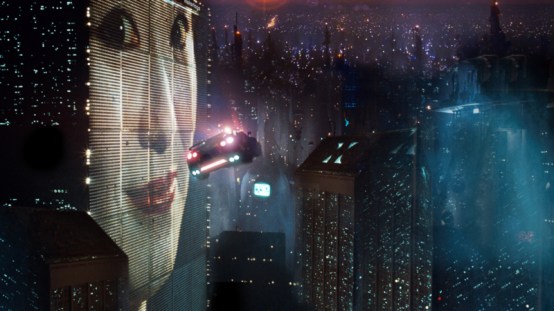
The story is based on a Philip K. Dick book titled Do Androids Dream of Electric Sheep? It takes place in an alternate future where flying cars are the primary form of transportation, holographic Coca-Cola ads light up the night sky, and robotic-humanoid hybrids blend in with the rest of society. These hybrids are called “Replicants”, and they are seen as a threat to the human race and are relentlessly hunted by specialists called “Blade Runners.” When a blade runner eliminates a replicant, they don’t even get the courtesy of saying they were killed. Instead, they call it “retirement.”

Our hero Rick Deckard (Harrison Ford) is a blade runner, and he is tasked with hunting four replicants that arrived to Earth a few days ago. One of those replicants is Roy Batty (Rutger Hauer), and his mission is to expand on his replicant bretheren’s short life span and integrate into human society. Both are extremists by every definition. Both are not above taking a life for the sake of their own agenda. And both think they are justified for their cruelty.

Ultimately, Blade Runner is a film about discrimination. Against who, exactly? Doesn’t matter. Pick your minority of choice and fill it inside the replicants, and you have your conflict. Unlike other films that tackle a similar subject matter, Blade Runner isn’t so much interested in the labels as much as it is interested in the actions. For instance, observe the principles of the Blade Runners themselves. They’re a team of bounty hunters tasked with navigating, hunting, and eventually killing (excuse me, “retiring”) a group of individuals they know next to nothing about. They don’t know who they are, they don’t know why they came here, and they don’t know what exactly they’re trying to accomplish. They only know their names and where they came from, and that they don’t belong in the society that created them.

Now tell me: how is that different from the sheriffs that hunted slaves who fled from their plantations during the 1800’s? Or a swarm of police finding and viciously punishing a group of civil rights protestors in the segregation era? Or Nazis searching for Jews hiding out in Poland in the 1940’s? Without directly commenting on these social issues, Blade Runner demonstrates the primal fear that society develops for individuals they don’t understand and the prejudice they create as a response to it. Granted, Blade Runner doesn’t have anything to say about the solutions to such issues: just the psychology of persecution and how that creates ripple effects throughout society.

Take Roy as another curious example. In the context of this film, he is seen as the film’s antagonist. But in his perspective, he sees Deckard as the antagonist. Is either one wrong? Is either one right? They both play to their own extremes and aren’t against violence and killing, but that’s besides the point. Both the humans and the replicants have their guns pulled on each other. Both are in response to violence that was previously perpetrated. Now the question is this: who fired first, and is the other justified in firing back?

As I said before, complicated questions, many of which don’t have easy answers to. Part of that is because there isn’t any neutrality expressed in the film. The character that is closest to representing one is Rachael (Sean Young), a replicant who believes that she is human. Really, she isn’t that far off from any other regular person. She likes to smoke, she exhibits her own feelings, emotions, fears, and she even possesses childhood memories. The memories in actuality belong to her creator’s niece, but does that make her memories any less real? Does it make her any less real?

The film is beautiful to look at and invokes the same aesthetic and nostalgia as those 1950’s Neo-Noir crime dramas do. Using light and contrast as tools to sharpen the images he brings to the screen, director Ridley Scott invokes a dark, ethereal setting that feels downtrodden and slummy, yet inhibits its own spirit and energy where shadowy figures hide around bleak corners, smoking cigars, and maybe downing a drink from the local pub. Bringing on visual effects supervisor Douglas Trumbull from 2001: A Space Odyssey, Blade Runner possesses the same edginess and detail to its set design, but it never gets lost in it. It simply lets the setting breathe as it will, and as Deckard navigates through the complexions of a lost city, so do we deconstruct the complicated things going on within it.

Blade Runner is well-acted, morally challenging, and visually absorbing. This much it has going for it. Where it loses focus is in its screenplay, which is so messy and convoluted that it nearly screws up the entire narrative. While I was a fan of the ambitious ideas the film was exploring, I wasn’t a fan of how it was overreaching beyond its grasp. There were many times where the film moved at a briskly quick pace, oftentimes slipping past important details that were essential to later scenes. I didn’t really understand the point of Blade Runner up until its climax, but by that point I was endlessly confused and lost with what these characters were supposed to be doing and why. It wasn’t until after I finished watching the film that I began to piece events together and understand it more efficiently. When it comes to filmmaking, it is the screenwriters job to construct the story and simplify it for its viewers, not the other way around. With Blade Runner, it is much more interested in flashy effects, brilliant concepts, and dystopian scenery than it is in its characters and deeper mythology. In that regard, Blade Runner is just plain lazy.

In hindsight, I find Blade Runner to be strongest as a conversation topic: an exchange of ideas between cinephiles and philosophers on where we are as a society versus where we are going. I don’t, however, consider it quality entertainment or even necessarily fun. I would watch it again to understand it better; not to enjoy it more.

As a film, Blade Runner is confusing and flashy. As a story, it fails to be coherent. But as a series of existential questions that we all need to ask ourselves, Blade Runner is invaluable. I hope you are ready with your answers.

Tagged , , , ,

Jared Leto Is Returning As DCEU’s Joker

UPDATE 8/24: Warner Bros. just recently added another spinoff to Leto’s slate as the Joker. It will primarily focus on the Joker’s relationship with Harley Quinn and will also feature Suicide Squad co-star Margot Robbie. The film is being written and directed by Crazy, Stupid, Love filmmakers Glen Ficarra and John Requa.


ORIGINAL STORY: 

Whoa, okay. I wasn’t expecting this much Joker news in one day. That’s kind awesome.

SOURCE: Warner Bros. Pictures

Hours after the announcement that Warner Bros. will be producing a standalone Joker movie, they followed up with more Joker news that is sure to both please and infuriate fans. Jared Leto will be reprising his role as the Joker from Suicide Squad in both the sequel and the Harley Quinn-centered spinoff, Gotham City Sirens. Reps have not confirmed whether Leto’s contract will extend past that to Ben Affleck’s solo Batman film or not.

I’m a little mixed with this development. I didn’t care for Leto that much in Suicide Squad and felt he was unnecessarily forced into the picture just so the marketing team could use him in their promotional material. With Leto, I didn’t get the sense that this guy had a sick sense of humor or was supposed to serve as a dark parody of a clown. He felt more like Scarface with some tattoos and makeup plastered on.

That being said, I blame writer-director David Ayer more for his portrayal than I do of Leto. His screenplay shoehorned the Joker awkwardly in there rather than giving him his own space to breathe and interact with the other characters, and I think it shortchanged him in the long run. With how little screen time he’s given as well as the sloppy editing of his scenes, I think Leto wasn’t given a lot to work with to truly stand out in Suicide Squad. I would be happy to see him given a second chance at the part in the sequel, although if it still doesn’t work DC may have to take the character back to the drawing board.

What do you guys think? Are you smiling to see Leto reprise the iconic villain, or do you wish he would laugh himself away from the part? Comment below, let me know.

– David Dunn

SOURCE: Comic Book Resource, Screenrant

Martin Scorsese Is Producing A ‘Joker’ Movie. Yes, Really.

Why so serious?

In addition to work on Justice League and the slate of the DC Extended Universe, Warner Bros. recently announced that they’re working on another surprise spinoff project. It is a prequel to the iconic Batman villain The Joker, and it will reportedly launch a new wave of DC movies unrelated to the DCEU.

What. Even.

The project is being produced by the masterful Martin Scorsese (The Departed, Shutter Island) and will be set in the criminal underworld of the 1980’s. The Hangover director Todd Phillips and 8 Mile scribe Scott Silver are penning the script, with Phillips also expected to direct the project as well.

So much to unpack here. First of all, Martin Scorsese working on a JOKER MOVIE?! HOLY COW. Scorsese’s filmography is as large as it is influential, with works such as Taxi Driver, Raging Bull, and Goodfellas considered by many to be among the greatest films of all time. With him taking a back seat in the producer’s chair, however, we can’t get too excited as he won’t be as involved with the film as Phillips and Silver will be. Still, knowing that the producer behind Free Fire, Bleed For This, as well as the Roger Ebert documentary Life Itself is exciting in of itself. It will be interesting to see what elements Scorsese exactly contributes to The Joker, although I wish he could be more hand’s-on with the film than he already is.

As for Phillips and Silver, they are… fine, I guess. Silver is more impressive considering he also penned The Fighter in addition to 8 Mile. Phillips, however, is where I am most concerned. His work has been inconsistent at its best, abhorrent at its worst. I can’t think of the last time I laughed at one of his movies besides the meagerly funny moments in Due Date, and as far as I can tell he’s very unpolished when it comes to directing drama. That’s not to say he can’t do a good job at directing The Joker. Shoot, Jurassic Park III’s director Joe Johnston made Captain America: The First Avenger, and that still ranks among the MCU’s best. I’m just curious where Phillips is going to take it is all. He’ll definitely need a helping hand from Scorsese and Silver if this prequel is going to work.

What I’m more interested in is the fact that this is a film OUTSIDE of the DCEU. This means that aside from The Dark Knight universe and the DCEU, this is an open canvas for these filmmakers. They have complete creative freedom for how they take on and portray this character. This is both exciting and terrifying news, because as we all know, too much creative freedom can lead to some disastrous decisions (as evidenced by the casting of Jesse Eisenberg as Lex Luthor in Batman V. Superman: Dawn of Justice).

Who will portray the Joker? Which comic book storylines are they going to pull from? Will it be inspired by previous on-screen iterations of the Joker, or will they be going in an entirely new direction?

Questions, questions, questions, all of which we’ll have to wait for the answers to. Hopefully we won’t be waiting too long.

– David Dunn

SOURCE: Deadline, MoviePilot

Obi-Wan Is Returning To Theaters

I’ve got a great feeling about this.

In a surprise development, The Hollywood Reporter confirmed the next spinoff film in the expanded Star Wars franchise. It is none other than ol’ Ben himself, Obi-Wan Kenobi.


SOURCE: LucasFilm

So far, there’s very little confirmed about the project besides that it’s focused on Obi-Wan. We don’t know if Ewan McGregor is returning or not, we don’t know if it’s taking place before or after the prequel trilogy, and we don’t know how exactly Obi-Wan will fit into the expanded Star Wars universe. All we know at this point is that the film will feature the esteemed jedi and that Billy Elliot filmmaker Stephen Daldry is expected to direct.

Don’t get me wrong, I’m excited for anything Star Wars-related, especially when it comes to Obi-Wan. But out of all of the spinoff stories Disney could have adapted, why did they pick him? Yoda and Boba Fett have been fan favorites for just as long and are spinoffs viewers have supported and actively campaigned for. And unlike Obi-Wan, there is much to Yoda and Boba Fett’s stories that we still don’t know about. How did Yoda become a jedi? How did Boba Fett become a bounty hunter? What were they doing in the years since Order 66 was carried out?

Unlike Obi-Wan, there is still much left unknown about these characters, and Disney is actually considering spinoffs featuring them as well. It just seems strange to me that it’s taken so long to get there whereas characters like Han Solo and Obi-Wan have just immediately taken off. We’ll have to wait and see where exactly their stories will take them though.

What do you guys think? Are you excited for an Obi-Wan movie, or would you have preferred another Star Wars spinoff? Comment below, let me know.

– David Dunn

SOURCE: The Hollywood Reporter, ComingSoon.net

No Confederacy, No Common Sense

SOURCE: Ringo Chiu/Getty Images

I was 12 years old when I saw a confederate flag for the first time outside of a classroom. I was at first disoriented by the sight: confused that after a war had ended for nearly 150 years, a flag was still being hoisted that wasn’t our own. I asked my dad why that flag was hanging on the back of our neighbor’s truck. He said that she was “representing her Southern pride.”

I’ve never understood why someone would be proud enough to represent the Confederate flag. It makes no sense. Take away the racial and historical implications behind the flag for a second. Who in their right mind would be proud of something that is most known for losing? That would be like admitting that you’re a Detroit Lions fan, or that you like listening to Nickelback. Once those opinions have left your lips, everything else that comes out afterwards has an embarrassing odor of stupid trailing it everywhere. You support the Confederacy? Good luck being taken seriously after confessing that, folks. I would probably find it funny, if it wasn’t already so pathetic.

Regardless of what you think, the open display of the Confederate flag is a debate that rages on, and it doesn’t look like it’s going to deescalate anytime soon. The more recent controversy spurring on the discussion is the “Unite the Right” protests going on in Charlottesville, VA, where white supremacists, Neo-Nazis, and Ku Klux Klan members flooded the streets and caused a state of emergency before killing three people and injuring 38 others.

“Unite the Right”? Ha. More like “Unite the White.”

I’m not going to lie, when I first heard about these protests, it broke my heart. I lived briefly in Charlottesville for a time last year, and the city that I remembered leaving was a bright, friendly place where you could strike up a conversation with anyone you met on the street. It wasn’t a hateful, divisive place. It wasn’t unsafe or shady. It was simply a beautiful city, and I roamed the downtown restaurants and venues freely and with ease. I will always have fond memories of Charlottesville and even plan to revisit at some point in the future, preferably before David Duke blows it to hell with a wooden cross burning over it.

So when I heard that once again racist and hate-fueled bigots were protesting in the town, the first thing I asked myself was why? Why were they making all of this fuss? Of course, racists like the KKK don’t need much reason to destroy public property, but nevertheless I was curious of their reasoning. What led them to such a violent escapade?

Well apparently all of this started when the Robert E. Lee statue was reportedly being taken down back in May. After news came out, white supremacists took to the streets in June, July, and August before their most violent outing yet on Saturday. By the way, after all of their protesting, Lexington mayor Jim Gray said they’re going to bring down two more confederate statues in response to their protests, and many more are following in his example. The “Unite the Right/White” march ended up harming the supremacist’s cause rather than helping it.

Like I said, an embarrassing odor of stupid trailing them everywhere.

Cartoon by Andrew David Cox

But it did get me thinking. White supremacists are very protective of their Confederate paraphernalia when it is threatened by the masses. Seriously, they turn into the most fragile little snowflakes you’ve ever seen, turning red anytime they see a pixel of blue floating near their precious flags. This overprotective mentality shows a rare vulnerability in white supremacists. At that point, you would reasonably think that the best way to disarm white supremacy would be to tear down confederate artifacts. After all, Germany doesn’t have Nazi symbolism publicly displayed anymore. Why would America have Confederate symbolism still exist 150 years later?

This is where things get really confusing, because while white supremacy is still very much a real threat, people continue to defend these supremacists and their hateful symbols. That to me is even weirder, because who in their right mind looks at a Nazi beating up somebody in the street, gives a thumbs up and says “You keep doing you, sir! You have every right to hate whoever you want!”

There are many arguments that pro-confederate advocates use to defend their claims. Allow me to deconstruct each of them.

“It’s for historical preservation.”

First of all, there’s a big difference between remembering history and reliving it. Remembering history means recounting past events and allowing them to influence your future decisions. Reliving it means re-enacting past practices to keep those ideologies alive.  A good way to differentiate is by judging the quality of the object’s preservation. Is the object properly stored away and maintained in a proper condition? Or is it constantly in use and faces regular wear-and-tear damage?

This is why the “historical” argument makes no sense to me. The core argument is based on preserving history, but the open public use of the flag is not even for preservation. It’s for decoration. And who in their right mind would want to decorate their belongings with something as ugly and putrid as the Confederate flag?

Then asks the Neo-Nazi “But if we can’t fly it, where do we put it?” You know, there are these amazing institutions called MUSEUMS that are specifically made for the purpose of storing and preserving ancient artifacts. You should try visiting one sometime, you might learn something for a change.

“Those people are exercising their freedom of speech.”

Nobody is denying that someone has the right or ability to openly share and express these ideas. That’s not the point. The point is should they express them? And if they do, does that automatically take away our right to speak out against them?

Freedom of speech does not mean freedom from consequence. If you’re going to say or represent hateful ideas, you should reasonably expect blow back from your critics, and you equally shouldn’t discourage those people for exercising the same rights as you do.

Here’s another way to view it. Say a man walks up to a woman in the middle of the street and calls her fat. The woman starts crying, local on-lookers start rushing to her defense and criticize the man for his hateful words. Now, with you bearing witness to all this, are you more likely to defend the woman for being victimized, or are you more likely to defend the man and his right to free speech?

The correct answer is, of course, the woman, because any decent person would defend those who are being unnecessarily harassed. If you, however, answered the man under any circumstance, then you misunderstand the rights that our constitution grants us and should never be allowed to comment on politics ever again.

“We have to remember history so we don’t repeat it.”

Well we pretty much failed in that mission, haven’t we? After all, 46 percent of the country elected a president who was publicly endorsed by the Ku Klux Klan, hate groups have grown by 17% since election season began, and literal Nazis are marching in our streets. At this point, preventing history from repeating itself is no longer an option for us. We’re living in it right now.

COURTESY: The Inquisitr/ Rob Cotton

Look, I could counter every point thrown in my direction, but it’s not like it would make any difference. If this political season has shown anything, it has shown that people would rather sit inside their sheltered echo chambers instead of getting out and facing reality as it is. And right now the reality is we are living in one of our nation’s most divisive times in modern history.

Everyone is saying we need to end the hate and come together as one. This much is true. However, the people who divided us with their hate in the first place must be proactive in taking the first steps towards healing our nation. Because of this, white supremacists, Neo-Nazis, and the KKK must allow themselves to be disarmed as we tear down the symbols that inspire their racist-fueled agenda. This includes publicly displayed Confederate and Nazi artifacts.

I don’t want it to be like this. I would like a nation that is civil with each other and allows free, respectful discussion of these issues. But if one side is going to be intolerant with their movement, they cannot blame us if we in turn refuse to tolerate their insolence. It’s okay to tolerate different political ideas. It is not okay to tolerate overt racism and hatred. Unfortunately, our nation has come to that point.

I understand that the removal of Confederate and Nazi images won’t stop the issues this country is facing. Still, we need to take a stand. We must. If we claim that America is for the land of the free and home of the brave, then we must demonstrate that by being brave and fighting for those freedoms.

Removing Confederate symbols won’t cure this country of the hatred that has infested it. But it’s a good place to start.

– David Dunn

Tagged , , , ,