Tag Archives: Drama

“RISE OF THE PLANET OF THE APES” Review (✫✫✫)

Hey, apes are people too. 

Be honest: how many of you were expecting this one to be good? I know I certainly didn’t. After seeing how poorly the earlier Planet of the Apes movies were faring (I’m looking at you, Tim Burton), here I was expecting another downtrodden experience that was trying to milk whatever it could left from the utters of its franchise. Why wouldn’t I expect that? The same thing has been done with the Jaws series alongside every conceivable Friday the 13th movie ever made. Believe me, I wasn’t expecting a good movie when I heard that this movie was called Rise of the Planet of the Apes. It honestly felt more like it was falling to me.

Here, however, is the rare occasion where a prequel/reboot actually contributes to the franchise rather than taking away from it. Taking place years before the events of the very first Planet of the Apes film, Rise tells the story of Will Rodman (James Franco), a scientist who is developing a potential cure for alzheimer’s deep within his lab. After testing it on multiple chimpanzees and noticing an effect in increased intelligence, one of them goes berserk, attacks her caretakers, then is killed in self-defense. The scientists are ordered to terminate the project and kill any ape left within the vicinity.

It is during his routine inspection where he discovers a small baby chimp deep within the cell of the female ape that was killed earlier. Knowing that the baby would die if he remained there, Will took the little baby home and raised him as his own.

As the years progress, we notice that the baby chimp shares the same characteristics as his mother did when she was in the labs. Both of them displayed feats of great intelligence and memorization. Both developed abilities to read, write and comprehend speech. Both learned the skill of being able to do sign language. Most impressive was their ability to convey, understand and express emotions, almost like they’re human themselves. As the small chimp named Caesar (Andy Serkis) grows out of his adolescence and into adult apehood, he begins to notice a darker side of humanity and plots a way to set himself and his fellow apes free from mankind’s grasp.

Here is a film that, by every definition, should not have been good. It had everything working against it. It’s the prequel to a film series that hasn’t had a good film since 1968. It’s the seventh film in a franchise that has long since lost its influence. And it’s centered around a main character who isn’t even human, an ape who, for more than half of the film, can’t even talk.

Believe me, I went into this film fully expecting to hate it. Turns out that it’s quite the opposite. Rise of the Planet of the Apes demonstrates exactly what a hollywood blockbuster is supposed to be, a smart, involving and intelligently made film that is equal parts exciting as it is relevant. Director Rupert Wyatt, who made the 2008 film The Escapist prior to Rise, is careful and delicate with the pacing of his film. Starting off on a very dramatic and touching note, we go through what can mostly be seen as a science-fiction drama about the relationship between the guy who plays Harry Osborn and his little ape-friend, until all hell breaks loose and the beginning of the human-ape war spawns itself.

I exaggerate a little bit, but you get my point. There isn’t a lot of action in the movie, or at least, not as much as you’d expect it to be Instead, there are a lot of small, intimate moments where Caesar and Will’s beings clash into each other, either bonding in very genuine, heartfelt moments or rubbing off of each other as starkly as their conflicting races are. This is a dialogue-driven movie, with Will and Caesar each questioning the decisions they make and how they should should both respond as the result of it.

A lot of things don’t really blow up in the movie, to be honest. But when it does, ohhhh boy, is it exciting. My favorite scene in the movie had to be when Caesar and his primate army broke out of a preservation facility in new york and pierced their way right through the heart of the city, almost like it’s the American revolution and it’s George Washington leading the charge.

At the absolute heart of this film, however, is Caesar, portrayed here by actor Andy Serkis. If you don’t recognize the name, you don’t deserve to call yourself a cinephile. Serkis is most known for a slew of CGI performances, ranging from Gollum in The Lord of the Rings to the titular ape in Peter Jackson’s King Kong. Great as he was as Gollum, I’m tempted to say that this is his best performance yet. When you watch the film, notice the differences at how he carries himself as an ape and as a slightly-more evolved ape. In early scenes, he’s just walking around like a regular animal, with his elongated arms carrying himself as he “oohs” and “ahhs” while rubbing the back of his head. As the movie continues on, Caesar’s evolvement is apparent, and you notice his regular instinctual appearance has been replaced with a tall, stark, and grim figure, bleakfully looking on at a society that he has lost all faith in. Gollum was a character he concieved entirely from his own inspiration, while King Kong was one he concieved from studying the natural behavior of apes. He does both here with Caesar, and successfully portrays a character who is not just an ape, but a super ape, one who is evolving to something much more dangerous at an alarming and vengeful pace.

The only complaint I will issue with this movie is its ending, which is so melodramatic and sappy that it could have been used for an “Animal Planet” commercial. Why did they have to do this? Who says a movie needs to end on an optimistic note? Why do we need to have a happy ending? Who says we can’t end on a bleak, grim note, foreshadowing on a downtrodden spiral of war, doom and apocalypse? We all know that this can only end one way anyway. The franchise isn’t called “Planet of the Humans”, after all.

Tagged , , , , , , , , , , , , , , , , , , , , , , , , , , , ,

“22 JUMP STREET” Review (✫✫✫1/2)

Doing the same thing over again isn’t such a bad thing after all.

22 Jump Street is the exact same film 21 Jump Street was, but with one key difference: it’s self-awareness. While 21 Jump Street was just aimlessly spastic and immature, 22 Jump Street uses that same spasm and immaturity and chooses to make fun of itself for the sake of the audience. 22 Jump Street isn’t laughing with the audience: it’s laughing at the audience laughing at itself, and it is infinitely funnier because of that.

22 Jump Street takes place after Captain Dickson (Ice Cube) tells Schmidt (Jonah Hill) and Jenko (Channing Tatum) that they’re about to go undercover at college. After a student died at the hands of a lethal new drug called WyFy, their job once again is to infiltrate the dealers, find the supplier and bring them to justice. Resuming their cover identities as brothers, they slowly try to adapt to college as they continue to search for the supplier who is providing for the whole operation.

“Waitaminute,” you might ask. “Isn’t this what happened in the first movie?” Yes, but like I said, the movie is more aware of itself than by just simply repeating what it did the first time around. This time, Tatum is the guy who is getting accepted and friendly with everyone around campus, while Hill is more or less left to go and sip wine with the art students.

Like I said, the film is on repeat from the plot with the first movie — similar characters, similar jokes, similar order of events. For Pete’s sake, even the run time is the same, with both films clocking in at about 1 hour and 50 minutes.

But like I always say, the repeat isn’t what matters. What matters is how they handle that repeat, whether it genuinely is a funnier, more refreshing take of the original rather than just a rehash. And let me tell you, even though it has Tatum and Hill in it, neither of which I’ve ever found particularly funny, I’ve never laughed harder.

These two guys are hilarious in the movie. Tatum is good as Jenko, a smug older jock who loves to drink beer, play football and show off his physique through physical feats that make me ashamed of my own body. Hill was even better. Whether he was getting into character as a Mexican mobster, trying to impress some girl or desperately trying to figure out how to drive a ferrari, he was clumsy, expressive and hilarious all at once, expertly becoming the likeable underdog needed for a film like this.

Great as Hill and Tatum are though, they are not the highlights of the film. The real stars of this movie are directors Phil Lord and Christopher Miller, both of whom recently directed The Lego Movie together. Lord and Miller, who also helmed the first film, seem to have a much more fleshed out idea of what they wanted Jump Street to be this time around. The first movie was just a loud, blatant action-comedy, shooting in every which way and direction with no clear aim or focus. Here, the aim couldn’t be more clear. From hearing bits of scathing dialogue — “We’re going to do the same thing all over again” from the captain — to the hilarious end credits spoofing every movie that had laughs and a gun, we can tell their goal with this was to slam the idea of sequels, to make fun of the problems that exist in them, then immerse themselves in that zone of making fun of themselves for the sake of our enjoyment.

I’ve had a complete blast with this movie. In every moment of the film I was either smiling, laughing my head off, or catching my breath, preparing myself for the many laughs to follow. I kept tossing around in my head whether I liked this movie or loved it, whether it was a truly definitive piece of comedy or just something fun to laugh at. I’ve concluded that it is both. 22 Jump Street is a big ball of action-packed comedic fun, a great sequel that has funny jokes, charismatic characters and wonderful self-irreverence. It’s an improvement upon the original in almost every way and will no doubt be a big problem to the studios once they realize they’re going to have to make a second sequel.

Tagged , , , , , , , , , , , , , , , , , , , , , , , , , , , , , , , , , ,

“HOW TO TRAIN YOUR DRAGON” Review (✫✫✫✫)

Step one: Don’t get eaten by a nightfury.

How To Train Your Dragon is a pure joy, a complete and captivating wonder that reaches the inner child in you, touches it, and fills you with such inexplicable excitement and adventure that you almost feel like you can do anything. I was initially worried about this movie going in to it: how many other movies have attempted the human-pet budding romance E.T. did so wonderfully all those magical years ago, and failed? Well, there’s nothing to fear here, fellow reader. In their long line of successes, failures and mismatches, How To Train Your Dragon easily ranks among DreamWorks’ best work.

We open up on a grand battle on the land of Berk, an island where the vikings are as stubborn and hard-headed as the metal helmets they wear on their heads. But this battle isn’t against other vikings, mind you: it’s against dragons, giant, dangerous beasts that tear through the sky and spit fire like its flu season for them. For the vikings, killing a dragon is like the starting point for becoming a man. It’s their form of puberty I suppose, next to the endless gorges of food and testosterone that they throw and shout about at each other.

One Berk citizen, however, is a little more hopeless than other vikings: Hiccup (Jay Baruchel), a smart, inventive but helplessly clumsy little fellow that will reach for a pencil when he’s supposed to reach for an axe. Fate turned an eye to him when in the midst of the battle, he captured a “nightfury”, a sleek black dragon whose fast speed and blue fire makes him the most deadly dragon out in the field of battle. However, against his better judgement, Hiccup decides not to kill the nightfury after discovering that he was injured during the battle. Now, while slowly helping him back to health and back to being able to fly, Hiccup discovers the truth about the dragon race, and how similar he is to them and their personalities.

Taking a look at the past animated movies DreamWorks has helped produce, you realize how much of a mixed bag they put out there to their audience. Look at the best they’ve had to offer, such as Shrek and Kung Fu Panda. Now look at the worst they’ve had to offer, such as Shark Tale and Shrek The Third. And don’t even get me started on Bee Movie. Looking at their filmoraphy, and looking at how much they’ve done wrong mixed with their right, I was expecting a very artificial, forgettable experience.

Boy, was I wrong, and boy was I glad to be wrong. The very first detail you notice in How To Train Your Dragon is it’s animation, how crisp and refined it is in detail, and how authentic it makes everything look. In the opening sequence, for instance, we shift through the dark clouds and sea as we approach the land of Berk, and it was so atmospheric that I felt like I myself was flying over the ocean surface when I first saw it. Later in the film, you look at vikings talking to each other in the dining hall, and the rock floors and the wood detailing look so real that you can almost reach out and touch it.

But I know what you’re really after. You’re not after what the waves, clouds and wood looks like. Nuh uh. You’re interested in how the dragons look, how exhilarating the fight scenes are and how exciting it is when you see a dragon spread his wings for the first time.

Let me assure you, fellow reader: the action could not be any more exciting. The dragons are all colorful, lifelike and filled with variety, their wings spread out in glorious, anthropomorphic detail. When they fly, they soar at supersonic speeds, dodging mountains, flipping through the air, and skydiving towards valleys like they are swimming in an endless sea of clouds and sky.

I especially liked the chemistry Hiccup shares with the nighfury, who he later names Toothless in the movie. Did I really just say that? That I liked the chemistry between two fictional, fake, animated characters? Yes I did, because these characters are neither fake nor artificial: they’re genuine, sharing real, heartfelt emotions with each other in ways almost no other animated film captures in movies. When Hiccup touches Toothless’ snout for the first time, you feel conflicted emotions between each other as they struggle to trust one another. When Toothless saves Hiccup from certain death from the dangers of the skies, you feel their relationship growing as they form a closer bond with each other. But when an all-out war spawns in between the vikings and the dragons, it’s Hiccup and Toothless that remain strong through it all, their friendship so compelling that it almost feels like connecting with a long-lost brother, not too disimilar to how Boo and Sully interact in Monsters Inc. 

My only regret with this movie is that it won’t be the best animated film of the year. With Toy Story 3 releasing just around the corner, and considering Pixar’s track record, it’s doubtful to see How To Train Your Dragon trump years of animated fandom and cherishment, especially when we’ve had years to grow with these characters. Shame, because this movie has great, fluid animation, an involving story, and memorable characters just like Toy Story does. If Toy Story 3 wasn’t coming out in June, I am positive that How To Train Your Dragon would win the best animated feature award at the Oscars.

Tagged , , , , , , , , , , , , , , , , , , , , , , , , , , , , , , , , , , , , ,

“X-MEN: DAYS OF FUTURE PAST” Review (✫✫✫✫)

The next stage in superhero cinema evolution. 

X-men: Days of Future Past ranks among the best superhero sequels I’ve ever seen, one I would instantly compare to that of Spider-man 2 or The Dark Knight. There were so many things that needed to be done, so many risks that needed to be taken, and so many ways this movie could have failed. It didn’t. From the opening sequence to its last breathtaking moment, my mind was blown and the comic-book nerd in me was absolutely filled with joy. The movie did more than simply expand the franchise: it redefined it.

We open on a post-apocalyptic future that hasn’t been this catastrophic since James Cameron’s 1984 film The Terminator. Years after X-men: The Last Stand took place, humans are now being hunted by the same weapons they created in the first place: the Sentinels, a coalition of dangerously armed robots who can track and exterminate any mutant they can find on planet earth. Amongst the ruins of battered buildings and fallen icons, the human race has now been collected into a sort of concentration camps: all that’s left for the mutants then is the mass graves filled with the dead bodies of their kin.

Lifelong frenemies Charles Xavier (Patrick Stewart) and Magneto (Ian McKellan) collaborate on a plan they would like to enact. Besides having the ability to phase through walls and objects, Kitty Pryde (Ellen Page) has recently developed the ability to transfer someone’s consciousness into their younger bodies in the past, allowing them to change the future and avoid the unfortunate outcomes that might become of them. Kitty has been able to use this ability on multiple occasions now to save her friends, but now Professor X and Magneto want to go back into the past (1970, to be exact) to prevent the event that triggered this horrifying future and save human and mutantkind as they know it.

Problem is, Kitty can only send someone back a few days or weeks at a time. Any further than that and she risks tearing apart the mind of the person she’s sending back to the point beyond repair. Luckily, Wolverine (played by Hugh Jackman, who else?) has the ability to heal himself at a faster rate. So Professor X and Magneto decide to send Wolverine back into the past to coerce their younger selves (portrayed by James McAvoy and Michael Fassbender, respectively) to stop the triggering event and save the future.

Serving as a sequel to both X-men: First Class and X-men: The Last Stand, and incorporating characters and actors from both translations, X-men: Days of Future Past is, in a word, a game changer. It brings in all of its key players, from the original cast members and its most revered director Bryan Singer, to the newcomers who’ve newly defined their roles, including McAvoy as Xavier and Fassbender as Magneto. Everyone meshes so perfectly with each other, especially Jackman once again, who essentially has to react to characters from two different time zones. There hasn’t been a cast this big since Joss Whedon’s The Avengers, and I’m tempted to say the movie is better because of it.

Do I really want to stand here though, and compare Days of Future Past to that of The Avengers? Yes I do. The Avengers was a bold, brave step forward in comic book evolution, combining characters from five different movies to make a superhero epic that hadn’t been tried before. Days of Future Past follows that same model, bringing in characters from six of its movies, but the end result is vastly different. There’s a much deeper plot going on here, a vastly intelligent and contemplative story that elaborates on its recurring themes of racism and, once again, bringing in the consequences of discrimination to the forefront. I loved X2 for this very reason, for it being more than just a comic book movie and focusing itself more as a political thriller with comic book elements thrown into the mix. This movie is that to, like, the tenth power.

Oh yes, this movie will fill comic fans with glee everywhere. Similar to the small little easter eggs that can be picked up in other Marvel movies (Note: The Doctor Strange reference in The Winter Soldier), this movie too has sweet little moments that comic fans can pluck from the ground and take a moment and appreciate the aroma. My favorite had to be a moment where a mutant named Peter (Evan Peters), who can run at supersonic speeds, rests in an elevator with the younger Magneto as he’s helping him escape from prison, and makes a comment about his long-lost father. That’s just the tip of the Bobby Drake-iceberg. There’s so many moments I can pull from that filled me with joy and happiness, while others filled me with dread and angst. The film orchestrates its emotions wonderfully, and in every fabric of the film I felt what I was supposed to feel.

I’m going to go out on a limb and say this is the best X-men movie in the series so far. Bold claim, I know, but it deserves it. From its first moment to its last, Days of Future Past is completely, utterly, fascinatingly mind-blowing and involving. From its quietly hinted-at themes of xenophobia and extermination to its climactic action scenes where we don’t see how on earth our heroes can win, Days of Future Past combines the best parts of all of the movies and makes itself the best entry out of them. Many audiences have recently been experiencing superhero movie fatigue, with movies such as Man of Steel and The Amazing Spider-man 2 recently being met with mixed reaction amongst audiences and in the box office. Days of Future Past is one of those movies that restores your faith in the genre.

Tagged , , , , , , , , , , , , , , , , , , , , , , , , , , , , , , , , , , , , , , , , , , , , , , , , , , , , ,

“X-MEN: THE LAST STAND” Review (✫✫✫)

How can you “cure” what was intended as a gift?

There’s an obvious danger with the production of second sequels made with planned trilogies: how do you keep things fresh and interesting and make sure none of the material isn’t stretched out or forced? For many trilogies, the third entry is the one filmmakers are usually least concerned about. Why should they be? They’ve already made their biggest impact with the first two films and people will go and see it anyway, so why should they extend any effort? I like to call this “the trilogy curse,” and it explains why so many second sequels end up letting down their entire franchise (*cough* Terminator 3 *cough*).

The best thing that can be said for X-men: The Last Stand is that it does a good job avoiding the trilogy curse. While some may be frustrated by the liberties it took and the deviations it made from the source material, I for one found it to be very liberating. It changes things up a bit, made things different, and did one huge thing that many comic book movies can’t do: it made it unpredictable. Because of this, the stakes were higher, the action was more involving, and it made you invest yourself more in the characters rather than waiting for everyone to hold hands in the end for that “happily ever after” ending many films get trapped into. X-men: The Last Stand accomplished something important: it proved that comic-book movies can deviate from their source material and still be good.

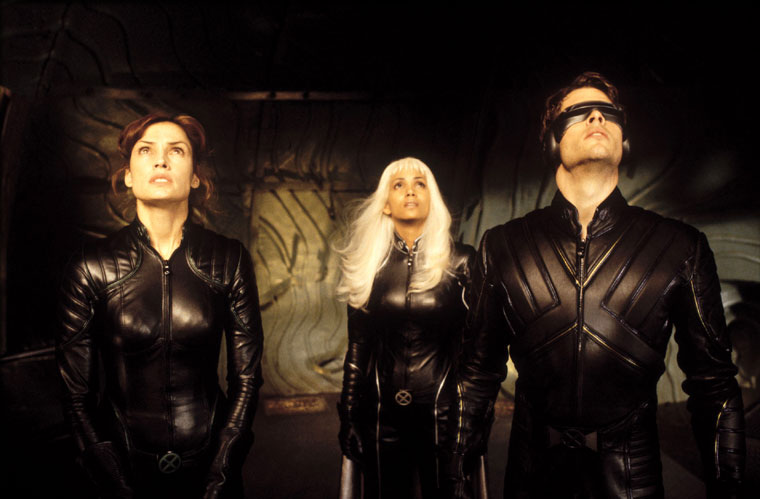
After saving both human and mutantkind at the shrouded site where Wolverine (Hugh Jackman) gained his metal claws and lost his memory many years ago, X-men: The Last Stand takes place as the X-men still try to cope with the death of their beloved Jean Grey (Famke Jannsen), who sacrificed herself to save her friends as she became engulfed by a sea of raging waters. Most affected by this is her boyfriend Scott “Cyclops” Summers (James Marsden), who can still hear her voice in his head as he sits in their bedroom reminiscing about her.

The X-men, however, have a much more pressing issue at hand: a company called Worthington Labs has recently invented a mutation antibody that basically attacks mutant cells and nullifies them. The public dubbed it as a “cure,” and it essentially turns mutants into regular human beings, forever granting themselves the life of normalcy they’ve so long desired. Of course, this new invention stirs up quite a controversy among the mutant community, especially regarding Magneto (Ian McKellan) and his extremist brotherhood of mutants. When mutants come to terms with this cure and what it means for all of them, they must make a decision of whether or not to fight against the cure, or fight for humanity’s survival at all.

The first out of the X-men series not to be directed by Bryan Singer, filmmaker Brett Ratner (The Rush Hour series) steps in to fill in the reigns of Singer’s mostly definitive first two installments. How does he do? Well, the good news is that he holds his own pretty well, and makes a movie that he can call all his own. Ratner poses an important question here that I think the other two films mostly sidesteps: if you have an unwanted gift, should you keep it? For me when I watched the movie, I saw an image deeper than that of a mutant standing in line to take a shot that would take away their powers. I saw a pregnant teenager waiting in line for an abortion for that baby that she never intended to have in the first place, or an image of a man going in for a gender change because he doesn’t feel comfortable in his current body.

Controversial? Yes, but that’s how the film intends for it to be. Much like its predecessors, The Last Stand handles its political side well, and is being more ambitious by taking a different spin from the standard supremacist/racism themes that they explored in the earlier installments.

The cast is good, but that’s standard at this point. We expect Jackman to be good as Wolverine. We expect Patrick Stewart and McKellan to be convincing as the leaders for their own specific causes. We expect Storm (Halle Berry) to be the strong female hero that she is, and we expect Iceman (Shawn Ashmore) to be the kind-hearted, considerate teenager while Rogue (Anna Paquin) remains the estranged and desperately shy mutant who continuously questions keeping her abilities. The one we should notice more than anyone else is Janssen as Jean Grey. Yes, she’s back, and she has a much more villainous spin on her that comic fans may or may not be happy to see. She’s much more versatile in this movie, bouncing brilliantly in between angry and hateful to scared and grief-stricken. Without giving too much away, I really liked her role in this movie as both a protagonist and antagonist, and I think X-men fans will be just as pleased with her performance as well.

The only thing I don’t like with this movie is its climax. The buildup earlier in the film was so much better, with the backstory of Jean Grey, Professor X and Magneto culminating so ingeniously into a plot where all the danger was real and there was no way to predict who lived and who died. Another great scene with excellent buildup was when Wolverine went searching for Jean, fighting a small group of mutants within the confusion of a lush, maze-like forest. The final fight, however, could not have been more standard and one-note if it tried. It plays out exactly as you would predict it to, dragging out into a disarray of violence and loud noises until finally it ends in explosions and agonizing screams. Enough already. The rest of the movie did a good job building up anticipation: did you really have to give in right before the end?

Still, I had fun with this movie. I know “fun” is a very loose term that can be used within the film community, especially when you’re speaking about a potential deal breaker such as this. Still, I’m going to say it: this movie was fun. Why am I saying that? Because I enjoyed it, that’s why. I genuinely liked it. I liked the big, boisterous action scenes orchestrated on a grander scale in which I don’t think would have been possible six years ago. I liked the darker, more thematic moments between characters where they took time to build up the stakes and what was on the line here. Mostly however, I liked how it humanized the mutants, and made them genuine flesh-and-blood human beings that could be killed and harmed. It didn’t immunize them from death because of their fans’ love for them: it made them mortal, and it presented a real, legitimate threat in the film because of that.

I know many people who are going to disagree with me, and that there will be many who love these characters too much to be able to see them get killed off and just be okay with it. Let me set the news down with you easily: if you’re that bothered by seeing a character’s death in a movie, maybe you shouldn’t be watching that movie in the first place. These filmmakers set out to make a convincing movie where the threat was imminent and real: not to please the comic-book die hard who gets frustrated if a comic book character’s hair isn’t the right color. Maybe that was Ratner’s second goal beyond making a good sequel, to see how many changes he could make before the fans starting writing death threats to his home mailbox.

Tagged , , , , , , , , , , , , , , , , , , , , , , , , , , , , , , , , , , , , , , , , , , ,

“X2” Review (✫✫✫1/2)

A social commentary disguised as an action blockbuster.

X2 is science-fiction brilliance, a sequel that is relentlessly exciting, smartly written, intelligently designed, and jam-packed with so many involving action scenes and stunning visual effects that it could potentially work as a stand-alone movie, rather than a direct sequel to its predecessor X-men. Like Lord of the Rings and Harry Potter, this movie serves as an expansion for the universe that it is in and as an opportunity to provide fan service to its dedicated readers and lovers of the iconic source material. I’m not very much for sequels, and I definitely don’t want this to become a superhero monopoly, but if we have to have sequels packaged with every superhero installment in the near future, more filmmakers should pull inspiration from X2.

X2 picks up just short of a few months after X-men originally left off. After the combined efforts of the X-men defeated Erik Lenshurr, a.k.a. “Magneto” (Ian McKellan), and imprisoned him within a special plastic cell (Countering his ability to manipulate metal), the X-men go about their (ab)normal lives as teachers at Xavier’s School for Gifted Youngsters, educating mutants on how to control their powers and not be afraid of who they are. Only Logan, a.k.a. Wolverine (Hugh Jackman) sets out to Canada to seek out answers for his long-forgotten past, and even then he comes up empty: the lab where he was supposedly experimented on has long since been abandoned.

Soon, however, a new figure from everyone’s past re-emerges: William Stryker (Brian Cox), a government official who has experimented on mutants for as long as mutants existed. After pitching his program to the President and revealing that Xavier’s School For Gifted Youngsters is a front to the X-men operation, the X-men and the Brotherhood of Mutants must band together to save each other from Stryker’s plot, and quite potentially the rest of mutant kind with them as well.

Directed and co-written by Bryan Singer, who also directed X2’s predecessor X-men, X2 is a highly involving, irreverently fascinating superhero epic. Functioning just as much as a political thriller as it does a superhero action flick, Singer is careful to deliberate and balance everything effectively in the movie, from its themes of xenophobia and racism to its highly-exciting action sequences where mutants go flying, flipping, and teleporting in every which way and under.

Funny, the first time Singer tried X-men, balance was a problem for him. He put a greater emphasis on the action and the visuals of the mutant’s powers more than what they meant for them individually, quite possibly because that’s more of what the audience wants to see anyway. Here, balance is not an issue. He does a great job at both not only giving us a healthy dose of action-packed sequences of grandeur and excitement: he also does a great job giving us heartfelt, genuine emotion, showing these character’s internal reactions just as much as their external.

Example: After escaping from an attack on themselves and the rest of the X-men earlier in the movie, Wolverine takes himself and a small group of mutants to Bobby “Iceman” Drake’s (Shawn Ashmore) home, where he’s forced to essentially come out to his family that he is, in fact, a mutant. After seeing the emotion and disparity of his family reeling in with the shocking revelation of Bobby’s abilities, the police pull up to the house, and an explosive battle results between these X-men and the officers.

See, this is what I’m talking about: there isn’t a single moment in the movie where the action outweighs the drama, or the drama outweighs the action. For every scene where something emotionally weighty or significant is revealed, there is another scene where something exciting or thrilling happens that jump-starts your interest all over again. Whether it’s a scene involving dialogue between characters, a narrator giving exposition on a conniving plot, or another scene where some sort of grand, explosive battle takes place doesn’t matter. It’s always moving, it’s always doing something different, it always keeps up its interest and it is never boring.

I’m very happy with this movie. In a world where so many sequels make the mistake of replacing genuine emotion with an overdose of action and visual effects, X2 is a clear standout. While not necessarily perfect, and still incapable of escaping from some of the cheesy, ham-fisted moments that I rued in the first movie, it definitely stepped up its game as a far as drama goes, and has deeper contexts to offer regarding the xenophobia/racism issue that inspired the series as a whole since its comic book creation. In that sense, X2 is more than a superhero blockbuster. It’s a social commentary on judging another person for who they are and the destructive consequences that can come from it as a result.

Tagged , , , , , , , , , , , , , , , , , , , , , , , , , , , , , , , , , , , , , , , ,

“X-MEN” Review (✫✫✫)

Racism, xenophobia and too many super-mutants to count.

We open on a quiet, haunting frame of a familiar image. Poland, 1944. As German soldiers stand on top of brick rooftops with rain pouring down their uniforms and gun barrels, soldiers at ground level file Jewish citizens from one line into another. One soldier separates a young boy from his aging parents. The mother screams out in agony, aggressively pushing against the flow of the crowd just to get to her son. Soldiers block her path, her husband trying to hold her back while desperately trying to hold back tears. The son, who is kneeling in fear as both tears and rain pours over his cheeks, rushes through the mud to get to his parents. It’s too late: the gate has already closed.

Frustrated in grief and agony, the young man reaches out to the fence as soldiers hold him back, as if he’s wishing the bars to bend so he can escape and save his parents. Before a soldier comes up and knocks him out, his desires becomes his reality: the metal fence is left as bent and tangled as a twisted paperclip.

This is how Bryan Singer’s X-men starts off, with a visual metaphor for bigotry and discrimination where we don’t quite understand what happened, but its emotional power retains itself regardless. The plot goes from the dramatic to a much more stranger turn when we’re introduced to the film’s premise: a new form of species is identified as “mutants,” who are superhuman beings who develop extraordinary abilities through a biological change in their DNA. There’s nothing they do to forcefully trigger the change: it’s as natural as a teenager going through puberty.

What does society choose to do with these mutants? They scrutinize them, convict them and force them to submit to their mutant registration program where they will be forced to reveal themselves, otherwise they will be considered enemies of the state.

The plot goes much deeper than that. The mutant race has been mostly split in between two factions. One of them is the Brotherhood of Mutants, an extremist group led by the gray-haired and calculative Magneto (Ian McKellan), who you will notice was the little boy we saw in the earlier-mentioned credits. The other organization is hidden under the secrecy of a preparatory school called “The X-men”, a group of mutants who train other mutants to control their powers rather than be afraid of them, led by the passively-oriented Professor Charles Xavier (Patrick Stewart).

There’s too many other mutants in this movie to keep track of, and even a short roll call won’t cover all of them either. There’s Rogue (Anna Paquin), a teenage mutant who absorbs the life energy out of any being that she touches. There’s Storm (Halle Berry), a silver-haired centurion who can summon lightning bolts and powerful winds through her ability to control the weather. There’s Jean Grey (Famke Jennsen), a telepath who lives with her boyfriend Cyclops (James Marsden), who can obliterate anything with a laser beam simply by looking at them (makes you wonder how they take care of their evening business in the bedroom…). Perhaps the most recognizable mutant here is Wolverine (Hugh Jackman), who came into the X-men with Rogue after spending years trying to remember who he was and where he came from. Wolverine has the most unique ability out of these X-men by being able to heal at a faster rate and protrude claws out of his fists when threatened. So there’s that.

Long story short, the Brotherhood of mutants hatch a scheme against the human race, and the X-men must rise up to stop them. Doesn’t sound like any other superhero team-up action flick out there, right?

Let me start off with the positives. To put it simply, X-men is just a big ball of fun. Whether we’re laughing from a line of scathing dialogue between Wolverine and Cyclops, or watching a thrilling action scene between two mutants fighting on top of the Statue of Liberty, there’s so many memorable moments to look at and enjoy regardless of how hammy or preposterous they might be. Because of this, I think I have a good idea of who this movie was made for: it’s made for the comic-book die-hards, the kids that would freak out in glee and excitement when they get their never-before-opened copy of The Uncanny X-men #141 in the mail for the first time.

For me, my experience with the X-men comes from the 1990′s saturday morning cartoon, the one that included these characters and more in a colorful, energetic and fast-paced ensemble that had much more time and episodes to introduce these characters and delve a little more into their backstories and motivations. For me, this movie hits a few notes on that feeling of nostalgia and then misses on others. I like a lot of what this movie had to offer, from the exciting and uniquely-packaged action scenes all the way to the more dramatic, tensely-driven moments, such as when a mutant argues with a U.S. Senator on mutant rights.

Again, I know where this feeling comes from. Earlier in his career, writer and co-creator Stan Lee created the X-men as a response to the civil rights movement, as an allegory to how people are afraid and hated by other people just because they are different from them. With this movie, I was hoping it would delve into those themes as deeply as Spider-man did with his themes regarding love, guilt and responsibility. Instead, it chooses to make the makeup and visual effects the stars of the movie, showing us cool, flashy effects of people in black leather costumes instead of making the story and themes itself the focus. The movie is a playground to show off what kind of cool tricks these kids can do: not a serious drama about why the two kids are fighting on the playground in the first place.

Here’s the critical factor that saves this movie from just being another standard action flick: the cast. I’ve already mentioned how this movie touches up on some of the nostalgia from the original cartoon. This cast is the reasoning behind that nostalgia. McKellan was conniving as Magneto, a torn and hateful man who sees only one outcome in the human-mutant conflict, an extremist not too dissimilar from that of Malcolm X during the civil rights movement. If he’s Malcolm X then, Professor Xavier is Martin Luther King. Jr., a patient, kind-hearted and wise man who wishes to co-exist with the human race, and defend both of their rights for the sake of that future. I especially liked Hugh Jackman as the feral and vicious Wolverine, a man who definitely has that hardened, rough edge to him, but also that soft spot where he feels protective over those who can’t protect themselves, almost like a papa bear over his little cubs. The script is the transgressor for the silly, generic plot: the cast is what elevates this film above its mediocrity and makes it more than what it actually is.

Overall, I liked X-men. I wish it could have been better, being that the source material is among the most original and influential comic books ever conceived in print, but I’m willing to let that pass for the sake of the franchise’s potential future. If the movie aimed to be nothing else except for visually-splendid eye candy to fill the gleeful hearts of comic book nerds, this movie succeeded. Hey, at least Stan Lee’s Marvelites will be satisfied.

Tagged , , , , , , , , , , , , , , , , , , , , , , , , , , , , , , , , , ,

“THE AMAZING SPIDER-MAN 2” Review (✫✫✫✫)

Don’t worry: it’s not “Spider-man 3.”

The Amazing Spider-Man 2 is the standard of a superhero movie that everyone should aspire to. It’s exciting, action-packed, gut-bustlingly hilarious and emotionally involving to a point where I was surprised at how personal and genuine it really was. “Amazing,” in fact, is not a good enough word to describe this movie — “Superior” is more like it.

Taking place after Curt Connors, aka The Lizard, attacked New York City, The Amazing Spider-Man 2 shows Peter Parker (Andrew Garfield) as he continues to adapt to his new life as the spectacular Spider-Man. He’s just about to graduate, he’s getting a job as a freelance photographer at the Daily Bugle and his relationship with Gwen Stacy (Emma Stone) is going strong. Being Spider-Man has its perks and its downfalls, and this is a rare high point in Peter’s life.

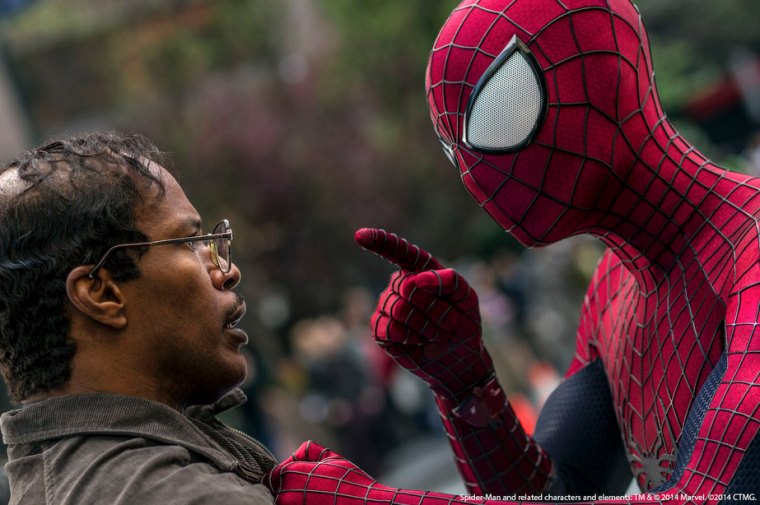
Elsewhere, however, dark forces develop under Oscorp. Engineer Max Dillon (Jamie Foxx) gets electrocuted by bio-electric eels, transforming him into the chaotic villain known as Electro. Russian mobster Aleksei Sytsevich (Paul Giamatti) gets equipped with a fully armed mechanical suit, becoming the Rhino. And Harry Osborn (Dane DeHaan), an old friend of Peter’s, returns with a dark secret that he’s hiding from everyone.

That makes three villains in total for this sequel. Concerned? You should be. The last time we had three villains in a Spider-Man movie, that film was Spider-Man 3. I’m never going to get that image of Tobey Maguire doing the Elvis Presley-stride out of my head, ever. Does anyone have any hydrochloric acid I can pour into my eyes?

Well, you can rest easy, fellow web heads. The Amazing Spider-Man 2 is not Spider-Man 3. Quite the contrary, actually. This is a significantly better Spider-Man than its predecessor, a film that bounces in between multiple tones and genres all at once and does all of them brilliantly.

An early fight scene in the film, for instance, is as wacky and funny as a Looney Tunes cartoon, with Spidey struggling to grab all these plutonium canisters off of a moving truck like he’s in the middle of a pinball table. In another scene, he’s in the middle of an action sequence so exhilarating and mind-blowing that it could have come straight from a video game cut scene. In another moment, him and Gwen are dealing with a real emotional struggle neither quite know how to handle, something that has haunted Peter since the first movie.

That’s what makes this Spider-Man better from the other one: It has many tones, story lines, characters and emotions that it’s juggling all at once. That’s a weighty order, and not one to handle easily. Yet director Marc Webb handles the challenge excellently, delivering just as relevant a character drama as he does an exciting action movie.

The cast members have expert chemistry with each other, but that should be expected because of their exceptional performances in the first film. We already expect Garfield and Stone to be perfect with each other because they were nearly inseparable in the first round of the series. It’s more efficient, then, to focus on the newer cast members: Jamie Foxx and Dane DeHaan. 

Foxx is electric as the high-voltage villain, pun intended. At first he’s just a socially silly and awkward scientist, similar to Jim Carrey’s version of the Riddler in Batman Forever. When he goes through his transformation into Electro, however, everything changes. He becomes an angry and malicious supervillain, a man who is mad and frustrated at everything and just wants to kill everyone, then jump start their heart just so he can kill them again. DeHaan, especially, was desperate and conniving as Harry Osborn, a menacing and starkly different Harry than the James Franco version we are used to in the original trilogy.

Both of these villains serve a pivotal role to Peter’s development. Electro is the physical conflict Peter has to face in the movie; Harry is the emotional one.

There’s another concern comic book fans will have about this movie, and that is the same concern they have with Captain America: The Winter Soldier: We’ve already read the comics. We already know the twists that are coming up, and as a result, our reaction is dulled when that moment comes in the movie.

Let me make a reassuring statement for my fellow comic book lovers: I could see the twist in this movie come from a mile away. Yet when I saw it, I reacted as if I was witnessing Peter’s tragic story for the first time.

There are apparent concerns to have with this movie. The multiple story strands are worrisome, the overload of villains can be an issue and Max Dillion’s character is far too silly to fully accept as being realistic.

Does that change The Amazing Spider-Man 2’s influence, or for that matter, its effect on the audience? The answer is no, it does not. The Amazing Spider-Man 2 is still a great sequel, an excellent expansion to the Spider-Man universe and a more-than-welcome development to Peter’s never-ending growth as Spider-Man. I’m tempted to compare it to the legendary Spider-Man 2, although I’m not sure if it’s quite there yet. One thing is for sure, however: it’s head-over-heels over Spider-Man 3. If Webb keeps this up, he just might surpass Sam Raimi’s original trilogy.

Tagged , , , , , , , , , , , , , , , , , , , , , , , , , , , , , , , , , ,

“X-MEN: FIRST CLASS” Review (✫✫)

Pretend G-men trying to skip out of class.

The very first shot of X-men: First Class is the exact same scene of the Holocaust, frame-by-frame of the very first X-men movie directed by Brian Singer. Not a good way to start off your movie by copying another one, isn’t it? The very next scene after briefly skipping through that one is a young Charles Xavier’s encounter with a young, hungry blue-skinned mutant named Raven who was trying to steal food from his refrigerator. Talking to her in a very sincere, comforting voice, he assures her that she doesn’t have to steal, and reaffirms it by saying that she’ll never have to steal again. Touching. I wonder how this conversation went over with his mother?

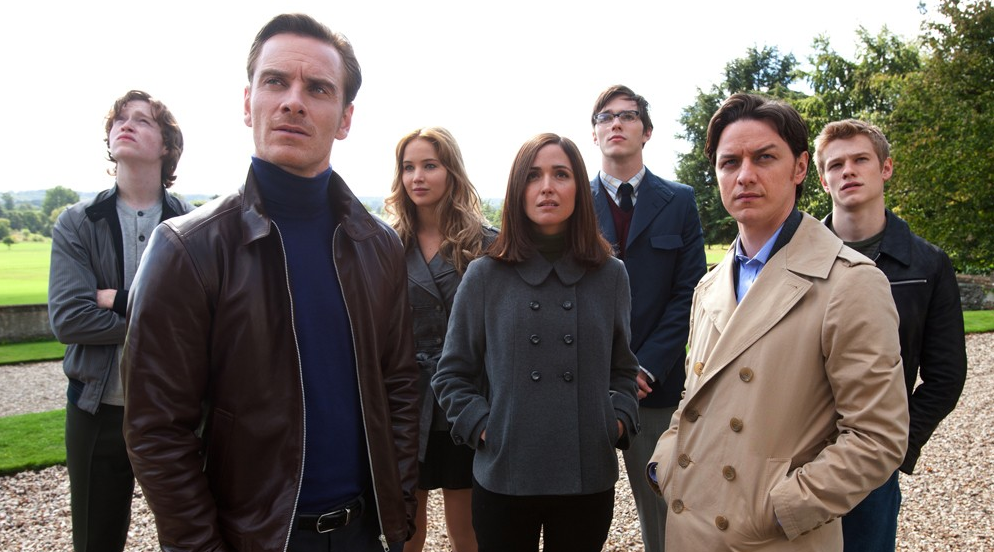
Years pass, and we’re reintroduced to the characters we’ve come to know for the past few movies now. Erik Lenshurr (Michael Fassbender), the man soon to become Magneto, is out on the hunt, looking for the man who killed his family and tortured him as a child back when he was a Jew in the concentration camps. Charles Xavier (James McAvoy) is now in college with the now much more mature Raven (Jennifer Lawrence), who is pursuing his masters degree in psychology.

There’s a mutual enemy that unites these three individuals together: Sebastian Shaw (Kevin Bacon), a menacing and conniving mutant with the ability to absorb and redistribute energy. That means a grenade can explode in his hand and he can transfer the explosion straight into you with a touch of his finger. Shaw is the man who tortured Erik back when he was a young child, and Xavier discovers a sinister plot that Shaw is setting to unveil upon the world. Erik and Charles combine their resources and their efforts to form a mutant team to work together and stop Shaw.

And how exactly does Shaw plan to carry out this giant, dastardly plan? By conspiring and coercing the Cuban Missile Crisis among nations, that’s how. How original. I wonder if these guys considered overthrowing the Chinese government while they were at it?

Hypothetical question. If you hear the term “prequel” being used, what’s the first thing that comes to mind? For me, its the word “beginning”. Beginning, as in, the start of the story. Beginning as in, the start of a legacy. Beginning as in, filling in the holes of all the ambiguous stuff we were told in the original trilogy, and beginning as in making sure everything fits into a nice, nifty little package by the time the end credits roll.

As a superhero blockbuster alone, X-men First Class succeeds. It’s exciting, it’s visually stunning, it features everyone’s favorite X-men that they’ve come to know and love, and it has enough comic book lore in it to make even Kevin Smith giggle with glee. As an action movie meant to please summer movie lovers, it is fine. As a prequel to the critically-acclaimed series that it is based on, however, it is utter and absolute failure.

Three of the biggest goofs that completely and utterly frustrated me. 1) There were flashback scenes in X2, X-men: The Last Stand, and Origins: Wolverine where Xavier is clearly seen as to being able to stand. Yet at the conclusion of First Class (spoiler alert!) Erik deflects a bullet into Xavier’s spine, permanently paralyzing is legs. 2) In the first X-men, Professor X audibly said to Wolverine that him and Magneto helped build Cerebro together, while in this movie it is very clear that a mutant named Hank McCoy (Nicholas Hoult) was the one who built it instead of them. Magneto’s helmet also didn’t exist prior to X-men, whereas here it already does. And lastly 3) a cameo appearance of a certain three-clawed mutant meeting Xavier and Erik about halfway through the movie at a bar. Wouldn’t they have remembered him thirty years later, especially since one of them is a telepath?

These ignorances to the plot show me that instead of providing an accurate prequel to a highly-revered superhero series, the filmmakers were more interested in letting loose and having fun rather than making something straight-laced and refined. I’m all for fun and high-octane action movies, but if you go in ignoring everything else that happened in the movies previous to your own, you’re being disrespectful to the franchise.

Oh, the cast was more than exceptional, I won’t deny that. McAvoy portrays the younger Professor X wonderfully here, passing himself off as a sort of young Patrick Stewart that’s more reckless and immature than his older self. Bacon is smug and charismatic as Shaw, and even though his role wasn’t as compelling as Ian McKellan’s was in the original trilogy, it still served its purpose in the film.

I especially enjoyed Fassbender’s performance as the angry, relentless, and grief-stricken Erik Lenshurr. The staple performances in the series overall belong to Patrick Stewart and Ian McKellan, there’s no doubt beyond that. Still, Fassbender gives it his all here. You notice the effort he extends here, the passion and the fire he instills in this character. McKellan’s rendition of Magneto was calm, collective, and calculated, a great foil to the equally intelligent but more morally aligned Xavier. Here, Fassbender is neither calm nor calculated. He is simply a raging, hateful man, a mutant who has been in pain and alone all his life, desperately seeking some sort of way to fill the emptiness within his cold, solemn heart. I genuinely liked and appreciated his take on the character, even though he bends missiles in one scene that look about as realistic as a Tom and Jerry cartoon.

“But wasn’t it fun?” is a common argument I get from a lot of moviegoers. “Fun” is such a subjective word, and can mean any one of different things. In the aspect of simple, plain, straightforward blockbuster fun, I guess this movie satisfies. The problem is I didn’t go into X-men: First Class expecting a brainless blockbuster. I went into this expecting this to be exactly what it claimed to be: a start to the X-men’s journey, an insightful and hot-blooded prequel that showed perspective on how their story began. This wasn’t even close to being a prequel, ending with more questions where there should have been answers. Fox has already announced that a sequel is currently in the works to be released sometime in 2014, and here I am, thinking that these kids need to go to summer school before even thinking about going into the second semester.

Tagged , , , , , , , , , , , , , , , , , , , , , , , , , , , , , , , , , , , ,

“THE AMAZING SPIDER-MAN” Review (✫✫✫1/2)

♪Does whatever a spider can♪

If I were to have a reboot of one of my favorite superhero films made just ten years ago, The Amazing Spider-man would be that reboot. What can I say about the film that will accurately do it justice? That it is exciting, suspenseful and displays visual effects that leaves the old one in the dust? That the writing is just as acute and skilled as the direction is? That Andrew Garfield has perfect chemistry with Emma Stone? No. Instead, I will describe the film by simply using just one word: amazing.

When Peter Parker was a young, bright-minded child, he lived in the content and warmth of his parents home. When his house was broken into, his father’s office searched through in every crook and cranny, his father Richard (Campbell Scott) quickly packs a suitcase, drives Peter to his Uncle Ben (Martin Sheen) and Aunt May’s (Sally Field) house, and tells Peter him and his mother will be gone for a while. A few days later, the plane that Peter’s parents were on was reported to have crashed. They didn’t make it out.

Twelve years later, Peter (Now played by Andrew Garfield), now in his teen years, is in high school, gets picked on by the local bullies every now and then, and has a crush on this pretty blonde-haired genius named Gwen Stacy (Emma Stone). While in the basement one day helping his Uncle unclog the water pipe, Peter makes an interesting discovery: his father’s briefcase, filled with notes, theories, and algorithms Peter has never seen before. While looking and studying the notes his father left behind, Peter realizes everything points to one scientific company in particular: Oscorp.

From there, Peter snoops around, goes into a lab he wasn’t supposed to go into, a radioactive spider bites him, and well… you probably already know where it goes from there.

If we look at the story, it is on repeat from the first Spider-man. But the repeat isn’t what we care about. The Amazing Spider-man is done with a new style, energy, and enthusiasm to it than the original one was. Funny, I didn’t expect this movie to be as energetic as it is. This film is directed by Mark Webb, who to date, his only directing experience being music videos and the 2009 romantic-comedy 500 Days of Summer. Quite a difference in genres, I know, but Webb handles the transition well. He makes Spider-man as he sees it, as a young man coming out of puberty using his powers for playful, mischievous reasons rather than the heroic acts of courage and responsibility that most heroes are known for. This Spider-man is more jokey and sarcastic than the original one, spitting witty one-liners while arresting a criminal or web swinging past bystanders.

He fuels the action scenes, inspires laughs, and is the source for original entertainment. If Tobey Maguire is the more emotional Spider-man, this Spider-man is the more sporadic and amusing one.

Andrew Garfield does a great job in portraying this Spider-man in a totally different dynamic. His character is definitely different, retorting to puns, jokes, and one-liners that would only result with awkward silences if Tobey Maguire tried to pull off the same thing. Garfield, however, is more talented than a one-dimensional joker. Like any great actor, his character portrays a flurry of emotions, and he portrays all of these emotions well. We can tell exactly when he is troubled or concerned, when he is angered and enraged, when he is happy and content, or when he is saddened and alone. Peter experiences many tragedies in this movie, and Garfield does a good job expressing the emotions for all of them. Emma Stone, equally, is incredible in this movie, providing the film’s beautiful, smart heroine. Together, their chemistry is irreplaceable, and forms a romance that rivals that of the chemistry Maguire and Dunst made in the original Spider-man movies.

Here is, regardless of pre-conceived opinions, a great movie. It is a blockbuster that does a great job balancing in between spectacular action, heartfelt emotion, and genuine humor, all combining into a reboot that makes it not only fun, but unique in its own right.

From a technical perspective, this film has no flaws. It, however, is not about what it did wrong; its a matter of who did it better.

The biggest weakness with The Amazing Spider-man is its release date. This is ten years after the first movie came out, and five years after its most recent one. Why did it need a reboot? It cannot help but bring up the comparison game when you watch this movie. And what happens when you compare things? You recognize which one did things better, and which one did things weaker. In comparison to the old one, The Amazing Spider-man cannot help but look inferior.

But how, exactly? The flaw exists in the writing, dear reader. There are just simply not enough moments in the film that are as emotionally real or relevant as there was in the first two Spider-man movies. Take, for example, the scene in the original Spider-man where Peter’s Uncle Ben dies because Peter did nothing to stop a criminal that ran past him. In the original film, this was a tragic, painful, and heartbroken realization for Peter that it was not the burglar who killed Uncle Ben, but Peter’s inaction and lack of doing the right thing. Here, it’s just on repeat as something that Peter needs to go through in order to become Spider-man. Peter, however, never acknowledges his responsibility in the matter, and neither does he ever even confront the criminal. How, then, does the issue ever become resolved? Answer: it does not. At the end of the film, everything is resolved except for that one specific conflict.

That’s the film’s only real weakness. I don’t want to go on about this weakness, though, because I’d be beating the bush. The main point: The Amazing Spider-man is still utterly fantastic. It is action-packed, suspenseful, energetic, relentless, exciting, humorous, and highly, highly entertaining. The production is all-around strong, the cast is even stronger, and the story is as driven and purposeful as it has ever been, despite a few moments of misplaced emotion. This is a reboot to one of my favorite superhero films of all time, and the surprise is I wouldn’t mind seeing a sequel to it in the slightest.

Tagged , , , , , , , , , , , , , , , , , , , , , , , , , , , , , ,