Tag Archives: Batman

“BIRDMAN” Review (✫✫✫✫)

The artist’s struggle, all in one take. 

Birdman, or otherwise known as The Unexpected Virtue of Ignorance is one of the most mesmerizing films I’ve ever seen. It is also one of the most unique, disturbing, shocking, and confusing films I’ve ever seen too. That’s okay. This film was reaching for a specific vision, and director Alejandro Inarritu has expanded beyond it. I admit I don’t know what to expect as far as the public reacting to this, and I also don’t know how accessible it is to non-film aficionados either. But I have seen the movie frame by frame, and I think it’s one of the best films of its kind. On the surface value, it’s about the struggles of Broadway theatre. In deeper insight, it’s about ego and the obsessive human condition.

The film stars Michael Keaton as washed-up actor Riggan Thompson, who has been forgotten by his adoring public after portraying the lead role in a series of superhero films titled Birdman. This is ironic, because in real life, Keaton portrayed a superhero in Tim Burton’s 1989 film Batman. Desperate for a comeback, Thompson sets out to write, direct and star in his favorite Broadway play: What We Talk About When We Talk About Love by Raymond Carver.

Things immediately hit the fan during the week of their first preview. One of Riggan’s actors gets a head injury from a loose light on the set. His replacement, Mike Shiner (Edward Norton) is a talented but brash and arrogant actor who sees himself as Riggan’s superior. And, as he faces personal problems with his estranged daughter Sam (Emma Stone), Riggan begins to feel the closing pressures of Broadway when a malicious theatre critic tells him she’s going to “kill his play.” Now Riggan is trying to keep the play and his sanity afloat, and he will make whatever sacrifices he needs to make sure both happens.

Written, directed and produced by Inarritu, Birdman is the first black comedy made by the filmmaker, his most successful films to date being Oscar nominees Babel and Biutiful. Now he has made Birdman, and I am tempted to say it’s the best film he’s made yet.

What worked so well with the film? The first thing is the editing and the cinematography, which was shot so wonderfully by Oscar winner Emmanuel Lubezki that it places you in the moment, in the reality of the film, not making you watch it from a cushion seat on the eighth row of a dark movie theater. Lubezki, who worked with Inarritu on short films in the past, decided to shoot the film and edit it into a continuous fashion, giving off the illusion that the entire film was filmed in one take. Even though the movie wasn’t filmed in one shot, the feeling it gives off makes it feel alive and moving, not unlike the world of theatre that Riggan is trying to prove himself in.

I wonder how much effort this takes, not just from the cinematographer and director’s point of view, but from everyone else involved in the film as well. How many hours did the actors need to rehearse their lines in order to get their roles right? How much pressure was the tech and lighting crew under while they were filming, knowing that if they screwed up, everyone would have to start back to square one? How many hours did film editors Douglas Crise and Stephen Mirrione have to sit in front of a computer, making sure the shots transitioned so well that you couldn’t even see the transitions? The illusion not only worked because of the idea that Lubezki and Inarritu offered, but because of the commitment it received from everyone involved with the film. In many ways, their efforts were all worth it: the camerawork here expresses more of the story than the character’s dialogue does.

The parallels in this movie are also ingenious. How does Keaton feel playing as Riggan Thompson in the movie, knowing that he reached international fame as Batman earlier in his career and having since then never been able to match a more recognized role? How does Inarritu feel, going through all of the production pressures Riggan did in making the play as he himself did in making the movie? Did he intend this movie as self-reflection? Is he telling the audience what he goes through daily as a filmmaker? Or is he using his struggles as a platform to tell a much deeper, more important story to the audience?

For me, I don’t get as much joy out of interpreting as much as I do out of experiencing. And make no mistake: Birdman is an experience, surreal, tantalizing, and thought-provoking all at once. I’m still sitting here, hours later, not quite fully realizing what exactly Inarritu was trying to portray in this film. Is he commenting on the artist’s struggle? Commercial vs. independent film? Fatherhood? Friendship? Family? Lost love?

I think it’s all of the above. Or maybe none of the above. I honestly don’t know. In the movie, Inarritu battles labels that are placed on artists and on the art that they produce. Is Riggan Thompson a superhero, or an actor portraying a superhero? Is he a former shell of who he is, or a flower that has yet to bloom? We see in this film how these labels influence his life and how much stress and anxiety it presses upon him. To put labels on the movie would contradict Inarritu’s intentions. It would be offensive to the film.

My bottom line: Birdman is a masterpiece. It is so distinct in its own language and style that I think it is impossible to define it, let alone replace it. Critics will applaud it for it’s technical and emotional achievements. It will definitely garner some Oscar nominations. It’s a sure contender for visual effects, cinematography and editing. It is also sure to confuse certain people, to which I would recommend stop trying to understand it. Birdman is not meant to be understood. It is meant to be experienced, and if you can help it, interpreted.

Post-script: A thought I had after seeing the movie that I think viewers will also have. Because of how profoundly his role as Birdman affected Riggan, is Inarritu attacking the superhero genre of film? I believe he is, but I choose not to acknowledge that. After all, for every time a superhero film was called too simple, couldn’t you call any art film too complicated? I quote Mark Twain: “Too much of anything is bad.” 

Tagged , , , , , , , , , , , , , , , , , , , , , , , , , , , , , , , ,

An Afternoon With Alejandro Inarritu

“And did you get what you wanted from this life, even so?

I did.

And what did you want?

To call myself beloved, to feel myself beloved on the earth.”

– Raymond Carver

These were the words that director Alejandro Inarritu (Babel, Biutiful) chose to quote at the beginning of his meticulous film Birdman, or The Unexpected Virtue of Ignorance. It was also the first words that came back into my head minutes before I was to interview him.

This weekend, I had two great experiences happen to me. Firstly, getting to see Birdman, a viciously unique film that tackles it’s characters and themes with pinpoint precision: a masterwork by a master director. The second you already know. If you don’t, you didn’t read my first paragraph.

Alejandro gave myself, along with about ten other college journalists, the privilege to talk to him about his upcoming limited release. After seeing the movie, this surprised me, because there was a moment in the film where a journalist accuses the main character of injecting semen into his pores to maintain his young features. I suspect Mr. Inarritu hosts a very guarded spirit while being interviewed by the press, and I certainly don’t blame him for that if that is the case. Now that I think about it, maybe that’s why Inarritu wanted to host the interview over the phone in the first place.

Anyhow, I had 20 minutes to listen to the director’s innermost thoughts, and while I only got to ask him one question, I enjoyed the experience as much as any other college journalist who participated in the call. While all of these aren’t my questions, these are the ones I found the most relevant to the film, and the ones I believed Inarritu would have preferred to be answered in the first place. So without further adieu, here is Alejandro Inarritu on the unexpected virtue of ignorance.

Question: Your film is unique, hyperactive and full of energy. How do you communicate to your cast the complex tone you’re wanting to portray?

Answer: I always try to be very specific, help them to clarify and simplify things by having a very clear objective. I think every scene has an objective, and every character has something they want to achieve in each scene. When you have cleared your objective, and to try one or two possible ways to get that done through an action verb, I think that would simplify the work not only for me, but for everybody.

Q: What were some of the challenges you faced while making the film? 

A: It was a very short shooting — 29 days. We rehearsed a lot before arriving to the set, so basically it was a very intense and meticulous work of precision with actors, camera and crew. Everything was designed and matched the needs of the film that was basically predecided in rehearsal.

Q: You have a big role behind your scenes in producing, writing and directing all of your films. What is it like taking on all of those jobs at once? 

A: I have been lucky to have been the producer and be involved in all of my films in a very personal way. I think there is no other way to make it. I think if you have a film that is personal, if you are doing your own film, there is no other way to not produce it, because I think it’s a part of the film. Producing means a lot of decisions that will impact your film one way or another.

Q: In the movie, Riggan Thompson is overshadowed by a superhero role he played earlier in his career. In real life, Keaton is overshadowed by his role in Tim Burton’s Batman. Is that an intentional casting decision that you made?

A: Keaton adds a lot of mental reality to the film, being an authority and one of the few persons of his work that pioneered the superhero thing. But at the same time, he has the craft and the range to play in drama and comedy, and very few actors can do that. He plays a prick in this film, and I need someone who was adorable, somebody who you can really like. He has that likeness, that likeness that was required. All of these things made him the perfect choice for it. I think he was very bold in trusting me with this role.

Q: One of the things that is particularly interesting with the film is the long take. Can you talk about why you made that visual choice?

A: I wanted the long take to make the people really feel the experience of this guy. I think it’s important for every director in every film to pick the point of view, and in this case I wanted radical point of view, and the people were in the shoes of the character to experience his emotions. I felt that was the most effective way to do that.

Q: Why did you choose to portray mental illness in a film that is at least extensively a comedy?

A: I think ego is a part of our decease as a society. I think the ego is a necessity, but I think when the ego takes over and we attach our personalities to the ego, and he domains a person absolutely without being discovered or controlled. That’s mental deceit, and I see in a way Riggan Thompson suffering from that illusion of ego that’s distorting him. He thinks he does things that he does not do, he’s in like a manic state of mind. He’s an extreme case of ego.

Q: Is that part of the commentary?

A: Everything is part of the tone of the film. That’s why it opens with a guy meditating in tidy whites.

– David Dunn

Tagged , , , , , , , , , , , , , , , , , , , , , , , , , , , , , ,

“NEED FOR SPEED” Review (✫✫)

Needs more brains if you ask me.

Need For Speed is one of those movies that feels like pressing on the gas pedal. You get a good kick out of it at first, but it doesn’t take long for it to run on empty.

Based loosely on the video game series of the same name, Need For Speed stars Aaron Paul (Breaking Bad’s Jesse Pinkman) as Tobey Marshall, a car mechanic whose prowess at street racing precedes that of Dom Toretto from Fast and Furious. When Tobey’s closest friend Pete (Harrison Gilbertson) is killed in a race against his wealthy rival Dino Brewster (Dominic Cooper), Marshall sets out in a race across the country to find Brewster and make him pay for what he has done.

Directed by Scott Waugh, the filmmaker behind the 2011 war drama Act Of Valor, Need For Speed is a typical Hollywood sports car movie with the typical ingredients you’d expect: a lot of action, few brains, even less wit and an over-dependence on formulaic Hollywood cheese

The screenplay is unbearably generic, to the point where groaning in disbelief is almost a reflex. In the first 20 minutes, we get every racing movie cliché you could possibly find in the handbook, from the underdog street racer stereotype to the prolifically rich and jerk of a rival to the underdog getting framed for a crime that he didn’t commit, seeking revenge on his transgressor. I wonder where we’ve seen that before?

Oh, is this movie bad. From the movie’s first scenes to its very last, it’s a predictable farce that can be easily foreseeable if you’ve seen any street racing movie ever. Case in point: Would I be really giving away any spoilers if I offer that A) Marshall makes it into the final race, B) He beats Brewster in a tedious scene that’s supposed to be the climax and C) He gets a beautiful girl in his arms? Please look at that, and tell me that doesn’t remind you of The Fast and the Furious franchise.

The movie might have been decent if the performances were worth anything more than a ukulele pick. Look at all of the names that are in this movie: Dominic Cooper, Imogen Poots, Michael Keaton, Aaron Paul. All great and talented actors, whose versatility of projects range from Batman and 28 Weeks Later to Captain America: The First Avenger and “Breaking Bad”. Their roles in this movie are wasted because they are mostly shoved aside for the (dis)pleasure of preposterous stunts, relentless engine revving and unbearably bad CGI animation. The fire effects that can be seen in one scene are so laughably bad that the video game looks more realistic.

The only thing I give the movie credit for is its third act, which is surprisingly affectionate. Dare I say that it may be poetic? No, that would be giving the movie too much credit. Still, it carries a very humble message about it, a grounded and reassuring statement that everything is going to be all right, even if things don’t initially seem that way. This end scene was surprisingly touching and relevant, elevating the movie above its mediocrity, although temporarily.

That still doesn’t change what we have here, though. Need For Speed is a predictable, standard, run-of-the-mill action farce with no surprises or original ideas. It’s almost like playing a video game, except you’re watching the filmmaker play it for you.

Tagged , , , , , , , , , , , , , , , , , , , , , , , , , ,

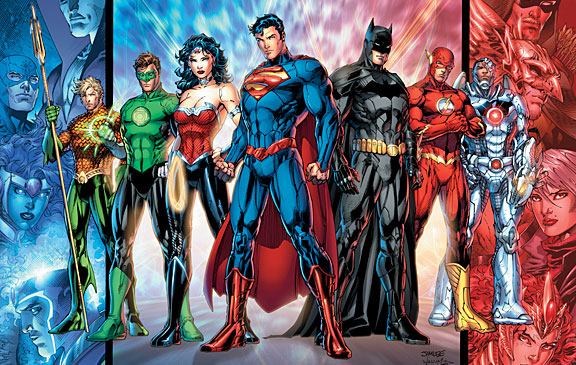
DC Versus Marvel: Why “The Justice League” Will Not Be As Successful As “The Avengers”

Well, this’ll ruin your morning coffee.  Due to recent developments, I am now convinced that no matter what DC does, that the much-speculated Justice League movie will not be as unique or outstanding as Joss Whedon’s The Avengers was, is, and always will be.  Why all the pessimism?  Call it intuition.  Before The Avengers cinematic universe was conceived, Marvel had a wider grasp of successful projects to boast of, including (but not limited to) SpidermanX-menBladeWolverine, Kick-Ass, and Men In Black.  DC, in comparison, only has SupermanBatman, and arguably RED and Watchmen as their most successful properties.  Also, I have an unhealthy amount of OCD.  Just thought you should know.

Believe me, I would like nothing more than to see a well-made Justice League movie hit the horizon.  There are as many characters that are as creative and dynamic in the DC universe as there are in the Marvel universe, many of them with memorable stories and villains of their own.  While I want to see a movie eventually, I now believe it will not happen, and if it does, it will not hit the mainstream success that The Avengers did.

Why am I so convinced of this?  DC has every inconvenience against them, and they have to deal with issues Marvel never had to face while producing The Avengers.  I’m not saying Marvel had it easy while making The Avengers.  Lord knows you’ll have a fair amount of doubt and backlash when you try to combine five comic-book properties into one high-adrelanine, action-packed adventure.  Regardless, DC is facing a lot of issues Marvel didn’t have to worry about, including competitive release with The Avengers in itself.

Let’s face facts: When The Avengers was released, we didn’t know what to expect.  All we knew was that it was incorporating six superheroes into one movie, they would be mostly featuring the same actors, the writer/director of “Firefly” was at the helm, and we were hoping it wouldn’t turn into the Saturday Morning Power Hour.  It didn’t, and now we have the exciting, exhilerating, witty, and entertaining Hulk-box-office-smash that The Avengers was.

This is the biggest issue that DC has over Marvel: the comparison game.  If DC would have thought of a plan similar to this ahead of Marvel and released Justice League incorporating elements from multiple DC universe movie properties at once, they would then have had a substantial edge over Marvel and would give them reason to compete for their box office revenue.  But the plain simple fact is that Marvel beat them to it, and now we have something to compare to when Justice League hits the theaters.  How big of a catastrophe is that?  What could possibly compete with The Avengers as far as box-office superheroes go?  I’ll name a few just for facetious effort: X-menFantastic Four, and Watchmen.  Now be honest with yourself: do any of those movies stand out in your mind at the level of enjoyment as The Avengers does?

If you’re being honest, it probably doesn’t, and what’s worse is that DC is now pressured into that because Marvel did it first.  But like I said, DC has a lot of issues against them, and many of them have to deal with their very own properties.  Take the following franchises as an example:

THE DARK KNIGHT TRILOGY

If we were talking about the movies by themselves, there’s no reason for concern.  The Dark Knight trilogy is among the greatest trilogies ever released into theaters, and it not only pleased long-time fans of the caped crusader: it pleased moviegoers who were not associated with the comic books.  The Dark Knighttrilogy isn’t only one of the best comic book movies of all time: they one of the best movies of all time, period.  Very few bad things are said about that franchise as a whole.

Which would enhance excitement to the fans when they think this same character will be incorporated into the Justice League, right?  Wrong.  Producer/Director Christopher Nolan and screenwriter David S. Goyer have stated multiple times that the Batman in the new Justice League is not associated with Nolan’s trilogy.  The quote from Goyer pulled from IGN says it all:

“…Zack has said that Bruce Wayne exists in this universe. It would be a different Bruce Wayne from Chris’ [Nolan] Dark Knight trilogy, and it would be disingenuous to say that Zack and I haven’t had various conversations on set, around ‘what if’ and ‘moving forward'”.  

On top of that, Christian Bale himself admitted to Entertainment Weekly that not only will he not be portraying Batman in the upcoming DC team-up film: he doesn’t even know about a release date.

“I have no information, no knowledge about anything. I’ve literally not had a conversation with a living soul. I understand that they may be making a Justice League movie, that’s it”.  

So what is their plan?  End a movie series in 2012, release a Superman movie in 2013, and reboot the character only a few years later?  Don’t they remember how many people saw those movies?  How much people praised them?  How those movies stuck out in people’s minds when someone mentioned the word “Batman”?  What are they thinking?  How on Earth do they think can they replace that?

Now, someone could offer the argument by saying Nolan’s universe was meant to be seen as realistic, whereas the rest of the DC universe wouldn’t be.  To which I respond that as hogwash.  Snyder also saidMan Of Steel was meant to be seen as realistic too, but we all know how realistic it is for an alien from outer space to get super powers on earth, or having a guy dress up in a halloween costume to beat criminals to near death.  The thought of superheroes in itself is fictitious, with powers or without.  So why are we trying so hard to differentiate in between reality and fiction?

Another possible argument someone could make is that The Dark Knight trilogy has ended, and there would be no way to revive the character for the Justice League.  To which I would say you are half right.  If we are talking about the Batman after The Dark Knight Rises then yes, that Batman is no more with us. But what about the Batman in between movies?  There is a two-year split in between Batman Begins andThe Dark Knight, and a five-year split in between The Dark Knight and The Dark Knight Rises.  Surely, someone could find room to fit Nolan’s Batman into the JL somewhere in that time stamp?

So, already you have your greatest property and you’re sending it out the window.  That’s great.  What else could go wrong?

MAN OF STEEL

I’m just going to go ahead and say this: Man Of Steel was a great film.  It had depth, it had character, it had development, and it had plenty of high-octane turbulent action.  It was a great reboot for Superman, and it was a great jump-off point for a possible Justice League series.  That much I will give to Snyder and his crew.

The complications with the Justice League universe, however, are plenty.  The biggest issue right now is their speculated release dates.  As many of you might expect, Warner Bros. has been trying to push for the Justice League movie to be released in 2016, to be released competitively with The Avengers 2 andStar Wars: Episode VII.  The original plan was to release Man Of Steel this year, release a possible sequel in 2014-2015, and then release the Justice League movie

That puts a great amount of pressure on Man Of Steel, and I don’t think it can handle it.  Again, not to play the comparison game with Marvel (even though I am), but like Man Of SteelIron Man was a great jump-off point for The Avengers, even though it was more charismatic and down-to-earth than Man Of Steel was.  It was a great film.  Great enough to jump right into The Avengers though?  Absolutely not.  It had to release four more movies before the buildup to the Avengers was complete and the excitement was at its highest.

Like Iron ManMan Of Steel is a great film to set up its expanded Universe.  Enough to jump right into aJustice League movie though?  Not even close.  Another sequel, maybe, but to jump right into the DC-team-up film would be suicide.  The announcement of a JL movie that this point wouldn’t be an anticipation: it would be a surprise.  How is that a good setup for a box-office smash?

Also, many other audience members felt the tone was too serious and did not fit into the joyous, silly veins of the original Christopher Reeve series.  To which I would say quit being a stooge and enjoy the movie for what it is.  People who wanted Green Lantern to be fun and silly got what they asked for, and look at how that movie faired with the moviegoing audiences.

Speaking of which…

GREEN LANTERN

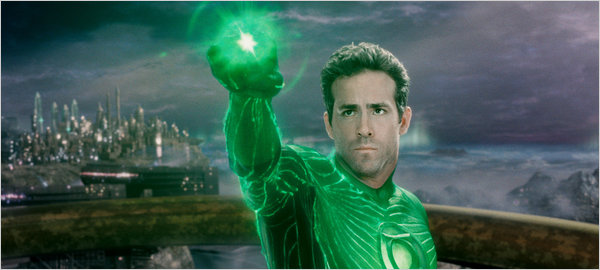
Many people hated this movie, and their hate was warranted.  Green Lantern was silly, stupid fun, and that’s all it needed to be.  I for one enjoyed the movie and appreciated it for its confidence, its stellar visual effects, and its smirking charisma.  Others, however, obviously do not share my opinion, and ultimately their opinion as a whole matters more than mine does.

To which I know disregard and ask this: what are you going to do with him now for the Justice League?  They can’t bring this same character in and have him do the same thing he did the first time: that will resurrect everything audiences hated the first time they watched the Martin Campbell film.  What are they going to do then?  Are they going to revamp him?  Recast him?  Reboot him?  Maybe even cut him out entirely?  Batman has a great story behind his success and Superman a great following.  Green Lantern has none of that.  So what can DC do to the character to give him a new spin and a spirit on the franchise?

The list of issues goes on and on.  How are they going to incorporate Wonder Woman into it?  What about the Flash?  Martian Manhunter?  Who would they cast?  Who would be the villain?  And how on Earth are they going to make Aquaman not look stupid???  

Bottom line: Justice League will not be as good as The Avengers.  DC just isn’t prepared for it.  There is the off-chance that it can still be good, exciting, and entertaining blockbuster fun, but I’m convinced that there’s no way that DC can give these characters the same treatment Whedon did for The Avengers solely because they won’t be as recognized as those characters have.  Even if you do give each Justice Leaguer his own movie and give time to set up each character: how do you know you’ll be as successful as The Avengers was?  Won’t you be following a formula at that point?

Of course, there is the off-chance that I’m completely wrong and that the Justice League will be vastly more successful than The Avengers will be.  I’m going to see it regardless of what RottenTomatoes says, and I hope it’ll at least be as good as Man Of Steel is.  But that’s unlikely, and no matter how it turns out, lets just be grateful that Robert Schwentke won’t be directing, writing, or having anything to do with the movie.  The last thing we need is a PG-13 version of RED.

Oh, wait a minute.

Source: EMPIRE, Entertainment Weekly, IGN
Tagged , , , , , , , , , , , , , , , , , , , , , , , , , , , , , , , , , , , , ,