“FINDING DORY” Review (✫✫✫✫)

Just keep swimming.

There is absolutely no reason why a movie called Finding Dory should be this good. Absolutely no reason. The last time Pixar attempted a sequel/spinoff, we got Cars 2, a cheeky and unnecessary addition to the Pixar universe. Finding Dory is equally unnecessary, but the good news is that it knows that. So instead of trying to follow up from its first film, it chooses to focuses on telling its own story rather than trying to expand upon another one. What we get is something truly rare: an animated sequel that is every bit as good as its predecessor. Considering that’s Finding Nemo, I think this is the best possible movie you could have gotten from Finding Dory.

Years before Dory (Ellen DeGeneres) met Marlin (Albert Brooks), Dory was just a baby fish happily playing with her parents. Just as forgetful and funny as her older self is, Dory was trained by her parents to say 10 words to any new fish she meets: “Hi, I’m Dory, and I have short-term memory loss.” (Or “reromry”, as she likes to pronounce it). Happy and comforted around her parents, baby Dory is afraid what might happen if she was ever separated from them, or worse, if she even forgot them.

Fast forward many years later, after the events of Finding Nemo. Dory suddenly remembers her parents and her life before meeting Marlin and Nemo (Hayden Rolence). Now determined to find her parents and be reunited again after all these years, Dory, Marlin, and Nemo embark on yet another journey across the ocean to find Dory’s family.

The first time I watched Finding Nemo, I was completely entranced by everything about it. The characters, story, animation, colors, and environments immediately swept me from my theater seat and plunged me 100 feet in the ocean to witness this story about a father and his son. At originally hearing about Finding Dory, all I felt was concern. Minus the Toy Story franchise, Pixar hadn’t handled its sequels as well as its first entries. I was really worried they were about to turn Finding Nemo into a cash-grabber, something that Finding Nemo is worth much more than.

Turns out I had no reason to be worried. Finding Dory is not only a smart homage to its origins, but also a funny, unique, and emotional roller coaster of a film that stands very well on its own two feet (well, fins). The screenplay, co-written by director Andrew Stanton, displays a fine understanding of everyone’s favorite forgetful fish. So fine, in fact, that this movie truly stands on its own, needing almost no support from its previous entry.

Watch the first scenes of Finding Dory closely. Like Finding Nemo, they pull you into the character’s reality and establish an almost immediate connection with your subject. In Finding Nemo, we watched as Marlin lost his wife and most of his children in one of the most tragic openings ever. In Finding Dory, we witness the opposite as a child loses her parents, although not in the same way. The same feeling is established in both cases: a deepened sense of loss, confusion, and grief. You look at baby Dory swimming around aimlessly in the ocean, and you can’t help but feel a deep sense of sympathy for this poor baby fish, alone and with no sense of direction or security.

This sympathy lasts throughout the entire movie, and that’s because Stanton has a clear understanding of Dory and how to get us to care about her. We don’t see Dory as a supporting character in Finding Dory, and we shouldn’t either. This is truly her story, and she appropriately takes center stage as we’re wrapped into her journey and emotions.

I have absolutely no gripes with this film. No criticisms. No recommendations to improve it any further from where it already is now. If we had to compare, then Finding Nemo is clearly superior, but that’s only because we’ve had more time to appreciate it. If Finding Nemo never happened, Finding Dory not only makes sense without it: it stands on its own and functions as its own entry. That’s because Stanton knows how to masterfully guide his audience without manipulating them, and we get caught up into Dory’s story not because we have to, but because we want to.

What we have left is an unchallenged successor to Finding Nemo: a movie that replicates the same appeal of characters, animation, wonder, and amazement as we’re completely engrossed into this story, not once feeling like it’s artificial or incomplete. When Pixar prepares to make the third entry, I officially now want it to be titled Finding Marlin. I trust Pixar enough that they’ll take it in the right direction.

Tagged , , , , , , , , , , , , , , , , , , , , , , , , ,

‘Wreck-It Ralph’ Sequel Uploading In 2018

Level up.

Walt Disney Studios recently confirmed that they are planning a sequel to the 2012 animated comedy Wreck-It Ralph. The sequel, which is currently slated for a March 2018 release, will focus on Ralph being uploaded onto the internet as opposed to the arcade setting of the first movie. John C. Reilly is set to reprise his role as Wreck-It Ralph, while director Rich Moore is also planning to return, although time will tell whether he’s planning on sitting in the director’s chair again or is simply interested in producing.

Personally, I’m very excited to hear that a sequel to Wreck-It Ralph is being released. The one thing Disney is not good at is releasing sequels. To date, Walt Disney has released only two sequels, one for Fantasia and another for Winnie the Pooh. With Wreck-It Ralph and Frozen lining up for second entries, its nice to see Disney widening their scopes to see bigger ways of expanding upon their stories. Seeing Ralph back up on the big screen is a treat that I’m looking forward to. At least they’re not like Pixar and waiting 10 years to release a sequel

What do you guys think? Are you excited for Ralph’s return, or would you rather it be just game over? Comment below, let me know.

– David Dunn

SOURCE: Collider, Oh My Disney

“FINDING NEMO” Review (✫✫✫✫)

Fish are friends, not food.

Reviewing a film like Finding Nemo is an impossible task, because it isn’t meant to be reviewed. It’s meant to be experienced. Like Pixar’s other masterpieces, Finding Nemo finds joy and adventure in seemingly ordinary environments. Toy Story found theirs in a toy box, and A Bug’s Life found theirs in an anthill. Now Finding Nemo plunges into the ocean to tell us a story about family, fatherhood, and friendship. The resulting film is nothing short of Pixar’s best: iconic, entertaining, and meaningful.

After viewing what is perhaps the most heartbreaking opening I’ve ever seen in an animated movie, we are introduced to the film’s key characters. Marlin (Albert Brooks), a deep-sea clownfish, is the single father of Nemo (Alexander Gould), his son who suffers from a short, defective fin. He’s very protective of his son: so much so, that he will hide him away in his anemone, away from the rest of the ocean.

One day, Marlon goes through any parent’s worst nightmare: he sees his son kidnapped by human divers swimming out in the ocean. Now accompanied only by a short-minded regal tang named Dory (Ellen DeGeneres), they set off across the ocean to save Marlin’s son.

The first thing you notice in any Pixar movie is its animation. Vibrant, elegant, and beaming with life, the one thing you can always appreciate about their films is the vivid details of their animation. With Finding Nemo, however, I’d argue that it is the most refined out of Pixar’s other films. This is the fifth film Pixar has produced now, and the fifth time that they’ve captured me with their ambient motions, intricate details, and complex characters. The colors are bright and saturated, reaching out to you in all of its eye-catching graphics and details. The fish feel fresh and alive, briskly swimming through the ocean as if they were real animals. The ocean itself breathes with just as much life as the fish do. Its plants flow in synchronization with the ocean streams, its currents moving like breaths in the ocean. This is easily Pixar’s most visually pleasing film yet, not just because of the colors and motions, but because of how real entire environments feel. This isn’t just an animated ocean: it is the ocean. That’s how authentic it feels and moves.

But the animation isn’t the only beautiful thing about Finding Nemo. Its story is equally breathtaking; simple and straightforward, yet creative and complex. On the surface, we have this father-son dynamic going on in between Marlin and Nemo, which serves as the emotional focal point of the film. In deeper insight, this is a movie about environment conservation and the effect our race is having on fish life.

Take Nemo’s plight as the most pure example of this. After being kidnapped, Nemo is dropped into a dentist’s fish tank with a collection of other fish, all of whom are terrified of the dentist’s reckless niece. It is in this tank where you see very simply that fish are not viewed as living creatures to these humans, but rather as objects, property, gifts. Seeing how poorly the fish are treated in this movie reflects a very sad truth under its layers of fun and humor, and it makes me ponder on how much of a threat we truly pose on the environments of the real clownfish, regal tangs, sharks, sea turtles, and the rest of the fish in the ocean.

None of this takes away from the fact that this is at heart a kids movie: a fun, colorful, and unique one at that. Yet this is a rare picture even among children’s films, an animated movie parents can enjoy just as much as their kids do. Perhaps that is because the main character is a parent himself, and it is easy to relate to his joy, his fears, and his solace as a father, and as someone who cares for something much bigger than himself. Animated films nowadays are like the ocean: vast, wide, never-ending, and impossible to predict. Finding Nemo is the pearl you find in it: small, hard to find, yet immensely valuable, just like its small-finned star.

Tagged , , , , , , , , , , , , , , , , , , , , , , , ,

“ANNABELLE” Review (✫)

Barbie is scarier than this. 

Remember how I wrote in my review for The Conjuring that the Annabelle doll was one of the creepiest elements of the movie? I take it all back. Annabelle is not creepy. Silence is creepy. Moving objects are creepy. Unexplainable sounds, noises, or occurrences are creepy. The unexpected is creepy. A rotted doll turning its head around to stare at you is not creepy, and it doesn’t get creepier as you repeat it 15 more times in a movie.

I realized this while watching Annabelle, a terrible prequel that is the complete antithesis of its predecessor. The Conjuring was masterfully orchestrated in its suspense. Annabelle is haphazardly assembled. The Conjuring knew how to exercise its elements conservatively. Annabelle throws them at the screen like a toddler with temper tantrums. The Conjuring understood the importance of silence and subtlety. Annabelle scoffs at these as it vomits out flashy effects and useless images that do nothing to intensify the plot or its stakes. If The Conjuring advanced the horror genre a few steps forward, Annabelle slowed it down to a baby crawl.

How boring is this movie? So boring that even attempting to write a synopsis for it nearly drifted me to sleep. Dear reader, I tried. I truly did. But what do you need from me? What do you need to know besides that this movie is a prequel? You already know there’s a family, a demented spirit, a doll, and too many jump scares to count. Where else have we seen this before besides in The Conjuring, The Exorcist, The Last Exorcism, The Amityville Horror, The Shining, and every other horror movie in existence, ever?

Talking about the characters is a waste of column space. Why waste talking about them, when the writers make them so plain and dull? In The Conjuring, we cared about Ed and Lorraine Warren because they were so different from the typical horror protagonists. They’re paranormal investigators, arguably the most equipped to handle demonic threats, and yet, they’re still fearful of the forces against them in that movie. The fact that they were strong characters and were still afraid made The Conjuring all the more potent in its dread. These characters, in comparison, are just lining up for the slaughter. You have the made-for-TV housewife, the ignorant father, a helpless priest, and a clueless child, all of whom you don’t care about or even feel slightly interested in. Actually, I retcon my statement: they’re all clueless, helpless, ignorant, and made-for-TV.

The pacing is as sluggish as its cast is. The score, stock and overused. In a movie like this, you would expect its only strength to lie in its visual effects, but even those are garbage. In one laughable scene, the heroine is running down the stairs from… lightning. Yes, dear reader, blue lightning. We go from dolls to demons to lightning, and it looks just as cheesy as it sounds. It looked so bad on the screen that the film’s editor might as well just have drawn blue crayon over the frames. It would have looked just as unconvincing, but at least you wouldn’t be wasting the budget. 

And then we get down to the movie’s biggest offense: poisoning the chilling nature of Annabelle. In The Conjuring, she provided the movie’s more unexpectedly scary moments. That’s because director James Wan knew how to save her, use her, conceal her, then reveal her in shocking moments that surprised you. Wan understood, more than anything else, that the doll by herself was unsettling, but with the right moment when the audience’s guard was down, she would pop out and frighten you with her mysterious and malicious nature.

Our guard is down when we watch Annabelle too, and it stays down after we see her tricks repeat over, and over, and over, and over, and over again. Director John Leonetti took a great element from The Conjuring and thought that copying and pasting it would have the same effect. It didn’t. Leonetti even worked as the cinematographer for The Conjuring. Couldn’t he see through the camera lense that it wasn’t Annabelle that made the film scary, but rather its deliberate pacing and dreary mood? Couldn’t he see that the film didn’t frighten its audiences because of one doll, but rather, because of all of the elements in the picture? Wan understood his cohesion of lighting, editing, and timing and how it delivered the movie’s biggest thrills. Leonetti, in comparison, is a one-trick phony.

Annabelle is a reaffirmation of why I hate horror movies. In good horror movies, like the original Halloween or The Conjuring, they use their premises as a springboard to build up to bigger moments of suspense and eeriness. Annabelle’s mistake was thinking that it’s flimsy premise was the suspense and eeriness. The result is a movie that is long, overbearing, tedious, tiring, and boring. I hope Annabelle stays in the glass jar that the Warrens trapped her in. Putting her in a woodchipper isn’t a bad idea either, along with this movie’s film stock.

Tagged , , , , , , , , ,

“THE CONJURING” Review (✫✫✫1/2)

Be afraid of what you can’t see.

The Conjuring is a revelation in horror cinema: a genuinely creepy and disturbing movie, infesting every nerve of your body with consistent tension, anxiety, and unease. In a long failing genre that mistakes horror for sick images and macabre violence, at last we find a movie that gets it. True horror does not come from the gruesome things we see on the screen: it comes from the things that we don’t see, the things that we suspect are hiding in dark corners, quietly leaning over our shoulders.

The fact that The Conjuring is based on two real-life paranormal investigators, Ed (Patrick Wilson) and Lorraine Warren (Vera Farmiga) makes the film’s events all the more unnerving to watch, and it makes you question how much of it is fiction. In the film, the Warrens are investigating the Perrons, a family that recently moved out to a house in Rhode Island where they think they will be able to peacefully raise their five children. It doesn’t even take a day for unexplainable occurrences to start happening in the house. The clocks always stop at exactly 3:07 in the morning. Picture frames fall to the floor all at once. Strange clapping can be heard in the house every now and then. And after a while, the Perron’s youngest daughter Christine (Joey King) persists that she sees a malevolent spirit late at night. The Warrens commit to the case to find out what is causing the occurrences and help the family before it is too late.

The Conjuring reaffirms an idea I’ve believed in for a long time now: ghosts by themselves are not scary. Neither are poltergeists, demons, monsters, psychotic murderers, serial killers, or supernatural entities. None of these things are scary on their own. What makes them truly scary is the environment around them, the sounds of feet shuffling, the crunching of leaves as they are being stepped on, the chairs creaking, the wind blowing out of nowhere, the chill running down your spine that you can’t explain where it came from. True fear comes from knowing that the threat is near, and yet, not being able to see or sense them.

Director James Wan plays on the senses brilliantly in The Conjuring. He doesn’t evoke sensationalism. He evokes moods, tones, feelings, paranoia, confusion, hopelessness, distrust, and dread. Because he relies on these things instead of the usually cheap jump scares, the picture lasts longer and leaves a heavier impact on you than most other horror pictures do.

Compare one of this film’s creepier antagonists, a small ceramic Annabelle doll, to most of today’s horror icons, such as Jason Vorhees and Michael Myers. Maybe once they were scary, but nowadays they’re just big, brainless buffoons that groan at their victims, swinging sharp objects around, their brutish bodies invulnerable to every hazard imaginable. That’s not scary, that’s overkill. How are you supposed to get invested into a story where its main threats are indestructible? How are you supposed to be surprised or shocked when you can see them lumbering 50 miles away? In the Friday the 13th and Halloween movies, you don’t go to get scared: you go to watch teenagers get hacked to death, with no suspense or investment to supplement their bloody deaths.

Annabelle, however, is a different story. She’s not scary because of one specific instance: she’s scary because she represents something much larger than herself, which is the obvious risks of the Warrens’ career choice. In one moment, the Warren’s professional life crosses over into their personal life, and the threat that entities like Annabelle poses to the Warrens is truly frightening. It made me really think, if this story were true, and malicious spirits like Annabelle are really out there, what defense would we have against them? What would we do if our families were haunted by them? We would be truly helpless, just like one of Annabelle’s victims.

Some might argue that the pace is too slow or deliberate in this picture. I guess I would agree with you, if James Wan hadn’t made Insidious before this, which truly was a slow, deliberate picture that didn’t have half of the thrills as The Conjuring does. Most horror pictures take their genre for granted, thinking that they will be successful just by following conventions. Not The Conjuring. It cherishes its horror, lingers on it, and smartly builds up to unexpected moments, surprising you in the most profound of ways. Like a poltergeist, The Conjuring possesses you, and no incantation can lift the spell it has on you.

Tagged , , , , , , , , , , , , , , , , , , , , , , , ,

A Note To Dan Turner

Dear Mr. Turner,

Your son got off easy.

You know what he did in January of last year. You know why he’s sitting inside of a courthouse instead of his dorm room. You know why you’re paying thousands, maybe hundreds of thousands of dollars on an attorney. You know why you are here.

I’m doing my best to see this situation from your perspective. I’m not a father, so I won’t pretend to understand what you are going through. I am a son, however, so let me try to understand this through Brock’s eyes instead of my own.

I’m imagining that it’s after midnight. I’m pinned to the ground, handcuffs around my wrists, confused, panicked, about to be taken in by the police. I’m afraid.

I’m behind a set of bars. I’m released to your face, maybe someone else’s. Regardless of whether you think I did it or not, I know you’re afraid too. As a man who’s cared for me and loved me all of my life, I’m ashamed of the pain I’ve brought to you. We both know the worst is yet to come.

I’m being charged with three counts of sexual assault. I’m in the courtroom, still confused, still scared, still uncertain of my future. You hired the best attorney and investigators you could to get me back to my normal life.

You don’t see yourself as trying to protect a criminal. You’re just trying to protect your son.

I understand your fear, love, and concern for your son. Truly, I do. My own father has gone to bat for me numerous times when I was clearly in the wrong. He does this time and time again because he loves me. I understand and empathize with that love very much. After all, it’s only a parent’s nature to want to defend their child.

Brock, however, isn’t your son in the courtroom. As of last Thursday, he’s a sex offender.

Many people believe Brock was given a light sentence. He potentially faced 14 years in federal prison. He ended up getting six months in county jail. People are mad because even though you and your family are suffering, everyone knows his victim’s family is suffering even worse. They are equally confused, afraid, concerned, and heartbroken for their child. Many say she didn’t get the justice that she deserved.

And yet, through all of this, you still think your son is the victim. In a letter you wrote to the judge, you said that incarceration was not “the appropriate punishment” for Brock. That this has affected his life, mood, eating habits, personality, and his well-being negatively. That by registering as a sex offender, it changes how he can work, live, and socialize. That he should not have to suffer more than 20 years for 20 minutes of “action.”

I wonder if you ever thought about if your were the father on the other side of the case? Would you still say that jail was not the appropriate punishment? That he didn’t deserve to have this affect his life? That he shouldn’t have to register as a sex offender? That he shouldn’t have to suffer for what he did?

I don’t have to tell you the answer. You already know the answer. You would defend your child, no matter what position they were in. Your son caused an entire family to hurt, but you can at least defend him knowing that he wasn’t the victim. How do you think you would handle it if it were the other way around?

Mr. Turner, the court system is not the problem. The ruling is not the problem. You are the problem. You think you’re just protecting your child, but all you’re doing is protecting a criminal. Ignorance is root of these issues, sir. Ignorance is what allows 97 out of 100 rapists to get out of punishment. Ignorance is what silences the voices of sexual assault victims. Ignorance is what good people use to forget about bad actions.

Remember that as you experience your son’s pain and reflect on what his victim’s family is going through.

Sincerely,

David A. Dunn.

“THE NICE GUYS” Review (✫✫)

Not so nice. 

The fundamental mistake that Shane Black made with The Nice Guys was thinking that the frosting could count for the cake. The Nice Guys wants so badly to be the next buddy-cop film: the next Lethal Weapon or Rush Hour. In order to be that, however, it needs a story that is coherent and believable, neither of which are adjectives that can describe the plot for Nice Guys. If Shane Black wanted a more thorough crime-comedy thriller, he should have focused just as much on the story’s larger consequences as he did on character’s conversations.

Taking place in 1977 Los Angeles, The Nice Guys opens up on porn star Misty Mountains (Murielle Telio) getting killed in a car crash, where we get to see the features bare all (I’m talking about the actress, not the car). A few days later, enforcer Jackson Healy (Russel Crowe) and private eye Holland March (Ryan Gosling) cross paths. March is looking for Misty’s porn-acting colleague, Amelia (Margaret Qualley), while Healy was hired to get March off of her trail. When their cases supposably line up in interest, these two wannabe detectives need to team up to find Amelia and save her from whatever threat is pursuing her.

Positives first. The dialogue is the best of the year so far. Seriously. Like Shane Black’s other credits, including Kiss Kiss, Bang Bang and Iron Man 3, The Nice Guys is a fast-paced film driven by witty, electric dialogue between its characters. Like any great comedy, the dialogue is key to this film’s comedic moments, and thanks to some great one-liner delivery from its leads, the jokes punch you in the laughing gut very hard. Take the following scene as an example, where March takes his daughter Holly (Angourie Rice) to the last place that she should be going to: a Los Angeles night party.

Holly: Dad, there are whores here and stuff.

March: Don’t say “and stuff.” Just say, “Dad, there are whores here.”

Another moment I appreciated was one where March shows an ad to a friend featuring the two of their likenesses on it. “I made your head small because I know you’re sensitive about how big it is,” March quipped.

The dialogue and the interactions surrounding the characters are timely and humorous, believable in every second not just because of Crowe and Gosling, but also because of Rice, who displays a surprising amount of maturity for an actress at 14 years old. The problem, however, doesn’t lie in the dialogue or delivery. It lies in the screenplay, which throws our heroes through situations and conspiracies so unbelievable that convincing us about the existence of aliens is an easier task. There’s so many unraveled strings, so many stretched out threads that never really weave together fluidly for one larger story. In fact, Black tries to tie in a ridiculous underlying theme about climate change that is so forced into the narrative that it makes PETA look like a passive organization.

Then there’s the whole issue regarding the film’s promiscuous premise. I’ve been vocal about explicit content being featured uselessly in motion pictures before. The Nice Guys is no exception. Tell me, why exactly is this film focused so much on the porn industry? Why is it so intent on showing us clips of two people in the middle of intercourse, scantily clad woman flaunting their bare breasts to attending patrons, or when most horrifyingly, a bloody, beaten, and nude woman flies out of a car before she dies? What do any of these things accomplish? What do any of these things add to the plot that isn’t already there? Couldn’t you have replaced all of these porn stars with supermodels and essentially have the same structure? What reason was there to be so sex obsessed?   

The Nice Guys is not a bad picture: just a misguided one. Black has written his dialogue skillfully, and it’s one of those rare films where the characters are more fun than the action is. The areas it’s lacking in are in its flow, clarity, and basic decency, adding too many elements that distract us from the larger picture rather than entertain us by what’s already going on. If Black made his story simpler, he would have had a better movie, and stuff.   

Tagged , , , , , , , , , , , , , , , , , , ,

‘Pacific Rim’ to Pacific Finn

Guillermo Del Toro fans, rejoice. It looks like Pacific Rim isn’t dead in the water after all.

Fans were disheartened months ago when The Hollywood Reporter wrote that the sequel to the 2013 sci-fi action movie was put on indefinite hold due to disagreements between Legendary and Universal Pictures. After it was announced that “Daredevil” showrunner and writer Steven S. DeKnight would take over directing duties for the project, we finally have our first casting announcement: Finn himself will be appearing in Pacific Rim 2.

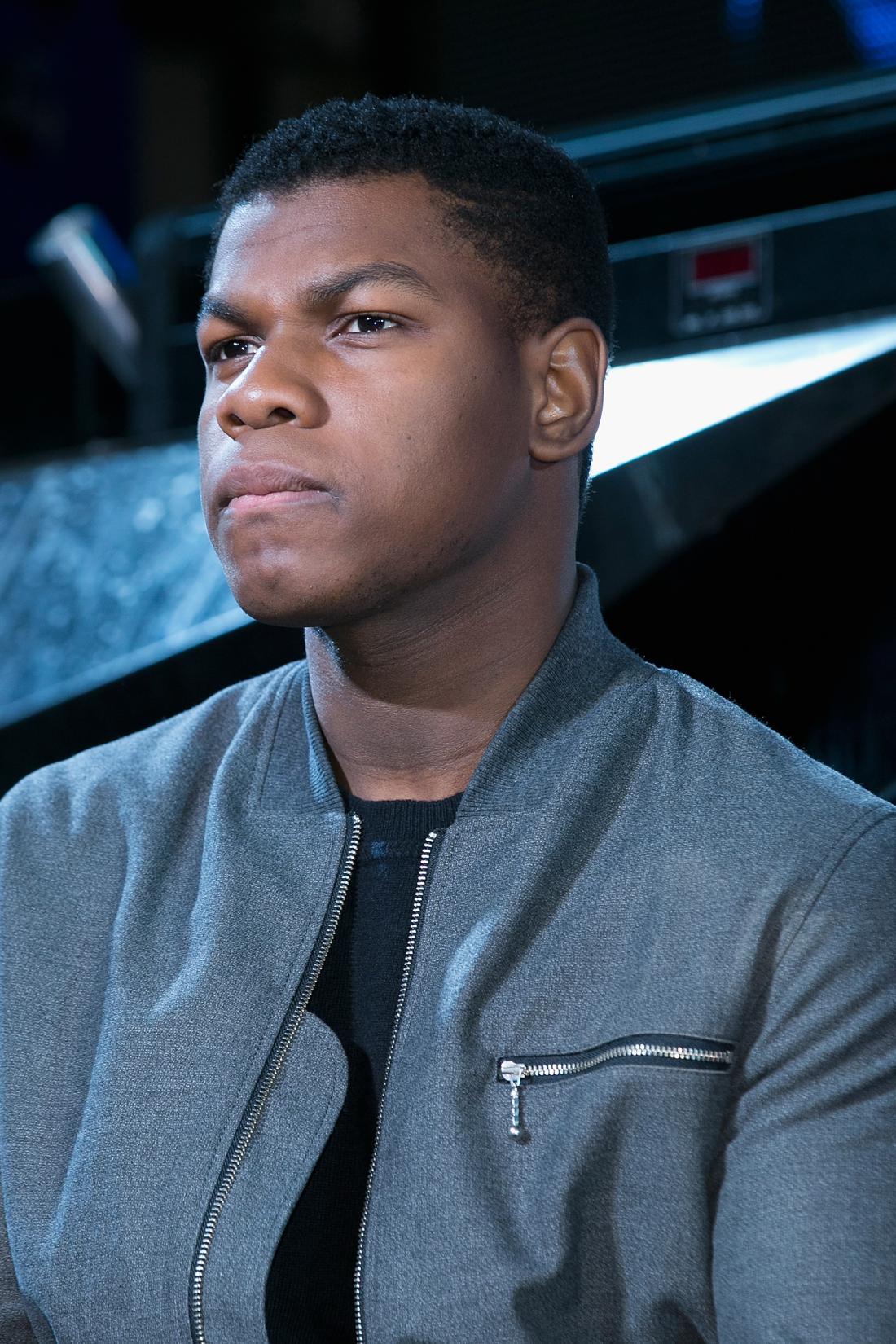
John Boyega, who has gained recognition as the Stormtrooper-turned-hero in Star Wars: The Force Awakens, is cast in a yet unspecified role in Pacific Rim 2. Previous to taking on Star Wars, Boyega has also starred in the sci-fi action comedy Attack the Block and in the limited television series “24: Live Another Day.”

Personally, I’m very excited to hear Boyega taking on Pacific Rim. The guy is a great actor and would be a perfect fit for any role in the film. If you’ve seen his chops in The Force Awakens, you’d understand what I’m talking about. The guy can do cocky, confident, funny, shy, awkward, introverted, heroic, whatever you name it. He had a lot of layers to himself in The Force Awakens, and bringing that sort of talent on for Pacific Rim can only benefit the project overall.

What do you guys think? Are you excited for Finn to board a Jaeger, or would you rather he get eaten by a Kaiju? Comment below, let me know.

– David Dunn

SOURCE: The Hollywood Reporter, Deadline

“X-MEN: APOCALYPSE” Review (✫✫1/2)

En Sabah No.

The biggest problem X-Men: Apocalypse faces is one it isn’t even responsible for. X-Men: Days of Future Past was and will always be one of the most definitive superhero experiences at the movies. Asking for follow-up to that is unreasonable, let alone damn near impossible, and to its credit, X-Men Apocalypse tries. It tries too hard, but at least it tries.

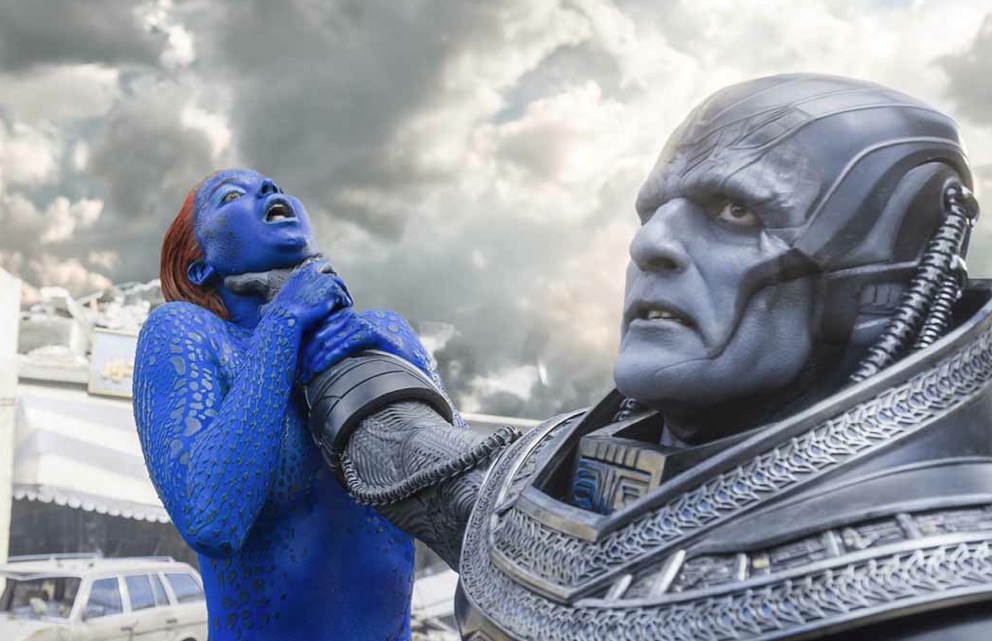
Taking place ten years after the events of Days of Future Past, Apocalypse shows an ancient threat that reawakens deep within the pyramids of Egypt. The first known mutant to ever historically exist, En Sabah Nur (Oscar Isaac) awakens to a world ran amuck in chaos and disorder. Political corruption. Poverty. War. Violence. En Sabah Nur sees all that’s wrong with the world and decides that, in order to save it, it must be destroyed and rebuilt.

Back in Westchester, at Xavier’s School for Gifted Youngsters, Jean Grey (Sophie Turner) awakens from a horrible nightmare. Witnessing horrible visions of the end of the world, Jean is convinced that these visions are real and that they will come to pass. Her professor Charles Xavier (James McAvoy) thinks these are just dreams. Yet, as one thing happens after another, he begins to think there is something devestating going on that even the X-Men might not be able to stop.

The third movie for the newly rebooted X-Men universe, X-Men: Apocalypse boasts a lot of the strengths that its predecessors have. For one thing, the performances are superb, and the actors exemplify their characters down to the molecule. McAvoy is earnest and well-intentioned as Xavier, while Jennifer Lawrence is motivated and sharp-shooting as Mystique. The actor I noticed most, however, was Michael Fassbender, once again adopting the role of Magneto. Every time I watch him, I am reminded of this character’s tragic history and how other people’s cruelty has driven him towards violence and extremism. Without giving too much away, there is one moment where Magneto sustain a crippling loss that comes to define his character the most throughout the picture. These moments remind us that Magneto is not a villain, but rather a tragic hero who fell through grace, and Fassbender is brilliant in capturing both the character’s regret, penance, and guilt throughout the movie.

The action is also incredibly polished, especially for an X-Men film. En Sabah Nur himself is the most omnipotent, wiping enemies away with a dash of his hand or the white glow of his eyes. Havok (Lucas Till) reappears alongside his brother Cyclops (Tye Sheridan) for the first time, and their red energies run amuck obliterating anything in their path. The most fun X-Man to make a return, however, is Evan Peters as the speedster mutant Peter Maximoff. You remember his signature scene at the Pentagon in X-Men: Days of Future Past. His scene in this movie blows that one out of the water. I won’t give much away, but saving over 30 people at superspeed is much more impressive than taking out six security guards in a kitchen. This sequence was funny, exciting, and most importantly, entertaining. His scenes were easily my favorite from the film.

The action and the characters culminate together fluidly, similar to the other X-Men films. The differences lie in its story, or more specifically, in its lack of focus. There are about five different stories packed into one in X-Men: Apocalypse, and most of them are unnecessary. You have so many unraveled narratives trying to weave together into one that quickly falls apart once the plot starts picking up speed. 

Take, for instance, the plight of Magneto. His story is pure tragedy. His hearbreak, his pain, his loss, it echoes of Magneto’s earlier history and builds into a climactic moment between himself and his transgressors. The scene should have been a moment of suspense and satisfaction, but then all of a sudden, En Sabah Nur appears on the scene and completely disjoints the narrative.

The whole film is like that, building up to big moments and then suddenly switching to other ones. There’s Xavier’s arc, then there’s Mystique’s, then Magneto’s, then Jean’s, and then Cyclops’. The most dissapointing to me is Peter. His story has to deal with his true parentage, but it never even leads anywhere. Screenwriter Simon Kinberg and director Bryan Singer build all of this effort up for nothing. No conclusion. No resolution. No payoff. That’s because they don’t have a focus, and the picture ends up losing our interest, despite all of its spectacular action.

X2 and X-Men: Days of Future Past remain to be the best entries of the franchise, while X-Men Origins: Wolverine is the unoquivocal worst. This movie falls in the middle ground. Like its predecessors, X-Men: Apocalypse has great action pieces and performances, but it collapses under the weight of its narrative while simultaneously lacking in depth and development. As Jean Grey observes after seeing Return of the Jedi, “At least we can all agree that the third one is always the worst.” You read my mind, sister.

Tagged , , , , , , , , , , , , , , , , , , , , , , , , , , , , , , , , , , , , , , , , , , , ,

“THE JUNGLE BOOK (2016)” Review (✫✫✫)

Introducing the legend of Tarza– oops, I meant Mowgli.

What is it with Jon Favreau taking the most obscure ideas and actually making good movies out of them? In 2008 he brought us Iron Man, which initially seemed like a sub par idea for a superhero, but then he delivered one of the greatest superhero films of our generation. Then he made Cowboys & Aliens, which sounds stupid by the title alone, yet he still managed to make a unique blend of genres in one exciting and interesting sci-fi western. Now we have his answer to Walt Disney’s The Jungle Book, and even though it’s a remake, it’s remains to be one of the most original and compelling experiences you can have at the movies this weekend.

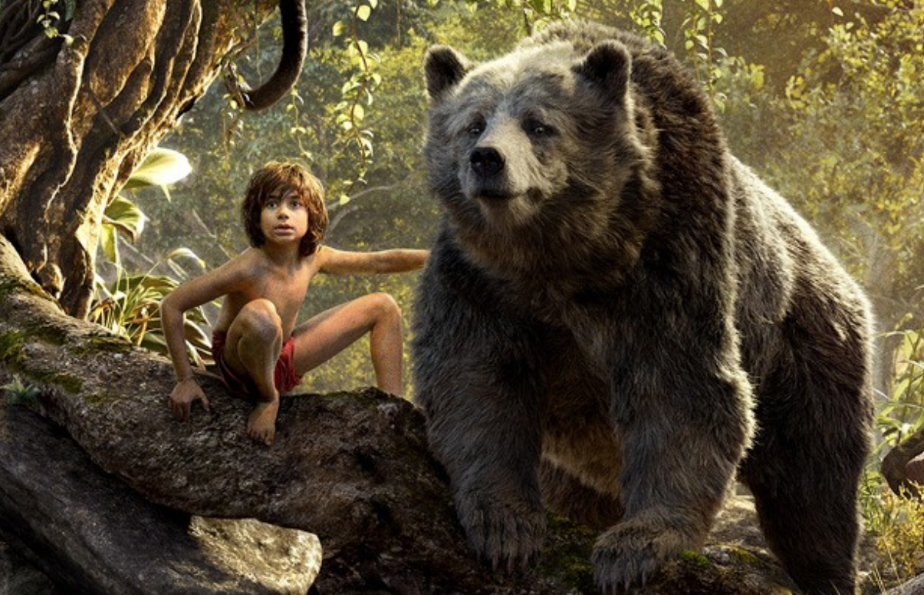
Anyone who is watching this movie already knows the story of The Jungle Book. There’s a jungle, an adventurous human child named Mowgli (Neel Sethi), his wolf pack family, a lazy, carefree bear named Baloo (Bill Murray), a black panther named Bageera (Ben Kingsley), and a vicious tiger named Shere Kahn (Idris Elba), who harbors an intense hatred of mankind. At learning about Mowgli’s presence in the jungle, Shere Kahn swears to find the child and maul him limb-from-limb. The jungle unites together to take Mowgli away to a human village and save him from Shere Kahn.

Those of you who frequently read my reviews will notice that I am not a big fan of remakes. I am also, surprisingly, not a big fan of the original Jungle Book, which I thought was thinly written despite some outstanding musical numbers. Yet, despite my negative outlook for both of these things, I found myself quite pleased with this movie, both as a remake and as an adaptation of The Jungle Book.

The first improvement Favreau makes over its predecessor is its characters. Yes, we liked Mowgli, Baloo, Bageera and others in the 1969 quote-unquote “classic”, but we didn’t really know them. We didn’t really understand them. We had their surface personalities to admire, but that’s it. Where did Mowgli come from? Why does Baloo want to adopt this man-cub straight for no reason whatsoever? Why does Shere Kahn hate mankind?

All of these are questions I had as a kid that 2016 provided me the answers to. This is a jungle fable that is fully fleshed out and realized, not unlike most of today’s modern fantasy epics. The characters of Mowgli, Baloo, Bageera, Shere Kahn, Kaa and others all have their place and function in the story, and their narrative flows as freely as the nile river. We come to relate to these characters not as Disney properties, but as personalities in their own right.

But the best thing about The Jungle Book is easily its visual effects. Yes, I know that’s a recycled compliment in today’s visually-dominated industry, but its a compliment that The Jungle Book is more than deserving in. Utilizing both motion capture from the voice actors and studying the motions and movements of real jungle animals, Favreau illustrates a smart attention to detail as these animals breathe, move, and feel like their real life counterparts, minus their speaking. Neel’s interactions with the environment, likewise, feel vivid and alert, as if he truly is swinging on vines, jumping into rivers, and running through the jungle, as opposed to acting in front of a green screen. For most other movies, it’s easy to say it’s visually stimulating because it has big explosions or large collateral damage. What makes The Jungle Book so praiseworthy is that it has none of these things, and yet, it has no evidence of being unreal despite being almost entirely computer-generated. This is easily an early contender for the visual effects Oscar at the Academy Awards, and even if it doesn’t win, it definitely deserves a nomination at the very least.

Neel is functional but not outstanding as Mowgli. What do you expect? The kid is 13 years old, barely enough to be in junior high. He’s not expected to demonstrate a bravura performance at his age, and he doesn’t. His performance centers mostly on his choreography and stuntwork, and that’s just about as far as his acting skills reach as well.

The key performance, however, doesn’t come from Neel. It comes from these jungle animals, captured so accurately on screen visually and aesthetically to its environment. It’s true, Neel isn’t that impressive on his own, but he doesn’t need to be. His interactions with the other animals is what makes this story believable and so easy to get wrapped up into.

The Jungle Book, of course, wraps its adventure up all nice and tidy, almost too much so in regards to my tastes with Disney. But the plain fact of the matter is that I was surprised. Surprised that I was actually invested in Mowgli and his jungle adventures. Surprised that when I saw the jungle and its inhabitants, my first instinct wasn’t to make fun of them, but to be absorbed by them. Surprised that when watching The Jungle Book, I was looking at it through the eyes of wonder and curiosity as a child, not the hardened, distrusting gaze of a critic.

Disney has plans to produce live-action remakes of many of their animated classics, among them including Pete’s Dragon and Beauty and the Beast. If they follow the pattern of The Jungle Book, Disney has a good road ahead of them.

Tagged , , , , , , , , , , , , , , , , , , , , , , , , , , , , ,