Category Archives: The Scope

It’s Only A Game

One man’s life isn’t worth a football game.

This past weekend, the Dallas Cowboys lost to the New England Patriots in a disheartening final score of 30-6. Cowboys fans left the AT&T stadium in a disarray of rage and disappointment, with two fans getting into a physical altercation outside in the parking lot.

43-year-old resident Richard Sells stepped in to try and break up the fight. A few minutes later, he was shot in the neck.

Sells died 8:44 p.m. Wednesday at the Texas Health Harris Methodist Hospital in Fort Worth, according to the Tarrant County medical examiner’s office. His family decided to take him off of life support earlier in the day. Even if he had survived, he would not have lived well. His sister Victoria Gunning wrote in a Facebook post that a neural surgeon said her brother would live the rest of his life in a nursing home with a respirator and a feeding tube, never waking up and never being able to move his body.

In a way, Sells had already died.

“Today, my mother and his family are going to go say our final goodbyes to the greatest man I’ve ever known and could ever know,” Gunning said.

Sells was supposed to get married in a month and was looking forward to the birth of his daughter.

It’s easy to place the blame of this incident on the shooter. It’s easy to point at him and say he’s responsible not only for this man’s loss of life, but for his family’s loss of life.

But the truth is the shooter is not the only person to blame for this incident. It’s the fans.

How many games have you attended and seen people get visibly angry at each other? How frequent a sight is it to see fans yelling at each other, shouting profanities, shaking their fists and eventually breaking out into a physical fight? This behavior happens far too often at any sporting event.

If the two fans hadn’t fought on Sunday, Sells might still be alive today.

We need to do more than just change who we’re blaming. We need to change the culture. Sports is no longer just a game. It’s become almost a religion to some fans, and people are willing to hurt and kill each other simply because of their zealousness.

No one should die for being a sports fan. The loss of one life is too many for a football game.

– David Dunn

Tagged , ,

No Great Movie

Editor’s note: I wrote the following essay as an extra credit assignment for a film and theatre appreciation class I took over the summer. It’s not everyday you get to write about movies for a class grade. Below is the final draft that I submitted to my instructor. I hope you enjoy reading it as much as I have enjoyed writing it. 

“A great movie evolves when everybody has the same vision in their heads.”

– Alan Parker, Midnight Express, Mississippi Burning

If director Alan Parker’s statement is true, then there is no such thing as a great movie. In that same sense though, there is no such thing as a bad movie either. There are only movies that we perceive as good or bad, not movies that are definitively good or bad. Movies aren’t fruit. They don’t spoil as they age. Really, they can last for years if their taste is sweet enough. They can also spoil at the first bite if their taste is rotten enough too. But like fruit, their tastes are also dependent on the people consuming them. There are people who like apples and don’t like bananas. There are people who like bananas and don’t like apples. There are also people who don’t like The Godfather, The Shawshank Redemption, or Toy Story. God forbid, there are also people who like Mortal Kombat, Battlefield Earth, and Gigli. The point, however, isn’t to praise or criticize viewers for liking one movie or another: it is to understand their reasons for their opinions, and come to a consensus they can agree on despite initial reactions.

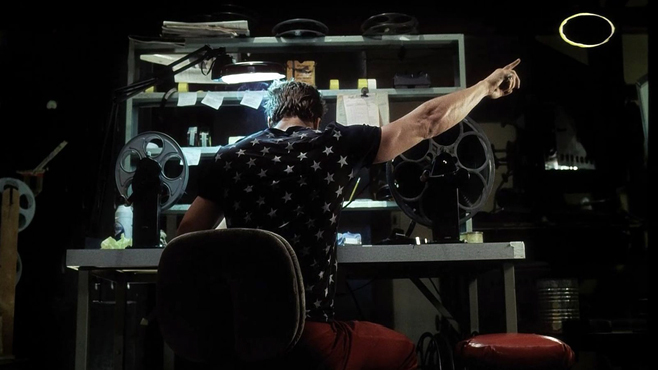
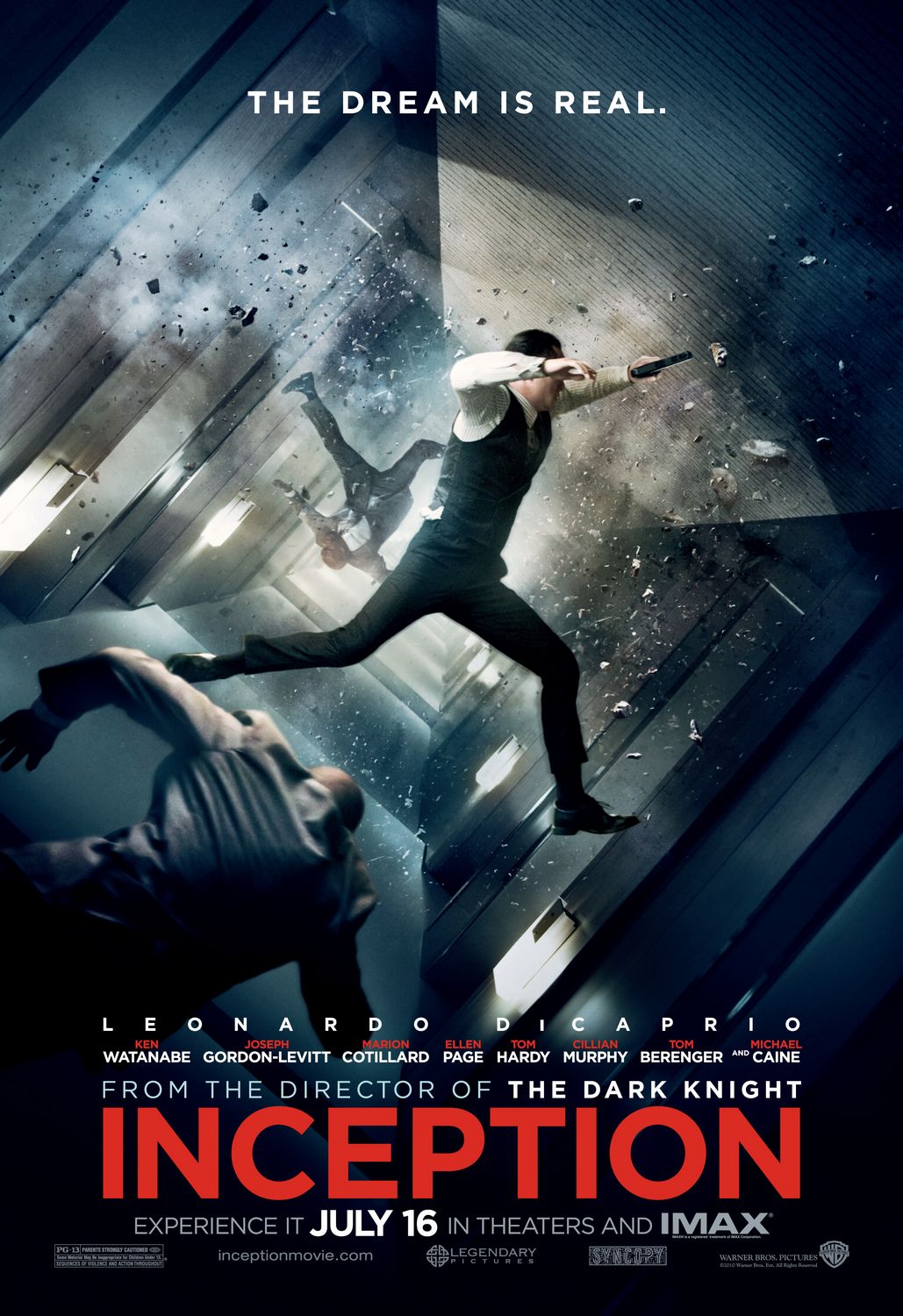
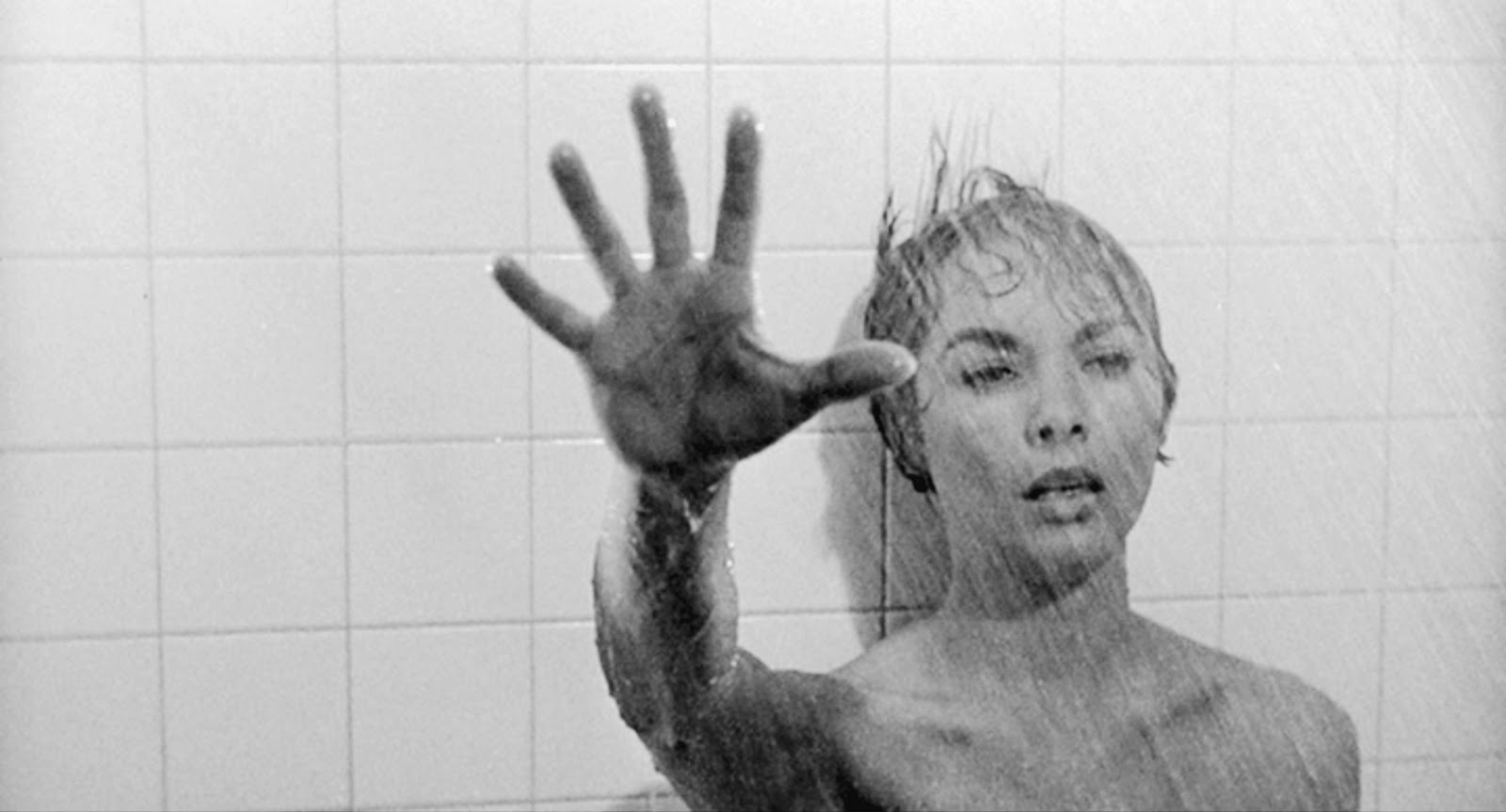
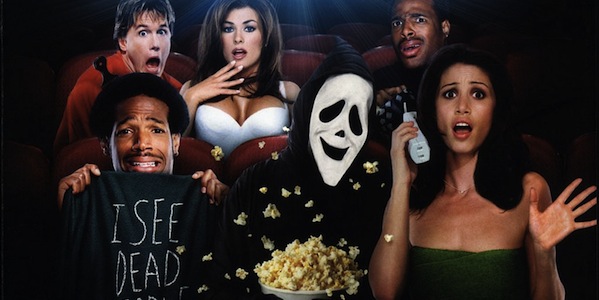
There are a few items to recognize before digging into a deeper argument. For instance, how do movies evolve into a status of either appraisal or rejection? Sometimes the reaction is immediate, like Inception or Scary Movie. Other times, the response is mixed and takes time for the work to either evolve or dissolve, like Fight Club or Twilight. And at other times, it will take either a decade or longer to truly appreciate a work, or to see it fade into nothingness as many other films do the same thing it does, except better. Psycho and Transformers fit into this category.

Let’s look at the positively reviewed films from this group first, shall we? Those films include David Fincher’s Fight Club, Christopher Nolan’s Inception, and Alfred Hitchcock’s Psycho. Unanimously, and without much dissent, these are widely accepted films that have achieved either “cult” or “classic” status that have more or less made their mark in today’s media. Critics and film historians have placed these films on many variations of their greatest “All time” lists. All three of these films have placed in the top 50 of international movie database’s Top 250 All-Time List. All three films have placed at 90% or higher on RottenTomatoes’ audience score. It almost doesn’t matter if you’ve seen these films or not. They’ve been officially labeled by our society as “masterpieces.”

And yet, they also all have one thing in common: they all have received mixed reactions from their initial release.

Let’s start with Fight Club. Before its release in 1999, director David Fincher worked on Alien 3, Seven, and The Game. Good films by standards back then, but not unique enough to set themselves apart or memorable from other films in their genre. Then in comes a film called Fight Club, based off of a novel by Chuck Palahnuik and starring Brad Pitt and Edward Norton. Bam. Instant game changer. Telling a story about a man who met a stranger on a plane who convinces him that this life is a waste and that radical changes are needed in order to live life to the fullest, Fight Club follows themes of morality, reality, survival, human nature, and insanity, observing elements of the human condition and how we relate to them as flawed individuals. It’s writing is fresh, unique, and smart. Perhaps too smart for its time.

At its initial release, Fight Club was among the most controversial films of the 1990’s for its portrayal of graphic violence and disturbing content. Critics at the time called it “irresponsible and appalling.” Comparisons were made almost instantaneously to Stanley Kubrick’s equally controversial A Clockwork Orange. Janet Maslin for the New York Times warned that if not interpreted correctly, the film could be “mistaken for a dangerous endorsement of totalitarian tactics and super-violent nihilism.” The film aimed to get a reaction, and it got one. People were almost unanimously shocked, appalled, and intrigued at this disturbing, violent, morally flexible film.

Let’s look at a more recent film. Inception. The film that many argue to be Christopher Nolan’s magnus opus. Originally conceived as a horror movie, but eventually evolved to be a science-fiction heist picture over the course of ten years, Inception tells the story about an “extractor” named Dom. In this universe, “extractors” are specially trained individuals who can seep into someone’s mind during their sleep, and navigate their sub conscious as they search for secrets solidified as actual objects in their dreams.

Sound complicated? It should be. The movie has been both praised and criticized for its complex narrative and multi-layered plot, with its flashbacks and flash forwards and traversing the subject’s dreams on top of dreams inside of dreams until your head explodes from all of the insanity.

While Inception was mostly praised for its in-depth plot and complex storytelling, it was equally panned for just that exact same thing. Which is a shame, because since when is it fair to call a story “too detailed”? Nevertheless, Inception’s dissenters spoke with ferocity and firmness. Gareth Simms from Platform wrote that Inception is “A film trying to feverishly to spin your head whilst feverishly trying to explain how it’s spinning it.” J.R. Jones from the Chicago Reader wrote that it “sags and eventually buckles under the weight of its complicated premise.” Any O’Hehir hilariously wrote for Salon.com “Nolan’s dreams are apparently directed by Michael Bay.”

Again, a lot of supporters, a lot of dissenters. Notice, however, that their reasons once again revolve around the complexity of the plot and it’s moral fiber. The film’s lovers and haters both cite the same reasons for their opinions.

And now Psycho. Alfred Hitchcock’s labeled masterpiece that is cited by many as one of the greatest thrillers of all time. Starring Janet Leigh and Anthony Perkins, this 1960 thriller follows a woman fleeing from town after stealing a large amount of money from the bank she works at. When she checks into a shady spot called the Bates Hotel, things radically change and impacts the people all around her.

The film is significant for a few reasons. Firstly, filmmaker Alfred Hitchcock refused seating for any attendants that showed up late to the film’s screening, going so far as to hang up doorknob signs saying that people who missed the beginning of the film needed to wait until the film’s next showing. It’s levels of violence and sexuality contrasted with the MPAA’s standards at the time, being allowed to show the film only after multiple clashes with the organization and changes to specific scenes. This film showed a scene of a man and a woman together in bed with undergarments on, one of the few films to do so at the time. Hitchcock even made one of the most daring narrative decisions while working on the script, killing off one of the film’s core characters near the end of the film’s first act.

These multiple controversies, plus the disturbing content of the film, made for a very strong release of mixed views and opinions. Many people loved the performances, while most were just horrified and alienated from the film’s mind-bending plot. Film critic C.A. Lejeune even permanently resigned her position at the Observer because of how much the film sickened her. Psycho’s appreciation only came as time moved on, as censorship codes changed and society’s moral standards shifted.

So, those movies have been labeled with stamps of approval while having their fair share of critics sounding off, but what about the opposite? What about movies that have been almost universally panned, and yet, are also not-so-silently accepted as entertainment from its viewers? These titles come in the form of Scary Movie, Twilight, and Transformers.

Scary Movie (which I wish I could say was the only one), is a spoof film directed by Keenen Ivory Wayans satirizing many iconic horror films into what is essentially a slapstick comedy. These films include the Scream movies, The Sixth Sense, The Blair Witch Project, and The Exorcist.

What’s your gut reaction to hearing that a spoof movie is coming out? Mine is to throw up. In my opinion, little effort is needed to make a spoof. That’s because you’re simply copying the plot from another movie, your actors are typecast for quote-unquote “comedic” effect, and your script is making fun of another movie just because you’re not talented enough to do what other filmmakers did. It’s disrespectful to the original material, and it’s a cheap way to get cheap laughs.

Here’s the thing, though: audiences don’t care to be respectful to source material. We know this because Scary Movie grossed $278 million at the box office, which is more than both Fight Club and Psycho’s box office combined. Yes, dear reader: Scary Movie made more money than Alfred Hitchcock’s horror classic Psycho. If that isn’t one of many examples to show you where society is at, I don’t know what is.

Post-note: To play devils advocate, you would need to adjust Psycho’s box office standards to todays due to inflation. Even then, their box office grosses are relatively close as Psycho’s adjusted $346 million competes with Scary Movie’s $278 million. The fact those movies are $50 million apart is disturbing to me.

Let’s look at another movie: Transformers, i.e. the same action movie you’ve seen over, and over, and over, and over again. Based off of the Hasbro toy line of the same name, Transformers’ premise is based on shifting robots that can transform (screenwriters: “Huh huh, we’re so clever”) into any vehicle they see. This sounds like an interesting idea in theory, and the first film in the series was actually entertaining and fun for a complacent action movie. But then the film did the worst thing some action movies could do: it spawned sequels. Not one, not two, but three sequels, and reports have indicated that more are coming out.

Do you know why more are coming out? It’s because America can’t stop freaking watching them, that’s why. The first Transformers movie grossed over $700 million. That’s okay because that was fun, in-your-face entertainment. The second film, Transformers: Revenge of the Fallen, grossed over $800 million. That one was just in your face. The third and fourth films, Dark of the Moon and Age of Extinction, both broke $1 billion at the box office, with a capital B. Movies like this gross at least four times its budget, while movies like The Shawshank Redemption struggled to even its budget at the box office. How is it that cheap movies get rewarded, whereas truly unique and pivotal films more or less get shoved under the red carpet?

And now Twilight: the biggest eye-roller out of the whole bunch. Twilight is a nationally recognized vampire love story that told of a teenage girl who falls in love with a classmate after realizing he is a vampire. Question: Is that usually your first reaction to hearing that someone is a blood-sucking animal?

The film is based off of the book series by Stephanie Meyer, stars Kristen Stewart and Robert Pattinson as the film’s hopeless gothic lovers, and is directed by Catherine Hardwicke, who directed acclaimed drama films Thirteen starring Holly Hunter and Evan Rachel Wood, and Lords of Dogtown starring heath Ledger and Emile Hirsch. Yeesh. Talk about a fall from grace.

What’s so confusing about the Twilight movies is that while they are all recognized as cheapish, insincere, artificially emotional films (not one went past 50% on RottenTomatoes), they still persisted and flourished with their target audience. With the exception of the first film, all movies in the franchise have grossed over $698 million, making the franchise overall worth a total of $3 billion worldwide. The fifth film in the franchise, Breaking Dawn: Part 2 went so far as to be the 50th highest grossing film of all time. Many of the movies have even unbelievably won best picture awards at the MTV Movie Awards, the Teen Choice Awards, and the People’s Choice awards, beating out other contenders such as The Dark Knight and Slumdog Millionaire.

What is our world coming to?

Here’s the thing you need to understand. Moviegoing audiences don’t appreciate film at the same levels as those who have studied filmmaking and storytelling as a profession. They don’t go to movies to study them. They go there to watch them, to have fun with them and to be entertained. I’d like to argue that it is possible to study them while enjoying them, but that’s another subject. Point being, moviegoers are not critics. They like what’s popular: not what is different.

So here’s the penultimate question: are their opinions wrong?

I’m going to answer this question by asking two.

Is the apple spoiled?

And are you wrong if you don’t like apples?

When going into the theater, we have to remember what the movie set out to do. If it set out to make us laugh, you can grade off of that. If it set out to entertain you, you can grade off of that. If it set out to make you sad, happy, angry, or fill you with emotion, you can grade off of that. It’s not what reaction you had to the film: it’s what reaction the movie was aiming to give you.

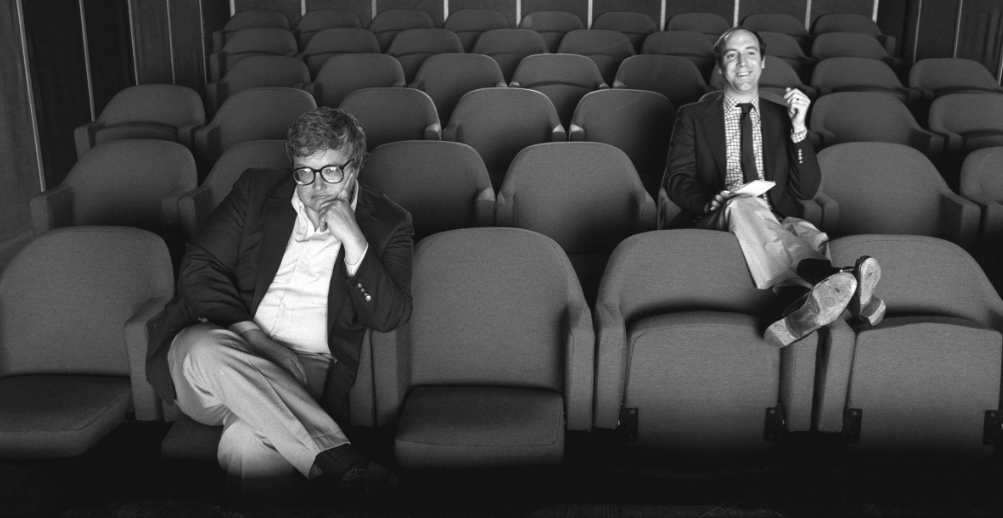
To argue this point, I reference film critic Roger Ebert’s blog entry “Whole Lotta Cantin’ Going On”, which defended both the supporters and dissenters of Inception and Transformers: Revenge of the Fallen. He also brought into discussion people’s reaction to the styles of filmmakers such as Orson Welles, Ingmar Bergmann, Yasujiro Ozu, and Alfred Hitchcock.

“If you say you dislike The Godfather or Shawshank, I can’t say you’re wrong,” Ebert wrote. “The one thing you can never be wrong about is your own opinion. It’s when you start giving your reasons that you lay yourself open.”

He then called into question two different negative reviews of Inception: one by David Edelstein of New York Magazine and another by Armond White of CityArts. Edelstein analyzed the feeling and tone of the film and described why he didn’t like it because of the elements. White watched the film and simply wrote his reaction to it. While Ebert praised Edelstein for giving his reasons for his opinion, rather than just his opinion like White did, he noted to both of them that they needed to view the film with Nolan’s intentions in mind.

“Nolan successfully made the film he had in mind, and shouldn’t be faulted for failing to make someone else’s film,” Ebert wrote.

Which really is the word of the day here: intent. What did the movie set out to do? Did it succeed in doing it? Is it technically well made and accurate to the film’s intentions? Are the film’s intentions whole to begin with, or are they just another cash- grabber and not much else?

All of this comes into question when thinking about your reaction to a film. Some movies may be manipulative to its audience, but some people like to be manipulated. Some movies may challenge its viewers and their conceptions and ideas, but some people don’t like to be challenged. And some movies, like Inception, are very smart and integral plots that challenge the viewer’s ability to think and interpret. God forgive them, some people just don’t like to think.

And that’s the problem with film criticism. You have the filmmaker’s intentions clashing with the audience’s idea of the intentions. Is it fair to judge a film through a specific scope when it should have been aiming for another? Does it not fit quite right with the tone that it was going for? Is it going to be accessible to its audience? Is it the audience’s fault if it isn’t accessible? Is it the filmmaker’s?

So, is there such a thing as a best picture? Is there such a thing as the worst picture? Both the audiences and the filmmakers have the power to decide that. They need to come together and realize each other’s intentions before dismissing the other.

– David Dunn

For WDBJ. For Journalism.

Journalism is under attack. The reporters are the soldiers, and our battlefield is the space that we type in.

Well, typing for most, that is. Some are brave enough to put their faces and bodies on a different battlefield: a television screen.

Two reporters did just that Wednesday morning. By that evening, we had two more casualties to report.

WDBJ reporter Alison Parker was 24 years old. She loved Mexican food, kayaking and television. One of her favorite characters was Walter White of “Breaking Bad.” She fell in love with WDBJ7 anchor Chris Hurst, and the couple moved in together in early August. They were saving up money for a wedding. Hurst told his mother “I finally found my teammate.”

Parker was the first to get shot.

Her camera man Adam Ward caught it all on camera. In that moment, everyone watching the television was seeing the same thing Ward was: his colleague and friend getting shot three times as she tried to get away.

Coworkers have described both journalists as good human beings — people with emotions, concerns, quirks and characteristics that made them who they are. They were good reporters, and they were better people.

The violent taking of their lives is, in every sense of the word, senseless. Nobody deserves the fate that these two suffered.

What bothers me most about this case is that, despite how tragic the situation is, it isn’t the only time it has happened.

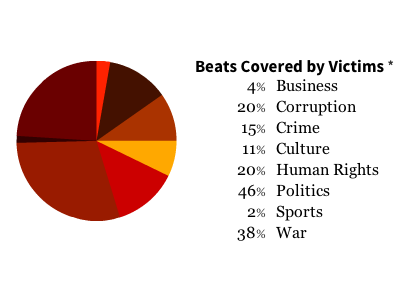
In the past 10 years, at least 40 journalists a year have died while reporting on a story, according to the Committee to Protect Journalists. The largest number of casualties was 74 in 2012.

Some were caught in the crossfire while on the other side of the world in Iraq or Syria. Others were publicly executed as a warning to others who would speak out against evil and violence. You might find it interesting that the area of coverage to suffer the greatest amount of casualties is not crime, but politics.

Whatever the case may be, journalists like Parker and Ward are all over the world doing their jobs. They have families, friends and lives outside of the newsroom just like Parker and Ward did.

There’s only one reason why Parker and Ward’s deaths are getting all the media attention and not others: it was broadcast on national television.

We can’t just care about the reporters deaths that we know about. We need to be aware of all the sacrifices that journalists make on a daily basis and why they voluntarily make those sacrifices. Too many journalists have lost too much for the sake of their jobs.

#WeStandWithWDBJ

Tagged , , , , ,

John Green visits Dallas for new movie

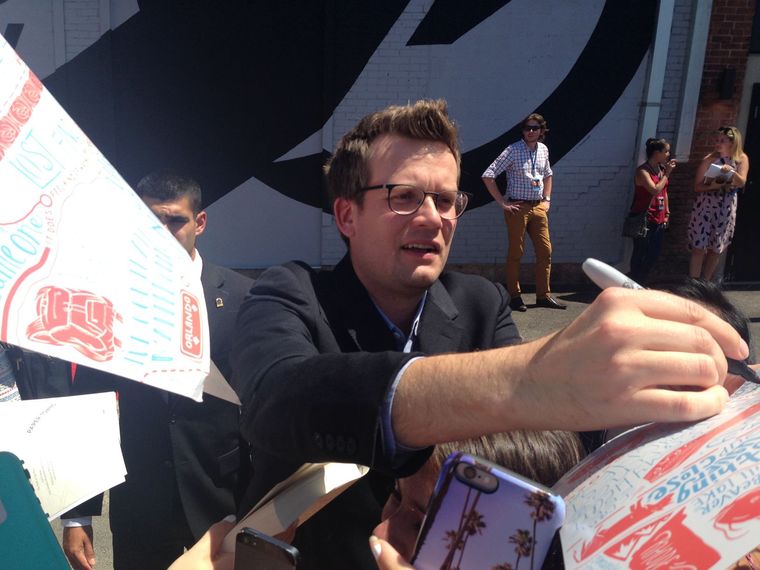
In the midst of the screams and cheers of excited fans, John Green signed as many autographs as he could when faced with an onslaught of books and movie posters.

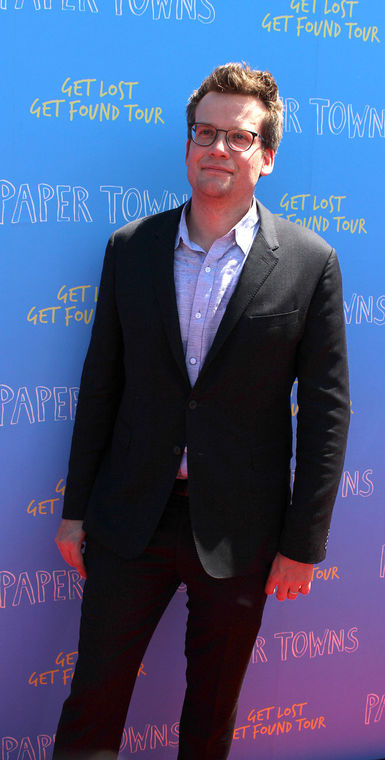
The Indianapolis-based author behind novels like Looking For Alaska and The Fault In Our Stars recently came to Dallas to promote the recent film adaptation of his 2008 novel Paper Towns, which tells the story of a suburban teenager searching for his classmate and love interest when she goes missing. He came to the “Get Lost, Get Found” tour 4 p.m. Thursday at The Bomb Factory in Dallas and was accompanied by actors Nat Wolff, Halston Sage and indie band Saint Motel.

“Dude, I love Dallas,” Green said. “I love Dallas so much. Yes, to 4 p.m. on a blistering July afternoon. This is an amazing place.”

The event was hosted by YouTubers Allison Raskin and Gaby Dunn, who produce the channel ‘Just Between Us.’ Dunn said Green favorited a video where they were talking about “duck penises.” It wasn’t long before Green personally asked them to host the fan event.

“I had read The Fault in Our Stars, then I read Paper Towns when I heard they were making a movie about it,” Dunn said. “I think I was already following him and when he followed me back. I was like ‘What is happening?’”

Dunn wasn’t the only one to read book by John Green after hearing about the movie coming out. UTA sociology junior Skyler Vasquez did the same thing when she heard that The Fault In Our Stars was being adapted into a film in 2014.

“I read the book before the movie came out,” Vasquez said. “I immediately fell in love with John Green.”

She started reading Paper Towns when she heard it was being made into a film as well, Vasquez said.

Paper Towns is a little hard to get into at first, but it’s a great story,” she said. “You just kind of got to hang on for the first few chapters and then it’ll pick up.”

One element that fans of Green praise about his writing is his style. Burleson high school student Alie Shipman described it as “interpretive”, going so far as to compare it to finding clues to solve a bigger mystery.

“It was a really good book,” Shipman said. “I like the style that he writes in. I’m kind of a bookworm.”

Vasquez said she likes how Green immerses the reader in his characters.

“John Green has a unique way of developing characters that are so different from one another,” Vasquez said. “It’s almost as if you can put yourself in that character’s place.”

Green’s novel was based on his own road trip experiences, and his reactions when he and his friends came across a real “paper town.”

55ad5c45d33b2.image“I really wanted it to be a movie about imagining other people complexly, and how difficult it is to understand what it’s really like to be someone else, and how difficult empathy really can be,” Green said. “I think Jake Schreier, the director of this movie, did an amazing job of bringing that to the screen.”

With Paper Towns being his second book to be adapted to the screen, Green said this is supposed to be a less sad movie than The Fault In Our Stars. Also, unlike his scene that they ended up cutting out of The Fault In Our Stars, he will have a cameo in Paper Towns.

“I have a cameo. It’s in the movie. Almost no one notices it, but it’s there,” Green said enthusiastically. “I know it’s there.”

With Paper Towns releasing on Friday, fans are more than excited for Green’s second big-screen adaptation.

“I just feel so incredibly lucky, not just to have them made, but to like them,” Green said. “I like both of the movies so much, and that’s very rare for authors. I’m really grateful.”

– David Dunn

Tagged , , , , , , , , , , , , , , , , , , ,

A Reflection On My Racial History

How do you think it feels knowing that your race caused decades of inhuman suffering and cruelty on a group of people that didn’t deserve it?

It’s the end of Black History Month, and after African-American citizens spent four weeks reflecting on their own history, I thought it was important that I took a moment to reflect on my own.

When I was thirteen, my great grandmother informed me that her father was a member of the Ku Klux Klan. Wearing the white robe of evil and judgement as if he were as clean as snow, he marched with his brothers in uniform against those of a different color from him with a sign filled with spite in one hand, and a torch burning with hatred in the other. She never learned if her father quit the organization or not. She found his uniform in the attic later on when she was an adult.

The rest of my family’s history isn’t much better. My dad’s uncles thought African Americans were selfish, lazy human beings, sputtering racial slurs at them while they drank their glasses full of whisky. Friends of my mother’s parents jokingly called them “jungle buddies.” Things only started getting better for my family when my mother stood up to her white classmates for her black friends when she was eight years old in elementary school. She was ridiculed and called by her classmates a “nigger lover.”

Bad as that is, I know it isn’t half as bad as what some of her friends had to face during that time.

Nowadays, with everything that has been going on in Ferguson and Staten Island, I sometimes find some people judging me and labeling me as a racist just because of the color of my skin. They don’t say this in words, but in silence: in the eerie, guarded ways they stare at you and in the sharpness in their breathing that feels like blades to your character.

I understand their contempt, and if I were in their shoes, I would probably judge myself too.

I’m not proud of the things my ancestors has done. I’m not proud of the things my entire race has done. In fact, I have to live with the fact that I’m living in a former slave state back when the south was considered the Confederate States of America. How can I say I’m proud to be a Texan, when I know all of the gross, unforgivable things we’ve done as a state?

But here’s what I need to keep reminding myself: it’s not me. I am not my family. I am not my origin. I am a passionate citizen of the United States of America. I love my brothers and sisters of all ethnicities and cultural backgrounds. I smile when I see them exercising their rights of freedom of expression, and I cry when I see them discriminated for their beliefs and appearances. I am filled with joy when their voices are heard, and I am filled with grief when their voices are silenced.

I am not my history, and for that matter, neither are you. We all should be proud, equal citizens of the United States. It’s high time we start acting like it.

– David Dunn

Tagged , , , , , , , , , , , , ,

The Real Problem With ‘Fifty Shades of Grey’

When a woman is screaming, crying and shouting at you to stop, I think there are at least a few indicators that she stopped enjoying it quite some time ago.

In recent additional controversy surrounding the sexually shameless movie 50 Shades of Grey, a recent sexual assault case came out linked with the motion picture. A 19 year-old University of Illinois at Chicago freshman was arrested for sexually assaulting a female he was formerly romantically associated with. After entering his dorm room and stripping down to her bra and underwear, the student proceeded to tie her wrists and legs to both edges of his bed, stuff a necktie in her mouth, blindfold her, take off her clothes, then viciously beat her with his fists and a belt before holding her hands behind her back and forcing her to have sex with him.

The excuse he told police when he was arrested? “He was re-enacting scenes from Fifty Shades of Grey.”

And people have the nerve to say the movie is as harmless as B-grade pornography (it’s actually C-grade, for those who were wondering).

Unfortunately, sexual assault is nothing new to America. According to a study conducted by the White House Council on Women and Girls, women make up the majority of victims, with one in five women reported to have been raped in their lifetimes. 98% of the perpetrators are male, with most of the victims previously knowing their assailants before they were assaulted.

However, the issue exists deeper than what can be printed on paper: it exists in the messages that the media is sending.

Take 50 Shades of Grey as an example. In the movie, the male character is a smooth-talking masculinist that angrily domineers over his sexual partner. The female character is an overly passive dimwit who is supposed to (literally) bend over and tend to her male master’s every desire.

Sex isn’t treated like a romantic act in 50 Shades of Grey. It’s treated like a service.

With that in mind, what message does the movie send to the masses that can’t think and act for themselves? One: that men are entitled to sex and that women should provide it to them because it is their role in life, and two: that if women don’t serve in this role, they deserve to be physically and verbally punished for their actions. It doesn’t matter what the filmmaker’s intentions were: what messages were viewers receiving when they saw a man being sexually aggressive and the woman enjoying it?

I am not placing the blame on either the man or the movie. What I am saying is that the gender stereotyping has to stop. Whether it’s in a movie theater or in a bedroom doesn’t matter. Women have the right to say “yes” or “no” just like any man does. We need to learn to respect that and acknowledge that so we can move on and improve the shabby society that we live in.

And before you say anything, yes, I am saying this as a 21-year old male college student. Look more at the words and less at the person writing them.

– David Dunn

Tagged , , , , , , , , ,

‘Birdman’ Sweeps At The 87th Academy Awards

You can’t say the night wasn’t a wild ride.

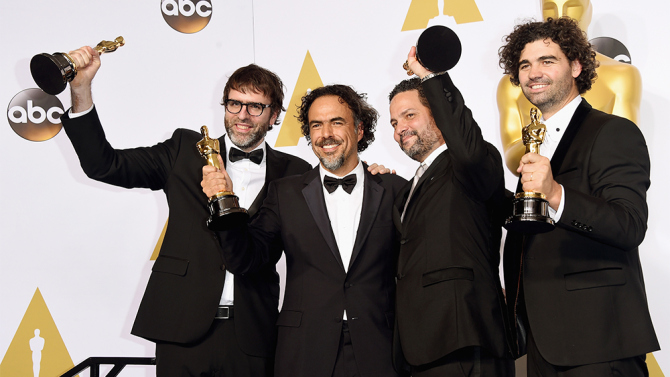
Every time I prepare myself for the Academy Awards, I end up getting usurped in every single angle possible. At the start of this season’s Awards race, Boyhood was getting the most attention and seemed the most likely to win the ceremony’s biggest awards. But by the end of the night, Birdman and Grand Budapest Hotel took the most awards from the night while Boyhood only walked away with one acting award for Patricia Arquette.

This is the one thing I love about the Academy Awards, if I even loved anything about it in the first place: it always finds a way to surprise you.

Even though the films I loved the most didn’t win the night’s most major awards, I’m mostly not upset. The Academy Awards was a night where some dreams were realized and others were crushed, but it nevertheless gave everyone something to aspire to. As I remember Matthew McConaughey’s speech from last year, “I’m always trying to be better than myself ten years from now.”

Anyhow, on to the winners. I predicted 18 out of the 24 categories correct, which is surprising for me because I expected to get more wrong. Regardless, the night held it’s own fair amount of shocks and surprises, so let’s hop right into them.

Best Picture: I was correct in predicting Birdman would win best picture, even though I would have preferred it gone to the likes of Selma, Whiplash, or even Boyhood. Still, it is a unique film, and it’s achievements are unmistakable. I was happy to see Alejandro Gonzalez Inarritu win for his hard work.

Best Director: Alejandro also won the Academy Award in directing for Birdman. No surprise there, considering he won the DGA. I am annoyed that Richard Linklater wasn’t honored for his 12-year commitment that was Boyhood, but I have to recognize that both films were works of high art and achievement. To pick one over the other is like picking apples to oranges, so I don’t judge the Academy for being given such a difficult decision to choose from.

Best Actor: Eddie Redmayne won the best acting Oscar for portraying Stephen Hawking in the most tragically grounded of ways in The Theory of EverythingHis acceptance speech was one of the cutest to have seen from the night.

Best Actress: Julianne Moore won the Academy Award for best actress as a mother suffering from early onset altzheimer’s in Still Alice. 

Best Supporting Actor: J.K. Simmons won best supporting actor as a music professor from hell in Damien Chazelle’s Whiplash

Best Supporting Actress: Patricia Arquette won in her role as an aging mother losing her children to adulthood in the brilliantly made Boyhood

Best Original Screenplay: Surprisingly, I got this category right by predicting that Birdman was going to win best original screenplay. After the WGA’s, I honestly though Grand Budapest was going to win the award for best original screenplay. Just goes to show you can’t trust all Awards ceremonies.

Best Adapted Screenplay: Since Whiplash can’t technically be considered an adapted work, Graham Moore rightfully deserved the award for The Imitation Game. Moore’s speech was my absolute favorite of the night.

Best Animated Feature:  The first category I got wrong was a category I shouldn’t have gotten wrong at all: Big Hero 6 won best animated feature over the genius of How To Train Your Dragon 2. As you can see, I was not happy about this. Not. One. Bit.

Best Documentary Feature: Citizenfour won the Academy Award for best documentary feature. If I didn’t want to see the award so badly before, I definitely wanted to see it even more now.

Best Foreign-Language Feature: Ida won best foreign language film. 

Best Film Editing: I got this category wrong, but it was wrong I was happy to get wrong: Tom Cross beat out Sandra Adhair from Boyhood with Whiplash, and that’s so appropriate considering how many smash cuts he has to conduct from the film at such precise moments for it to work.

Best Cinematography: Another one extremely deserving in the award: Emanuel Lubeski won for the second year in a row for Birdman

Best Original Score: I got this category wrong too, but this is another one where I was happy to lose it: Alexandre Deplat won best original score for The Grand Budapest Hotel. After being nominated six times prior, I’d say the award was long overdue. He certainly was more deserving than The Theory of Everything was, at least.

Best Original Song: John Legend and Common both rightfully won the Academy Award for best original song with “Glory”. Members from the audience started crying after they finished their performance.

Best Costume Design: The Grand Budapest Hotel won the Academy Award for best costume design. 

Best Makeup and Hairstyling: Grand Budapest also won the Oscar for it’s makeup, though I felt it wasn’t the most deserving nominee. 

Best Production Design: Grand Budapest won it’s fourth award for production design, but as you can see, I was still so distraught by How To Train Your Dragon 2’s horrible loss that I barely even cared. 

Best Sound Editing and Mixing: American Sniper and Whiplash won in these categories, respectivelyI incorrectly predicted it would be Interstellar, but how on Earth would you know considering how flippantly the Oscars switches sides?

Best Visual Effects: Christopher Nolan’s space epic Interstellar won the award for best visual effects. 

Feast, The Phone Call, and Crisis Hotline: Veterans Press 1 won in all of the short categories. Since nobody even watches those nominees, however, do you really even care?

At the end of the night, it was the live-action short, film editing, original score, animated feature (ugh), and sound editing and mixing categories that cost me losing to my mother at the Academy Awards predictions. Don’t remind me on how embarrassing that is.

Next year, I’ll work to refine my predictions so that I’ll be so accurate at guessing the Oscars, the Academy Award voters will think I stole the results beforehand.

On that note, you’re wrong Academy. Lego Movie should have been nominated. How To Train Your Dragon 2 should have won.

I’ll leave you to ponder on the great mistakes you’ve made this year.

– David Dunn.

Oscar Predictions 2014

There is no such thing as the best picture.

That’s what I keep thinking year after year when I make my Oscar predictions. Why? Because everyone has a different idea of what the best picture means.

There were many great movies that wasn’t nominated from this year that left a profound impact on the people who watched them. The Fault In Our Stars is one of those pictures. Guardians of the Galaxy filled people with as many laughs and energy as it did with tears and quivering lips. Christopher Nolan’s Interstellar is the most liked movie of 2014 according to the Internet Movie Database. God forbid, there are people out there who even liked Inherent Vice.

My point in saying all of this is that different movies have different effects on people. It doesn’t matter what the Academy thinks is the best picture: it matters what you think is the best picture to you.

Regardless, the Oscars are unfortunately still a thing. With the 87th Academy Awards coming up in a few weeks, people are going to be scrambling to guess who is going to win which awards this year. Here are the movies I think are going to win big this year at the Oscars:

Best Picture: The big category. Good God, how do you predict this one? Boyhood and Birdman have been at each other’s throats since the beginning of awards season. Since Boyhood‘s best picture win at the Golden Globes, it at first seemed like the frontrunner for best picture. Since then, however, Birdman has gone on to win the Screen Actors Guild award for best overall cast, the Directors Guild of America award for best feature and the Producers Guild Awards award for best picture. At this point, Birdman would be most poised to win the award, and it would be wise to opt for it.

Best Director: The nominee most deserving of this award is Richard Linklater for following with his passion project 12 years straight for Boyhood, a wonderfully ambitious project that shows the joys and heartbreaks alike of growing up. Unfortunately, Linklater didn’t win the DGA award for best director. The Oscar, then, is going to go to Alejandro Gonzalez Inarritu for Birdman, which was an innovative, creative, and darkly clever film in it’s own right. Neither filmmaker is a bad nomination, as both of them delivered the most unique and memorable pictures of the year. The award can only go to one of them, but both Linklater and Inarritu are undeniably the best filmmakers of the year.

Best Actor: Another close one. Which is it going to be: Eddie Redmayne for The Theory of Everything or Michael Keaton for Birdman? Redmayne has the Screen Actors Guild award and the Golden Globe for best actor. Keaton also has a Golden Globe and the Screen Actors Guild award for best overall cast. So who’s going to take it? Redmayne or Keaton? My bet is on Redmayne, but don’t be surprised if either actor takes home the award. This is going to be a close one.

On that note, honorable mention to Benedict Cumberbatch for his brilliant, heartbreaking, passionate, intelligent, and wonderfully unique performance as physicist Alan Turing in The Imitation Game. You sir gave the best performance of the year, and are most deserving of the Oscar for best actor this year. Unfortunately, the Oscars is not a game of talent. It’s a game of politics.

Best Actress: Everyone (including myself) has been praising Rosamund Pike’s work in Gone Girl and has been saying that she deserves this award most. The charts don’t lie, however, and Julianne Moore has won award after award for her heartbreaking performance as a mother suffering from early onset alzheimer’s in Still Alice. She’s locked for the award. Don’t bet on anyone else except her.

Best Supporting Actor: J.K. Simmons for Whiplash. If you have any objections to that, you haven’t seen the movie.

Best Supporting Actress: It takes a lot of dedication not only to play the role of an aging mother losing her children to adulthood, but to return to that role year after year for 12 years straight. The award for best supporting actress rightfully goes to Patricia Arquette for her stunning decade-long performance that she melted so wonderfully into year after year in Boyhood. It will be a huge upset if she doesn’t get the award.

Best Original Screenplay: This year was borderline impossible to make a clear prediction of who was going to win in the best original screenplay category. First, critics predicted it would be Boyhood due to it’s massive popularity in the best picture race. Then, people switched sides and said Wes Anderson would win for The Grand Budapest HotelBirdman won the Golden Globe and a slew of other state critics awards. Since I don’t have the luxury of waiting for the WGA’s next week to claim which is the best screenplay of the year, I’m going with the only nomination that has the physical accolades to back up their nomination: Birdman is going to win best original screenplay. 

Side Note: I will never cease to get angry at the Academy for profusely snubbing Christopher Nolan multiple times. If Interstellar was not deemed one of the best movies of the year, it definitely is considered one of the best stories of the year. Nolan deserved a nomination in this category, but like all other the Oscar ceremonies, he got snubbed because he’s Christopher Nolan. Typical.

Best Adapted Screenplay: This category is messed up from the start, because how in God’s name is Whiplash considered an adapted screenplay? I get it that it was first made into a short film before a feature release, thank you for pointing that out Academy. That doesn’t change the fact that it was an original idea conceived by Damien Chazelle, and that both properties were projects that he worked on. Whiplash was, in every definition, an original work. To put it in the adapted category is pish posh.

On that note, Graham Moore’s The Imitation Game IS an adapted work, and it so wonderfully brings interest and awareness to this secretive story that only a few have known about for quite some time. The Imitation Game is most poised to take home the best adapted screenplay award, unless Whiplash snabs it from them first. 

Another side note: Did the Academy just work to have the worst nominations in this category this year? Is there seriously nothing for The Fault In Our Stars? Nothing for Gone Girl? Shoot, I’d even take a nomination for Guardians of the Galaxy over the confusing Inherent Vice and insipid Theory of Everything. These awards should not be nominated for the Academy’s opinion, but rather, on the impact these films have had on the public. All of the films I’ve mentioned above were movies the public had very strong reactions to, and each of them deserve nominations over the other films recognized. This is the Oscar category I am most frustrated with this year.

Best Animated Feature: Let’s get over the frustration that The Lego Movie wasn’t nominated for just one second, shall we? The biggest competition is between Disney’s Big Hero 6 and Dreamwork’s How To Train Your Dragon 2. Since How To Train Your Dragon 2 has won the Golden Globe, the Annie Award, and the National Board of Review for best animated feature of the year, the best bet is on that film. It is the best animated film of the year, and matches it’s predecessor in almost every way. If it does win, it is a very deserving one.

On that note, shame on you Academy for taking out The Lego Movie. Everything is not awesome for you.

Best Documentary Feature: Were Steve James’ wonderful documentary Life Itself on film critic Roger Ebert’s life nominated, it might have posed a challenge to the frontrunner for this category. Since it isn’t however, the award is most poised for Laura Poitras’ Citizenfour, a documentary about Poitras’ investigation in U.S. surveillance programs until her research brings her face-to-face with former NSA contractor Edward Snowden. Keep this one on your radar, folks. This is one of those films that needs to be sought out.

Best Foreign-Language Film: The Academy loves movies that are not only politically challenging, but are also based around events surrounding World War II. The frontrunner, then, is Ida, a polish film about a young nun who discovers a dark secret about her family from the Nazi occupation before taking her vows. Wild Tales has also been widely talked about, but don’t expect anything big from it. Ida is most positioned to win the award.

Best Film Editing: The film with the best editing of the year isn’t even nominated in this category, and that is Birdman. The shots were so seamlessly blended together in between takes that it gave off the illusion that the film was shot in one take, even though it wasn’t. The work done with Birdman is both innovative and revolutionary, and it’s flat out disrespectful that it’s not even nominated here.

The next best work is from Tom Cross on Whiplash, which editing together the film so perfectly that it gave off an heart-pounding, unnerving sensation better than most thriller’s you’d see in theaters. Neither one will win. The award will go to Boyhood for it’s compilation of 12-years worth of footage into one film, even though the editing dragged out at times and it had to handle the same amount of footage any other film would have to. Even though Boyhood is a great movie, it’s editing is average at best.

Best Cinematography: Emmanuel Lubeski for Birdman. If he wins, he will be one of the few cinematography nominees to have won the award two years in a row. It’s not undeserved. Lubeski is a great cinematographer, and has done great work for years for films such as Children of Men, The Tree of Life, and last year’s Oscar winner Gravity. He deserves the award for cinematography if he does wins it.

Best Original Score: I waited until the last possible second to write down my prediction for this, because the nominee everyone is talking about is also the one least deserving. Alexandre Desplat has been nominated year-after-year at the Academy Awards for scoring movies like The Curious Case of Benjamin Button, The King’s Speech, Argo, and Philomena. This year, he deserves the award the most not only for his nomination with The Imitation Game, but also with Wes Anderson’s The Grand Budapest Hotel. He’s going to lose both of his nominations to Johann Johannssons’ The Theory of Everything, a theme that is as average, annoying, and repetitive as its movie is. I didn’t like The Theory of Everything, and I liked its music even less. But all critics and accolades point towards that movie, so that’s the one I’m begrudgingly going with.

Best Original Song: “Glory” from Selma will win and deserve this award the most. No song fills you with as much power and proclamation as this song does. It fills you with the same energy and captivation that the movie does, and it’s a shame that the film wasn’t nominated in more categories this year.

Best Costume Design: I doubt that Colleen Atwood is going to take home the award yet again for Into The Woods, despite her great track record with the Academy. My bet is on Milena Canonero for The Great Budapest Hotel, mostly because 1) The film’s costume work is as lovable and quirky as the movie itself is, and 2) She hasn’t won the award since her work with Marie Antoinette in 2006. It’s her year to win the award.

Best Makeup and Hairstyling: This is such a difficult category to decide for, because what on Earth is the Academy’s criteria for this ungaudy award? A few years ago, movies like Star Trek beat out films like The Young Victoria in this category. In 2011, the boring, mundane, and insipid Iron Lady beat out Harry Potter. What is going on?! How on Earth are you supposed to predict this category when the Academy keeps flipping the standard???

If I was going off of the best makeup work out of the nominees, it’s no competition: Guardians of the Galaxy. Yet, keep in mind from previous years that films have won for the exaggerated minimalist work seen from The Grand Budapest Hotel. I’m keeping my bets on The Grand Budapest Hotel, but don’t be surprised if either film takes home the award.

(Post-script: The makeup work for The Iron Lady was awful.)

Best Production Design: The Grand Budapest Hotel. If any film other than that wins for best production design, the Academy officially hates Wes Anderson.

Best Sound Editing: Normally, I couldn’t care less for the sound editing awards, because who has enough patience to dissect the sound bit-by-bit in each feature film? This year though, there is a frontrunner in this category that doesn’t deserve to be nominated. Great a film as it is, Interstellar has some of the worse sound editing and mixing I’ve heard in years. The music overwhelmed the dialogue at times, character’s couldn’t be heard that well at certain parts of the movie, and the sound got so loud at times that I felt like I was at a Daft Punk concert. For all of the accomplishments Interstellar has made, sound is definitely not one of them.

Unfortunately, I think Interstellar is going to be the one to take this award home. Christopher Nolan’s movies have a good track record for getting sound awards at the Oscars (Ex. The Dark Knight and Inception)and I don’t think the Academy has any intent of stopping his good run anytime soon. The film most deserving in this category is American Sniper. It’s going to Interstellar.

Best Sound Mixing: Whiplash had the most impressive sound mixing out of any of the other nominees. The Oscar, however, is going to go to Interstellar. See above for my reasoning.

Best Visual Effects: I’m partial towards X-men: Days of Future Past because it had great visual effects, costuming, and set design to make not only a convincing portrayal of a post-apocalyptic future, but also to show the slow dissolution of American society in the mid-1970’s. However, Interstellar was also an amazing movie, and accomplished visual spectacles unseen since Avatar and Inception. It will win the award, and it is also the most deserving. 

And now finally, my most-dreaded predictions for the categories I never know how to predict: the shorts. Let’s play a game of Eenie-Minie-Moe, shall we?

Best Animated Short: Feast. It’s the only film out of any of these categories that I’ve seen anyway.

Best Documentary Short: Crisis Hotline: Veterans Press 1. Because why not?

Best Live-Action Short: Aya? The Phone Call? Boogaloo and Graham? What kind of titles are these???

Screw it. Boogaloo and whats-it’s-face is going to get it, because reasons.

That’s all I have for now, folks. I’ll see you and Barney Stinson on Feb. 22.

– David Dunn
Tagged , , , , , , , , , , , , , , , , , , , , , , , , , , , , , , , , , , , , , , , , , , , , ,

For The Man Who Died So I Could Write This.

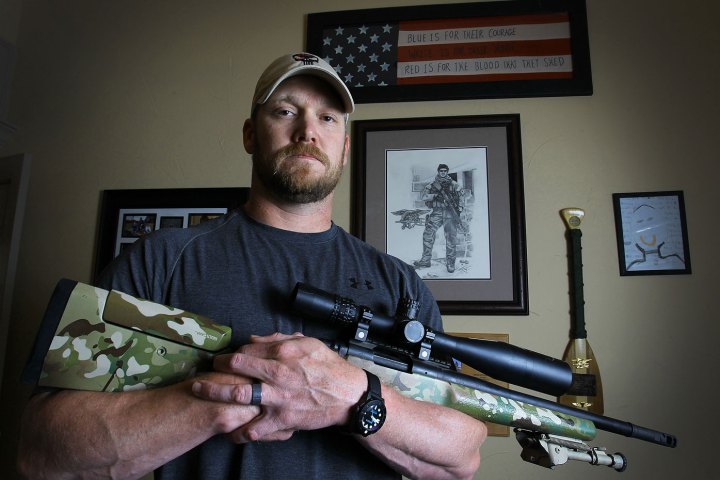
Chris Kyle was not a murderer. He was a hero.

The military sniper’s story came under fire last week after Clint Eastwood’s biographical war drama American Sniper was released in theaters. Critics have called it many things, many of which I am not fond of. Some have called it pro-war. Others have called it “bigoted.” Filmmakers Michael Moore and Seth Rogan also fired shots at the film, with Rogan comparing the film to the Nazi propaganda seen in the third act of Quentin Tarantino’s Inglorious Basterds.

Coming from the guy who almost blew America up with his controversial film The Interview, which fantasized about killing North Korean leader Kim Jong-un, I can’t say I care much for his opinion.

Since the conversation sparked intense debate over the nation, Moore and Rogan has since redacted their statements, apologizing and claiming they were taken out of context. Their supporters, however, have not silenced themselves, and continue to persist saying that the film is a dishonest piece of propaganda that glorifies a murderer that shot and killed not only Iraqi men, but also women and children during the Iraq war.

It’s important to note, both sides have merit to their opinions. Both sides have their perspectives, and both have evidence to back up their claims.

The critics have claimed that Kyle was not as remorseful in real-life as he was depicted in the movie. That he felt no shame in killing Iraqi men, women and children, and would probably kill more if he needed to. This is supported by the fact that he used very blunt descriptions and vocabulary in his book, with one sentence reading “I hate the damn savages.”

He’s been confirmed as the most lethal sniper in American history with an estimated 255 kills, 160 of them being confirmed by the Pentagon. His first few pages in the book opens on him shooting a child and his mother. There is no fighting the horrible things he’s done in Iraq: Kyle has described the events himself in text.

At the same time though, the supporters of Kyle’s story have equal leverage on their perspectives. He felt no remorse with his kills because he was always shooting in defense of his brothers in uniform. The woman and her child that he shot were both going to blow up a convoy with a hidden grenade, which blew up shortly after they dropped it. The many seemingly-innocent Iraqi’s after that were also visibly going to initiate violence against the military, whether they were picking up a bomb, or aiming an RPG.

If you’re focused on how many kills he’s made, think also about how many lives he’s saved. He shot an estimated 255 enemy kills in Iraq. If each one was going to attack a group of military soldiers, how many fathers do you think were able to go home because of him?

We have a much bigger issue at hand here than just who is right. Our culture is so quick to attack and criticize our military, when they’re the ones fighting so that we can have the right to attack and criticize. In the midst of moral ambiguity and political correctness, men and women are on the other side of the world fighting and dying for our rights. Their last concern is being politically correct. Freedom isn’t free.

So if you want to criticize Kyle or the book and movie, American Sniper, be my guest. But understand that Kyle shot from the barrel and died from the barrel so you could have that right.

– David Dunn
Tagged , , , , , , , , , , , , , , , , , , ,

Top Ten Films Of 2014

Has anyone ever stopped to wonder why all of the best of the year lists have to be in the top ten? Like, what sort of critic was working on his list and thought that ten would be the magic number? Why ten and not twelve? Or fifteen? Five? Twenty? Eight? Why was ten specifically chosen as the big number? Was it chosen at random, or was it actually chosen for some relevant, significant reason?

Regardless of whatever the case may be, I’m choosing to be a little rebellious this year. For the past few years, I’ve seen enough films to make a “Top 15″ list if I wanted to, but if I had done that, my site viewership would go down by about twenty views.

So this year, to battle the preconceived notion that “best of the year” lists have to have ten movies, I’m doing two different things. 1) I’m adding an “honorable mentions” selection that while those films aren’t necessarily in my top ten, they are still significant films that have contributed to the year’s industry regardless. 2) In honor of our first full year without the wise, sometime snarky, words of film critic Roger Ebert, I’m offering a special Grand Jury Prize, which honors a film from the year which has made a notable accomplishment that fits outside of my year’s top ten.

As always, there is a few things you need to know before I get into my year’s best. First of all, I haven’t seen all of the films the year has had to offer. I’ve heard from so many people how Jean-Marc Vallee’s Wild was emotionally stirring, with Reese Witherspoon’s performance being the greatest highlight of the film. I’ve also read from critics that Selma, A Most Violent Year, and American Sniper were great movies as well, but guess what? None of those movies get a wide release until after Dec. 31, so I’m not able to even see those films until after the year anyway. So what am I going to do? Release a revision to my current list, or add those films to 2015 if they’re good enough? I’ll make a decision when it comes to that. It’s the studio’s faults for releasing those movies so late into the year anyway. Blasted film mongers.

Secondly, and perhaps more significantly, this is my list for the best films of 2014. Not yours. There has been high praise from many notable films of the year, including Edge of Tomorrow, The Theory of Everything, and Captain America: The Winter Soldier. None of those films will be on my top ten list because I didn’t deem them worthy enough to be on there. It’s nothing against the films or the filmmakers: I just didn’t think they were good enough.

If you’re not satisfied with that, then please, make your own top ten list. I’d love to read it, and if your reasonings are sound enough, I’d like to share it with others.

Now then, let’s hop to it, shall we? Here are my top ten films of 2014:

10. Interstellar 

A mesmerizing, breathtaking, and exhilarating journey that may have only slightly exceeded it’s grasp. Based on an idea by physicist Kip Thorne and directed by Christopher Nolan, Interstellar takes place in the future on a dying planet Earth, where the only source of sustainable food is by growing corn. When former aircraft pilot Cooper (Matthew McConaughey) stumbles upon a secret station that has been hiding NASA for so many years, Cooper enlists in a daring space mission to find a new planet that will be able to sustain and save the human race. A testament to the quality of film that Nolan is consistent in making, Interstellar is a brilliantly woven, thought-provoking plot, invoking the same themes of humanity and identity that Nolan exercises in all of his films. McConaughey reaches an emotional depth much deeper than past “Nolan” actors, and succeeds in making his character more human than hero. This is Nolan’s most emotional movie yet, but it’s also his most complicated and convoluted. But if Nolan’s only real flaw with this film is being overly ambitious, I don’t consider that a flaw at all. Three and a half stars.

9. The Grand Budapest Hotel

A crafty and artsy film that acts as a homage to the early days of cinema. After being framed for a violent murder of one of his former hotel guests, Concierge Gustave (Ralph Fiennes) teams up with his young apprentice Zero (Tony Revolori) to set out and prove his innocence through a series of weird, wacky, and crazy adventures. Written and directed by Wes Anderson, who was nominated for an Academy Award for The Royal Tenenbaums and Moonrise Kingdom, The Grand Budapest Hotel is a peculiar, quirky film, a fun and enjoyable ride in it’s own singular way. Anderson is very specific with the direction of the film, using practical effects and set pieces that gives the film a very distinct visual style and aesthetic. The antics Gustave and Zero go through are the stuff of slapstick gold, with these guys doing silly stunts and chase sequences that reminds me of the silent film days of Buster Keaton and Charlie Chaplin. It’s definitely seasoned for the art house crowd, and it’s definitely more difficult to appeal to the masses. But if you allow yourself to be lost in it and have fun with it, you’ll find that it is easily the most unique film of the year. Three and a half stars.

8. How To Train Your Dragon 2

A wildly exciting and entertaining animated ride that appeals to both kids and adults. When a crusade of dragon-hunters reach the land of Berk and begin their hunt for the flying beasts, Hiccup (Jay Baruchel) must team up once again with his dragon Toothless to stop the brigade and save Berk’s dragons and dragon riders. Written and directed by Dean DuBlois, who returned from directing the first film, How To Train Your Dragon 2 is a near-perfect follow-up. It hits on every note it needs to, from the comedy, to the animation, to the action, to the emotion. Hiccup is a much stronger, yet more vulnerable, character now, and needs to face more mature situations now as a grown man rather than as he did when he was a boy. In many ways, How To Train Your Dragon 2 is to it’s first counterpart as Hiccup is to his younger self: they both grew. Three and a half stars.

7. Gone Girl

A brilliantly frustrating thriller that exercises themes of infidelity and media harassment. When Nick Dunne’s (Ben Affleck) wife Amy (Rosamund Pike) goes missing, all eyes turn to Nick for what happened to his wife. When clues slowly surface and more details surrounding the disappearance reveal themselves, everyone is asking the same question: did Nick Dunne kill his wife? Directed by David Fincher and written by author Gillian Flynn, Gone Girl is a masterfully orchestrated thriller, equal parts daring, inventive, intelligent, and unpredictable. Fincher propels Flynn’s brilliant plot forward with expert direction, eye-striking camerawork, and a cast that Fincher pulls the best from. This movie is like a game of cat and mouse, except no one really knows who is the cat or mouse. There is not one note in the film that you can guess is coming. Three and a half stars.

6. Dawn of the Planet of the Apes

A compelling and exciting survivalist-drama that looks at the human/primate condition as two sides to one coin. After the chemical attack on planet Earth that took place at the end of Rise of the Planet of the Apes, Dawn of the Planet of the Apes follows the story of Caesar (Andy Serkis) and Malcolm (Jason Clarke), the leaders of the apes and the humans, respectively. As the human-primate war rages on violently, Caesar and Malcolm begin to see that the apes and the humans aren’t so different from each other, and they begin to explore any possibilities of peace between two races. Matt Reeves builds an intelligent, in-depth story around Dawn of the Planet of the Apes, and handles its premise with skill and precision.  It surprising that the basis of this film wasn’t grounded in action or ridiculous CGI stunts, but rather in small, intimate moments of conversation and ape-sign-language that characters share with each other. Serkis is a revelation in the movie, and deserves an Oscar nomination for both his physical and emotional performance. Four stars.

5. Birdman

One of the most mesmerizing, unique, disturbing, shocking, and darkly funny films I’ve ever seen. Alejandro Gonzalez Inarritu writes and directs this ingenious dramedy starring Michael Keaton as Riggan Thompson, a washed-up movie actor trying to escape his image in a former superhero role by adapting his favorite broadway play to the stage. Keaton is a natural in the role, relating his own experience to portraying Batman in order to further authenticity for the character. Cinematographer Emanuel Lubeski contributes to the visual design of the film, shooting and editing it to look like one, continuous shot rather than multiple longer takes. But Inarritu is the most essential storyteller here, making a visual and emotional masterpiece that is so distinct in its own language that it is impossible to define it, let alone replace it. Four stars.

4. Whiplash

One of the most edgy, thrilling, and provocative films of the year. Miles Teller stars as Andrew, an upcoming college student who is majoring in music and dreams of becoming one of the best drummers in the country. A series of events lands him in the top jazz orchestra of Shaffer Conservatory and under the tutelage of Terrence Fletcher (J.K. Simmons), a brilliant but harsh and antagonistic instructor who is known to go very hard on his students. Andrew and Fletcher both develop an intense rivalry that both hurts Andrew, angers Fletcher, and yet equally compels them both to become the very best they can be. Writer/director Damien Chazelle conducts both actors through his sophomore effort, and does a great job in producing a tense, electric vibe consistently throughout the film. Teller and Simmons’ chemistry with each other is equally perfect, with the both of them bouncing off of each other’s words and emotions as perfectly as a drum beat. This film is about more than just music. It’s about the human desire to be great and what sacrifices we’d make to get there. Four stars.

3. Boyhood

The most revolutionary film of the year, ambitious in both production and vision. A twelve-year project pioneered by writer/director Richard Linklater, Boyhood tells the story of Mason’s (Ellar Coltrane) childhood, chronicling his entire life from when he was six years old, up until when he turns 18 and leaves for college. The movie isn’t so much a story as it is a scrapbook of memories, and Linklater is pulling each photograph out of it just to show it to us. When he is younger, Ellar isn’t acting but living, behaving like any other child would in the moment because he is in the moment. As he gets older, his performance gets more stagnant and Coltrane becomes more of a surrogate for us to express our emotions through, rather than experiencing his own. In this day and age, it’s rare to find a film as real and honest as Boyhood is. Four stars.

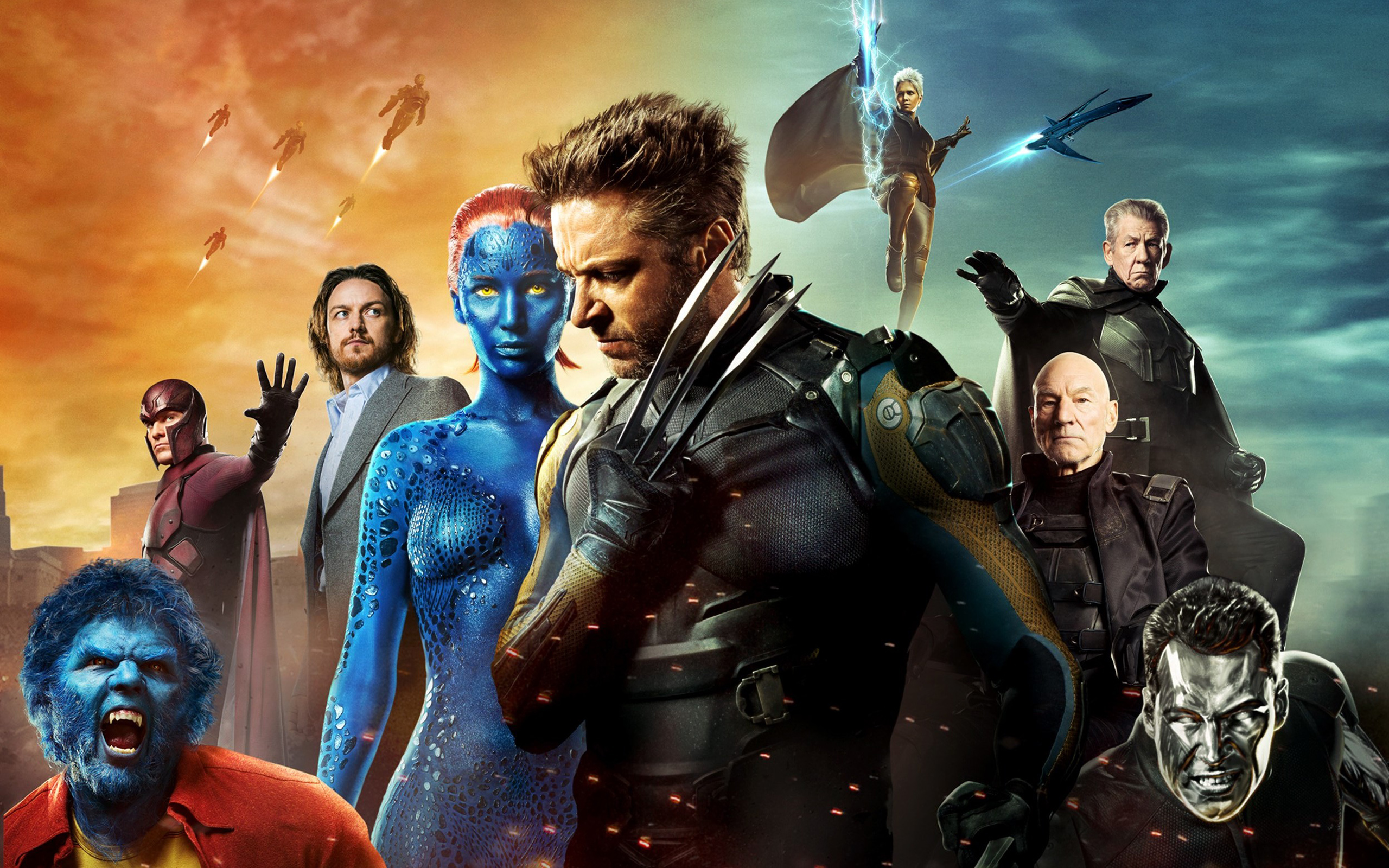
2. X-men: Days of Future Past

The best entry out of the X-men franchise, and the best superhero movie of the year. Serving as a sequel to both 2011’s X-men: First Class and 2006’s X-men: The Last Stand, X-men: Days of Future Past is set in the apocalyptic future where mutants are being exterminated by humanoid robots called “Sentinels”. Having only one chance to go back in time and stop this future from ever happening, Charles Xavier (Patrick Stewart) and Magneto (Ian McKellen) send Wolverine (Hugh Jackman) through time to their younger selves (Portrayed by James McAvoy and Michael Fassbender) so they can stop the triggering event and save the future. Directed by Bryan Singer, who formerly helmed the first two entries in the franchise, X-men: Days of Future Past is a game changer. It is not only a visually-dazzling and highly climactic sci-fi blockbuster: it is a vastly intelligent and contemplative story that focuses on its recurring themes of racism and xenophobia, once again bringing the consequences of discrimination to the forefront. X-men: Days of Future Past is one of those movies that restores your faith in the superhero genre. Four stars.

And finally, my number one film of the year is —

1. The Fault In Our Stars

Surprised? I’m not. The Fault In Our Stars is one of the most magical, heartbreaking, and genuine films you will ever see, and is more than worthy of being called the most emotional film of the year. Based off of the novel by John Green, The Fault In Our Stars follows the love story of two Cancer-stricken teenagers: the shy and book-loving Hazel Grace (Shailene Woodley) and the optimistic amputee Gus (Ansel Elgort). Written and directed by independent filmmaker Josh Boone, The Fault In Our Stars is one of the best stories ever translated from book to film. I initially was skeptical on seeing this film, considering how much it seemed to have been doused in rom-com syndrome. The reality couldn’t be further from the truth. Boone adapts Green’s story perfectly to the big screen, retaining everything in the novel from the visual details to the words that were written. But its Woodley and Elgort that sells it so well, their chemistry that vibrates so wonderfully with each other and leaves such an impression on you. Trust me when I say this isn’t your typical rom-com: it’s a heartfelt drama disguised as a tween movie, and it is the best of it’s kind. Four stars.

And finally, this year’s first Grand Jury Prize appropriately goes to Steve James’ documented biography Life Itself. Following Roger Ebert’s life and career from him growing up in Chicago, to when he got his first reporting job, to when he won the Nobel Prize for film criticism, to when he lost his best friend, to when he got Thyroid cancer, this film is everything that Roger Ebert is: funny, honest, heartfelt, unabashed, unflinching, and real. It doesn’t give you a peppered-up look at his life: it’s whole and accurate, as genuine as any of the reviews he’s written. I’m probably biased towards this subject, but the subject doesn’t count as long as it is handled well. James’ handles this story with respect and humility, and ends up telling a story about life itself rather than just limiting it to Roger’s story. It’s my favorite documentary of the year, and it brings me great pleasure to award my first Grand Jury Prize to this wonderful film tribute.

Honorable mentions include the creepy and morally ambiguous Nightcrawler, the funny yet stylish Guardians of the Galaxy, the humorously innovative The Lego Movie, and the quietly thrilling The Imitation Game, featuring the year’s best performance from actor Benedict Cumberbatch. Not all films can be honored at the end of the year compilations, but this year I was glad to have seen so many films and give each of them a chance to shine in their own way.

All the same, if you feel differently about some of the films on my list, or you have seen another film that deserves to be recognized, please comment about it. Or make your own list. Movies are deemed as great films not from individuals, but from the masses, and the only way you can tell if a movie has truly accomplished something is if it has the same effect on all its viewers.

On that note, my fellow moviegoers, I end with a classic line from my favorite film critic: “I’ll see you at the movies.”

– David Dunn

Tagged , , , , , , , , , , , , , , , , , , , , , , , , , , , , , , , , , , , , , , , , , , , , , , , , , , , , , , , , , , , , , , , , , , , , , , , , , , , , , , , , , ,