Category Archives: The Scope

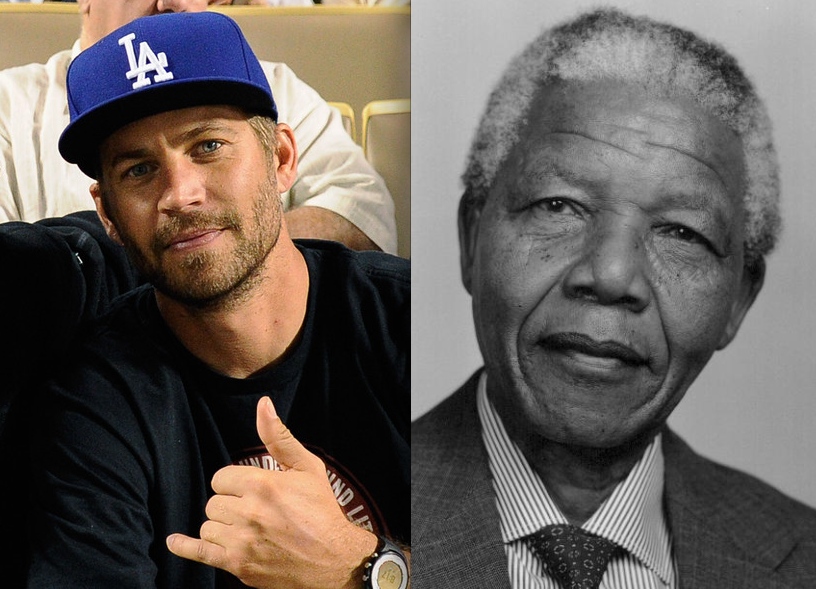
The Philanthropist And The Entertainer: A Eulogy

Before I begin, let me start by stating the obvious: yes, I know that I’m late with reporting this. Everyone already knows about the following issues I will be tackling. The information provided in this article is no longer timely. I know that. However, given the gravity of the situations and considering that I’m also writing this from an essential perspective, I write and publish this in the hopes that people will have a changed outlook to similar occurrences in the near future, not that I’m looking forward to these things repeating themselves in any way.

On Saturday, December 5th of last week, Nelson Mandela passed away at his home in Houghton, Johannesburg, succumbing to the respiratory infection he’s been struggling with for years now. He was surrounded by his friends and family when he died. The nation mourned, a memorial was held, and the world leaders all flocked to Africa to celebrate the life of one great man, including President Barack Obama and South Africa’s own Jacob Zuma. Mandela was 95 years old.

A week before, the world was ridden of another great man. On November 30th, two days after thanksgiving, celebrity and actor Paul Walker was killed in a fatal car crash that took him and friend Roger Rodas’ life on the road. The car burst into flames upon crashing into a light pole, which investigators believe the car was going 90 miles per hour in a 45 mph speed zone.

Regardless of the details of the crash, their deaths were tragic all the same. Rodas, who was a raceshop owner and Walker’s financial adviser, was survived by his wife and his two children, one of whom was his eight-year old son who saw him at the crash site. While Walker is most known for the Fast and Furious series, Walker was also known as an avid car lover, racer and a phenomenal philanthropist, founding a charity in 2010 called “Reach Out Worldwide” as a response to the earthquake in Haiti. Him and Rodas were coming back from a philanthropic event hosted by this same charity before they got into the fatal crash.

These three great men passed away under tragic circumstances, all of them leaving behind families who will love them and miss them forever. Two of them were known world-wide, and contributed to the health and well-being of mankind. One of them, however, changed a nation and inspired generations.

If you read that last part and were about to say Paul Walker, I’m going to slap you so hard you won’t be able to tell the difference between a Ferrari and a Volkswaggen. The day I was informed of Walker’s death was surprising in the least. At 24 years old I didn’t expect to hear that he had passed away, though admittedly I wasn’t surprised to hear it was a car crash. All of social media blew up with his death. My Facebook was crammed with status updates. There were too many tweets to count. And in the following days, so many publications were writing about his death he might as well have been Michael Jackson.

Now experiencing the same shock and sadness with Nelson Mandela’s death, I find it interesting that the public’s reaction is mild at best and non-existent at its worst. Looking back at my twitter and Facebook feeds, I notice nearly everyone I followed wrote about Paul Walker almost instantaneously the day he died. When Nelson Mandela died on December 5th, about how many people do you think tweeted or facebooked on his death? On my feeds, I counted five.

Anyhow, back to Paul Walker. On one of the posts I was reading, a close friend of mine commented on the feed which stirred quite a controversy between him and other bloggers. On another friend’s post, he commented bluntly: “What war did he serve in? Oh yeah, that’s right…”

He later came back on Facebook, writing about Paul Walker’s death and criticizing all of the attention people were paying towards it. Obviously, people were angered and offended by his comments, but take a second to understand it from his perspective. My friend, who will remain anonymous out of respect, previously served in the military before going to college. He served in the Iraq war for eight years on two tours of duty. The experience of killing and seeing many of his friends getting killed impacted him deeply, and when he came back to the USA he was mostly alone, suffered from cases of depression and paranoia, and was homeless for many years of his life before a friend convinced him to go to college and change his future. He experienced the worst the world had to offer, came back from it and decided to make himself something out of it. I respect him with great admiration, as I do towards anyone who makes the sacrifices he does and comes back choosing to better themselves out of it.

But this isn’t about him. This is about Paul Walker, Nelson Mandela, and the media that popularizes them both. Answer honestly: in the days you heard about Walker and Mandela’s death, which one did you hear about quicker? Whose death was talked about more? Who’s stories were discussed more in the media? Do you even know who Nelson Mandela is?

If you don’t, here are the bullet points: Nelson Mandela was born into an apartheid and racially segregated Africa. From 1950 to 1962, he protested against his government and the racial evil they advocated, and because he spoke out he was thrown into prison for 28 years of his life. When he finally was released from prison in 1990, he ran an election for presidency over South Africa, and was the first black president ever to be elected into office. During his time as president he brought an end to apartheid, advocated human rights for all African citizens, and unified a country during a time of great tension.

That’s just a summary of his career, but Mandela has done so much more. After his retirement, Mandela focused on charitable foundations and poverty. He communicated to the NAACP on the economic assistance of Africa. He focused on world-wide issues through an organization called “The Elders” founded by himself and others in 2007. And when his son Makgatho died of AIDS in 2005, Mandela lead a campaign aimed towards the improvement of treating and preventing AIDS among other hurting families so they don’t have to go through the same things that he did.

Point being: Mandela changed a nation. For Pete’s sake, he changed the world. There were some things that people were critical of him towards, including his violent protests at the beginning of his career or his condescending views of the United States during the Iraq war. Beyond that though, look at what this man has done. He has taken hardship, unfairness and tragedy, turned it around, and made everything better for an entire nation. I only saw a few facebook updates for this wonderful man, yet Paul Walker looked good and drove sports cars for a living and the internet basically exploded at the mention of his death.

I end mentioning one notable scene from this year’s 12 Years A Slave. In one sorrowful scene, Solomon Northrup is begging to a Canadian carpenter named Samuel Bass, played by Brad Pitt, to write and deliver a letter to his hometown so law enforcement can bring his citizenship papers and free him from his life as a slave. While at first intimidated and afraid at the notion, he eventually comes to resolve, standing up and saying to him:

“I will write your letter, Solomon. If you indeed find freedom, it will not have only been my privilege. It will have been my duty.”

Mandela too recognized freedom from oppression as his duty over of his privilege. And yet we pay more attention to the death of an entertainer over that of the carpenter who freed them.

-David Dunn

Post-Script: Everyone, no doubt, has seen the Fast and Furious movies, because that’s what Paul Walker was most known for. I encourage you then to seek out Clint Eastwood’s phenomenal 2009 sports-drama film Invictus, which not only shows Nelson Mandela’s impact of a nation, but also of the hardships he’s had to endure along the way. Also, Morgan Freeman is in it.

SOURCES: The Guardian, WORLD Magazine, The Huffington Post, NelsonMandela.org
Tagged , , , , , , , , , , , , , , , ,

A Good Ol’ Cup Of Joe

I recently had the pleasure of sitting down at a college roundtable for an in-person interview with Joseph Gordon-Levitt, the award-winning actor most known for movie roles including Tom Hansen in 500 Days Of Summer, Robert Todd in Lincoln, and John Blake in The Dark Knight Rises.  Recently Mr. Gordon-Levitt (Or “Joe”, as he likes to introduce himself) was working to get publicity for his writer-director debut Don Jon, a romantic comedy coming out this Friday and the reason why me and three other college journalists were able to interview him.

The man who introduced himself to us couldn’t have been more humble, or for that matter, more real.  As I walked into the room with the other university journalists, it was hard to imagine that the well-combed, professionally-dressed man sitting casually at the table in front of us was the same man who fought through topping cars and buildings in Inception, or the same guy who shaved his head in front of Seth Rogan in 50/50.  And yet when he walked up to me, shook my hand, and said “Hi, my name is Joe,” the introduction couldn’t have been more fulfilling, or for that matter, more meaningful.

I was in attendance to the event alongside journalists from Northwestern University, Southern Methodist University, and the University Of North Texas.  We were all eager to ask Mr. Gordon-Levitt our questions about the film and what it was like making the movie.  These are our questions, and this is how he responded.

Question: Before anything else, can I just say that it was completely shocking to see your new look in the first few minutes of the film? Very well done sir.

Joe: Right on. That’s what we were going for.

Q: Since we’re all college students, if you and Don Jon were to teach a course in college, what would you both teach?

J: Jon I guess would probably teach at a bartending school. I don’t think he would teach anything undergrad or graduate.  But what class would I teach? I guess a storytelling class of some sort. I went to college for a couple years and I stopped, which isn’t to say that anybody else should, but for me personally I learn best by doing stuff. So I feel like for me, film school really was working on sets and watching directors do what they do and I don’t know if you know, I run this company called HitRecord, where anybody can come and contribute and its not your traditional production company, but it actually bears a lot of similarities to production companies other than the fact that its open and anybody can contribute. If you’re interested in the process, in how things are done, I would definitely recommend spending some time on the site to contribute to some of our collaborations and paying attention to how its done. I’m on there everyday. These days, we’re in the middle of making a TV show, and I’m directing it, and making stuff. It’s different than a classroom because in a classroom your goal is to teach every student, whereas HitRecord, our goal is to make the best TV show we can possibly make. So unfortunately I don’t get to necessarily spend time with everybody who comes and contributes, because there’s thousands everyday. But I think there’s a lot to be learned there and its really cool actually to see artists that do come in and contribute to HitRecord and do so for a while. You can see them grow as artists. You can see them learn from what they’ve done, and from notes I sometimes give as feedback and watch them improve. That’s always really satisfying.

Q: What audience demographic were you aiming for?  Are you afraid that this type of film because of its content will lose some of its audience? 

J: I was really wanting to make a movie for everybody and so far the reactions have been across the board, whether young or old, or male or female, people have been digging it. So, I was pretty intent on not having it be just a movie for cinephiles. I wanted it to be for everybody. And I think its talking about a lot of stuff that everybody can understand or relate to. I mean, I certainly think it’ll be popular on college campuses. My mom loved it, and I’ve spoken to a bunch of reporters today, some of whom were younger than I am some of whom that were older than I am. Everyone seems to really like it.

Q: This is the first time you’re credited as a screenwriter and director for a feature-length film. What inspired the idea of Don Jon and what story did you find relevant to tell in Don Jon’s character? 

J: Well, I wanted to tell a story about how sometimes people treat each other more like things than like people. I imagine that came from my own experience. You know, actors in our culture are often treated more like things than like people. It’s sort of weird. But I don’t think its just actors, I think everyone experiences that. We have a tendency to put each other in boxes and label them. And rather than actually listening to what someone is saying and paying attention to what is going on right here, right now, we sort of project our own pre-conceived notions onto them and I think it happens all the time everywhere. So I wanted to tell a story about that, then I wanted to tell a story about how media plays into that, also probably because I pay a lot of attention to how media works and the impact it has on people. And so, I thought of a story about a relationship between a young man who watches too much pornography and a young woman who watches too many romantic hollywood movies would be a funny way to kind of get at that question. So that’s the origin of that story.

Q: How similar are you and Don Jon’s viewpoints of the Hollywood system right now? Are you worried people are going to look at that in the movie in a bad way?

J: Not very. I mean, Jon I don’t think really has much of a view on the Hollywood system, I don’t think he thinks about it much. By the end of the movie, he is starting to maybe ask a few questions, and that’s good. But he’s mostly a guy that’s just sort of expects things to be how they’re supposed to be, and wouldn’t really notice if they weren’t. He just treats them as if they are. And you know, the way things are supposed to be is largely defined by the media. By the movies you see, the shows you watch, or the pornography videos you watch, or the magazines you read, or the radio shows you listen to, or the newspaper, any number of things.  You also learn, of course, these expectations from your family, your friends, your church, etc and that’s all in the movie too.

Q: Looking at your filmography, you seem to have a particular interest in the romantic comedy genre. Can you tell me what about that genre that appeals to you?

J: Well, I do all kinds of genres in movies, but why do the romantic comedies appeal to me? I mean, they’re fun to watch, you get caught up in them. I don’t know, what can I say, I’m a romantic person maybe? Me personally, I’m probably closer to Barbara Sugarman than Jon Martello as far as getting twisted up into pre-conceived fantasies from the screen. But you know, romantic comedies, especially really conventional ones, they tend to present things in black and white and love is not that way. Love is actually way cooler than that. Way way more interesting and rich and fulfilling and beautiful than some kind of sappy string section while you’re riding off into the sunset. You have to look for it. And if you’re too busy comparing real life to these sort of overly-simplified stories that you’ve seen, you won’t see it. You won’t see what’s so great about it. But if you kind of let go of those and go “Okay, those are nice movies to watch sometimes, but what is really going on?” There is so much to discover, and that’s I guess what Don Jon is sort of making fun of.

Q: How involved were you with casting? Did you get exactly the people you wanted for this film or did you kind of have to pull some strings for it to work?

J: I wrote it with Scarlett in mind the entire time. From the very beginning of conceiving the character I pictured her playing the part. Julie, I did not, to be honest. I never would have believed that she would have done it and it was a beautiful surprise when she read the script and she did want to do it. I think both of them just turned in such excellent performances. Scarlett is so different from any character you’ve really seen her really play before and I think she brings such charm and specificity to the character, yet at the same time, the character’s shortcomings are very apparent. Those are my favorite kinds of performances because they feel the most like human beings when they’re strengths and weaknesses are on display.

Q: You’re chemistry seemed so intimate and so sincere with Julianne Moore and Scarlett Johansen. What’s it like working with them?

J: On set? On set you know you’re just making a movie. It’s a very technical thing. It’s not like it seems in the scene. We’re creating an illusion. We’re crafting a story. So what its really like is you do the scene for a few seconds, and then you hop up and talk to camera, talk to sound, talk to lights, so its work. But its good work, I love doing it. It’s not honestly too dissimilar from any other scene, where you do the scene and then you cut and you talk about it a bit and figure out how to make it better, see if you have what you need, if you can move on or if you have to do it again. They’re really kind of just like any other scene, they fit into the story and you need to accomplish a certain thing to advance the story in that moment, and you shoot it until you have those ingredients necessary.

Q: When did you make the decision to do these long Carl’s Junior ads instead of having it in the background and putting a focus on it?

J: Yeah, and that’s in the script, there is a scene in the script as the family watches a television commercial with bikini girls in the background. Because again, I think that all types of media are sort of perpetrating a lot of these stereotypes and expectations, and I think any distinction between pornography and many of mainstream media is purely technical distinction. It’s still the same thing. It’s turning a woman into a sex object and reducing her to that.

Q: Now, I heard that Christopher Nolan advised against you starring and directing in your first film.  Can you tell me a little bit about that?

J: Well, that’s not quite accurate. He asked about it. And he pointed out some valid concerns and he asked like “Would you consider directing something first before directing and acting at the same time?” But he did not say like “You shouldn’t do it”.  He was nothing but encouraging. He was never discouraging and that was really meaningful to me.

Q: Regardless, what were some of the challenges you faced during filming? 

J: Yeah, well so its pretty normal for an actor, and I felt this way in the past, when you see yourself on screen, the sight of your own face and the sound of your own voice can be disconcerting. For me, I think just because I’ve made a ton of little short films and videos and things, pointing the camera at myself, loaded the footage onto my computer and cut it up into something and I’ve just done that over and over and over again for years, I’ve sort of gotten used to the sight of my own face and the sound of my own voice. So, that was a challenge that I sort of felt that I had already kind of overcome.

Q: Now in the movie, Jon was very dedicated to church despite his deviant lifestyle. Why did he have such a dedication to church despite the guilt he would bring on upon himself for that?

J: Good question. I think just because that’s how that had always been. That’s the answer. He just did it because he had always done it. That’s what was expected of him. I think that’s kind of why everyone in his family goes to church. I don’t think any of them are really thinking very much about why they are doing it. They’re just kind of doing it. And you know, at the end of the movie, there’s a bit of a change in that, and that’s how I think the whole movie goes, is that by the end this mold that he’s sort of stuck in is beginning to crack and he’s starting to be more curious and start to actually pay more attention to what is going on right here right now.

Q: What do you think happened to Jon after the end of the movie? Did he sort of move on, did he go to college, what happened? 

J: I hope he sort of breaks out of the mold. I think by the end of the movie he’s beginning to ask more questions and be more present and rather than comparing everything in his life to preset expectations he’s beginning to sort of actually pay attention to what is in front of his face. I’m hopeful that he’ll continue along that path. I don’t know whether he’ll finish college or not, I think he was sort of doing that because again, he was supposed to.

-David Dunn

Tagged , , , , , , , , , , , , , , , , , , , ,

A Look Into African-Americans In Film And Culture

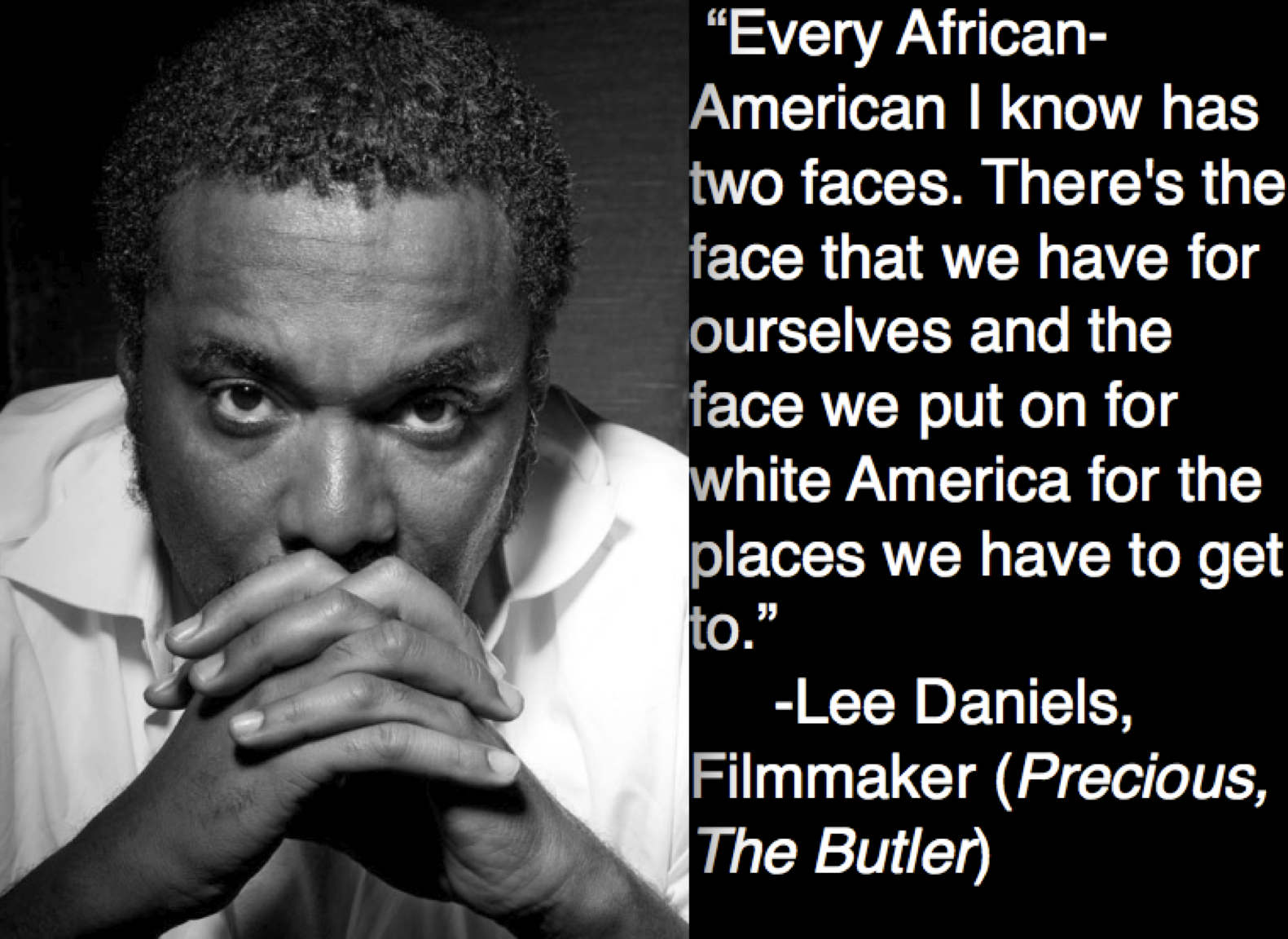
Photo and quote courtesy of Lee Daniels Entertainment

A great realization spread over me as I watched Lee Daniels The Butler with a good friend of mine last weekend: African-American films and movies based on African-American history are exploding in popularity and are becoming more frequent in today’s theaters.

Don’t believe me? Look at the movies being released in just this year alone. You have 42, a biographical picture about Jackie Robinson, the first African ballplayer to play on a dominantly caucasian team. There’s Fruitvale Station, a tragedy about a young black father discriminated and eventually killed by a white police officer in a subway station. There, of course, is Lee Daniel’s The Butler, based on real-life African-American butler Eugene Allen who served in the White House 34 years from the civil rights era all the way to when Barack Obama became president. And being released later on this year is Mandela: Long Walk To Freedom, a biographical picture about anti-apartheid activist Nelson Mandela, and 12 Years A Slave, a true story about a free black man who was kidnapped and sold back into slavery.

Recently speaking to me about the new trend on African-American cinema is award-winning filmmaker and film professor Ya’ke Smith, who recently released his feature debut titled Wolf, a spiritual drama about a young African-American boy who was sexually molested by his pastor and the emotional reprecussions that followed.

“It looks great,” he told me about 12 Years A Slave. Chiwetel man, I’m telling you, that guy, its time for him to get his Oscar. I mean, he’s been doing some great work. I’m really looking forward to that film.”

This isn’t the first year to feature stories promoting equality and nondiscrimination. Since 2009, an increasing number of films follow the African population and of the mistreatment they’ve experienced through America’s history. The Blind SideInvictus, Precious, The HelpLincoln, and Django Unchained all fit during this timestamp.

“I wanna say Django just for the fact that its comedy,” said film senior Avery Hartwell, telling me why Django was his favorite out of the bunch. “I mean, of course its a little history, but its funny. And of course you have some movies that are like Fruitvale Station, you can’t make that funny. It’s serious, of course, and you have to take that seriously. But I like to learn while still laughing, you know? And Django was about learning history, but also laughing about it.”

THE SLEEPER HITS

For the past four years, we’ve had more than eleven films being made about the African-American crusade. In the past, it would be rare to see even two of this genre in the same year.

I notice that the most popular period for African-American films were in the late ’80s and the early ’90s, according to data pulled from IMDB. Films such Spike Lee’s Do The Right Thing and Best Picture winner  Driving Miss Daisy were both released in 1989, while Boyz N The HoodMalcolm X and  Menace II Society were consecutively released from 1991 to 1993.

“African-american cinema of the 90’s is very different from what you’re seeing right now,” Smith said to me. “Again, you had the Spike Lees, the John Singletons, who were really commenting on popular culture  and what was going on at that time. You just had a slew of films that were really dealing with what was going on at the time because these filmmakers were allowed to comment on what was going on and they were able to do it without much censorship.”

As the 90’s faded into the 2000’s, African-American films became as scarce and rare as a sleeper hit in a movie theater.  Of course you would have movies such as The Hurricane come out in 1999, or other films such as Antwone Fisher in 2002 or Glory Road in 2006, but during that period African-American cinema was not as prominent as the typical American blockbusters, including the highly-revered Harry Potter and Lord of The Rings series.

CONVERGENCE AND CHANGE

In 2009, two things happened that profoundly impacted the black community: Barack Obama assuming office on Jan. 20, and the racial discrimination and murder of Oscar Grant III in Oakland, California, which inspired the 2013 movie Fruitvale Station.

“Since Obama has become president, there has been this whole new emergence on the conversation of race,” Smith said. “This whole idea of how African Americans are seen in this country. This whole idea of the African-American struggle to get to where Obama is now. This whole idea of ‘does racism still exist.’ I think all these conversations, because of Obama’s presidency, have started to happen, and then in people’s minds its like ‘Wait a minute, we need to tell our stories again. We need to tell from whence we came. We were once slaves who then were free, then we ended up being domestics, then we ended up being Presidents.”

The last sentence specifically reminded me of a key moment in Lee Daniels’ The Butler, where Forest Whitaker, after facing a lifetime of unfairness and cruelty as both a slave and a manservant, looked at a television screen with tears in his eyes as he saw Barack Obama become the first black president to be inaugurated into office.

But that wasn’t all that influenced this whole exploding trend: Smith and I also discussed the events of Fruitvale Station, in which he also compared to the racial discrimination and beating of Rodney King in 1991.

“You had a cop that got, I think he was given two years, and he got out in months,” Smith said about Johannes Mehserle, the police officer who involuntarily murdered Grant III. “You know, that’s not really justice, right? So yes, when that stuff starts happening again, we begin to talk about race again because it sort of opens up these old wounds that many of us thought were healed. But when you start to see something like that again, you realize that these wounds are not healed.”

Advertising senior and NAACP president Michael Coleman gave me a different theory on why these movies are becoming so frequent in 2013.

“I feel like specifically the most recent movies I feel like have something to do with the upcoming year of 2014 because that’s going to be the 50th anniversary of the Civil Rights movement,” Coleman said. “So, I feel like that could have a large influence on why so many movies have come out recently, and also just because the content in those movies are factual, and they are based on real events that happened in the past.”

WHERE WE GO FROM HERE

The trend of African-American films does not stop in 2013. More films are currently in production and slated for release in 2014. Two of those films include Belle, a true story about mixed-raced princess Dido Elizabeth Belle and Get On Up, a biographical picture on the life of African singer James Brown, directed by Tate Taylor of The Help and starring Chadwick Boseman from 42.

“I feel like its just going to get more and more prevalent in society,” Coleman said. “Not only in movies, but it can happen through music, poetry, anything else can come about, but I do feel like the African-American history and especially civil rights is about to become something major in society and people are really starting to take a further look into it.”

Hartwell couldn’t be more excited and hopes the trend will continue as long as it can.

“To tell you the truth, I’m a visual person,” Hartwell remarked. “Movies, of course, is how I learn, because I’m a visual thinker. So I hope that they keep at least putting out two or three movies about our history, just showing that. I hope there’s always somebody that wants to be an African-American director or producer that forgoes on not just making movies, but continuing our history through the years to come.”

Smith was especially excited for the upcoming reemergence of African-American cinema and the attention its getting from the general public.

“I think that this is a very exciting time for African-American filmmakers,” Smith said. “I know that it gives me hope, honestly. It’s like ‘Okay, these films are being produced, and maybe, maybe, maybe, maybe this door is opening.’”

More than anything else, however, Smith hopes that African-Americans don’t just get their own movies: he eventually wants them to blend with culture in the same way any caucasian actor would.

“What I really want to see is not the film that is necessarily dealing with my history, but is dealing with who I am presently as a man,” Smith said. “As an African-American person. Meaning, I want to see African-Americans in Gravity. I want to see African-Americans in whatever the popular film is right now. Because I don’t need to just be in films that are about history, or whatever. I am a man. Let me be that. Don’t just say you have to play this kind of role.”

Another film scheduled for a 2014 release is Annie, based on the original comic strip “Little Orphan Annie” by Harold Gray and starring African-American actors Quevenzhane Wallis and Jamie Foxx.

In the original comic strip, you will notice that both of their characters were originally white.

-David Dunn

An Absent Presence

Forging back into the 2013 Fall Semester of my school year, I’ll be diving headfirst into a semester of studying, schoolwork, journalism, reporting, and extracurricular activities mostly involved with the Kappa Sigma fraternity.  Because of this, I will not be able to visit this site and post as frequently as I would like to.  If this were any other year, I would be sulking about in this return, mostly drowning my sorrows in some Elton John and endless bottles of Coca-Cola.

What does this mean for me though, now that I have discovered my site and my newfound presence on the blogosphere?  Not much really.  I’ll still be putting posts up on my website, writing reviews, reporting news announcements, and piping up my own opinion on ‘The Scope’ every now and then.  None of my functions on this site have changed one bit.  The only difference between the semester and now is that my postings will be more irregular than they already have been, and I won’t be able to post on my site as much as I want to.

Again, this doesn’t mean much difference except for a quantity of articles.  Experienced film critics like Peter Travers or Michael Phillips post an average of 4-6 articles every week.  At my current rate, I have only been producing about 2-3 articles every two weeks, reaching Travers or Phillips weekly numbers by the end of a month.  That’s embarrassing, isn’t it, to admit that you’re one-fourth of a professional film journalist?

It is what it is.  I choose not to compare myself to those journalists only because I haven’t reached their level of expertise yet.  If there is anything that I’ve learned this summer of film reviewing, its that film criticism takes a great amount of thought and dedication.  It’s not enough to simply watch a movie and have an opinion of it: people do that automatically, from the petite three-year-old toddlers to the average 80-year old retiree.

It’s easy for anyone to have an opinion, and its easy to assess why you have that opinion.  What’s difficult is deciding who the film’s intended target audience is, and whether it will appeal to that audience or not.

The difference between myself, Travers, Phillips and normal moviegoers is that we’re required to assess what elements will appeal to its target audience and what will not.  We do this through the words we write in our critiques.  Whether we liked a film or not isn’t the point: people should be able to read your review, and whether they agree or not, should at least reason whether or not it will be something they want to see or not.  This seems like it would be a simple job, but not when you think about all the elements you need to take into account when writing your review.  How easy is it, for instance, when trying to describe whether movies like Taxi Driver, Cloud Atlas, or The Tree Of Life will win over its target audience or not?

Nevertheless, I have had a great thing happen to me over the course of summer break.  I have learned what it meant to be a film journalist and I gained more experience as to what the online database is like.  When I first started this site, I had little to no clue what I was doing.  I played with menus, I designed topics, I took photos, I practiced with designs, and I kept fleshing out what my site would look like and how I would market it to my audience.  When I first started, all I had was a few articles and many, many empty pages. on my site  Now, I have had well over 800 views of my articles, I have seven subscribers, and I have people regularly commenting on my articles whenever they pique their interest.

My site is not at the level of my other fellow bloggers, but that is besides the point.  This is a great starting point for me.  Over the course of the summer, I’ve learned the value of consistency, accuracy, opinion, and debate, and I’ve got to experience what going “viral” felt like.

To which I need to say one thing to whoever is reading this: thank you.  I would have not made it this far without your interest and support, and I certainly would not have made it this far without your initiation to click onto my page.  Whether you commented on an article, shared a link, subscribed to my page, or either just pointed-and-clicked any of my articles on Facebook or Twitter, your support has helped me mature as a writer/journalist/blogger/critic, and helped me better understand the world I am trying to appeal to.

So again, and again, and again, I say thank you.  This is not a goodbye, but rather, I’ll see you soon.  To the seven-or-more people who consistently follow my site, you are in my upmost regards and appreciation.  I’ll be back before you know it.

To those who are visiting here for the first time, I encourage you to stick around.  A few surprises just might come your way.

-David Dunn

“I’m A Historian, Not A Muslim”

Lauren Green, you simpering idiot.  I can’t believe you were actually aired on national television a few hours ago.  I’ve seen some doozies on biased interviews and reporting before, but you’ve got to take the top spot as the most shocking one yet.  You’re job as a reporter is to be objective on your subject, not subjective on information that you don’t bother to even look into.  You were so biased, inappropriate, and arrogant towards the interviewee that more people are going to mistaken christians as biased zealots rather than the open-minded, intelligent, and dedicated human beings that we are.  What a sham.

You gotta look this up just so your jaw can drop.  Sometime yesterday, during FOX news’ daily airtime, anchorwoman Lauren Green interviewed a Islam novelist named Reza Aslan, who wrote a book titled “Zealot: The Life & Times Of Jesus Of Nazareth” and had multiple PhD’s in religious studies.  Supposedly, his book looked at Jesus through a historical context and looks at his impact of our culture through his actions and through his time on Earth.  The novel received controversy as to being a
“Poorly researched, unintentionally false interpretation of Jesus”, or “sounding like old Islamic political propaganda”, quotes provided by Amazon.com.

I have not read the book, nor do I plan to anytime in the future, so I can’t criticize the author or his novel since I haven’t read it.  If what these people are saying is true, and indeed Aslan is as biased and one-sided as this reporter is, then he deserves the controversy he is receiving.  But I can’t substantiate, or comment on that, since I have no idea how authentic or genuine the research is.

I can, however, comment on Ms. Green as a reporter considering she was so rude and so aggressive during her interview.  Throughout the interview, she refused to ask any questions about his book, but instead, revert to stereotypical and critical questions such as “Why is a muslim writing a book about Jesus?”, or “Is this intended as Islam Propaganda?” and reverting to a quote from a negative review whenever her turn came around.

Seriously, look up the video.  Her stance and her treatment of her subject was so demeaning and maddening it would upset even the most conservative of Christians, such as myself.

The first thing I want to point out is why is she being so critical if she hasn’t read the book, or done research on her subject?  During the interview, she clearly has no idea about the person she is interviewing, and shows this by retreating to other people’s quotes about the book at every other question that she asks him.  You need to see this woman just to believe it: by the time she said “(blank person) said” for the fourth time, I had to go to the restroom and splash cold water in my face just to wake me up from the shock of it all.

First of all, as a fellow journalist and film critic myself, I need to point out a rule of thumb I have when reviewing movies.  Before I criticize a film, I make a point of watching the movie, all the way through, opening credits to end, so I can give substantial reasoning for why I didn’t like the movie.  I listed reasons why I hated movies like American Psycho, Shame, and The Hangover in my reviews, but they were all valid reasons for hating them because I pointed out real moments that happened in the picture.  If I were to write a negative review for, say, The Human Centipede, I couldn’t be held accountable for it because I didn’t see it or bothered to seek it out.

Now, if I hate the concept of a movie I could point that out.  I hate the concepts for movies like Project X, I Spit On Your Grave, Dogma, and The Virginity Hit, so I can trash those ideas all I want.  But I can’t criticize the execution of the projects themselves because again, I haven’t seen them.  There have been plenty of movies I thought I’d hate but then I gave them a chance and I enjoyed them quite a bit: Silence Of The Lambs is one of them.  Pulp Fiction, another.  Do The Right Thing.  Harry Potter.  Crazy Heart.  Halloween.  Taxi Driver.  Please test me on this, I can go all day.

Ms. Green reacts to Aslan’s novel in the same way I react to Martin Scorcese’s The Last Temptation Of Christ: I hate the idea, and would reject any notion of it, but I cannot comment on the playout of it because I have not witnessed or paid attention to it myself.  The difference between me and Ms. Green is that I have this rule I abide by fervently, while she decides she doesn’t need to do research or respect Aslan as a historian or as a scholar of religious studies.  Aslan said it himself: the goal is not to be subjective of your subject.  The goal is to provide relevant and authentic data on your focus, and allow other people to form their own opinions about it.

But does Ms. Green bother to do that?  Nooooooooo.   She ham-fists her arrogant opinions and ideas into her questions and spoon-feeds them into Aslan’s mouth, forcing him to respond in awkward, shocked, and appalled answers all while he is wondering what he had done to deserve such treatment.  I would compare her interview to that of the crusade of the Westboro Baptist Church, or as I like to call them, “The Westboro Baptists”, because they don’t deserve the word “Church” anywhere in their title.  They lead an antagonistic, cruel, unharboring crusade of hatred against homosexuals and armed forces alike, and while one can see some validation in their protests (Notice: I said SOME.  More like .5%), they are a cruel and unforgiving people nonetheless.

I don’t think Green is as monstrous as they are, but she is equally as absent-minded, aggressive, and idiotic as they are.  This should be a rule of thumb for all journalists: why, in God’s name, would you act this way towards a muslim theologian when you haven’t even read the first two pages of his book?

Just so you know, I don’t actually agree with Reza either.  I think Jesus is a honorable, respectable figure in history, one who has had as much a positive impact with our culture as did Martin Luther King Jr. or Mohandas Ghandi.  I’ve been raised to believe that he is the son of God, and I believe that to this day, and I think he deserves more respect than simply being referred to as a “troublemaker” or a “threat” during that time, even though I don’t think Reza meant any offense by it.

But what Reza believes, doesn’t believe, wrote, or said doesn’t matter. Green is so obsessed in her opinion that I want to denounce her, and her entire station, for what she said and how she said it.  I know its not FOX News’ fault for the way that she behaved, even though they have had similar criticisms in the past, and I know that in the way she behaved towards Reza was of her own accord and her own disposition.

During my first semester working for the UTA Shorthorn, I produced an opinion piece about why people shouldn’t judge Christian artist TobyMac for his religious beliefs.  I was criticized in my piece for being negligent and intolerant to other people’s opinions, but what my commentators didn’t understand is that I feel this way towards all faiths.  Jewish hymns, Hindu practices, Islam chants, whatever.  They all have a beautiful thing called faith, and they all have their right to carry it out the way they want to.  It is not our job to judge it or criticize it, but it is our job to understand it and respect it, no matter how we feel about the practice overall.

On a closing note, I hope Lauren Green gets fired.

Tagged , , , , , , , , , , , ,

DC Versus Marvel: Why “The Justice League” Will Not Be As Successful As “The Avengers”

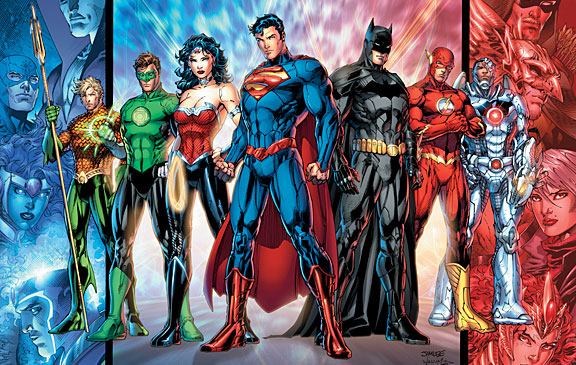
Well, this’ll ruin your morning coffee.  Due to recent developments, I am now convinced that no matter what DC does, that the much-speculated Justice League movie will not be as unique or outstanding as Joss Whedon’s The Avengers was, is, and always will be.  Why all the pessimism?  Call it intuition.  Before The Avengers cinematic universe was conceived, Marvel had a wider grasp of successful projects to boast of, including (but not limited to) SpidermanX-menBladeWolverine, Kick-Ass, and Men In Black.  DC, in comparison, only has SupermanBatman, and arguably RED and Watchmen as their most successful properties.  Also, I have an unhealthy amount of OCD.  Just thought you should know.

Believe me, I would like nothing more than to see a well-made Justice League movie hit the horizon.  There are as many characters that are as creative and dynamic in the DC universe as there are in the Marvel universe, many of them with memorable stories and villains of their own.  While I want to see a movie eventually, I now believe it will not happen, and if it does, it will not hit the mainstream success that The Avengers did.

Why am I so convinced of this?  DC has every inconvenience against them, and they have to deal with issues Marvel never had to face while producing The Avengers.  I’m not saying Marvel had it easy while making The Avengers.  Lord knows you’ll have a fair amount of doubt and backlash when you try to combine five comic-book properties into one high-adrelanine, action-packed adventure.  Regardless, DC is facing a lot of issues Marvel didn’t have to worry about, including competitive release with The Avengers in itself.

Let’s face facts: When The Avengers was released, we didn’t know what to expect.  All we knew was that it was incorporating six superheroes into one movie, they would be mostly featuring the same actors, the writer/director of “Firefly” was at the helm, and we were hoping it wouldn’t turn into the Saturday Morning Power Hour.  It didn’t, and now we have the exciting, exhilerating, witty, and entertaining Hulk-box-office-smash that The Avengers was.

This is the biggest issue that DC has over Marvel: the comparison game.  If DC would have thought of a plan similar to this ahead of Marvel and released Justice League incorporating elements from multiple DC universe movie properties at once, they would then have had a substantial edge over Marvel and would give them reason to compete for their box office revenue.  But the plain simple fact is that Marvel beat them to it, and now we have something to compare to when Justice League hits the theaters.  How big of a catastrophe is that?  What could possibly compete with The Avengers as far as box-office superheroes go?  I’ll name a few just for facetious effort: X-menFantastic Four, and Watchmen.  Now be honest with yourself: do any of those movies stand out in your mind at the level of enjoyment as The Avengers does?

If you’re being honest, it probably doesn’t, and what’s worse is that DC is now pressured into that because Marvel did it first.  But like I said, DC has a lot of issues against them, and many of them have to deal with their very own properties.  Take the following franchises as an example:

THE DARK KNIGHT TRILOGY

If we were talking about the movies by themselves, there’s no reason for concern.  The Dark Knight trilogy is among the greatest trilogies ever released into theaters, and it not only pleased long-time fans of the caped crusader: it pleased moviegoers who were not associated with the comic books.  The Dark Knighttrilogy isn’t only one of the best comic book movies of all time: they one of the best movies of all time, period.  Very few bad things are said about that franchise as a whole.

Which would enhance excitement to the fans when they think this same character will be incorporated into the Justice League, right?  Wrong.  Producer/Director Christopher Nolan and screenwriter David S. Goyer have stated multiple times that the Batman in the new Justice League is not associated with Nolan’s trilogy.  The quote from Goyer pulled from IGN says it all:

“…Zack has said that Bruce Wayne exists in this universe. It would be a different Bruce Wayne from Chris’ [Nolan] Dark Knight trilogy, and it would be disingenuous to say that Zack and I haven’t had various conversations on set, around ‘what if’ and ‘moving forward'”.  

On top of that, Christian Bale himself admitted to Entertainment Weekly that not only will he not be portraying Batman in the upcoming DC team-up film: he doesn’t even know about a release date.

“I have no information, no knowledge about anything. I’ve literally not had a conversation with a living soul. I understand that they may be making a Justice League movie, that’s it”.  

So what is their plan?  End a movie series in 2012, release a Superman movie in 2013, and reboot the character only a few years later?  Don’t they remember how many people saw those movies?  How much people praised them?  How those movies stuck out in people’s minds when someone mentioned the word “Batman”?  What are they thinking?  How on Earth do they think can they replace that?

Now, someone could offer the argument by saying Nolan’s universe was meant to be seen as realistic, whereas the rest of the DC universe wouldn’t be.  To which I respond that as hogwash.  Snyder also saidMan Of Steel was meant to be seen as realistic too, but we all know how realistic it is for an alien from outer space to get super powers on earth, or having a guy dress up in a halloween costume to beat criminals to near death.  The thought of superheroes in itself is fictitious, with powers or without.  So why are we trying so hard to differentiate in between reality and fiction?

Another possible argument someone could make is that The Dark Knight trilogy has ended, and there would be no way to revive the character for the Justice League.  To which I would say you are half right.  If we are talking about the Batman after The Dark Knight Rises then yes, that Batman is no more with us. But what about the Batman in between movies?  There is a two-year split in between Batman Begins andThe Dark Knight, and a five-year split in between The Dark Knight and The Dark Knight Rises.  Surely, someone could find room to fit Nolan’s Batman into the JL somewhere in that time stamp?

So, already you have your greatest property and you’re sending it out the window.  That’s great.  What else could go wrong?

MAN OF STEEL

I’m just going to go ahead and say this: Man Of Steel was a great film.  It had depth, it had character, it had development, and it had plenty of high-octane turbulent action.  It was a great reboot for Superman, and it was a great jump-off point for a possible Justice League series.  That much I will give to Snyder and his crew.

The complications with the Justice League universe, however, are plenty.  The biggest issue right now is their speculated release dates.  As many of you might expect, Warner Bros. has been trying to push for the Justice League movie to be released in 2016, to be released competitively with The Avengers 2 andStar Wars: Episode VII.  The original plan was to release Man Of Steel this year, release a possible sequel in 2014-2015, and then release the Justice League movie

That puts a great amount of pressure on Man Of Steel, and I don’t think it can handle it.  Again, not to play the comparison game with Marvel (even though I am), but like Man Of SteelIron Man was a great jump-off point for The Avengers, even though it was more charismatic and down-to-earth than Man Of Steel was.  It was a great film.  Great enough to jump right into The Avengers though?  Absolutely not.  It had to release four more movies before the buildup to the Avengers was complete and the excitement was at its highest.

Like Iron ManMan Of Steel is a great film to set up its expanded Universe.  Enough to jump right into aJustice League movie though?  Not even close.  Another sequel, maybe, but to jump right into the DC-team-up film would be suicide.  The announcement of a JL movie that this point wouldn’t be an anticipation: it would be a surprise.  How is that a good setup for a box-office smash?

Also, many other audience members felt the tone was too serious and did not fit into the joyous, silly veins of the original Christopher Reeve series.  To which I would say quit being a stooge and enjoy the movie for what it is.  People who wanted Green Lantern to be fun and silly got what they asked for, and look at how that movie faired with the moviegoing audiences.

Speaking of which…

GREEN LANTERN

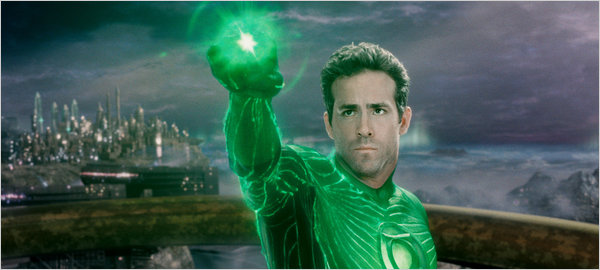
Many people hated this movie, and their hate was warranted.  Green Lantern was silly, stupid fun, and that’s all it needed to be.  I for one enjoyed the movie and appreciated it for its confidence, its stellar visual effects, and its smirking charisma.  Others, however, obviously do not share my opinion, and ultimately their opinion as a whole matters more than mine does.

To which I know disregard and ask this: what are you going to do with him now for the Justice League?  They can’t bring this same character in and have him do the same thing he did the first time: that will resurrect everything audiences hated the first time they watched the Martin Campbell film.  What are they going to do then?  Are they going to revamp him?  Recast him?  Reboot him?  Maybe even cut him out entirely?  Batman has a great story behind his success and Superman a great following.  Green Lantern has none of that.  So what can DC do to the character to give him a new spin and a spirit on the franchise?

The list of issues goes on and on.  How are they going to incorporate Wonder Woman into it?  What about the Flash?  Martian Manhunter?  Who would they cast?  Who would be the villain?  And how on Earth are they going to make Aquaman not look stupid???  

Bottom line: Justice League will not be as good as The Avengers.  DC just isn’t prepared for it.  There is the off-chance that it can still be good, exciting, and entertaining blockbuster fun, but I’m convinced that there’s no way that DC can give these characters the same treatment Whedon did for The Avengers solely because they won’t be as recognized as those characters have.  Even if you do give each Justice Leaguer his own movie and give time to set up each character: how do you know you’ll be as successful as The Avengers was?  Won’t you be following a formula at that point?

Of course, there is the off-chance that I’m completely wrong and that the Justice League will be vastly more successful than The Avengers will be.  I’m going to see it regardless of what RottenTomatoes says, and I hope it’ll at least be as good as Man Of Steel is.  But that’s unlikely, and no matter how it turns out, lets just be grateful that Robert Schwentke won’t be directing, writing, or having anything to do with the movie.  The last thing we need is a PG-13 version of RED.

Oh, wait a minute.

Source: EMPIRE, Entertainment Weekly, IGN
Tagged , , , , , , , , , , , , , , , , , , , , , , , , , , , , , , , , , , , , ,

Meeting Me: The Kid From Texas

securedownload

The above photograph you’re looking at is a picture of the first time I’ve ever visited a beach.  I remember that moment as if it were a picture in a postcard.  I took off my shirt, my shoes, and my socks as I leapt from my mom’s car.  I ran out onto the beach and felt the warmth and the coarseness of the sand in between my toes.  And I just ran.  I ran and ran and ran and ran.  I ran so much, it looked like the world was running with me.  I ran so much, my Aunt couldn’t keep up with me.  I ran so much, Forest Gump would have been impressed.

I share you this memory not to flaunt about my lifestyle, but just to give you an idea of who I am.  My name is David Dunn.  I am many things in this life, but boring isn’t one of them.  I’m a writer.  I’m an enthusiast.  I’m a spiritualist.  I’m an introvert.  I’m an adventurer.

Of course, none of those things pays the bills (well, maybe the “writer” part.  But many would offer an opposing argument).  Profession-wise, I am pursuing many endeavors.  I am a filmmaker.  I am a producer.  I am a screenwriter.  I am a composer.  I am a photographer.  I am an aspiring actor.  But my most significant profession is my current job at my school newspaper, the University of Texas at Arlington Shorthorn: I am a film critic and journalist.

All of these jobs have one thing in common: they are all deeply invested with the respect and power of film.

I’ve been studying film history and appreciation ever since I was in high school, and I haven’t been done studying since.  I’ve been watching and loving films far beyond that, as my mom would always show me childhood videos of me copying Tigger’s movements from Winnie The Pooh back when I was just a kid.  I’ve been watching and respecting stories my whole life.  In a way, I guess you could say I’ve been studying film appreciation forever.

It didn’t come upon chance that I wound up in this profession.  I decided on a profession in film early in 2005, although I didn’t quite know what it would be.  I made this decision after reading an early draft of the newly-produced Halo screenplay by Alex Garland.  The script, much like many other screenplays written in that year, was a wonderful and energetic science-fiction story about a emotionally reserved hero who was trying to find recompense after failing a mission that resulted in the loss of countless lives and an entire planet.  I loved that script and would have loved seeing a film adaptation of it.  Sadly, it never came to be made, but that hardly deterred my enthusiasm.  I found love in many other films that would continue to inspire me in my studies, including Friday Night Lights, There Will Be Blood, Gran Torino, Slumdog Millionaire, and my personal favorite, The Social Network. 

Post-Script: The original Halo video game released by Microsoft and developed by Bungie is just as much a cinematic experience as it is a well-crafted arcade game.  I’d strongly recommend anyone to play through the campaign at least once in your lifetime.  

But again, I had no idea what my new profession would be.  I wanted to do something I could I was good at, anything in the film world that I could grab my hands on (Many of my peers tell me I’m a decent actor, although my film professor verbally disagrees with many of them).

Since I was pursuing a career in film, the first thing I decided was that I needed to understand my own opinion of it.  Not just about movies, but about filmmakers, about actors, screenwriters, production companies, projects in production, creative decisions, moral boundaries, etc etc.  I also knew that while doing that, I also had to develop my own theories and ideas that I could relate to other people’s opinions and experiences in film (Ex. A movie that relies on relentless violence and explosions instead of story and character cannot be categorized as a movie, but instead, should be labeled as a 150-minute trailer).

See, the important thing about film criticism is not agreeing with everybody else’s opinion about film: you’re not a critic if you do that.  You’re just a normal run-of-the-mill schmuck who nods his head and smiles while everybody else around him is also nodding and smiling.

You do, however, need to word your opinion in a way where everybody agrees with your review, even if they don’t necessarily agree with your opinion.

For example, if I look up the definition of a PREQUEL in a dictionary, the definition will read “a story or movie containing events that precede those of an existing work”.

Now, let’s bring two prequels to the table: X-men: First Class and the Star Wars prequel trilogy.  I’m one of the relative few that didn’t like X-men: First Class because A) Magneto’s conflict is with another mutant, not with the human race, B) Mystique’s relationship with Professor Xavier is different from how it is portrayed in the original trilogy, and C) Xavier was confined to a wheelchair at the end of First Class even though his older self is seen walking through flashback sequences of X-men 2, 3, and Wolverine.  

Now, as an action blockbuster intended to revive energy into the franchise, the movie worked.  But as a prequel to a superhero trilogy of epic proportions, it ended with more holes and questions than it did with answers.  Therefore, I did not like the movie because it did not serve its function as a prequel.

Oppositely, the prequel trilogy of Star Wars was fun, entertaining, visually spectacular, highly stylized, and ended with no holes at the end of its conclusion.  Despite its tonal inconsistencies and its moments of failed comedy (*Cough, cough* JAR-JAR BINKS *Cough, cough*), it served its purpose as a prequel.  Therefore, I enjoyed the movie.

This is my goal as a film critic: to cite why I liked a movie, the reasons why I liked it, and mention the reasons why you too might like it.  Of course, there will be times where you and I will come to disagreement, but that is the joy of film criticism: finding out the differences between viewers and learning our similarities to each other.

Yes, I know I’m not the first critic to enter into the criticism field.  Yes, I know my competition is just as ridiculous as the film industry is.  And yes, I realize I may not be the best film critic out there on the world wide web.

Which no doubt leaves you with one question: what makes me different from all the other movie critics out there right now?

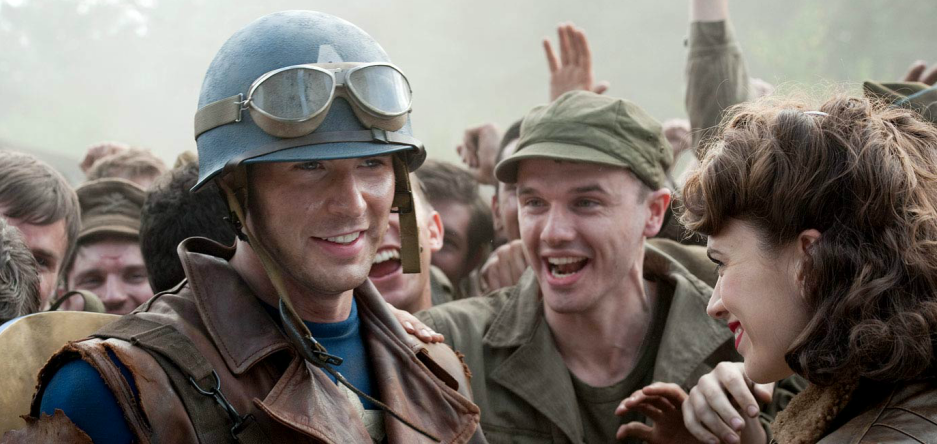
To answer that, I’ll quote a moment from Joe Johnston’s superhero film, Captain America: The First Avenger.  At one point in the movie, the heinous villain Red Skull (brilliantly portrayed by Hugo Weaving) captures our hero Captain America (Chris Evans) and has his men hold him down.  With a tone as sinister and slithering as can be, he asks our hero:

Red Skull: “Tell me… what makes you so special?”

Captain America: “Nothing.  I’m just a normal kid from Brooklyn”.

Well, it’s Texas, but you get my point.

-David Dunn

Top Ten Movies of 2012

Man, what a year in movies. There has been so many achievements in so many different films, it’s hard to keep up with all of them at once. Superheroes defeated alien races. Lincoln was brought back from the dead. Ben Affleck made a fake movie. The Batman chronology came to a fantastic close. Peter Griffin possessed Teddy Bear. The list goes on and on and on.

With all of these stories coming into and out of theaters, it’s hard to decide which movies should be placed above another one. For a film critic, however, its important to know which movies are the best of the year and which are best left forgotten.

From bottom to top, here is my list for the Top Ten films of 2012.

NOTE: Not every film has been seen this year. If there is a ground-breaking blockbuster epic that isn’t up here already, its probably because it hasn’t been viewed yet. Either that, or you’re watching too much Alfred Hitchcock.

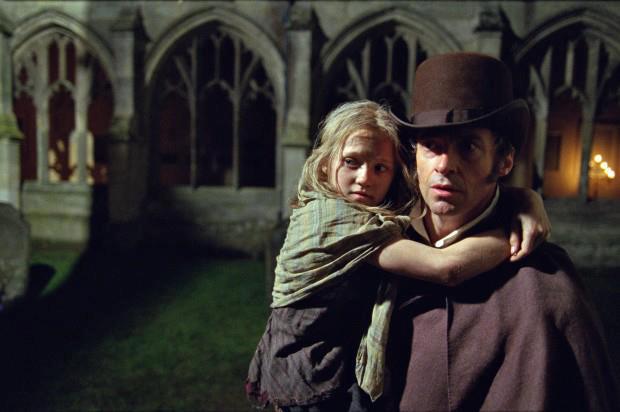
10) LES MISERABLES

An enriching and inspirational musical experience beyond all measure.  Hugh Jackman stars as Jean Valjean, a man struggling with his past as he struggles to look for peace and redemption in a land torn by poverty and civil war.

Directed by Tom Hooper, Oscar-winner for 2010’s The King’s Speech, this is a movie that juggles emotional tensity with visual splendor and grandeur, with Hooper’s dignified set pieces shining brightly all over the place. At the same time though, this movie thrives as an aesthetic piece, with these characters conveying their thoughts and emotions through their powerful performances and voices through the film. Jackman, however, steals the show as Jean,  a man whose powerful, perilous spiritual journey is told through the film’s emotion-stirring song numbers. This movie isn’t just another musical. This is an opera of unexpectedly epic proportions. Four-and-a-half stars.

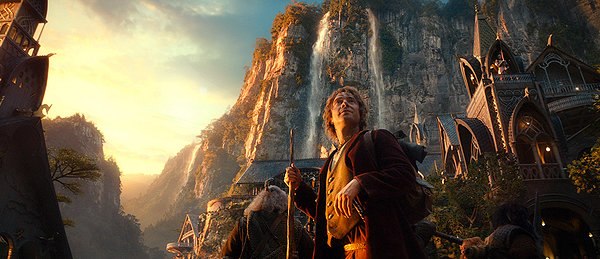
9) THE HOBBIT: AN UNEXPECTED JOURNEY

A prequel that not only matches the expectations set by its predecessor, The Lord Of The Rings: in some ways, it surpasses them. Martin Freeman plays as Bilbo Baggins, a young hobbit who lives a peaceful life full of rest and relaxation in his roomy cottage home. He was the last person who was expecting a visit from Gandalf The Grey (Ian McKellan), a wizard who traveled from the west in search of great adventure in middle-Earth: and he wants Bilbo to come along with him.

Directed, written, and produced by Peter Jackson, the same man credited to the success of the previous Lord Of The Rings trilogy, The Hobbit: An Unexpected Journey is a film that is influential enough to fuel its own trilogy. With a wonderful script, a solid cast, and creative and dynamic visuals, The Hobbit matches the proficiency of the first two Lord Of The Rings movies and rivals the mastery of the third. Five stars.

8) THE HUNGER GAMES

A survival-fantasy epic that retains the same tension and energy from the original novel. In the post-dystopian kingdom of Panem, young Katniss Everdeen (Jennifer Lawrence) volunteers for the Hunger Games, a brutal survival competition where combatants fight to the death, when she realizes her younger sister was previously selected to participate. Now having to participate in the games alongside fellow villager Peeta Melark (Josh Hutcherson), Katniss must find a way to win the Hunger games and get back home.

Lawrence is a powerful presence in the lead role, and she fits the part well as a strong-willed, courageous, yet secretly afraid heroine who simply wants to be reunited with her family. The movie does a great job as an adaptation as well, not only retaining faithfulness to the original novel, but also expanding upon it, actively showing what a broken and crumbled society this story takes place in. Directed by Gary Ross (Pleasantville, Seabiscuit). Five stars.

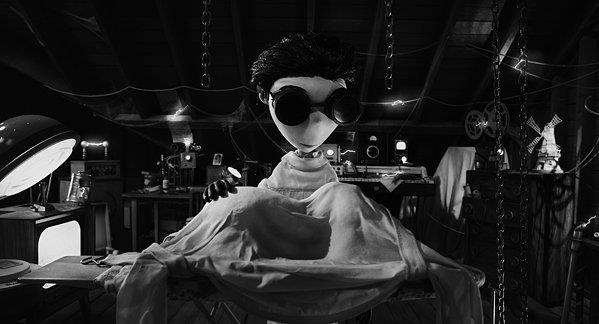
7) FRANKENWEENIE

An affectionate tribute to classic horror cinema and a welcome return to form for director Tim Burton (Edward Scizzorhands, The Nightmare Before Christmas). When Victor Frankenstein (Charlie Tahan) witnesses the death of his dog Sparky (Frank Welker), Victor sets out on an experiment using lightning and electricity to bring his best friend back to life.

Based on an idea that originally got Burton fired from Disney Studios, Burton turns this idea around by offering us this creative, imaginative, dark, twisted, yet mature and emotional film about life, death, resurrection, growing up and companionship. The film is also smartly stylized, with its black-and-white animated visuals offering a surprising amount of eye candy.

A film every bit as fun and entertaining as it is thoughtful and emotional. Five stars.

6) SKYFALL

A Bond movie lived to the fullest potential. Daniel Craig returns as 007, the double-daring, martini-sipping secret agent who isn’t afraid to talk back to his superior, M (Judi Dench). But when Bond discovers an enemy who returned from M’s past to exact revenge, Bond will uncover a secret in his past so haunting that it will impact the entire nation of Britain and shake the foundations of MI6 forever.

Skyfall is a full-blooded action film, a spy movie that completely embodies everything great about Bond, from the lively, exotic locations to the pulse-pounding action that overflows you by the minute. The cast is great, the plot is fresh, the action is refined and thrilling, and the film has a deeper introspective into Bond than what we were expecting. Skyfall assures us that not only will Bond survive throughout the years as cinema progresses: it will also thrive on its success and its legacy. Directed by Sam Mendes (American Beauty, Jarhead). Five stars.

5) CHRONICLE

A fascinating and exciting science-fiction story filmed creatively through the “found footage” shooting method. Young Andrew Detmer (Dane DeHaan) lives a troubled home life with a sick, absent mother and a drunken alcoholic for a father, and decides to film everything on his home video camera as means of emotional release. When his cousin Matt (Alex Russel) and his friend Steve (Michael B. Jordan) discover a hole in an empty field in the backyard of a party, all three of them make a discovery that will change their lives forever.

Dane Dehaan is tense and subversive in his role as Andrew, and portrays him as a character that is both fearsome and sympathetic. The biggest props, however, goes to director Josh Trank and screenwriter Max Landis. They both help compose a very mature, thoughtful story that serves as a sort of metaphor for troubled youth. Their decision to make it a found footage film especially affected the film’s outcome. If the found footage genre was created for the purpose of one movie, Chronicle is that one movie. Five stars.

4) LINCOLN

A powerhouse of a biopic driven by Daniel Day-Lewis’ overwhelming performance as the famous president. Set during the final years of Lincoln’s presidency, the film follows the famed President as he tries to abolish slavery, end the civil war and attempt to mend the wounds of a torn country.

This dialogue-heavy narrative boasts screenwriter Tony Kushner (Munich) and director Steven Spielberg (Schindler’s List, Saving Private Ryan) at their best, carefully composing a story with intricate detail, whimsical humor and tender emotion that results in a very personal perspective in the life of Abraham Lincoln. Daniel Day-Lewis, of course, deserves all praise and admiration as the famous president. He’s so skilled in his performance, there’s no indication that he even is Daniel Day-Lewis. He fully embodies Lincoln, from the weariness in his voice, to the hunch in his back. Five stars.

3) BEASTS OF THE SOUTHERN WILD

An rich, aural experiment that pays off in many unsuspecting ways. The young and adventurous Hushpuppy (Quevenzhane Wallis) lives with her father Wink (Dwight Henry) in a place known as “The bathtub”, a Louisiana bayou that faces demise at the hands of a flooding. First-time director Behn Zeitlin wrote, produced, directed, and even composed this brilliant feature, and everything he was involved with fine-tuned this film to near-perfection. Through his skill of direction and symbolism, Zeitlin ends up commenting on many social issues such as poverty, naturalism, global warming, parenthood, neglect, childhood, purity, and innocence.

Wallis, especially, is breathtakingly powerful as Hushpuppy, a child that is so brave, strong-willed, and spirited, yet also at the same time vulnerable and emotionally fragile. A fantasy drama that is ripe with context, emotion, and adventure. Five stars.

POST-SCRIPT: I went back and forth on the following two movies on which should be second and which should be first, and you know what? I’m cheating. Only one film is ranked higher than the other, but they both truly are the best films of the year, as no other film has reached the success or the cinematic value that these movies have achieved.  Although one must be ranked higher than the other, both of these are number one in my book.  

2) THE AVENGERS

Built upon the success of iconic superhero movies such as Iron ManThorThe Incredible Hulk, and Captain AmericaThe Avengers assembles the world’s greatest heroes to fight the battles that humanity never could. And when an alien race known as the Chitari threaten the existence of mankind, it is up to the Avengers to step up and fight for humanity’s survival.

Being the sort of action-blockbuster that seems inspired by epic nature of the Lord Of The Rings and Star Wars franchises, The Avengers is the most iconic, the most exciting, the most quotable, the most entertaining and the most memorable picture of the whole year. With great action, a strong cast, a convincing script and so many memorable and witty one-liners, The Avengers is easily one of the most ambitious and most efficient films of the year. It is highly unlikely that there will be another just like it. Five stars.

1) ARGO

A tense, thrilling, and heart-pounding experience that is every bit surreal as it is unflinchingly realistic. During the Iran Hostage Crisis of 1979, all 50 people inside the U.S. Embassy building are taken hostage except for six Americans who escape and hold refuge inside a Canadian ambassador’s house. Two months later, CIA operative Tony Mendez (Ben Affleck) is given the assignment of getting the Americans out, and he hatches the ultimate unorthodox cover: disguise the Americans as a film crew, tell the officials that they’re scouting locations for a film production, get the Americans on a plane and get them home.

Ben Affleck shines in the film not only as its lead character, but also as its director. He directs this film with both skill and conviction, building up to highly suspenseful and climactic moments through expert pacing and precise cut-aways. He also knows how to excise compassion and sympathy, as he is able to show the American’s struggle through the traumatic situation they are in. The best drama of the year. Five stars.

And that’s my list for the year, folks.  Wake me up when its 2014.

-David Dunn

A Tribute To Roger Ebert

ebert

I’ve never known any film critic like Roger Ebert. I’ve never known any critic more funny than him, more intelligent than him, more emotional than him, or more real than him. Roger Ebert wasn’t just another journalist or film critic. He was a man who loved, cherished, and believed in the power of movies and cinema. He wasn’t just a man who studied films: he was a man who watched them.

Roger Joseph Ebert was born on June 18, 1942 in Urbana, Illinois. By the time he graduated high school, he was a sports writer for The News-Gazzette in Champaign, Illinois, an enthusiastic contributor for science-fiction fanzines, became the co-editor for the high-school paper, won first place at the Illinois State Speech Championship in Radio Speaking and began taking classes at the University of Illinois at Urbana-Champaign while simultaneously finishing the last of his high school credits.

Geez. And here I am struggling to get into film festivals and write two stories a week.

His first exposure to professional journalism was in 1966 when he applied for a job at the Chicago Daily News, but was then referred to Jim Hodge, the editor-in-chief of the Chicago Sun-times. After being promoted to film critic after the paper’s previous critic resigned, he eventually began his own television show called “Sneak Previews”, where he would eventually meet his longtime partner, friend, and collaborator: Gene Siskel.

Some of the best moments of film reviewing came from “Siskel And Ebert”. Not one. Not the other. Both. They defined what film criticism truly is: two human beings, with two different opinions, and the two of them trying to find the common ground of a movie between the both of them.

What made those two so funny and memorable though was not the fact that they agreed and saw eye-to-eye as film scholars: they often couldn’t find the common ground, and this resulted in many of their most scathing and hilariously heated debates.

On Brain Candy:

Siskel: Roger, what happened to your sense of humor?

Ebert: I’ve GOT my sense of humor. My sense of humor was STARVING for laughter!

On Silence Of The Lambs:

Siskel: I wasn’t compelled by anybody except, I suppose, the Jodie Foster character as a ‘strong woman’.

Roger: Come on, a great performance!

Siskel: Not a great performance, a decent performance.

Roger: Anthony Hopkins?

Siskel: NO. I thought that was way overplayed.

On Full Metal Jacket:

Siskel: I’ve never felt a kill in a movie quite like that.

Ebert: Well, in that case, you’re going to love “The Late Show”, because they have kills like that every night in black-and-white starring John Wayne.

Those two were not just the definition of film lovers: they were the definition of film critics.

Their relationship lasted all the way until Gene’s death in 1999. Ironically, Gene passed very similarly to Ebert: He contracted cancer and died due to surgery complications.

From there, the show survived until Siskel’s successor was found in Sun-time columnist Richard Roeper, where the show was then renamed “Ebert and Roeper”. The show had a successful run, but it wasn’t at the same level as when Siskel was still a co-host. How could it be, when Ebert and Siskel’s rivalrous relationship was the highlight of the show?

The two critics eventually parted ways to follow their own interests and endeavors. Roeper would go on to publish his reviews via internet broadcasts for the ReelzChannel, while Ebert continued to write for the Chicago Sun-times as well as spend time with his beloved wife, Chaz.

However, a great obstacle eventually put itself right in front of Roger’s path: he contracted papillary thyroid cancer. For more than ten years, Ebert vigorously fought and combated cancer in any way he could, while still maintaining his job as a film critic.

It wasn’t easy. He underwent three surgeries, lost the ability to speak through a surgery involving his jawbone, got tissues and pieces of bone removed from his back, arms, and legs in order to replace it, and after it failed, was left with no voice and a frail body. Here the man finally was: a great film scholar and historian physically shriveled down to nothing.

That didn’t stop Ebert though. If anything, it made his voice through his writing stronger. Ebert continued to write for the Chicago Sun-Times, all while maintaining film submissions for his film festival Ebertfest and even tried to revive “At The Movies” with film critics Christy Lemiere and Ignaty Vishnivetsky.

But after a while, he couldn’t take it anymore. He succumbed to his ailments in the morning of Thursday, April 4th of last week while him and his wife Chaz were preparing to go to a hopsital appointment with the doctors at Hospice hospital care.

I remember where I was at that exact moment when I first heard the news. I was at the 2013 TIPA Convention, representing my college paper alongside many of my other fellow journalists and reporters when a friend of mine from the paper called me:

“David… you’ve heard about Roger Ebert, haven’t you? He’s dead.”

I couldn’t believe it. My hero, my role model, my inspiration for film criticism, was dead. It was too much for me to process all at once. It nearly ruined my whole day.

Ever since I started getting serious about criticism and started reading his reviews in 2008, I’ve always been a huge admirer and fan of Roger Ebert’s reviews. There were specifically three things about his reviews that stood out to me so much.

First of all, his narcissistic sarcasm. When he loved a movie, you knew it. When he didn’t like a movie, you knew it. When he hated a movie with such steaming passion that he would give anything (including an admission price) to leave the theater, well, you knew that too.

Some of his most famous hate speeches below:

“This movie doesn’t scrape the bottom of the barrel. This movie isn’t the bottom of the barrel. This movie isn’t below the bottom of the barrel. This movie doesn’t deserve to be mentioned in the same sentence with barrels.” 

-Freddy Got Fingered, 2001

“Enough. Do the people who made ‘Meteor’ take us all for total fools? And if so, could that possibly be because they’re looking for company?” 

-Meteor, 1979

“I hated this movie. Hated hated hated hated hated this movie. Hated it. Hated every simpering stupid vacant audience-insulting moment of it. Hated the sensibility that thought anyone would like it. Hated the implied insult to the audience by its belief that anyone would be entertained by it.” 

-North, 1994

I didn’t love Roger Ebert because he ripped off on bad movies: I loved him because he was funny while he did it.

Secondly, I liked how personal Ebert made his reviews. It wasn’t just his tastes or his education he considered when he was writing: he also considered his personal background when doing so.  He considered his morality.

Take, for instance, his review of Mel Gibson’s epic “The Passion of The Christ”, a film I feel is severely underrated by the critical public. Ebert, after giving the movie four stars out of four, said:

“What Gibson has provided for me, for the first time in my life, is a visceral idea of what the Passion consisted of. This is not a sermon or a homily, but a visualization of the central event in the Christian religion.”

-Passion Of The Christ, 2004

And later on, another comment he gave about Terrence Malick’s “The Tree Of Life”.

“In whispered words near the beginning, “nature” and “grace” are heard. We have seen nature as it gives and takes away; one of the family’s boys dies… And what then? The film’s coda provides a vision of an afterlife, a desolate landscape on which quiet people solemnly recognize and greet one another, and all is understood in the fullness of time.”

-The Tree of Life, 2011

In many ways, Ebert isn’t unlike Terrence Malick in “The Tree Of Life”: vast, attentive, understanding, patient, and recognizing of true beauty. He noticed morality and principle more than he noticed art and vision, although he paid equal attention to both things all the same. He doesn’t just analyze the technical skill of a film: he analyzes the intent, and whether it is appropriate or not for its content.

Lastly, I respected Roger Ebert because, more than anyone else, he understands the value of opinion and film criticism. The best line Roger has ever said about the business was in a journal entry dated for July 18th, 2010. In it, he wrote:

“The one thing you can never be wrong about is your own opinion. It’s when you start giving your reasons that you lay yourself open. Only rarely does it stray into objective fact.”  

-Ebert’s Journal, “Whole Lotta Cantin’ Going On”, July 18th, 2010.  

That line is what inspired me to become a film critic. That line first got me writing my articles and reviews in the first place. It established my perspective as a critic in the field. It broadened my respect for other opinions in the field. It honed me to being able to debate and argue opposite views of film. I learned to love film through Robert Ebert.

Thank you Roger Ebert. You’ve given me and so many other aspiring journalists to strive for something only you so far have been able to reach. For now, the balcony is closed. But maybe someday, with you as our guide, we’ll be able to open it again.

R.I.P. ROGER JOSEPH EBERT (JUNE 18, 1942 – APRIL 4, 2013)

-David Dunn

OSCAR REACTIONS 2013

Well then.  Turns out even William Shatner couldn’t save Seth Macfarlane from being the worst awards show host I’ve ever seen.

I’m not even kidding.  I couldn’t stand him.  He annoyed me even more than Anne Hathaway and James Franco.  He disgusted me even more than Ricky Gervais.  He was even less humorous than David Letterman.  Seriously, how is it a guy of this caliber walks up on stage and, aside from being tasteless and offensive, fails to even be funny?  He’s the worst Oscar host I’ve ever seen on stage.

Enough of that though.  Besides the show’s prolonged, idiosyncratic pace, this was a decent year at the Oscars, with just as many candidates deserving their wins as there was candidates who were… well, let’s just say “lacking” in their wins.

Here are the categories I got right this year:

BEST PICTURE (CORRECT! 👍) Yes, yes, and yes.  Ben Affleck won best picture alongside Grant Heslov and George Clooney for his brilliant thriller, Argo.  He more than deserves it and his acceptance speech was one of the most emotional and sincere of the night.  I’m glad he won.  Moving along.

BEST DIRECTOR (WRONG! 👎)  No, no, NO.  Ang Lee won best direction for his fantasy-epic Life Of Pi.

Why?  Where did this come from?  Was Life Of Pi a good movie?  Yes.  Was it faithful to the novel?  Yes.  Was it a revolutionary piece that has singular and daring direction that made the movie stand out compared to other nominees?

NO.  NO NO NO.  Steven Spielberg directed the 16th American president and the entire Union through the civil war in his powerful biopic Lincoln.  Behn Zeitlan directed a six-year old girl through the swampy infestations of New Orleans in Beasts Of The Southern Wild.  Ang Lee had to direct one indian boy on a lifeboat with a CGI tiger.  How does Ang Lee win the award for just following the book note-for-note, word-for-word.  Why?

Argh.  Whatever.  He’s not a bad choice, I’ll give them that.  At least the award went to a decent director.

BEST ACTOR (CORRECT! 👍) Good.  Daniel-Day Lewis won best actor for his adamant performance in Lincoln.  The president of AMPAS just saved himself a broken TV.

BEST ACTRESS (CORRECT! 👍) And yet again, Jennifer Lawrence wins best actress for Silver Linings Playbook.  I’m happy for her win, even though she tripped on the stairs on the way up to accept her award.  She’s a woman of character, integrity, charisma, and good humor.  Congradulations for her win.

BEST SUPPORTING ACTOR (WRONG! 👎) Christoph Waltz beat out Tommy Lee Jones for Lincoln with Django Unchained.  While he certainly isn’t a bad choice, he wouldn’t have been my first pick.  Tommy Lee Jones’ role in Lincoln demanded more for his character, and more emotion and context was shown behind the character of Congressman Thaddeus Stevens.  I would have preferred he recieve the award over Waltz.

On the flip side, where is Leonardo DiCaprio in this?  His performance stood out even more in Django than Waltz’ did.  And yet, here he is, being snubbed for pushing himself as an artist so the Academy can give it to someone who has already won before.  Typical.

But I digress.  Waltz’ role was vital in Django and he served it well.  Congradulations to him for his second win.

BEST SUPPORTING ACTRESS (CORRECT! 👍) Thank you, Anne Hathway, for giving us one of the most powerful moments this year in film for your performance in Les Miserables.  And thank you, Academy, for recognizing her for it.

BEST ORIGINAL SCREENPLAY (CORRECT! 👍) Quintin Taratino won for Django Unchained While I can say the movie is witty and well-written, I still have to point out that I think Zero Dark Thirty and Flight were superior movies compared to that one.  But that is besides the point.  Congradulations to Quintin for his second Oscar.

BEST ADAPTED SCREENPLAY (CORRECT! 👍) Chris Terrio won for Argo.  This is fair considering this is a phenomenal movie with great writing, brilliant pacing, and witty humor.  That all started on the pages of the screenplay, and Terrio is more than deserving in the award.  Again, congrats.

BEST ANIMATED FILM (WRONG! 👎) ….um…. wow.  I gotta admit, I didn’t see this one coming.  Pixar’s Brave won for best animated film over Wreck It Ralph and Frankenweenie.  While I am happy for its win and agree it is among the best animated films of the year, to say it is the best is something of a long shot.  It doesn’t match Frankenweenie as far as maturity goes, and it doesn’t precede Wreck-It Ralph as far as wit and cleverness goes.

I’m not mad, and I’m happy for its win.  I’m just pointing out that I wasn’t expecting it, and out of all of the Pixar epics, this has been one of them that has been recieved with lesser critical reception.  I expect many people to be upset about this win.

BEST DOCUMENTARY (CORRECT! 👍) Of course Searching For Sugar Man won for best documentary.  It’s one of the most critically-acclaimed films of the year and achieved widespread popularity despite its limited release.  Congrats for the win.

BEST FOREIGN LANGUAGE FILM (CORRECT! 👍) Amour won best foreign-language film.  No surprise there.

BEST COSTUME DESIGN (CORRECT! 👍) Anna Karenina won.  I have no comment for its win except that The Dark Knight Rises should have been nominated in its place.

BEST PRODUCTION DESIGN (WRONG! 👎) Now here’s a pleasant surprise.  I was expecting Anna Karenina to win, but it turns out the Academy wisened up for a change and gave the award to Lincoln instead.  Congradulations, and thank you.  That film was a phenomenal period piece that had great attention to historical detail and architecture.  I am not mad at all that I got this category wrong.  Not at all.

BEST CINEMATOGRAPHY (CORRECT! 👍) One step forward, two steps back.  Claudio Miranda beat Roger Deakins in cinemetography with his Life Of Pi against Skyfall.

I knew this was going to happen, even though I wished it hadn’t.  Skyfall was a superior action piece utilizing inventive camera angles at the hands of cinema master Roger Deakins.  Life Of Pi relied on visual effects and wide shots to convey its story across.  Deakins was the more original artist, and he deserved to win.  Just like every other year he’s been nominated.

BEST FILM EDITING (CORRECT! 👍) Argo won for best film editing.

BEST ORIGINAL SCORE (CORRECT! 👍) Life Of Pi won best original score.  And this is one of the categories it wins in which I don’t mind.

BEST ORIGINAL SONG (CORRECT! 👍) Adele took home the award for the night for Skyfall.  Could anyone else have taken it away and be just as deserving?  I think not.

BEST VISUAL EFFECTS (CORRECT! 👍) Life Of Pi won best visual effects.  How humuliating is it that the cast of The Avengers, a movie which SHOULD have walked away with the award, handed it off to the people in charge of the visuals for Life Of Pi?  What a sham.

BEST MAKEUP (WRONG! 👎) Les Miserables won for best makeup.  While I got this category wrong (predicting it’d be The Hobbit), its at least not as polarizing as when The Iron Lady won.  At least its more deserving than Hitchcock.

BEST SOUND EDITING (WRONG! 👎)  Shockingly, for the sixth (seventh?) time in Oscar history, the winner of this category is a tie.  Between Zero Dark Thirty and Skyfall to be precise.  This is great because both nominees were worthwhile movies that deserved at least some recognition.  Bad because I didn’t predict either one on my sheet.

Oh well.  Can’t get everything you want.

BEST SOUND MIXING (CORRECT! 👍) And Les Miserables won best sound mixing. Congradulations.  It deserved it due to the difficulty of the request of what Tom Hooper was asking his sound editors.  Congradulations to that musical epic regardless.

And of course, I got all three of the following categories incorrect.  But that’s only because…

BEST DOCUMENTARY SHORT (WRONG! 👎) Innocente.  Didn’t see it.

BEST LIVE-ACTION SHORT FILM (WRONG! 👎) Curfew.  Didn’t see it.

BEST ANIMATED SHORT FILM (CORRECT?) ...waitaminute, I GOT ONE RIGHT??!?!  Whoa…

Didn’t see that one coming.

In all sincerity, Paperman is the only animation short I’ve seen, paired with my screening of Wreck-It Ralph.  And I’m glad it won.  It was a tender, sincere piece that was just as visually dynamic as it was gripping and creative.  It was a phenomenal animation piece and it deserved no less than best animated short.  Huge congratulations for John Kahr’s win.

Again, and again, and again, congratulations to all of the nominees and their wins.  This was a great year at the Oscars, and many deserved the wins that they received.

Poor on you, though, Seth Macfarlane.  As Ben Affleck said as he was presenting a category in the ceremony, “Y’know, I thought we were doing pretty well here today, Seth.  But I’m sure you’ll turn that around for us”.

-David Dunn