Category Archives: Reviews

“STAR WARS: RETURN OF THE JEDI” Review (✫✫✫1/2)

Balance to the force, there is at last.

This is it, the moment that everything has been building up to: the conclusion of George Lucas’ Star Wars trilogy. Just like the last few movies, Return of the Jedi is a strong sci-fi feature that focuses on its character’s development just as much as it does on its mythology and visual effects. I’ve grown fond of Star Wars and its sequel The Empire Strikes Back, and Return of the Jedi is no different. The only disappointment is that it has to end.

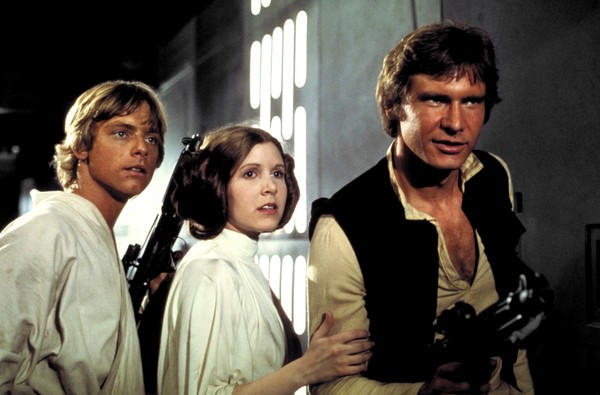
Taking place after The Empire Strikes Back when Han Solo (Harrison Ford) is frozen in carbonite and Darth Vader (James Earl Jones) reveals he is Luke’s (Mark Hamill) father, Return of the Jedi sees our heroes as the Galactic Rebellion comes to its most crucial moment. As the Empire works to rebuild its infamous Death Star and the rebellion works to counterattack the Empire, both sides mount up their efforts as they have one last chance to defeat their enemies, either freeing or enslaving the galaxy for all eternity.

Out of any of the other Star Wars movies, Return of the Jedi is the most exhilarating, an exciting action romp that contains rebels and stormtroopers shooting at each other, chase sequences through forests, and lightsaber duels that are arguably the best out of the series. We’ve witnessed over and over again how visually ambitious the Star Wars saga is. Here is another demonstration of how groundbreaking the Star Wars movies really are.

Take the film’s climax as an example. As the film gains momentum, we switch around to multiple scenes at once and the stakes that characters are faced with in the heat of the moment. We switch to an epic space battle where rebellion cruisers and imperial spacecrafts are firing and flying at each other all at once. We switch to a ground scene where rebels are breaking into an imperial base before they are suddenly captured and fired upon. We switch to a dark room, where two jedi are staring tensely at each other, waiting for the other to make the first move against them.

This is something all of the Star Wars movies handle well, which is perspective. We have our main conflict between Luke and Darth Vader, certainly, but they’re not the only ones in the scope here. We also have Han and Leia’s romance, 3PO’s humorous cowardice, R2’s curious sense of adventure, and Chewbacca’s loyalty and brutishness. We have a comprehensive understanding of all of these characters, their motivations and aspirations, and we sympathize with them when they’re in the midst of tragedy. It’s rare to have this much character diversity and not have it fleet in its focus, but Return of the Jedi succeeds in being emotionally balanced and meaningful. If The Empire Strikes Back is the buildup, Return of the Jedi is the payoff.

There are a few elements that don’t work as well with this picture. The beginning sequence, for instance, ran a little longer than it should have, and could have been edited down to about ten minutes as opposed to the 25 minutes it took up. On the opposite end, the final battle, while thrilling and climactic, was equally too long and took up the better half of the picture. The introduction of some teddy bear-sized aliens called Ewoks definitely did not help the picture either. These squatty little freaks speak in such incomprehensible and annoying sounds that they make Chewbacca look like he speaks English. The fact that these midget-sized creatures had a fight scene was almost laughable to me.

But the film’s flaws are miniscule compared to it’s sheer and massive successes. Yes, the runtime was too long, but it at least kept me interested throughout most of it. The action was engaging, the chemistry of the cast was genuine, and George Lucas ultimately gave a fitting conclusion to one of cinema’s most cherished trilogies. We can forgive him for the Ewoks.

Tagged , , , , , , , , , , , , , , , , , , , , , , , , , , , , , , , , , , , , , , ,

“STAR WARS: THE EMPIRE STRIKES BACK” Review (✫✫✫✫)

The Galactic rebellion intensifies.

How do you improve upon perfection? The second installment in the Star Wars series, The Empire Strikes Back, answers this question with profound confidence, wiping away any doubt with the swift of a lightsaber and the influence of the force. It’s hard to imagine that at one point, creator George Lucas doubted the impact his series would hold. And now here stands The Empire Strikes Back, not only every bit as strong as its predecessor, but also cementing its influence on cinema forever.

Taking place a few years after the events of Star Wars, The Empire Strikes Back follows its core characters as they continue the intensified conflict against the empire. Darth Vader (James Earl Jones) is viciously in pursuit after Luke Skywalker (Mark Hamill). Han Solo (Harrison Ford) has a debt he desperately needs to pay off from a criminal overlord. Princess Leia (Carrie Fisher) has a war she’s still trying to fight. And while all of this is going on, Luke receives a message from his long-deceased friend, Ben Kenobi (Alec Guinness), telling him to go to the Dagobah system to train with the only Jedi master left in existence. Now all on separate paths towards their destinies, these rebels and friends must complete their own journeys as they continue to fight the empire and save the galaxy from its evil clutches.

After the massive success of Star Wars, you’d wonder how on Earth George Lucas would be able to provide a follow up to his science-fiction saga. Yes, he had created these wonderful characters, but character appeal can only last for so long. You have to give them something to do to test the strength of their resolve and the changes that they go through. For the sequel to work, Lucas needed to not only reproduce his memorable heroes: he needed a story just as compelling to allow them to grow and evolve.

Thankfully, Lucas delivers just that alongside director Irvin Kershner and screenwriters Leigh Brackett and Lawrence Kasdan. One improvement that The Empire Strikes Back has upon its predecessor is in the scope of its storytelling; in the stakes that it sets up and in the challenges it pits against its characters. That’s perhaps the most noticeable way in how this movie excels, is in its buildup and anticipation.

Take, for instance, the dynamic that pits Luke Skywalker against Darth Vader. As the movie builds, you quickly realize how similar Luke and Vader are to each other, and how dangerous of a path Luke is on if he isn’t careful. Luke is training to become a jedi. So was Vader, at one point. Luke is very strong in the force. So is Vader. Luke wants to get powerful fast so he can protect his friends. So did Vader, before he turned to the dark side. The parallels this movie draws on its protagonist and antagonist are very strong, and Kershner is effective in highlighting the conflict going on inside of Luke. It shows that if Luke isn’t careful, the greatest thing he will lose is not his friends, but his soul.

The other characters are just as great as they were the first time we became acquainted with them. Han Solo is still the smug, over-confident rebel, Leia is still the stubborn and headstrong leader that gives a good name to female protagonists. Darth Vader, however, is just as imposing and fearful as he was when we first met him. I would argue even more so, given more of the history we learn about him in this movie. When listening to him, I had forgotten how pivotal James Earl Jones was in his character conception, how his voice lends so much to his performance and his agony. It isn’t just the deepness of Jones’ voice that perfectly encapsulates Darth Vader: it’s in the sincerity of his words, how he says some lines with intensity and quietly utters others in softness. In the first movie, we got a great introduction to Darth Vader as a villain. Here, we’re beginning to understand him as a character, and Jones continues to be pivotal as that comprehension continues to be constructed.

What of the technical elements? Read my first review. You know what I think of its technical elements. The landscapes are vast and barren, contributing to a deep sense of loneliness and vulnerability. The action is exciting and suspenseful, teaming our heroes up against near impossible tasks, then having them find solutions in the most creative and dynamic ways possible. John Williams’ score doesn’t even need any elaboration. Can’t you remember the emotions you felt the first time you saw the words “Star Wars” on the screen and heard the horns blasting proudly in harmony?

This movie is just as strong as the first film was in its production value. Yet, production value means nothing without a strong arc for our characters to go through, and The Empire Strikes Back has that in spades. On the surface, it’s another sci-fi action blockbuster not too dissimilar to its first entry. In deeper insight, it’s a character conflict on how these heroes and villains react to stakes rising and how similar they are in their struggle and in their pain.

There are other characters and story elements that I would like to talk about, but doing so would cheat you of the experience and take away the enjoyment of seeing it for yourself. Star Wars was a masterpiece. The Empire Strikes Back, even more so.

Tagged , , , , , , , , , , , , , , , , , , , , , , , , , , , , , , , , , , , , , , , , , , , ,

“STAR WARS” Review (✫✫✫✫)

The force is strong with George Lucas.

What is your favorite piece of science fiction of all time? Nine times out of ten, most people’s answer will be Star Wars. Not Star Trek. Not Terminator. Not Alien, or Blade Runner, or Metropolis, or 2001: A Space Odyssey. It’s always Star Wars. Why is that?

I think it’s because, unlike Gene Roddenberry, James Cameron, Ridley Scott, Fritz Lang, and yes, even the great Stanley Kubrick, George Lucas succeeded in making characters that were not only believable, but loveable. We didn’t just accept them. We embraced them as we found a piece of ourselves in each of them. If I bring up the name David Bowman, many of you might ask “Who?” If I mention Nyota Uhura, most of you would stare at me in puzzlement. But if I mention the letters and numbers of C-3PO and R2-D2, your ears would most likely perk up in excitement as you realize I’m talking about Star Wars.

That’s what happened to me in my small living room in Brownsville, Texas when I was just a little boy. When the opening credits and theme song for Star Wars opened up, my attention was immediately caught. When the vast imperial fighter boarded the small rebel ship and the tall figure of Darth Vader (James Earl Jones) entered the deck, I stared at the screen in bewilderment and amazement. But when those two geeky droids entered the frame, as R2 slid around beeping and 3PO clumsily blundered about, I knew I had found something special, as we all did when Star Wars hit the theaters in 1977.

The droids escape the rebel ship and soon land on the dusty planet of Tatooine, where they are soon captured and sold to a small plantation family outside of the city. It is here where we meet our hero Luke Skywalker (Mark Hamill), and we watch as he grows from being a desert farmer to a jedi warrior.

After spending years apart from this picture, I wondered if its appeal would still hold up to today’s standards. Yes, I had grown up with the characters, but that was when I was a child. I had grown away from many things as I grew into adulthood. Would I grow away from Star Wars too?

The answer is no, I didn’t, and I don’t think anyone can grow away from Star Wars. Star Wars appeals to a very specific part of the moviegoing experience: imagination. Yes, plenty of science-fiction films existed prior to the release of Star Wars, but none left the impact on the genre that Star Wars did. And every time I view Star Wars, watching as the droids beep and the aliens groan and the stormtroopers march, I ask what was it that this movie had that all of the others didn’t? My answer is the same every time: George Lucas.

From the writing to the visual design, George Lucas was heavily involved with the film’s concept and creation. How could Lucas come up with such creative and dynamic characters? From the droids to the humans, every character is completely fascinating and appealing, reaching a deep part of our mind from when we were excited at those swashbuckling serials we read when we were kids. It’s almost childlike in its appeal, and its heroes and villains alike are people we learn to root for not because we are asked to as viewers, but because we want to as fans.

Luke is the well-intentioned hero of the story, the knight in shining armor so to speak that is looking for his own adventure out there, all while trying to help anyone he can along the way. 3PO and R2 are the Abbott and Costello of robots here, and provide some of the more comedic moments of the picture without trying too hard or seeming exaggerated. Then there’s Darth Vader, whose visual scope and deep, imposing voice sets a new standard of villainy altogether. James Earl Jones wasn’t a relatively popular actor before Star Wars’ release. Yet, when Star Wars hit the theater, Jones’ personification of the character summoned such a powerful sense of intimidation for Darth Vader that it emboldened his status as a movie villain forever.

In retrospect, these characters don’t do anything in Star Wars that other characters haven’t done in other movies before. A princess is captured, a dashing hero (or two) comes in to save her, a climactic duel builds between its two leads, and somewhere, in one place or another, an explosion happens.

Doesn’t that sound like something you’ve seen before? Indeed, in most classic westerns and swashbuckling pictures, this was the template for your typical motion picture. What places Star Wars above the standard is its characters, in their funny, witty remarks, their moments of lighthearted comedy, and their deepened sense of adventure that survives past the stars and beyond. Yes, the cast gets credit for servicing their characters well, but not as much credit as the man who created the characters.

The other technical elements of the motion picture are astounding and contribute to the overall vision of this science-fiction fantasy. The visual effects were groundbreaking for its time, its elaborate art direction, set design, costuming and make up creating this authentic and aged environment that makes it feel like an age long lost. The technology and the weapons they use make for some of the most exciting action sequences, with one light saber battle between two jedi in the movie serving as one of its high points. And the musical composition by John Williams is simply beautiful, with the horns and the strings switching from moments of ease and reflection to moments of excitement and anticipation. Williams demonstrated his mastery of handling different aesthetics from his Academy Award-winning score for Jaws. Here is another film where he arguably contributed just as much to the film as its creator did.

But a film can be technically well made and fail on the whole. What makes Lucas’ work stand out is, once again, his characters. We share the young farmer’s dreams as he wants to travel to different worlds and become a jedi. We share the droid’s frustration at each other as their situation quickly crumbles into shambles, and we share the rebel’s fear and gloom as the shadowy figure of Darth Vader approaches them. This is a film that is strong in both production and concept, as it makes us deeply care for the characters that exist from a long time ago in a galaxy far, far away.

Tagged , , , , , , , , , , , , , , , , , , , , , , , , , , , , , , , , , , , , , , ,

“SPOTLIGHT” Review (✫✫✫✫)

“Shine a light, and let the whole world see.”

In the Boston Globe story on the 1990 Church abuse scandal, the Spotlight team reported that there were over 130 sexual assault victims from just one Catholic priest. In the film Spotlight, we eventually learn that over 80 Boston priests were sexual predators, and were being continuously circulated from parish to parish. If those numbers are consistent, how many victims of sexual assault does that spell out for Boston? My math came down to over 10,000.

I don’t know if that’s accurate because I haven’t dug much further into the Boston Globe’s reporting, but I don’t think that matters. What matters is that Spotlight made me think of those victims. It made me think about the people that you don’t normally think about, the problems that you don’t think exist, and the secrets that you don’t think are being hidden behind prayers and confession booths. Like any great piece of reporting, Spotlight brings importance, urgency, and truth that needs to be known about. If Spotlight isn’t the best film of the year, it is definitely the most important.

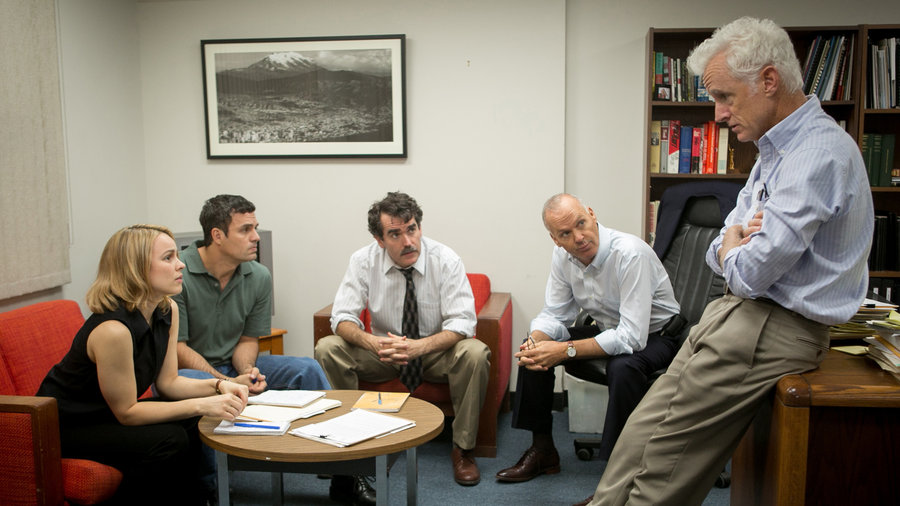
The Spotlight team consists of lead editor Walter Robinson (Michael Keaton) and reporters Matt Carol (Brian d’Arcy James), Sacha Pfeiffer (Rachel McAdams), and Michael Rezendes (Mark Ruffalo). The team is specifically reserved for investigative reporting, previously breaking stories on transit mismanagement and political corruption in Massachusetts. At the time when they were given this assignment, it was not as a follow-up to a news story, but to a column written and published by one of the Globe’s staffers.

At first, no one really thought much of the project. When originally pitched, it had to do with the Catholic church finding out that one priest had sexually assaulted children in six different churches, and did nothing about it. But when the team kept digging, they found out that it was bigger than they anticipated. Much bigger.

While watching Spotlight, I was thrusted upon an early memory of one of my first major news assignments. It was a story called “Seconds Away,” and it was about a university alumna who was just seconds from crossing the finish line before it blew up during the Boston Marathon bombings in 2013. The story wasn’t that she survived. It was that she went back the following year to finish crossing the line that she never did.

While getting ready for our interview, I was excited, nervous, and petrified all at once. This was a woman who had survived a near-death experience. She had faced something few other people have had to face, myself included. I didn’t know how to approach it. Was she comfortable with me talking to her? Would I be insensitive by asking serious questions? Would I be disrespectful by asking what was going through her mind? What would that say of me as a person, by asking her to relive something traumatic that she already went through?

The reporters and editors behind Spotlight face these same questions and concerns of morality every day they step into the office. Yet, they handled this difficult subject in the same way that the movie does: with grace and respect.

The greatest thing that can be said about Spotlight is its transparency: in how its characters charge towards this groundbreaking story and the emotions and conflicts they experience while doing their jobs. Writer-director Tom McCarthy, who was raised Catholic, juggles this behind-the-scenes story with real people’s traumas and emotions in mind. The result is a portrait that is genuine, astounding, mind-blowing, and heartbreaking all at once.

Take the interview scenes as a demonstration of this. During the film’s first scenes, Spotlight reporters sit down with a few sex abuse survivors, their brokenness and vulnerability made evident on the spot. The interesting thing you’ll find in between these intercut scenes is that it’s not Rachel McAdam’s mannerisms we’re noticing. It’s not Mark Ruffalo’s reactions or face of shock we’re noticing. It’s the supporting actors playing these victims, whom I can’t even identify off of the film’s cast list. Every detail of them is absorbing and introspective.

We notice the gay man in a coffee shop as he twiddles his thumbs nervously on his coffee cup. We notice the skinny drug addict sweating, entering the room cautiously, seeing scars up his arms from when he injected himself with heroin. We notice that while their testimonies are overwhelmingly tragic, they talk about it casually and on a whim; like it’s a scar that has already been healed, but will never go away. We listen to their silence as they quietly relive their traumas, the quivering in their voice as they slowly speak, the tears building up in their eyes as they come to once again realize what they are. I find that so compelling, that one of the best things in this film are the actors that I can’t even name.

The rest of the film is like that: finding value in the areas that you can’t exactly point out, but you know they are there. For instance, who’s the main protagonist? You could argue Rezendes, because he has the most visible reaction from working on this story. In reality though, this story is impacting the entire Spotlight team and more. It impacts everyone, in ways that nobody realizes until it walks right up to their doorstep.

This movie takes time and dedication to build up its story and collect the necessary information, just like Spotlight’s reporters do. In doing that, this is undeniably a slow film, but the pace doesn’t matter as much as the payoff. Spotlight deserves to be sought out. It is one of those rare films that not only makes us better viewers, but also better human beings.

Tagged , , , , , , , , , , , , , , , , , , , , , , , , , , , , , , , , , , , , , , ,

“CREED” Review (✫✫✫1/2)


Donnie’s, not Apollo’s, legacy.

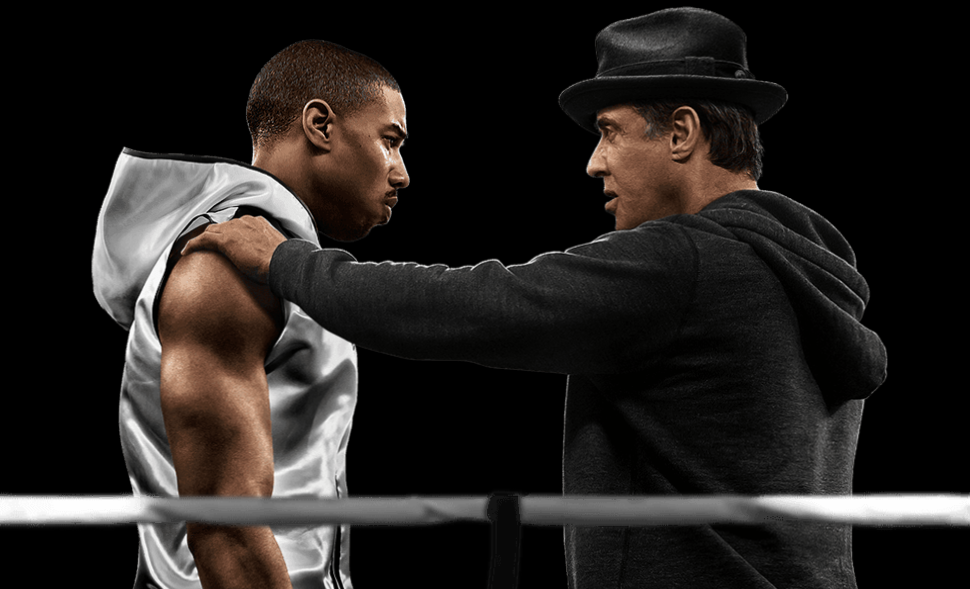
I find it interesting how much Creed lives in the shadows of its predecessors, just like its main subject does. Creed is not trying to be a movie like Rocky, and likewise, Donnie Johnson-Creed (Michael B. Jordan) isn’t trying to be a boxer like Rocky. Creed really isn’t even a movie about Rocky’s rival, Apollo Creed, and it’s just as well because Donnie doesn’t want to be remembered as Apollo Creed’s son. Both the movie and the character are aspiring to leave their own marks on a world where pretty big marks have already been left by key figures from their past. The fact that the movie is trying to do this with Sylvester Stallone reprising the role of Rocky Balboa makes its challenge all the more difficult, but Creed pulls it off with plenty of emotion and style to spare.

You know exactly how Creed is going to play out. Or do you? When the movie begins, you think this is going to be another rags-to-riches story similar to Rocky or The Fighter, and indeed, the opening scenes makes it look like it’s going to play out that way. But Donnie starts his story with the riches, then backtracks to the rags in order to train and become a pro boxer. Why would he sacrifice all of his money and his high-class lifestyle in order to become a fighter? His motivation is not explained until much later, but when it is, it’s nonetheless heartbreaking.

He moves to Philadelphia and seeks out Rocky for training, who as you remember from his last film quit boxing and now owns an Italian restaurant. He insists to Donnie that he doesn’t do that anymore, and he doesn’t even want to be involved with fighting from the ringside. Yet, he eventually suspends his discontent and commits to training this new kid for the ring. Why? He never says why in the movie, although I suspect it’s for the same reasons that Micky decided to train an Italian nobody in the original Rocky.

Creed is a hot-blooded sports drama, ripe with all of the adrenaline, action, and emotion that you’d come to expect in boxing movies. Like its main character, it works independently from its inspirations, despite having very deep ties with the rest of the Rocky franchise. When I first heard that this movie was coming out, the one thing I did not want it to be was another Rocky picture. Of course, it’s going to sell itself as a spinoff, but as a film, I did not want it to focus on Rocky, nor did I want it to try and mimic the franchise formula. It’s called Creed. I wanted its emphasis on that character’s story specifically.

Luckily, so did writer-director Ryan Coogler, who approached in telling this story not as a sequel to a popular franchise, but rather as an intimate, personal story about one fighter’s deep aspirations. Does the movie fall for some of the genre conventions? Of course it does, but the conventions don’t matter as much as the intentions behind them. When Donnie steps into the ring, you don’t want him to win the fight because he’s the main character, but because of all of the hurt and pain he’s gone through up until this point. When he and Rocky talk, you don’t want the conversations to be meaningful because he’s talking to the Italian Stallion, but because the words they’re exchanging are genuine, honest, and real to each other. Coogler succeeds in not only making a powerful fighting drama, but a powerful drama period. He throws quite a few emotional punches in there that I wasn’t expecting.

Of course, for this dynamic to work, Jordan and Stallone need to have the chemistry to make these characters feel real. They have it in spades, and I would even challenge this dynamic to be as likeable as the one between Rocky and Mick in the original. Jordan is electric as Creed, a young rebellious sort who is full of energy, vigor, and passion, not letting any punk young or old telling him what he can or can’t do as a fighter. Do we need to go into Stallone? He’s done the character for years now, and he’s just as great now as he was nearly 40 years ago. Again, he throws a few emotional jabs I wasn’t expecting, but I’ll stop there so that you can experience it for yourself in the theater.

This is simply one of the most motivating films of the year, let alone one of the best Rocky films, if you can call it that. It takes its characters and their emotions seriously. The actors service their roles well and make them believable and real. My only complaint is that this movie has to suffer for being called a “franchise film”, but what do you expect? Let’s face it: the title wouldn’t have been as interesting if it was called Johnson.

Tagged , , , , , , , , , , , , , , , , , , ,

“BLACK MASS” Review (✫✫✫)

Fear him. Fear Whitey Bulger.

I would not recommend to any of my friends that they watch Black Mass. It’s not for everyone. In fact, I would argue that it’s not for most. It’s violent, twisted, bleak, convoluted, and has little sense of purpose other than to show us the dark depths of human depravity. In that regard, it is not a worthwhile moviegoing experience. But man, is Johnny Depp’s performance mesmerizing.

In Black Mass, Johnny Depp portrays Jimmy “Whitey” Bulger, a notorious gangster who ruled the south streets of Boston for nearly 30 years. When he was finally captured by the FBI in 2011, he faced a 33-count indictment, including multiple counts of extortion, money laundering, selling drugs, corrupting law enforcement, and committing 19 murders. That number surprises me. After watching the movie, it almost seems low.

How was Bulger able to get away with all of this for almost three decades? Simple. He had help. When his childhood friend John Connolly (Joel Edgerton) was hired by the FBI, Connolly believed he and Bulger could help each other out. As an employed FBI informant, Bulger could provide information to Connolly on rival gangs so the FBI could clean house for Bulger. Meanwhile, Connolly could provide protection for Bulger’s operations as a result of him being an informant. They both end up agreeing to each others terms and Bulger officially enlists himself as an FBI informant.

While watching this movie, I was wondering where I had heard this story before about an FBI informant using the bureau to protect himself from his own criminal operations. Then I remembered Martin Scorsese’s 2006 crime film The Departed, which involved Jack Nicholson’s character also using the FBI to his own purposes. I came to find out that his character was actually largely based around Whitey Bulger’s circumstances. The only difference is that The Departed is somewhat watered down compared to the actual accounts.

Yes, I just wrote that. The Departed is watered down compared to Black Mass. What is the world coming to when Martin Scorsese looks tame?

Black Mass is a sickening, deplorable film, one that outlines one man’s lifetime of crime in disturbing detail. Yet, the film is reasonably sickening because it isn’t actively advocating for Bulger. Indeed, in most of the film, he seems more like the movie’s villain rather than its hero.

So who is the main protagonist then? The movie doesn’t have one. It’s unusual, but it works for this sort of film. This isn’t a story we’re watching, but a report: an account on real-life events that is driven to inform on every detail as accurately as possible. The writers of the original novel, Boston Globe reporters Dick Lehr and Gerard O’Neill, served as consultants on the film, working specifically with director Scott Cooper on what did or didn’t happen based on their experiences.

It is reasonable to say they’re credible sources. Lehr and O’Neill have written numerous books on Boston crime, and Bulger was a key figure in all of their research. Their reporting was thorough and in-depth. They’ve met John Connolly on numerous occasions. Next to the gangsters that have lived alongside Bulger, these two would be the next best accountants on him and his life.

Bringing them on as consultants was wise of Cooper, and his attention to their details brings authenticity to the picture. In one of the most disturbing scenes of the film, Bulger is choking a hooker to death inside of a house. Cooper paused filming this scene because Lehr and O’Neill said one of the gangster that was present in the original events was not present on the set. The fact that Cooper paused filming for such a small detail impresses me. The fact that Bulger wipes his feet, shrugs, and says he’s taking a nap so non-chalantly after killing her disturbs me on how true this is.

Depp is another story altogether. He is completely and utterly eerie as Bulger, perfect in capturing the character’s details and relentless in portraying his acts of violence and cruelty. It’s not just that Depp gives a convincing performance: I literally can’t see any indication that Depp is even in the movie. His being is erased into Bulger’s existence, in his cold, steady stare and his fixed, stoic posture. He’s disturbing in the slurred, snaky voice he speaks in, and how he so casually inflicts pain and death as if he were the Grim Reaper himself. Depp is the highlight of the film, with his portrayal of Bulger evoking memory of Hannibal Lecter from Silence of the Lambs or Jack Torrence from The Shining. His performance isn’t just the best of the year: it’s a challenger for the best of the decade. It’s that momentous and memorable.

If I were reviewing Depp’s performance alone, he would be given four stars, because the truth is his performance is perfect. However, I am not reviewing one actor’s performance. I’m reviewing the movie, and the truth is the movie is sloppy. The camerawork by Masanobu Takayangi is smooth and steady, but everything else in the film is lopsided and rocky. The editing by David Rosenbloom is scattered and choppy. The chronology of events is non-linear and hard to follow. And the screenwriters of the film Jez Butterworth and Mark Mallouk skip an important part of Bulger’s story, which is his upbringing. It doesn’t have to be a flashback either; just simply explaining where the character came from and why he acts the way he does would have sufficed. We’re given clues throughout the movie, but no answers. We are asked to fill in the holes as the movie skips over important questions and just goes to Bulger’s tirades of violence.

Why is the movie called Black Mass? In the 19th Century, a Black Mass was secretly held by a Roman Catholic Church for Satan worship and in mockery of the Christian faith. A Black Mass is a crooked sermon concealing evil intentions. I believe a black mass was made when the FBI enlisted one of history’s most notorious gangsters as an informant. A black mass is also made when we enter the movie theater. The devil’s name is the same in both cases: Whitey Bulger.

Tagged , , , , , , , , , , , , , , , , , , ,

“SPECTRE” Review (✫✫✫)

Back to Bond, baby.

The opening tracking shot in Spectre is masterfully filmed and beautifully consistent, following our subjects smoothly through the chaos of a celebratory crowd like an artist’s hand running down his sculpture. What follows after that is a film less consistent, less smooth, and less artistic, but to hell with being artistic. This is a fun movie.

Following up a few months after Skyfall, Spectre places our hero, James Bond, a.k.a. 007 (Once again portrayed by Daniel Craig) in the middle of a hidden conspiracy of overthrowing the world government and taking over the planet. We can’t go a few decades without Bond dealing with one of those every once in a while, now can’t we?

This time, Bond is after the villainous organization called S.P.E.C.T.R.E., which we’re never told what it stands for in the film (Although in Dr. No, it stood for Special Executive for Counter-intelligence, Terrorism, Revenge and Extortion). At first, Bond doesn’t know exactly what he’s looking for, only having a clue by the deceased M (Judi Dench) to go by. But as he continues to investigate the organization further and further, he finds deeper connections to S.P.E.C.T.R.E. in his enemies from the past, until finally, he finds the deepest connection to S.P.E.C.T.R.E. of all: himself.

What do you think of when you think of James Bond? When I think of Bond, I think of a movie icon who is the penultimate vision of the masculine fantasy. He’s physically astute and sexually appealing. He’s smooth, suave, and has a way with words that is both comforting and edgy. He drinks a lot, but he can hold his liquor. He can fire a gun better than any marksman, throw a punch better than most fighters. He dresses up in nice suits and bow ties, although he does a great job at mucking them up on missions. When I think of Bond, I think of a character that women secretly desire and men not-so-secretly idolize. If he were any more larger than life, he would be a superhero.

Spectre continues the trend of Bond being a stylish action hero, and it continues the trend well. I mentioned in my lead that the film isn’t very artistic. That’s because it doesn’t need to be. After the impressive tracking shot at the beginning, Bond gets into a firefight, dodges a falling building, chases a suspect through the streets, gets into a fist fight, then highjacks a helicopter after it flips over on its axis in the air. And it’s not even the first 15 minutes.

This is something I’m impressed by in a lot of Bond movies, which is the action sequences. Minus the mediocrity of Quantum of Solace, the most recent Bond films have always found new ways to make old conventions interesting. For instance, how many times have you seen Bond take a sip of a martini? How many times have we seen him charm a young woman into the bedroom? How many times have we seen him get into chase, fighting, and action sequences involving all sorts of weaponry and vehicular manslaughter? You think we’d get sick of it by now, and yet, the series has lasted past 24 films. The series is doing something right.

I think part of it is because of how well Craig inherits the role of of James Bond. Sean Connery is always going to be regarded as the most significant Bond actor, because he was the first to take on the role and the one to exemplify most of Bond’s characteristics. Yet, Craig is nearly equal in iconic status because he too portrays Bond with multiple layers, and he does all of those layers well. He’s charming and sincere when he needs to be, manipulative and deceptive when otherwise.

Most impressive to me is that, even in the action sequences, the biggest thing I notice is Craig’s mannerisms. Not the explosions. Not the gunfire. Not the people he’s punching in the face. I’m noticing Craig. Why? Because I’m buying him as a character, not as an actor. I see the anger in his face when someone hits him and he’s getting ready to hit back. I see the cold calculation in his eyes as he’s deciding which targets to shoot first. I’m noticing the surprise on his face as his eyes widen, the panic that sets in when he’s discovered, and the fear piercing through his body when someone he loves is in danger. It’s hard to notice someone’s performance in the middle of an action sequence. Craig makes it seem like a cakewalk.

Of course, director Sam Mendes is also credited for the style of the film as well, with the action and the incredible set pieces making up for most of the excitement of the film. Yet, I’m a little disappointed that, after making one of the most definitive Bond films ever in Skyfall, Mendes reverted to a few conventions of the franchise that worked against it.

Take the characters as a primary example. Who do we have here? A secretive baddie hiding in the shadows, a big, burly baddie that walks and fights like a tank, a figure from Bond’s past that ushers him a profound warning, and the Bond girl, who is as beautiful and striking as ever. Their actors deliver just what is expected of them and what has been delivered before. The secretive baddie hides in the shadows, the big, burly baddie beats up Bond before he is killed, the figure from his past dies, and the girl hooks up with Bond. Not very original, now is it?

And this isn’t a criticism so much as it is a notice. Casino Royale and Skyfall were significant entries to the series because they saw Bond not as an action hero, but as a human being, dealing with his own hurts and pains by taking it out on the mission and his enemies. Here, Bond goes back to hero mode while we just tag along for the ride. That’s not necessarily a bad thing, but when you’re used to seeing one thing, it’s a little bit of a let down to see the franchise take a step back on itself.

In the end, Spectre is like Bond’s rebuilt Ashton Martin after it blew up in Skyfall: It may have the same frame, but it doesn’t have the same ride.

Tagged , , , , , , , , , , , , , , , , , , , , , , , , , , , , ,

“STEVE JOBS” Review (✫✫✫)

Creator. Entrepreneur. Father.

Steve Jobs is defined by three years of his life: 1984, 1988 and 1998.

The movie, Steve Jobs, covers these years of his life. So will this review.

1984

Steve Jobs (Michael Fassbender) is on edge. The Macintosh is malfunctioning. He is told by his technicians that the computer won’t say “Hello” to him. It’s 40 minutes before the product launches. His ex-girlfriend is waiting in the other room with her daughter, who Jobs insists isn’t his, wondering why they are both living on welfare while he is making millions. He paces back and forth in between his professional and personal problems. He tells his technician to fix it and walks off stage.

Fassbender is mesmerizing as Jobs. He’s ecstatic, energetic, passionate. He’s tense, egotistical, confrontational. He’s at peace when thinking about how many people’s lives this new computer will impact. He’s angry at people who come up to him, trying to stop him from completing his mission. His expression shows that they’ll fail. He’s too determined to let his ambitions die.

The filming in this sequence is enclosed, personal. It uses tracking shots to follow Jobs as he paces back and forth, looking at TIME Magazines, drinking his sparkling water, his mind racing with everything that needs to get done. The reel itself has a texture to it that I couldn’t quite point out until it hit me: this sequence is shot on celluloid film, reminiscent of the decade that it’s reflecting. A great choice of stylistic direction from Danny Boyle (Slumdog Millionaire, 127 Hours), but just like the time period we’re in, we know that it won’t last long.

Jobs handles his personal issues. The technical issues are resolved. He steps out onto the stage and introduces the Apple Macintosh.

1988

The Macintosh underperformed in sales. Jobs is let go by Apple, the company that he helped start. He feels betrayed by his closest friends, alone in his struggle for significance.

He meets a few of his former colleagues who want to wish him well. Steve Wozniak (Seth Rogen) starts acting friendly to him, but then confronts him on not giving him enough credit on the launch of the Macintosh. He asks him what he does.

“I play the orchestra, and you’re a good musician,” Jobs says. “You sit right there and you’re the best in your row.”

The scene switches to another where Jobs is confronting a former confidant. The editing is off, choppy. It’s cross-cutting between this scene and a flashback so rapidly it’s hard to keep track of the two conversations. I don’t know what Boyle was trying to do here. Maybe he thought he was adding tension to the scene. I thought he was adding confusion.

Jobs visits his daughter in the next room, who is skipping class to come and see him. She’s in middle school. He tells her she needs to go to school before she rushes up to him and hugs his legs.

“I want to live with you, daddy,” she whispers to him.

She and her mother leave. Jobs is shaken. He steps out onto the stage.

1998

This is it: the launch that has come to define both Apple and Jobs for years to come. This is the most important act of the film, and the one I will talk less about for the sake of spoilers.

Jobs looks different. He looks older. His hair is whiter. He’s sporting the iconic glasses and turtleneck that most people recognize Jobs in. Fassbender is no longer just acting like Steve Jobs. He has become Steve Jobs.

The framing of shots is similar to the beginning. It tracks Jobs while he walks from one place to another. He’s more sure of himself in relationship to Apple, less sure of himself in relationship to his daughter. Boyle captures the panic on his face, the fear recognizing his failings as a person and as a father.

It’s nearing the end of the film, and I realize the thing that I love most about the movie is its screenplay. Screenwriter Aaron Sorkin captures both the genius and fragility of Jobs, the sharpness in his words and the intimacy of his emotions. This is a good change of pace for Sorkin. From a filmography of lightning-quick, witty characters and dialogue from A Few Good Men to The Social Network, this is his most emotive work yet. It makes you feel more than it makes you think.

I exit the theater. I call my dad on my iPhone and tell him I love him. Steve Jobs too realizes that the greatest thing he ever made wasn’t an Apple product. It was his daughter.

Tagged , , , , , , , , , , , , , , , , , , , , , , , , , ,

“SICARIO” Review (✫✫✫✫)

Your time has come, hombre.

A bleak, haunting scent looms over the frames of Sicario: like decaying bodies that have laid in a drug dealer’s basement for a few days. It’s permanent and disturbing, and remains with you long after you’ve left the theater. In the opening slide, it is explained to us that Sicario is Spanish for hitman. I don’t know what disturbs me more in the movie: who the Sicario is, or who are the people that he’s hunting.

As the movie begins, we watch as a SWAT team is gearing up to raid a house in Chandler, Arizona. The neighborhood is relatively quiet. It’s serene. Calm. Normal. You would never have expected that the cartel was living in the midst of this slight, unsuspecting town.

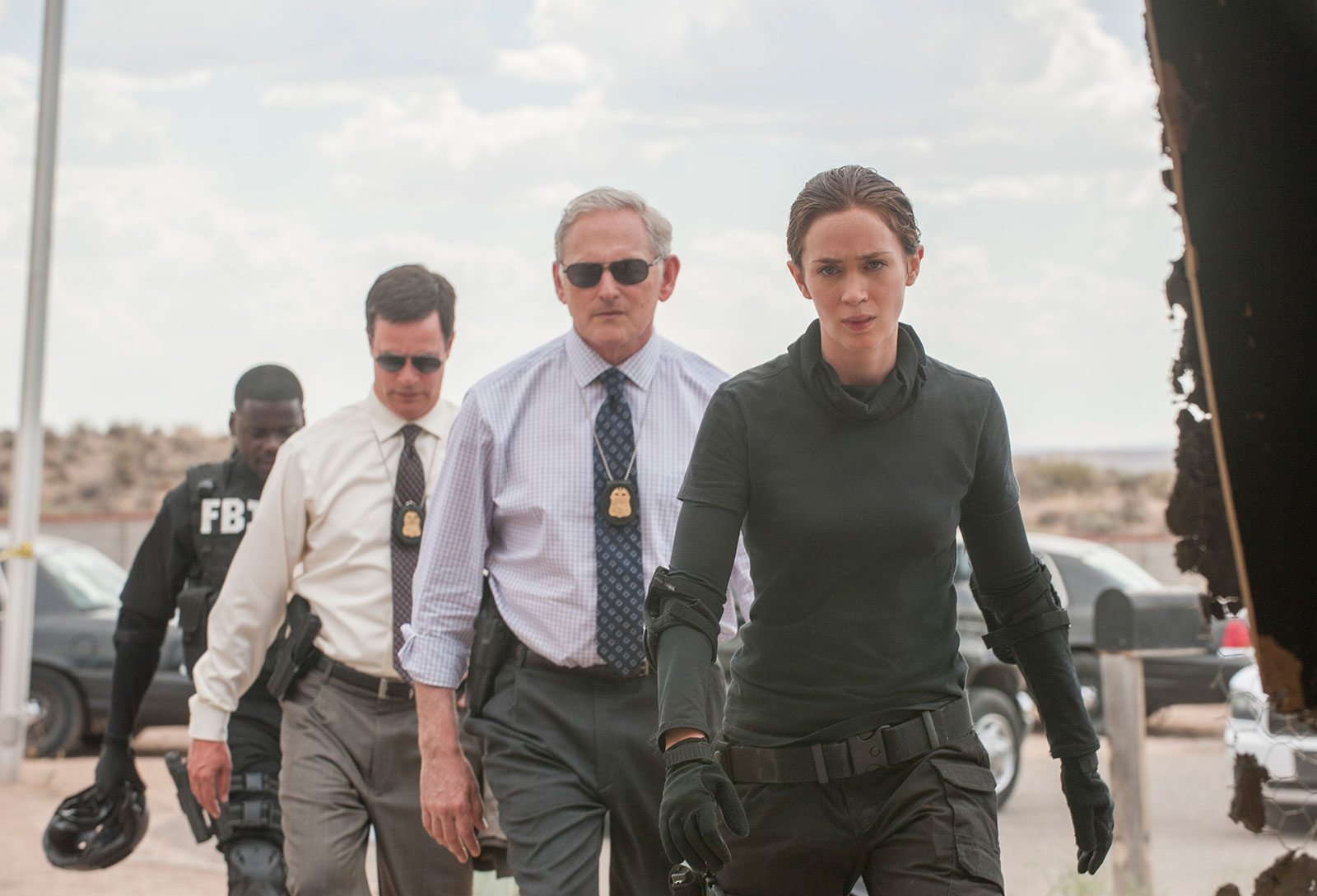
FBI agent Kate Mercer (Emily Blunt) is one of the members on this team. After breaking into the house and engaging in a brief firefight, Mercer discovers the horrible fate of what the tenants did to a group of people they were holding hostage. As the team investigates the property, they go into the backyard and are killed after a bomb blows up from inside the shed. We don’t know how experienced an officer Mercer is, but after the raid, she’s obviously shaken and disturbed by what she saw. This mission has served as sort of a wake up call for her.

Despite her emotions, her superiors were so impressed by her performance that they recommend her for a special op with Matt Graver (Josh Brolin), a CIA officer tasked with finding Manuel Diaz (Bernardo P. Saracino), the cartel boss responsible for the drug plant in Arizona. Matt is offering Kate a chance to get back at the man who killed many of her men. Eager for a chance at payback, she accepts the offer.

When the film begins, I thought the movie was aiming to be a pro-imigration film, pausing and drawing out focus on the many darker sides of illegal immigration near the beginning of the film. This was interesting, I thought, because its rare for liberal Hollywood to go against the grain. As the film went on, however, I realized that the movie doesn’t have a stance on illegal immigration. It shows both sides of the issue, and how each side of the system is manipulating the other in this never-ending cycle of deceit and violence.

Meanwhile, innocents are getting dragged into this never-ending conflict like ants to an extermination. In one of the most pivotal scenes of the film, a kid is playing football in Mexico until he, along with his classmates and their parents, hear screams and gunshots a few blocks away from them. It’s something most of us can’t even imagine in rural America. It’s something children face every day in modern Mexico.

This is the greatest strength of the film, in that it functions in realism, not politics. It’s not interested in taking sides on the issue, because how would that lend to the story? What we have here is a morally-charged drama about characters trying to do the right thing in a world where “the right thing” doesn’t exist. Kate believes a line exists to maintain integrity and order. Matt believes a line exists for integrity and order, and can be manipulated to maintain that idea as such.

There’s one character I haven’t mentioned yet, and his name is Alejandro (Benicio Del Toro). He doesn’t believe a line even exists. Whatever ideas of order and chaos other people have doesn’t matter to him. In his eyes, they’re all one and the same.

Del Toro’s character fascinates me. In many ways, he is the heart of the film. He’s elusive. Mysterious. Unforgiving. Empathetic. Dangerous. He’s helping Matt and Kate, but we sense he’s not here for their end purposes as much as he is for his own. He’s manipulative, yet sympathetic, extending kindness to Kate as if she’s just a little kid suddenly thrown into a grown-up’s world. The third act of the film focuses more on him than it does Kate, and it should. What we’re seeing here is not a progression of character, but a progression of events. The climax itself provides one of the most exciting and unnerving thrills I’ve seen this year: yes, even more so than The Martian and Mad Max. That’s because the stakes are set up masterfully well, and by the end of the film, we understand the characters and the quiet motives that compel them.

This is a nearly perfect film in which all of the elements form together into an excellent scope of filmmaking. The actors are brilliant and could catch your attention just by reading their lines. Director Dennis Villeneuve evokes a sense of hopelessness and desperation from its setting. The cinematography by Roger Deakins captures this aesthetic perfectly and with great focus to detail, while the editor Joe Walker knows how to cut in between angles and shots to help construct coherent ideas in the viewer’s minds. In short, my only complaint is that the film is violent and disturbing. But then again, it’s supposed to be violent and disturbing. What service would that do the viewer if you hid from them the truth?

In one of my favorite scenes from the film, Alejandro tells Kate that there is no book for her to go by anymore. That it’s only a world full of wolves now. I believe him when he says that, and I think Kate ends up believing him as well. The question, then, is this: who are the sheep, and who are the wolves?

Tagged , , , , , , , , , , , , , , , , , , ,

“THE MARTIAN” Review (✫✫✫)

Again with this, Matt?

Hollywood has spent too much money trying to bring Matt Damon home. I’m sorry, but someone had to say it. Our first venture to bring him home was in Steven Spielberg’s Saving Private Ryan. Then, we brought him home from Syriana. His most recent attempt was in last year’s Christopher Nolan epic Interstellar. And now we have The Martian.

Don’t worry, it’s a good movie. The story is thorough, the visual effects are convincing, and Damon does a great job evoking tension and sympathy from his viewers. I swear to God though, if he gets himself trapped on another distant planet or war zone anytime soon, I’m leaving his ass behind and joining a traveling circus with Jimmy Kimmel.

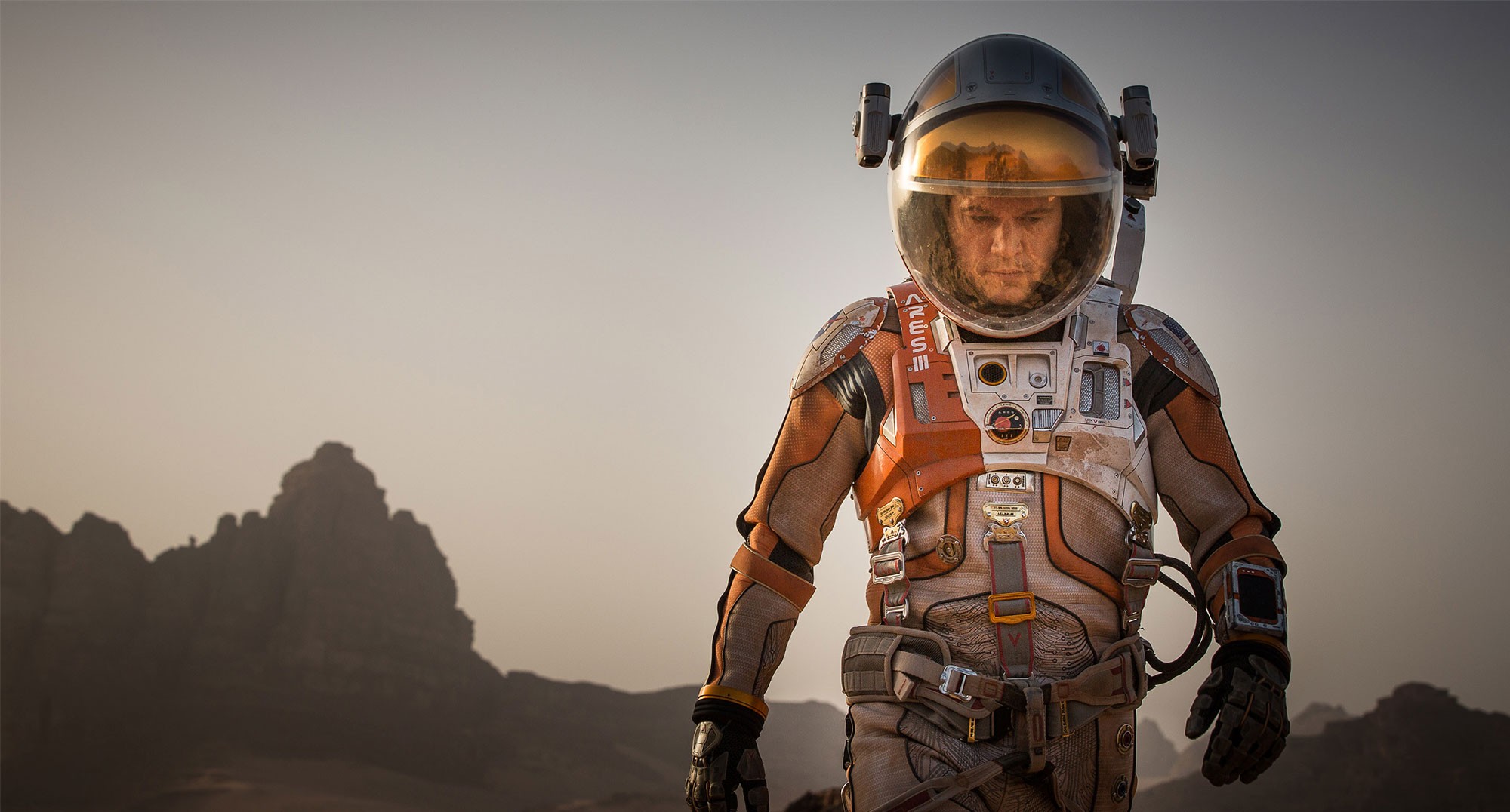
Based on the novel of the same name, The Martian tells the story of the Ares III crew, an astronaut team sent to scout and research the planet Mars. While there, the team gets hit by an intense sand storm and is forced to initiate an emergency evacuation from the planet. While making their escape, however, one of their teammates, Mark Watney (Matt Damon), is struck by debris and separated from his team. Believing he was killed, his teammates board the ship and launch away from the planet.

The Ares III team forgot to account for one thing, however. Mark Watney is played by Matt Damon, so of course he’s going to survive. He didn’t last through war zones, conspiracy theories, and elaborate heists just to let one planet do him in.

Now alone on a planet that is incapable of sustaining life, Mark Watney needs to figure out how to survive and eventually escape from the planet Mars.

This film is directed by Ridley Scott. You can see that as either a good or bad thing depending on what part of his filmography you’re looking at. It’s true, he’s known for science-fiction classics including Alien and Blade Runner, as well as the Academy Award-winning Gladiator. But in recent years, he’s also been responsible for a number of duds. For example, has anyone seen, and liked, Robin Hood, The Counselor, and Exodus: Gods and Kings?

Well, don’t worry dear reader: Scott is back in his prime, and he orchestrates his environments beautifully here. However, I don’t think it’s necessarily just because of him. This world was crafted from the mind of author Andy Weir, who before writing The Martian was a software engineer for Sandia National Laboratories, AOL Inc. and Blizzard Entertainment. When he originally published The Martian on his website, he conducted extensive research on Mars’ geography, astrodynamics, and botany to make the book as scientifically accurate as possible.

By the time Ridley Scott and writer Drew Godard read the book, they didn’t have to adapt it so much as reproduce it.

The thing I love most about The Martian is the research that went into it. When it starts, you think this is going to be another survival story in space, not too dissimilar to Gravity or Apollo 13. The surprising thing, though, is that The Martian isn’t so much thrilling as it is fascinating.

Picture being stuck on a planet with no water, no oxygen, and no food. Seems hopeless, right? And indeed it is, but Watney was trained for environments like this. He adapts. He learns to deal with what he is given. So how does he react to having no water, oxygen, or food? He creates his own water by super-heating Mars’ humidity, he tears apart NASA machinery to stockpile on oxygen resources, and he learns to artificially grow his own potato garden by planting them in (don’t vomit) his own feces.

These are just a few of the problems Watney faces in the film. How does he create transportation? How is he going to communicate with NASA? What does he do if a sandstorm blows open a hole in his space station? What if his crops suddenly die out? What if he runs out of oxygen? What then?

This is how the film builds tension: by throwing impossible survival situations at our poor hero and watching as he dissects for a solution. Does his methods get outlandish? Of course they do, but they are reasonably outlandish, and that’s because of the reality Weir grounded Watney in while writing his novel.

Scott’s visual prowess lends well to the film’s scientific applications. In terms of scale, this film operates on a smaller budget than his other recent films (Robin Hood and Exodus: Gods and Kings’ budgets were $200 million and $145 million, respectively. The Martian’s was $108 million). Yet, in comparison, I’m inclined to say this is his most visually authentic film yet. The reason is because of Scott’s use of practical effects. For science-fiction films, it’s so easy to place your character in front of a blue screen and plaster generic Mars footage in the background. That wasn’t good enough for Scott. For the background alone, he went and filmed the production in the Wadi Rum Valley in Jordan, which has the appropriate sandy landscapes and shade of red that is accurate to the geography of Mars. He constructed 20 sets for the many areas Watney traverses. His production crew grew legitimate potato crops so they could capture the process of photosynthesis on film. For any other director, they would have settled for the easy way out, plastering CGI around your actor and having them react to what isn’t there. That wouldn’t do The Martian justice. Scott knew that and created the best visuals possible for a movie that deserved it.

I have one gripe with the film, and that is its climax, which ironically is supposed to be the high point of the film. I can’t say exactly what happens with the end, but I will say it went on for too long. By the time we arrive at the climax, we know what’s going to happen to Watney. What kind of a movie would this be if it ended any other way than what we were expecting? The thing is that Scott treats us as if we’re too oblivious to it, and he draws it out to a ridiculous length in an attempt to further thrill his audience. It doesn’t work. By the time the ending rolled around, I was looking at my watch, wondering how much longer this scene was going to drag out. Climaxes aren’t supposed to do that. They’re supposed to keep you further engaged with the film: not waiting, impatiently wondering when its going to end.

So does Mark Watney survive? You tell me. He is played by Matt Damon.

Tagged , , , , , , , , , , , , , , , , , , , , , , , , , , , , , , ,