Category Archives: Reviews

“DEADPOOL & WOLVERINE” Review (✫✫✫1/2)

Maximum effort, times two.

Note: Since 2016, I’ve had the displeasure of co-writing every Deadpool review with the Merc With A Mouth himself, Wade Wilson. Neither one of us saw a reason to discontinue that tradition now, so without further adieu, here’s… Deadpool.

You did it. You crazy son of a *****, you did it. 

You are NOT Jeff Goldblum, so stop quoting Jurassic Park

I’m sorry, I just… I never thought this day would come. I was beginning to think I’d never get a three-and-a-half-star movie

Neither did I, but you managed to bring Hugh Jackman back from the dead, so I figured that’s worth something. 

Hehehe, Disney was never gonna let him hang up the claws and you know it. 

Oh yeah, they’re gonna milk everything out of him like the Star Wars franchise. 

Yeah, but let’s be honest — our cameo game is WAY better. 

Oh it definitely is Wade. You and Hugh Jackman both prove that to be true with Deadpool & Wolverine, Marvel’s most bloody, brutal, and bizarre film yet, but it’s also filled with a lot of heart. 

Don’t I know it! See, it’s beating right now! 

Oh God, Wade, it’s outside of you. Please, put it back in. 

Lol, that’s what she said. 

Stop. You JUST got added to Disney Plus. 

Okay, fine. God knows I don’t wanna end up on Tubi. So, what did you like about my third movie, Double D? 

Well I was particularly impressed with how much freedom you had in this movie. Marvel and Fox normally like to gatekeep their characters very closely, and understandably so considering how passionate fans feel about these franchises. That’s why I was so surprised to find just how big of a sandbox you got to play in for Deadpool & Wolverine. You happily hurled jokes and insults not just at the Marvel movies, but also at the Fox movies and even a few DC movies. Did your lawyers clear everything you said in the script? 

Did my who do my what now? 

… okay, Blind Al might wanna call Matt Murdock before this review is over. Bottom line, you made me laugh. A lot. 

Hehe, I always do. And what about ol’ Wolvie? You HAD to be excited about him coming back! 

Well to be honest, I was a bit worried he was coming back at first. Not just because Hugh Jackman is in his mid-50s, but also because Logan was such a perfect sendoff for the character. 

And you had to LOVE how I dug him back up just for this movie, didn’t you??? 

It was… certainly a choice. 

Yeah it was — a GOOD one! 

I’ll… reluctantly agree with you on that one. While I have mixed feelings on how exactly you brought him back, I can’t deny that Hugh Jackman is exceptional in this role, and your chemistry together is unmatched. His stoic, stiff, rough-around-the-edges demeanor perfectly contrasts with your off-the-cuff, smartmouth personality,  and you make a beautifully dysfunctional pair together. 

Hehe, yeah… just like Elon Musk and his dwindling X users. So why dock half a star then? 

The movie in general is actually a lot like you Wade — funny, charismatic, violent, and wildly unhinged, but also very erratic, impulsive, and nonsensical. Structurally speaking, this is your messiest movie to date, with the plot relying more on Easter Eggs and nostalgia more than characters and their motivations. I genuinely wonder if this film works better as a standalone movie or as straight-up cameo porn. 

I’m grabbing the bottle of lotion now. My question is why can’t it be both?

First, put that bottle away Wade, my mom reads my reviews. Second, that’s actually the case you make here with Deadpool & Wolverine, and honestly, I’m not mad at it. As messy and convoluted as your film is, it’s also wildly funny, amusing, and entertaining. I was grinning from ear to ear throughout the whole picture, and honestly, I can’t remember the last time that’s happened to me in a movie theater. 

Definitely not the movie where Dakota Johnson’s mom was in the amazon researching spiders right before she died

Definitely not. 

Well, I think we’ve both earned a victory lap after all of this. Are you excited to see us return in Avengers: Secret Wars

Not particularly given who the villain is going to be. 

Who’s the villain? 

Kevin Feige. 

Ahhh, understandable. Well, look on the bright side.

What’s the bright side?

At least it isn’t David Zaslav.

Tagged , , , , , ,

“DUNE: PART TWO” Review (✫✫✫✫)

SOURCE: Warner Bros.

The dangerous power of belief. 

The greatest drug on Arrakis is not spice, but power. It’s the drug that corrupts the mind and the soul — the drug that turns women into witches and men into monsters. The last line spoken in the first Dune was “This is only the beginning.” When Dune: Part Two lingered on its last haunting shot, all I could think to myself was “This is the end.”

Picking up immediately where Part One left off, Dune: Part Two shows Paul Atreides (Timothee Chalamet) learning the ways of the Fremen, the sand people of Arrakis. He falls in love with a young woman named Chani (Zendaya), and his mother Jessica (Rebecca Ferguson) is now a trusted Reverend Mother to the Fremen. Paul and Jessica have adjusted quickly to their new lives, but Paul still has thoughts of vengeance in the back of his mind for the deaths of his father and House Atreides. 

Meanwhile on Geidi Prime, House Harkonnen is building up its forces to take back spice production on Arrakis. After failing to kill Paul and Lady Jessica, the Baron (Stellan Skarsgard) replaces his nephew Rabban (Dave Bautista) with Feyd-Rautha (Austin Butler), a violent and bloodthirsty psychopath and heir to the Baron’s throne. As both of these factions come head to head, Paul must decide what kind of man he wants to become and the lengths he will go to exact vengeance on the ones who betrayed his family. 

I was very nervous going in to watch Dune: Part Two. Not because I wasn’t confident in writer-director Denis Villeneuve, who has proven himself over and over again with the likes of Prisoners, Sicario, Arrival, Blade Runner 2049, and of course, the first Dune. I was nervous because I understood the huge expectations that weighed down on this film like a sandworm. Not only was Denis Villeneuve expected to make a film just as great as its predecessor, but somehow, he had to build upon the already big ideas he was exploring and make a film that was satisfying for fans new and old alike. Much bigger franchises than Dune have crumbled under the weight of their own expectations, whether you’re talking about Star Wars, Harry Potter, Lord Of The Rings, or the Marvel Cinematic Universe. I was worried Dune was going to fall into the small trap as many others had before it. 

I’m so grateful to tell you that Dune: Part Two is not as great as its predecessor — it’s even better. Like The Dark Knight, Return Of The King, or Empire Strikes Back, Dune: Part Two expands on its universe and builds upon the lore in new and exciting ways that takes it in surprising and unexpected directions. It’s one thing to make an epic sci-fi blockbuster smash hit for moviegoing audiences. It’s another thing entirely to pose it as a moral and philosophical question to the same audience and have it hit just as deeply.

The very first thing that hits you with this movie is its visual prowess. The opening shot is a deeply disturbing image of a pile of corpses set ablaze — the last remains of the fallen House Atreides. At the end of the film, we circle back to that motif with a similar shot, only this time with a different pile of bodies and an even more horrifying context. That’s the skill cinematographer Greg Frasier fully displays here. He isn’t just capturing stunning, spectacular, striking images — he fills them with context that brings weight and meaning to every image. 

There are some scenes that are filled with all of the extravagant imagery you’ve witnessed from the first movie — sand worms traversing through the desert, Sardaukar hovering in the air, Fremen and Harkonnen warring in the sands. And then there are other scenes that are so quiet, somber, and contemplative, yet say eons more than any of the action scenes do. My favorite shot in the whole movie isn’t even a particularly exciting one — it’s the final shot of the film, where we linger on the pained, hurt, and grieved face of an innocent who’s left lost and alone at the end of it all. It’s technically the most normal shot in the movie, yet it says the most because you understand what this character went through and what brought them to this very moment. 

But capturing the setting is one thing — it’s the characters whose actions and words bring life to this story, and the performances in Dune: Part Two are even more outstanding than the first movie, if you can believe it. In her first appearance as Lady Jessica, Rebecca Ferguson was very good as a grieving mother caught up in a conflict she never wanted herself or her family to get involved in. Here, she demonstrates that she will go to any length to protect her son and unborn child — no matter who she has to hurt in the process. While Zendaya had a smaller role in the first movie, here she’s brought front and center as one of the main characters, and she demonstrates the dramatic chops to prove that she can be just as memorable as her leading co-stars despite having less screen time than them. But the most surprising transformation comes from Austin Butler, who is easily the most sinister, the most scathing, and the most monstrous character out of the entire movie. He was nominated for an Oscar just last year for playing Elvis Presley, but I genuinely believe this is the role he should be most known for going forward. He commits to the insanity of this part with such conviction to the point where you don’t even see him as a heartthrob nor as a movie star — you only see him for his evil and bloodlust. 

As phenomenal as this star-studded cast is, none of them compare to the fierceness and ferocity of Timothee Chalamet. At the beginning of the film, Paul is fearful of the Bene Gesserit’s prophecy and resists it like the plague. But by the time we arrive at the third act, Paul has fully embraced his identity as Lisan al Gaib and uses it to strike down his enemies like a crysknife. There is a scene in this movie where he rallies all of Arrakis’ tribes together, and it’s so intense, powerful, and commanding that it made me believe that he just might be the messiah to these people. Whether he actually is remains to be seen, but it almost doesn’t matter whether he is or isn’t. The Fremen believe that he is, and sometimes, belief is all you need to defeat armies, conquer lands, and win wars — or wage them. 

Denis Villeneuve masterfully brings all of these elements together to create a mesmerizing, spellbinding, and horrifying portrait of faith, fascism, and fanaticism that consumes and corrupts everything it touches. I think everybody expected this film to be as explosive, captivating, and visually spectacular as the first film was. What’s more surprising is that Dune: Part Two is deeper, darker, and even more profound and thought-provoking. To me, that’s the bigger accomplishment, because movies only last as long as their runtime — but the conversations they create last far beyond the closing credits. 

When we first meet Paul in Dune: Part One, we see a bright-eyed and curious royal heir who’s eager to learn more about the tribes and cultures beyond his own. But after losing his father, his family, his home, and his life, he turns into something lethal — something more violent than the Harkonnens and more cruel than the Bene Gesserit. But the scariest part isn’t seeing the millions believing in Paul and rallying behind his crusade. The scariest part is that you want to believe him too. 

Tagged , , , , , ,

“THE BOY AND THE HERON” Review (✫✫✫1/2)

Learning how to live.

We open on a dark, harrowing image — a young boy racing to save his mother. That boy is Mahito Maki (Luca Padovan), and as the sirens go off and the sky seems to catch on fire, the only thought he can focus on is that his mom is in danger. As he races through the village toward the hospital where she’s staying at, all of the details surrounding him seem to blur like a watercolor painting. The people he passes by are mere flashes of color and light that distract from the path ahead of him. The embers surrounding him flicker and fade away like the lives they take. He barely even feels the heat that’s consuming the town. But when he stops at the hospital and sees it set ablaze, all he can focus on is the flames reflecting in his own eyes.

And just like that, Mahito was alone.

This opening shot is so imperative to The Boy And The Heron because it informs everything that motivates Mahito throughout the film. As his father Shoichi (Christian Bale) remarries and has another child with his wife’s sister, Natsuko (Gemma Chan), he politely asks Mahito to call Natsuko “mother.” Of course, he refuses, because in his heart, he only has one mom. Or rather, had.

As Mahito adjusts to a new life away from the war, he keeps noticing a grey heron (Robert Pattinson) pestering around his estate. At first, the heron taunts Mahito by repeating his name, almost as if he’s mocking him like a parrot. But as Mahito continues to seek him out, the heron claims that his mother is actually alive and needs Mahito’s help.

But how could this be? Mahito saw his mother die in the hospital. Surely the heron is lying. Or is he? Mahito doesn’t know whether to trust the heron or to be wary of him, but regardless, he clings to the hope that his mother may in fact be alive. Only by going on this journey with the heron will Mahito discover if his hope is in vain or not.

This is the 12th film by Japanese animation legend Hayao Miyazaki, who has produced several magical works over the years including My Neighbor Totoro, Kiki’s Delivery Service, Princess Mononoke, Howl’s Moving Castle, and Spirited Away, which won the Academy Award for Best Animated Feature in 2002. All of his works capture the mystery and magic of the worlds they belong to, whether they involve spirits, witches, mermaids, warriors, or dreamers — sometimes all of the above.

The Boy And The Heron is just as magical as his previous films are, from the stunning and captivating animation to the gorgeous and alluring worlds he paints like an artist and his canvas. When Mahito begins his journey, he’s swept away into a strange world filled with brave explorers, spirits, birds, wizards, pyrokinetics, and even murderous cannibal pelicans. No, I’m not exaggerating when I say that, and it’s every bit as bizarre and funny as it sounds.

But it’s not just wonderful, joyful, imaginative, and spellbinding — it’s also incredibly profound and thought-provoking. One of the very best things about this movie is its emotional complexity. While other movies spell out everything you’re supposed to feel and make it so literal and on-the-nose that you can’t miss it, The Boy And The Heron is much more contemplative and open-ended with its art and its messaging. It is not a fast-moving film by any means. In fact, it’s very gradual and spends a lot of time developing this world and the people who inhabit it. Some viewers might be frustrated by this film’s slower pacing. I myself appreciate that the film took its time to invest in its characters and what they’re experiencing because the truth is there’s nothing simple about their emotions. How do you explain to a child that people just die? No, even bigger — how do you explain to a child that dreams die?

When Mahito travels into the realm where his mother is supposably at, part of it is to discover if she is still alive. But another part of it is that he needs to escape from the prison that is his life. He’s tired of being with a father who is always working and never around. He’s tired of living with a mother who isn’t really his mother. And he’s tired of playing second fiddle to a younger brother who isn’t really his brother. For the first act of the movie, he’s caught in a whirlwind of tormented emotions, yet he bottles all of them up and pretends his world isn’t crumbling just because he’s expected to be on his best behavior.

So when Mahito is swept away into a magical new world and all of his troubles seem far away, it makes sense that Mahito gets a little mesmerized by it all. Wouldn’t you be? We may not all have lost a parent, but all of us have felt like Mahito at one point or another, with our emotions screaming inside of us all while we’re expected to bury and silence them. So we go to a place to escape. For some people, it’s in books, while for others, it’s in music. For me and for many others, it’s in the movies.

Going into that escape feels so freeing, but then we face a conundrum — do we remain in the pleasant fantasy, or do we return to the harsh reality? I must admit, I have struggled with this question on numerous occasions. After I graduated high school, I almost always spent my time at the movie theater, immersing myself in countless adventures and the many wonders that they held. But was that good for me? Did I benefit from watching other people’s stories unfold, or was I hindering myself by not experiencing my own?

This question is at the heart of The Boy And The Heron’s conflict, and ultimately, it’s what sets it apart from its peers regardless of whether they’re animated or live-action. I watched this movie back in December, and several months later, it’s still at the forefront of my mind. I don’t know if every single creative decision in the film works for me. I don’t even pretend that I understand most of the film’s dream logic. But what I do know is that the film resonated with me, deeply moved me, and made me think about my own life and the path I want to forge moving ahead. And ultimately, that’s more important.

I have one complaint, and one complaint alone, and that is the film’s title. The Boy And The Heron is as misleading as it is inaccurate, because the emphasis isn’t on Mahito and the grey heron’s relationship. In fact, the grey heron is barely a presence in the movie at all. As eye-catching as it is, calling this movie The Boy And The Heron would be like calling Star Wars “The Farmer And The Droids,” or The Lord Of The Rings “The Wizard And The Eagles.” There’s much more going on in the film than just two characters, and ultimately, the title does a grave disservice to the story Hayao Miyazaki is trying to tell. The weirdest part is the Japanese version already has the perfect title, releasing in theaters as How Do You Live? Sure, it’s not as much an attention-grabber as The Boy And The Heron, but it is more true and relevant to the story. And if American audiences don’t like it, they can get over themselves. They need more lessons in subtlety anyway.

All that is to say that The Boy And The Heron is an incredibly conflicting experience, but it is a very true experience, and that’s what I think audiences need to latch onto more. By the time the movie ended, I thought very deeply about Mahito’s journey, the many tragedies he endured, the exciting new adventures he got to have, and all of the growth he’s experienced along the way. By the end, I’m left facing the same question that Mahito has to answer — do you spend your life living in a fantasy or in reality? When I have a child, I hope I can teach them that you don’t have to choose and that you indeed experience the most of life by embracing both. How do you live? By living.

Tagged , , , , , ,

“MADAME WEB” Review (Zero Stars)

SOURCE: Sony Pictures

Why madame, what big webs you have! 

Madame Web is an ugly, excruciating, and incomprehensible waste of a film — the cinematic equivalent of excrement if there ever was one. Not a single thing worked in this movie. Every single frame was rancid from cringey dialogue, incomprehensible editing, God-awful visual effects and performances so flimsy and weak that stick figures would have been more convincing. Its failure runs so deep and so thoroughly that I’m more aghast than I am angry. How can you stay mad at something that’s so pathetic?

The movie follows Cassandra Webb (Dakota Johnson), a paramedic who learns that she has precognitive abilities that allows her to see into the future. During one of her visions, she sees a man in a spider costume start killing these innocent teenage girls on a train. His name is Ezekiel Sims (Tahir Rahim), and he has a premonition that these three teenagers will become Spider-Women in the future and kill him. How does he know this, and why do they want to kill him? The movie never explains either because it doesn’t expect you to, well, think, while watching.  

This movie is so baffling to me for several reasons, but let me start with one of the more obvious ones — absolutely nobody asked for nor wanted a Madame Web movie. Out of all of Spider-Man’s cast of characters, Madame Web’s role is minimal at best, and her appearances are limited to just a handful of TV shows and video games. She does not have the notoriety to justify a cameo in a Spider-Man movie, let alone getting her own movie. 

Still, I always say the idea isn’t what matters most — it’s how it’s executed that makes the difference. Several obscure comic book characters have made their big-screen debuts over the past several years, including Thor, Ant-Man, Shazam, Shang-Chi, and The Suicide Squad. All of those movies were successful because they had a deep-rooted love for these characters and they understood how to translate their stories to the big screen. Ten years ago, I predicted that Guardians Of The Galaxy was going to be the MCU’s biggest flop and thought it was Marvel’s dumbest idea to date. Then just last year, the Guardians deeply moved me and made me sob my eyes out in their third and final movie. Because of this, I will never dismiss a premise outright, even if it’s a bad one. It’s all about how you approach it. 

The problem is Madame Web had no approach. No, I don’t mean that it was poorly executed — I mean it had no execution, period. So much is wrong with this movie all at once that it’s hard to break down what exactly went wrong, because EVERYTHING went wrong. It’s like trying to look through a kid’s vomit in the cafeteria — you can see everything that went into him, but it’s harder to see what exactly made him sick.

The biggest problem by far is the film’s writing. I know, surprise surprise that the writers of Morbius turned out yet another dumpster fire. But somehow, Madame Web is even worse. At least Morbius had hilariously bad moments, like when Matt Smith was twerking in the bathroom or when Jared Leto says “I am Venom.” Madame Web’s writing is just as bad as Morbius’ and even less fun, which is really saying something. 

I could talk about how God-awful the dialogue is in this movie, like when Cassie tells a young Ben Parker “What, you don’t want to get shot in Queens?” or when another character absolutely BUTCHERS the “with great power comes great responsibility” line. Instead I would like to focus on the characters, because the character work here is horrendous. All of the pre-Spider-Women are brain-dead nitwits who are more concerned about flirting with random guys than they are about avoiding the murderous Spider-killer hunting them. Ezekiel Sims lacks any sort of intimidating presence and feels like he can be shoved aside in the subway. And Cassie is just straight-up unlikeable. Instead of being protective of these girls once she realizes they’re in danger, she immediately tries to pawn them off, saying “You’re your parents’ problem now.” Are you kidding me??? Why are you a paramedic if you don’t give a rip what happens to other people? You’d be better off being a slimy corporate executive, or perhaps more appropriately, a Warner Bros. or Sony Pictures studio head. 

The most frustrating thing is that I’ve seen these actors in better movies — they can act, and they can act well. Dakota Johnson was a marvel in Black Mass, Our Friend, and Peanut Butter Falcon and shows that she can display depth and drama when given a good part. Tahar Rahim was nominated for both a BAFTA and a Golden Globe for playing the lead in The Mauritanian and “The Serpent.” But Sydney Sweeney is sadly the absolute worst of them all. This is an Emmy-nominated actress who’s put out one emotional performance after another with the likes of “The Handmaiden’s Tale,” “The White Lotus” and “Euphoria.” Yet here, she’s so clueless and ditzy that she couldn’t even pull off a cameo in “Degrassi.” 

And sadly, all of the film’s technical elements are just as awful as the writing and acting is. The CGI is so obviously cartoonish that it looks like PS3-era video game graphics. The sound dubbing is so jarring and awkward that I’m still not entirely convinced the actors didn’t deliver their lines on-set. The editing is so choppy and incomprehensible that it makes Transformers look Oscar-worthy by comparison. I’m not exaggerating when I say that nothing worked in this movie. Say whatever you will about Spider-Man 3, The Amazing Spider-Man 2, or even Morbius — at least those movies had individual elements that were technically impressive, whether it was the music, the action, or the visual effects. Madame Web has none of that. It. Has. Nothing.

Yet as terrible as this movie is, I don’t want to blame the cast, who feel more like victims to the script rather than its stars. I don’t want to blame the film’s director S.J. Clarkson, who prior to this CGI abomination had an illustrious TV career directing for shows such as “Heroes,” “Dexter,” “Orange Is The New Black,” “Jessica Jones,” and more recently “Succession.” I don’t even want to blame the film’s writers which, sure aren’t good, but they’ve previously written projects that are at least watchable.

No, for a stinker this bad, I place the blame squarely on the shoulders of the film’s producers, especially Transformers and G.I. Joe producer Lorenzo di Bonaventura. Because at the end of the day, it’s their responsibility for how poorly this turned out. Whether they were too involved with this film’s production or they weren’t involved at all doesn’t matter — somebody left the wheel in the driver’s seat unattended. And as a result, this train wreck crashed into all of us poor unsuspecting moviegoers. 

Madame Web represents everything wrong not just with superhero movies, but with movies period. When people say they don’t like big-budget blockbusters, they aren’t talking about legitimately good movies like Top Gun: Maverick, Avatar: The Way of Water, or John Wick: Chapter 4. They’re talking about movies like this — cheap, insincere, incomprehensible hogwash that would fail a fifth-grader in their English lit class, let alone an entire film production. Madame Web clearly does not have the gift of foresight, because if she did, she would have seen how terribly her story would have turned out and fired her agent ahead of time.

Tagged , , , , , ,

“KILLERS OF THE FLOWER MOON” REVIEW (✫✫✫✫)

SOURCE: Paramount Pictures

Beware the wolves in sheep’s clothing.

Killers Of The Flower Moon is the kind of film that leaves you stunned and speechless: the kind that makes you sit on uncomfortable emotions, reflect on your history, and think about all we have taken from people that we have never met. People don’t think often enough about how America was founded on stolen land, but they should. All we have done since meeting the Native American in the 17th century was kill and steal from them — and we’ve been killing and stealing from them ever since. 

Martin Scorsese confronts this cold, stark truth with brutal honesty and unflinching reality. You don’t merely watch Killers Of The Flower Moon — you are devastated by it. You watch as real-life horrors unfold before your very eyes, begging that justice comes and relieves the persecuted like a breath of fresh air. It never does. In this film, a kind word is a lie. A hug is insincere. A kiss is betrayal. And the words “I love you” mean death. 

Based on the nonfiction book by journalist David Grann, Killers of the Flower Moon tells the true story of the Osage Nation, who stumbled upon oil on their lands and became filthy rich. Many white Americans were jealous of the natives and their obscene amounts of wealth in 1920s Oklahoma, including William Hale (Robert De Niro), a cattle rancher who familiarized himself with the Osage’s customs and gained their trust. 

After World War I ended, William’s simpleton nephew Ernest Burkhart (Leonardo DiCaprio) comes home to live with William and his family. Once he settles in, William plants an idea to Ernest — marry an Osage woman and kill her and her family so that they can inherit their oil headrights after they die. 

That woman ends up being Mollie (Lily Gladstone), whose family’s estate owns more than $7 million in oil money. As Ernest marries Mollie and they build a life together, he’s torn between his love for money and his love for family, and he ultimately has to decide which one matters to him more. 

Killers Of The Flower Moon is a hard film to review because it’s a hard film to watch. Many of Martin Scorsese’s contemporary and modern-day classics are all entertaining to some degree, whether you’re talking about the dark humor and wit of Goodfellas, the spine-tingling sensations of Shutter Island, the grandiose splendor and serenity of Hugo, or the outrageousness of The Wolf Of Wall Street. Killers Of The Flower Moon is a different story. It is not a fun film by any means. It isn’t enjoyable, amusing, exciting, or gratifying. I wouldn’t even call it fulfilling. 

No, the word that comes to mind is “traumatizing.” And why wouldn’t it be? You’re dealing with indigenous genocide here. I wouldn’t say Killers Of The Flower Moon is a fun watch any more than I would say Schindler’s List or 12 Years A Slave is a fun watch. In fact, going into a movie like this searching for entertainment value diminishes the film at large and the story it’s trying to tell. 

Instead, Martin Scorsese pays it the respect and the seriousness it deserves. Killers Of The Flower Moon is not a traditional picture — it’s a striking and observant portrait, a vast and stunning painting filled with beautiful colors and harrowing scenes filled with violence, terror, and tragedy. The fact is you don’t enjoy Killers Of The Flower Moon — you are entranced by it. You embrace it as the experience washes over you and you feel the deep pain that the Osage have experienced in silence for generations. 

While Leonardo DiCaprio and Robert De Niro have both separately teamed up with Martin Scorsese in the past, this is the first time both Academy Award-winning actors have partnered up with Scorsese at the same time, and it pays off with wonderful results. De Niro is downright hateful as William Hale, a sly and sick little scab that pretends to be a friend to the Osage people, when in reality he is the most dangerous predator there is — the kind you don’t recognize. The worst thing about his character isn’t how monstrous he is: it’s how normal he seems when he discusses genocide and plotting to take away the dead’s land and money for himself. He sounds so casual and matter-of-factly in his delivery — like he’s discussing a business strategy instead of a murder plot. For him, they may mean the same thing. 

DiCaprio is the exact opposite. While De Niro is calculated and crafty in his murder schemes, DiCaprio is a bumbling fool who wouldn’t know how to tie his shoelaces if you told him they were untied. At this point in his career, Leonardo DiCaprio has played all types of characters, from the undercover cop in The Departed to the illustrious millionaire in The Great Gatsby to the frostbitten survivor in The Revenant. He’s sold all types of characters in all types of roles, but he’s never sold stupid quite as well as he does in Killers Of The Flower Moon. It may sound like I’m insulting him, but I genuinely mean that as a positive. When it comes to murder conspiracies as massive as this, every master planner needs an idiot underling to carry out his bidding. Leonardo DiCaprio plays that part to a T, and considering I’m used to seeing him as the teen heartthrob from Titanic, it was shocking to me to see no traces of him here with Ernest Berkhardt. 

And the thing is his actions in the film might seem contradictory at first, but they’re really not once you understand his character’s motivations. He says at one point that he doesn’t know what he loves more: women or money. It seems like a throwaway line, but it actually informs everything his character does throughout the entire film. Because even though he’s slowly killing his wife and her family, he’s doing it through the thin veneer of love and being torn by what he loves most: his wife or her money. It’s incredibly conflicting, and DiCaprio captures that inner turmoil perfectly. 

But the best performance in the film is neither of the leads. It’s actually Lily Gladstone, who up until now has had mostly supporting roles in shows like “Room 104,” “Billions” and “Reservation Dogs.” Here, she takes command of the screen and steals every single scene she’s in. She is not a victim here: she is a fierce and powerful woman, a loyal and loving daughter, mother, and sister who watches in horror as her entire family slowly perishes one at a time. With a narrative this demanding, you need an actress who can authentically channel the pain, the torment, and the generational trauma that the indigenous have felt, and Lily Gladstone nails it perfectly. I can honestly say that she gives one of my favorite performances out of the whole year, and I hope she gets a lot of recognition come awards season because she truly deserves no less. 

At three hours and 26 minutes, Killers of the Flower Moon is one of Martin Scorsese’s longest films ever, second only behind 2019’s The Irishman. Does it feel long? Yes it does, but it also feels like it needed to be. This was a sprawling murder conspiracy that lasted several years and took the lives of over 60 people and shattered the lives of many more. Those people deserve to have their story told in full, uncompromising view. Quite frankly, anything shorter than three hours would have been disrespectful to those this film was dedicated to.

By the time Killers of the Flower Moon ended, I was left shaking in the theater with angry tears in my eyes. Not because of what Ernest and William had already done to the Osage, but because of how much they were allowed to take from them when they’ve already lost so much. May Ernest and William burn for eternity from the fiery coals they piled up for themselves in Hell, and may Molly and her family finally experience peace, knowing that the vibrant shades of the flower moon will shine forever. 

Tagged , , , , , ,

“COCAINE BEAR” Review (✫1/2)

Pat Redmond | Universal Pictures

Just a large smackrel of bear blow. 

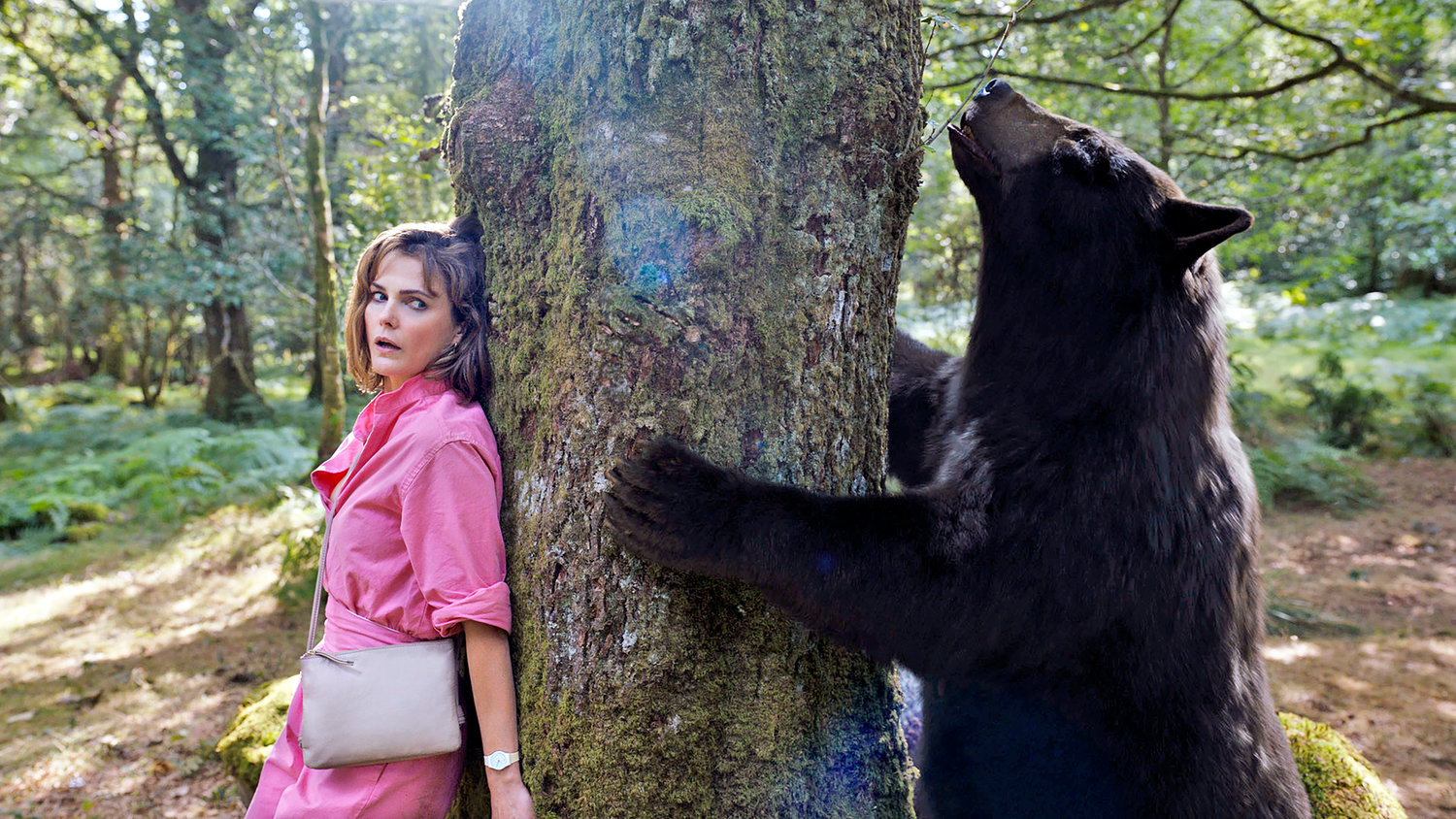
Cocaine Bear is not a film — it’s an autopsy report. It’s a limp, lifeless, morbidly obese corpse that threw a massive fit before overdosing on obscene amounts of cocaine. It’s not meant to be seen, but rather dissected to understand what exactly went wrong. With such an outlandish title as “Cocaine Bear,” you’d expect a film to be equally bizarre and insane, or at the very least, meagerly amusing. Cocaine Bear is anything but. You’d have a more fulfilling cinematic experience if you overdosed while watching National Geographic. (Disclaimer: that is not an endorsement nor a recommendation). 

Based on “true events” (I’ll explain the quotation marks later), Cocaine Bear is about a bear that — you guessed it — does cocaine and goes on a massive killing spree. That’s it. That’s literally all there is to this premise. Sure the film is sprinkled with the likes of some stars like Keri Russell, Alden Ehrenreich, O’Shea Jackson Jr., Margo Martindale, and the late Ray Liotta in what is depressingly his last film role. Other than that, the movie is just about a bear killing people. And sleeping. And eating cocaine before killing more people. 

This is a film that’s really pushing the limit on what “based on a true story” is supposed to mean. Because while there was a real-life bear that ingested nearly 50 pounds of cocaine (local inhabitants hilariously called him “Pablo Escobear”), that bear overdosed and obviously did not survive, because why would it? If you ingested 50 pounds of anything, you’re not viable to live in the next 15 minutes, let alone for the next runtime of an hour and a half. 

The “novel” concept this film introduces is “Hey, this bear did cocaine — what if it DIDN’T die?” Hardee-har-har, how original. Imagine if we started doing that with other movies, like “What if Bambi’s mother didn’t die?” or “What if Michael Bay actually had taste and talent?” 

As mindless and insipid as this premise is, this project wasn’t completely without potential. After all, films with even more ridiculous premises went on to be singular and entertaining in their own right. Eraserhead was a deliciously dark and opaque film about the nightmares that haunt us, while Rubber was a hilariously outrageous romp about a tire that gains sentience and goes on a killing spree. And last year’s Everything Everywhere All At Once was arguably the weirdest film from last year, with its characters leaping through different universes and becoming martial artists, raccoon chefs, bagel-obsessed entities, hot dog-fingered lesbians, rocks, and even entire planets at one point. That movie went on to win Best Picture at the Academy Awards, and deservingly so. 

So despite how dumb and simple-minded this idea is, I don’t fault Cocaine Bear for having a weird premise — I fault Cocaine Bear for not doing anything with it. The previous films I mentioned all had strange, surreal, and bizarre ideas, but they all did something unique and different with them that elevated those ideas beyond their original premises. Cocaine Bear, meanwhile, does absolutely nothing with its premise. It “bear”-ly even does the “bear” minimum. And yes, the pun is intended, because this movie doesn’t offer up any other fun alternatives. 

This film is classified as a “horror comedy.” I find this in itself funny because nothing about the film is either scary or funny. The bear is not an intimidating presence and doesn’t inspire fear beyond its horrifying CGI rendering. The kills themselves are not bloody or grotesque enough to be truly frightening or shocking. I chuckled a little bit at some of the cameos (keep an eye out for Angry Retail Guy from TikTok), but that has to do more with who is being killed rather than how they’re being killed. Other than that, you don’t have much reason to care about the people who are being offered up for the bear’s carnage considering how uneventful they are.

So this film’s idea of horror was clearly misguided. What about its idea of comedy? To that I ask, what comedy? This film’s sense of humor revolves around two things: the F-bomb and cocaine. That’s not funny. It’s barely even juvenile. I laughed exactly one time in the movie, and it was when Alden Ehrenreich screamed out “A BEAR did COCAINE!” with the only exasperated voice in the entire movie. At 95 minutes, the movie needed much more than one flimsy one-liner to justify it as a comedy, especially when the other 94 minutes and 45 seconds are such a slog to get through. 

Even the editing is in complete shambles. There’s one scene of the film where a group is walking along, and all of a sudden, one of the group members calls out “Hey, remember that dead body we just passed?” Then the film flashes back to literally a minute ago where the group came across the body before cutting back to the present. I’m watching this scene thinking that with one quick rewrite, the film could have one clean, coherent sequence, and it would have saved the editor an extra editing session. It’s not like he was doing much with the rest of the movie. 

As bad as this movie is, the thing that offends me the most about it is just how inoffensive it is. However crazy and balls-to-the-wall insane you expect this movie to be, Cocaine Bear is surprisingly generic, dull, and just plain boring, which is the one thing I didn’t want it to be. It does absolutely nothing with its wacky premise. There’s nothing exciting about this movie. There’s nothing funny about this movie. There isn’t even anything remotely absurd about this movie. In fact, this movie’s lack of absurdity is probably the most absurd thing about the whole thing. 

This is the third feature-length film from Elizabeth Banks, who has directed one trainwreck after another from the gross and off-putting Movie 43 to the formulaic and forgettable Charlie’s Angels reboot in 2019. She’s such a talented and likable actress, why does she keep relegating herself to these obscenely stupid movies that are clearly beneath her? Pray this is the last trainwreck we get from her. And if it isn’t, God help us if her next movie is Cocaine Bear(s)

Tagged , , , ,

“TEENAGE MUTANT NINJA TURTLES: MUTANT MAYHEM” Review (✫✫✫1/2)

Cowa-freaking-bunga. 

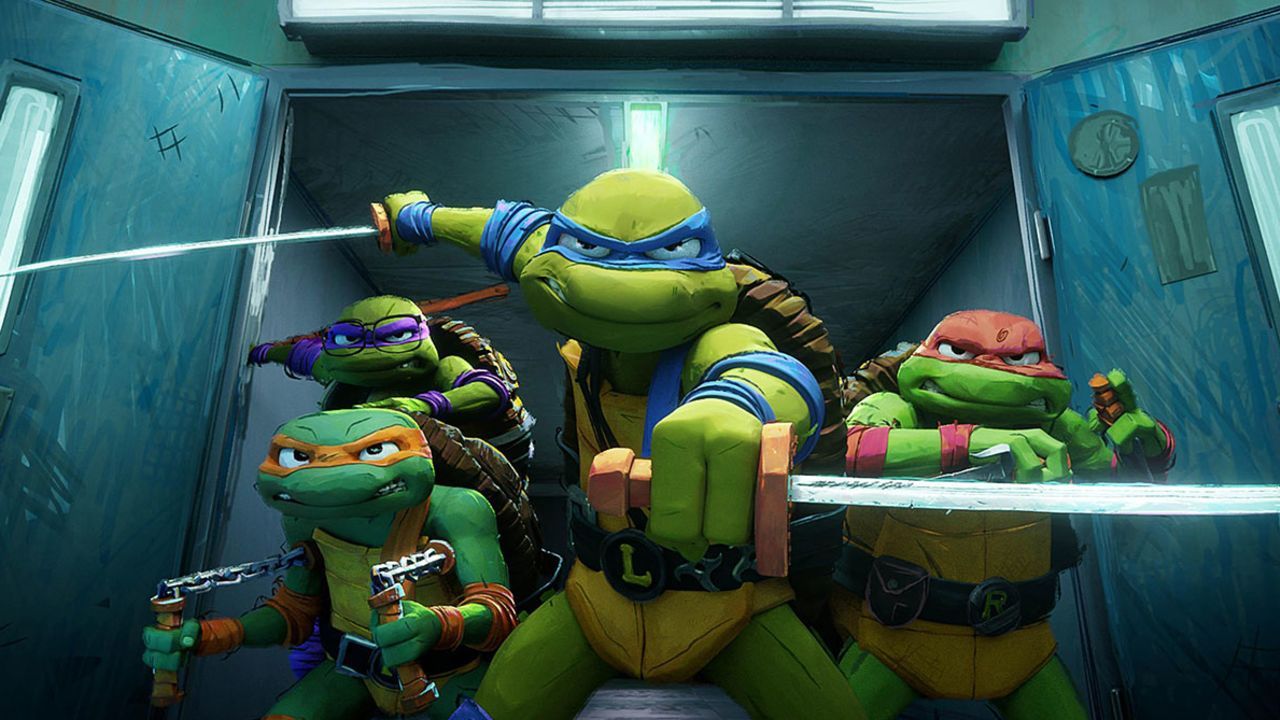
Teenage Mutant Ninja Turtles: Mutant Mayhem is the best ninja turtles movie we’ve ever gotten. Yes, even better than the classic 1990’s film. Like the turtles themselves, TMNT: Mutant Mayhem is bursting with personality, energy, off-kilter comedy, high-kicking ninja action, and a ton of heart. It may deviate slightly from the source material, but the essence of the turtles is all here. Or maybe it’s more appropriate to say “ooze.”

Retelling the classic turtles story for the modern age, TMNT: Mutant Mayhem follows our four teenage mutants as they grow up wanting to live a life beyond the sewer. When they were very little, their father Splinter (Jackie Chan) raised Leonardo (Nicolas Cantu), Donatello (Micah Abbey), Raphael (Brady Noon), and Michelangelo (Shamon Brown Jr.) to fear the surface world and trained them in the martial arts to defend themselves. But while Leo wants to follow his father’s wishes, his brothers are always getting into trouble whether they’re ordering extra pizza, sneaking out to the movies, or breaking windows with their ninja stars.

One day, the quartet of brothers get an idea — if they help bring in a master criminal who is threatening New York City, the world will see that they’re not monsters and will accept them as one of their own. The problem is they need to catch “The Superfly” (Ice Cube), a mass murderer whose face nobody has ever seen. With their nunchucks, katanas, sai, and bo staff in hand, the turtles come together to prove that humans don’t need to be afraid of mutants.

One of the things I’ve always loved about the turtles is that it’s a story about outsiders. Much like the Hulk and the X-Men, the turtles are a family of misunderstood heroes who are feared and hated by society just because they’re different from them. Yet, despite the fear and hatred they experience on a daily basis, the turtles always strive to do the right thing. Not because it personally benefits them or because it makes others see them differently, but just because it is the honorable thing to do.

Teenage Mutant Ninja Turtles: Mutant Mayhem is a different story. While other TMNT adaptations have traditionally emphasized the “mutant” or “ninja” side of the turtles, Mutant Mayhem instead fully embraces the teenage aspect and allows them to be much more mischievous, rebellious, and even a little reckless — just like real teenagers are. We’ve seen action-hero turtles beat up a bunch of highly-trained assassins, as well as stealthy ninja turtles who silently stalk their prey at night. I’ve never seen a turtles movie where their biggest concerns are high school crushes, pizza toppings, and searching for a place to belong. That makes them so much more relatable and humanizes them to the point where we don’t see them as mutants, ninjas, or turtles, but rather as kids confused and hurt by a world that hates them so much.

I also love the animation in this movie. While clearly inspired by the recent success of Into The Spider-Verse, Teenage Mutant Ninja Turtles: Mutant Mayhem carries its own gross and pulpy influence that feels like it’s popping straight out of the pages of an Eastman & Laird comic book. The lines are scratchy and unrefined, yet illustrate whole and complete pictures. The character designs look uneven and bizarre, but emphasize specific traits relating to their personalities and mutations. And the frame rate is gorgeous, moving and flowing like a waterfall of heavily saturated colors. Remember how Spider-Punk looked in Across The Spider-Verse? Picture that for the entire movie, and you’d come pretty close to what it’s like watching Mutant Mayhem.

And in a day and age where the weakest part of most movies are the villains, I’ve got to give special credit to Ice Cube’s portrayal of Superfly. His arc mirrors that of the turtles in that he too is a mutant who has always been shunned by society, but he doesn’t possess the moral compass that they do — mainly because he never had a father figure in his life to teach him the difference between right and wrong. The fact that he and the turtles share the same struggles while simultaneously divided on their values makes their conflict so much more personal and compelling.

The best part? Superfly is a wholly original villain. While partially influenced by Baxter Stockman, Superfly did not exist in turtles media prior to this movie. It’s so refreshing to see an original idea work so well in a popular franchise, especially when many other live-action movie villains fail to be as interesting or intimidating.

The fast-paced ninja action you know and love is all here, and personally, I would argue some of the movie’s crazier action sequences are more exciting than even the live-action movies are. The pop-culture references are clever and copious, further emphasizing the teenage aspect of the turtles. And the comedic bits are spot-on and hilarious. This is probably the funniest ninja turtles movie we’ve ever seen, and the best part is it doesn’t have to sacrifice its serious or darker tones in order to remain fun and entertaining.

There are some differences from the source material that will bother some die-hard fans, namely with how the turtles acquire their ninja skills and how the movie ends. For me, changes are justified if they add to the characters and the world they’re living in, and Teenage Mutant Ninja Turtles: Mutant Mayhem is filled with wild, gross, and weird characters that you quickly learn to fall in love with. Imagine all of the kids out in the world right now who sometimes feel as lost, afraid, and alone as Leo, Raph, Mikey, and Donnie do. And imagine how inspired they must feel when they look down the sewers knowing that they too can be a ninja turtle.

Tagged , , , , , ,

“BARBIE” Review (✫✫✫1/2)

SOURCE: Warner Bros. Pictures

Introducing Existential Dread Barbie!

Barbie is an unexpectedly amazing and splendid little film, an equally joyful, imaginative, and heart-wrenching adventure in pink that combines the playfulness of Toy Story with the existential questions you’d find in 2001: A Space Odyssey. Like The Lego Movie and the recently released Dungeons & Dragons: Honor Among Thieves, Barbie proves that there is no such thing as bad ideas in Hollywood: only bad execution.

Based on the popular Mattel toy line, Barbie takes place in a magical world called Barbieland where all of the Barbies and Kens live and play. You see, when you play with Barbie dolls in the real world, they also interact with one another in Barbieland — and their world is incredibly different from ours.

For one thing, their government is made up entirely of women, from President Barbie (Issa Rae) all the way to the Barbie Supreme Court (which I imagine is giving Samuel Alito and Clarence Thomas a much-deserved migraine). Barbies lead all of the most important positions in Barbieland, from doctors and lawyers to physicists and pilots. And perhaps most significantly, Barbies aren’t expected to couple with any Kens if they don’t want to — which needless to say, is often.

One day, Stereotypical Barbie (Margot Robbie) notices strange things happening to her. For one thing, her feet go flat instead of her typical arched position (yes, that’s considered a serious health condition in Barbieland). She starts to notice cellulite on her thighs (an even more serious condition). But perhaps most oddly, she starts to think about death, a concept that all Barbies should be allegedly immune from. Together with her boyfriend Ken (Ryan Gosling), they venture into the real world to see what is happening and what is causing Barbieland to turn upside down.

Before I hop into this review, let me just say something for the sake of transparency: I hate Barbie. I hate Barbie with a passion. As a kid, I would kick, throw, and rip the heads off of every Barbie I could find because of her plastic, plain stare and her creepily real strains of hair. There’s a character in this movie called “Weird Barbie” who looks twisted, disheveled, and all-around messed up because she was played with too roughly in the real world. I probably made more Weird Barbies than I care to admit in my youth. I genuinely hate them that much. If younger me had a choice, he would probably bomb Barbieland and laugh while doing it.

And yet, I love this movie. Why? Well for one thing, this movie isn’t about Barbie. Or rather, it isn’t exclusively about Barbie. It’s more about the culture surrounding Barbie: the little girls whose faces light up around her, the mothers who reminisce on their childhood playing with her, and the corporate heads who can’t wait to make money off of her. It’s all a big, mesmerizing, messy picture, and it’s filled with pink dreams and fantasies right alongside harsh truths and realities.

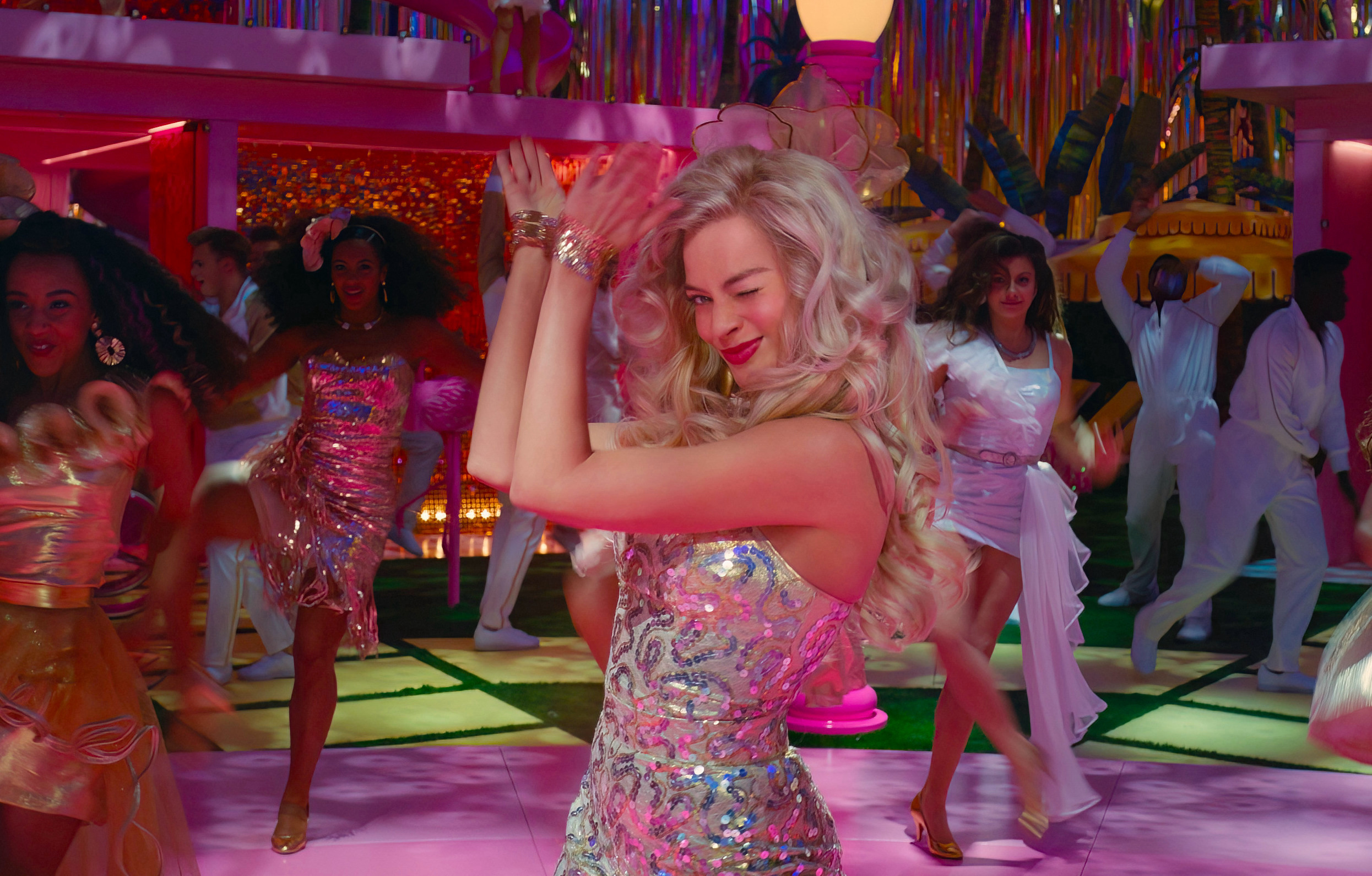
One of the first things both fans and non-Barbie fans will appreciate about this movie is the level of detail that goes into its production and costume design. Barbieland itself feels like a child’s playset brought to life, with Barbiehouses, Barbiecars, and Barbiestreets all lit up in beautiful hues of pink and white. The sets all feel distinctly plastic, yet tangible and real. Even the waves stay static as Ken tries to “catch waves” (which in his case, means face-planting into the solid “water”). And the clothes all feel like real pieces of clothing you’d get in a Barbie set. They even have the names flash on the screen that shows which edition they belong to.

But the production value is one thing: these characters have to act and behave like Barbie too, and they are all exceptional. Margot Robbie gives the most nuanced performance as a Barbie who shines and glows at the beginning of the film, but as the movie goes on, she begins to gain sentience and experiences complex emotions for the first time. She isn’t so much “Stereotypical Barbie” as much as she is “Existential Dread Barbie,” because that’s exactly what she is and the kind of performance that Margot Robbie delivers.

Ryan Gosling is on a whole other level as Ken. He starts the film as a lovably oblivious oaf who constantly fawns over Barbie to win over her affection (“It’s Barbie AND Ken!” he exclaims at one point). But as he too gains independence, he becomes a massive, massive chode that isn’t unlike some frat bros who take pride in demeaning women and looking masculine in front of other guys. I don’t know what it’s like to be a woman in this age, but if all the guys girls met were a bunch of Kens, I understand their hesitations very well. I wouldn’t want to date Ken either.

Amazingly enough, neither Margot nor Ryan deliver my favorite performances in this film. It’s actually America Ferrera, who authentically portrays Barbie’s owner. She offers a powerful monologue describing what it’s like living as a woman and all of the contradictions that come with it. You need to put on makeup, but not too much makeup. You have to be thin, but not skinny. Smart, but not smarter than guys. Independent, but not bossy. She perfectly encapsulates all of the unreasonable expectations society places on women daily and the toll it takes on their mental and emotional well-being. She was absolutely incredible in the film, and I would personally argue she was the movie’s heart and soul.

But if America Ferrera was my favorite performance in the movie, Will Ferrell was my least favorite. Don’t get me wrong, I generally think he’s a funny and capable actor, but he feels so out of place here. He plays the Mattel CEO, and even though he belongs in our world, he behaves so obnoxiously that he feels like he should be CEO Ken in Barbieland. I get that the movie is trying to make a point of how stupid and tone-deaf bigwig CEOs can be, but unfortunately, it did too good of a job. A lot of restraint could have gone a long way, but as it stands, Will Ferrell is the most manufactured thing in the movie by far. Which is funny, because there are literal Barbie and Ken dolls in the film, and all of them feel more genuine and real than he does.

Outside of that, what I love most about Barbie is how it embraces her identity — how it embraces womanhood, how we view womanhood in general, and how womanhood blossoms when we nurture and care for it instead of judging it and objectifying it. This is the fourth film writer-director Greta Gerwig has centered around the subject, and while it isn’t her best one, it’s definitely the most accessible. The irony isn’t lost on me when men objectify women in the real world, only for Greta Gerwig to humanize a real object in Barbie. That take is infinitely clever and creative, and I wish that level of originality was present in many other modern-day IPs.

Barbie was not made for me — it was made for the growing girls who played with her when they were little, for the mothers who felt inspired by her, and for the grandmothers who saw themselves in her. Despite my gender barriers, I found Barbie to be a splendid movie, one that made me laugh, cry, and feel for everything that Barbie is and what she’s supposed to be. What else can I say? I’m just Film Critic Ken.

Tagged , , , , , ,

“OPPENHEIMER” Review (✫✫✫✫)

Becoming Death, The Destroyer Of Worlds.

On August 6th, 1945, the United States dropped an atomic bomb over Hiroshima, killing over 70,000 people and burning, scarring, and poisoning several hundred others. A few days later, the U.S. dropped a second bomb on Nagasaki, killing 60,000 more people. That’s at least 130,000 dead, and several historians estimate that casualties were actually much higher. If that bomb were dropped on U.S. soil instead, it would have meant the death of America. Maybe it already does. 

The argument lingers over how necessary those bombings were in effectively ending World War II, but even those arguments don’t answer one key question: what is the cost of taking all of those lives? History gives us hindsight of what the literal fallout from those bombings was, but what do all of those deaths do to a man? What is it like to feel the weight of a thousand burning souls on your shoulders? 

Oppenheimer answers this question with cold, stark, unflinching reality, simultaneously providing us with a behind-the-scenes look at how the atomic bomb was made as well as a peak into the soul of the man tortured by his own creation. Written and directed by Christopher Nolan (Inception, The Dark Knight trilogy), Oppenheimer recounts the story of the infamous father of the atomic bomb through three key points of his life: his academic upbringing in Cambridge, his days working on the Manhattan Project, and his security clearance hearing in 1954. While all of these storylines are being portrayed simultaneously, all of them are linked toward one recurring theme: Oppenheimer, and humanity itself, hurtling towards a dark, inevitable fate that all seem powerless to prevent.

I remember the first time I saw J. Robert Oppenheimer speak. It was during the 1965 documentary “The Decision To Drop The Bomb,” where he uttered the infamous quote “Now I have become Death, the destroyer of worlds.” However, the thing I remember most from that telecast wasn’t those words: it was Oppenheimer’s eyes. His face was cold, expressionless, the light from his eyes evaporated as if he were a corpse confessing his soul. He looked as if the atomic bomb went off inside of him, and his body on the outside was decaying from the nuclear fallout from within. 

More than anything else, I wanted Oppenheimer to capture what it’s like to be the man behind the deadliest weapon in human history. I wanted to see what that does to a person — what knowing the death and destruction you have caused does to your spirit. Oppenheimer gave me more than what I asked for and delivered a dramatic epic that’s part tragedy, part cautionary tale, and part Greek fable not unlike that of Prometheus, the god of fire. 

A key part of that comes from one of Nolan’s longtime collaborators Cillian Murphy, who convincingly portrays Oppenheimer at every point of his life. At the beginning of the film, he’s a curious and ambitious young scientist who dreams of atoms, molecules, and the world of matter that hides behind our own. As the film progresses, he transforms into an atomic-sized dramatic force determined to bring the Manhattan Project to life. It’s only after the Trinity test that he becomes Oppenheimer as we recognize him — an aging, decrepit shell of a man haunted by the nightmares he helped create. Cillian brilliantly portrays Oppenheimer not as a historical figure, but as a real person experiencing all of these events in real time. While the film doesn’t excuse his actions, Cillian humanizes Oppenheimer so effectively to the point where you understand where he’s coming from. At times, you even feel bad for him. 

But Cillian is only one part of this giant and mesmerizing nuclear puzzle, and his exceptional castmates help complete it. Emily Blunt plays Oppenheimer’s wife Kitty, and her fiery, ferocious spirit perfectly balances Cillian’s nuanced, colder demeanor. Matt Damon plays Oppenheimer’s handler, and his snarky condescension brings welcome brevity and comedic timing to a film that usually feels unbearably heavy. And I’m happy to say that Robert Downey Jr. was exceptional as AEC chairman Lewis Strauss. I was worried after he finished his time as Iron Man that he might become complacent and not want to work as hard for future roles. Oppenheimer demonstrates that he’s still got the acting chops, and if you give him a good part, he’ll damn near outshine everyone else in the movie.

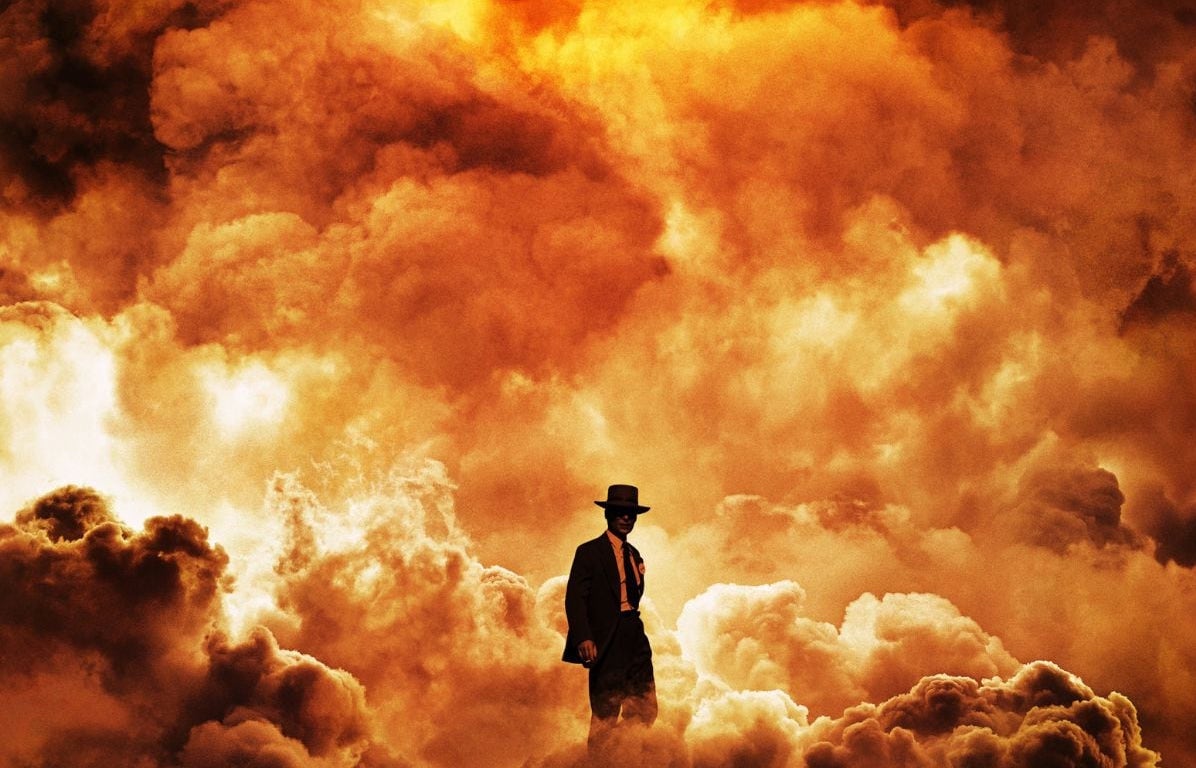
And like all of his movies before, Christopher Nolan outdoes himself in his commitment to only using practical effects. It all culminates into the Trinity test sequence, which is actually the only time we ever see the atomic bomb explode on screen. The buildup and anticipation was nerve-wracking, the score by Ludwig Goransson was intense and anxious, and the cinematography by Hoyte Van Hoytema captured everyone’s uneasy expressions beautifully. But when that bomb went off, that bright light consumed the screen, and the sound design shook the theater like an earthquake… dear reader, I have NEVER felt an explosion like that in the cinema ever. It felt like you were in the bunker with Oppenheimer, and like everyone else on the Manhattan Project, you were worried you were going to set the sky on fire. 

But amazingly, that explosion was not the most impactful thing from the movie. What impacted me most was witnessing the fallout of it — how global powers changed, how the world reacted to its creation, how Washington scrambled to politicize it and benefit from its power, and the guilt and the grief that racked Oppenheimer for years after he detonated that first bomb.

We never actually see the bombings of Hiroshima and Nagasaki, and rightfully so. After all, Oppenheimer never saw it himself, so it makes sense that we share his perspective when he heard about it afterward. But what’s incredible is despite never witnessing it, Oppenheimer imagines it, and his imaginings are horrifying. He feels the bomb go off and the bright light consuming his body. He feels flesh burning and sees charred bodies crumble into ashes. And he hears the shrieks and screams as they fill his ears like a chorus from hell.

Oppenheimer is a haunting and harrowing vision of one man’s nuclear nightmares and what they may mean for the future of the human race. By the end of the film, the scariest thing isn’t wondering if the world will end from nuclear warfare — it’s wondering if it already did. 

Tagged , , , , , ,

“MISSION IMPOSSIBLE: DEAD RECKONING PART ONE” Review (✫✫✫)

SOURCE: Paramount Pictures

Your next mission, should you choose to accept…

How on Earth is a franchise like Mission Impossible still going strong? For the past 27 years, there’s been one Mission Impossible film released after another, each one defying, well, impossible odds and outdoing their last feat in spectacular fashion. By all accounts, the seventh film in the series should feel tired, exhausted, and redundant, but it doesn’t. Not only is the Mission Impossible franchise not slowing down — if anything, it’s picking up speed, much like Tom Cruise’s infamous running.

The first of yet another two-parter, Mission Impossible: Dead Reckoning follows Ethan Hunt (Tom Cruise) on another global mission where he has to save the world yet again. But this time, the big threat isn’t deadly viruses, nuclear warheads, or terrorist organizations. Instead, he’s pursuing a lethal A.I. called “The Entity,” which becomes sentient and set out to dismantle the world governments. There’s only one thing that can control it, and it’s a key broken up into two halves. Now teaming up with old allies in Luther (Ving Rhames), Benji (Simon Pegg), and Ilsa (Rebecca Ferguson), Ethan and his squad need to race against time to find the key and destroy all traces of the Entity before it’s too late.

If this premise sounds similar to previous Mission Impossible movies, that’s because it is. Whatever you think about Mission Impossible, you at least know what to expect from them. You expect a high-stakes adventure filled with espionage, intrigue, and excitement. You expect to hear Lalo Schifrin’s iconic theme that gets your blood pumping. You expect the IMF’s many nifty gadgets to come in handy whenever Ethan gets into a pinch, which sufficed to say, is often. You expect some exhilarating fight and chase sequences that are no doubt set up so Cruise can maintain his physique. And you expect some insane stunts for Cruise to take on that have you boggle your mind and exasperatingly yell out “What on Earth were you thinking???”

All of the series’ trademarks from previous installments are here too, so Mission Impossible fans should not go into the first part of Dead Reckoning expecting it to break new ground. The good news is that it doesn’t have to. Like any other good movie, Dead Reckoning Part One understands what it is and what it isn’t and how to elicit the best reactions from its audience. One of my favorite sequences from this movie wasn’t a fight scene, but rather a chase sequence involving Ethan driving a yellow Fiat 500. Seeing him drive around in this squawky little thing while giant armored cars were chasing him around Rome was way too funny and entertaining. It was like watching a golf cart trying to evade a tank.

But the film isn’t just entertaining — it also carries with it a sinister tone that feels edgy, creepy, and a little unsettling. It’s true that stories involving A.I. are almost as tiresome as spy and action movies are, but the topic is incredibly relevant today — especially with the SAG-AFTRA strike occurring mere days before this movie’s premiere. I find it interesting that even though the Entity rarely speaks in the movie, its presence is felt throughout, and its threat looms over Ethan and his team like a dark shadow that’s about to consume them. I really, really like Dead Reckoning’s exploration of this concept, and more than anything else, I’m looking forward to seeing how writer-director Christopher McQuarrie builds upon this idea in the next movie.

I also really liked Hayley Atwell’s addition to the film. Ethan has many female accomplices, some damsels in distress like Ethan’s ex-wife Julia, while others are cunning and capable like Ilsa. Hayley teeters the line between both of those. A highly-skilled and crafty thief, Hayley is dropped into this plot like a rat trapped in a maze, and she’s just trying to get out of it before the traps inside of it kill her. She adds a welcome dynamic to this movie because she doesn’t really come from the world of international espionage — she just gets roped into it because she’s after the same thing everyone else is. Her unpredictable nature nicely contrasts with the film’s formula and offers up some surprising predicaments that Ethan has to get out of just because he’s after her.

And I really can’t overstate just how insane the stunt work in this movie really is. I don’t know how Cruise does it. I genuinely don’t. It was just two movies ago where he held onto a plane while taking off, while the last film had him and Henry Cavill base jumping in real time. Dead Reckoning Part One had him (and I’m not kidding when I say this) ride a motorcycle off of a mountain — and it feels as intense and heart-racing as it sounds. My entire theater was dead silent when that moment happened. I think I heard one person gasping, and I honestly wouldn’t be surprised if it was my own.

Everything Mission Impossible: Dead Reckoning Part One does, it does really well, from the stunt work to the fights to the action choreography to the editing all the way down to the music. It is a technical and visual marvel for sure. What prevents it from being truly top-tier is its writing, which unfortunately begins to unravel by the third act. For one thing, there was a character death near the climax that was completely uncalled for and infuriated me to the point where I actually walked out of the theater. There were also a couple of IMF agents chasing Ethan throughout the picture that served no point except for being yet another thing for Ethan to run away from, and he’s already got more than enough to deal with for the rest of the movie.

But the worst transgression by far lies in the film’s villain named Gabriel (Esai Morales). Simply put, he was forgettable, another generic run-of-the-mill bad guy for Ethan to fight just because the script calls for it. Mind you, I don’t think Esai himself was bad in the role — he frankly did the most he could with it.

The problem is we don’t know enough about Gabriel. He supposedly has some deep tie with Ethan’s past and was allegedly responsible for some loss he experienced, but the movie never tells us or explains what happened. All it does is show a couple of quick flashback sequences, then moves on as if we got the full picture when we barely even got a good glimpse at it. Other great Mission Impossible villains such as Phillip Seymour Hoffman and Jon Voight are effective menaces because their relationship with Ethan is set up very well and we clearly understand their motivations. Neither Gabriel’s past nor his motivations are explained very well in Dead Reckoning Part One. In terms of threats, the Entity he serves is far more intimidating than he ever was.

All in all, Mission Impossible: Dead Reckoning Part One is a solid setup for its eventual two-parter and a welcome entry to all of the death-defying stunts that Ethan Hunt pulls off. It isn’t as thrilling, emotional, and heart-racing as Fallout was, but it’s reliable popcorn entertainment that doesn’t overstay its welcome. Here’s one mission you should choose to accept.

Tagged , , , , , ,