
Just a large smackrel of bear blow.
Cocaine Bear is not a film — it’s an autopsy report. It’s a limp, lifeless, morbidly obese corpse that threw a massive fit before overdosing on obscene amounts of cocaine. It’s not meant to be seen, but rather dissected to understand what exactly went wrong. With such an outlandish title as “Cocaine Bear,” you’d expect a film to be equally bizarre and insane, or at the very least, meagerly amusing. Cocaine Bear is anything but. You’d have a more fulfilling cinematic experience if you overdosed while watching National Geographic. (Disclaimer: that is not an endorsement nor a recommendation).
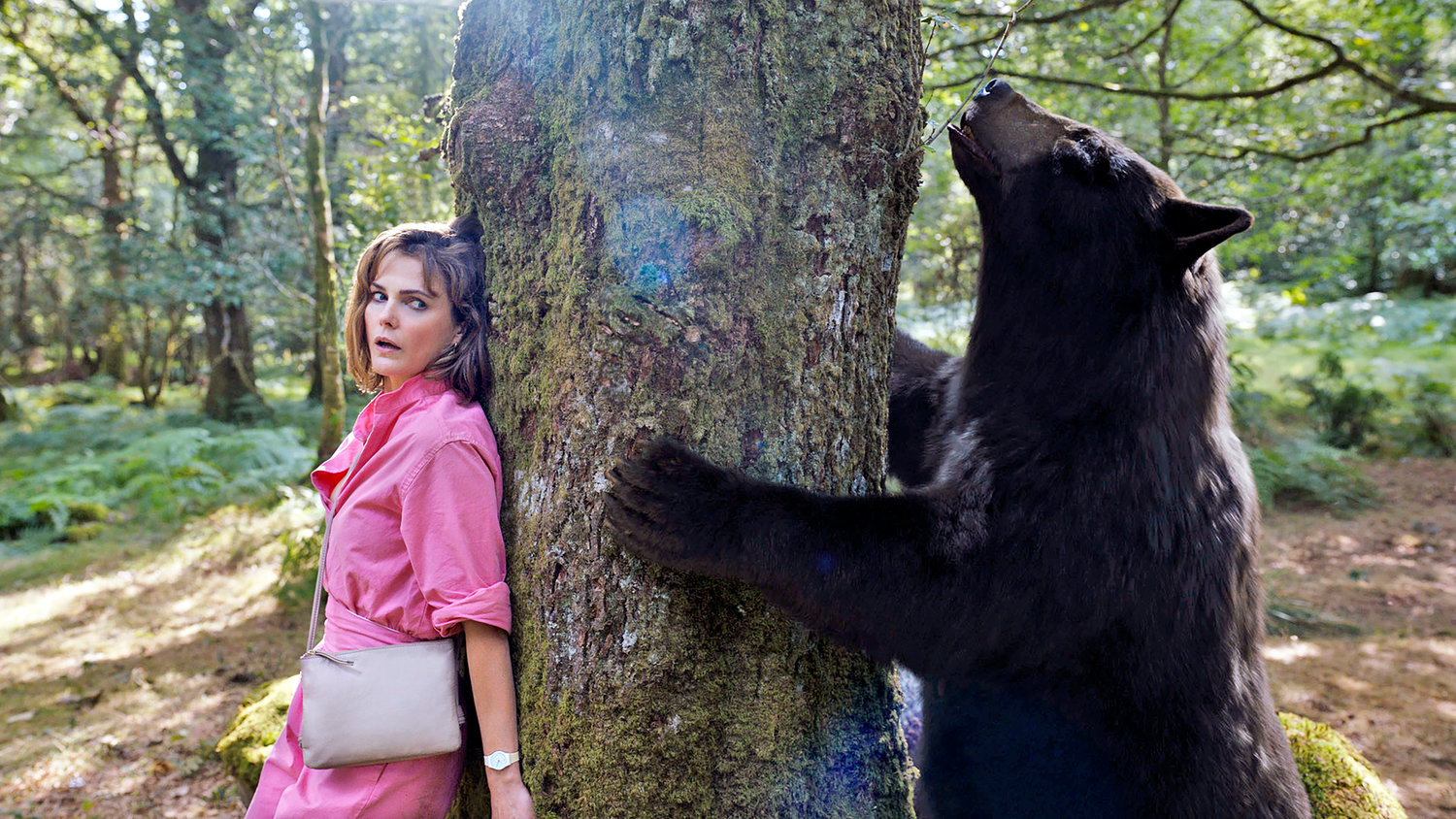
Based on “true events” (I’ll explain the quotation marks later), Cocaine Bear is about a bear that — you guessed it — does cocaine and goes on a massive killing spree. That’s it. That’s literally all there is to this premise. Sure the film is sprinkled with the likes of some stars like Keri Russell, Alden Ehrenreich, O’Shea Jackson Jr., Margo Martindale, and the late Ray Liotta in what is depressingly his last film role. Other than that, the movie is just about a bear killing people. And sleeping. And eating cocaine before killing more people.
This is a film that’s really pushing the limit on what “based on a true story” is supposed to mean. Because while there was a real-life bear that ingested nearly 50 pounds of cocaine (local inhabitants hilariously called him “Pablo Escobear”), that bear overdosed and obviously did not survive, because why would it? If you ingested 50 pounds of anything, you’re not viable to live in the next 15 minutes, let alone for the next runtime of an hour and a half.
The “novel” concept this film introduces is “Hey, this bear did cocaine — what if it DIDN’T die?” Hardee-har-har, how original. Imagine if we started doing that with other movies, like “What if Bambi’s mother didn’t die?” or “What if Michael Bay actually had taste and talent?”
As mindless and insipid as this premise is, this project wasn’t completely without potential. After all, films with even more ridiculous premises went on to be singular and entertaining in their own right. Eraserhead was a deliciously dark and opaque film about the nightmares that haunt us, while Rubber was a hilariously outrageous romp about a tire that gains sentience and goes on a killing spree. And last year’s Everything Everywhere All At Once was arguably the weirdest film from last year, with its characters leaping through different universes and becoming martial artists, raccoon chefs, bagel-obsessed entities, hot dog-fingered lesbians, rocks, and even entire planets at one point. That movie went on to win Best Picture at the Academy Awards, and deservingly so.
So despite how dumb and simple-minded this idea is, I don’t fault Cocaine Bear for having a weird premise — I fault Cocaine Bear for not doing anything with it. The previous films I mentioned all had strange, surreal, and bizarre ideas, but they all did something unique and different with them that elevated those ideas beyond their original premises. Cocaine Bear, meanwhile, does absolutely nothing with its premise. It “bear”-ly even does the “bear” minimum. And yes, the pun is intended, because this movie doesn’t offer up any other fun alternatives.
This film is classified as a “horror comedy.” I find this in itself funny because nothing about the film is either scary or funny. The bear is not an intimidating presence and doesn’t inspire fear beyond its horrifying CGI rendering. The kills themselves are not bloody or grotesque enough to be truly frightening or shocking. I chuckled a little bit at some of the cameos (keep an eye out for Angry Retail Guy from TikTok), but that has to do more with who is being killed rather than how they’re being killed. Other than that, you don’t have much reason to care about the people who are being offered up for the bear’s carnage considering how uneventful they are.
So this film’s idea of horror was clearly misguided. What about its idea of comedy? To that I ask, what comedy? This film’s sense of humor revolves around two things: the F-bomb and cocaine. That’s not funny. It’s barely even juvenile. I laughed exactly one time in the movie, and it was when Alden Ehrenreich screamed out “A BEAR did COCAINE!” with the only exasperated voice in the entire movie. At 95 minutes, the movie needed much more than one flimsy one-liner to justify it as a comedy, especially when the other 94 minutes and 45 seconds are such a slog to get through.
Even the editing is in complete shambles. There’s one scene of the film where a group is walking along, and all of a sudden, one of the group members calls out “Hey, remember that dead body we just passed?” Then the film flashes back to literally a minute ago where the group came across the body before cutting back to the present. I’m watching this scene thinking that with one quick rewrite, the film could have one clean, coherent sequence, and it would have saved the editor an extra editing session. It’s not like he was doing much with the rest of the movie.
As bad as this movie is, the thing that offends me the most about it is just how inoffensive it is. However crazy and balls-to-the-wall insane you expect this movie to be, Cocaine Bear is surprisingly generic, dull, and just plain boring, which is the one thing I didn’t want it to be. It does absolutely nothing with its wacky premise. There’s nothing exciting about this movie. There’s nothing funny about this movie. There isn’t even anything remotely absurd about this movie. In fact, this movie’s lack of absurdity is probably the most absurd thing about the whole thing.
This is the third feature-length film from Elizabeth Banks, who has directed one trainwreck after another from the gross and off-putting Movie 43 to the formulaic and forgettable Charlie’s Angels reboot in 2019. She’s such a talented and likable actress, why does she keep relegating herself to these obscenely stupid movies that are clearly beneath her? Pray this is the last trainwreck we get from her. And if it isn’t, God help us if her next movie is Cocaine Bear(s).

 DAVID DUNN