Tag Archives: History

“I’m A Historian, Not A Muslim”

Lauren Green, you simpering idiot.  I can’t believe you were actually aired on national television a few hours ago.  I’ve seen some doozies on biased interviews and reporting before, but you’ve got to take the top spot as the most shocking one yet.  You’re job as a reporter is to be objective on your subject, not subjective on information that you don’t bother to even look into.  You were so biased, inappropriate, and arrogant towards the interviewee that more people are going to mistaken christians as biased zealots rather than the open-minded, intelligent, and dedicated human beings that we are.  What a sham.

You gotta look this up just so your jaw can drop.  Sometime yesterday, during FOX news’ daily airtime, anchorwoman Lauren Green interviewed a Islam novelist named Reza Aslan, who wrote a book titled “Zealot: The Life & Times Of Jesus Of Nazareth” and had multiple PhD’s in religious studies.  Supposedly, his book looked at Jesus through a historical context and looks at his impact of our culture through his actions and through his time on Earth.  The novel received controversy as to being a
“Poorly researched, unintentionally false interpretation of Jesus”, or “sounding like old Islamic political propaganda”, quotes provided by Amazon.com.

I have not read the book, nor do I plan to anytime in the future, so I can’t criticize the author or his novel since I haven’t read it.  If what these people are saying is true, and indeed Aslan is as biased and one-sided as this reporter is, then he deserves the controversy he is receiving.  But I can’t substantiate, or comment on that, since I have no idea how authentic or genuine the research is.

I can, however, comment on Ms. Green as a reporter considering she was so rude and so aggressive during her interview.  Throughout the interview, she refused to ask any questions about his book, but instead, revert to stereotypical and critical questions such as “Why is a muslim writing a book about Jesus?”, or “Is this intended as Islam Propaganda?” and reverting to a quote from a negative review whenever her turn came around.

Seriously, look up the video.  Her stance and her treatment of her subject was so demeaning and maddening it would upset even the most conservative of Christians, such as myself.

The first thing I want to point out is why is she being so critical if she hasn’t read the book, or done research on her subject?  During the interview, she clearly has no idea about the person she is interviewing, and shows this by retreating to other people’s quotes about the book at every other question that she asks him.  You need to see this woman just to believe it: by the time she said “(blank person) said” for the fourth time, I had to go to the restroom and splash cold water in my face just to wake me up from the shock of it all.

First of all, as a fellow journalist and film critic myself, I need to point out a rule of thumb I have when reviewing movies.  Before I criticize a film, I make a point of watching the movie, all the way through, opening credits to end, so I can give substantial reasoning for why I didn’t like the movie.  I listed reasons why I hated movies like American Psycho, Shame, and The Hangover in my reviews, but they were all valid reasons for hating them because I pointed out real moments that happened in the picture.  If I were to write a negative review for, say, The Human Centipede, I couldn’t be held accountable for it because I didn’t see it or bothered to seek it out.

Now, if I hate the concept of a movie I could point that out.  I hate the concepts for movies like Project X, I Spit On Your Grave, Dogma, and The Virginity Hit, so I can trash those ideas all I want.  But I can’t criticize the execution of the projects themselves because again, I haven’t seen them.  There have been plenty of movies I thought I’d hate but then I gave them a chance and I enjoyed them quite a bit: Silence Of The Lambs is one of them.  Pulp Fiction, another.  Do The Right Thing.  Harry Potter.  Crazy Heart.  Halloween.  Taxi Driver.  Please test me on this, I can go all day.

Ms. Green reacts to Aslan’s novel in the same way I react to Martin Scorcese’s The Last Temptation Of Christ: I hate the idea, and would reject any notion of it, but I cannot comment on the playout of it because I have not witnessed or paid attention to it myself.  The difference between me and Ms. Green is that I have this rule I abide by fervently, while she decides she doesn’t need to do research or respect Aslan as a historian or as a scholar of religious studies.  Aslan said it himself: the goal is not to be subjective of your subject.  The goal is to provide relevant and authentic data on your focus, and allow other people to form their own opinions about it.

But does Ms. Green bother to do that?  Nooooooooo.   She ham-fists her arrogant opinions and ideas into her questions and spoon-feeds them into Aslan’s mouth, forcing him to respond in awkward, shocked, and appalled answers all while he is wondering what he had done to deserve such treatment.  I would compare her interview to that of the crusade of the Westboro Baptist Church, or as I like to call them, “The Westboro Baptists”, because they don’t deserve the word “Church” anywhere in their title.  They lead an antagonistic, cruel, unharboring crusade of hatred against homosexuals and armed forces alike, and while one can see some validation in their protests (Notice: I said SOME.  More like .5%), they are a cruel and unforgiving people nonetheless.

I don’t think Green is as monstrous as they are, but she is equally as absent-minded, aggressive, and idiotic as they are.  This should be a rule of thumb for all journalists: why, in God’s name, would you act this way towards a muslim theologian when you haven’t even read the first two pages of his book?

Just so you know, I don’t actually agree with Reza either.  I think Jesus is a honorable, respectable figure in history, one who has had as much a positive impact with our culture as did Martin Luther King Jr. or Mohandas Ghandi.  I’ve been raised to believe that he is the son of God, and I believe that to this day, and I think he deserves more respect than simply being referred to as a “troublemaker” or a “threat” during that time, even though I don’t think Reza meant any offense by it.

But what Reza believes, doesn’t believe, wrote, or said doesn’t matter. Green is so obsessed in her opinion that I want to denounce her, and her entire station, for what she said and how she said it.  I know its not FOX News’ fault for the way that she behaved, even though they have had similar criticisms in the past, and I know that in the way she behaved towards Reza was of her own accord and her own disposition.

During my first semester working for the UTA Shorthorn, I produced an opinion piece about why people shouldn’t judge Christian artist TobyMac for his religious beliefs.  I was criticized in my piece for being negligent and intolerant to other people’s opinions, but what my commentators didn’t understand is that I feel this way towards all faiths.  Jewish hymns, Hindu practices, Islam chants, whatever.  They all have a beautiful thing called faith, and they all have their right to carry it out the way they want to.  It is not our job to judge it or criticize it, but it is our job to understand it and respect it, no matter how we feel about the practice overall.

On a closing note, I hope Lauren Green gets fired.
Tagged , , , , , , , , , , , ,

“WHITE HOUSE DOWN” Review (✫✫1/2)

You’d be crazy running for a second term, Mr. President.  

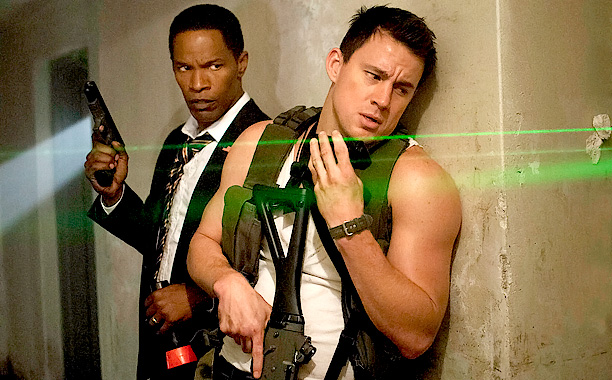
Now here’s a movie that would give President Obama a heart attack.  White House Down, much like a film released earlier this film called Olympus Has Fallen are both about the same thing.  The white house is under attack by a group of professional terrorists, the president is in danger, and our brawn yet brave hero must step in to save him.  All you need is a ripped shirt, a clean-shaven face, and a lot of guns on this guy (not just automatic) and you’re all set.

Unfortunately, that’s all the information I can give you.  This movie is so thinly written that that’s the deepest I can go without giving any spoilers.  The only other information I can provide that could give you any clue on to what this movie is like is that the brawn, brutish hero is played by Channing Tatum,  the president is played by Jamie Foxx, and Tatum owns a daughter portrayed by the sweet and talented Joey King.

I’m going to get this out of the way: Channing Tatum should never play the lead in any movie ever.  He cannot act.  There is no sincerity in his voice, no fluid movement of his body, no expression on his face to show he’s feeling anything except for when he’s shooting at something.  The fullest his acting capability reaches in the movie is the eyedrops you see in his cornea when he’s “crying” for his daughter. I’m not even kidding.  His acting is so terrible, the only use Tatum is in the movie is to provide meat for the female viewers in the audience.

(And I will admit my jealousy here: I will never look as good as Channing Tatum does.  I don’t think its possible for any man to).

Where was I again?  Ah yes, Tatum’s acting.  As always he is a stiff, awkward, and uncomfortable actor, a perfect reason why he should never be the lead character in a movie.  Admittedly though, the dialogue isn’t helping him much.  His best lines in the movie involve something like: “You have to go out there and be President”, or “If this guy keeps making those sounds, I’m going to start looking at him.”

If the above description makes this movie sound appealing to you, you should see it.  White House Down is a big case of what-you-see-is-what-you-get: a movie filled to the brim with excessive action, big explosions, cheesy dialogue, and mediocre acting, with the minor exception of Jamie Foxx, who has the most patriotic and humorous dialogue out of any other character in the movie.  In one scene, he’s reciting the history of America so beautifully to his secretary of defense over the phone that one could mistaken him as a Lincoln who underwent skin surgery.  In another scene, he’s following Tatum up an elevator shaft to evade capture when this exchange happens between them:

Foxx: What you do, I do.

(Channing Tatum ninja moves across elevator).

Foxx: I ain’t doing that.

Foxx’s character was the most appealing, the most intelligent, and the most charismatic character out of the entire movie.  Everyone other character was overly charismatic and grossly unrealistic.  One radical baddie is so stereotypical and so overpumped with tattoos, facial hair, ego, and steroids that I expected him to rip off his skin and reveal that he’s the Terminator.  A tour guide portrayed by Nicholas Wright is more worried about fine china and precious artifacts than he is about his own life and well being.  Tatum’s daughter, however, is probably the most frustrating.  She comes off as annoying, careless, and extremely absent-minded in this film.  You might say this is because she’s a child, but tell me something: how realistic is it that a teenage girl like this is smart enough to run her own youtube channel and know more about the white house than the tour guide, and yet, she doesn’t know when to stay in the bathroom or to leave a building when its going to blow up?

I remember an argument I had with a friend of mine in my first year of college.  He was an experienced videographer who understood more about the film industry than any of the professors did in that department.  We were arguing about the differences between film and art, and he told me a direct yet simple statement:

“Film is not an art” he argued.  “Film is a business.”

While I desperately want to prove him wrong through films such as Inception, Life Of Pi and Beasts Of The Southern Wild, it is movies like White House Down that remind me that the industry does in fact exist and operate like a business intended for profit.  At least Roland Emmerich didn’t release this film in 3-D: that wouldn’t have helped my side of the argument one bit.

Tagged , , , , , , , , , , , , , , , , , , , , ,

“SNOW WHITE AND THE HUNTSMAN” Review (✫✫✫)

And thank you, Thor, for keeping up appearances.

Take a deep breath and say it with me: Snow White And The Huntsman.  Doesn’t sound very promising, does it?  Like most fantasy films, Snow White And The Huntsman seemed set up for failure.  It’s centered around a very popular character portrayed by Bella Swan, the film is based around a fairy tale known universally in every person’s mind, and it seemed tempted to fall for a formula and let down its audience.  Believe me, that was the movie I was expecting when I went into the theater.  The movie, however, is much better than the title suggests.

Based on the famous original fairy tale by brothers Grimm, Snow White And The Huntsmanfollows the story of Snow White (Kirsten Stewart), a kind and beautiful princess of the land Tabor who would one day inherit the kingdom and the throne from her father King Magnus (Noah Huntley).  Before she was born, the narrator tells us that her mother pricked her fingers on a rose outside of her castle, with three drops of blood staining the snow.  Her mother told herself that she wanted a daughter as white as the snow, lips as red as the blood, and a spirit as strong and defiant as the rose she prickled.

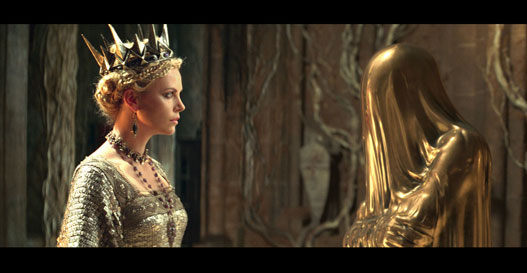
This opening sequence was both fascinating and revealing, a deeper introspect into Snow White’s history that I don’t believe has been visited before.  Her mother eventually died giving birth to Snow White, and so King Magnus marries a strikingly beautiful woman named Ravenna (Charlize Theron), whom he rescued from a dark army made out of glass soldiers that tried to invade his kingdom.  Magnus is so stricken by Ravenna’s beauty, in fact, that she becomes his queen in less than two days.

You already know where this is going, don’t you?  Ravenna is, in fact, the dark and conniving witch leader of the dark army.  After killing Magnus in his bed, she takes Snow White, forces her into the upstairs dungeon, and seizes power over the kingdom as the newly appointed Queen of Tabor.

Years past, and the kingdom of Tabor falls into desolation and poverty.  Snow White has now become of age to become the new queen of Tabor, and has been blessed with the gift of kindness that will ultimately dethrone Ravenna from the throne.  Snow White eventually escapes from the dungeon, flees from Ravenna, and escapes into the dark forest, a place where people slowly lose their sanity and, in time, their life.

Raevenna cannot go to this place to kill Snow White, so she hires somebody who can: a huntsman by the name of Eric (Chris Hemsworth), a man who lost his wife to death’s hand long ago.  Nothing could convince this angry, tired old drunk to take this job willingly, but he takes the job nonetheless in the hopes of that the evil witch can revive his dead wife with her dark powers.  And so the adventures of Snow White and the Huntsman begin.

The biggest thing Snow White And The Huntsman has going for it is two things: its visuals and its handling of the premise, in that exact order.  Rubert Sanders, who is making his director debut through this picture, is very smart and very careful with his visuals, using very precise and expertly-detailed CGI in things like the Magic Mirror or in the dark army made out of glass.  But it isn’t just the visuals that makes the picture what it is: Sanders is smart enough to make the visuals mean something, and just like the camera he’s using to record the picture, the visuals are a tool he uses to tell a story and to instill some deeper meaning in the audience.

Take, for example, how Sanders uses the color of white in the picture.  The color itself only appears three times in the picture: once where Snow White rides and abandons a white horse on the beach, another time where she encounters and caresses a magnificent and beautiful white stag, and the last one being where she dies and is resurrected while being in a white funeral dress.  Go back and look at the pictures again and try to look at it through a more symbolic scope.  I promise you, if you see the picture as I do, you will see a princess abandoning her kingdom, returning to her kingdom, and finally, becoming the queen and leader that the kingdom deserves.

To find such complexion in a picture as this was both shocking and surprising, and the cast delivers just as much as the visuals do. Charlize Theron was menacing, evil, and conniving as the dark witch, and gives a stellar performance that would have had the animated version relieving in her pants.  Stewart, shockingly, is very grounded in her take as Snow White, and embodies everything her mother says she has: strength, beauty, courage, kindness, and heart, and this especially shows in the last half hour of the picture.  Hemsworth was equally as emotional and convincing as the huntsman named Eric, although there are a few brief moments where he breaks character and acts more like Thor from The Avengers.

There was another Snow White movie released earlier this year called Mirror Mirror, and it starred the lovely Lily Collins and Julia Roberts in roles opposite Stewart and Theron.  That movie was too silly and immature for its own good.  Here, we have the opposite problem: this film is dreary, dark, sullen, and bleak, a movie that for the first half of its runtime, fills us with dread, angst,  and sorrow.  Starkly different tone from the whimsical, uplifting veins of the original Disney classic don’t you think?  Whatever happened to Doc, Grumpy, Happy, Sleepy, Bashful, Sneezy, and Dopey?

Still, its a good movie.  When there is color in the picture, it reaches out to you in striking detail, the cast is extremely strong, and the visuals and the camera angles combine to make a very provocative picture and a very sharp visual experience.  All you need left is Mjolnir and the rest of the Avengers, and you’ll be all set.

Tagged , , , , , , , , , , , , , , , , , , , , , ,

“SKYFALL” Review (✫✫✫✫)

United Artists Corporation/PA Wire

Old dog: new tricks.  

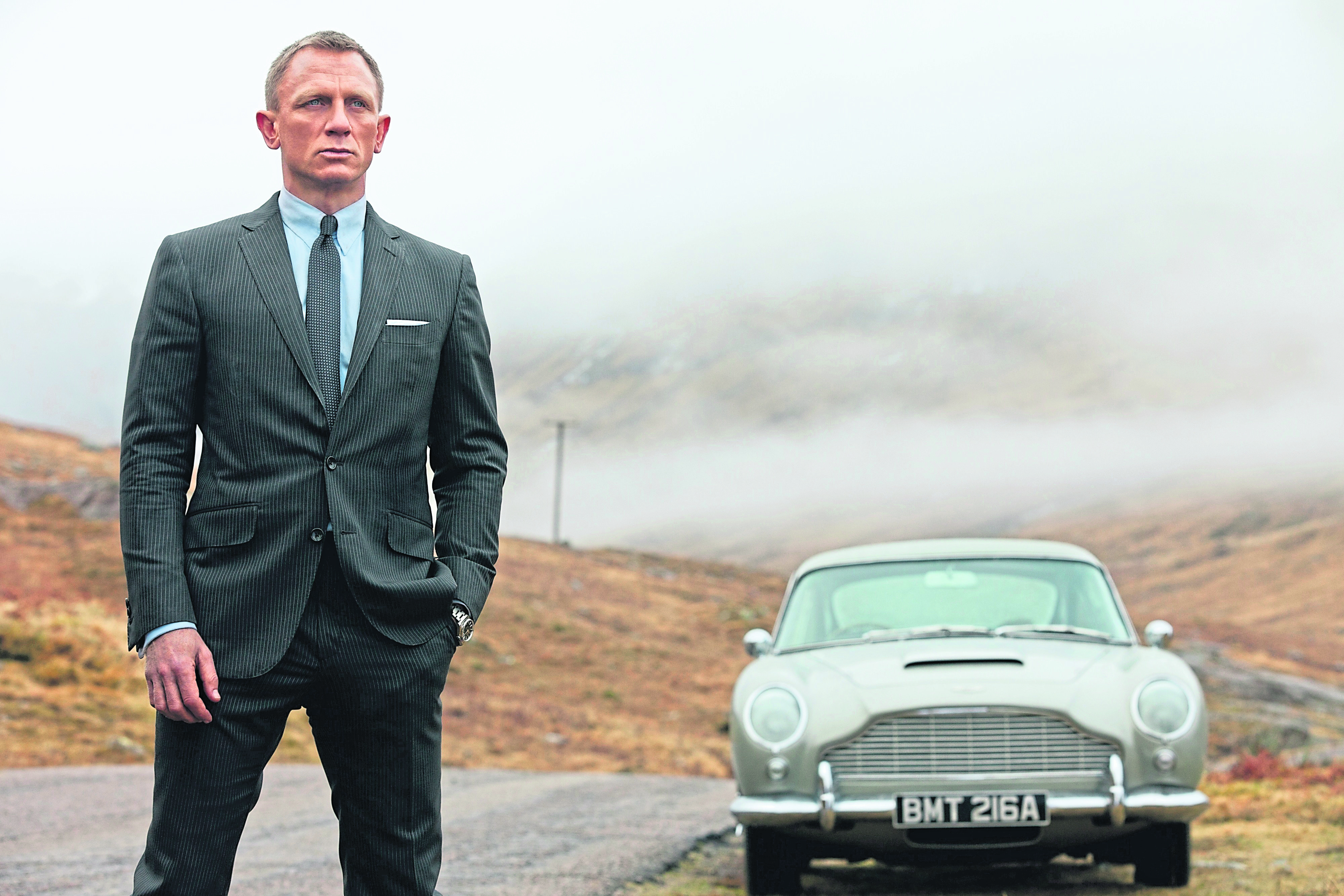
You’re not gonna see this one coming.  No matter what you expect to get from Skyfall, I promise you it isn’t what you expect it to be.  Yeah, its a high-adrenaline action film featuring Daniel Craig, yet again, as the double-daring, martini-sipping secret agent known as James Bond. I think we all pretty much understood that from the film’s trailer.  But oh, is the experience much more than just being a simple action film.  Much more.

Skyfall takes place a few years after the events of Quantum of Solace.  After a bomb threat has been declared on the headquarters of MI6, James Bond (Daniel Craig) is ordered by M (Judi Dench) to find and apprehend the ex-MI6 operative known as Raoul Silva (Javier Bardem), a cyberterrorist who has some deepening grudges with Bond’s superior officer.  As Bond begins to follow the trail and find out who Silva really is, he uncovers a secret in his past so haunting that it will impact the entire nation of Britain and shake the foundations of MI6 forever.

Here is a Bond movie lived to the fullest potential, an action movie that begins with a sensational chase sequence and refuses to let up on the excitement as the movie progresses.  Written by John Logan (Gladiator, The Last Samurai) and directed by Sam Mendes (Jarhead, 1999 best picture winner American Beauty), Skyfall is a full-blooded action film, a spy movie that completely embodies everything great about Bond, from the lively, exotic locations to the pulse-pounding action that overflows you by the minute.

But this film doesn’t just succeed as another action movie: it also brilliantly serves its purpose as a drama piece.  Being one of the more personal and more deeper Bond films to date, Skyfall is a profoundly mature film that has a deeper introspective into Bond than what we were expecting.  Unlike other Bond movies (including the dreary Quantam Of Solace), where Bond is just an emotionless action hero that goes through the motions, Bond actually has an arc in this movie when compared to other ones.  In the film, Bond struggles with both his morality and past, and both of these conflicts come into full circle in ways nobody expects nearing the end of the film.

The film remembers something important that Quantum Of Solace has forgotten: that James Bond isn’t just an action hero.  He’s a movie character that holds a popularity entirely in his own bracket, a character who holds an iconic presence similar to how Indiana Jones does in his own series.  Daniel Craig inhabits the role well in Skyfall, and shows us the truth about James Bond: that he’s at a level of character fascination entirely in his own caliber.

At the same time though, it isn’t just the hero that makes the film what it is: the villain must be equally as motivated, and interesting, as the main character is.

Enter Javier Bardem as Silva, a villain who is as imposing and daunting as the action itself is.  Bardem is brilliant and chilling as Silva, a man whose past and pains haunt him, M, and Bond through the history that he remembers.  This shouldn’t come as a big surprise.  He did, after all, portray Felix in 2002’s Collateral and Anton Chigurh in his Oscar-winning performance for No Country For Old Men.  Here, he’s just as chilling as ever as a villain who is as deceitful, conniving, and crafty as Silva.  He’s one of the more memorable Bond villains to date, and I wouldn’t be surprised if he was in the top five for IGN’s top 25 Bond Villains list.

This is a great movie.  The cast is great, the plot is fresh, the action is refined and thrilling, and the story is told through the lens of cinema master Roger Deakins as he flows from one beautiful shot to another.  There is much to love about this movie.

The only weakness, if there is one, is that the film doesn’t go deep enough.  The idea of Skyfall is great, the idea being that Bond is mortal and vulnerable and, like all of the other characters and villains in the Bond series, has a history where his issues have not been resolved.  Writer John Logan was brilliant for making this idea, and Mendes was smart in heading into this great direction.

The problem is that he doesn’t go deep enough.  The film dominates as an action movie, and granted, its a great action movie.  Still though.  Hasn’t there been other action movies that have been as deep and profound as they were exciting and fun?  Inception, for instance.  The Dark Knight.  The Terminator.  The Bourne Identity.  Movies like these succeed not only as action movies, but as compelling dramas.  Skyfall has a tint of that “drama” category, but it could have gone deeper.  It might seem like a small thing, but that’s all it takes.  One small thing would have turned Skyfall from just another great action movie into an instant classic.

This is a weakness on the film’s part, but am I really going to hold it against Bond?  No.  I am not.  Despite the supposed weaknesses, Skyfall is a fantastic thriller.  It revives Bond in ways similar to how Batman was revived in Christopher Nolan’s The Dark Knight trilogy, and it assures us that not only will Bond survive throughout the years as cinema progresses: it will also thrive on its success and its legacy.

P.S.: You will never guess what Skyfall actually is in the movie.  Seriously.  You will never guess.

Tagged , , , , , , , , , , , , , , , , , , , ,

“LINCOLN” Review (✫✫✫✫)

A man, not a monument, named Lincoln.

I’m rarely made more aware of what Lincoln was in history than what this powerful biopic reminds me: Lincoln was a man.  He wasn’t a fable.  He wasn’t a myth.  He wasn’t some sanctified holy figure that was crowned with solely freeing the slaves.  He wasn’t even technically honest Abe.  Abraham Lincoln was, solely, earnestly, realistically, the 16th President of the United States.  He was for the Union, he despised slavery, he was humble on approach, and he always fought intently for the things that he believed in: the things that he thought were right.

Depicting the final months of Lincoln’s presidency, including the end of the civil war and the abolishment of slavery, Lincoln is a very personal view of the final months of Abraham Lincoln’s life.  In that period Lincoln pushed for african freedom, dealt with conflicting opinions of his cabinet, sought peace negotiations with the confederacy, managed an entire union, and was in a state of emotional grief with his family after the recent death of Lincoln’s middle child, Willie.  If you told me that Lincoln had an easy time during his term as American president, I would call you grossly inaccurate.

In this drama-driven biopic, Daniel Day-Lewis portrays Abraham Lincoln.  When you watch him in this movie, I guarantee you that you won’t recognize him.  Day-Lewis doesn’t just portray the famous president: he embodies and embraces Lincoln’s spirit on every possible level, from the weariness in his voice to the hunch in his back.  His performance is so acute, there is barely any indication that he even is Daniel Day-Lewis.  For two and half hours he disappears into his role, and we briefly witness the miraculous resurrection of Lincoln through Daniel Day-Lewis.  The film lives and breathes on Daniel Day-Lewis’ performance.

Even then, a great actor cannot do anything without great material.  Enter Steven Spielberg and screenwriter Tony Kushner.  Kushner, who co-wrote Spielberg’s earlier history epic, Munich returns here to compose a story that is as complex and insightful as it is dramatic and informative.  Speilberg obviously needs no introduction.  For a decade-defining career as Speilberg’s, and for a project as personal to Spielberg as Lincoln, its obvious he would pay as much attention and focus to this era as he would with Schindler’s List or Saving Private Ryan.

Even then, I’m surprised at Spielberg’s role in this movie.  He’s effective as a director with this film, but he’s not the highlight.  He kind of takes a backseat to Kushner’s screenplay and Day-Lewis’ performance, with him serving as the production’s moderator rather than their visionary.

Which believe me, I’m fine with that.  At times, a director must learn to step back and just let the production flow into place.  Here, Spielberg is a great moderator, carefully directing Day-Lewis through Kushner’s fragile, elaborate script and always making sure he never takes the wrong step along the journey.  It isn’t like Spielberg’s previous films where it relies on flashy effects and CGI: this film is carefully paced through revealing dialogue and personal character development.  While it’s a step out of Speilberg’s comfort zone, it more than works for this production.  Lincoln is one of Spielberg’s most personal and most effective works to date.

The film’s only problem: pace.  Because this film relies on dialogue and performance as its greatest assets, there are times where the film becomes so muddled within its political kurfuffle and babbling that at times its hard to keep track of all at once.  You should know what I’m talking about: Senators and Congressmen shout and babble about to each other in such incoherent conversation that our ears zoom out for a bit and miss some key information we’ll need to remember later on.  This will be a problem for some viewers in the audience, as it will be difficult for some people to be hooked on the beginning of Lincoln’s story because of its slow, slow, slow pace.

But even then, I’m so absorbed into Lincoln’s story and Day-Lewis’ performance that I don’t even care about this minute fault.  The one thing that defines this film, the one thing Spielberg, Kushner, and Day-Lewis got right more than anything else is Lincoln’s compassion, his character, and his humanity.

I remember an interview Speilberg and Day-Lewis gave to Yahoo!Movies earlier this year.  When asked about the gravity of the challenge of bringing Lincoln’s legacy to life on the big screen, Spielberg had this to say about his lifelong dream project:

“…we have a big responsibility in telling the story,” Spielberg said. “And we determined that we didn’t want to make a movie about a monument named Lincoln, we wanted to make a movie about a man named Lincoln.”

A man.

Tagged , , , , , , , , , ,

“LES MISERABLES” Review (✫✫✫1/2)

An opera of unexpectedly epic proportions.  

The first thing that crossed my mind while watching Tom Hooper’s Les Miserables is that this entire story is based around truth.  Not a true story, mind you, but rather the truth about 1800’s great Britain.  In that time period, the country was engulfed in sadness, desperation, and revolution.  The rich outmatched the poor.  The sick and the hungry dominated the streets.  Employment was scarce.  In times like these, misery seemed to inhabit every dark corner, and God was hard to find in the shrinking light.

Perhaps this is also a metaphor for today’s world, but that’s besides the point.  Les Miserables shocked me with its energy, its spirit, and its mature handling of its subject matter.  If the film industry was a railroad, and the train is Les Miserables, Tom Hooper is the conductor, and he’s taking me through a roller-coaster of emotions that range from shock, to sadness, to grief, to anger, to loss, to laughter, and ultimately, to happiness.  How was I supposed to know that I would begin the film with a sulk as low as Russell Crowe’s beard and end the film with a smile beaming as brightly as the sun?

This is the kind of film that Les Miserables is: the kind that finds the light shining through the cracks in the concrete.  Based on both the original novel by Victor Hugo and the subsequent musical by Claude Schonberg, Les Miserables follows the story of Jean Valjean (Hugh Jackman), a convicted criminal in 1815, Great Britain who was put away nine years ago for stealing a loaf of bread.  After being released from prison and breaking parole, Javert (Russell Crowe) is tasked with finding him and imprisoning him once again.

But somewhere along the way, Jean’s hardened heart changes. He encounters Fantine (Anne Hathaway), a sick prostitute mother who greatly fears for what will become of her daughter Cosette (Isabelle Allen). After hearing her dying wish pleading for Cosette’s safety, Jean vows to find Cosette and raise her in the world as if she were his own child.

This is an emotion-stirring epic that is vast and grand beyond all comprehension. Directed by Tom Hooper, Oscar-winner for 2010’s The King’s Speech, Les Miserables is a movie that juggles emotional tensity with visual splendor and grandeur, with Hooper’s dignified set pieces shining brightly all over the place in a broadly dignified fashion.  The opening sequence in itself is bold and spectacular, beginning deep in British seawaters and lifting itself out of the water to show a view of British prisoners pulling a ship into the bay.  With the visua effects, there is a great historical context within this picture, focusing attentively to many issues in 1800’s France, including criminal treatment, poverty, child neglect and the French revolution.

At the same time though, this movie thrives as an aesthetic piece, with these characters conveying their thoughts and emotions through their powerful performances and voices through the film.  Russell Crowe is upright and stoic as Javert, a man committed to law and order to the point where it is almost inhumane and cruel.  Anne Hathaway is affectionate and masterful as Fantine, and her character is one of the more tragic characterizations I’ve come across in recent cinema.

Hugh Jackman, however, steals the show as Jean Valjean. He is a man who has experienced cruelty and unfairness firsthand and has hardened his heart so much just so he can survive in this world. But he is also a man who has gone through a change, a man who experienced a kindness and love that no one has shown him for so long. Jackman is brilliant in the lead role, and a powerful spiritual connotation is told through his fantastic, emotional journey through the perilous land of France.

Admittedly, the film is at times overly expressive, and the music is also overwhelming to the story. The plain and simple fact is that there’s too much of it in the picture: 98% of all of the performances in the film involve singing and music, and only one or two lines are spoken through lines of actual dialogue in this movie. Won’t people get tired of hearing just relentless music numbers one after the other?

But the important thing is that Les Miserables has the emotion to match the dramatic tension that is heard through the music. As far as story and character goes, Les Miserables is unparalleled, and draws in its viewer through the drama and tragedies the characters are experiencing.  I’ll admit, balance is an issue, and people might have trouble staying interested in a two-and-a-half hour musical.

This isn’t just a musical though. This is an opera of unexpectedly epic proportions.

Tagged , , , , , , , , , , , , , , , , , , , , ,