Tag Archives: Documentary

20 Minutes With Mstyslav Chernov 

Felipe Dana | AP

On February 24, 2022, Russia’s preeminent dictator Vladimir Putin launched his invasion on Ukraine, declaring it as a necessary step to the “demilitarization and denazification of Ukraine,” whatever that’s supposed to mean. He claimed that this operation didn’t include occupying Ukrainian territories. That they weren’t going to impose anything on anyone by force. That they would not infringe on the rights of Ukraine and its people. 

He said all of this while shelling residential neighborhoods, carrying out attacks on innocent civilians, bombing hospitals, and killing children and their families. Once again, Putin proves that his actions are what you should listen to most — not his lies. 

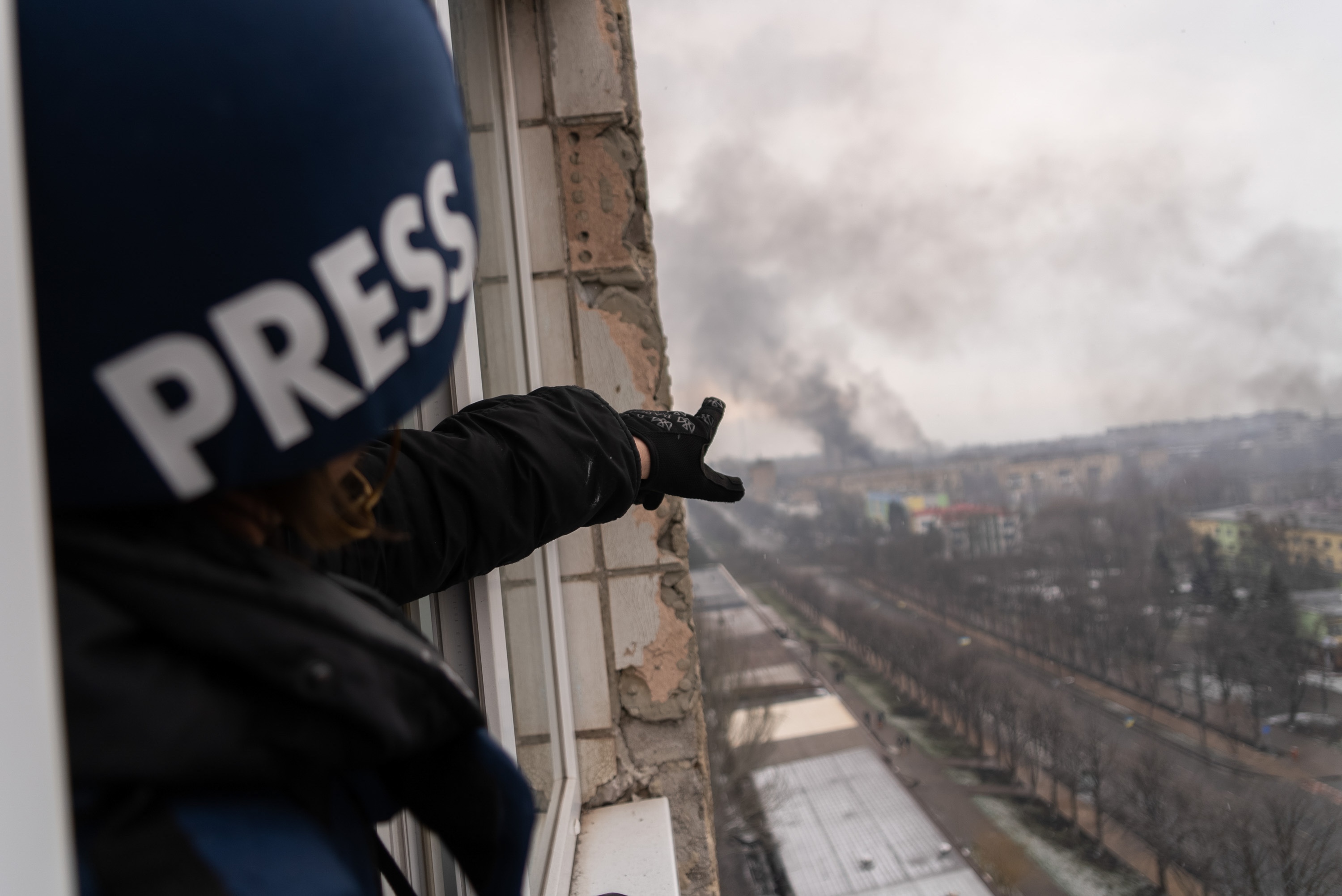
While this operation was carried out, photojournalist and war correspondent Mystyslav Chernov was on the front lines, covering the siege for the Associated Press. The footage that was not used in AP’s reporting, he edited into a 94-minute documentary called 20 Days In Mariupol, which is nominated for Best Documentary at the 96th Academy Awards

I recently had the privilege of sitting down with Mystyslav to ask him about his experiences filming that conflict up close, but before I did, I wanted to watch the movie myself to ensure that I was well-prepared to discuss the topic at hand. 

My viewing experience was nothing short of horrifying. When watching other movies about real-life conflicts, whether it’s 1917, All Quiet On The Western Front, or Oppenheimer, it’s helpful to know that what you’re watching on screen isn’t real. Yes, someone died at some point and someone lived through indescribable suffering, but the people you’re watching on the screen are not those people. At the end of the day, they get to clock out of work, they get to go home, and they get to live their happy lives, hopefully with a family who loves and values them. 

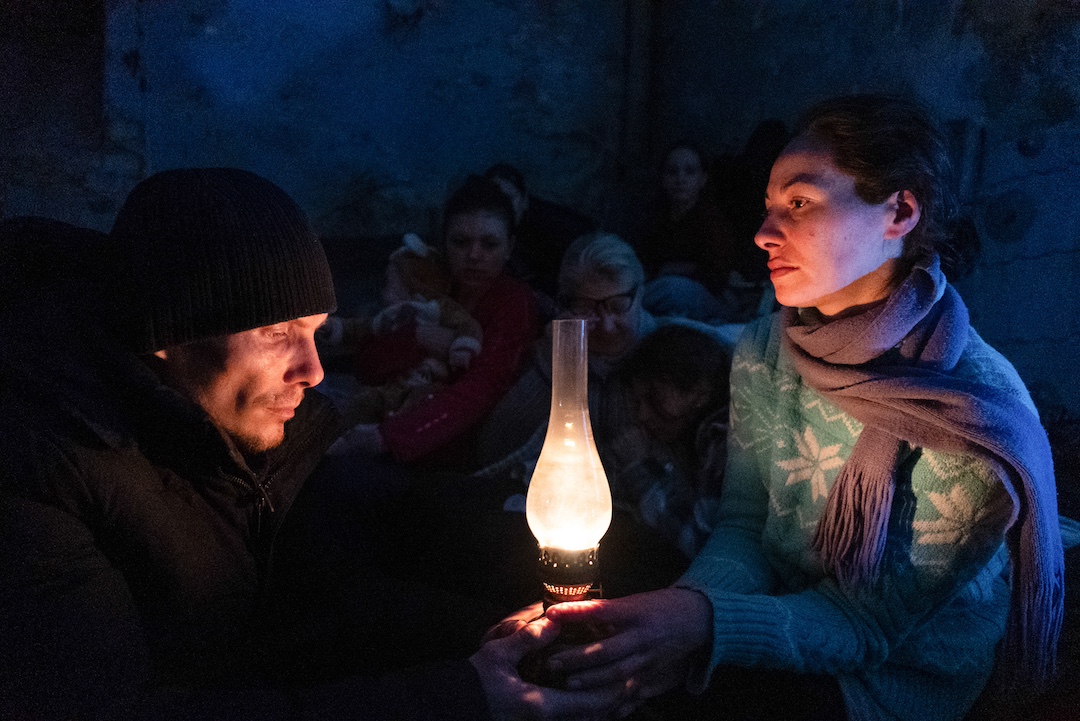
The people I watched in 20 Days In Mariupol did not have that privilege. Despite what Russia’s propaganda may have you believe, there were no actors involved in this conflict. There were no set extras, body doubles, or special effects. When you watch someone die, they died. When a father grieves for his dead son, it’s real. When a hospital is overwhelmed with citizens whose limbs have been blown off, it’s real. When a mother wails for her dead infant, it’s real. And when the bodies of both children and adults fill mass graves until it’s overflowing, it’s real.

In many ways, the carnage and cruelty in Ukraine mirrors that in Gaza right now. And just like Ukraine, people don’t seem to care what happens to the innocents who live there. 

It’s hard to pin down the exact number of casualties Ukraine suffered from the ongoing conflict, but it likely exceeds 20,000 people. Imagine a small city wiped off of the face of the Earth in a heartbeat. That’s what Mystyslav witnessed during the fall of Mariupol. 

Before I go into our conversation, I would like to encourage all of my readers to watch 20 Days In Mariupol as soon as they can either on PBS Frontline or YouTube. After that, I encourage you to support Ukrainian relief efforts however you can. The Ukrainian Red Cross actually helped Mystyslav and his team escape from Mariupol at the end of the film, so they’re at least one initiative I strongly recommend. There’s also Future For Ukraine, Razom, Nova Ukraine, as well as the GlobalGiving Ukraine Crisis Relief Fund. There are plenty of opportunities to help those who are suffering in Ukraine. Even $1 can go a long way for those drowning in a sea of sorrow. 

As we begin, know that this is probably one of the most important interviews I’ve ever conducted. That’s because this isn’t covering the movies — it’s covering life. Specifically the life of Ukraine and her people — including Mstyslav Chernov.
Mstyslav Chernov | AP

David Dunn: Your film opens on such a haunting line: “Wars don’t start with explosions — they start with silence.” As you were driving through the streets of Mariupol on the eve of the invasion, what was that silence saying to you? 

Mstyslav Chernov: This war has lasted for me and all Ukrainians for 10 years. Russia invaded Ukraine in 2013, so all these 10 years, we’ve heard explosions on the front lines. We tried to cover it and keep telling the story of this invasion to the world, and the world didn’t always pay attention to that because there were so many other important events happening in Syria, Iraq, and Europe. But the front line was always active. There was always fighting. 

But that night before, it was completely silent as we drove along the front line. It was so unusually quiet. It felt like the calm before the storm. As the world looked away from what was happening, nobody really believed that the war was about to start. Nobody really wanted to believe that tomorrow, our world would be shattered and changed forever. 

Even when the bombs started to fall, there were moments of dire attempts to keep their humanity and hope that there was still a chance that our world would not fall apart. That silence was also striking. The fact that people clung to their humanity until the very, very last moment when the bombs already hit the residential areas in Mariupol. That is another kind of silence that was there not only for the people of Mariupol, but probably for the whole world. They didn’t really want to believe that Russia did attack Ukraine openly this time — that they did probably start the third world war. 

The more I travel and talk to people in the U.S., the more I realize that this belief that the world hasn’t changed and can stay the way we remember it is an attempt to keep silence around us. Not everyone probably realizes the gravity of what has already started, as the people of Mariupol did not realize that until the bombs started to hit their houses. Russia is already at war with NATO. Russia has already been openly stating that to their own military, their own people, and their media for over a year. The west doesn’t seem to completely realize the gravity of that fact — that Russia is already at war with them. 

DD: So it’s more than just bringing attention to what’s going on in Ukraine — you also want to bring attention to how grave of a threat Russia really is?

MC: How grave the situation is. For many people, it still seems like this concerns only Ukraine. That this is a local conflict that has no influence on the U.S. or other parts of the world. But this and the victory of Russia on the battlefield will have huge implications around the world — in other regions where other countries are waiting for their opportunity to invade their neighbors. This will signal that they can do that and nobody will stop them. It will have huge implications on U.S. security because of the U.S. presence in those regions. It will have huge implications on the economy of the entire world. It may ultimately result in direct confrontation between Russia and NATO, as many generals are saying right now in Europe and the U.S.

Evgeniy Maloletka | AP

DD: Your film has been getting a lot of recognition on the awards circuit. You’ve obviously won the BAFTA, you’ve won the DGA, and you’re nominated for Best Documentary at the Academy Awards. What change do you hope comes from all of this attention your film is getting, and by extension, the ongoing conflict between Ukraine and Russia? 

MC: Well, it would be naive of me to think that the film could change international policy — that it can change the course of the war. I actually address that thought in the film itself. When Vladimir the police officer tells us this is going to change the course of the war — the images of the bombing of the maternity hospital — I do express my doubts about that. I do extend my doubts to the film as well, although I feel that cinema is a much more impactful medium. It has a stronger appeal and stronger impact on audiences. The more recognition this film gets, the more audiences will see that. That’s actually my main hope, for more people to see it. 

Addressing the hope for change, I would rather express my doubt about that because it takes much more than one film or 10 films or any kind of reporting to actually change international policy. I think there should be much more effort to really change the course of the war efforts from politicians, from countries, from civil societies, which will someday probably realize that it’s not only about Ukraine, but it’s also about the security of their own countries. That’s probably what I hope this film will ultimately bring. 

It’s not a political issue, and it’s not a bargaining chip for political arguments. It is an urgent humanitarian catastrophe. People are dying every day. They need to be helped because that’s what we as humans do. If someone is being attacked in the street by a criminal, we call the police, we intervene, or we try to stop the crime. It’s quite the natural thing to do for modern society. For the people who see the film, I hope they look at Ukraine again not as a political topic, but as a humanitarian catastrophe. 

There are approximately 14,000 graves right now on the outskirts of Mariupol. That means there are at least 14,000 people who have been killed just in that siege — not only by the bombs, but by the conditions that were created by the lack of food and medicine. We do hope that this tragedy will be recognized and reacted upon in a way — or taken seriously, at least. 
Mstyslav Chernov | AP

DD: This documentary was incredibly hard to watch, which is why I imagine it was even harder to film. I think of the line in the movie where you say “My brain will desperately want to forget all of this, but the camera will not let it happen.” How did you keep filming despite all of the horror you were witnessing? What kept you going through it all? 

MC: In the moment, you’re only thinking about two things — how do I not die, and how do I even go on after this? You’re also thinking about your shutter speeds, how much battery you have left on the camera, how many minutes are on these cards. This is all happening at the same time in your head. Very often, you’re so scared that you don’t want to do what you do.

But then you look at the people around you — the people who are burying people, who are burying children and adults in mass graves in the city center of Mariupol. They were still doing that, even while the bombs were falling nearby. The day before that, that nearby cemetery was hit by a shell, and those people still do their work, just like the firefighters without water or the doctors without medicine. When you look at all of those people and you look at how strong the community is, that’s what keeps you going. You feel like part of the community and you just realize you need to do your part. 

Of course, it sometimes feels like that’s not enough. You can’t really stop a bullet with a camera. You can’t really protect anyone. But people kept telling us, “You have to keep filming. You have to make sure that the world knows about what’s happening in Mariupol.” They wanted to be heard, and that alone was a huge motivation for me, because we were the only ones who could give them that voice. 

DD: One of the most sickening, disheartening moments of the film was watching how Russia tried to delegitimize your reporting through mass disinformation campaigns. What did you feel when your editors told you what was happening outside of Mariupol? 

MC: As a journalist, I wasn’t surprised, because I went through that before in 2014 when Russia shot down the MH17 Boeing going over Donetsk Oblast by Hrabove. There was such a storm of misinformation and misinterpretation and distortions, and that showed me that the most important events are immediately followed by a misinformation campaign — fake news and propaganda. 

I was not surprised when it happened after the Mariupol maternity hospital bombing, because it was already happening before that. Some Russian bloggers were saying that the woman who died was just an actor, or it was staged scenes. I was prepared for that, and it’s actually a good indicator of the importance of the work. If it evokes a strong response of propaganda, it means that the work and this story is making an impact. 

But my heart bleeds for the people who lost their families — who lost everything. Apart from the fact they lost everything, they are also being told that this is all fake. Even their pain is denied and questioned. I know how painful and devastating it is for the residents of Mariupol. 

DD: Do you see 20 Days In Mariupol as a way of legitimizing and restoring truth to their pain? 

MC: Yeah, that’s probably the main motivation behind what I did in Mariupol and also what I did when we started making the film. We wanted to make sure that this story is not forgotten and that they will have a way to express their tragedy and prove that this really happened. It’s at least a way to save their memory — those children, those thousands who were murdered. It would be a monument to those who died.

– David Dunn

Tagged , , , , , ,

Top Ten Films Of 2014

Has anyone ever stopped to wonder why all of the best of the year lists have to be in the top ten? Like, what sort of critic was working on his list and thought that ten would be the magic number? Why ten and not twelve? Or fifteen? Five? Twenty? Eight? Why was ten specifically chosen as the big number? Was it chosen at random, or was it actually chosen for some relevant, significant reason?

Regardless of whatever the case may be, I’m choosing to be a little rebellious this year. For the past few years, I’ve seen enough films to make a “Top 15″ list if I wanted to, but if I had done that, my site viewership would go down by about twenty views.

So this year, to battle the preconceived notion that “best of the year” lists have to have ten movies, I’m doing two different things. 1) I’m adding an “honorable mentions” selection that while those films aren’t necessarily in my top ten, they are still significant films that have contributed to the year’s industry regardless. 2) In honor of our first full year without the wise, sometime snarky, words of film critic Roger Ebert, I’m offering a special Grand Jury Prize, which honors a film from the year which has made a notable accomplishment that fits outside of my year’s top ten.

As always, there is a few things you need to know before I get into my year’s best. First of all, I haven’t seen all of the films the year has had to offer. I’ve heard from so many people how Jean-Marc Vallee’s Wild was emotionally stirring, with Reese Witherspoon’s performance being the greatest highlight of the film. I’ve also read from critics that Selma, A Most Violent Year, and American Sniper were great movies as well, but guess what? None of those movies get a wide release until after Dec. 31, so I’m not able to even see those films until after the year anyway. So what am I going to do? Release a revision to my current list, or add those films to 2015 if they’re good enough? I’ll make a decision when it comes to that. It’s the studio’s faults for releasing those movies so late into the year anyway. Blasted film mongers.

Secondly, and perhaps more significantly, this is my list for the best films of 2014. Not yours. There has been high praise from many notable films of the year, including Edge of Tomorrow, The Theory of Everything, and Captain America: The Winter Soldier. None of those films will be on my top ten list because I didn’t deem them worthy enough to be on there. It’s nothing against the films or the filmmakers: I just didn’t think they were good enough.

If you’re not satisfied with that, then please, make your own top ten list. I’d love to read it, and if your reasonings are sound enough, I’d like to share it with others.

Now then, let’s hop to it, shall we? Here are my top ten films of 2014:

10. Interstellar 

A mesmerizing, breathtaking, and exhilarating journey that may have only slightly exceeded it’s grasp. Based on an idea by physicist Kip Thorne and directed by Christopher Nolan, Interstellar takes place in the future on a dying planet Earth, where the only source of sustainable food is by growing corn. When former aircraft pilot Cooper (Matthew McConaughey) stumbles upon a secret station that has been hiding NASA for so many years, Cooper enlists in a daring space mission to find a new planet that will be able to sustain and save the human race. A testament to the quality of film that Nolan is consistent in making, Interstellar is a brilliantly woven, thought-provoking plot, invoking the same themes of humanity and identity that Nolan exercises in all of his films. McConaughey reaches an emotional depth much deeper than past “Nolan” actors, and succeeds in making his character more human than hero. This is Nolan’s most emotional movie yet, but it’s also his most complicated and convoluted. But if Nolan’s only real flaw with this film is being overly ambitious, I don’t consider that a flaw at all. Three and a half stars.

9. The Grand Budapest Hotel

A crafty and artsy film that acts as a homage to the early days of cinema. After being framed for a violent murder of one of his former hotel guests, Concierge Gustave (Ralph Fiennes) teams up with his young apprentice Zero (Tony Revolori) to set out and prove his innocence through a series of weird, wacky, and crazy adventures. Written and directed by Wes Anderson, who was nominated for an Academy Award for The Royal Tenenbaums and Moonrise Kingdom, The Grand Budapest Hotel is a peculiar, quirky film, a fun and enjoyable ride in it’s own singular way. Anderson is very specific with the direction of the film, using practical effects and set pieces that gives the film a very distinct visual style and aesthetic. The antics Gustave and Zero go through are the stuff of slapstick gold, with these guys doing silly stunts and chase sequences that reminds me of the silent film days of Buster Keaton and Charlie Chaplin. It’s definitely seasoned for the art house crowd, and it’s definitely more difficult to appeal to the masses. But if you allow yourself to be lost in it and have fun with it, you’ll find that it is easily the most unique film of the year. Three and a half stars.

8. How To Train Your Dragon 2

A wildly exciting and entertaining animated ride that appeals to both kids and adults. When a crusade of dragon-hunters reach the land of Berk and begin their hunt for the flying beasts, Hiccup (Jay Baruchel) must team up once again with his dragon Toothless to stop the brigade and save Berk’s dragons and dragon riders. Written and directed by Dean DuBlois, who returned from directing the first film, How To Train Your Dragon 2 is a near-perfect follow-up. It hits on every note it needs to, from the comedy, to the animation, to the action, to the emotion. Hiccup is a much stronger, yet more vulnerable, character now, and needs to face more mature situations now as a grown man rather than as he did when he was a boy. In many ways, How To Train Your Dragon 2 is to it’s first counterpart as Hiccup is to his younger self: they both grew. Three and a half stars.

7. Gone Girl

A brilliantly frustrating thriller that exercises themes of infidelity and media harassment. When Nick Dunne’s (Ben Affleck) wife Amy (Rosamund Pike) goes missing, all eyes turn to Nick for what happened to his wife. When clues slowly surface and more details surrounding the disappearance reveal themselves, everyone is asking the same question: did Nick Dunne kill his wife? Directed by David Fincher and written by author Gillian Flynn, Gone Girl is a masterfully orchestrated thriller, equal parts daring, inventive, intelligent, and unpredictable. Fincher propels Flynn’s brilliant plot forward with expert direction, eye-striking camerawork, and a cast that Fincher pulls the best from. This movie is like a game of cat and mouse, except no one really knows who is the cat or mouse. There is not one note in the film that you can guess is coming. Three and a half stars.

6. Dawn of the Planet of the Apes

A compelling and exciting survivalist-drama that looks at the human/primate condition as two sides to one coin. After the chemical attack on planet Earth that took place at the end of Rise of the Planet of the Apes, Dawn of the Planet of the Apes follows the story of Caesar (Andy Serkis) and Malcolm (Jason Clarke), the leaders of the apes and the humans, respectively. As the human-primate war rages on violently, Caesar and Malcolm begin to see that the apes and the humans aren’t so different from each other, and they begin to explore any possibilities of peace between two races. Matt Reeves builds an intelligent, in-depth story around Dawn of the Planet of the Apes, and handles its premise with skill and precision.  It surprising that the basis of this film wasn’t grounded in action or ridiculous CGI stunts, but rather in small, intimate moments of conversation and ape-sign-language that characters share with each other. Serkis is a revelation in the movie, and deserves an Oscar nomination for both his physical and emotional performance. Four stars.

5. Birdman

One of the most mesmerizing, unique, disturbing, shocking, and darkly funny films I’ve ever seen. Alejandro Gonzalez Inarritu writes and directs this ingenious dramedy starring Michael Keaton as Riggan Thompson, a washed-up movie actor trying to escape his image in a former superhero role by adapting his favorite broadway play to the stage. Keaton is a natural in the role, relating his own experience to portraying Batman in order to further authenticity for the character. Cinematographer Emanuel Lubeski contributes to the visual design of the film, shooting and editing it to look like one, continuous shot rather than multiple longer takes. But Inarritu is the most essential storyteller here, making a visual and emotional masterpiece that is so distinct in its own language that it is impossible to define it, let alone replace it. Four stars.

4. Whiplash

One of the most edgy, thrilling, and provocative films of the year. Miles Teller stars as Andrew, an upcoming college student who is majoring in music and dreams of becoming one of the best drummers in the country. A series of events lands him in the top jazz orchestra of Shaffer Conservatory and under the tutelage of Terrence Fletcher (J.K. Simmons), a brilliant but harsh and antagonistic instructor who is known to go very hard on his students. Andrew and Fletcher both develop an intense rivalry that both hurts Andrew, angers Fletcher, and yet equally compels them both to become the very best they can be. Writer/director Damien Chazelle conducts both actors through his sophomore effort, and does a great job in producing a tense, electric vibe consistently throughout the film. Teller and Simmons’ chemistry with each other is equally perfect, with the both of them bouncing off of each other’s words and emotions as perfectly as a drum beat. This film is about more than just music. It’s about the human desire to be great and what sacrifices we’d make to get there. Four stars.

3. Boyhood

The most revolutionary film of the year, ambitious in both production and vision. A twelve-year project pioneered by writer/director Richard Linklater, Boyhood tells the story of Mason’s (Ellar Coltrane) childhood, chronicling his entire life from when he was six years old, up until when he turns 18 and leaves for college. The movie isn’t so much a story as it is a scrapbook of memories, and Linklater is pulling each photograph out of it just to show it to us. When he is younger, Ellar isn’t acting but living, behaving like any other child would in the moment because he is in the moment. As he gets older, his performance gets more stagnant and Coltrane becomes more of a surrogate for us to express our emotions through, rather than experiencing his own. In this day and age, it’s rare to find a film as real and honest as Boyhood is. Four stars.

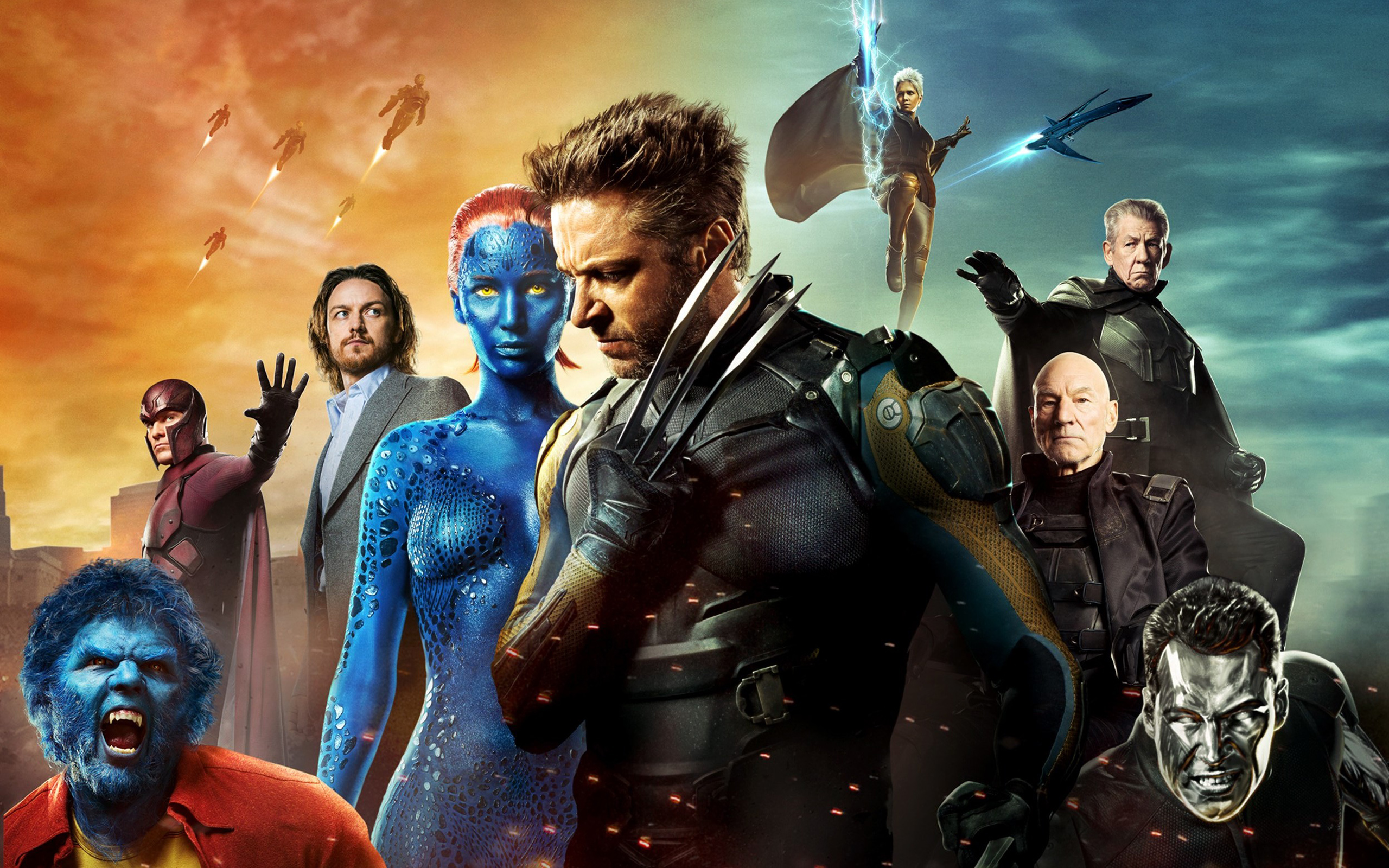
2. X-men: Days of Future Past

The best entry out of the X-men franchise, and the best superhero movie of the year. Serving as a sequel to both 2011’s X-men: First Class and 2006’s X-men: The Last Stand, X-men: Days of Future Past is set in the apocalyptic future where mutants are being exterminated by humanoid robots called “Sentinels”. Having only one chance to go back in time and stop this future from ever happening, Charles Xavier (Patrick Stewart) and Magneto (Ian McKellen) send Wolverine (Hugh Jackman) through time to their younger selves (Portrayed by James McAvoy and Michael Fassbender) so they can stop the triggering event and save the future. Directed by Bryan Singer, who formerly helmed the first two entries in the franchise, X-men: Days of Future Past is a game changer. It is not only a visually-dazzling and highly climactic sci-fi blockbuster: it is a vastly intelligent and contemplative story that focuses on its recurring themes of racism and xenophobia, once again bringing the consequences of discrimination to the forefront. X-men: Days of Future Past is one of those movies that restores your faith in the superhero genre. Four stars.

And finally, my number one film of the year is —

1. The Fault In Our Stars

Surprised? I’m not. The Fault In Our Stars is one of the most magical, heartbreaking, and genuine films you will ever see, and is more than worthy of being called the most emotional film of the year. Based off of the novel by John Green, The Fault In Our Stars follows the love story of two Cancer-stricken teenagers: the shy and book-loving Hazel Grace (Shailene Woodley) and the optimistic amputee Gus (Ansel Elgort). Written and directed by independent filmmaker Josh Boone, The Fault In Our Stars is one of the best stories ever translated from book to film. I initially was skeptical on seeing this film, considering how much it seemed to have been doused in rom-com syndrome. The reality couldn’t be further from the truth. Boone adapts Green’s story perfectly to the big screen, retaining everything in the novel from the visual details to the words that were written. But its Woodley and Elgort that sells it so well, their chemistry that vibrates so wonderfully with each other and leaves such an impression on you. Trust me when I say this isn’t your typical rom-com: it’s a heartfelt drama disguised as a tween movie, and it is the best of it’s kind. Four stars.

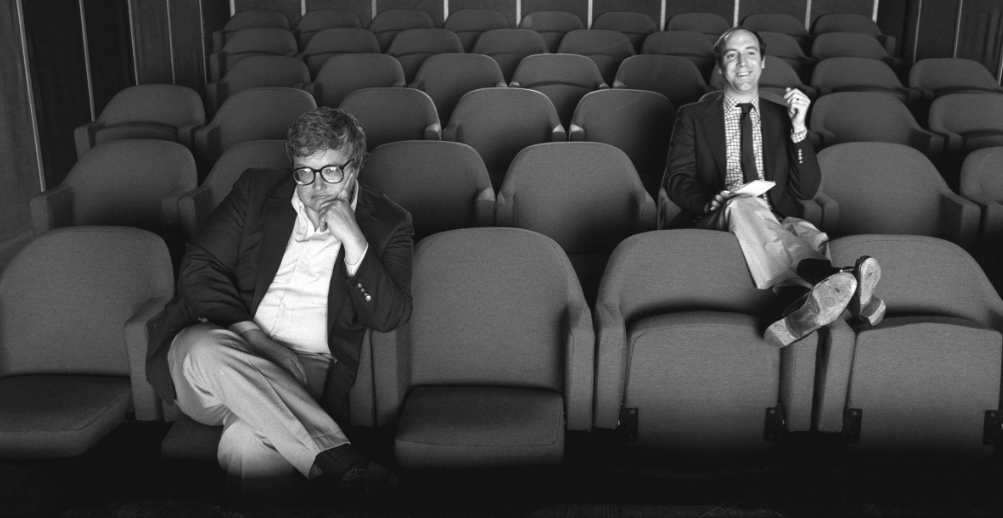
And finally, this year’s first Grand Jury Prize appropriately goes to Steve James’ documented biography Life Itself. Following Roger Ebert’s life and career from him growing up in Chicago, to when he got his first reporting job, to when he won the Nobel Prize for film criticism, to when he lost his best friend, to when he got Thyroid cancer, this film is everything that Roger Ebert is: funny, honest, heartfelt, unabashed, unflinching, and real. It doesn’t give you a peppered-up look at his life: it’s whole and accurate, as genuine as any of the reviews he’s written. I’m probably biased towards this subject, but the subject doesn’t count as long as it is handled well. James’ handles this story with respect and humility, and ends up telling a story about life itself rather than just limiting it to Roger’s story. It’s my favorite documentary of the year, and it brings me great pleasure to award my first Grand Jury Prize to this wonderful film tribute.

Honorable mentions include the creepy and morally ambiguous Nightcrawler, the funny yet stylish Guardians of the Galaxy, the humorously innovative The Lego Movie, and the quietly thrilling The Imitation Game, featuring the year’s best performance from actor Benedict Cumberbatch. Not all films can be honored at the end of the year compilations, but this year I was glad to have seen so many films and give each of them a chance to shine in their own way.

All the same, if you feel differently about some of the films on my list, or you have seen another film that deserves to be recognized, please comment about it. Or make your own list. Movies are deemed as great films not from individuals, but from the masses, and the only way you can tell if a movie has truly accomplished something is if it has the same effect on all its viewers.

On that note, my fellow moviegoers, I end with a classic line from my favorite film critic: “I’ll see you at the movies.”

– David Dunn

Tagged , , , , , , , , , , , , , , , , , , , , , , , , , , , , , , , , , , , , , , , , , , , , , , , , , , , , , , , , , , , , , , , , , , , , , , , , , , , , , , , , , ,