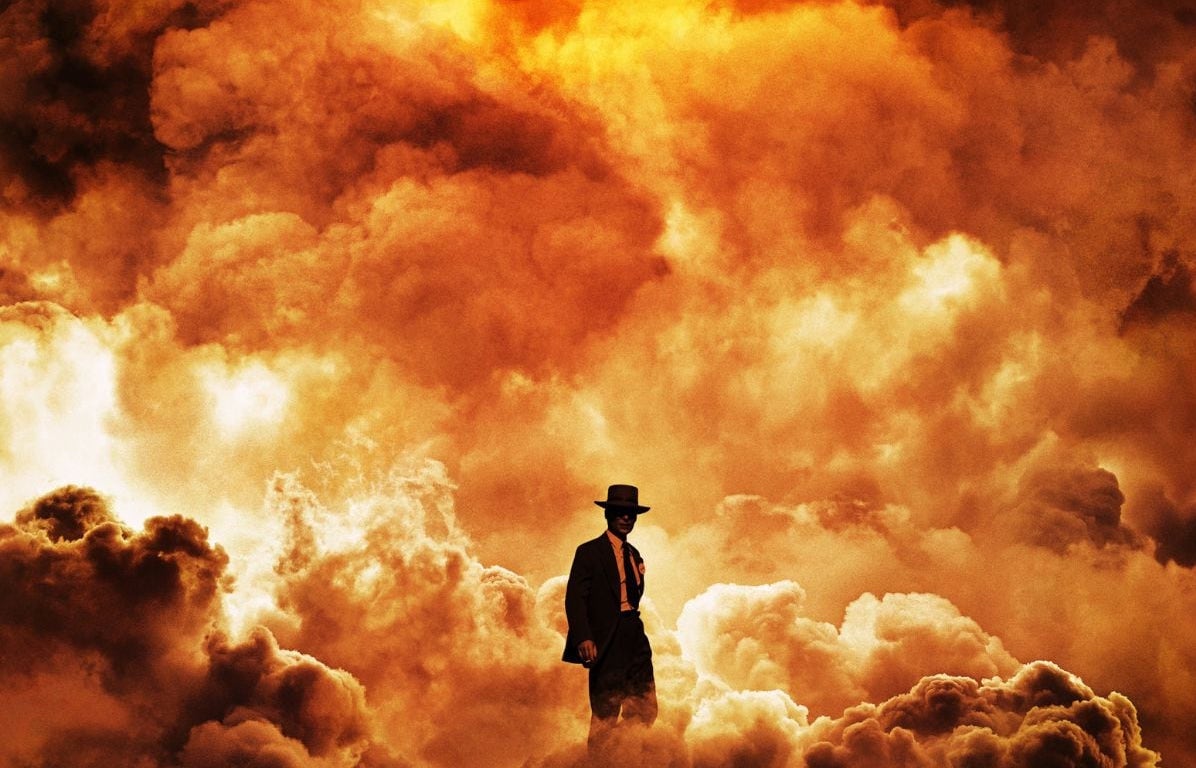
Top 10 Films Of 2023

Life is funny. Not necessarily “haha” funny, but funny as in kind of weird. At the beginning of 2023, I was looking forward to my first full year of marriage with my newly-wedded wife, going on adventures together, and checking out the newest releases in theaters. We got to do all of that and more, but there were a lot of unexpected pitfalls along the way.

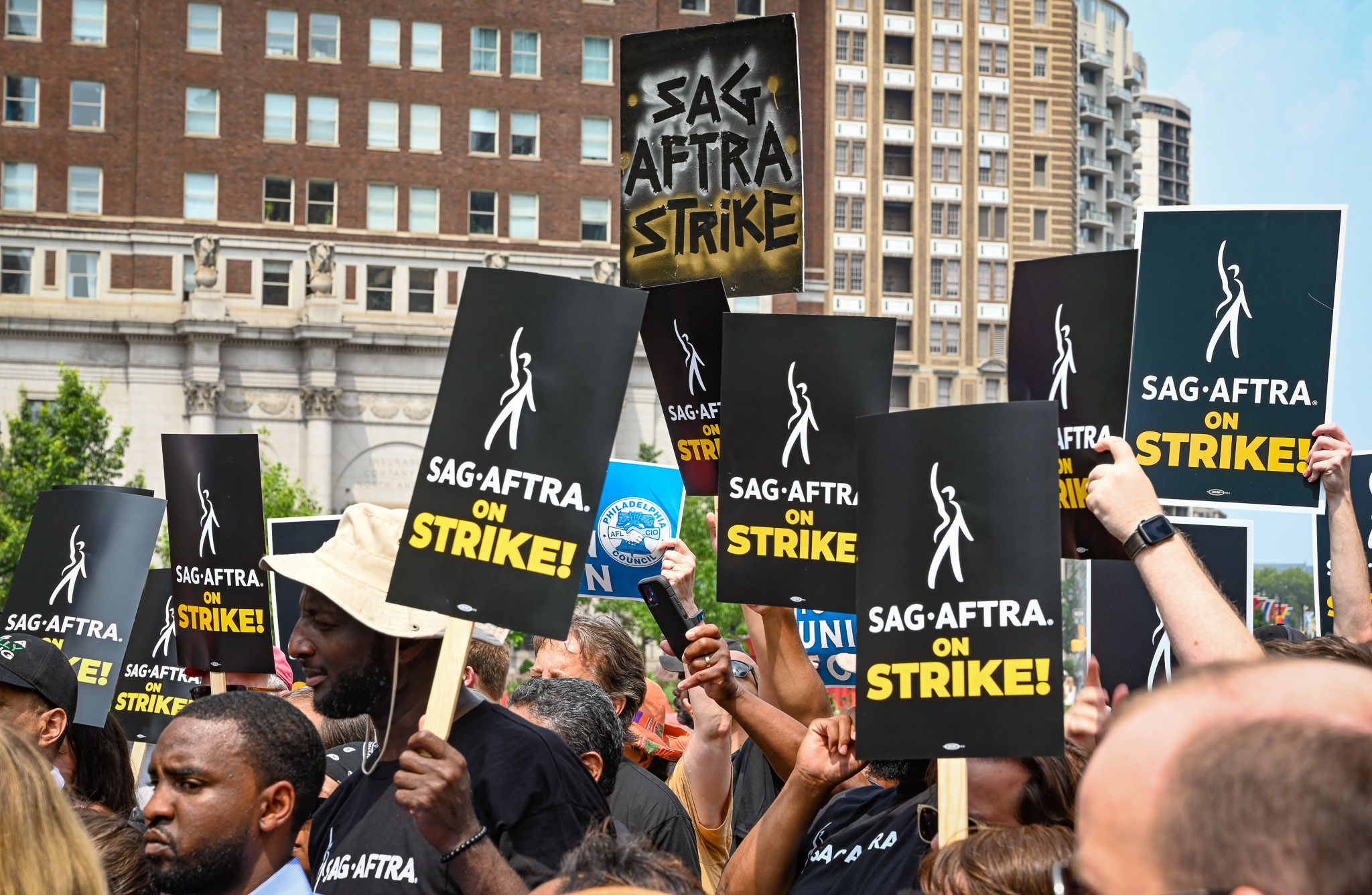
For instance, not only did the Writer’s Guild go on strike for the first time in 15 years, but so did SAG-AFTRA for the first time in 40 years, mainly due to the growing use of artificial intelligence in film productions. Both concurrent strikes resulted in over $6.5 billion in economic losses, as well as over 45,000 jobs lost. For context, the 2007 Writer’s strike resulted in over $2.1 billion and 38,000 job losses. And here I was thinking that COVID-19 would be the most damaging thing to the film industry. Hollywood studio executives turned out to be the biggest parasites out of the entire year, and the worst part is the issue isn’t even over. Sure, they ended up signing a new contract with the AMPTP, but that’s a temporary deal that only lasts until 2026, so we might be dealing with the same issues all over again in two years’ time. Good luck, Hollywood: you’re definitely gonna need it.

But that isn’t all that happened in the past year. The recession continues to put economic pressure on everybody across the nation. War continues to ravage Palestine and Israel. Advertisers continue to flee Elon Musk’s failed rebranding of Twitter (excuse me, “X”). Not to mention the bizarre “Barbenheimer” craze and all of the unhinged memes that came out of that. Don’t even get me started on the fact that we have another presidential election coming up this year. Didn’t we just have one of those things? I’m not looking forward to another year filled with political angst and hostility, especially when the leading GQP candidate is too much of a wuss to even show his face on a debate stage.

All this is to say that 2023 has been a strange, strange year, and it’s impossible to predict what 2024 will bring. But as long as actors and writers are being fairly paid and nobody attempts another insurrection against our democracy, I guess it can’t all be bad. Fingers crossed either way.

Now before we hop into this year’s Top 10 list, we have a few disclaimers to cover as per usual. First of all, try as I might, I have not seen every film that’s come out this year, especially those released in mid-to-late December. Trust me, I wanted to see movies like Wonka, Maestro, The Color Purple, The Boys In The Boat, and Ferrari, but it’s the holidays and my time was split between two families and a destination wedding. I’ve said this before, and I’ll keep saying it until it registers with film studios: if you want your movie considered for my Top 10, STOP. RELEASING. YOUR. MOVIES. IN. DECEMBER. There is a 99% chance I will not see it, especially with all of the holiday hysteria that’s happening this time of year.

Also, not every movie released this year made it onto my list. I know The Super Mario Bros. Movie was one of two billion-dollar movies from the year, and while it was a fun and wacky time in the Mushroom Kingdom, it doesn’t belong anywhere near anyone’s Top 10 list. For crying out loud, I didn’t even put Sonic The Hedgehog 2 in my Top 10 last year. You really think I’m going to put Mario above the greatest video game movie ever made? Mamma Mia, what a mistake that would be!

That being said, there were some movies I really enjoyed this year that couldn’t find their way onto my list just due to the sheer space. Those movies include Teenage Mutant Ninja Turtles: Mutant Mayhem, Mission Impossible: Dead Reckoning, A Haunting In Venice, Blue Beetle, Elemental, Evil Dead Rise, and The Boy And The Heron. It certainly doesn’t include Dune: Part Two since it got delayed to March 2024. David Zaslav continues to prove he’s the worst CEO working in Hollywood today, but he’s still got some work to do if he wants to be the worst CEO in the nation (hi Elon!).

With all of that said, let’s kick off my Top 10 with this year’s Special Prize. Normally, I award my Special Prize to a limited release that didn’t get as much love and attention as other movies did, but this year is different. Even though my Special Prize is literally the highest-grossing movie of the year, it did the most it could with its fairly limited premise and brought something fresh, original, and creative to cinemas this year. I hope all studios will look to this movie as inspiration for how to handle popular franchises moving forward, especially when that IP is as massive, iconic, and empowering as…

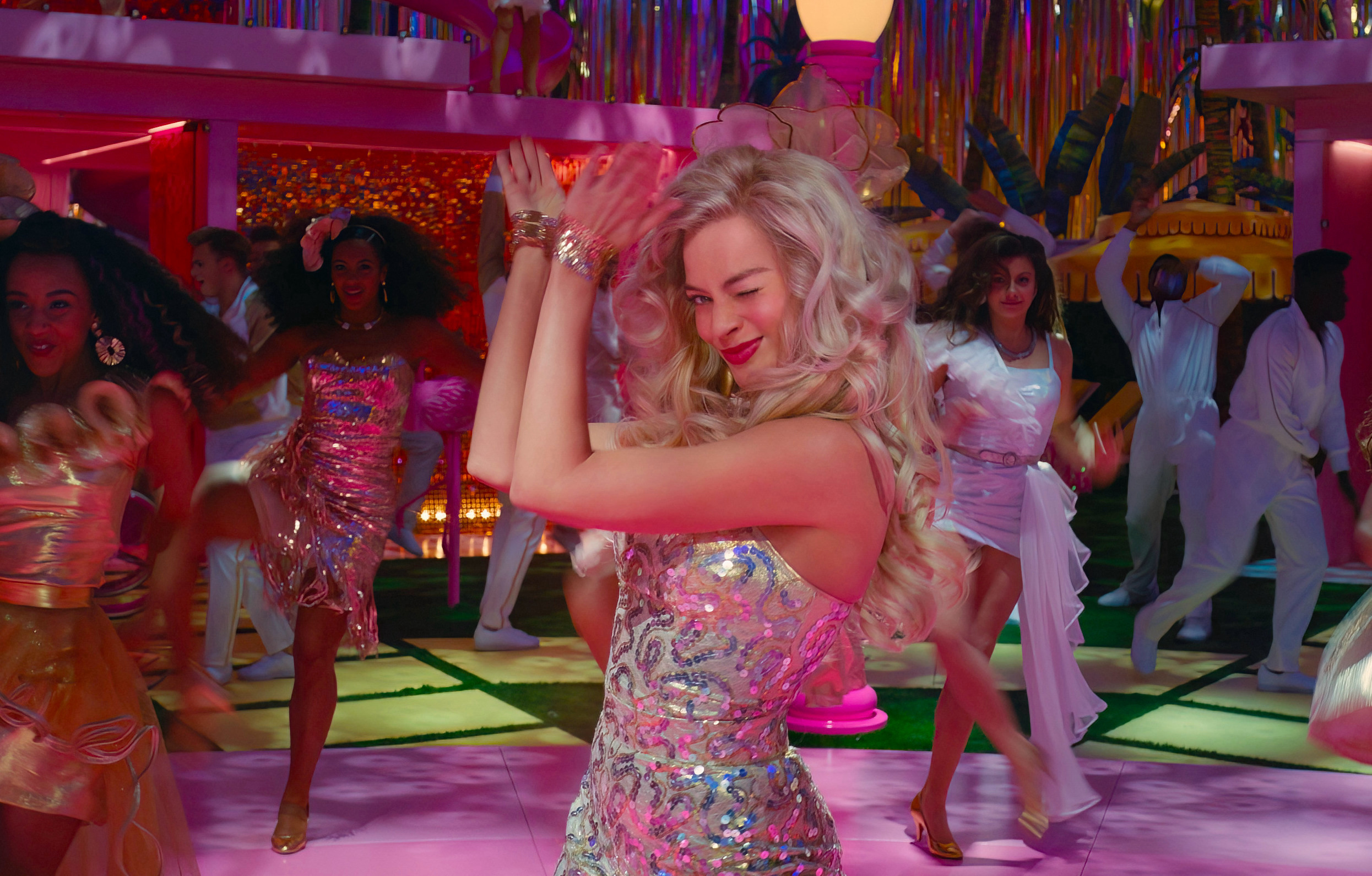
Special Prize: Barbie

SOURCE: Warner Bros. Pictures

Bursting with joy, humor, heart, style, pizzazz, personality, and as many hues of pink that it can fit, Barbie tells an ingenious and captivating story that is as thought-provoking as it is in-cheek and entertaining. Yet the best thing about this movie isn’t its leads, with Margot Robbie and Ryan Gosling giving inspired performances as both Barbie and Ken. It isn’t the flashy costumes, the dreamy vehicles, or the eye-catching production design that makes you feel like you’re walking through Barbieland. It isn’t even the incredible soundtrack, which features hit after hit from featured artists such as Dua Lipa, Lizzo, and Billie Eilish. No, the best thing about this movie is Greta Gerwig’s inspired take on Barbie that explores larger themes about womanhood, materialism, motherhood, gender patriarchy, and existentialism. Simply put, this movie is way better than it has any business being. If we’re going to keep going down this road of adapting popular childhood IPs, I hope future movies are as witty, clever, and creative as Barbie is.

Now that we’ve finished with this year’s Special Prize, let’s break down the 10 best movies I’ve seen in 2023, starting with…

10. John Wick: Chapter 4

SOURCE: Lionsgate

In a genre that’s as tired and exhausted as action movies are, the John Wick series always manages to stay fresh, stylish, and exhilarating, and Chapter 4 is no exception. The action is well-choreographed, fast-paced, and brutal, with every sequence consistently ramping up the stakes and tension. Keanu Reeves is as slick and cool as he’s ever been, and Bill Skarsgard offers a smug and slimy performance as the film’s central villain. But the best thing about the film by far is its richness in characters. Unlike other action movies that drop generic, faceless figures into the fray just to be killed, John Wick: Chapter 4 is packed with quirky, unique, and memorable characters that are as distinguished as they are charismatic. By the time the movie ended, I not only cared about what happened to John, but all of the characters he’s come into contact with — including the very people who were hunting him. A hot-blooded action thriller that skillfully teeters you on the edge of your seat all the way through. Three and a half stars.

9. Talk To Me

SOURCE: Umbrella Entertainment

One of the most creative, eerie, and original horror movies to emerge from the past several years. After a group of teenagers discover an embalmed hand that allows them to see the dead, they quickly realize that these spirits have nefarious intentions of their own and they won’t rest until they’ve taken over every person who’s touched the hand. Writers-directors Danny and Michael Philippou are absolutely stellar in their debut feature film, crafting an ingenious and layered narrative filled with depth, mystery, and intrigue. But they do an equally exceptional job humanizing their characters and making them feel down-to-earth and relatable. By the time the horror truly settles in, you’re invested in everyone and care about what happens to them. It does struggle a bit with pacing early on, but I’d rather have a more gradual narrative that sets up its stakes well rather than a spastic one that doesn’t understand how to properly engage its audience. The last scene will send the coldest shivers down your spine. Three and a half stars.

8. Air

SOURCE: Amazon Studios

An incredibly human and heartfelt look at one of the biggest branding deals ever made in sports history. Matt Damon stars as Sonny Vaccaro, a Nike talent scout who’s looking to sign NBA rookie Michael Jordan against impossible odds. This isn’t so much a sports drama as much as it is a marketing drama, but this behind-the-scenes look into one of Nike’s most iconic products feels interesting and engaging at every turn of this witty, clever, and spellbinding story. Matt Damon is phenomenal in the lead role and offers one of the most powerful monologues ever in a sports drama, and Viola Davis is equally as convincing as Michael Jordan’s mother. But Ben Affleck shines the most in the director’s chair, setting up the stakes very well and making you understand everything these characters have to lose if this deal doesn’t go through. A slam dunk in the world of basketball dramas and the best possible way you could have told this story. Three and a half stars.

7. Spider-Man: Across The Spider-Verse

SOURCE: Sony Pictures Animation

Yet another visually dazzling, eye-catching, emotional, and impactful animated epic that once again proves that animation is not merely a genre — it is a medium for art, film, and greater feats of storytelling. This sequel to the Academy Award-winning Spider-Man: Into The Spider-Verse is bigger than ever before, showing an expansive and limitless Spider-Verse filled with all kinds of Spider-Heroes. Shameik Moore and Hailee Steinfeld continue to shine as Miles and Gwen, but Oscar Isaac is the one who really leaves an impact as Miguel O’Hara, the Spider-Man from 2099 who is quite literally carrying the entire universe on his shoulders. The animation is even more ambitious than in 2018 if you can believe it, with each Spider-Verse stylized in a unique and striking way that makes each one stand out in their own way. But the creative team deserves special praise for not merely relying on the multiverse aspect, but rather using it to tell a larger, more complex story about how Miles fits in the ever-expanding Spider-Verse. The only genuinely negative thing I can say about Across The Spider-Verse is that it had to end. Four stars.

6. Nimona

A vibrant, fast-paced, and infectious sci-fi-fantasy adventure with some of the cleanest and most polished animation all year. Chloe Grace Moretz stars as Nimona, a shapeshifter who is feared and hated by her kingdom for her strange abilities. But when she teams up with disgraced ex-knight Ballister Boldheart (Riz Ahmed), they uncover a conspiracy together that could unravel the entire kingdom. Based on ND Stevenson’s beloved graphic novel, Nimona is a film bursting with energy, excitement, and heart, a magical little adventure that teaches children not to be afraid of who they are or what they can do. Moretz and Ahmed share great chemistry and create one of the year’s most beloved on-screen friendships. Directors Nick Bruno and Troy Quane translate ND Stevenson’s rebellious energy wonderfully into this vast medieval-futuristic setting. But it’s DNEG’s incredible animation that really makes this a top-tier animated classic, designed to evoke the feel of a storybook with silky-smooth action and motion. A special, sweet little gem that can make anyone feel like their own hero. Four stars.

5. Guardians Of The Galaxy Vol. 3
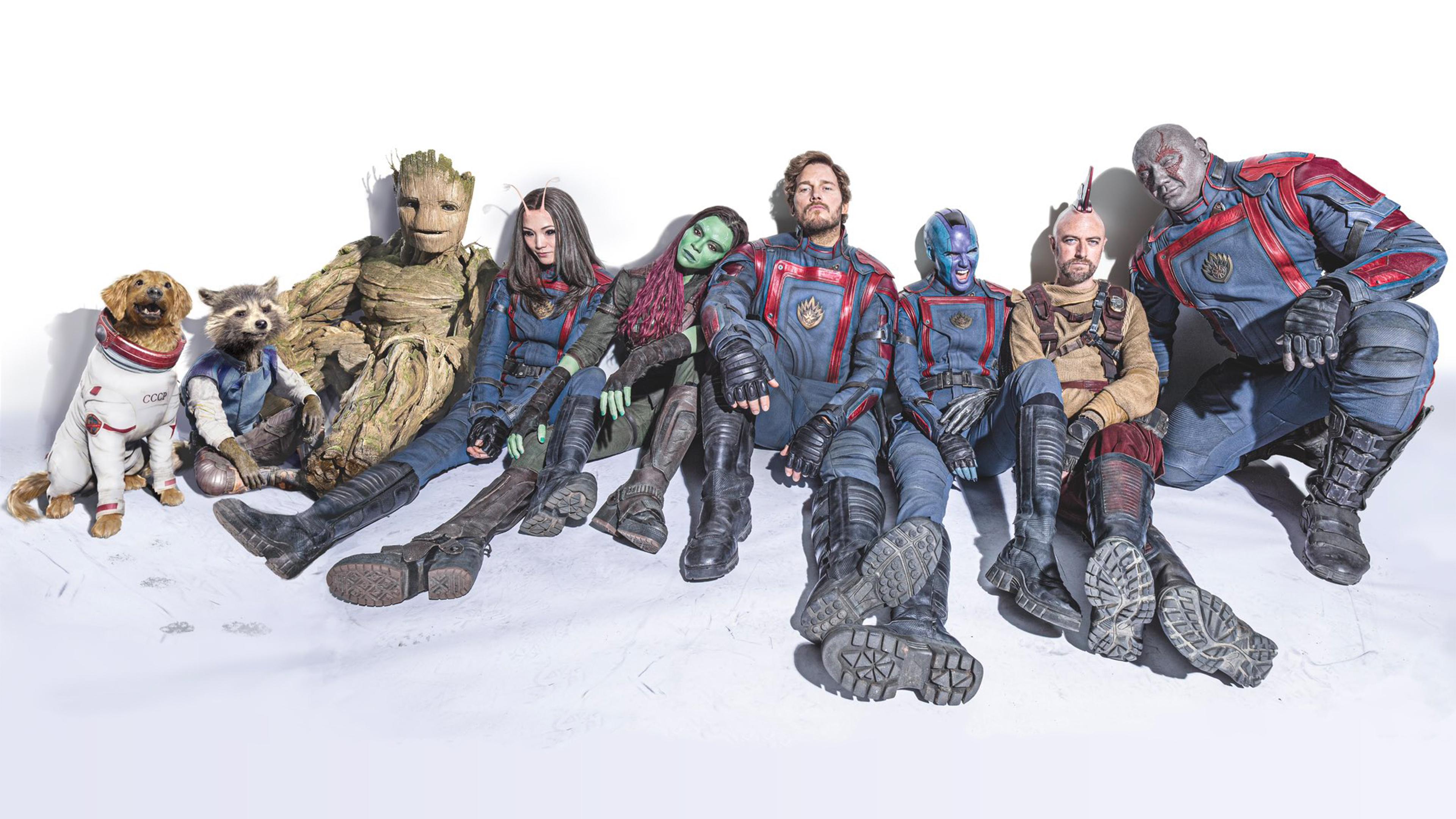
SOURCE: Marvel Studios

The very best movie out of the Guardians Of The Galaxy trilogy and quite possibly one of the best movies the MCU has ever produced, period. In this galactic threequel, the Guardians need to team up one last time to save one of their beloved friends from the clutches of the High Evolutionary (Chukwudi Iwuji), a cruel and psychotic scientist who will stop at nothing to “perfect” the universe as he sees fit. Chukwudi is downright despicable as the High Evolutionary, a twisted and sadistic madman who takes great pleasure in inflicting pain and torture upon his poor creations. Rocket’s (Bradley Cooper) backstory is as touching as it is heartbreaking, with each flashback drawing you deeper and deeper into his tragic beginnings. But James Gunn is the heart and soul of this story about redemption, change, and how the power of family can fix even the most broken people. Guardians of the Galaxy Vol. 3 is nothing short of a moviemaking miracle, a genuinely unique, refreshing, and original experience that reminds us all of the power of movies and what they can accomplish. Four stars.

4. Godzilla Minus One

SOURCE: Toho

An epic return to form for Japan’s most iconic movie monster, and just in time for his 70th anniversary. After the world was left devastated in the wake of World War II, a post-war Japan must unite against a new threat facing their nation — a 160-foot monster known as Godzilla. Taking inspiration from his roots as a metaphor for nuclear warfare, Godzilla is at his most terrifying here and wreaks havoc in ways we’ve never seen before. Godzilla’s sheer size and scale feels much bigger and more ominous than ever, and the destruction he leaves in his wake feels downright nuclear. But the disaster elements are commonplace in most Godzilla movies — what elevates Minus One is a very human story that focuses on war, PTSD, grief, guilt, and finding reasons to live in a world that feels like it’s always crumbling. Director Takashi Yamazaki gives the characters urgency and humanity that makes you want to root for them, even in the wake of an unstoppable Kaiju rampage. Godzilla Minus One is the surprise hit of the year that is as entertaining as it is emotional. One of the best modern-day Godzilla movies, if not of all time. Four stars.

3. Killers Of The Flower Moon

SOURCE: Apple Original Films

You don’t merely watch Killers Of The Flower Moon — you are traumatized by it. You sit in silence as a gaping sense of loss washes over you, like watching your own child die in front of you. Based on David Grann’s book chronicling the horrific Osage murders of the 1920s, Martin Scorsese’s sweeping crime saga is a striking and observant portrait filled with beautiful, bold, and striking colors and harrowing scenes of violence, terror, and tragedy. Leonardo DiCaprio and Robert De Niro give some of the best performances out of their entire careers, but Lily Gladstone outshines everyone else with a captivating performance filled with strength, bravura, power, grief, and a deep-rooted pain that could only last for generations. But Martin Scorsese deserves high regard for giving this subject matter the respect, the seriousness, and the attention that it deserves. At three hours and 26 minutes, Killers of the Flower Moon is one of Martin Scorsese’s longest films ever, but it is simultaneously one of his most essential. You will not find another film in 2023 as important to watch as Killers Of The Flower Moon. Four stars.

2. The Iron Claw

SOURCE: A24

A devastating behind-the-scenes look at one of America’s most notorious wrestling families and the relentless tragedy that followed them throughout their lives. Zac Efron gives an incredibly nuanced performance as world champion Kevin Von Erich, but it’s his on-screen brothers Jeremy Allen White, Harris Dickinson, and Stanley Simons that really round out this brotherhood and make it feel grounded and real. The wrestling sequences are brutal and unrelenting, with each punch, kick, throw, tackle, and impact pushing these brothers further and further past their limits. The cinematography by Matyas Erdely puts you right in the ring and makes you feel just as bloody and exhausted as these brothers are. But writer-director Sean Durkin deserves special praise for portraying this family not as larger-than-life wrestling icons, but as everyday people who have their own dreams, desires, fears, and aspirations. The big achievement with The Iron Claw isn’t just how faithful it remains to the real-life family — it’s how human it feels and how much these brothers mean to each other. A beautiful yet heart-wrenching picture that demonstrates just how beautiful and fleeting life can be. Four stars.

And finally, we come to my number one movie of 2023. Just like with any other moviegoing experience, I’m always looking for a film that leaves an impression: one that lingers and stays with you long after you’ve left the theater. But with this movie, the impact was immediate and horrifying: like watching a bomb go off in front of your eyes. This is the most engrossing, intriguing, absorbing, ominous, and foreboding film of the year by far, and that film is…

1. Oppenheimer

SOURCE: Universal Pictures

Recounting the life story of the father of the atomic bomb, Oppenheimer follows his life from his early university days to creating the bomb to witnessing the nuclear fallout from its creation. Writer-director Christopher Nolan accounts for nearly every aspect of J. Robert Oppenheimer’s life in vivid detail, while longtime collaborator Cillian Murphy does an impeccable job portraying the physicist at every point of his life. The cast is all exceptional, with Emily Blunt and Robert Downey Jr. being two of the strongest highlights. The score by Ludwig Goransson is entrancing, mesmerizing, and unsettling. And when that bomb goes off during the Trinity Test sequence, I’ve never felt a blast in a theater more than I ever did in that moment. Yet for all of its technical achievements, the greatest thing Oppenheimer does is capturing the fallout of the atomic bomb — how global powers reacted to it, how Washington politicized it, how the world felt threatened by it, and how Oppenheimer’s life was forever changed by it. More than anything else, I wanted Oppenheimer to show what unleashing nuclear warfare onto the world would do to the soul of a man, and Christopher Nolan does a brilliant job showing how Oppenheimer remained haunted by his achievement for the rest of his life. The scariest part of Oppenheimer isn’t wondering if his creation will end up destroying the world — it’s wondering if it already did. Four stars.

And that’s a wrap on 2023, folks. I hope you all have an amazing 2024. And if somehow David Zaslav or Elon Musk is reading this, I wish you the opposite.

– David Dunn

Tagged , , , , , , , , , ,

“KILLERS OF THE FLOWER MOON” REVIEW (✫✫✫✫)

SOURCE: Paramount Pictures

Beware the wolves in sheep’s clothing.

Killers Of The Flower Moon is the kind of film that leaves you stunned and speechless: the kind that makes you sit on uncomfortable emotions, reflect on your history, and think about all we have taken from people that we have never met. People don’t think often enough about how America was founded on stolen land, but they should. All we have done since meeting the Native American in the 17th century was kill and steal from them — and we’ve been killing and stealing from them ever since. 

Martin Scorsese confronts this cold, stark truth with brutal honesty and unflinching reality. You don’t merely watch Killers Of The Flower Moon — you are devastated by it. You watch as real-life horrors unfold before your very eyes, begging that justice comes and relieves the persecuted like a breath of fresh air. It never does. In this film, a kind word is a lie. A hug is insincere. A kiss is betrayal. And the words “I love you” mean death. 

Based on the nonfiction book by journalist David Grann, Killers of the Flower Moon tells the true story of the Osage Nation, who stumbled upon oil on their lands and became filthy rich. Many white Americans were jealous of the natives and their obscene amounts of wealth in 1920s Oklahoma, including William Hale (Robert De Niro), a cattle rancher who familiarized himself with the Osage’s customs and gained their trust. 

After World War I ended, William’s simpleton nephew Ernest Burkhart (Leonardo DiCaprio) comes home to live with William and his family. Once he settles in, William plants an idea to Ernest — marry an Osage woman and kill her and her family so that they can inherit their oil headrights after they die. 

That woman ends up being Mollie (Lily Gladstone), whose family’s estate owns more than $7 million in oil money. As Ernest marries Mollie and they build a life together, he’s torn between his love for money and his love for family, and he ultimately has to decide which one matters to him more. 

Killers Of The Flower Moon is a hard film to review because it’s a hard film to watch. Many of Martin Scorsese’s contemporary and modern-day classics are all entertaining to some degree, whether you’re talking about the dark humor and wit of Goodfellas, the spine-tingling sensations of Shutter Island, the grandiose splendor and serenity of Hugo, or the outrageousness of The Wolf Of Wall Street. Killers Of The Flower Moon is a different story. It is not a fun film by any means. It isn’t enjoyable, amusing, exciting, or gratifying. I wouldn’t even call it fulfilling. 

No, the word that comes to mind is “traumatizing.” And why wouldn’t it be? You’re dealing with indigenous genocide here. I wouldn’t say Killers Of The Flower Moon is a fun watch any more than I would say Schindler’s List or 12 Years A Slave is a fun watch. In fact, going into a movie like this searching for entertainment value diminishes the film at large and the story it’s trying to tell. 

Instead, Martin Scorsese pays it the respect and the seriousness it deserves. Killers Of The Flower Moon is not a traditional picture — it’s a striking and observant portrait, a vast and stunning painting filled with beautiful colors and harrowing scenes filled with violence, terror, and tragedy. The fact is you don’t enjoy Killers Of The Flower Moon — you are entranced by it. You embrace it as the experience washes over you and you feel the deep pain that the Osage have experienced in silence for generations. 

While Leonardo DiCaprio and Robert De Niro have both separately teamed up with Martin Scorsese in the past, this is the first time both Academy Award-winning actors have partnered up with Scorsese at the same time, and it pays off with wonderful results. De Niro is downright hateful as William Hale, a sly and sick little scab that pretends to be a friend to the Osage people, when in reality he is the most dangerous predator there is — the kind you don’t recognize. The worst thing about his character isn’t how monstrous he is: it’s how normal he seems when he discusses genocide and plotting to take away the dead’s land and money for himself. He sounds so casual and matter-of-factly in his delivery — like he’s discussing a business strategy instead of a murder plot. For him, they may mean the same thing. 

DiCaprio is the exact opposite. While De Niro is calculated and crafty in his murder schemes, DiCaprio is a bumbling fool who wouldn’t know how to tie his shoelaces if you told him they were untied. At this point in his career, Leonardo DiCaprio has played all types of characters, from the undercover cop in The Departed to the illustrious millionaire in The Great Gatsby to the frostbitten survivor in The Revenant. He’s sold all types of characters in all types of roles, but he’s never sold stupid quite as well as he does in Killers Of The Flower Moon. It may sound like I’m insulting him, but I genuinely mean that as a positive. When it comes to murder conspiracies as massive as this, every master planner needs an idiot underling to carry out his bidding. Leonardo DiCaprio plays that part to a T, and considering I’m used to seeing him as the teen heartthrob from Titanic, it was shocking to me to see no traces of him here with Ernest Berkhardt. 

And the thing is his actions in the film might seem contradictory at first, but they’re really not once you understand his character’s motivations. He says at one point that he doesn’t know what he loves more: women or money. It seems like a throwaway line, but it actually informs everything his character does throughout the entire film. Because even though he’s slowly killing his wife and her family, he’s doing it through the thin veneer of love and being torn by what he loves most: his wife or her money. It’s incredibly conflicting, and DiCaprio captures that inner turmoil perfectly. 

But the best performance in the film is neither of the leads. It’s actually Lily Gladstone, who up until now has had mostly supporting roles in shows like “Room 104,” “Billions” and “Reservation Dogs.” Here, she takes command of the screen and steals every single scene she’s in. She is not a victim here: she is a fierce and powerful woman, a loyal and loving daughter, mother, and sister who watches in horror as her entire family slowly perishes one at a time. With a narrative this demanding, you need an actress who can authentically channel the pain, the torment, and the generational trauma that the indigenous have felt, and Lily Gladstone nails it perfectly. I can honestly say that she gives one of my favorite performances out of the whole year, and I hope she gets a lot of recognition come awards season because she truly deserves no less. 

At three hours and 26 minutes, Killers of the Flower Moon is one of Martin Scorsese’s longest films ever, second only behind 2019’s The Irishman. Does it feel long? Yes it does, but it also feels like it needed to be. This was a sprawling murder conspiracy that lasted several years and took the lives of over 60 people and shattered the lives of many more. Those people deserve to have their story told in full, uncompromising view. Quite frankly, anything shorter than three hours would have been disrespectful to those this film was dedicated to.

By the time Killers of the Flower Moon ended, I was left shaking in the theater with angry tears in my eyes. Not because of what Ernest and William had already done to the Osage, but because of how much they were allowed to take from them when they’ve already lost so much. May Ernest and William burn for eternity from the fiery coals they piled up for themselves in Hell, and may Molly and her family finally experience peace, knowing that the vibrant shades of the flower moon will shine forever. 

Tagged , , , , , ,

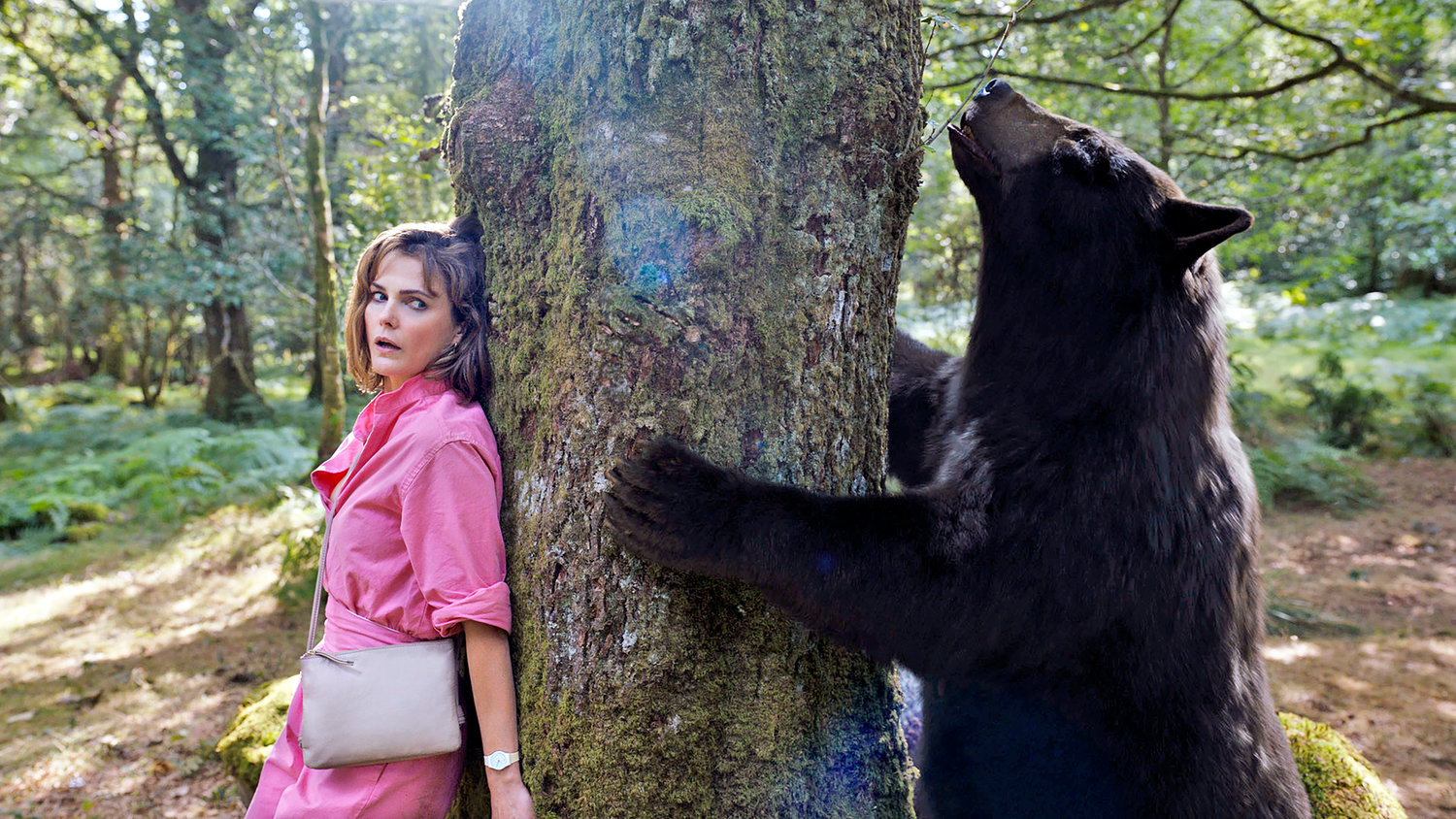
“COCAINE BEAR” Review (✫1/2)

Pat Redmond | Universal Pictures

Just a large smackrel of bear blow. 

Cocaine Bear is not a film — it’s an autopsy report. It’s a limp, lifeless, morbidly obese corpse that threw a massive fit before overdosing on obscene amounts of cocaine. It’s not meant to be seen, but rather dissected to understand what exactly went wrong. With such an outlandish title as “Cocaine Bear,” you’d expect a film to be equally bizarre and insane, or at the very least, meagerly amusing. Cocaine Bear is anything but. You’d have a more fulfilling cinematic experience if you overdosed while watching National Geographic. (Disclaimer: that is not an endorsement nor a recommendation). 

Based on “true events” (I’ll explain the quotation marks later), Cocaine Bear is about a bear that — you guessed it — does cocaine and goes on a massive killing spree. That’s it. That’s literally all there is to this premise. Sure the film is sprinkled with the likes of some stars like Keri Russell, Alden Ehrenreich, O’Shea Jackson Jr., Margo Martindale, and the late Ray Liotta in what is depressingly his last film role. Other than that, the movie is just about a bear killing people. And sleeping. And eating cocaine before killing more people. 

This is a film that’s really pushing the limit on what “based on a true story” is supposed to mean. Because while there was a real-life bear that ingested nearly 50 pounds of cocaine (local inhabitants hilariously called him “Pablo Escobear”), that bear overdosed and obviously did not survive, because why would it? If you ingested 50 pounds of anything, you’re not viable to live in the next 15 minutes, let alone for the next runtime of an hour and a half. 

The “novel” concept this film introduces is “Hey, this bear did cocaine — what if it DIDN’T die?” Hardee-har-har, how original. Imagine if we started doing that with other movies, like “What if Bambi’s mother didn’t die?” or “What if Michael Bay actually had taste and talent?” 

As mindless and insipid as this premise is, this project wasn’t completely without potential. After all, films with even more ridiculous premises went on to be singular and entertaining in their own right. Eraserhead was a deliciously dark and opaque film about the nightmares that haunt us, while Rubber was a hilariously outrageous romp about a tire that gains sentience and goes on a killing spree. And last year’s Everything Everywhere All At Once was arguably the weirdest film from last year, with its characters leaping through different universes and becoming martial artists, raccoon chefs, bagel-obsessed entities, hot dog-fingered lesbians, rocks, and even entire planets at one point. That movie went on to win Best Picture at the Academy Awards, and deservingly so. 

So despite how dumb and simple-minded this idea is, I don’t fault Cocaine Bear for having a weird premise — I fault Cocaine Bear for not doing anything with it. The previous films I mentioned all had strange, surreal, and bizarre ideas, but they all did something unique and different with them that elevated those ideas beyond their original premises. Cocaine Bear, meanwhile, does absolutely nothing with its premise. It “bear”-ly even does the “bear” minimum. And yes, the pun is intended, because this movie doesn’t offer up any other fun alternatives. 

This film is classified as a “horror comedy.” I find this in itself funny because nothing about the film is either scary or funny. The bear is not an intimidating presence and doesn’t inspire fear beyond its horrifying CGI rendering. The kills themselves are not bloody or grotesque enough to be truly frightening or shocking. I chuckled a little bit at some of the cameos (keep an eye out for Angry Retail Guy from TikTok), but that has to do more with who is being killed rather than how they’re being killed. Other than that, you don’t have much reason to care about the people who are being offered up for the bear’s carnage considering how uneventful they are.

So this film’s idea of horror was clearly misguided. What about its idea of comedy? To that I ask, what comedy? This film’s sense of humor revolves around two things: the F-bomb and cocaine. That’s not funny. It’s barely even juvenile. I laughed exactly one time in the movie, and it was when Alden Ehrenreich screamed out “A BEAR did COCAINE!” with the only exasperated voice in the entire movie. At 95 minutes, the movie needed much more than one flimsy one-liner to justify it as a comedy, especially when the other 94 minutes and 45 seconds are such a slog to get through. 

Even the editing is in complete shambles. There’s one scene of the film where a group is walking along, and all of a sudden, one of the group members calls out “Hey, remember that dead body we just passed?” Then the film flashes back to literally a minute ago where the group came across the body before cutting back to the present. I’m watching this scene thinking that with one quick rewrite, the film could have one clean, coherent sequence, and it would have saved the editor an extra editing session. It’s not like he was doing much with the rest of the movie. 

As bad as this movie is, the thing that offends me the most about it is just how inoffensive it is. However crazy and balls-to-the-wall insane you expect this movie to be, Cocaine Bear is surprisingly generic, dull, and just plain boring, which is the one thing I didn’t want it to be. It does absolutely nothing with its wacky premise. There’s nothing exciting about this movie. There’s nothing funny about this movie. There isn’t even anything remotely absurd about this movie. In fact, this movie’s lack of absurdity is probably the most absurd thing about the whole thing. 

This is the third feature-length film from Elizabeth Banks, who has directed one trainwreck after another from the gross and off-putting Movie 43 to the formulaic and forgettable Charlie’s Angels reboot in 2019. She’s such a talented and likable actress, why does she keep relegating herself to these obscenely stupid movies that are clearly beneath her? Pray this is the last trainwreck we get from her. And if it isn’t, God help us if her next movie is Cocaine Bear(s)

Tagged , , , ,

Part Of Me

It’s startling when you realize just how much your family resembles yourself. Ever since I was born, my Dad, my Grandpa, and I have been pretty much the same person. We all have heavily fixated minds and are deeply passionate about the subjects we’re interested in. We’re all emotionally oblivious and have trouble connecting with people on a meaningful level. We all struggle with anxiety and how to deal with our toiled emotions. And we all loved grabbing a slice of Grandma’s homemade pies. Even our baby pictures look identical. 

I always related very much to my Dad and Gramps because for most of my life, we all connected and struggled with the same things. Now, it’s just my Dad and me. 

Part of a family of eight, David Lee Dunn was born on March 5, 1938 from his mother, Hilda Dunn. Gramps and my Grandma, Marilyn, eloped in 1959 and had two children: my Dad, Stacey, and my Aunt U’lette, who sadly passed away in 2020. I remember visiting them both at their old home in Papa Grove, Illinois when I was very little. I used to play inside their pantry, taking out all of the pots and pans and banging on them with wooden spoons like I was a drummer in a band. Grandma told me that Gramps would always put the pots and pans back in the pantry after I was done playing with them, only for me to bring them back out and play with them all over again. I smile at the thought of him eventually giving up altogether, telling my Grandma to just pick up a pan off of the floor when she’s ready to cook dinner. 

I don’t remember Gramps being the warmest personality as I was growing up. Grandma was always the one who played with me, sang with me, made toys with me, and tucked me into bed in her upstairs bedroom. That’s not to say Gramps wasn’t affectionate in his own way — it just looked different from Grandma’s, like asking if I wanted a cookie or giving me a glass of milk. 

I found out why our interactions felt different much later in life, and that’s because Gramps was uncomfortable. Not with me mind you, but rather with himself. You see, the Dunns all struggle with a form of high-functioning autism that blessed us with great skill while cursing us with social ineptitude at the same time. My talents were in writing, while my Dad’s was in music. 

Gramps, meanwhile, was a master at machinery. If you gave him a wrench, that guy could work his way around any car engine or kitchen appliance, tinkering away until he found what made it tick. My Dad always said that Gramps was the best worker he ever had, and I could see why. He wasn’t called “Mr. Fixit” for nothing. 

But that level of genius comes at a cost. As I already mentioned, people on the autism spectrum struggle in social settings more than most other people do. I myself always struggled with what to say to people while growing up. I couldn’t read sarcasm that well, and I didn’t know how to pick up on other people’s nonverbal cues. 

Gramps had it worse than any of us. Not only were his symptoms more severe, but because his condition wasn’t properly diagnosed until 1981, he went through most of his life without the support he needed. He was always questioning himself, uncomfortable with his emotions and how to properly communicate with others. When I went to Sunday church with Grandma, I remember Gramps always skipping out on going with us. Not because God wasn’t important to him, but because he was legitimately scared that he might have to talk to somebody. 

I know firsthand what it’s like to be a prisoner in your own body — I’ve lived that way my whole life. But in many ways, Gramps’ prison was worse than mine ever was. That’s why I relate to him so strongly. 

It’s also why I’m so grateful that as I grew older, our relationship became stronger. At around the time I entered high school, he took a great interest in video games, and my Dad and I got him an Xbox 360 for Christmas. The games he played were the same as the movies he watched, either action or westerns. I remember watching him as he shot up gunslingers in Red Dead Redemption or Call Of Juarez, stormed the beaches of Normandy in Call Of Duty, or shot down a fighter jet in Ace Combat. No one else in my family really got into gaming as much as Gramps did, so it was nice to share that passion with him and bond over it together. 

But as time passed, Gramps’ hearing got worse, and eventually, so did his mind. Earlier this year, Gramps was diagnosed with early-onset dementia. We were told he probably wouldn’t live past the year. He passed just shortly after Easter. 

It’s so strange and heartbreaking to see someone you love deteriorate right in front of you. He often tried to eat inedible objects like bottle caps or napkins, and at other times, hallucinated that other people were there with us when they weren’t. One time, he pointed out to the garden and said “There’s my Ma. I’m going to go see her soon.” One of the scariest things to happen, however, was one day when he accidentally locked himself inside his closet for six hours. My Dad literally had to rip off the door bolts just to get him out of there. 

The most surreal thing by far though was the moments where you recognized your loved one hiding behind the mental fogginess of their mind. In one of my last interactions with him, I helped him to get up from the couch to go into the other room. Behind his tired eyes and smile, I could see my Grandpa exhausted and weary not just from the disease, but from all of his years living on this Earth. “I’m no good Dave,” he muttered to me in between some tired chuckles. I pressed my forehead into his and told him “You’re good, Gramps.” The fact that one David was saying this to another, I still don’t know if we said these things to ourselves or to each other. Maybe both. 

At other times, Gramps faded away, and the sick and frail persona took over. There was one point where he clutched onto my body while standing up in his bedroom, and I held him up for about two hours. It felt like my body was a pillar, and it was the only thing keeping him from falling into despair. 

It’s been a few months now, and it still feels weird without him around. This isn’t my first time losing a grandparent, and it won’t be my last time either. But losing someone you grew up with who feels so much like yourself feels like a piece of you has died with them. My Dad, Gramps, and I all grew up feeling like we’ve never really been understood by the world. To lose someone who did understand you so personally makes the loss feel a little bit deeper. 

I take comfort knowing that despite all of the bad days, memory lapses, and fading comprehension, it was still my Gramps I saw when I visited my grandparent’s home. I know this because when my dad was going through his things after he passed, he found my wife and I’s wedding invitation within the pages of his Bible. I remind you — this was a man who tried eating bottle caps and locked himself in his closet. And in the midst of all of that mental anguish and confusion, he still somehow found a way to put his grandson’s wedding invitation next to the most special place in his heart. That’s how Gramps loved — silently, yet truly. 

Despite everything our family has experienced in the past few months, I’m happy that my most prominent memory of him isn’t his dementia episodes or his hearing problems. It was a small, potentially inconsequential moment at their old home in Christmas 2005. I was home alone with him while Grandma was out shopping, and I was crying at the ending of How The Grinch Stole Christmas (don’t judge, I was a sentimental kid). Given his own social struggles, it would have been easy for him to ignore me and continue watching football in the other room. Instead, he came over to me, hugged me, and kissed me on the forehead. It was the first genuine moment of affection I felt from him where it didn’t feel forced, awkward, or uncomfortable. It felt natural. It felt like him. 

“Love you, Dave” he said to me. 

Love you, Gramps. 

– Little Dave

1938 – 2023

Tagged , , , ,

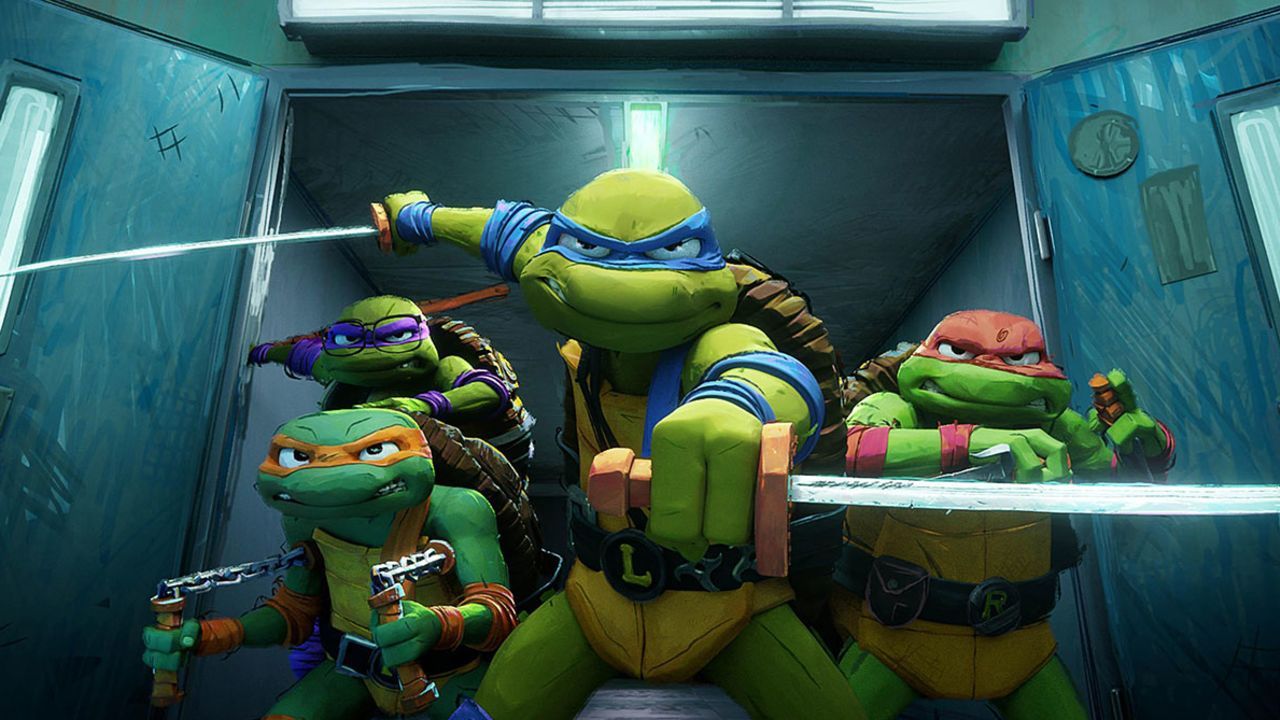
“TEENAGE MUTANT NINJA TURTLES: MUTANT MAYHEM” Review (✫✫✫1/2)

Cowa-freaking-bunga. 

Teenage Mutant Ninja Turtles: Mutant Mayhem is the best ninja turtles movie we’ve ever gotten. Yes, even better than the classic 1990’s film. Like the turtles themselves, TMNT: Mutant Mayhem is bursting with personality, energy, off-kilter comedy, high-kicking ninja action, and a ton of heart. It may deviate slightly from the source material, but the essence of the turtles is all here. Or maybe it’s more appropriate to say “ooze.”

Retelling the classic turtles story for the modern age, TMNT: Mutant Mayhem follows our four teenage mutants as they grow up wanting to live a life beyond the sewer. When they were very little, their father Splinter (Jackie Chan) raised Leonardo (Nicolas Cantu), Donatello (Micah Abbey), Raphael (Brady Noon), and Michelangelo (Shamon Brown Jr.) to fear the surface world and trained them in the martial arts to defend themselves. But while Leo wants to follow his father’s wishes, his brothers are always getting into trouble whether they’re ordering extra pizza, sneaking out to the movies, or breaking windows with their ninja stars.

One day, the quartet of brothers get an idea — if they help bring in a master criminal who is threatening New York City, the world will see that they’re not monsters and will accept them as one of their own. The problem is they need to catch “The Superfly” (Ice Cube), a mass murderer whose face nobody has ever seen. With their nunchucks, katanas, sai, and bo staff in hand, the turtles come together to prove that humans don’t need to be afraid of mutants.

One of the things I’ve always loved about the turtles is that it’s a story about outsiders. Much like the Hulk and the X-Men, the turtles are a family of misunderstood heroes who are feared and hated by society just because they’re different from them. Yet, despite the fear and hatred they experience on a daily basis, the turtles always strive to do the right thing. Not because it personally benefits them or because it makes others see them differently, but just because it is the honorable thing to do.

Teenage Mutant Ninja Turtles: Mutant Mayhem is a different story. While other TMNT adaptations have traditionally emphasized the “mutant” or “ninja” side of the turtles, Mutant Mayhem instead fully embraces the teenage aspect and allows them to be much more mischievous, rebellious, and even a little reckless — just like real teenagers are. We’ve seen action-hero turtles beat up a bunch of highly-trained assassins, as well as stealthy ninja turtles who silently stalk their prey at night. I’ve never seen a turtles movie where their biggest concerns are high school crushes, pizza toppings, and searching for a place to belong. That makes them so much more relatable and humanizes them to the point where we don’t see them as mutants, ninjas, or turtles, but rather as kids confused and hurt by a world that hates them so much.

I also love the animation in this movie. While clearly inspired by the recent success of Into The Spider-Verse, Teenage Mutant Ninja Turtles: Mutant Mayhem carries its own gross and pulpy influence that feels like it’s popping straight out of the pages of an Eastman & Laird comic book. The lines are scratchy and unrefined, yet illustrate whole and complete pictures. The character designs look uneven and bizarre, but emphasize specific traits relating to their personalities and mutations. And the frame rate is gorgeous, moving and flowing like a waterfall of heavily saturated colors. Remember how Spider-Punk looked in Across The Spider-Verse? Picture that for the entire movie, and you’d come pretty close to what it’s like watching Mutant Mayhem.

And in a day and age where the weakest part of most movies are the villains, I’ve got to give special credit to Ice Cube’s portrayal of Superfly. His arc mirrors that of the turtles in that he too is a mutant who has always been shunned by society, but he doesn’t possess the moral compass that they do — mainly because he never had a father figure in his life to teach him the difference between right and wrong. The fact that he and the turtles share the same struggles while simultaneously divided on their values makes their conflict so much more personal and compelling.

The best part? Superfly is a wholly original villain. While partially influenced by Baxter Stockman, Superfly did not exist in turtles media prior to this movie. It’s so refreshing to see an original idea work so well in a popular franchise, especially when many other live-action movie villains fail to be as interesting or intimidating.

The fast-paced ninja action you know and love is all here, and personally, I would argue some of the movie’s crazier action sequences are more exciting than even the live-action movies are. The pop-culture references are clever and copious, further emphasizing the teenage aspect of the turtles. And the comedic bits are spot-on and hilarious. This is probably the funniest ninja turtles movie we’ve ever seen, and the best part is it doesn’t have to sacrifice its serious or darker tones in order to remain fun and entertaining.

There are some differences from the source material that will bother some die-hard fans, namely with how the turtles acquire their ninja skills and how the movie ends. For me, changes are justified if they add to the characters and the world they’re living in, and Teenage Mutant Ninja Turtles: Mutant Mayhem is filled with wild, gross, and weird characters that you quickly learn to fall in love with. Imagine all of the kids out in the world right now who sometimes feel as lost, afraid, and alone as Leo, Raph, Mikey, and Donnie do. And imagine how inspired they must feel when they look down the sewers knowing that they too can be a ninja turtle.

Tagged , , , , , ,

“BARBIE” Review (✫✫✫1/2)

SOURCE: Warner Bros. Pictures

Introducing Existential Dread Barbie!

Barbie is an unexpectedly amazing and splendid little film, an equally joyful, imaginative, and heart-wrenching adventure in pink that combines the playfulness of Toy Story with the existential questions you’d find in 2001: A Space Odyssey. Like The Lego Movie and the recently released Dungeons & Dragons: Honor Among Thieves, Barbie proves that there is no such thing as bad ideas in Hollywood: only bad execution.

Based on the popular Mattel toy line, Barbie takes place in a magical world called Barbieland where all of the Barbies and Kens live and play. You see, when you play with Barbie dolls in the real world, they also interact with one another in Barbieland — and their world is incredibly different from ours.

For one thing, their government is made up entirely of women, from President Barbie (Issa Rae) all the way to the Barbie Supreme Court (which I imagine is giving Samuel Alito and Clarence Thomas a much-deserved migraine). Barbies lead all of the most important positions in Barbieland, from doctors and lawyers to physicists and pilots. And perhaps most significantly, Barbies aren’t expected to couple with any Kens if they don’t want to — which needless to say, is often.

One day, Stereotypical Barbie (Margot Robbie) notices strange things happening to her. For one thing, her feet go flat instead of her typical arched position (yes, that’s considered a serious health condition in Barbieland). She starts to notice cellulite on her thighs (an even more serious condition). But perhaps most oddly, she starts to think about death, a concept that all Barbies should be allegedly immune from. Together with her boyfriend Ken (Ryan Gosling), they venture into the real world to see what is happening and what is causing Barbieland to turn upside down.

Before I hop into this review, let me just say something for the sake of transparency: I hate Barbie. I hate Barbie with a passion. As a kid, I would kick, throw, and rip the heads off of every Barbie I could find because of her plastic, plain stare and her creepily real strains of hair. There’s a character in this movie called “Weird Barbie” who looks twisted, disheveled, and all-around messed up because she was played with too roughly in the real world. I probably made more Weird Barbies than I care to admit in my youth. I genuinely hate them that much. If younger me had a choice, he would probably bomb Barbieland and laugh while doing it.

And yet, I love this movie. Why? Well for one thing, this movie isn’t about Barbie. Or rather, it isn’t exclusively about Barbie. It’s more about the culture surrounding Barbie: the little girls whose faces light up around her, the mothers who reminisce on their childhood playing with her, and the corporate heads who can’t wait to make money off of her. It’s all a big, mesmerizing, messy picture, and it’s filled with pink dreams and fantasies right alongside harsh truths and realities.

One of the first things both fans and non-Barbie fans will appreciate about this movie is the level of detail that goes into its production and costume design. Barbieland itself feels like a child’s playset brought to life, with Barbiehouses, Barbiecars, and Barbiestreets all lit up in beautiful hues of pink and white. The sets all feel distinctly plastic, yet tangible and real. Even the waves stay static as Ken tries to “catch waves” (which in his case, means face-planting into the solid “water”). And the clothes all feel like real pieces of clothing you’d get in a Barbie set. They even have the names flash on the screen that shows which edition they belong to.

But the production value is one thing: these characters have to act and behave like Barbie too, and they are all exceptional. Margot Robbie gives the most nuanced performance as a Barbie who shines and glows at the beginning of the film, but as the movie goes on, she begins to gain sentience and experiences complex emotions for the first time. She isn’t so much “Stereotypical Barbie” as much as she is “Existential Dread Barbie,” because that’s exactly what she is and the kind of performance that Margot Robbie delivers.

Ryan Gosling is on a whole other level as Ken. He starts the film as a lovably oblivious oaf who constantly fawns over Barbie to win over her affection (“It’s Barbie AND Ken!” he exclaims at one point). But as he too gains independence, he becomes a massive, massive chode that isn’t unlike some frat bros who take pride in demeaning women and looking masculine in front of other guys. I don’t know what it’s like to be a woman in this age, but if all the guys girls met were a bunch of Kens, I understand their hesitations very well. I wouldn’t want to date Ken either.

Amazingly enough, neither Margot nor Ryan deliver my favorite performances in this film. It’s actually America Ferrera, who authentically portrays Barbie’s owner. She offers a powerful monologue describing what it’s like living as a woman and all of the contradictions that come with it. You need to put on makeup, but not too much makeup. You have to be thin, but not skinny. Smart, but not smarter than guys. Independent, but not bossy. She perfectly encapsulates all of the unreasonable expectations society places on women daily and the toll it takes on their mental and emotional well-being. She was absolutely incredible in the film, and I would personally argue she was the movie’s heart and soul.

But if America Ferrera was my favorite performance in the movie, Will Ferrell was my least favorite. Don’t get me wrong, I generally think he’s a funny and capable actor, but he feels so out of place here. He plays the Mattel CEO, and even though he belongs in our world, he behaves so obnoxiously that he feels like he should be CEO Ken in Barbieland. I get that the movie is trying to make a point of how stupid and tone-deaf bigwig CEOs can be, but unfortunately, it did too good of a job. A lot of restraint could have gone a long way, but as it stands, Will Ferrell is the most manufactured thing in the movie by far. Which is funny, because there are literal Barbie and Ken dolls in the film, and all of them feel more genuine and real than he does.

Outside of that, what I love most about Barbie is how it embraces her identity — how it embraces womanhood, how we view womanhood in general, and how womanhood blossoms when we nurture and care for it instead of judging it and objectifying it. This is the fourth film writer-director Greta Gerwig has centered around the subject, and while it isn’t her best one, it’s definitely the most accessible. The irony isn’t lost on me when men objectify women in the real world, only for Greta Gerwig to humanize a real object in Barbie. That take is infinitely clever and creative, and I wish that level of originality was present in many other modern-day IPs.

Barbie was not made for me — it was made for the growing girls who played with her when they were little, for the mothers who felt inspired by her, and for the grandmothers who saw themselves in her. Despite my gender barriers, I found Barbie to be a splendid movie, one that made me laugh, cry, and feel for everything that Barbie is and what she’s supposed to be. What else can I say? I’m just Film Critic Ken.

Tagged , , , , , ,

Hollywood On Strike

Creative Commons

I think I collectively speak for everyone when I ask “What the hell is going on?” Earlier this year, the Writers Guild of America announced its intention to strike for the first time in 15 years following a fallout of negotiations with their producers. Then just last month, the Screen Actors Guild did the same thing and announced their own strike against the Alliance of Motion Picture and Television Producers. It’s the first time actors have gone on strike in 40 years, and the first time both actors and writers were on strike together in 60 years. 

And here I was, thinking COVID-19 would be the most damaging thing to the film industry in the 21st century. Turns out greedy Hollywood producers were the deadliest virus of them all.

What compelled these unions to strike? Like with anything else going on in the entertainment industry, it’s complicated, and unfortunately, neither of them are boycotting just for one singular reason. Both SAG-AFTRA and the WGA have several issues that went on unaddressed by their peers, and it just reached a boiling point where both felt that the only way their voices would be heard is if they stopped working altogether. It’s frustrating, but understandable. The only other actions guild members could take at this point would be to take their lattes and avocado toasts and start throwing them at studio executives. Hell, maybe I’d join em’. 

I’ll start with the Writers Guild since their strike has been going on longer. For starters, they weren’t being paid fairly. They never are. The only reason the previous 2008 strike ended was because writers were promised residual payments for television programs streaming online. Even then, that deal came with major concessions, including residual payments only kicking in after a 17-day period and zero jurisdiction over reality TV, animation, and DVD residuals. Still, it was considered a major win for Hollywood writers back in the day and allowed for more union writers to be hired at fairer rates.

I remember that strike when it began in 2007. I was a freshman entering high school, and I was watching my television screens flooded with images of writers and their picket signs. I remember being confused, thinking to myself “They have the best jobs in the world — they get to tell stories! What could they possibly be striking about?” I didn’t understand enough about the struggles of living day-to-day as a writer, and I wouldn’t understand until I watched Daniel Snyder’s phenomenal documentary film Dreams On Spec.

SOURCE: Mercury Productions

The film follows three aspiring screenwriters as they struggle to get their scripts picked up to be made into movies. Those writers include Deborah, who’s buried under bills and struggling to pay rent, Joe, a middle-aged father who cares for his Autistic daughter, and David, who works as a talent agent assistant. Spoiler alert: the only one whose screenplay gets picked up is David’s, and it was made into the 2006 mockumentary horror film Behind The Mask: The Rise of Leslie Vernon

Hollywood has notoriously undervalued its writers for a long, long time, so it doesn’t surprise me that this continues to be the case. This has always been baffling to me, because writers are arguably the most important role in any film. They’re responsible for every significant story beat that happens in a screenplay. They’re responsible for crafting the characters, their moods, personalities, flaws, and motivations. They’re responsible for the words they speak and what emotions they experience. They’re responsible for what happens to them and how they react to forces beyond their control. And they’re responsible for the adventure they experience and how they’ve personally changed by the end of it all.  

My screenwriting professor used to say “You can make a bad movie from a good script, but you can’t make a good movie from a bad script.” Those words have always resonated with me because those words are true. Everything that goes on in a film revolves around its script. Without it, you don’t have a movie to show, let alone a story to tell. 

Joe Piette | Flickr

Actors are arguably just as important as writers are. If writers are responsible for what the characters say, then actors are responsible for how they say it and how they bring these characters to life. And bizarrely enough, they too are being undervalued by the Hollywood elites for both similar and different reasons. 

For one thing, actors are also not being fairly compensated for residual payments, especially across streaming platforms. How on Earth was this an issue for writers 15 years ago, and the AMPTP still hasn’t learned its lesson? For another thing, SAG-AFTRA members want to limit the use of self-taping auditions since the severity of COVID-19 has died down considerably. This also makes sense not just from an actor’s perspective, but a humanistic one too. I concede that I do conduct phone interviews on occasion, but when I’m interviewing someone for an important story, I always choose in-person meetings. That’s because that personal interaction is essential to understanding who they are and what value they can bring to your story. If I can understand that as a community reporter, how the hell can Hollywood execs not understand this after 30-plus years in the industry? 

But the grossest issue by far, and what ultimately led to the SAG-AFTRA striking, was the use of artificial intelligence. You see, one idea the AMTP proposed was using A.I. to scan background actors’ faces, pay them for one day’s work, and after they’ve finished working for ONE DAY, they would relieve them of their duty and use their likeness to replicate background actors. Think about that for a second. They’re trying to remove real people from real film productions and replace them with a freaking program. 

Considering background actors are one of the lowest-paid movie jobs by far ($178 per day, according to SAG-AFTRA), the cost savings are minimal, but the consequences are huge. Not only are you slowly phasing out real people working on your production (imagine a film where all of the background extras are the CGI monstrosities from The Flash), but that also means studios would own actors’ faces. If a background actor somehow made a big break and wanted to star in a major blockbuster movie down the road, they can’t because a different film studio would own their likeness. This sounds more and more like a seriously messed up “Black Mirror” episode by the minute, and the scariest part by far is that nobody is talking about this nearly as much as they should be. 

Joe Piette | Flickr

Keep in mind that when SAG-AFTRA voted unanimously to go on strike, they weren’t going on strike for billionaire stars like Robert Downey Jr., Samuel L. Jackson, Scarlett Johansson, Chris Pratt, or Tom Cruise. They went on strike for everyone else in their movies, the people you see walking around in the background but never see their faces. People have a misconception that just because they know a few successful Hollywood stars that every actor must be filthy rich and swimming in money, and that’s just not the case. Far, far more people in the film industry are living paycheck to paycheck rather than in these multi-million-dollar mansions that some people fantasize about. That’s also why SAG-AFTRA unanimously voted to strike, because every actor has been there before and they know how brutal the business can be. 

Needless to say, these concurring strikes have also resulted in delays across multiple studio productions. Spider-Man: Beyond The Spider-Verse has shut down production, as has the second season of “The Last Of Us.” Mission Impossible: Dead Reckoning Part 2 has also stopped filming, and many upcoming films may be pushing back their releases since actors can’t contractually promote their upcoming movies. The cast of Oppenheimer literally walked out of its premiere the same day the strike was launched. The film to have been affected the most, however, is Deadpool 3. Here is a film that literally BEGAN production right when the writer’s strike started, and it was forced to shut down production only two months in after the actor’s strike was authorized. If at least one joke about either of the strikes isn’t going to be in the final movie, I’m going to be extremely disappointed. 

Only God knows how long these strikes will last. The longest-running writer’s strike was five months in 1988, while the longest-running actor’s strike lasted for six months in 2000. The most recent strikes resulted in over $2.1 billion in economic losses, and that was just for three months. The current writer’s strike is about to pass that milestone, so it’s reasonable to assume that the losses will be even greater this time around.

The solution to avoiding greater losses and delays is simple — pay your talent what they’re worth. Their demands are not outrageous. Seriously. If people are rewatching certain movies or binging certain TV series, actors and writers should be fairly compensated for those views because they’re the ones who brought those stories to life. Yes, producers and studios serve a vital role in film production too, but their value only goes as far as the dollar amount they provide. The plain and simple fact is that money alone does not make a movie — people do. And in an industry where the average Hollywood producer makes millions upon millions of dollars, it’s insane to not sacrifice a little bit of that so your writers and actors can live a little more comfortably, or even decently. 

Pay your damn writers and actors. Maybe you could fire David Zaslav and use his salary. 

– David Dunn 

Tagged , , , ,

“OPPENHEIMER” Review (✫✫✫✫)

Becoming Death, The Destroyer Of Worlds.

On August 6th, 1945, the United States dropped an atomic bomb over Hiroshima, killing over 70,000 people and burning, scarring, and poisoning several hundred others. A few days later, the U.S. dropped a second bomb on Nagasaki, killing 60,000 more people. That’s at least 130,000 dead, and several historians estimate that casualties were actually much higher. If that bomb were dropped on U.S. soil instead, it would have meant the death of America. Maybe it already does. 

The argument lingers over how necessary those bombings were in effectively ending World War II, but even those arguments don’t answer one key question: what is the cost of taking all of those lives? History gives us hindsight of what the literal fallout from those bombings was, but what do all of those deaths do to a man? What is it like to feel the weight of a thousand burning souls on your shoulders? 

Oppenheimer answers this question with cold, stark, unflinching reality, simultaneously providing us with a behind-the-scenes look at how the atomic bomb was made as well as a peak into the soul of the man tortured by his own creation. Written and directed by Christopher Nolan (Inception, The Dark Knight trilogy), Oppenheimer recounts the story of the infamous father of the atomic bomb through three key points of his life: his academic upbringing in Cambridge, his days working on the Manhattan Project, and his security clearance hearing in 1954. While all of these storylines are being portrayed simultaneously, all of them are linked toward one recurring theme: Oppenheimer, and humanity itself, hurtling towards a dark, inevitable fate that all seem powerless to prevent.

I remember the first time I saw J. Robert Oppenheimer speak. It was during the 1965 documentary “The Decision To Drop The Bomb,” where he uttered the infamous quote “Now I have become Death, the destroyer of worlds.” However, the thing I remember most from that telecast wasn’t those words: it was Oppenheimer’s eyes. His face was cold, expressionless, the light from his eyes evaporated as if he were a corpse confessing his soul. He looked as if the atomic bomb went off inside of him, and his body on the outside was decaying from the nuclear fallout from within. 

More than anything else, I wanted Oppenheimer to capture what it’s like to be the man behind the deadliest weapon in human history. I wanted to see what that does to a person — what knowing the death and destruction you have caused does to your spirit. Oppenheimer gave me more than what I asked for and delivered a dramatic epic that’s part tragedy, part cautionary tale, and part Greek fable not unlike that of Prometheus, the god of fire. 

A key part of that comes from one of Nolan’s longtime collaborators Cillian Murphy, who convincingly portrays Oppenheimer at every point of his life. At the beginning of the film, he’s a curious and ambitious young scientist who dreams of atoms, molecules, and the world of matter that hides behind our own. As the film progresses, he transforms into an atomic-sized dramatic force determined to bring the Manhattan Project to life. It’s only after the Trinity test that he becomes Oppenheimer as we recognize him — an aging, decrepit shell of a man haunted by the nightmares he helped create. Cillian brilliantly portrays Oppenheimer not as a historical figure, but as a real person experiencing all of these events in real time. While the film doesn’t excuse his actions, Cillian humanizes Oppenheimer so effectively to the point where you understand where he’s coming from. At times, you even feel bad for him. 

But Cillian is only one part of this giant and mesmerizing nuclear puzzle, and his exceptional castmates help complete it. Emily Blunt plays Oppenheimer’s wife Kitty, and her fiery, ferocious spirit perfectly balances Cillian’s nuanced, colder demeanor. Matt Damon plays Oppenheimer’s handler, and his snarky condescension brings welcome brevity and comedic timing to a film that usually feels unbearably heavy. And I’m happy to say that Robert Downey Jr. was exceptional as AEC chairman Lewis Strauss. I was worried after he finished his time as Iron Man that he might become complacent and not want to work as hard for future roles. Oppenheimer demonstrates that he’s still got the acting chops, and if you give him a good part, he’ll damn near outshine everyone else in the movie.

And like all of his movies before, Christopher Nolan outdoes himself in his commitment to only using practical effects. It all culminates into the Trinity test sequence, which is actually the only time we ever see the atomic bomb explode on screen. The buildup and anticipation was nerve-wracking, the score by Ludwig Goransson was intense and anxious, and the cinematography by Hoyte Van Hoytema captured everyone’s uneasy expressions beautifully. But when that bomb went off, that bright light consumed the screen, and the sound design shook the theater like an earthquake… dear reader, I have NEVER felt an explosion like that in the cinema ever. It felt like you were in the bunker with Oppenheimer, and like everyone else on the Manhattan Project, you were worried you were going to set the sky on fire. 

But amazingly, that explosion was not the most impactful thing from the movie. What impacted me most was witnessing the fallout of it — how global powers changed, how the world reacted to its creation, how Washington scrambled to politicize it and benefit from its power, and the guilt and the grief that racked Oppenheimer for years after he detonated that first bomb.

We never actually see the bombings of Hiroshima and Nagasaki, and rightfully so. After all, Oppenheimer never saw it himself, so it makes sense that we share his perspective when he heard about it afterward. But what’s incredible is despite never witnessing it, Oppenheimer imagines it, and his imaginings are horrifying. He feels the bomb go off and the bright light consuming his body. He feels flesh burning and sees charred bodies crumble into ashes. And he hears the shrieks and screams as they fill his ears like a chorus from hell.

Oppenheimer is a haunting and harrowing vision of one man’s nuclear nightmares and what they may mean for the future of the human race. By the end of the film, the scariest thing isn’t wondering if the world will end from nuclear warfare — it’s wondering if it already did. 

Tagged , , , , , ,

“MISSION IMPOSSIBLE: DEAD RECKONING PART ONE” Review (✫✫✫)

SOURCE: Paramount Pictures

Your next mission, should you choose to accept…

How on Earth is a franchise like Mission Impossible still going strong? For the past 27 years, there’s been one Mission Impossible film released after another, each one defying, well, impossible odds and outdoing their last feat in spectacular fashion. By all accounts, the seventh film in the series should feel tired, exhausted, and redundant, but it doesn’t. Not only is the Mission Impossible franchise not slowing down — if anything, it’s picking up speed, much like Tom Cruise’s infamous running.

The first of yet another two-parter, Mission Impossible: Dead Reckoning follows Ethan Hunt (Tom Cruise) on another global mission where he has to save the world yet again. But this time, the big threat isn’t deadly viruses, nuclear warheads, or terrorist organizations. Instead, he’s pursuing a lethal A.I. called “The Entity,” which becomes sentient and set out to dismantle the world governments. There’s only one thing that can control it, and it’s a key broken up into two halves. Now teaming up with old allies in Luther (Ving Rhames), Benji (Simon Pegg), and Ilsa (Rebecca Ferguson), Ethan and his squad need to race against time to find the key and destroy all traces of the Entity before it’s too late.

If this premise sounds similar to previous Mission Impossible movies, that’s because it is. Whatever you think about Mission Impossible, you at least know what to expect from them. You expect a high-stakes adventure filled with espionage, intrigue, and excitement. You expect to hear Lalo Schifrin’s iconic theme that gets your blood pumping. You expect the IMF’s many nifty gadgets to come in handy whenever Ethan gets into a pinch, which sufficed to say, is often. You expect some exhilarating fight and chase sequences that are no doubt set up so Cruise can maintain his physique. And you expect some insane stunts for Cruise to take on that have you boggle your mind and exasperatingly yell out “What on Earth were you thinking???”

All of the series’ trademarks from previous installments are here too, so Mission Impossible fans should not go into the first part of Dead Reckoning expecting it to break new ground. The good news is that it doesn’t have to. Like any other good movie, Dead Reckoning Part One understands what it is and what it isn’t and how to elicit the best reactions from its audience. One of my favorite sequences from this movie wasn’t a fight scene, but rather a chase sequence involving Ethan driving a yellow Fiat 500. Seeing him drive around in this squawky little thing while giant armored cars were chasing him around Rome was way too funny and entertaining. It was like watching a golf cart trying to evade a tank.

But the film isn’t just entertaining — it also carries with it a sinister tone that feels edgy, creepy, and a little unsettling. It’s true that stories involving A.I. are almost as tiresome as spy and action movies are, but the topic is incredibly relevant today — especially with the SAG-AFTRA strike occurring mere days before this movie’s premiere. I find it interesting that even though the Entity rarely speaks in the movie, its presence is felt throughout, and its threat looms over Ethan and his team like a dark shadow that’s about to consume them. I really, really like Dead Reckoning’s exploration of this concept, and more than anything else, I’m looking forward to seeing how writer-director Christopher McQuarrie builds upon this idea in the next movie.

I also really liked Hayley Atwell’s addition to the film. Ethan has many female accomplices, some damsels in distress like Ethan’s ex-wife Julia, while others are cunning and capable like Ilsa. Hayley teeters the line between both of those. A highly-skilled and crafty thief, Hayley is dropped into this plot like a rat trapped in a maze, and she’s just trying to get out of it before the traps inside of it kill her. She adds a welcome dynamic to this movie because she doesn’t really come from the world of international espionage — she just gets roped into it because she’s after the same thing everyone else is. Her unpredictable nature nicely contrasts with the film’s formula and offers up some surprising predicaments that Ethan has to get out of just because he’s after her.

And I really can’t overstate just how insane the stunt work in this movie really is. I don’t know how Cruise does it. I genuinely don’t. It was just two movies ago where he held onto a plane while taking off, while the last film had him and Henry Cavill base jumping in real time. Dead Reckoning Part One had him (and I’m not kidding when I say this) ride a motorcycle off of a mountain — and it feels as intense and heart-racing as it sounds. My entire theater was dead silent when that moment happened. I think I heard one person gasping, and I honestly wouldn’t be surprised if it was my own.

Everything Mission Impossible: Dead Reckoning Part One does, it does really well, from the stunt work to the fights to the action choreography to the editing all the way down to the music. It is a technical and visual marvel for sure. What prevents it from being truly top-tier is its writing, which unfortunately begins to unravel by the third act. For one thing, there was a character death near the climax that was completely uncalled for and infuriated me to the point where I actually walked out of the theater. There were also a couple of IMF agents chasing Ethan throughout the picture that served no point except for being yet another thing for Ethan to run away from, and he’s already got more than enough to deal with for the rest of the movie.

But the worst transgression by far lies in the film’s villain named Gabriel (Esai Morales). Simply put, he was forgettable, another generic run-of-the-mill bad guy for Ethan to fight just because the script calls for it. Mind you, I don’t think Esai himself was bad in the role — he frankly did the most he could with it.

The problem is we don’t know enough about Gabriel. He supposedly has some deep tie with Ethan’s past and was allegedly responsible for some loss he experienced, but the movie never tells us or explains what happened. All it does is show a couple of quick flashback sequences, then moves on as if we got the full picture when we barely even got a good glimpse at it. Other great Mission Impossible villains such as Phillip Seymour Hoffman and Jon Voight are effective menaces because their relationship with Ethan is set up very well and we clearly understand their motivations. Neither Gabriel’s past nor his motivations are explained very well in Dead Reckoning Part One. In terms of threats, the Entity he serves is far more intimidating than he ever was.

All in all, Mission Impossible: Dead Reckoning Part One is a solid setup for its eventual two-parter and a welcome entry to all of the death-defying stunts that Ethan Hunt pulls off. It isn’t as thrilling, emotional, and heart-racing as Fallout was, but it’s reliable popcorn entertainment that doesn’t overstay its welcome. Here’s one mission you should choose to accept.

Tagged , , , , , ,

“SPIDER-MAN: ACROSS THE SPIDER-VERSE” Review (✫✫✫✫)

SOURCE: Sony Pictures

A wonderful web of infinite spider-people and possibilities. 

When he accepted the Academy Award for Best Animated Feature for Pinocchio earlier this year, Guillermo Del Toro declared to audiences everywhere that animation is not a genre — it is a medium for art, film, and storytelling. This has always been true, but if you need another reminder, let Spider-Man: Across The Spider-Verse serve as your latest example. Not only is it visually dazzling, eye-catching, emotional, and impactful — it makes the best use of its animation, delivering an unparalleled superhero epic unlike anything we’ve seen before. Not only is this film better than most live-action Spider-Man movies — I genuinely doubt a live-action adaptation can even come close to reaching the cinematic highs that Across The Spider-Verse does.

Taking place after the events of Into The Spider-Verse, Spider-Man: Across The Spider-Verse follows each of our fellow Spider-Men (and women) after they returned to their respective dimensions. Gwen Stacy (Hailee Steinfeld) is back to juggling her life as both Gwen and Spider-Woman. Peter B. Parker (Jake Johnson) is raising a daughter with MJ named MayDay, whose adorable name is matched only by her bubbly personality. And Miles Morales (Shameik Moore) is busy protecting Brooklyn as the one and only Spider-Man.

But across the Spider-Verse, an alternate Spider-Man from 2099 named Miguel O’Hara (Oscar Isaac) is creating a new multi-dimensional organization called “The Spider-Society.” You see, when the Super-Collider went off in the last movie, it sent ruptures throughout the Spider-Verse and put other parallel worlds in danger. With a new multiversal threat on the rise, Miguel assembles a new team to save the Spider-Verse, and Miles has to figure out his place in all of it.

The biggest thing Across The Spider-Verse has working against it by far is the power of expectation. When Into The Spider-Verse came out five years ago, nobody expected it to be the smash hit that it was with its pop-art animation, layered world-building, emotional storytelling, and exciting action sequences that were on par with most live-action movies. That’s because it was made with love and care for the source material and with what Spider-Man means to so many people. It was such a lightning-in-a-bottle experience that everyone wondered if the Spider-Verse team could capture that same magic again.

Well I’m relieved to say that Across The Spider-Verse is just as amazing as its predecessor is — potentially even more so. While Into The Spider-Verse had six Spider-Men and women to focus on, Across The Spider-Verse focuses on a nearly limitless amount of Spider-people that are uniquely different and stand apart from each other. You have the Indian Spider-Man Pavitr Prabhakar (Karan Soni), who is just so happy, fun, upbeat, and has a deep love of chai, while the rebellious Spider-Punk (Daniel Kaluuya) rocks out on his guitar while rebelling against the establishment. There’s a pregnant Spider-Woman (Issa Rae) who is something of a motherly figure to Gwen Stacy, there’s Scarlet Spider (Andy Samberg), a clone of Peter who is way, way, WAY too obsessed with his biceps, and there’s a cowboy Spider-Man who calls himself the Web-Slinger. There are others that are even more ridiculous, including a Cyborg Spider, a Spider-Cat, and even a Spidersaurus Rex.

I list all of these characters to show the depths that the Spider-Verse team goes to explore this vast and infinite playground of possibilities. While Into The Spider-Verse dips its toes into its multiverse concept, Across The Spider-Verse dives headfirst into the whole thing like it’s cliff diving into an infinite sea of Spider-Men. And it would be one thing to just arbitrarily toss these characters into the plot like action figures into a play set, but each of them has their own animation and art styles that speak to their characters and the worlds they’re from. Pravitr looks like he jumped directly out of an Indian painting, while Spider-Punk looks like he was ripped straight out of a rock magazine. Surprisingly, a few live-action Spider-Men make up some cameo appearances as well, though probably not the ones you’re expecting.

My favorite of all of these new Spider-Men, however, is Miguel. As Peter himself observes, he isn’t like the rest of the Spider-Society. He isn’t quippy, funny, light-hearted, or anything friendly neighborhood. He’s a much grimmer, darker, more serious no-nonsense Spider-Man, so much so that others question if he’s even a “good guy.” That makes him so, so interesting because it exemplifies the idea that being Spider-Man is not a privilege or a pastime — it is a burden. It is a responsibility. That responsibility weighs down on Miguel harder than any other Spider-Man, and at times, his fear pushes him to make the wrong choices.

This is yet another multiverse film in a long pattern of recent multiverse films, from Doctor Strange In The Multiverse Of Madness to the upcoming Flash movie. So just like the superhero genre itself, I understand if people are somewhat tired of seeing this trend in movies overall.

But the fact is Across The Spider-Verse utilizes its multiverse concept so much better than most other movies do. In fact, Across The Spider-Verse shares more similarities to Everything Everywhere All At Once than it does to its live-action counterpart, No Way Home. That’s because like Everything Everywhere All At Once, it uses its alternate realities to challenge its characters and ask them who they are under the mask.

Here is a movie that just works on every level. The script by Phil Lord, Chris Miller, and Dave Callaham is fleshed out, fully realized, and completely understands every character and the arcs they need to go through. The voice acting by Shameik, Hailee, and Oscar Isaac is passionate and even more compelling than their first time voicing these characters. The animation is jaw-dropping, deftly blending several different art styles and making it all feel seamless and cohesive with each other. There are some shocking plot twists that completely flip the narrative on its head and leave a waking impact on everyone watching. And the movie offers some smart commentary on Spider-Man fandom overall, with an especially scathing critique of those ignorant enough to claim “Miles Morales isn’t Spider-Man.”

But the most impressive thing by far is that by the time the movie ended, I wasn’t thinking about the fast-paced action or the visual effects. I wasn’t thinking about the vast wealth of Spider-people and how awesome they all looked. I wasn’t even thinking about this movie’s jaw-dropping revelations. No, by the end, I was thinking about Miguel and the weight of the multiverse quite literally being on his shoulders. I was thinking about Gwen and how she struggles between her double life of a growing teenager and a multiverse-jumping superheroine. And I was thinking about Miles and how he struggled to fit into this big and wonderful universe that says he doesn’t belong there.

Six years ago, Spider-Man: Into The Spider-Verse proved just how fitting animation works for the web-slinger and how it could be used for greater feats of storytelling. By every definition, Into The Spider-Verse was a miracle in comic book moviemaking. Now we have another, and it is across the Spider-Verse.

Tagged , , , , , ,