Category Archives: Reviews

“THE POWER OF THE DOG” Review (✫✫)

SOURCE: Netflix

Putting the dog down.

There’s a metaphor hiding behind the mountains of The Power Of The Dog. Some people can see a dog hiding within the curves, crevices, and shadows of the canyonside. Others can only see the mountain. Regardless of whether or not you can see the dog, it doesn’t change the fact that two people are just staring aimlessly at a mountain like madmen, searching for something that might not even be there.

Ironically enough, this plot point is the perfect metaphor for The Power Of The Dog itself. Like the old west, The Power Of The Dog possesses a lot of beauty, a lot of darkness, and a lot of danger burrowing beneath the sands of Montana. Just like the countryside, there’s a lot to appreciate with the sheer scale and scenery that we witness here. But stick around for too long, and it’ll eventually swallow you whole. That’s pretty much what happens with The Power Of The Dog: the main characters stare at the mountains for far too long, looking for deeper meaning in a place where there is none.

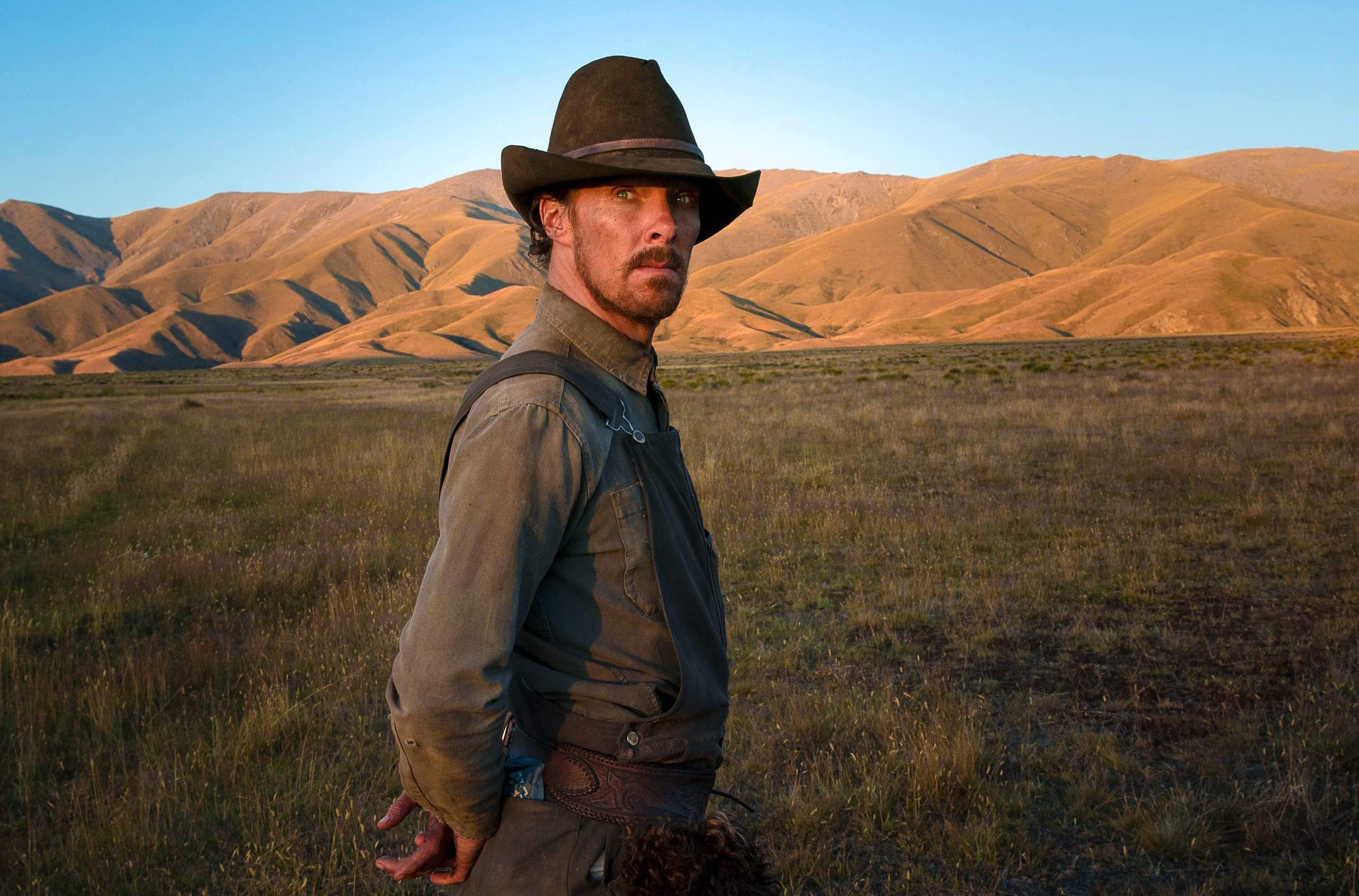
Based on a 1967 western novel by Thomas Savage, The Power of the Dog follows two rancher brothers as they toil day and night taking care of their cattle and farm. The elder brother Phil (Benedict Cumberbatch) is still mourning the loss of his mentor, Henry Bronco. His brother George (Jesse Plemons) marries a widow named Rose (Kirsten Dunst) and adopts her son Peter (Kodi Smit-McPhee). Phil is a sordid, distrusting person who thinks Rose is only after George’s money. Rose is still grieving her former husband’s demise while battling an alcohol addiction. Things simmer like a soft boil until the tensions rise to the point of no return for the Burbank household.

Well, “tension” may not be the right word to use here. More like melodramatically prolonged stares and pauses that are so drawn out and overbearing that it makes after-school detention seem more interesting. When The Power Of The Dog opens up, it promises a dark, complex narrative filled with depth and deception — one where long-hidden secrets remained buried until one curious teenager brings them to light. This film… is not that. What we get instead is a long, dull, boring, flavorless experience that’s so bland and uninteresting that it makes unsalted crackers look exciting.

Oh sure, the film is perfectly functional. From a purely technical standpoint, I have no grievances with the film whatsoever. The costuming and production design is accurate and on-point to the era the film is portraying. The cinematography by Ari Wegner is lush and vivid and evokes a sense of loneliness and isolation. And while it is simple and bare-bones, the acoustic score by Jonny Greenwood carries on with an uneasy progression, with its strings plucking in an agitated manner as if Phil Burbank were playing them himself.

The actors also do a really good job with the roles they are given and are convincing in their portrayals of an unnerved family losing its sense of tranquility. Kirsten Dunst has a mesmerizing return to form after leaving the film industry for four years, playing a tortured, anguished character who is torn by her motherhood, her alcoholism, and her trauma she’s experienced since moving in with the Burbanks. Kodi Smit-McPhee plays an equally layered character with several shades, feeling warm and inviting in one beat and cold and calculating in another. And Benedict Cumberbatch masterfully plays the meanest bastard you’ve ever met, a man who will inflict great suffering on a family without hesitation but whose actions are contextualized through a great tragedy he experienced. Individually these characters are very interesting, and the cast realizes all of these roles to the best of their abilities.

The problem is the story they’re in is just not there. On paper, there’s an intricate and layered narrative hiding deep beneath The Power of the Dog’s muddy surface. But in execution, there’s no story at all — only characters that meander aimlessly from one point to another without any rhyme or reason, without any point or purpose, really without any sense of direction or destination. It isn’t merely the fact that The Power of the Dog is difficult to read. Quite the contrary — it is impossible to read. There is so much sleight of hand, so much implication, and so much interpretation that is required to understand this film that you would need to read the script while watching just to be able to follow what is even going on.

I say all this knowing that interpretation in and of itself is not a bad thing. Several films released from the past few years have required audiences to do the heavy lifting and were uniquely rewarding in their own way, whether it was Terrence Malick’s The Tree Of Life, Darren Aronofsky’s Mother!, or Alejandro Gonzalez Inarritu’s Birdman and The Revenant. Even David Lowery’s recent The Green Knight, which I still profess was an extremely polarizing film, at least had an intriguing point and a purpose that the film was driving toward. The Power of the Dog doesn’t even have that. It drops its 304-page novel right onto audiences’ backs, shrugs its shoulders, says “make of that whatever you will” and then leaves. That’s not good filmmaking. That isn’t even storytelling. That’s a cinematic Rorschach test it’s forcing audiences to take without even doing the decency of providing them with a clear picture.

This is why the mountains are the perfect metaphor for the public’s reaction to The Power of the Dog. Some will see the point that The Power of the Dog is trying to make and fall in love with it. Others won’t see anything at all and will be flabbergasted as to how so many people can be drooling all over it. So, which is it? Is there a dog or isn’t there? I have a better question: who cares?

Tagged , , , ,

“SPIDER-MAN: NO WAY HOME” Review (✫✫✫✫)

Into the Spider-verse.

About halfway through Spider-Man: No Way Home’s runtime, one of the movie’s newest multiversal villains looks out at the new world he’s stumbled onto and says “Look at all the possibilities.” I feel like right now we’re on the cusp of a whole new universe of our own, imagining all of the possibilities for our friendly neighborhood wall-crawler as he plunges ahead into new and unexpected adventures. No matter what your expectations are, Spider-Man: No Way Home absolutely lives up to every bit of the hype surrounding it. The fact that you can say that even when our expectations were insanely high to begin with is more impressive than anything I can share in this review.

After that shocking twist ending in Spider-Man: Far From Home, Peter Parker’s (Tom Holland) secret identity has been revealed thanks to Mysterio’s manipulation. Now the whole world knows he’s Spider-Man, and Peter isn’t the only one facing the consequences. So too is his best friend Ned (Jacob Batalon), his girlfriend MJ (Zendaya), and his Aunt May (Marissa Tomei).

Feeling guilty for how he caused ripple effects throughout the lives of the people he loves most, Peter turns to the sorcerer supreme Doctor Strange (Benedict Cumberbatch) asking him if he can use his magic to make it so the whole world forgets that he’s Spider-Man. He does, but it comes at a cost: now villains have poured in from other Spider-universes looking to kill Peter Parker. There’s the sinister Green Goblin (Willem Dafoe). There’s the menacing Doctor Octopus (Alfred Molina). There’s the rage-filled Electro (Jamie Foxx), the elusive Sandman (Thomas Haden Church), and the slithering Lizard (Rhys Ifans). Now Peter has to team up with his friends to round up these villains and send them back to their universes before they destroy his.

I’m going to start by saying this review will be very brief and very spoiler-free, because this film is best experienced knowing as little as possible about it, and I don’t want to compromise the surprises for my fellow spider-fans out there. Because of this, my review will seem very vague and very nondescript. Don’t worry, I’ll be publishing a spoiler-filled review later on.

For now, all you need to know about Spider-Man: No Way Home is that it is a masterpiece. You absolutely should go and watch it. Not only does Spider-Man: No Way Home do justice to Peter Parker’s arc that has been building up ever since his first appearance in Captain America: Civil War — it’s also a beautiful and heartfelt love letter to Spider-Man’s cinematic legacy. One of the things that makes Spider-Man such an endearing character is the fact that his greatest superpower isn’t his webs, his wall-crawling or his spider-sense: it’s his heart and his unwavering will to do the right thing even when it’s the hardest road you can take.

A lot of that is in large part thanks to Tom Holland, who gives his most passionate and emotional performance as Spider-Man to date. A lot of fans (myself included) questioned at the beginning how much Tom Holland stacked up against fellow Spider-Man veterans Tobey Maguire and Andrew Garfield, especially when his earlier movies traded out a lot of the dramatic moments for jokes and quippy one-liners. No Way Home shows him at his most challenged and vulnerable, and Tom Holland naysayers are very quickly proven wrong with his acting chops here. Not only is this Tom’s most dramatic, daring, and darkest portrayal of Spider-Man yet: it is also his rawest and most human. Not since Spider-Man 2 has a Spider-Man performance felt so natural and real, and that’s the best compliment I can give to Tom Holland regarding No Way Home.

But it isn’t just Tom Holland who is at his best: director Jon Watts also delivers the best Spider-Man story in the MCU yet with this sprawling cinematic crossover. It isn’t just the fact that he’s bringing in the villains from pre-existing Spider-Man properties: it’s that he’s using them in interesting and engaging ways while staying true to their original characters. In a recent panel, Alfred Molina mentions that what makes these villains so interesting is that they aren’t just some mustache-twirling charlatans, but they carry a depth and complexion as real people who have been changed by unspeakable tragedies and accidents in their lives. That made them so interesting in their initial cinematic appearances, and that makes them just as interesting here because Jon Watts paid them the attention they deserved. They aren’t just dropped into the plot here for cheap fan service: their appearance in this story feels earned and they have a point and a purpose for this crossover with the MCU’s Spider-Man.

Look, I can only go so far without talking about spoilers, so I am going to end the review here. All I can say is this: if you are a Spider-Man fan, Spider-Man: No Way Home will not disappoint you. Not only is the action fresh, fast-paced, and exciting, but the characters’ presence in this sprawling story makes it feel gripping and engaging at the same time. To think that five years ago, we questioned how Tom Holland would not only fit into the MCU, but into the constantly expanding Spider-Man mythos overall. No Way Home gives us our answer, and the payoff is so, so satisfying. What else can I say? The possibilities are quite literally endless.

Tagged , , , ,

“DUNE” Review (✫✫✫✫)

SOURCE: Warner Bros. Pictures

Fear is the mind-killer.

There are a few movies that come once in a generation where they don’t feel just like cinema, but rather as raw, immersive experiences that feel equally epic in their scope of storytelling as they do in their visceral visual presentation. Star Wars in the 1980s is one such example. Jurassic Park in the 90s is another. Lord Of The Rings in the 2000s. The Avengers movies in the 2010s. Now here comes the newest science-fiction epic in Dune, and if it isn’t destined to become the next decade-defining blockbuster, it definitely feels like it should be.

Based on Frank Herbert’s classic science-fiction saga, Dune takes place in the far distant future where different houses fight for control over different planets in the galaxy. One of the most sought-after planets is the desert world of Arrakis, which carries an element known as spice that allows for interstellar travel, making it the most valuable asset in the universe. The House of Atreides is gifted the planet of Arrakis to harvest the spice for the good of all the houses, but in the process, they get caught up in a violent conflict between the Fremen, the native dwellers of Arrakis, and the Harkonnen, a vicious race of savages that seek the power of the spice only for themselves. Now trapped on the world of Arrakis, Paul Atreides (Timothee Chalamet) needs to find a way to adapt to the harsh environment surrounding him and harness the desert power of Arrakis.

When I heard that Denis Villeneuve was remaking Frank Herbert’s classic tale of “Dune,” I nearly fell out of my seat. For those of you that are unaware of it, “Dune” has been hailed as one of the most important science-fiction novels of all time, right alongside the likes of “Anthem”, “Ender’s Game,” and “1984.” To see a large-scale adaptation of one of the most essential books ever written would have any reader giggling in their seats, where I admittedly found myself not too long ago.

Yet despite Denis’s cinematic prowess, I found myself a little hesitant to accept a live-action “Dune” remake. For one thing, “Dune” had been visually adapted twice before, once in David Lynch’s 1984 film and once in Frank Herbert’s TV show in 2000. Neither one really reached the fascination or intrigue that the book inspired and were really kind of silly and gimmicky in retrospect, although I do find their amateurish quality slightly endearing. For another thing, “Dune” had been largely considered an unadaptable story, with its dense lore amounting to a massive 412 pages.

Granted, it wasn’t the first book to be considered “unadaptable.” Yann Martel’s “Life Of Pi” was largely considered unadaptable, as was Alan Moore’s “Watchmen.” Yet, both were made into magnificent movies by Ang Lee and Zack Snyder. Still, that doesn’t mean that it’s a sure thing. Indeed, it means that whoever does end up tackling the project has a massive, massive challenge ahead of them, one that may mean breaking up the book’s plot into multiple movies.

Thank God that Denis Villeneuve was a brave and competent enough filmmaker to take it on, because he fulfills every bit of the book’s lofty expectations and then some. The first thing you notice with Dune is how immersive it is: visually striking, audibly haunting, and emotionally stirring. The very first line of dialogue you hear in the movie isn’t even human: it’s Harkonnen, and its rich, deep voice eerily echoes the words “Dreams are messages from the deep.”

Immediately after that, we’re swept into an engrossing display of Arrakis: its beauty, its danger, its dry, devastating heat, the invaluable spice, and the people willing to fight and kill and die over it. What follows from there is an engrossing and absorbing experience that completely and fully immerses you in its characters, lore, and setting in a rare display of intrigue, excitement, and fascination.

I’m not just talking about merely watching the movie play out on screen. Sure, you see the vast landscape, the colossal spaceships, the endless void of space and its planets, the massive explosions that blow up on battlefields and mining sites. But the film is so much more than merely seeing the images on screen: you experience them. You feel the sun rays beating down on you, the dryness in the air as the desert sands of Arakkis parch your mouth, the wind from the space thrusters blowing against you, and the heat from explosions radiating off of your body as the shockwave blows you off of your feet.

See, in a rare marriage of visual and audio mastery, Dune drops you in the middle of Arakkis and forces you to feel the loneliness and isolation of its characters. Movies have a bad habit of superficially showing you what characters are going through instead of engrossing you in the moment of what they’re experiencing. Dune places you right alongside House Atreides and forces you to try and survive the dangers of the desert alongside them. Not since Avatar has a movie immersed you so vividly into its lore and setting.

The production of the film is a technical marvel, from Greg Fraser’s vast and expansive cinematography to Joe Walker’s expert editing to the eerie and striking visuals to the mesmerizing score by Hans Zimmer. Even the all-star cast is masterful in their roles, with Timothee Chalamet shining the most as a fallen prince torn between two different destinies.

Dune is a rare example of a perfect picture. Yes, a perfect picture. I literally would not change a single thing about it. Some viewers may not appreciate Denis Villeneuve’s trademark slow-burn style of storytelling, but that’s because of their personal preferences as movie watchers, not Denis’ craft or ability as a filmmaker. To think that years ago, we questioned how he would handle his first science-fiction picture with Arrival, then how he would revive Ridley Scott’s long-cherished franchise with Blade Runner 2049. Now he has made Dune, and its legacy will surpass both of those pictures. I can’t wait for the sequel.

Tagged , , , ,

“NO TIME TO DIE” Review (✫✫✫✫)

Nicola Dove | Metro-Goldwyn-Mayer Studios

Goodbye, James Bond.

We live in an age where closure is beginning to become the norm in big-budget Hollywood blockbusters. The Dark Knight Rises. Logan. War For The Planet Of The Apes. The Rise of Skywalker. Avengers: Endgame. These movies prove that you can have a definitive end to our heroes’ journeys, and not only will audiences be fine with it, but they quite possibly might love it. That’s because when you take away the lights, the cameras, and the special effects, these larger-than-life heroes are not the immortal cinematic icons they’re portrayed as on-screen. They’re people, and their story deserves an appropriate ending just like anybody else does.

In No Time To Die, Daniel Craig experiences his own ending in his final portrayal of James Bond, a role he’s inhabited so seamlessly ever since his debut in Casino Royale in 2006. In No Time To Die, Bond goes into retirement after defeating Ernst Stavro Blofeld (Christoph Waltz) and saving his lover Madeleine Swann (Lea Seydoux) in Spectre. But like any other 007 movie, James Bond is once again pulled into the spy world when his old friend Felix Leiter (Jeffrey Wright) asks him for a favor. Now facing yet another potentially world-ending threat, James Bond needs to suit up one last time to defeat a nefarious new foe named Lyutsifer Safin (Rami Malek).

Watching No Time To Die was a particularly meaningful experience for me, not just because it signifies the end to an amazing era of James Bond, but also because this was one of the first movies on the chopping block when the COVID-19 pandemic came to our doorstep last year. After delay after delay after delay, it almost seemed like this movie was never going to get released. To finally watch it now after all this time feels like the world is finally turning a corner on this blasted pandemic, though I do kind of find it funny that the big threat in No Time To Die is, ironically enough, a virus.

To say that No Time To Die is a bold undertaking of the James Bond mythos is a severe understatement. It isn’t merely another entry in the James Bond franchise. Like Casino Royale and Skyfall, No Time To Die introduces the character to new and unusual circumstances, circumstances Bond would never have been caught dead in the original Ian Fleming novels. What makes Daniel Craig’s version of James Bond so interesting is that he’s less of a caricature and more of a character. He isn’t a generic movie spy that is used to channel toxic male fantasies of drinking vodka martinis, hooking up with beautiful women and killing bad guys. In many ways, he is an incredibly pained and tragic character, one whose endless cycle of violence and espionage almost seemed predestined to him.

It’s rare for James Bond to be vulnerable, or indeed, even to appear weak in front of not just the movie’s villains and supporting characters, but also in front of the audience. But all of the best movies feature vulnerable moments for the character. In Casino Royale, it was when Bond was getting tortured by Le Chiffre or when he failed to save his first love. In Skyfall, it was when Bond was struggling with post-traumatic stress or when he failed to save M. In No Time To Die, he once again finds himself in a place of vulnerability and weakness in an arc that has been set up ever since the first movie. And like all of the great Craig Bond movies that came before, he fails to save a life that’s very important to him, though I won’t spoil by saying who.

Of course, all of the quintessential Bond elements are prevalent in No Time To Die. The high-stakes and adrenaline-pumping action. The tight and quick editing and the over-the-top and insane shootout and chase scenes. The amazing and mesmerizing score by Hans Zimmer. The haunting yet angelic single by Billie Eilish. And of course, Daniel Craig’s amazing performance, brilliantly contrasted with Rami Malek’s ice-chilling presence as the movie’s villain. All of the elements that made previous Bond movies thrive are just as evident here as they’ve ever been before.

Yet the incredible thing about No Time To Die is how it shows Bond reacting to a changing world. Indeed, how he reacts to MI6 keeping up its operations despite his retirement, how new double-Os enter the picture and accomplish the same things that he does, really how people in his life move on without him when he’s no longer in the picture. It all makes him feel so, so obsolete, and that’s what I love so much about this movie: it forces James Bond to evaluate who he is when he isn’t 007. Is he more man than mercenary? Or is he just another number?

Director Cary Joji Fukanaga (“True Detective,” Beasts of No Nation) has accomplished a rare feat with No Time To Die — he made James Bond fallible and brought him down to our level, a man haunted by his own demons and whose insecurities drive him to make ruinous, self-destructive choices. While some people may be frustrated how the movie deconstructs the larger-than-life myth of James Bond, I for one love that we’re taking away the license to kill and looking at how the man behind it tries to live his life without it. It’s funny how the movie is called No Time To Die, yet by the time the end credits rolled, all I could think about was how James Bond lived.

Tagged , , , , , ,

“CASINO ROYALE” Review (✫✫✫✫)

SOURCE: Sony Pictures

A new Bond for a new age.

With over 40 years of cinema behind him, James Bond is one of the oldest — and most timeless — action heroes to persevere throughout film history. Why don’t we know more about him? We know all about Dr. Jones and his early crusades that led to him becoming Indiana Jones. We all know the rags-to-riches story of Rocky Balboa, the tragic beginnings of Batman, and Luke Skywalker’s parentage that literally spans the galaxy. But for some reason despite 20 films dedicated to his name, James Bond is a character whose history has always eluded us. Why is that?

I think it’s for several reasons. One may be because it adds to his mystery and intrigue, and keeping his backstory in the dark maybe contributes to the elusiveness of his character. Another may be to allow for multiple interpretations of James Bond. Since we’ve had six actors play the part now, it makes sense to keep his story loose and flexible to allow for overlapping storylines and not convolute different films’ timelines. But the most rational explanation may be that his backstory simply doesn’t matter. James Bond exists in the here and now: in the mission, the objective, the target, the drink, the beautiful women, the pleasures of the instant because tomorrow is never guaranteed.

Whatever the case may be, Casino Royale is the newest reboot of MI6’s favorite secret agent. It is also arguably the most raw and personal James Bond film to date, something I never expected to say about any James Bond movie ever.

In this modern retelling of Ian Fleming’s first James Bond novel, Casino Royale introduces a younger, less robust Bond in Daniel Craig, shortly before he even achieves his double-0 status. All of the usual James Bond elements are here. The fast-paced and exciting action. The high-stakes shoot-em-outs and intensive fight choreography. The sleek vehicles, weapons, and spy gadgets. The over-the-top chase sequences that take you over streets, bridges, buildings, hallways, and skyscrapers. The drop-dead gorgeous Bond girl in Eva Green. The chilling and unsettling villain in Mads Mikkelsen. The twists, the turns, the conspiracies that drive the plot forward. Everything that makes James Bond James Bond is in here and dialed up to pristine shaken-not-stirred detail.

But it’s not the usual Bond elements that impress me: what really impresses me with Casino Royale is the ruggedness, the roughness, the gritty realism that makes this film move and breathe with the authenticity of a top-secret SIS mission report. There are so many nuances to the film that you learn to appreciate and value that I don’t even know where to begin.

I’ll start with the film’s star Daniel Craig, who carries his part with the confidence and collectiveness of a Sean Connery and with the dispassion and coldness of Timothy Dalton. In previous films, James Bond has been portrayed with the suave coolness of a master infiltrator — a man who knows how to get out of every slippery situation, regardless of whether they’re in a secret base or a woman’s chambers. Here, the younger, more inexperienced James Bond is prone to more mistakes and is a lot less calm under pressure. That makes him surprisingly more vulnerable and the action feel a lot more immediate and real.

When he finishes making his first kill, his hand quivers and he breathes sporadically as he processes what he has done. When he makes a startling realization, his eyes pop and he spurs into action, knowing that something horrible will happen if he does not stop a particular outcome from happening. When someone close to him feels a particular pain that he’s familiar with, you feel his empathy as he consoles them and processes their grief with them. When he’s captured and being tortured, he doesn’t experience it like a hardened agent who fears nothing, but as a rookie experiencing this for the first time and is very, very afraid, even if he refuses to break. That level of emotion is a rare quality in a James Bond performance, and it will easily be Craig’s greatest asset the more he establishes his own 007 identity going forward.

But Craig is only half the puzzle. The other half comes in the film’s clever and crafty screenplay, which combines the typical Bond troupes delivered by Neal Purvis and Robert Wade with the style and swagger of a real-world espionage thriller from Academy Award-winning writer Paul Haggis (Million Dollar Baby, Crash). In previous Bond movies, the screenplay may have been given second focus to over-the-top gizmos, gadgets, and camp so silly and obnoxious that it would have made Adam West blush. Not here. In Casino Royale, the larger-than-life spy movie spectacle is traded out for a dense and layered plot that perfectly establishes James Bond and his beginnings as a double-0. Oh, and the dialogue is so sweet and snappy and so perfectly understands James Bond. One of my favorite lines is where Bond comments how the love interest isn’t his type. “Smart?” she asks. He responds “Single.”

Side note: The subversion of the classic “shaken, not stirred” line is also worthy runner-up.

All of these elements are masterfully brought together by director Martin Campbell, who returns to the director’s chair after bringing us Pierce Brosnan’s portrayal of the character in GoldenEye 10 years ago. Whatever your opinions of the previous entries in the James Bond franchise, Casino Royale breathes new life and fresh blood into this everlasting series. The action choreography is so fast, brutal, and impactful that it leaves you dizzy while watching it. David Arnold’s mesmerizing score is so exciting and enthralling, with the snazzy horns and emotional orchestra throwing you back to the classic days of James Bond. And the editing by Stuart Baird is so smart, gradual, and all-encompassing that it allows you to follow all of the threads that are unraveling while never losing track of everything that’s going on. I find it fascinating that one of the most engaging scenes in the entire movie isn’t a fight or a chase scene, but rather a card game between Bond and the movie’s villain. That’s because the film’s astronomically high stakes are set up very well, and you know what will happen if Bond pulls a bad hand.

It’s hard to say which is the best Bond movie, or even who is the best Bond actor, because of how many stories, movies, and portrayals are out there of the double-0 agent. But even amongst the sea of James Bond retellings and reinterpretations, Casino Royale stands out, as does its star. That’s because they both understand that James Bond is more than a gun, a bullet, a bow tie, a license to kill. James Bond is an action. He’s a statement. He’s a man that will do what needs to be done even when the world is collapsing all around him. That’s why when he says his name is James Bond at the end of the movie, we believe him.

Tagged , , , , , ,

“VENOM: LET THERE BE CARNAGE” Review (✫1/2)

SOURCE: Sony Pictures

One dysfunctional symbiotic family.

The best part of Venom: Let There Be Carnage is the mid-credits scene. That’s not a good sign for a movie when the best part of it literally happens after the movie is over. Venom: Let There Be Carnage promised to be a revival of the symbiotic superhero: a darker, grittier, edgier telling that got to the roots of what makes the lethal protector tick. Oh, will comic book fans be so, so disappointed. 

In this sequel to the 2018 Spider-Man spinoff, Venom: Let There Be Carnage follows Eddie Brock (Tom Hardy) as he adjusts to his double life as a carnivorous superhero and a journalist trying to revive his career. The key to reigniting his career is Cletus Kasady (Woody Harrelson), a serial killer who has left behind a trail of bodies, and thankfully with a wig much more convincing than in his post-credits scene in the first movie. Eventually through a convoluted sequence of events, Cletus ends up with his own red-blooded symbiote he nicknames “Carnage.” Now Eddie and Venom have to once again unite to defeat this symbiotic serial killer and save the Earth… again. 

Venom: Let There Be Carnage shares the same strengths as its predecessor, specifically Venom himself. Scripting, directing, and storytelling aside, Eddie and Venom were among the best characters in the first movie, and their odd, offbeat chemistry still works perfectly in tandem with each other. That makes sense considering they’re both portrayed by Hardy himself. Still, it isn’t easy to create a connection with, well, yourself, and Hardy embodies both roles masterfully here. Whether he’s Eddie Brock investigating a story or Venom is starving for human brains, he captures the essence of both characters very, very well. When they are together, Eddie and Venom are easily the funniest, craziest, most entertaining parts of the movie. 

I say “when they’re together,” because for some reason, Hardy and screenwriter Kelly Marcel thought it would be a good idea to split Eddie and Venom up for half the movie. I have no idea why they thought this. After all, Eddie and Venom are perfect as a chaotically dysfunctional pair, not as two different entities going through their own separate melodramatic identity crises by themselves. In the limited time they are together, Eddie and Venom perfectly play off of each other’s manic, wild energy, snapping at each other like two alpha wolves fighting for control. When they are apart, they couldn’t be more pathetic, with Eddie whining about his failed marriage and Venom… dancing at Rave parties? What? 

Side Note: As an alien who is very sensitive to sound, it is very weird that 1) Venom doesn’t feel threatened by attending a concert where stereo speakers are blaring all around him, and 2) That neither did director Andy Serkis, who lets Venom carry on with his monologuing despite the fact that he should be a pile of goo thanks to all of the loud sounds surrounding him. 

What about Venom’s antagonist, Carnage? How was he done in the movie? Well, he’s a mixed bag. On one hand, when the Carnage symbiote is out, Carnage is a vicious force to be reckoned with, tearing up prison gates, destroying cars and helicopters, and biting the heads off of police officers like they’re Tootsie Pops. All of this makes Carnage a fierce, formidable character, and eons more intimidating than Riot was in the previous movie. 

But when he’s just Cletus, he has these winey, mopey monologues about how he wasn’t loved enough as a kid and that’s why he kills people today. Wah-freaking-wah. Other Marvel characters like the Hulk, Black Widow, and Shang-Chi have also had similarly traumatic childhoods and didn’t use it as an excuse to eat people. The fact that the script attempts to connect Eddie and Cletus together and treat them like they’re the same person is actually the most gross and manipulative part of it all. Sorry, but Venom is nothing at all like Carnage. Venom eats criminals only to survive. Carnage would kill a kid just because he thought it was funny. They’re not at all the same, and the fact that the script tries to paint it like they are shows how little it understands both characters. 

The rest of the movie plays out pretty much like the first one did. Eddie gets down on his luck, gets possessed (or repossessed) by Venom, learns to accept himself (again), and then gets into another gooey fight with the monstrous villain that’s too incomprehensible to follow at the end of the movie. Whatever you think of these movies, Venom: Let There Be Carnage embodies the same strengths and most of the weaknesses as its predecessor. When Eddie and Venom are the focus, the movie is at its strongest. When the focus is shifted to the supporting characters, we care nothing about their half-hearted performances or the weak sauce writing they’re provided with. 

But somehow it’s only getting worse. While the first movie was a passable, if not mildly disappointing, introduction to Venom, its mishaps can at least be forgiven because it was trying to re-establish his identity after a very underwhelming appearance in Spider-Man 3. Now here comes Venom: Let There Be Carnage, a movie which has now had at least two opportunities to learn from its mistakes and just doubles down on them harder. Pray that Venom’s next big-screen appearance does more justice to the character than his previous two outings have. And for whatever it’s worth, I’m not referring to Venom 3

Tagged , , , ,

“DA 5 BLOODS” Review (✫✫✫✫)

Bloods don’t die. They multiply.

The only thing that’s more forgotten than a soldier of war is a black soldier. Spike Lee’s Vietnam war epic Da 5 Bloods observes this truth with sobering reality and honesty, taking you through the plight of five black soldiers who went through hell in Vietnam only to trade it for another hell when they came back home to America. Several movies have been done about the Vietnam war now, from Apocalypse Now to Born on the Fourth of July. Yet I’ve never seen a movie quite like Da 5 Bloods.

In Da 5 Bloods, a group of veterans venture back to Vietnam to bury their fallen squad leader and recover treasure they left behind during the war. Their squad leader is Stormin’ Norman, powerfully portrayed by Chadick Boseman in his first major role since Black Panther. The rest of the Bloods include Otis (Clarke Peters), David (Jonathan Majors), Eddie (Norm Lewis), and Paul (Delroy Lindo), who is the most devastated and haunted by Stormin’ Norman’s demise in Vietnam.

One of the immediate things you’ll notice about Da 5 Bloods is its creative direction. While Spike Lee is no stranger to displaying style and pizzazz in his movies whether it’s BlacKkKlansman, Malcolm X, or Do The Right Thing, Da 5 Bloods is noticeably less flashy than his other major projects. While his other films place an emphasis on color, music, and production design that visually pops from the screen, Da 5 Bloods is more grim, bleak, and dark, not just in its storytelling, but also in its visual design. Whether its scenes take place in the 1960s or the present day, the shading is so unrefined and gritty that it doesn’t even feel like a movie: it feels like real life and you’re simply witnessing these men’s experiences play out in front of you.

The cinematography and editing are equally essential when it comes to further realizing the film’s sense of character. One creative detail Spike Lee utilizes is the method of filming the movie’s two different eras. In the present day, Lee and cinematographer Newton Thomas Sigel capture the scenes on high-definition digital cameras, reflective of today’s technological achievements. But in 1960s Vietnam, Lee and Sigel switch to 16 mm film, making the picture frame smaller and more grainy. The result is a fuller, more immersive experience that vividly places you in the same period as the Bloods. Few films do this mesmerizing of a job with its cinematography, yet Spike and Sigel make it look serene, striking, and epic (although for some reason, Spike annoyingly decided not to de-age his 60-year-old actors in the Vietnam flashbacks).

The cast is just as exceptional as Spike’s sense of artistry. While John David Washington, Samuel Jackson, Don Cheadle, and Giancarlo Esposito were originally slated to portray the living Bloods, scheduling conflicts prevented them from joining the film, so Lee had to seek alternatives in Peters, Majors, Lewis, and Lindo. Scheduling conflicts may have been the best thing to happen to Spike for this movie, because this quartet feels organic and authentic in relationship to one another. It’s not often where a film brings together an ensemble cast and makes it feel this natural and fluid, yet these actors do such a great job at portraying their love and affection for one another that they can’t help but really feel like long-lost friends reuniting under tragic circumstances.

But of the four leads, Delroy Lindo easily shines the most. You’d recognize him as West Indian Archie from Lee’s Malcolm X. But unlike most of his other supporting roles, Lindo takes more of a leading presence in Da 5 Bloods, and he handles the pressure very well. There’s one moment in particular where he’s vividly expressing his pain, hurt, and anger, and he’s staring into the camera while he’s delivering a heart-wrenching monologue. In context, he’s obviously just talking to himself, but in the shot, it feels like he’s talking directly to you. “You” as in the white man. “You” as in the American. “You” who are unaffected by the issues that plague him and his loved ones every day. His passionate and convincing delivery feels so raw and honest that you can’t help but feel guilty by the time he delivers his last impactful line to the camera.

And of all of the elements that bind this beautifully-wrapped cinematic package together, the most essential is the themes Lee explores in his screenplay. While the script was originally written on spec by screenwriters Danny Bilson and Paul De Meo, Spike rewrote it to include a black American perspective. The result is a spellbinding, rich, and dense narrative filled with many relevant themes to today’s society, including racism, police brutality, violence, war, mental health, poverty, generational wealth, greed, division: even Donald Trump’s election is provided with some commentary.

All of this leads to a grim reality we’re forced to face at the end of Da 5 Bloods: many of the battles Paul, Otis, David, Eddie, and Stormin’ Norman were a part of back then are still being fought to this day. We’ve entered five wars since Vietnam ended in 1975, one of which is still ongoing in Afghanistan. The Black Lives Matter movement is still fighting for the same civil rights that Martin Luther King Jr. and Malcolm X died for in the 60s. Hell, there’s even been multiple teases to World War III in just this year alone. Yet in their misery and despair, Da 5 Bloods reminds us of another truth that perseveres: Bloods don’t die. They multiply. The Bloods never gave up fighting. Neither should we.

Tagged , , , , , ,

“JACK AND JILL” Review (Zero Stars)

SOURCE: Sony Pictures

Poopsie-whoopsie! Why did you make a floopsie-doo-dooski?

It should be illegal to make movies as terrible as Jack and Jill. This isn’t the usual sort of terrible where the cast and crew are merely incompetent at making a good movie  it’s the sort of terrible where they fully understand how to make a bad movie and are aggressively committed to making it as asinine, annoying, and offensive on the senses as possible. Well if Jack and Jill’s goal was to make one of the worst movies ever made, then they succeeded. May they never succeed at anything ever again.

Jack and Jill stars Adam Sandler as identical twins Jack and Jill, with the latter sibling being portrayed with drag and a wig that’s so fake-looking that I’m wondering which mannequin he took it from. The story follows the dreadful duo on a series of absurd adventures, some of which include inviting homeless people to Thanksgiving dinner, appearing on a game show, crushing a helpless horse under Jill’s weight, going to a Lakers game, and being stalked by Al Pacino. And when I say that, no, I’m not saying that it’s a character played by Al Pacino: I mean the actual, real, Academy Award-winner Al Pacino is in love with Adam Sandler in drag and is stalking her/him.

I don’t know what’s more disturbing; watching Al Pacino sexually harass Adam Sandler or knowing that both men willingly agreed to this.

Where do I start with this movie? What’s the worst part? Do I start with the screenplay, which is so childish and immature that fifth graders would be offended? Do I start with the performances, all of which are so obnoxious and distasteful that it makes The Room look artful by comparison? Or do I elaborate on its technical failings, all of which are so basic and amateurish that it makes The Hallmark Channel seem watchable?

Let’s start with the premise itself, in which the idea to have Adam Sandler playing gender-swapping roles is gimmicky at best and downright repugnant at its worst. For some comedic actors, they’re able to successfully play both masculine and feminine characters with finesse and flair, among my favorites being Jack Lemmon in Some Like It Hot, Dustin Hoffman in Tootsie, and Robin Williams in Mrs. Doubtfire.

Adam Sandler is not one of those actors. Simply put, he doesn’t have the training or the ability to act much beyond his own generic self. That’s why when Jack puts on a dress later in the movie and pretends to be Jill, there’s literally no discernible difference between Jill and the disguised Jack. It’s the same God-awful performance either way.

And seeing Adam Sandler dressed as a woman is truly an unpleasant sight to suffer through. While other gender-swapping roles put its actors through extensive makeup and costuming to make them look believable as women, Sandler just slaps on whatever outfit he bought from GAP and the lipstick and eyelashes he got from Ulta Beauty and calls it a transformation. It’s easily one of the laziest makeup and costuming jobs I’ve ever seen, and I’ve suffered through White Chicks.

But it isn’t just how Adam Sandler looks: his dialogue is just as insufferable and grotesque as the rest of his appearance is. Jill is disgusting, foul, whiny, and loud-mouthed to the point where you need earplugs to even attempt to listen to her. Sandler’s voice as Jill is so high-pitched and screechy that I’m shocked no windows in the theater broke every time Jill talked. Why Sandler chose this particular voice for Jill I have no idea. All I know is that I had to check my ears at the end of the screening to make sure they weren’t bleeding from all of the grated squealing they suffered through.

This begs a question that I, unfortunately, do not have an answer to: why was this movie made? Who was this movie made for? What purpose does it serve other than to test my patience and sanity? I cannot rationalize this movie for any reason whatsoever under any spectrum of thought. If it was supposed to be funny, why didn’t I laugh? If it was supposed to be endearing, why was I enraged the entire time while watching it? If it was supposed to be heartfelt, why did I drive my hands into my skull every time one of the characters spoke? If it was supposed to be sincere, why did the film reek of contrivance and laziness? And if it was supposed to be entertaining, why did I spend all 90 minutes fantasizing about strangling every single person I saw in the film?

While he was once known for starring in cheeky and amusing comedies like Billy Madison, Happy Gilmore, and The Wedding Singer, Adam Sandler has been making one string of bad decisions after another, whether it’s with the cheap and juvenile Grown Ups or the dull and uninspired Just Go With It. Jack and Jill confirms his downward spiral of insanity. For his own safety and well-being, he needs to be checked into a psychological ward as soon as humanly possible, and then his unfortunate viewers should seek counseling to process Jack and Jill in a healthy way.

After watching a trailer where he’s promoting Dunkin’ Donuts’ new Dunkaccino (hardee-har-har), Al Pacino demands that Jack burn all copies of it, warning him “This must never be seen by anyone.” He should have warned Jack and Jill’s producers instead and saved us all from the embarrassment.

Tagged , , , , , ,

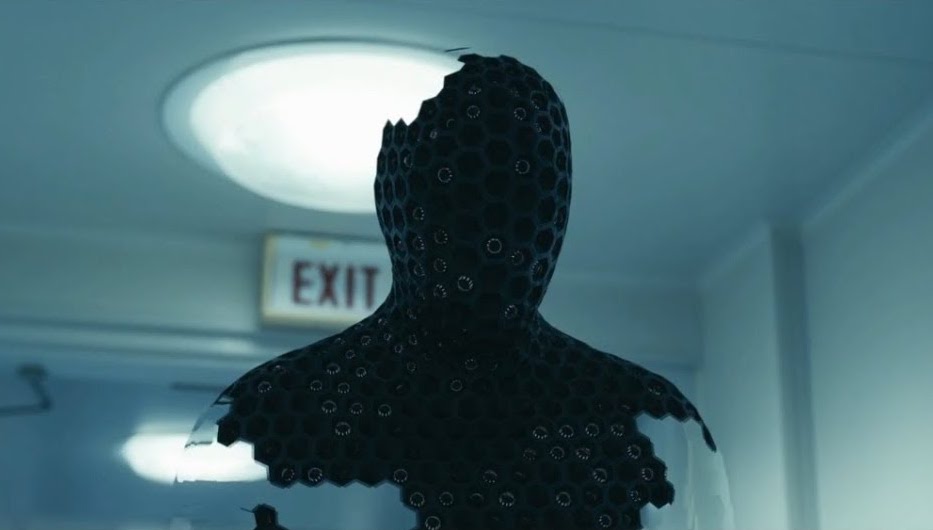
“THE INVISIBLE MAN (2020)” Review (✫✫✫1/2)

SOURCE: Universal Pictures

What you can’t see can hurt you. 

An invisible threat haunts Cecilia Kass (Elizabeth Moss) at the beginning of The Invisible Man – and despite what you might expect, it isn’t the film’s titular villain. Instead, the invisible threat that looms over Kass is the same one that has followed Kelly McGillis, Rose McGowan, Ashley Judd, Kesha, Taylor Swift, E. Jean Carroll, Christine Blasey Ford, and several other women: abuse.

We see how it’s affected Kass early on in the film; how she fears sleeping next to her boyfriend Adrian (Oliver Jackson-Cohen) and how she quietly and meticulously creeps around the house so as not to wake him. She’s lucky enough to escape from her abusive relationship and stay at her friend James’ (Aldis Hodge) place as she recovers and picks up the broken pieces of her shattered life. Then one day she receives news that brings her a sigh of relief: Adrian killed himself shortly after Kass left him.

At least, that’s what Kass is told at first. But then she starts noticing strange things around the house. She finds an old pill bottle in her bathroom that she left behind at Adrian’s place when she left. Her belongings keep getting shifted around, moved from one place to another, and sometimes disappearing altogether. And despite being told over and over again that Adrian is dead, Kass can’t help but feel that he’s still around, always watching her close by.

I didn’t have high hopes for The Invisible Man prior to seeing this movie. Why would I? For one thing, it’s a remake of the 1940s Invisible Man movies by Universal, and horror remakes go over just about as well as Gus Van Sant’s 1998 remake of Psycho. It’s a February release, and spring movies tend to be among the worst films released on any given year. And to top it all off, The Invisible Man was originally planned to be an inclusion in Universal’s Dark Universe franchise  and if you want to know how bad of a start that franchise got off to, go watch Tom Cruise’s Mummy remake.

So I had no expectations of this movie being any good, let alone even remotely entertaining. Yet The Invisible Man blew away all of my expectations, immersing me in a harrowing, haunting, and nerve-wracking experience that doesn’t fail to send chills down your spine or stick the hairs up on your neck.

One of the many ways that this film succeeds in doing that is in its clever and carefully-crafted cinematography, which evokes a sense of dread and angst throughout the whole picture. Director Leigh Whannell and longtime collaborator Stefan Duscio smartly frame each shot slightly off-center, leaving plenty of white space between its characters and their environments. If this were any other film, you might think the shot was simply framed sloppily and the crew was just too lazy to readjust it. Instead the framing is used for artistic effect, creating the uneasy presence of another character despite never being able to see him. You feel like somebody is always watching Kass, and therefore, somebody is always watching you.

Elizabeth Moss is especially convincing in portraying a traumatized survivor still haunted by her seemingly dead boyfriend. We already knew that she was a skilled and talented actress in television shows like “Mad Men” and “The Handmaiden’s Tale,” but here she demonstrates another layer of expression that feels especially raw and vulnerable. If you removed Elizabeth Moss completely from this movie and put her into another movie where its protagonist was dealing with PTSD from an abusive relationship, it would still work very well. That’s because she isn’t portraying a stock final girl archetype you usually find in many of these horror movies: she’s playing a fleshed out and fully-realized character dealing with her own unique problems and isolation. That depth and complexion adds a lot of emotional weight to this seemingly simple horror movie, establishing a strong connection to its main character and making us root for her throughout the picture.

All of this contributes to Leigh Whannell’s exemplary ability to elevate this picture beyond its original expectations. While the movie is all sorts of exciting and riveting on its own, Whannell uses the thrills and jump scares to tell a deeper narrative about the mistreatment of women and how we respond to them speaking their truth. We’ve seen this in a few other movies now where they use their blockbuster appeal to share something deeper and more compelling, such as the topic of racism in Get Out, mental health and well-being in Joker, wealth inequality in Parasite, and artificial intelligence in Leigh Whannell’s own Upgrade. Here, Whannell is utilizing a classic premise to pioneer a powerful pro-feminist anthem, not unlike other blockbusters such as Alien or Mad Max: Fury Road.

Of course, the movie is not without its flaws. The first act specifically uses a lot of time for setup and drags in terms of pacing. With this being a horror movie, you’re bound to get at least one or two groan-inducing moments where characters seem to be begging to get killed through one stupid mistake or another. And there’s one scene in particular where the invisible man is slaughtering a whole hallway full of guards, all while the security cameras capture the whole scene. You’d think people would see that footage and believe Kass’ outlandish claims, yet the moment is dropped as quickly as it is brought up and is never revisited again.

None of this changes how ingenious and unsettling The Invisible Man is in its eerie premise: how brilliant it is in guiding its audience through one jaw-dropping scare after another and how even more brilliant it is in weaving deeper feminist themes into its narrative. I wondered before going into this movie why its planned sequel was titled The Invisible Woman. Now I know why.

Tagged , , , ,

“MALCOLM X” Review (✫✫✫✫)

SOURCE: Warner Bros.

Liberate your mind. 

If history has taught us anything, it was that Malcolm X and Martin Luther King Jr. had starkly different methods to fighting racism in America. Yet they were so similar in so many other ways despite all of their differences. For instance, both men have experienced firsthand the boot and lashes of white America. Both were men of faith that were compelled to action because of what they believed. Both fought fiercely and passionately for the day that black men would be free from persecution and hatred. And both were shot and killed at 39 years old before they would ever see that day realized.

But of course, Malcolm X is not remembered by many for marching for the same causes that Martin Luther King Jr. did. Malcolm is not remembered for advocating for his fellow black men, for his fight against the evils of racism, and for his rousing speeches and words burning with passion and fire. Instead, he’s remembered because his words were filled with contention and confrontation, not the piety and the hope as Dr. King’s speeches were. Regardless of which ideology you do or don’t agree with, there’s no denying the one truth that both men share: they understood all too well of what it meant to be a black man in America.

In Spike Lee’s Malcolm X, Denzel Washington portrays the Muslim minister in an epic encapsulation of his whole life. The movie covers everything from his traumatic childhood where his family was hunted by white supremacists, to his robbery days as “Detroit Red,” to his discovery of Islam during his time in prison, to his emergence in the civil rights movement, all the way to his last days ministering before he was ruthlessly gunned down by Thomas Hagan and his crew.

Seeing Malcolm’s life play out like this gives perspective into who he was, where he came from, and what happened in his life to shape him into the leader he’s widely recognized as today. Writer-director Spike Lee illustrates Malcolm’s life story with intensity and conviction, fully committed to showing you who he was and who he wasn’t. Lee stylizes his scenes with flair and pizzazz, with Malcolm and his buddies dressed in colorful outfits, shucking and jiving down the streets in Boston while the smoke and police sirens linger in the background. But Lee’s film design isn’t gimmicky or exploitative of Malcolm X. Like Lee’s earlier films Do The Right Thing and Mo’ Better Blues, they speak to the era they’re representing and add authenticity to Malcolm’s story.

The scenes that deal with Malcolm’s faith are especially moving and touching. When he’s first introduced to Islam in his prison cell, it’s an emotionally-stirring moment where Malcolm faces who he is and how he needs to make a change in his life. When he later confronts the hypocrisies of the Nation of Islam, he becomes disillusioned to what message he’s been preaching and what his faith really represents. And when he later travels to Mecca and encounters Muslims of all ethnicities and cultures, Malcolm experiences a spiritual revival of Islam and what it means to him. It’s a poignant redemption arc that shows how he grew from Malcolm Little to becoming Malcolm X.

I can’t talk about Malcolm X without mentioning the man who plays him. Denzel Washington is simply stunning as the civil rights activist. Whether he’s portraying him in high school trying to pick up white women, running a numbers game as a gangster, or standing against oppression in the streets as an outspoken civil rights advocate, Denzel portrays each chapter of Malcolm’s life with vigor and authenticity. He isn’t playing one character so much as he is playing several characters and their many transformations throughout their lives, and he fully commits himself to every single aspect of those characters. I find it fascinating that in the really captivating moments where he was preaching to crowds and protestors, I never once thought it was Denzel reciting someone else’s words. I only saw Malcolm X.

This leads to the film’s greatest strength, and that is its honesty. With a figure as controversial as Malcolm X, it would have been too easy to shy away from the hard conversations Malcolm X forced us to have and sanitize his story for the comfort of neutral moviegoers. But Spike Lee doesn’t do that. Instead, he lays out the entirety of Malcolm X’s legacy, and he doesn’t shy away from its highs or lows. It’s no secret that Malcolm X made many disparaging remarks to many individuals throughout his life, including Dr. Martin Luther King Jr., President John F. Kennedy, and white America as a whole.

Yet the movie doesn’t virtue signal as to whether Malcolm was right or wrong in the statements he’s made: it just shows it the way it was and lets the audience decide for themselves. I’m not going to comment much on it myself, because my job as a film critic is to review the movie, not the person it’s portraying. I will say that if Malcolm X’s words bother you more than the lynchings, the police brutality, the white nationalism, and the racist institutions he was fighting against, then you need to evaluate whether it’s the words that bother you so much or the cause behind them.

Whatever conclusions you come to about his life, Malcolm X is a powerful film: dramatic, well-acted, and faithfully executed. The film forces you to face uncomfortable questions regarding America’s racist history, and many people may not like facing those truths. My view of it is that if Malcolm X couldn’t shy away from it, neither can we. We could all learn something from those that we don’t see eye-to-eye with. Perhaps we could start with Malcolm X.

Tagged , , , ,