Category Archives: Reviews

“BEAUTY AND THE BEAST (1991)” Review (✫✫✫✫)

Beauty exists on the inside, not the outside.

The first time I watched Beauty and the Beast in theaters was nothing short of an enchanting experience. It was absolutely magical. The bright colors, the wondrous music, the dizzying animation, the brilliant voiceover work and the creative characters all combined into an experience that is ethereal, passionate, and everlasting. This is truly a standout among the Disney films, one that clearly demonstrates why animated film should be considered on equal footing to live-action.

In even the opening moments of the picture, we understand the scope of this movie and where exactly it wants to lead us. Sweeping through valleys, trees, and rivers until it arrives at a lone castle, we are told the story of an arrogant prince who refused to shelter an old woman from the cold. That woman, as it turns out, was an enchantress, and she placed a curse on this prince for his cruelty and his ego. The nails on his hands turned into claws like a lion. His smooth skin turned hairy like a wolf. And his human face was erased and replaced with the horns, teeth, and fur of an oxen. This prince was no longer royalty. He was now a Beast.

Enter Belle (Paige O’Hara), a village girl that lived a few miles away from the Beast and his castle. Belle isn’t seen as normal by her fellow villagers. She’s not dainty like the other girls are. She’s not interested in looking for a man, birthing children, or settling down to have a family. She’s more than content in living at home with her father the inventor and the occasional book she checks out from the local library. Her independence is seen as strange, even dangerous by her fellow villagers. But that’s the time that she lives in.

One day, her father ventures too far into the woods and is attacked by a pack of wolves. As Belle races to rescue her father, she runs into a creature that looks like an animal but talks like a human. That creature is the Beast, and thus begins their adventure as old as time.

One of the most prolific elements in any Disney movie is always the music. “When You Wish Upon A Star” in Pinnocchio. “Part of Your World” in The Little Mermaid. “Circle of Life” in Lion King. In most movies, the characters, the dialogue, and the action all make up the tone and feel of the film, while the music more or less rests in the background.

Not with Disney though. In their films, the music is elevated to the forefront as a form of expression for character’s moods and feelings, the lyrics expressing meaning and language much like the dialogue does. That rhythm and aesthetic is repeated masterfully here in Beauty and the Beast as composer Alan Menken takes us through an epic journey filled with upbeat melodies, climactic staccato, ominous foreshadowing, and beautiful voices that fill us with wonder and joy. This material would make for great opera if it hasn’t already in its animated form.

Seriously, the next time you watch Beauty and the Beast, close your eyes during one of the musical numbers and see if you can still follow what’s going on. I’m betting a 20 that you can. The conversation that characters carry while in movement, singing, and dancing carries the story in a way that flows just right while just slightly resisting the urge to be on-the-nose. Most musicals have that problem, in that they have to spell everything out like we’re second graders and can’t tell what’s going on unless it’s read to us like a bedtime story.

But Beauty and the Beast doesn’t ever fall into this mundane repetition of obviousness. Not once. Mostly because every scene comes alive with movement and energy, always moving on to the next scene, not slowing down to pause unless a scene calls for it. That’s because directors Gary Trousdale and Kirk Wise have a clear understanding of pacing and build up, and how to make these elements work to escalate emotions in a film. Watch, for instance, how long they delay the reveal of the Beast. It’s at about the 30-minute mark when the Beast finally emerges from the shadows, and he doesn’t pop out like a Jack-in-the-box. His reveal is instead slow and ominous, ashamed by his ugly, animalistic appearance.

I find it interesting how the story parallels outward looks to inward personality, just like The Phantom of the Opera or Dr. Jekyl and Mr. Hyde. In many ways, Belle and the Beast are outsiders, their differences shamed by the people around them. Beast is an aggressive, angry individual who is just seeking love, but doesn’t know how to pursue it or even where to start. Belle is a compassionate and intelligent woman who is proud of her independence, but secretly yearns for something more. Both of these are character archetypes definitely, but they’re done with an energy and honesty here that feels original and vivid.

I was reminded of Pinocchio while watching this movie. They’re very similar in many ways, mostly because they pose the same questions. How do you define someone’s humanity? Where does real strength come from? And where does the concept of love fit into all of this? They go about these questions in different ways, but they arrive to the same conclusions. Humanity is honesty, strength comes from within, and love is the source to both of these.

It’s also interesting how screenwriter Linda Woolverton confronts gender stereotypes while defining concepts of masculinity and femininity. There’s a character in here named Gaston (Richard White), who’s filled with so much hot air that his character would make more sense if he were a balloon. Gaston embodies all of the characteristics in how society perceives masculinity. His muscles are bulging and his bones are strong. He loves to get into fights and show off in front of cute girls. He is cocky and arrogant. He lacks humility and humbleness. And he doesn’t have a willingness to learn or admit when he is wrong. If these characters existed in a woman, she would be shamed for being selfish and egotistical. Yet when they’re in a man, people shrug their shoulders and say “Eh, boys will be boys.”

Gaston is seen as a hero by the townspeople, when really he’s only interested in serving his own self interests. I find it interesting how in the more pressured moments, Gaston cowers in fear, whereas Belle and the Beast persevere through the struggles. Yet, Gaston is celebrated as the bravest man in town. Could anyone ever see the Beast as masculine, or would they be too scared by his appearance and call him a monster instead? And what about Belle? She’s braver than Gaston, yet she’s a woman. Do you call that masculine strength, or feminine strength?

As the first woman to write a script for Disney, I’m assuming Woolverton comes from a personal space while writing this. She shows very clearly that people don’t exist inside stereotypes even though we create them. We are our own person, unique and irreplaceable in our own ways. This is a movie that celebrates individuality, diversity, and gender equality. While men and women exhibit different strengths from one another, they are strengths nonetheless. Woolverton has done a masterful job in making this film immediately relevant to her audience. I presume that’s why she would continue a long writing relationship with Disney that includes credits such as The Lion King, Maleficent, and Alice in Wonderland.

I could go on and on about all the amazing things about this picture. The animation is crisp and clear and brings detail and life into every person, every scene, and every setting that it paints in our minds. The characters come alive and dance to the beat and tune of every exciting moment in this picture. And at the center of it all are these two star-crossed strangers, who have every reason to be afraid of each other, yet fall in love despite all the odds.

I’m trying to levy where exactly I would rank Beauty and the Beast in comparison to its fellow Disney companions. Pinocchio is definitely first for me, then Bambi. I think Beauty and the Beast would rank third for me, but that’s still no small feat to achieve. With generations of different characters, stories, and mythology at their fingertips, how does Disney keep improving upon their franchise? This is a film that is so well made that you could see it being translated into live-action, although I almost don’t want it to. There really isn’t another film quite like Beauty and the Beast, and I seriously doubt there will be another one like it in the future.
Tagged , , , ,

“THE PASSION OF THE CHRIST” Review (✫✫✫✫)

A passion we’ll never be able to understand.

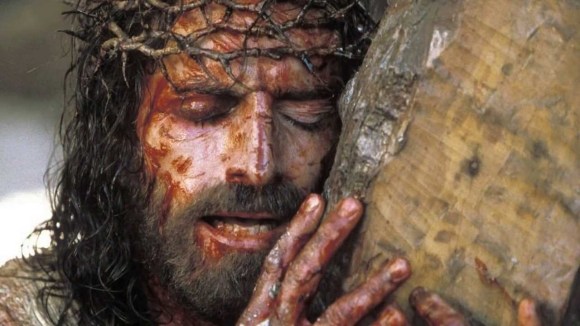
We open on a dark, haunting shot, a man standing alone in the vineyard weeping and praying desperately. Tears are streaming down his face. Blood is sweating from his brow. He begs in thick Hebrew dialect, begging to his heavenly father for another path if there is one. He knows what is coming. He knows what he has to do, and he’s afraid of everything that is about to happen.

A figure hides in the shadows, tempting him like he always has. He tells him he does not need to suffer if he does not want to. He does not need to be harmed. He does not need to die for the crimes committed by others. The man continues to weep, conflicted by his commitment to his father and the temptations from the evil one.

I’ve known this man ever since I was a young boy growing up in a Baptist Church. I’ve never met him face to face, yet I know him just like millions of other people do. Later when he exits the garden, a group of soldiers come to take him away before one of his followers slices one of the soldiers’ ear off in retaliation. The man rebukes his friend, miraculously heals the soldier’s ear, and allows the other soldiers to take him away. The evil one continues to watch closely while the rest of the man’s followers flee into the night.

This man, of course, is Jesus Christ of Nazareth, portrayed here by Jim Caviezel. He is the son of Mary the virgin, leader and friend to his faithful disciples, and the central figure behind the Christian faith. His story has been told and retold numerous times already, his sacrifice praised in churches all around the world. Yet, his story has never been told like this before. Not in the way that it is told in The Passion of the Christ.

In this epic drama directed by Mel Gibson, Jesus’ final hours is depicted in brutal, unrelenting detail as it covers the entirety of Jesus’ emotional and physical abuse leading up to his crucifixion. Whether you’re a believer or not, you more than likely already know the story from a historical perspective. A man claimed to be the son of God and was beaten, tortured, and sentenced to die on the cross because of his prophecies. Then on the third day after his passing, he mysteriously vanished from his tomb.

This much is consistent knowledge among atheists and believers alike. What isn’t covered enough is the full details surrounding Jesus’ suffering. I remember when I was in Sunday school and how much our instructors cleaned up their telling of Jesus’ crucifixion to us. I’m sure it was because we were all children and the instructors didn’t want to disturb us, but regardless we were only given a brief outline of the crucifixion without covering much of the specific details surrounding Jesus’ anguish. Since we grew up with this sanitized picture in our minds, we imagine the whole affair as clean-cut and are somehow able to brush through the messy parts of Jesus’ death.

Gibson, however, doesn’t allow us to shy away from the violence. Pulling from the New Testament Gospels including Matthew, Mark, Luke, and John, Gibson confronts Jesus’ suffering headfirst, demonstrating all of the brutalities that Jesus went through at the hands of those who persecuted him. Among the cruelties that Jesus experienced included being arrested, beaten, kicked, spat on, flogged viciously, stabbed rose thorns into his head, forced him to pick up a 300 pound wooden cross, travel through the blistering heat while carrying it on his back, whip him when he falls behind, dehydrate him, strip him, and humiliate him in public before nailing him to the cross and waiting for him to die a slow, agonizing death. I know some pastors who preach about the crucifixion as if it were some deeply spiritual, dignified affair. Believe me when I say there was nothing dignified about it. It was an ugly, violent, torturous, exhausting, and disturbing experience that Jesus went through, all because the Jewish high priests felt this man wasn’t the son of God.

The Passion of the Christ is a deeply moving film. Powerful, spiritual, and profoundly mesmerizing, this picture is commanding of our attention and doesn’t lose it until after it fades out from its final shot. That’s because Gibson focuses on telling Jesus’ story as a filmmaker and not as a follower. In most Faith-based movies, the big mistake most filmmakers make is glossing over the complexities of real life to stick to its shiny-clean moralistic agenda, forgetting that oftentimes believers and non-believers both face the same struggles. This is one of my biggest pet peeves when a film skips material just to take the high road when it comes to content and development. Can you imagine how jarring it might be to see Jesus’ crucifixion adapted as brutally as it is here, then flip into a upbeat, flowery musical such as Jesus Christ: Superstar?

And yet, Gibson doesn’t forget that Jesus was a man before he was any of the other things that society has labeled him. In both cultural and religious groups, Jesus is referred to under multiple pseudonyms. Messiah. Savior. Redeemer. Son of God. If you are a person belonging to the faith, then of course you see him as all of these things and more.

But who was Jesus before any of these titles were attached to him? Quite simply, Jesus was a man. He had a family, friends, a great many people who cared about him and loved him, and he cared about and loved each of them a great deal in return. And yet, even as a man, he possessed a grace and strength to his character that is all too rare in today’s world. In the moments where he was tortured, victimized, and sentenced to a bloody death, you would understandably assume that most others in his position would curse and lash out at the people who were hurting him. Yet, while being mutilated, abused, and laughed at, Jesus cried to the heavens and shouted out “Father forgive them, for they know not what they do.”

I’m trying to write this review from the perspective of a non-believer. As a Christian, I’ve always been familiar with Jesus’ story and why he felt the need to sacrifice himself for the people he loved. In the same way that Martin Luther King Jr. and Mahatmas Gandhi died for the causes they believed in, so too did Jesus die for the cause that he believed in. Yet, their causes were for mortal and earthly movements. Jesus’ cause was for something much bigger, something that is not understandable to most people. So why should non-believers take the time to watch The Passion?

For me, I would watch it just to get an understanding of the man who lived and died. Like Schindler’s List, Braveheart, and Born on the Fourth of July, The Passion of the Christ evokes a deep understanding of the emotional impact for the character and what his actions meant to the people around him. This was a man who really lived and died for the people he held a deep compassion for. Even if you don’t believe in his mission or his identity as the messiah, can’t you at least feel sympathy for this man’s sacrifice and his willingness to die for the people he loved?

I will leave it to you to decide your own conclusions based on what this film shows you. I will say that even if I were not a Christian or a believer, I would still be moved by Jesus’ story and the sacrifices he made for his people. He knew in his heart what would come from this. He knew he would extend this gift to everyone and many would still choose to not accept it. So why would he still willingly sacrifice himself and allow himself to suffer, knowing where everything will lead in the long run? As much as we’re tempted to read too deeply into his intentions, I think the answer is relatively simple: love. He died because he loved us, even though he has every reason to hate us for our persecution of him. That’s a love many of us will never be able to understand. Or perhaps, maybe a more appropriate word would be passion.

Tagged , , , , ,

“GET OUT” Review (✫✫✫1/2)

SOURCE: Universal Pictures

The mind is a terrible thing to waste.

I’m going to start by saying I’m the wrong person to be reviewing Get Out. It wasn’t made for me. In fact, I’m willing to safely assume that it also wasn’t made for Caucasians, televangelists, Neo-Nazis, white supremacists, alternate right supporters, and Donald Trump voters. For all intensive purposes, Get Out was made for the people that go through the profiling and discrimination that its main character goes through every day of their lives. As a heterosexual white male, I will never fully understand what people like Chris go through. All I can do is try to empathize with it.

Taking place in a homey little town that feels too much like it’s pulled straight out of Mister Rogers’ Neighborhood, Get Out follows interracial couple Chris and Rose (Daniel Kaluuya and Allison Williams, respectively) for a weekend trip where they’re going to visit Rose’s white parents. And when I say these people are white, I mean they’re super white. They’re so clean-cut, well-mannered and awkwardly sociable that you start wondering if they’re real people or robots.

As Chris starts mingling with Rose’s parents and their white neighbors, he starts getting an eerie feeling that there’s something going on behind everyone’s polite manners and big smiles. The house servants, Walter (Marcus Henderson) and Georgina (Betty Gabriel) treat him with hostility. He swears he’s seen one of the black neighbors before, but he’s acting differently now. And his friend Rod (Lil Rel Howery) warns him that a lot of black people went missing in the rural area that they’re at. As events start to slowly unravel, Chris makes a discovery so horrifying that he needs to escape before it grabs a hold of him. Hence the title Get Out.

While watching Get Out, I was acutely aware that while some moments were intended as satire, other moments were filled with a surprising amount of truth in them. In one scene in particular, Chris was mingling with a crowd of white neighbors, and it was very clear that they didn’t socialize with African-Americans very often. From asking questions about sports teams to grabbing his arm to see how strong he was, the neighbors’ behavior wasn’t overtly racist, but they stereotyped in the areas that mattered most. Just as I was wondering if this discrimination ever happened in modern times, a viewer next to me commented “Oh yeah, that’s happened to me before.”

I’m assuming that writer-director Jordan Peele (of “Key & Peele” fame) comes from a very personal place while writing this, because the details are just too acute to come from random imagination. In even the most subtle of moments, Peele deconstructs and elaborates on white privilege and the devastating affects it can have on individual lives. Upon their first meeting, Rose’s dad comments that he kept Walter and Georgina as house servants so that they can continue to be employed. Couldn’t he just give them a letter of recommendation? Refer them to another employer? Maybe help work towards a 401(k)? When Chris comments how too many white people can make him nervous, Georgina retaliates. Yet, tears are streaming down her face as she’s doing so.

That’s the kind of movie Get Out is: strange, surreal, and deeply unusual, but also immediately relevant to its intended audience. Is it even possible to have a culturally relevant horror film? Well if Get Out is anything to go by, then yes, it is definitely possible, and it doesn’t have to sacrifice its thrills to make an excellent point either.

Two cast members I have to praise before going any further: Daniel Kaluuya and Lil Rel Howery, who respectively delivers the films most climactic and comedic moments. Howery is the smartass friend that always has a response to everything, no matter how ridiculous or obscene it sounds. I bawled in my seat when he tried to explain to a few police officers why he felt his friend was being kidnapped and hypnotized to be sold as a sex slave, or that his status as a T.S.A. agent somehow makes him qualified to do detective work. Calm down there, Rod. You’re checking my bags, not solving a murder.

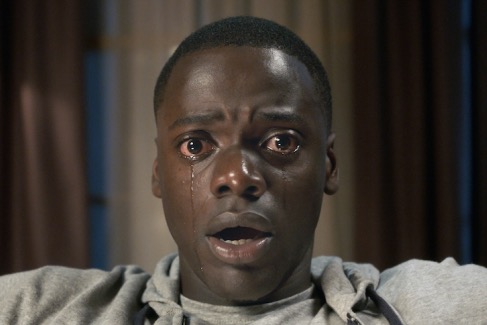
But Kaluuya is truly impressive in the center role here. He expresses both the strength and the vulnerability that allows Get Out to work as a thriller, portraying a character that is confused, scared, and victimized in a situation where no one is coming to help him. In one moment of the picture, he has to summon tears instantaneously as if he’s under a trance. Demonstrating these emotions on the spot requires either immense talent or personal experience, and I can’t help but feel Kaluuya is utilizing both during these demanding sequences.

I can already hear some of the commenters typing. “But David!” You might be saying. “White people aren’t kidnapping and terrorizing black youth!” Yes, I obviously know that, no more than I know about the nonexistence of Hogwarts, Middle-Earth, and the Force. If that is a serious concern to you, then you’re missing the point. The point very vividly depicted in Get Out, and what you really need to pay attention to, is the privilege that allows white people to appropriate African American lives and culture. And when you’re part of a society where police brutality and black imprisonment are common occurrences, is it that much of a stretch to see this film as satire?

I know some people will debate on the validity of Peele’s point of view and how accurate it is to modern society. My job is not to agree or disagree with Peele’s point, but to analyze how well he made it. And I will say without batting an eye that Get Out is one of the most creative, compelling, riveting, and darkly humorous films I’ve ever seen. It works across the board as horror, comedy, drama, or satire. Take your pick.

Tagged , , , ,

“LOGAN” Review (✫✫✫1/2)

SOURCE: 20th Century Fox

The greatest X-Man that ever lived.

Out of any actor to ever inhabit their roles, I don’t believe there has ever been one as committed as Hugh Jackman has been to Wolverine. The guy is 48 years old now. He’s played the superhero for 17 years for a total of nine films. Now he returns one last time as an elderly Logan for a film that is equal parts violent, action-packed, emotional, heartbreaking, and powerful. What a finale.

Taking place far into the distant future in the year 2029, James “Logan” Howlett (Jackman) is no longer Wolverine or an X-Man. Now he’s just old man Logan, taking care of himself and an aged Charles Xavier (Patrick Stewart) in a world where mutants no longer exist. Neither of them are in their prime state of health. Charles is facing a degenerative brain disease that causes daily seizures, which in combination with his mutation sends out psychic shock waves that can kill anyone within a 100-yard radius. Logan himself is barely even healing anymore, and he self-medicates with a bottle of Jack to cope with the pain. Both of these men are at the end of their ropes. This is not a place where we expected either of them to be.

Enter a little girl named Laura (Dafne Keen), who Charles discovers is one of the last remaining mutants alive. On the run from a squad of cybernetic hitmen called the Reavers, Laura turns to Logan and Charles as her only hope to escape. While Charles is eager to help, Logan is done with the hero days and just wants to be left alone. But as he keeps getting roped into this pursuit, Logan discovers how he’s connected to Laura and the Reavers and how everything he’s ever been through has lead him up to this moment.

First and foremost, let’s get the obvious out of the way: Logan is rated a hard R. No, this is not a passive R rating like The King’s Speech with a small string of curse words. More like a Hacksaw Ridge, Deadpool, Hateful Eight R rating packed with bloody violence, gratuitous gore, dismembered limbs, exploding body parts, decapitated heads, and F bombs the size of Nagasaki. And I thought the mansion raid scene in X2 was rough. If the X2 Wolverine went head-to-head against Logan in this movie, Logan would literally shred him into a pile of bloody red meat. Period.

As someone who is a strong advocate for the PG-13 rating, I didn’t know how I was going to feel about the R-rated violence in Logan. None of the other X-Men movies would have improved if the violence were increased one bit. Not even the Wolverine films, which fans have been advocating for more mature content for a long time now. Yet strangely enough, the heightened violence worked very well for Logan and didn’t feel forced or unnecessary. Why is that?

I think it’s because in context to this film, it makes sense for Logan’s story. By this point in his life, he’s well over 100 years old. He’s literally seen decades of violence, both committed to him and committed by him. He’s seen friends, enemies, and innocents fall to the blades in his body. He’s lived a long, tired, blood-soaked life filled with tragedy and regret.

By the time we get to Logan, he’s not allowed to shy away from all of the violence he’s experienced in his life. So why should we? Logan is very confrontational in what the character has had to face all by himself, and for the first time ever in the series, it won’t allow us to look away from the violence Logan has had to struggle with. As one character points out in the film, killing is like a brand. And a brand sticks.

This is a brilliant entry by writer-director James Mangold, who previously directed The Wolverine in the X-Men saga. Instead of the action and the visual effects, Mangold chooses to focus on something more practical to Wolverine: his humanity. More than almost any of the other X-Men films, Logan is the most emotional, the most vivid, and the most grounded story told in Wolverine’s saga. Like The Dark Knight and Spider-Man 2, Logan relates to us on a more human level as opposed to a fantastical one. In one of the greatest moments of the picture, Logan turns to Laura and tells her “Don’t be what they made you.” I wonder how hard he wishes someone told him that same thing when he was Laura’s age.

As this is one of Wolverine’s most emotional adventures, so too is this the best demonstration of Hugh Jackman’s talent. The more I watch him, the more impressed I am by his range as an actor. This is a guy who has performed numerous roles besides Wolverine, from The Prestige to Les Miserables to Prisoners. How he can bounce from those roles back to Wolverine constantly impresses me, and the fact that he comes back and gives a performance as powerful and demanding as this shows how seriously he takes his roles as an actor. Patrick Stewart also gives a heartfelt performance and displays Professor X in his most vulnerable, broken appearance to date. Keen was also fitting in her role as Laura, although most of her scenes required nothing more than just fiercely death-glaring at everything she looks at.

I won’t tell you how Logan ends, although I’m sure you’ll have already guessed it. I will say that the thing that stays with you most is not how Logan ends, but of the smaller moments that lead up to it. I caught myself remembering how Logan first met the X-Men in the earlier movies, how the stray loner found a family, how he has lost the ones he’s loved most, how many friends he’s seen die, and how every small, intimate moment he’s kept close to his heart has lead him here. Take note of the last thing Logan says to Laura, the last thing Laura does for Logan, and the last shot that Mangold chooses to linger on. Time will remember Wolverine for the hero. I will remember Logan for the man.

Tagged , , , ,

“THE WOLVERINE” Review (✫✫✫)

SOURCE: 20th Century Fox

Snikt, snikt.

If there’s one good thing about sequels, it’s that it gives studios a chance to redeem themselves if they failed the first time around. With that in mind, I’m thankful that 20th Century Fox has redeemed themselves from X-Men Origins: Wolverine with its sequel The Wolverine, a vicious and riveting action-fest that features perhaps the most impressive performance from Hugh Jackman to date. Is it very original? No, but it’s loads of fun, and that’s one thing this film has over its predecessor.

A follow-up to both the X-Men trilogy and its failed prequel, The Wolverine features an older, more weary Logan (Hugh Jackman), who’s tired of all of the years of fighting and struggling as an X-Man. Now rescinded in the Canadian woods, he’s tracked down by a female samurai named Yukio (Rila Fukushima) who delivers some downtrodden news to Logan: Yashida is dying.

You see, back in WWII, Logan was held prisoner by a Japanese camp close to Nagasaki. After the notable atomic bombing, Logan pulled down a young soldier into his ditch and protected him from the blast. That soldier was Yashida (Haruhiko Yamanouchi), and he’s now succumbing to cancer.

So Logan is brought to Japan, where he once again meets with Yashida to say his goodbyes. But upon seeing him, Yashida instead makes him a ludicrous offer: surrender his healing factor to him, and become mortal. Settle down. Live a normal life, just like Logan has always wanted.

Logan ends up refusing and Yashida dies later that night. But the next few days, Logan notices something strange. After a few skirmishes with the local Yakuza, Logan notices that he’s not healing like he used to. When he gets shot, he’s blown back. When he gets stabbed, he bleeds. And when his claws come out of his hands, they leave holes where they used to be. Now left as an ordinary homosapien, Logan needs to traverse through Japan to discover what happened to his powers and once again become the Wolverine.

I’m going to get the obvious out of the way first: yes, Hugh is as great as Wolverine as he always is. That in itself isn’t a surprise to anyone. This is his sixth time portraying the character, the second time in his own film. He knows what he’s doing. Wolverine has always been the ultimate anti-hero of superheroes. He is a mean, ferocious, aggressive, untrusting, violent lone wolf who hacks, slashes, and cuts his enemies to pieces. He is not supposed to be a likeable fellow. Were it not for his slight sense of empathy, he could very easily be a villain if he wanted to be, and that’s what makes the character so fascinating. He exists on both sides of the superhero spectrum, and Jackman has always done well in contrasting the two sides of the character.

But an outstanding actor can still exist inside a mediocre movie. As demonstrated in the previous X-Men Origins: Wolverine, a performance by itself is worthless unless a good director can guide it in the right direction. Luckily, James Mangold does exactly that. Previously helming films such as Walk the Line and 3:10 To Yuma, Mangold combines action with relevance in The Wolverine, making it not only an exciting superhero blockbuster, but also an introspective character study on a man fighting his own immortality.

First, the action. While I still believe that X2 sports the best action scenes in the franchise to date, The Wolverine is definitely a worthy runner-up and is incredibly creative in constructing its action. In one of my favorite scenes, Wolverine is fighting against a slew of Yakuza on top of a bullet train with a base speed of 200 mph. If that just sounds ridiculous, imagine what it looks like seeing these guys fighting each other on top of it. While Wolverine and the Yakuza are desperately stabbing into the hull to maintain their grip on the train, they keep slashing at and fighting each other, all while the wind is slamming against their faces and they’re dodging signs and advertisements speeding past them. In another scene, Wolverine is fighting a samurai inside of a dojo, and the editing was so well interwoven together that I felt like I was watching a swordfight not unlike Gladiator or The Last Samurai. The Wolverine is an excellent blending of genres, and seeing Wolvie fighting in this new feudal environment gives a unique spin on the character’s regular hack-and-slash action.

But it’s not just the action that’s so enthralling. For the first time in any X-Men movie, Wolverine’s immortality is brought into question as a personal conflict for the character. It’s funny how I’ve never considered Wolverine’s healing factor as a weakness for him. But thanks to how cleverly constructed this movie is, it does bring up a valid question: if it were possible, would you want to live forever? I know I wouldn’t. What sane person would want to stomach Justin Bieber for the rest of their lives?

Wolverine, however, has much more serious consequences to face for his immortality. At this point in his life, he’s a weathered soul. He’s killed people. Watched as his friends were killed. Fell in love. Lost love. Found a family. Lost a family. For someone who has lived and lost as much as Logan has, I don’t blame him one bit for being tempted by the peace of mortality. As Yashida points out, if he gave up his powers, he could grow old, settle down, have a family, and die happily in peace, just like any other normal man. After everything he’s been through, “normal” is a gift Logan deserves at the very least. Yet, the gift evades him.

I enjoyed The Wolverine very much. The action, the conflicts, the performances, they all get back to the roots of the character and why they make Wolverine so interesting. A few of the film’s villains might be flat and uninteresting, and while the plot is unique with its themes, its execution fails to impress as much as its predecessors do. That still doesn’t change the fact that this is a fun action movie, a meaningful display of Jackman’s talents, and a worthy redemption from the haphazard failure of X-Men Origins: Wolverine. It’s good to have you back, Logan. Snikt, snikt.

Tagged , , , , ,

“SPLIT” Review (Zero Stars)

24 personalities to hate.

I hate acts of violence committed against children. I hate it, hate it, hate it. Now you know. Besides it’s obviously unsettling and disturbing nature, there’s no purpose to inflict this type of trauma on children of any age in a movie. What good does it do? What does it contribute to the story, really? Would it really have killed the film if any of these actors were at least five years older? Three?

Split is a sick, disgusting, cancerous movie that mistakes little girls’ suffering for entertainment. Those girls are Anya Taylor-Joy, Haley Lu Richardson, and Jessica Sula, all of them playing high school classmates. After attending a birthday party, the three girls are kidnapped by Kevin (James McAvoy), who gases the girls in their car until they pass out. Hours later, they wake up in a small room that looks like prime territory for an experienced rapist. Kevin never does anything, but it wouldn’t be much of a stretch if he ever did.

The girls eventually find out that “Kevin” is not exactly one person, but multiple. Suffering from Disassociative Identity Disorder, Kevin has 24 personalities in his head, and the girls converse with all of them. The one that kidnapped them is named Dennis, an OCD clean freak that will rip your clothes off if you so much as have a smudge on them. There’s Clarissa, an almost-motherly figure were it not that she (he?) ordered Dennis to kidnap the girls in the first place. There’s a nine-year old named Hedwig, who’s the most friendly to the girls out of Kevin’s personalities. And then lurking in the back of Kevin’s mind is the 24th personality, who the other personalities refer to as “The Beast.”

First of all, I need to address Kevin’s disorder. The film’s portrayal of the disease is inaccurate at its best, demonizing at its worst. There are multiple inconsistencies with the film’s portrayal of the disease, including:

  • The different personalities having conversations with each other (they don’t).
  • Kevin’s body composition and appearance changes based on what personality has taken over (it doesn’t).
  • Kevin’s original personality can be summoned forward if you say his full name (he can’t).
  • The different personalities can get so extreme that it can make Kevin bulletproof and have super strength (definitely not).

That, however, isn’t even the worse part of Split’s portrayal of DID. With Kevin kidnapping, torturing, and brutalizing these young girls, the film portrays the victims of this disease as dangerous and threatening, when in most cases they’re relatively harmless to anyone except themselves. As someone who personally suffers from another mental disorder, I’m offended by the movie for demonizing Kevin’s disease and for making it look more dangerous than it actually is. It makes people suffering from this disease look like horrible people, when in fact they’re suffering in ways none of us can understand. These people deserve to be sympathized with, not apathized.

But hell, forget about it. This is a movie, after all, and filmmakers are allowed to take artistic license for the purpose of advancing their art and storytelling. At least, that’s the excuse I would give if this movie had any sort of art or storytelling to it. From start to finish, the only purpose of Split is to see little girls get hurt by a megalomaniac who tortures them differently with each of his personalities. Seeing anyone being tortured by one assailant is enough. Seeing three girls being manhandled by 24 assailants in one body is revolting.

A few things these girls are forced to go through after being kidnapped include: dancing, urinating on themselves, fondling, being stripped from their clothes, separated into other rooms, taunted by a knife, forced into small spaces, psychologically tortured, having their intestines ripped out, and eventually eaten alive, although by what exactly I won’t say. I’m watching all of this absolutely mortified, not only by what I’m seeing on-screen, but also knowing that this movie was rated PG-13. My mind raced, wondering how many teenagers might have also watched this atrocity and told their friends about it enthusiastically afterwards.

The violence against these girls serve no purpose. None. It is not fun. It is not thrilling. It is not exciting. It is ugly, twisted, and demented, and it’s even worse when you think about studio executives approving of this sort of on-screen torture porn against children. How can you look at everything Kevin is doing here and think “Hey, this teenage suffering is worth some money. Let’s market it to teenagers.”

I say all this knowing full well that I have praised other horror films with teenage protagonists, including Halloween, Scream, and Nightmare On Elm Street. Other horror films, such as Poltergeist, Sinister, and The Shining have had even younger children in them. So how come I’m more forgiving of these movies and not Split?

I think it has to do with intentions. In the aforementioned films, the children are either ignorant or unsuspecting of the overlying threat looming over them, whereas the adults are fully aware and terrified of it. That enhances the horror experience and makes us bite our nails at the action happening on-screen. And in the case of Halloween, Scream, and Nightmare, the screenplay says they’re teenagers, but they look more mature in their on-screen appearance. It’s not hard to see Jamie Lynn Curtis, Neve Campbell, or Heather Lagenkamp as seniors, maybe even as college students.

But the girls in Split look very much like young girls, as in 12 to 13. Even though they’re all older than 20, they all look like somebody’s kid that just came out of recess. To see them like this and have the camera watch them eagerly as they’re being tortured with very little clothing on is sickening and disgusting. It makes me wonder if the actresses parents were bothered at all while watching them. If they weren’t, what does that say about them?

What caused these personalities to emerge in Kevin? The reason implied is sexual abuse, as Kevin’s mother always grabbed a coat hanger any time she saw mess in her house. There’s sexual abuse implied for another character too, although I won’t spoil by saying who. Kevin refers to himself and the other individual as “pure”, saying that they are the special ones who will inherit the Earth. To imply that you have to be sexually abused in order to become genetically superior is both disgusting and insensitive. I would love to hear some sexual assault victims opinions’ on this film, and I would love the studio heads to sit down and listen to it as well.

This is a new low for writer-director M. Night Shyamalan, unmatched by most of his recent failures. The Happening. The Last Airbender. After Earth. And now Split. At least with the previous films, they were just poorly made or insulting to our intelligence. But Split fails with something far, far worse. It insults our dignity, it insults what the PG-13 rating allows into theaters, and it insults what consumers consider as “entertainment.” This can’t fairly be labeled as the worst film of the year because it’s technically immaculate. But it’s the film with the worst intentions, and that matters more.

I recognize James McAvoy as an outstanding talent, and the fact that he can brave through all of these different personalities and perform all of them enthusiastically speaks to his range as an actor. But I’m not here to review his performance. I’m here to review the film. And the movie is poisonous, harmful, and disingenuous, no matter how great of a performance may be in it.

Split is an immoral, abhorrent waste of film, made all the more worse because we’re seeing kids suffering no less in it. The studio heads were wrong to make a movie like this, and they’re damn wrong if they think we’re supposed to accept it as entertainment.

Tagged , , , , , ,

“X-MEN ORIGINS: WOLVERINE” Review (✫)

SOURCE: 20th Century Fox

Pop those claws back in, bub. 

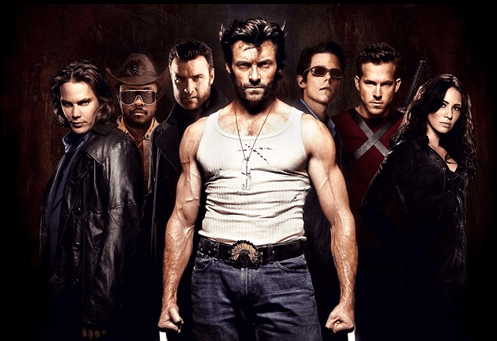
The fatal mistake that X-Men Origins: Wolverine makes besides its God-awful title is focusing more on the “X-Men” part than the “Wolverine” part. We’ve seen three X-Men movies now, guys. We get it. Mankind fears and hates mutants. Mutants are the next stage in human evolution. Blah blah blah, all that jazz. But with a Wolverine-centered movie, I was hoping that they would focus less on the recurring themes of the series and make it a more personal narrative to everyone’s favorite X-Man. Unfortunately, the studio didn’t want the same thing. Instead, X-Men Origins: Wolverine is more focused on making comic book cameos than it is in making a compelling story for its key character. It’s more of an X-Men movie than it is a Wolverine movie, and it’s not a good one at that.

In this prequel to the X-Men trilogy, we discover the origins of Wolverine, A.K.A. James Howlett (Hugh Jackman). When his unusual mutant powers break out and James discovers the claws in his body, James goes on the run with his brother Victor Creed, A.K.A. Sabretooth (Liev Schreiber). After fighting in the Vietnam war together, the two brothers join a mutant task force called Team X that is led by Major William Stryker (Danny Huston). But after one too many violent genocides from the task force, James resigns from Team X and tries to live a normal life by himself and his lover Kayla Silverfox (Lynn Collins). Now Sabretooth and Team X have come back into James’ life, and he has to sink once again into his Wolverine alter-ego to free himself of his past forever.

Right off the bat, I need to point out the biggest flaw with this haphazard of a movie: it’s too much. X-Men Origins: Wolverine tries to do too many things all at once, and it does all of them badly. It tries to be a Wolverine origin story, an X-Men prequel, an introduction to new mutant characters, and a fun action movie on top of all of this.

Let me leisurely break down why it fails in every one of these goals:

1) The screenplay is too by-the-books. Skip Woods, who wrote Hitman prior to this, focuses too much on explaining Wolverine’s history and not enough on how it impacts him as a character. There’s no teeth in it, no grit or compelling force that makes his story worthwhile or meaningful to us. It feels more like fanfiction written for discussion rather than an established continuity for the X-Men universe.

2) Speaking of the X-Men, there are two X-Men here in the movie besides Wolverine. They are the younger Scott Summers/Cyclops, portrayed by Tim Pocock, and Patrick Stewart as Charles Xavier, here with the use of his legs. There is absolutely zero reason to have them in this movie. They contribute nothing to the story, nothing to Wolverine’s origin, and nothing that makes any worthwhile impact on the film. They’re only there as forced cameos so that viewers can point at them and be like “Uh Look! That’s them before the X-Men movies! Huh huh.” Except that this now creates a massive plot hole, once you question how they could be so close to the action, yet not remember him years later.

3) So we already have three characters we don’t care about in the movie. Want to add 15 more just for fun? No? Well too bad, here they are anyway. In most of the X-Men movies, its hard to keep up with the full roster because of how many characters are jam-packed into them. But now it’s getting ridiculous. Besides the aforementioned characters, there are a slew of other mutants here that are not memorable, or useful, in any of their scenes. We have will.i.am as a teleporter, Kevin Durand whose mutant power is literally being fat, Dominic Monaghan as a living battery, Taylor Kitsch as someone who can light cards on fire, and Ryan Reynolds with his mouth sewn shut who has blades coming out of his arms. The logic of that one just baffles me completely. If you have literal swords in your arms, how do you plan to even move them around? One wrong move, and you have a giant blade sticking out of your elbow. Imagine how inconvenient that would be at the dinner table.

4) There’s no excuse for this one. No excuse that in even in a Wolverine movie, the visual effects and the fight scenes are garbage. In X2, we had a great demonstration of Wolverine’s savagery as he ripped, stabbed, and mercilessly shredded people in the mansion raid scene. Here, that grit and violence is gone as Wolverine blows up helicopters, topples over buildings, and even gets into boxing fist-fights just like any other stock action hero would. Some of the fight scenes are so ridiculous that having Arnold Schwarzenegger in them would make more sense than Hugh Jackman. I can’t make this up. It’s so cartoonish and stupid that I was left wondering if this is why Stan Lee didn’t film a cameo for this movie. I wouldn’t put it past him if that were the case.

Does it sound like I’m spreading myself thin here? That’s probably because I’m writing about a movie that is spreading itself thin. X-Men Origins: Wolverine is not only the worst title out of the X-Men movies so far: it is also its unequivocal worst film. I detested every moronic minute of this insipid, idiotic, pretend-thriller. Nothing landed in this movie. The characters, the acting, the writing, the choppy editing, the fights, everything falls apart and fails to deliver anything of any value. Fans complained about X-Men: The Last Stand, but at least that one expressed some interesting ideas. X-Men Origins: Wolverine fails to even be stupidly fun. It just reaches stupid.

I give this film one point, and one point only, and that is that Hugh Jackman, as always, makes a great Wolverine. His snarl, his ferocity, his fierce presence commands the role. He is perhaps one of the greatest superhero casting decisions ever made, next to Robert Downey Jr. as Iron Man or Wesley Snipes as Blade. The problem isn’t Jackman’s performance. The problem is the movie doesn’t know what to do with his performance. Because of this, Jackman’s efforts are in vain as he’s thrown through a silly script and an even sillier movie, downplaying his emotions and his efforts in the role. Say what you will about the previous X-Men movies, but Wolverine deserves better treatment than that.

By the end of the film, Wolverine’s story concludes exactly as you expect it to: with his memory wiped, forgetting everything he just went through. I wish I were in his position.

Tagged , , , , , ,

“CRASH” Review (✫✫✫✫)

SOURCE: Lionsgate Films

There is no us against them. It is only us.

“It’s the sense of touch. In any real city, you walk, you know? You brush past people, people bump into you. In L.A., nobody touches you. We’re always behind this metal and glass. I think we miss that touch so much, that we crash into each other, just so we can feel something.”

– Detective Graham Walters, Crash.

I couldn’t sleep the night that I watched Crash. That’s because I crashed into somebody.  26 different people, in fact. In life, we are so self-consumed by the business and burdens of our lives that we never stop to think of how we might affect the lives of the people around us. So we crash into them. Sometimes it’s just a fender-bender. Sometimes it’s a straight-on collision. But it always has repercussions, whether it’s an exchange of flurried insults, or the breaking down of someone’s worth and self-esteem.

There are no characters in Crash, only faces that you remember. Those faces belong to Don Cheadle, Jennifer Esposito, Shaun Toub, Bahar Soomekh, Chris Bridges, Larenz Tate, Sandra Bullock, Brendan Fraser, Matt Dillon, Ryan Phillippe, Terrence Howard, Thandie Newton, Michael Pena, Yomi Perry, Ashlyn Sanchez, Karina Arroyave, Loretta Devine, Beverly Todd, William Fictner, Keith David, Greg Joung Paik, Nona Gaye, Bruce Kirby, Tony Danza, Kathleen York, Sylva Kelegian, and Marina Sirtis. I list all of them out only because they all matter. You’ll only recognize a few by name or from another film. But you care about all of them, no matter how small their role may seem.

To cover the full scope of Crash would be impossible. It takes place over the course of a few days in downtown L.A. and features an assortment of people that affect each other’s lives in one way or another, whether they realize it or not. I use “people” instead of “characters” because these are not fictionalized troupes that could only exist in a movie. These people feel, breathe, talk, and behave like any real person would. Even though the movie is classified as fictional, you can easily see the events happening to someone else in real life. In many cases they’ve already happened, and more than likely they’ve happened to you.

One of them already happened to writer-director Paul Haggis, who was inspired to write Crash after having his car stolen by a pair of carjackers. Playing it back in his head, he creates a path that starts with the carjackers, then it follows to the theft victims. Then it follows the locksmith at their house. Then it follows one of his customers that got his store broken into. Then it follows his daughter at her night job and et cetera, et cetera until it paints a beautifully written, tragic path between all of its subjects, creating a recurring pattern of judgement and apprehension that each person shares, that each person is guilty of.

And none of these people are innocent of prejudice. None of them are blameless for contributing to the problem. All of them are guilty of judging based on appearance, no matter if they’re White, Black, Mexican, Latino, Persian, or Chinese. It shows very vividly that there is not a difference between the perpetrators and victims of racism. There are only victims.

This perspective is so important because it humanizes everyone in the film, no matter what malice or misdeeds they commit. Imagine, if you would, if every character in this film were one race. White, Black, Mexican, Indian, Asian, whatever. Now imagine all of them throwing their same prejudice and judgements on each other even though they all look the same. The movie would look pretty silly, wouldn’t it?

Yet the movie makes complete sense, because of the stereotypes and the xenophobia we learn growing up. How sad is it that as a person, you can identify and understand why these people behave and react the way they do? How maddening is it when in one moment we get angry at a character for calling someone a criminal, a gangster, a hoodlum, or a terrorist, then we look at the mirror and realize we do the same thing? The people in the movie see each other for what they look like, but the movie never does. It only sees them as fathers, mothers, sons, daughters, brothers, sisters, family, friends, people.

I felt genuinely ashamed while watching Crash. Guilt-ridden, heartbroken, frustrated, upset, angry. That’s because I saw myself while watching it. Perhaps not at the level of a racist cop or an opportunistic district attorney, but in the small, subtle moments. When one woman wants to get the locks changed again because she doesn’t trust the Mexican locksmith “homie” over there, I quietly gasped to myself saying “Oh shoot, I do that too.” And then you see “homie” go home, quietly comforting his daughter when she hears gunshots, kissing her forehead, telling her he will protect her. That’s when you realize “homie” isn’t Mexican or gangster. He’s a father. He’s human.

We don’t want these judgements passed on to us. Yet, we pass them on to others. Why? Because that’s our nature, I suppose. We’re engineered at an early age to judge and be cautious of people based on appearance, so this security mechanism is instilled in our mindset to be wary of someone just because of what they look like. It’s saved our lives many times. It’s also ruined the lives of so many others.

Yet, through this brilliantly interwoven narrative that Haggis creates, he also demonstrates the same remedy for this problem. Kindness. Compassion. Empathy. Many times, at the hands of the people who were cruel or inhumane only a few scenes ago. There’s this genius reversal of character between where someone starts at the beginning of the film versus where they are at the end. In the movie, there is a racist cop who ends up saving the life of a black woman in a burning vehicle. There’s a spoiled housewife who’s wary of Mexicans who ends up saying her best friend is her Mexican housemaid. There’s a black man who demonstrates disregard for Asians, only to save the lives of multiple Asians by the end. A white man who saves a black man’s life, only to take another’s later on. Whether they are on one end of the spectrum or another, by the end of the film, they exist on the other end.

This is so important because it demonstrates that we’re capable of that same kindness and cruelty, whether we want to admit it or not. How many times have you been more open to someone of your race rather than another? How many times have you acted more cautious because of someone’s skin color? How many times do you say “I don’t want to be around this person” because of a generalization or an assumption you have on their character because of their appearance? We don’t want to admit that it’s about race, but what else could it be about? Whether they’re matching colors on their outfit?

The movie technically ends on a cliffhanger, because there are still many things that we don’t know. Does John’s dad ever get the medical treatment he needs? Does Graham ever find the man who killed his brother? Does Anthony find redemption or fall back into a life of crime? Does Farhad ever manage to reopen his store? Does Tom remain in the police force?

I don’t know the answers to these questions, just like I don’t know the answers to my questions or to your questions about the future. Perhaps that’s the point. In life, we don’t know where we’re going, where we’re traveling to, or who we meet on the way. We can’t control the people that come into our lives. We can only control how we react to them. And instead of reacting with fear, maybe we can react with curiosity. Confidence. Belief in the best of people. By doing this, we begin to create an atmosphere of change.

And change doesn’t come in big steps. As Crash demonstrates, they come in small doses of change, whether they be positive or negative. If we focus on those changes being kind and compassionate as opposed to cold and fearful, we change many things at once until we change the world entire. That’s the one that I want to be a part of: one where we won’t have to crash into someone ever again.

Tagged , , , , , ,

“LA LA LAND” Review (✫✫✫)

So does “LA” refer to music, or Los Angeles?

Musicals don’t exist in realms of reality. If you have this as your mindset when you go into a musical, 9/10 times you won’t be dissapointed. This expectation helped me to enjoy La La Land, a delightful, energetic musical experiment that is equal parts joyful, uplifting, and honest with itself. I enjoyed it very much even though I knew it wasn’t realistic, and that’s part of the influence of cinema: escaping one reality so you may be immersed in another.

Taking place in modern-day Los Angeles, La La Land follows two hopeful dreamers who aspire to be successful Hollywood artists. Mia (Emma Stone) is a down-on-her-luck actress who works as a barista while simultaneously auditioning for shows. Sebastian (Ryan Gosling) is a jazz pianist who was recently fired from his performance job at a nightclub. As these two run into each other coincidence after coincidence, they soon fall in love with their artistry, and eventually, each other.

With La La Land being the third film written and directed by Damien Chazelle, it feels strange that he would want to come back and do a musical. His last film, the masterfully-paced and enthralling Whiplash, was a tense exercise in perfection and practice, while 10 Cloverfield Lane also demonstrated Chazelle’s characteristics of pacing with tension. La La Land, however, feels so starkly different from those films. From the emotional mood to the artistic direction, La La Land exists in ambiance, throwing you back to the classic musical days where characters broke out into song and dance instead of engaging in conversation with each other. If Whiplash is a vicious, violent train chugging down the tracks at a lethal pace, La La Land is like a feather, whimsically dancing in the wind as it quietly falls down to its next restful stop.

That change of mood is fine. What isn’t is sacrificing quality along with it, and La La Land definitely has a few things to answer for, particularly in the runtime. The movie is two hours and eight minutes long, and it definitely feels like it. From the writing to the editing, there were small things in there that were not needed and could have been resolved with a few quick rewrites and tighter edits.

Example: In the middle of the movie, Mia is caught in a love triangle between Sebastian and her boyfriend Greg (portrayed by Finn Wittrock). None of these scenes were needed. None of them. Greg served no purpose in the film other than just to have Finn Wittrock in it, who admittedly is a talented actor, but that’s not a good enough reason to have him awkwardly shoved in here. He offered no development in either Mia or Sebastian’s story, and the film would have moved on much more smoothly without him in there as a distraction.

There’s other small things, from the sudden dance montages to characters conveniently lacking cell phones in really useful moments (I.e. at Sebastian and Mia’s first meeting, when he asks her out on their first date, when she gets an audition callback, etc.). In an age where cell phones flood every part of our culture, it’s so hard to imagine two people lacking them so often, especially in the heart of a city like L.A.

Compare this to the tempo and flow of Whiplash. Nothing is wasted in that film. Nothing. Every practice scene, every beating of the drum, every fiery argument between Neiman and Fletcher drives home a point about passion and sacrifice. Whiplash was tight, effective, and masterful in its art. La La Land has more fun with it.

That’s not to say La La Land isn’t enjoyable. It definitely has an upbeat, feel-good rhythm to it, guaranteed to get you dancing on your feet and humming the song’s melodies out loud. Part of this is because of the wholly earnest energy sprouting from Gosling and Stone’s chemistry. With this being their third collaboration together (the first two being Crazy, Stupid, Love and Gangster Squad), this film is easily the best representation of their talents together. They do well no matter what scene they’re in, whether they’re subtly flirting with each other, sharing a moment of romantic passion, dancing the night away in a wonderful musical number, or are arguing in a heated moment. They make every moment come alive and immediate. Stone especially demonstrates immersive talent, and in her audition scenes as an actress, she feels like she’s playing two characters at once. That’s because she is.

I like a lot of things about this film. The music is catchy and meaningful, with each number saying more in each scene than character’s dialogue can sometimes. The set design is bright, vibrant, and colorful, with some scenes painting a more vivid picture than any painting or photograph can. The choreography is especially impressive, with characters moving, leaping, tap-dancing, and flying into synchronized rhythms in-time with the music.

As a musical, La La Land fulfills every requirement and then some, with it being not just catchy and melodic, but also visually spectacular and dynamic. It could have been more effective in some areas, but at the end of the day, Chazelle is doing what he loves by telling this story about two unlikely lovers pursuing their dreams. We can learn an important lesson here. It’s easy to give up on the impossible. It’s hard to pursue your dreams. Imagine what it feels like reaching them.

Tagged , , , ,

“ASSASSINS CREED” Review (✫1/2)

Nothing is true, so nothing should be permitted.

There should be a special recognition for filmmakers who somehow squander great material set at their feet. Zack Snyder, for instance, had DC Comics’ two staple characters at his disposal, and yet somehow made a movie as incompetently dull as Batman V. Superman. Gary Ross had Oscar-winner Matthew McConaughey, an intriguing premise, and the historical relevance to back up Free State of Jones, but he didn’t do anything with it despite having that much to work with. And don’t even get me started on Michael Bay and Transformers. That guy deserves an Oscar for how much he ruined a series about a galactic robot war on Earth.

Now we have Justin Kurzel here to continue the trend with Assassin’s Creed, a boring, stupid, frustrating experience that kills any of the fascination or thoughtfulness the video games inspired. Kurzel literally had everything to work with. Oscar-winning talent. A deep mythology built from its source material. Incredibly choreographed action that blows even Mad Max: Fury Road away. None of it amounts to anything worthwhile. Besides Batman V. Superman: Dawn of Justice, Assassin’s Creed is this year’s biggest disappointment.

Based on the video game series of the same name, Assassin’s Creed is set in the present day where a corporation named Abstergo is after an ancient macguffin called “The Apple of Eden”, a device which can control man’s free will and “cure them of violence” (The script’s words, not mine). The head of Abstergo, Alan Rikkin (Jeremy Irons), charges his daughter Sophia (Marion Cotillard) with finding the artifact by tracking the ancestry line of the last man known to have it, an assassin from 15th Century Spain named Aguilar (Michael Fassbender). Tracking his descendants from Spain onward, Sophia discovers his only living descendant: Callum Lynch (Michael Fassbender), an inmate waiting on death row. After rescuing him from his execution, Sophia hooks Lynch up to this machine called the Animus, which allows you to relive the memories of your ancestors, and begins their search for the Apple of Eden.

Let me start with the film’s biggest and most fundamental flaw: the animus. This is, from what I understand, a virtual-reality machine, intended to allow users to relive the memories of their ancestors. Since its making users relive their ancestors memories, why is there a need for a crane? When Callum Lynch is in the present, he is re-enacting the movements of his ancestor from decades ago in real-time, with the crane throwing him around like a rag doll on a puppet string. Why is this necessary? If the Abstergo scientists built a machine that literally allows you to relive the past, why would anyone care if you’re mimicking them in the present? From an efficiency standpoint it makes no sense, and it seems really stupid to be flinging Michael Fassbender around in a big crane while he’s in the machine.

But you know what, that’s fine. Whatever. If Lynch has to move during his animus sessions, I can get behind that. But then that brings up another problem: the editing of these action sequences. While he’s reliving his ancestor’s memories, he’s also mimicking his actions in real-time in the animus. Because of this, the film cuts back and forth between the past and present to illustrate that Lynch is doing this. That would be fine if they did this at the beginning just to assert the idea, but then they keep cutting back and forth between the action throughout the movie. They do this constantly, like we won’t know that Lynch is re-enacting his ancestor’s movements unless they remind us every 30 seconds. The action is so choppy and poorly intercutted that its akin to switching in between two different channels on a television. You can’t keep up with what’s happening on one channel or the other, so why even bother to show us both at the same time?

This film is from Justin Kurzel, who before this has received critical acclaim for directing Snowtown and last year’s adaptation of Macbeth. What happened to him? My guess is studio interference. With this being a video game adaptation, there is an obvious pressure to relate to the aesthetic and feel of the source material in order to satisfy gamers of the original series. Add that on top of the pressure that there hasn’t be a satisfying video game movie ever (See Resident Evil, Doom, Prince of Persia, Mortal Kombat, Super Mario Bros., etc), and you have an unreasonable amount of expectation to set on one director’s small shoulders.

All of the elements technically function in the movie. Fassbender is a powerhouse in the lead and firmly demonstrates why he’s one of the biggest rising stars in Hollywood. The premise is interesting and has the potential to explore deep ideas. And the action is impressive and depth-defying, when it isn’t cutting back and forth between the past and present.

The problem is Kurzel, and 20th Century Fox, focus on adapting the wrong parts of Assassin’s Creed. Yes, you want the action. Yes, you want the choreography. But beyond that, you also want the elements that made the video games so successful. The deep themes of religion versus identity. The lore of the Assassins and Abstergo. How it subtly ties itself to history and how it relates to humanity’s nature. The video games were successful not just because of the action. They were successful because they had a compelling, thought-provoking plot that made us question everything and trust nothing.

I think that’s the worst part of this movie, is seeing the potential in every scene, in every shot Kurzel sets up, only for it to get shot down due to one easily fixable mistake or another. If there is one thing I hate more than a bad idea, it is a good idea wasted on poor execution. Assassin’s Creed is not just a wasted film: it’s a wasted opportunity. To me, that is worse to stomach.

This is a stupid, sloppy, poorly assembled mess of a film that further asserts why video games make terrible movie adaptations. Kurzel should have saved us the trouble and chopped up the film stock into confetti. At least then it could serve a more useful purpose.

Tagged , , , ,